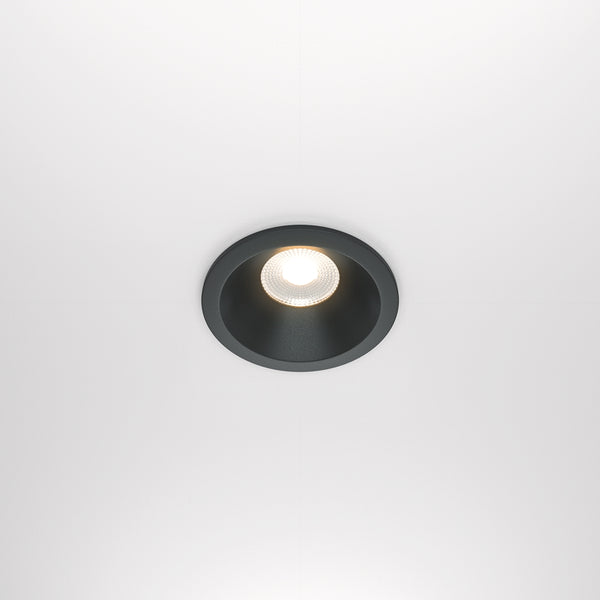
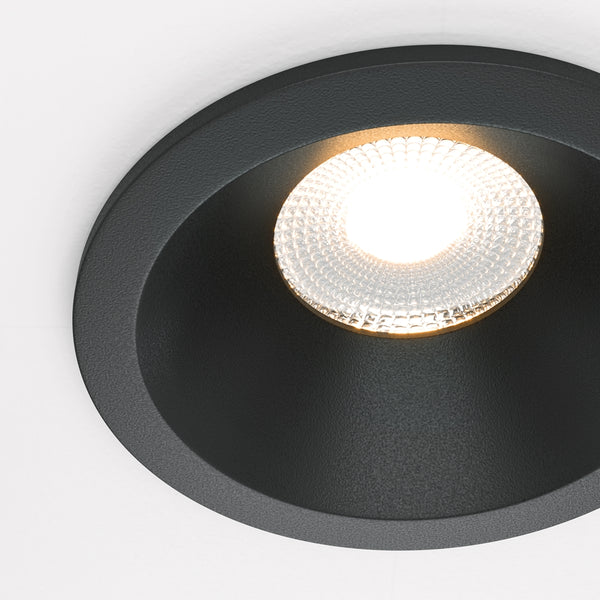
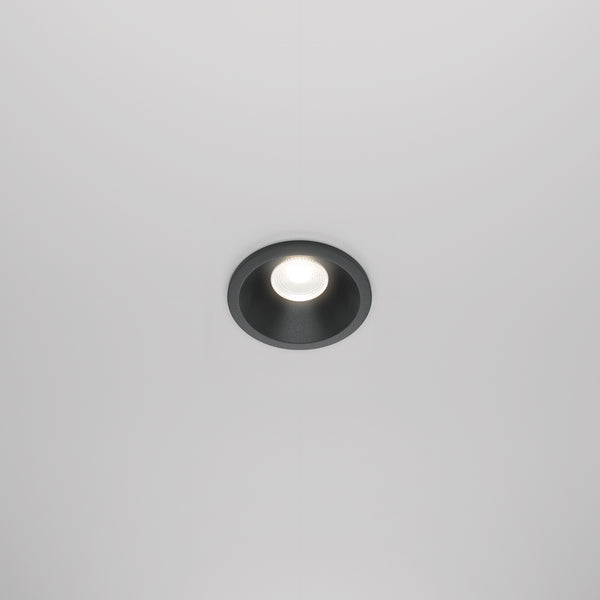
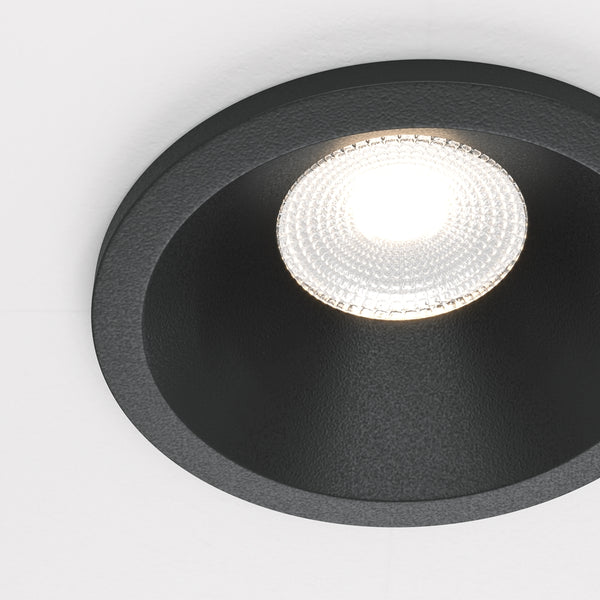
Recessed spotlight
- Tracked delivery to your country Tracked delivery
- Secure payment at checkout Multiple payment methods
- 14 days to change your mind 14-day returns
- Secure payment Secure payment


Not sure of your style? Find it in 30 seconds
A few questions, and we will show you the pieces made for you.




















Frequently asked questions
How do I choose the right light output?
At what height should the light be installed?
What type of bulb?
Compatible with LEDs and dimmers?
Light changes everything
From statement chandeliers to discreet wall lights, we help you choose the right brightness, height and style for every room.
- Tracked delivery
- Pay in instalments, where available
- 14 days to change your mind
- Advice & showroom in Lyon, France
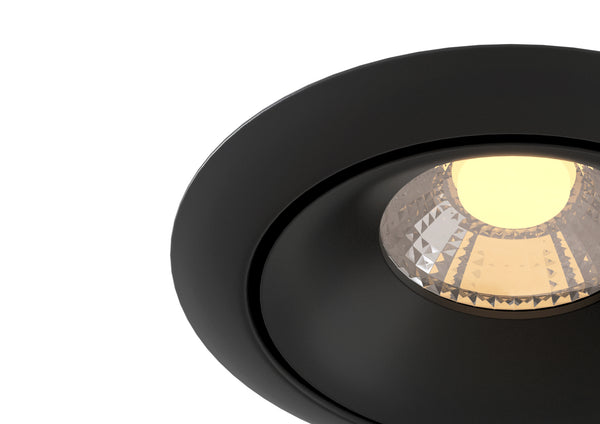
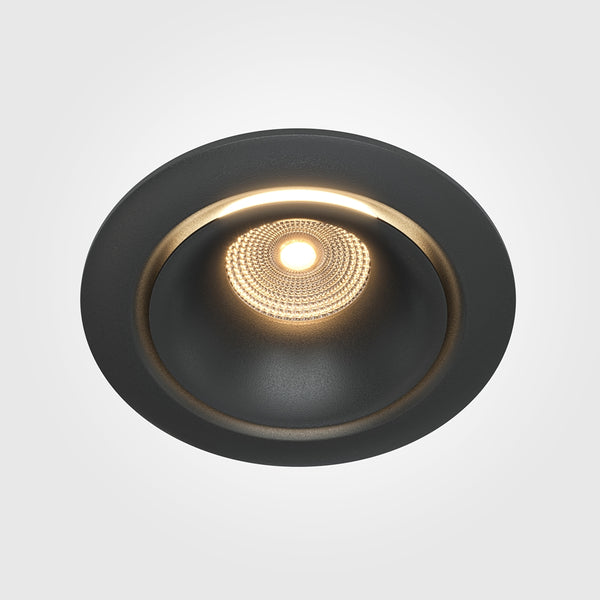
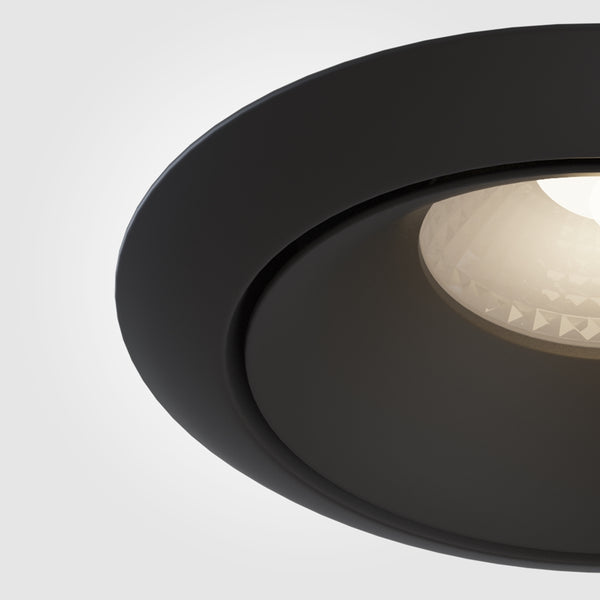
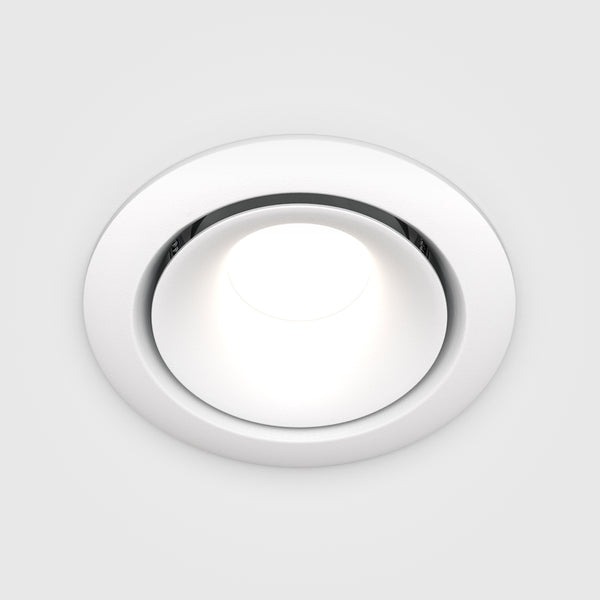
Start with a round aluminium recessed spotlight Ø 6.8 cm with a GU10 base: it is the most common format in this collection, discreet in a living room or hallway. Then adjust the finish, black or white depending on the ceiling to dress, then the orientation if the light needs to aim at a wall.
Which recessed spotlights should you choose for your living room or hallway?
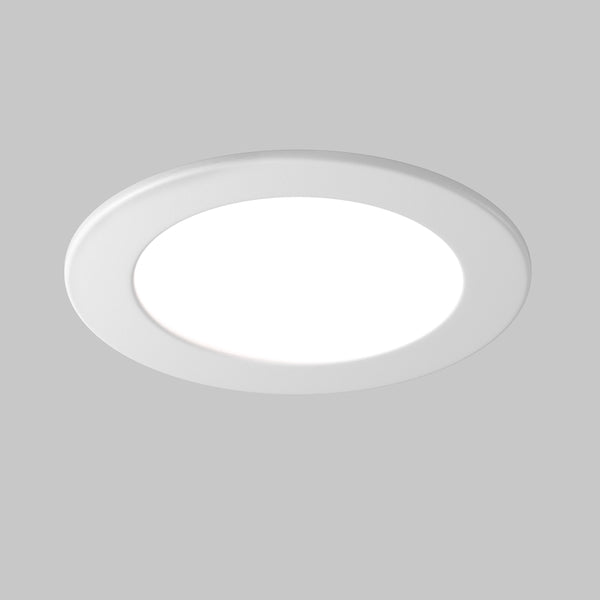
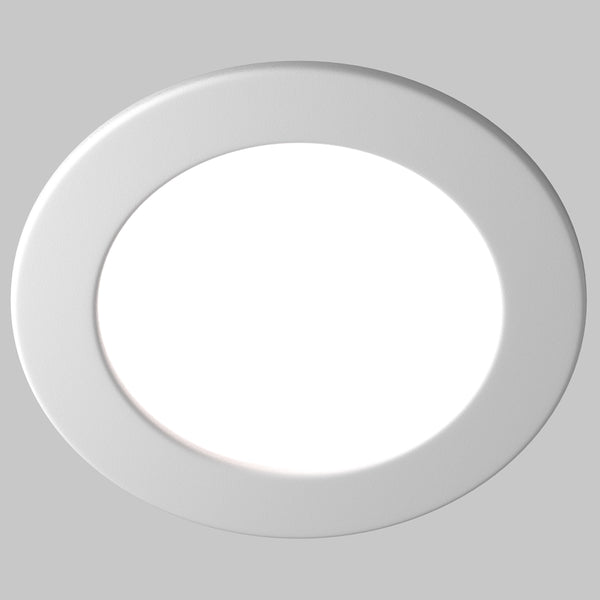
The choice comes down to three points: the base, the colour and the orientation. Most models in the collection work with a GU10 bulb, a few have an integrated LED. Black dominates, white blends into the ceiling, and some models can be angled to aim at a wall or a painting.
Recessed ceiling spotlight: which model for which room?
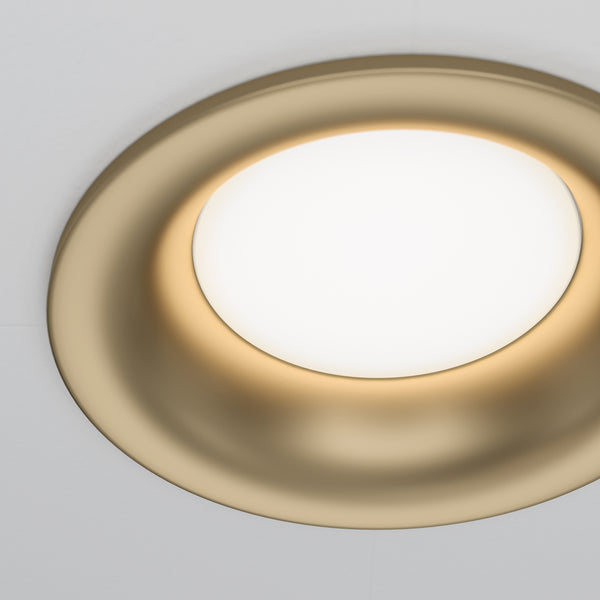
In a living room, light concentrates on the sofa and the walls rather than spreading everywhere: the Zarel, with its gold reflector, or the Oribi, white with a gold collar, play this role in the Ø 6.8 cm format. For a hallway, the same family lines up in a row and takes up little visual depth. In a kitchen, light must fall on the worktop. A damp room is treated separately, with the models for damp rooms. The Temis, black with a gold reflector, draws a fine line on the ceiling, while the Luno and its striped diffuser spread a softer light.
Tiltable or fixed recessed spotlight: which to choose?
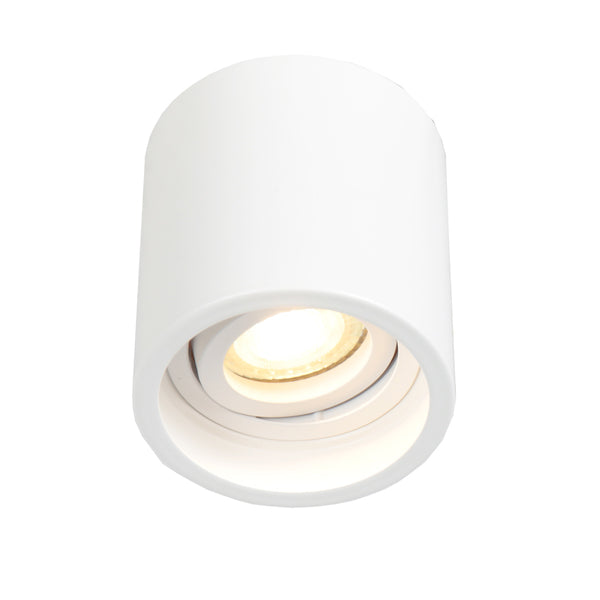
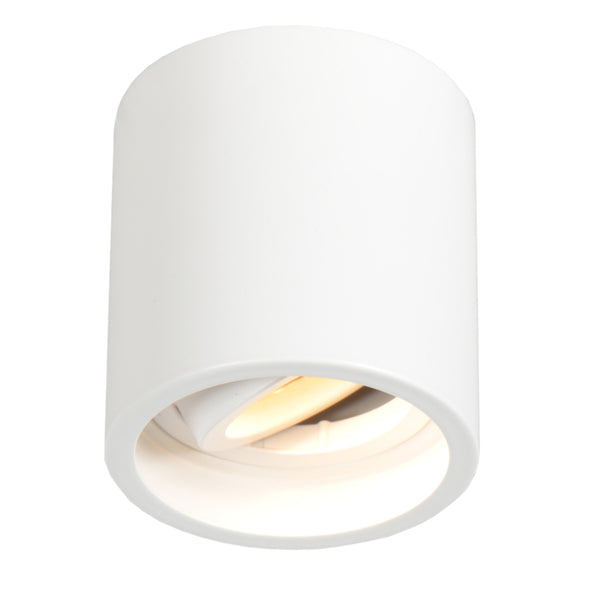
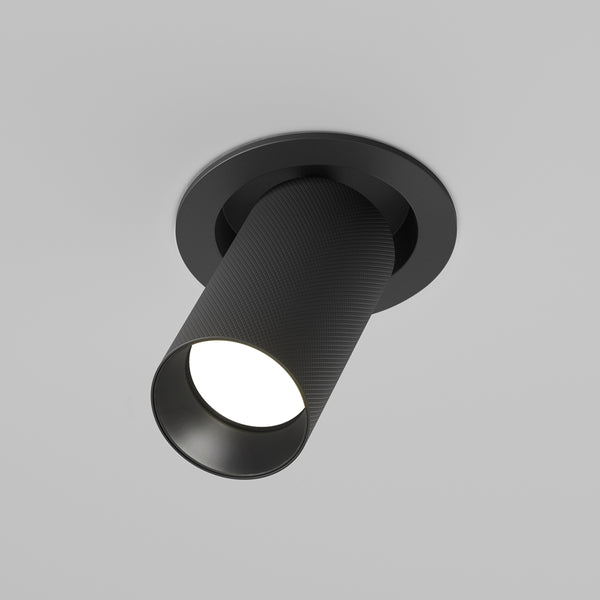
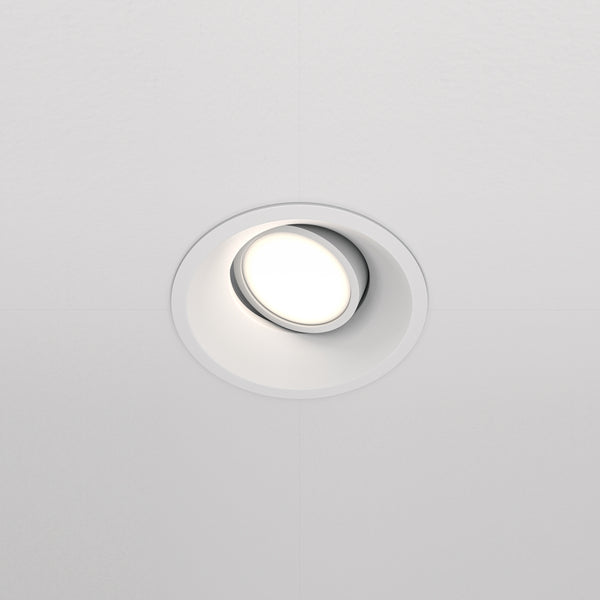
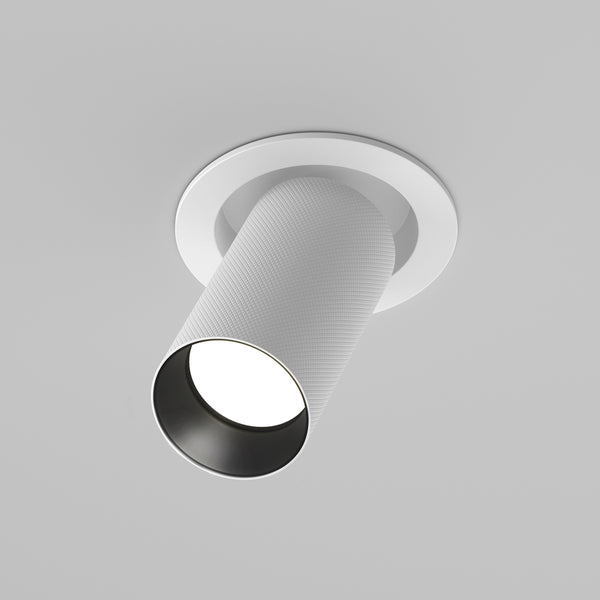
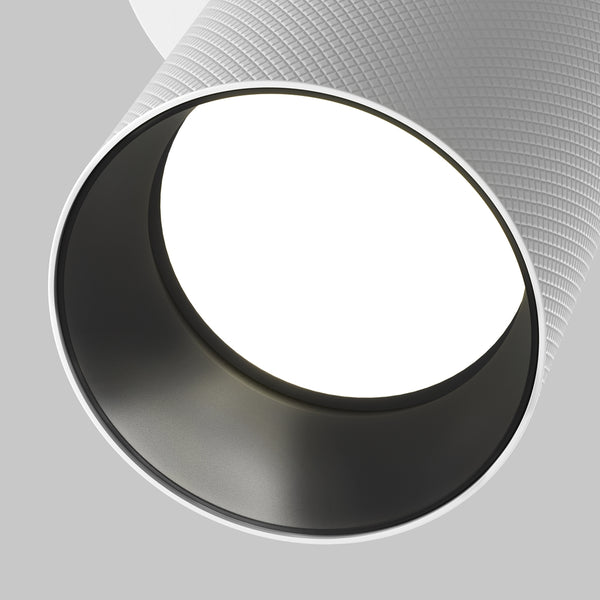
A tiltable spotlight is adjusted after installation: the Collara in a silver finish and the Vestra, black with a gold cylindrical projector, let you aim at a painting or correct an approximate alignment. A fixed model works when the light must fall straight below the fixture. To compare mechanisms, browse the models that pivot and the recessed LED spotlight family.
How to arrange spotlights on a living room ceiling?
Start from the areas to be lit, not from the number of spotlights: align them on one or two axes parallel to the wall, centred on the sofa, the table or the walkway. The spacing is set according to ceiling height and beam angle, keeping the spotlights far enough from the wall to avoid shadows.
Ceiling spotlight layout: where to start?
Draw the useful areas on the floor, then project them onto the ceiling. Two axes are enough in most living rooms: one along the main wall, one above the sofa. To locate the available families, compare the spotlight range as a whole and LED spotlights for the living room. A high ceiling allows wider spacing; a low ceiling requires tighter points and a model recessed flush with the slab.
What distance between spotlights and the wall?
Allow at least 50 to 60 cm from the wall to let the light travel down the surface without casting the shadow of furniture. Above a sofa or a worktop, offset the point rather than placing it right at the edge. A tiltable recessed spotlight compensates for a poorly placed gap, it is the most flexible solution.
| Room | Lighting intent | IP rating | Base or technology | Finish |
|---|---|---|---|---|
| Living room | lighting centred on the sofa and walls, orientation possible | IP20 | GU10 most often, integrated LED possible | black or white |
| Hallway | alignment of several spotlights, low visual bulk | IP20 | GU10 | black, white or gold |
| Kitchen | light directed onto the worktop | IP20 | GU10 | black or silver |
| Entrance and staircase | small format, accent lighting | IP20 | GU10 or integrated LED | white |
| Dressing room | even light without cast shadows | IP20 | integrated LED | white |
| Damp room | moisture resistance | IP44 on a few models | GU10 | black |
Modern living room ceiling spotlight: which shapes and colours to choose?
In a modern living room, round dominates and square adds a graphic line. Black stands out and structures the ceiling, white fades away, silver and gold remain occasional. A slim collar, an opal or striped diffuser change the result as much as the colour.
Black or white recessed ceiling spotlight: what effect in the room?
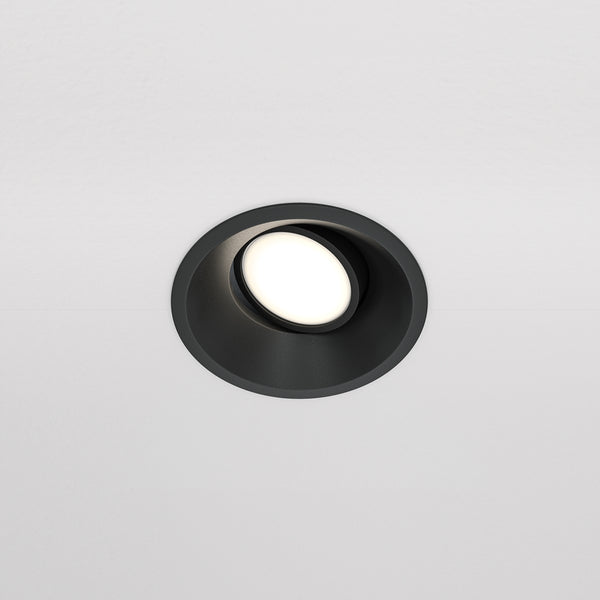
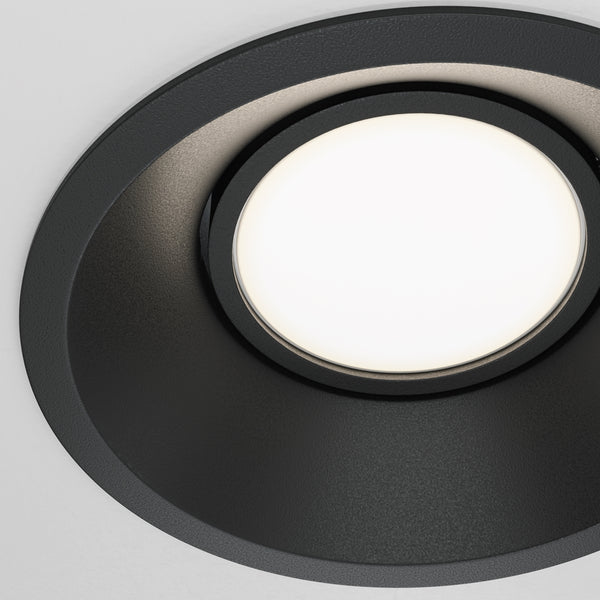
A black rim draws sharp points on the ceiling: on a white ceiling, the effect is graphic and deliberate. White, on the other hand, keeps the ceiling smooth with only the light visible. The Mirka, a white square with a black ring, plays both. To choose by shade, compare the black finishes and the discreet white spotlights.
Extra-flat or large-diameter recessed spotlight: depending on ceiling height?
Under a low ceiling or in a hallway, a small format is less noticeable and can be multiplied without clutter. Under a high ceiling, a large diameter such as the Cielo at Ø 14 cm fills the surface and lights more widely. Style-wise, compare the modern-style spotlights and the pieces with more elaborate design.
What is the diameter of a recessed ceiling spotlight?
It ranges from about 4 cm to 14 cm depending on the model. The most common format is Ø 6.8 cm, discreet in a hallway or living room. Large diameters, up to 14 cm, dress high ceilings, and the square measures 12.6 cm per side.
Ø 6.8 cm or Ø 8.5 cm: what difference in practice?
At 6.8 cm, the spotlight blends into the ceiling and can be repeated without forming a pattern: this is the format of the Temis, Zarel and Orio models. At 8.5 cm, the visible surface increases and the collar becomes a decorative element, as on the gold Ridley. Below that, the Mirane at Ø 4 cm and the Ombrio at Ø 5.2 cm target hallways and small ceilings.
Square recessed spotlight: what dimensions and what use?
The square measures 12.6 cm per side and is installed recessed. It is used to mark an area rather than blend into the ceiling: an axis of square shapes suits a contemporary interior aligned on right angles.
| Diameter or format | Models concerned | Installation | Where it works best |
|---|---|---|---|
| Ø 4 cm | Mirane | Recessed | Hallway, low ceiling |
| Ø 5.2 cm | Ombrio, Vestra | Recessed | Hallway, small ceiling |
| Ø 6 cm | Lorsamara | Recessed | Entrance, dressing room |
| Ø 6.8 cm | Temis, Oribi, Orio, Zarel, Rovea | Recessed | Living room, hallway |
| Ø 9.8 cm | Luno | Recessed | Large living room |
| Ø 14 cm | Cielo | Recessed | High ceiling, large room |
Do you need a recessed spotlight bell and which IP rating to choose?
The bell is mainly useful when insulation touches the spotlight; if the ceiling is clear, it is not necessary. The IP rating depends on the room: almost all of this selection is IP20 for dry rooms, and a few models are IP44 for damp rooms.
IP65 recessed spotlight: for which uses?
No model in this selection is rated IP65. That level concerns highly exposed rooms, a covered terrace or a shower area: you should then look at outdoor spotlights and models for damp rooms, designed for those uses.
Recessed bathroom spotlight: what to check before buying?
First check the IP rating, then the distance to the shower or bathtub. An IP44 is enough in the peripheral zone; closer to water, a fixture designed for outdoor use is better. The Brossa, mounted surface-mounted under the ceiling, is installed where recessing is not possible.
Warm white, neutral white or cool white: which light for a recessed spotlight?
The models with integrated LED in the collection light in warm white 2700 to 3500 K, except one model in neutral white. On a spotlight with a GU10 base, the shade depends on the bulb you install: you choose it, and you can change it without replacing the spotlight.
Which colour temperature in a living room or hallway?
In general, light around 2700 to 3000 K warms a living room or bedroom, and a neutral white around 4000 K is better suited to a hallway or kitchen where you want to read and work. The Lorsamara and the Luno illustrate both approaches: warm white for one, neutral white for the other.
Can two light temperatures be mixed in the same room?
Better to avoid on the same circuit: the difference is visible from one spotlight to the next. If you change a GU10 bulb, use the same temperature as the others. On models with integrated LED, the shade is fixed at purchase, so you must choose before installation. See the spotlights with GU10 bulb and the spotlights with integrated LED module.
How to tell if a spotlight is burnt out and how to replace it?
Start by testing the bulb on another light point or replace it: on a GU10 or GX53 spotlight, it is most often the bulb that fails. If a model with integrated LED no longer lights while the circuit is powered, it is the module that must be replaced, not the bulb.
What to do when the LEDs no longer light up?
Switch off the circuit, check that the breaker has not tripped, then look at the other spotlights on the same switch. If only one is off, the fault is in the fixture. If all are off, the problem is upstream. On the Encastro or the Luno, with integrated LED, the whole fixture is replaced.
GU10 bulb, GX53 or LED module: what can be replaced?
On a GU10 base, very common in the collection, or on a GX53 base, you replace the bulb alone: the Zarel and the Temis are repaired this way in seconds. On an integrated LED module, no element is interchangeable: plan to change the spotlight. To choose by this criterion, compare the integrated LED references.
What is the lifespan of a recessed LED spotlight and what drawbacks to expect?
An integrated LED spotlight wears out slowly and without warning, but its module is not replaceable like a bulb: it is the whole fixture that is changed. Its light shade is fixed at purchase and the beam remains directional.
What warranty on a recessed spotlight?
The warranty covers 5 years on the vast majority of the selection and 2 years on the rest. It covers the fixture, not the bulb you add on a model with a base. Keep the reference of the installed model, it simplifies any later exchange.
Integrated LED or GU10 bulb: what advantages in use?
An integrated LED gives even light straight out of the box, with no adjustment, and avoids choosing a bulb. A GU10 base leaves the choice: you can change the shade or the power without touching the spotlight. The beam of an integrated LED is more directional, which suits accent lighting more than wide diffusion.
What budget for recessed spotlights?
The budget follows the material and the module type: an aluminium spotlight with a GU10 base remains the entry level, a model with integrated LED or a gold finish sits higher. The number of points to install often weighs more than the model chosen, and prices are shown in the collection grid.
Dimmable spotlights: what to check before buying?
Not all spotlights are dimmable: only a few models in the selection are rated compatible, such as the Collara. Check compatibility between the wall dimmer and the bulb, as an old dimmer can make an LED flicker. The dimmer-compatible models remove that doubt.
Should the same finish be kept throughout a room?
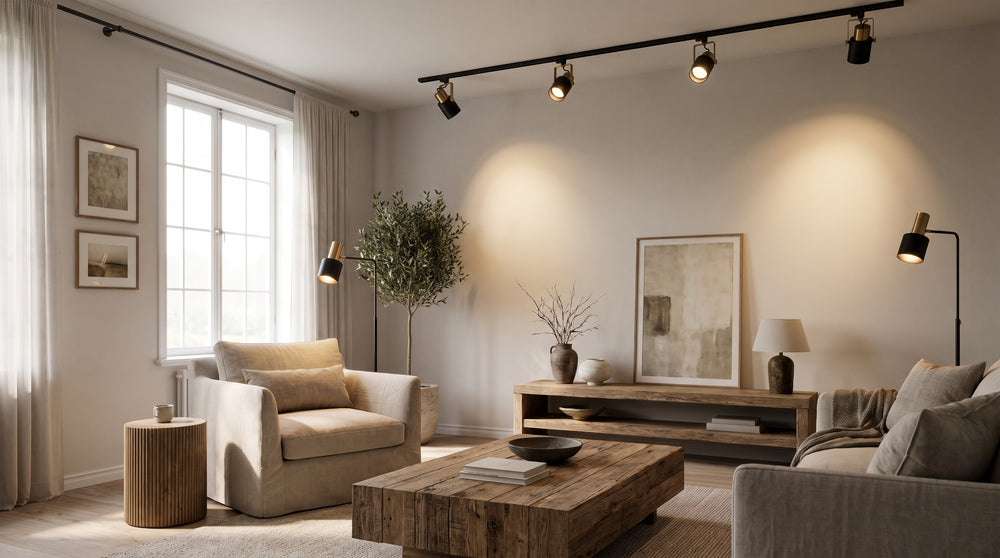
On the same ceiling, a single finish gives a clean line: all black or all white. Gold and silver are best kept occasional, on one axis or a worktop. If you prefer to distribute light differently, a spotlight rail complements a room where recessing is not possible everywhere.
Secure payment, tracked delivery, returns and Designix customer service: everything you need to order the right reference first time. Find our selection of light fixtures and the spotlights for the kitchen to complete a lighting plan, or browse all Designix light fixtures to equip the rest of the house.
Frequently asked questions
Which recessed spotlights to choose?
Start with the room: for a living room or hallway, a round aluminium model in the Ø 6.8 cm format integrates without cluttering the ceiling. Then choose the base, GU10 so you can change the bulb, integrated LED for a fixed shade, then the finish, black or white.
Is a recessed spotlight bell mandatory?
The protective bell is not mandatory everywhere: it becomes useful when ceiling insulation directly touches the spotlight. If your attic is insulated and the fixture remains clear, a standard recessed spotlight is enough. Check the model's instructions before installation.
What is the diameter of a recessed ceiling spotlight?
The outer diameter ranges from about 4 cm for a small hallway spotlight to 14 cm for a living room model. The most common format in this collection is Ø 6.8 cm, with variants in Ø 8.3, 8.5, 9.8 and 10 cm, plus a square model 12.6 cm per side.
What is the lifespan of a recessed LED spotlight?
The lifespan depends on the module and the use, it is not comparable from one model to another. What can be checked here: the selection is guaranteed 5 years for the vast majority of models, and 2 years for the rest. A spotlight with a GU10 bulb simply needs a replacement bulb.
How can I change an LED spotlight?
On a spotlight with a GU10 or GX53 base, switch off the circuit, remove the bulb by turning it, replace it with a bulb of the same base then refit. On a model with integrated LED, the module is not interchangeable: the complete fixture must be replaced.