Bathroom spotlight
- Tracked delivery to your country Tracked delivery
- Secure payment at checkout Multiple payment methods
- 14 days to change your mind 14-day returns
- Secure payment Secure payment


Not sure of your style? Find it in 30 seconds
A few questions, and we will show you the pieces made for you.










Frequently asked questions
How do I choose the right light output?
At what height should the light be installed?
What type of bulb?
Compatible with LEDs and dimmers?
Light changes everything
From statement chandeliers to discreet wall lights, we help you choose the right brightness, height and style for every room.
- Tracked delivery
- Pay in instalments, where available
- 14 days to change your mind
- Advice & showroom in Lyon, France
Plan for recessed GU10 bathroom spotlight fixtures above the mirror, then a regular line across the ceiling for the rest of the room, choosing an IP44 rating near water. This selection brings together recessed and surface-mounted spots, often adjustable, in black, white or silver finishes, with a majority in warm white.
Which type of spot in a bathroom?
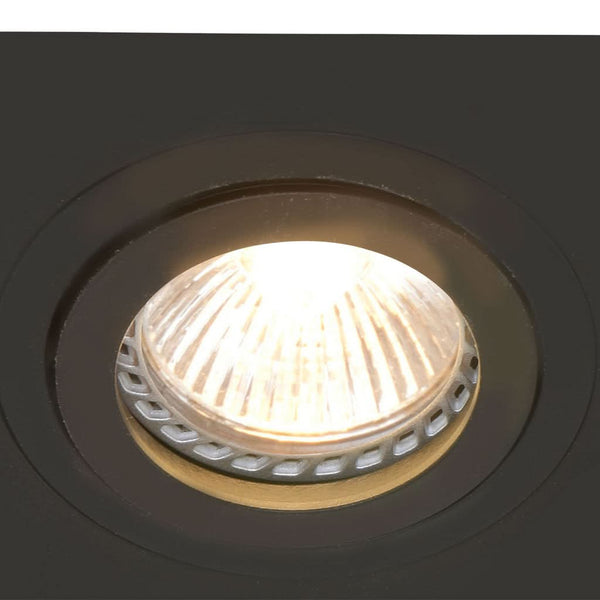
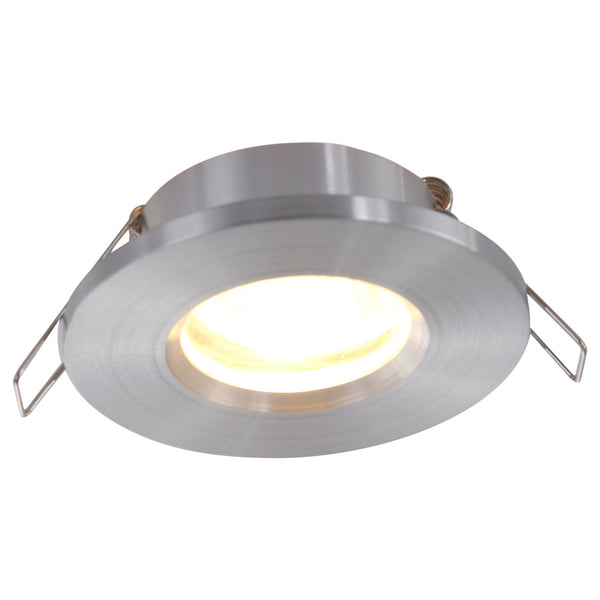
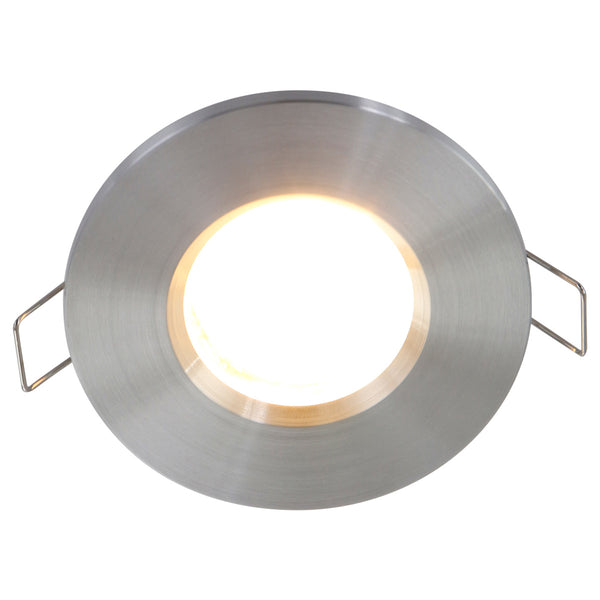
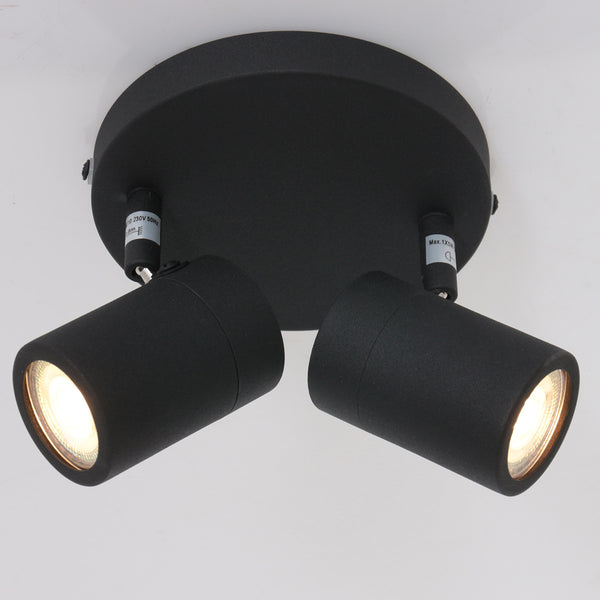
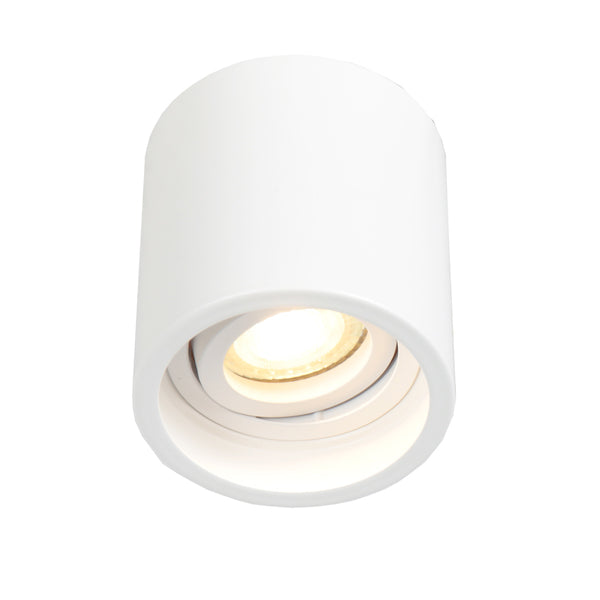
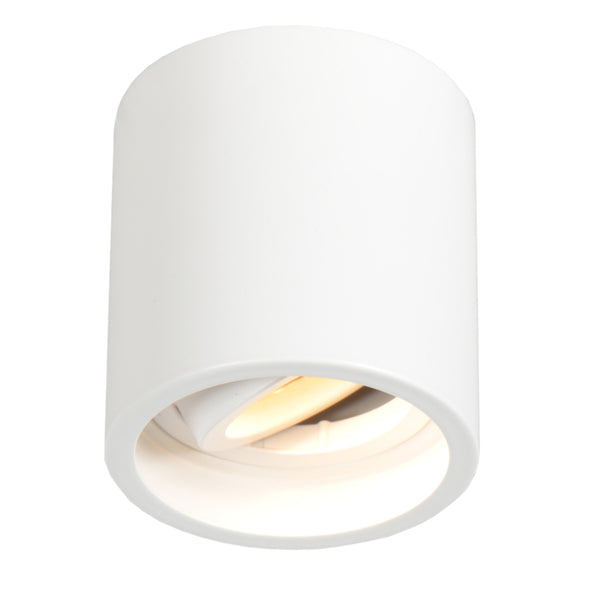
There are three families: the recessed spot, which sits flush with the ceiling, the surface-mounted spot, visible and easier to fit, and the track spot, which can be moved. Most models in this collection are recessed, with a GU10 base and 10 W, in diameters of 8.5 or 10 cm.
Bathroom ceiling spot: recessed or surface-mounted?
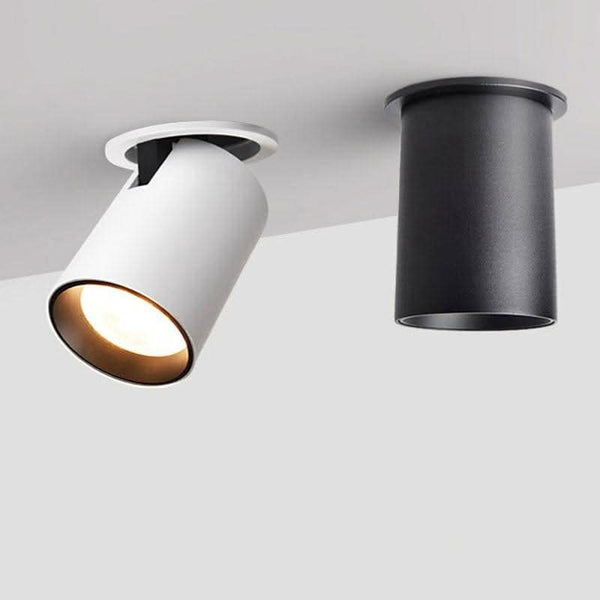
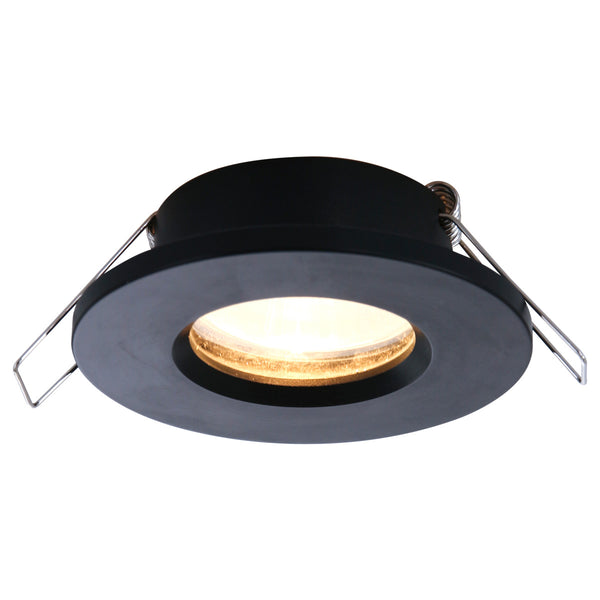
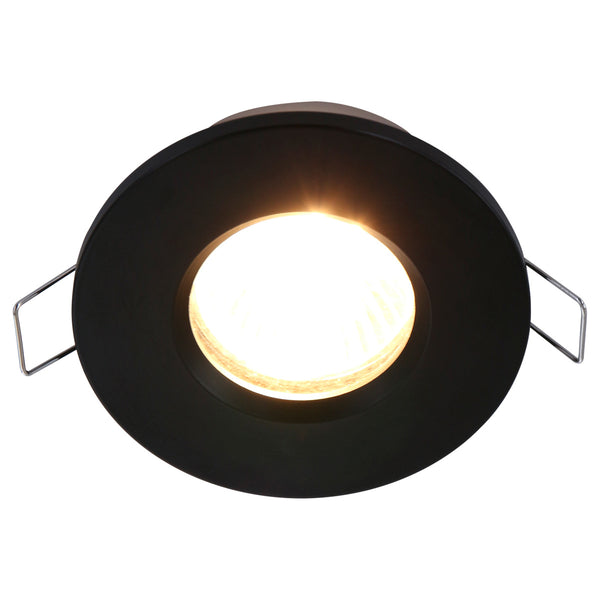
A recessed spot slots into a cut-out and leaves the ceiling clean, which suits low rooms. It needs a cable run and free height above, 4 cm on slim versions such as the Vidar round spot. A surface-mounted spot screws straight to the ceiling, comes off without special tools and gives easy access to the wiring when height is short. To widen your search, browse the recessed models or the spot tracks.
Adjustable spot: what is it for in front of a mirror?
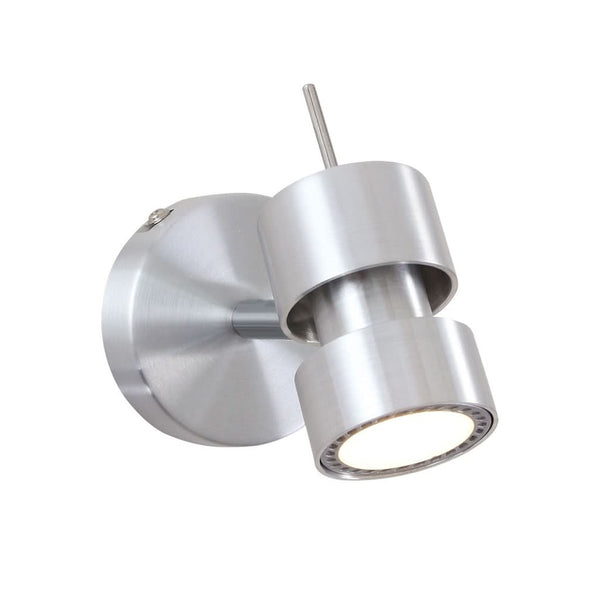
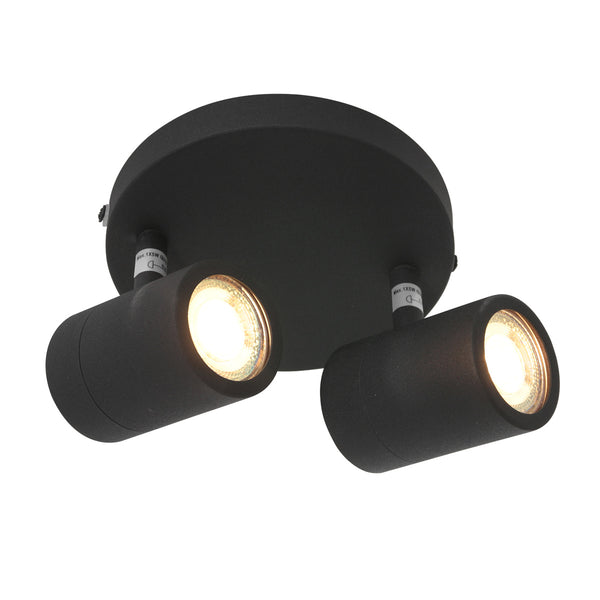
The head pivots and sends light where it is needed: onto the vanity top, into a corner of the room, or at an angle to avoid the shadow of your face in the mirror. The Jadeon square adjustable spot shows this principle clearly, with its moving head mounted on a 7 cm high square base. A fixed model gives a softer light, with no adjustment possible after fitting. You will find the same principle in the selection of adjustable spotlights.
Bathroom spot IP44 or IP65: how do you read the protection rating?
The protection rating shows resistance to water and dust. This selection mixes IP44 spots, protected against splashes, and IP20 spots reserved for dry areas of the room. An IP44 model goes near the bath, the shower or the mirror.
| Rating | Share of the selection | Rooms listed | Where to place it |
|---|---|---|---|
| IP44 | 43 % | Bathroom, Living room | Around the bath, the shower and the mirror |
| IP20 | 57 % | Bathroom, Living room, Kitchen, Outdoor | Dry areas: ceiling, room entrance, kitchen |
Waterproof bathroom spot: what does the IP rating mean?
The first digit covers dust, the second water. The 4 of the second digit signals resistance to splashes, which covers spray around the tub and the basin. The IP44 of the Sigrid with ribbed glass or the Kalella two heads is enough in the room; IP20 is fitted high up, away from the water zone.
Is IP44 enough near the shower?
Yes, if the spot stays high up and receives splashes without being immersed or exposed to a direct jet. A silver model such as the Orbia double spotlight or the Marissa round IP44 is content with the same protection. Higher in the room, an IP20 can take over on the black finish spots as well as the white finishes.
Bathroom spot 12V or 220V: which base should you plan for?
The answer comes down to the base. Almost every spot in this collection uses the GU10 base, standard and replaceable, at 10 W; the others have an integrated 12 W LED. The base appears on each product page and should be checked before ordering.
Bathroom spot 12v or 220v
The GU10 base connects to the mains, needing neither a transformer nor a separate box, which simplifies fitting and bulb replacement. An integrated LED module cannot be changed: when it dims, the whole spot goes. That is the choice of the Noria with inner diffuser, the only one in the selection at 12 W with light adjustable between warm white and cool white.
GU10 base or integrated LED: what it changes in use
The GU10 leaves you free: you keep the spot and change the bulb to suit the mood you want. An integrated LED locks the colour temperature and the wattage, in exchange for a slimmer body. The spots with a GU10 base are in the majority here; to compare both approaches, open the LED spots.
How do you get the ceiling layout of spots right in a living room?
The layout is decided by use: a regular line set away from the walls for ambience, close-set points above the mirror or the worktop. Adjusting the heads then corrects any gaps, which makes placement less critical with an adjustable spot.
Living room ceiling spot layout: line them up or group them?
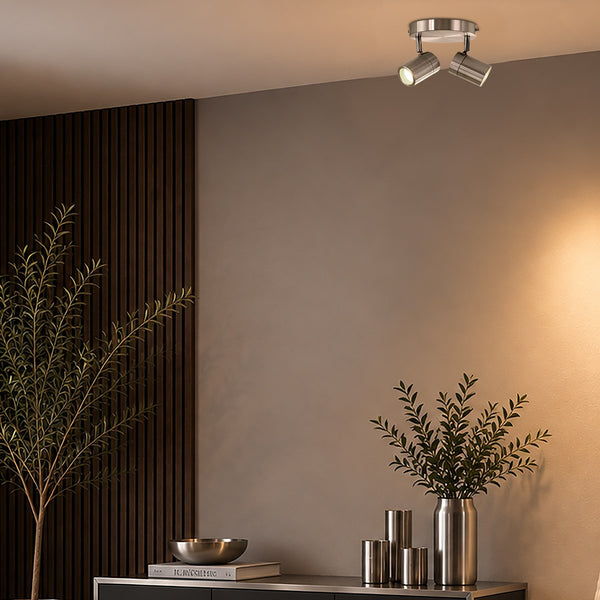
In a living room, three or four sources are spread at roughly equal distance from the walls, which gives even light with no shadow areas. A living room ceiling spot layout mainly avoids fixing the spots to the wall: the light then climbs the paint instead of lighting the room. A two-head model such as the Duoproj ceiling spotlight covers a wider area from a single power point. See also the lighting a living room selection.
Applying the same logic in the bathroom
The rule changes near the basin: two close-set points either side of the mirror light the face without cast shadow, better than a single spot in the centre. Elsewhere, the regular spacing is kept. The kitchen spots follow the same principle above a worktop, with closely spaced points and a crisp light.
Bathroom spot black, white or silver: which finish should you choose?
Silver leads in this selection, ahead of black and white. On a light ceiling, a white spot goes unnoticed and a black spot draws a clean contrast; silver matches chrome tapware. The choice is therefore made with the rest of the room.
| Shape | Share of the selection | Dimensions recorded | Example models |
|---|---|---|---|
| Round | 64 % | ø8.5 to ø10 cm, height or depth from 4 to 9 cm | Vidar, Marissa, Nivéo, Lisio, Sigrid, Lunaro |
| Tube | 50 % | ø24 cm, height up to 15 cm | Kalella, Orbia, Cylia |
| Square | 14 % | height 7 cm | Jadeon, Facetta |
Black bathroom spot: on what type of ceiling?
Black marks a clean line and structures a light ceiling or a wooden ceiling, provided you accept the contrast. On an already dark ceiling, it disappears and loses its point. The Cylia two tubes IP44 and the Facetta with faceted glass play in that register.
White, silver or gold ring: matching spot and tapware
A silver or chrome spot follows the tapware and accessories, a white one fades into a ceiling painted in the same shade, a gold ring such as the one on the Nivéo warms a more dressed interior. The materials recorded are metal and plastic, with a little aluminium on the adjustable models.
Which light for a bathroom: warm white or cool white?
Warm white, from 2700 to 3500 K, dominates this selection: it stays comfortable in the morning and the evening and suits the whole room. Cool white, from 4500 to 6500 K, equips the more technical models and is reserved for areas where a crisp light is wanted.
Warm white or cool white in front of the mirror?
Around 3000 K, skin keeps a natural tone and the morning wake-up stays bearable; that is the temperature fitted to most spots in the collection. Above 4000 K, the light becomes whiter, more clinical, handy for a make-up corner or a worktop, less comfortable as evening light. The Noria lets you switch between the two ranges.
Can you mix two temperatures in a bathroom?
It is better to keep a single temperature on the points that switch on together: two different whites in the same field of view are immediately noticeable. A cooler point can however be reserved for a specific area, switched on separately. The dimmable spots help lower the intensity in the evening without changing temperature.
How do you install and maintain a spot in a bathroom?
First check the diameter of the spot and the ceiling cut-out: the recessed models in the collection measure 8.5 or 10 cm, with 4 cm of depth on the slim versions. Spring clips hold the spot, and a soft cloth is enough for maintenance.
How do you install spots in your bathroom?
Mark the points on the ceiling before drilling, keeping a regular distance between centres. Cut to the stated diameter, run the cable, then push the spot in: the fixing springs press it against the ceiling, as on the Lisio with springs. Switch off the power at the breaker before any handling and check the free height above the cut-out, up to 15 cm on the two-tube models.
Cleaning a spot without damaging the finish
Soft slightly damp cloth, no abrasive product and no scouring sponge: silver finishes and ribbed glass scratch easily. Switch off the power before cleaning, and take the chance to dust the fins and diffusers, which lose their sparkle when they get dirty. For very damp rooms, also look at the outdoor spots.
Before you confirm, note the diameter you need: it decides everything else. Browse the recessed LED spots then compare with the spots with a crafted design if you are after a more striking piece.
Dining room chandelier or spots: how do you light each room?
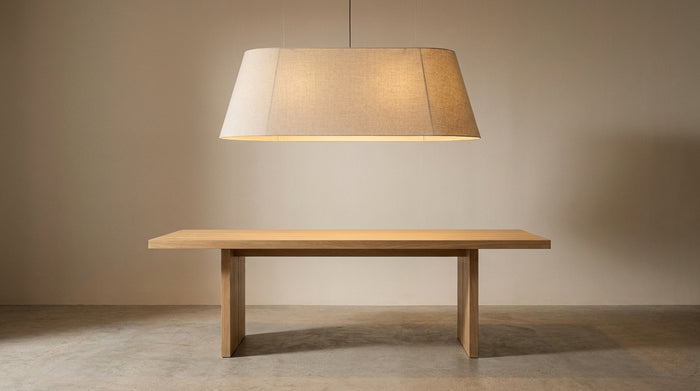
A chandelier or a pendant light gives the dining room a focal point, centred above the table, while a ceiling light or spots spread the light across the whole room. In the bathroom, spots and ceiling lights take over, because they take up little space.
Modern dining room chandelier or large chandelier: what should you choose?
The format is decided by the scale of the table: a wide model above a large gathering, a more compact format in a narrow room, and always a single focal point in the centre. A trendy chandelier plays on lines and material more than on volume. The whole house can be found in all our light fittings.
Dining room ceiling light, trendy dining room light: what should you look at?
The hanging height above the table is set around 75 cm, without blocking the view of the guests. Many rooms combine this central light with spots around the edge, switched on separately: the focal point for meals, the spread light for the rest. You will find these solutions in all Designix light fittings and in the modern style selection.
Frequently asked questions
What are the standards for spots in a bathroom?
The practical reference remains the protection rating of the spot. An IP44 model resists water splashes and suits the area around the bath, the shower and the mirror; an IP20 model is reserved for dry areas. This rating is shown on each product page.
Bathroom spot IP65: is it necessary?
It all depends on exposure to water. This selection stops at IP44, which covers splashes around the bath and the shower, and also offers IP20 spots for dry areas. A higher rating is only justified if the spot is directly exposed.
Bathroom pendant IP44: what is the alternative?
This collection contains no pendant: bathroom lighting here is provided by spots and ceiling lights, some of them IP44. For a hanging light, it is better to reserve it for a dining room or a living room, and keep protected spots around the bath.
Bathroom chandelier: possible or best avoided?
A hanging light in a bathroom comes up against damp and the available height. Recessed or surface-mounted spots, in IP44 near water, take up less space and light the mirror as well as the bath. A chandelier finds its natural place above a table.
Waterproof bathroom spot: what should you check on the product page?
Three pieces of information are enough: the protection rating, the base and the dimensions. A spot in IP44, with a 10 W GU10 base and 8.5 or 10 cm in diameter matches most bathrooms in this selection; the page also states the material and the 2 year warranty.
Ordering from Designix
Secure payment, tracked delivery, returns and Designix customer service accompany every order. For statement pieces, compare the modern style spots for the kitchen and the black LED spots before making your choice.