Waterproof outdoor wall lights
- Tracked delivery to your country Tracked delivery
- Secure payment at checkout Multiple payment methods
- 14 days to change your mind 14-day returns
- Secure payment Secure payment


Not sure of your style? Find it in 30 seconds
A few questions, and we will show you the pieces made for you.

























Frequently asked questions
How do I choose the right product?
What are the delivery times?
Can I return an item?
Can I pay in instalments?
An interior that reflects who you are
Carefully selected pieces, shipped from our warehouses. Our team advises you before you buy, so you choose with confidence.
- Tracked delivery
- Pay in instalments, where available
- 14 days to change your mind
- Advice & showroom in Lyon, France
Start with how exposed the wall really is: IP44 under a canopy, IP54 in a recess, IP65 on an open facade or entrance, IP67 near the ground. Once the rating is set, light colour and light source decide the rest. Waterproof outdoor wall lights are chosen in that order, never the other way round.
What is the best outdoor wall light?
There is no single model: the best outdoor wall light is the one whose IP rating matches the exposure of the wall. Choose IP65 for an open facade, IP44 under a canopy. Light colour, light source and finish, black or white, come next.
What decides first: how exposed the wall really is
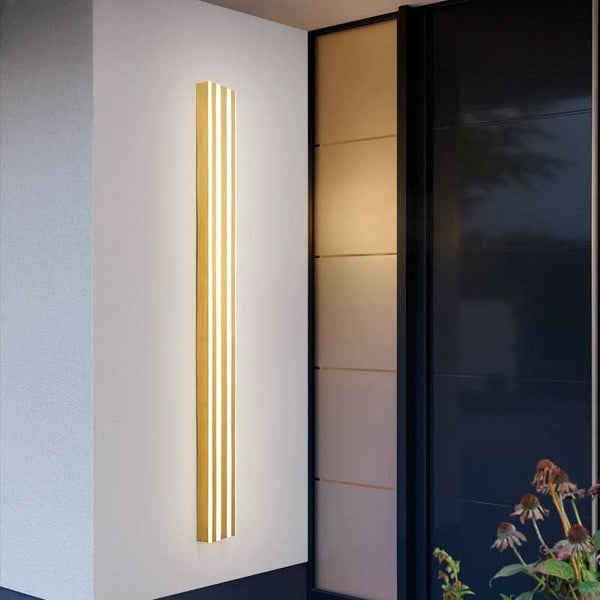
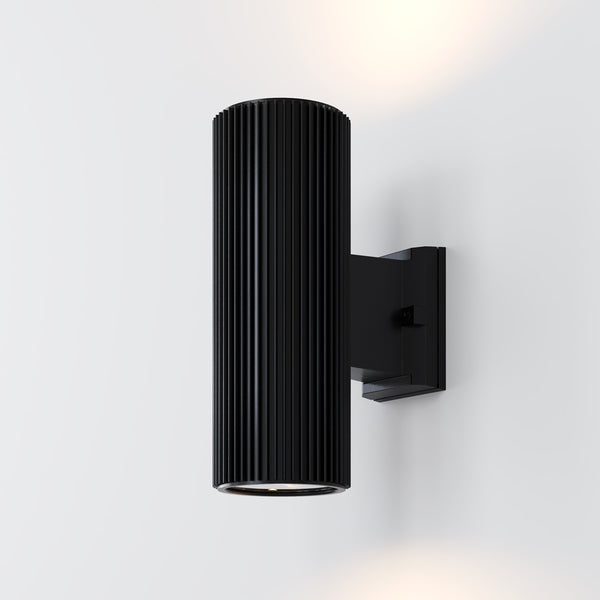
A wall under a roof overhang stays dry even in winter; a gable wall beaten by slanting rain takes water across its whole surface. Look at whether water runs down the wall before choosing the rating. Looks matter too: a gold wall light on pale stone and a black wall light on white render do not give the same facade after dark. Anthracite grey and black finishes stay discreet on a recent wall, while bronze warms up brick.
The three families of models: integrated LED, E27 socket, with detector
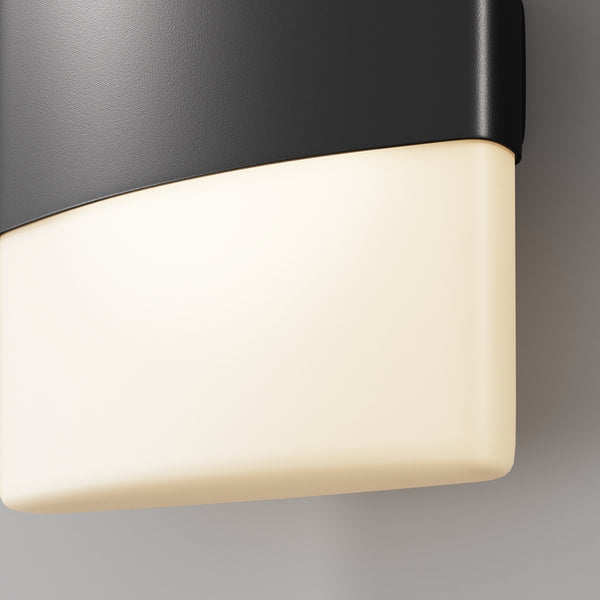
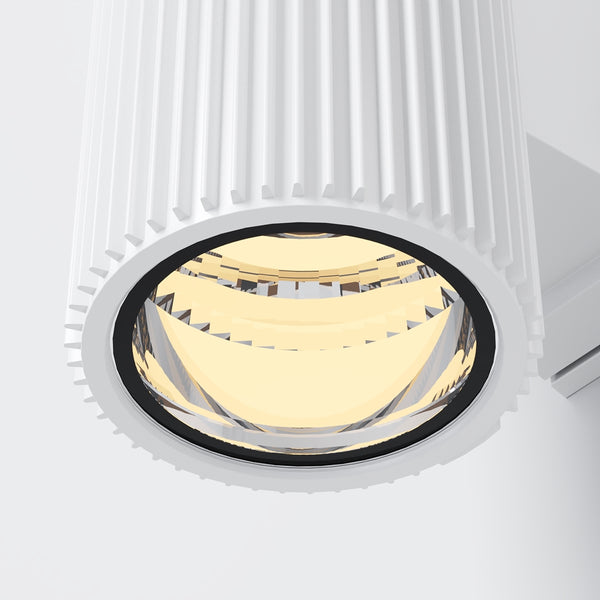
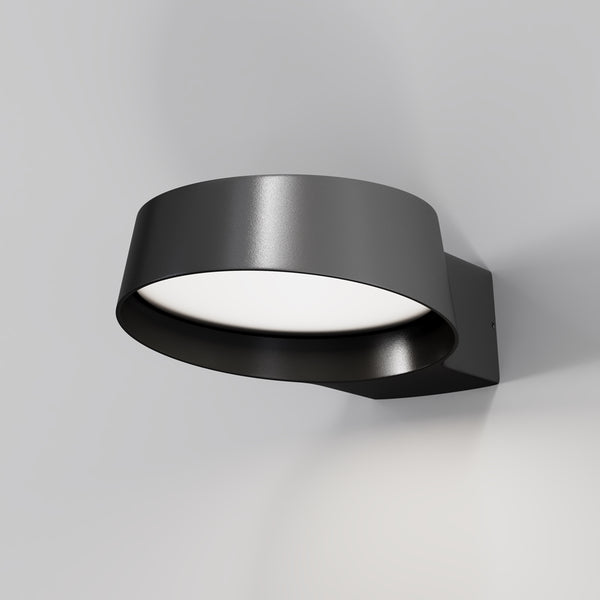
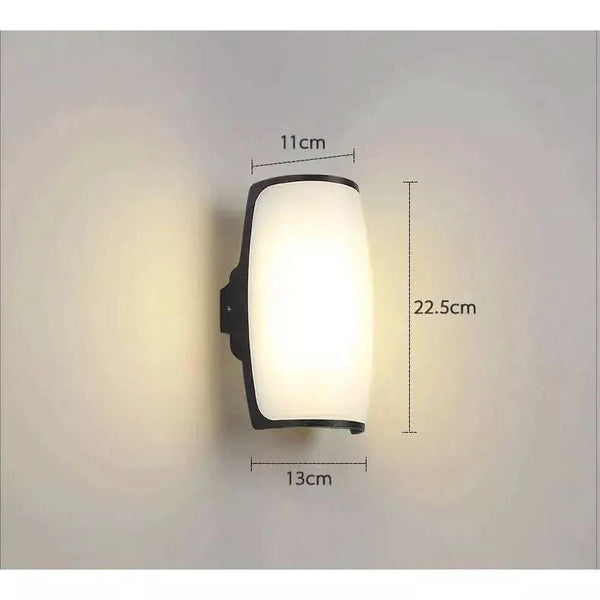
Three families shape the selection. Integrated LED wall lights need no bulb and give a light colour fixed at purchase, such as Halo, a 17 cm by 10 cm round in IP65. Models with a socket, found among the E27 wall lights, can be re-lamped without being replaced. Finally, a third family includes automation, found among the motion detector wall lights.
Which IP rating should you choose between IP44, IP54, IP65 and IP67?
IP44 suits a wall sheltered under a roof overhang, IP54 a covered terrace, IP65 a facade or entrance exposed to rain and water jets, IP67 the wettest spots or those close to the ground. The higher the number, the freer you are in placing it.
| IP rating | Where to install it | What it handles | Models |
|---|---|---|---|
| IP44 | Sheltered wall: canopy, roof overhang, covered terrace | Splashes and limited slanting rain | Urbano Brillante, Yaro, CharmeRétro, ZenEclat |
| IP54 | Covered terrace, recessed entrance | Dust and water spray | Faro, Rando |
| IP65 | Exposed facade, entrance and terrace wall | Driving rain and water jets | Halo, Terralux, Lumina, Sentinel, SécuriLuxe, LuminMotion, Hylo, ÉclatModerne, Eior |
| IP67 | Very wet location, close to the ground | Brief immersion possible | Éclat |
IP44 or IP54: when the location is already sheltered
Under a canopy, a roof overhang or a covered terrace, the wall light receives little direct water. IP44 is enough, and it opens the door to more elaborate shapes: most models in the retro-inspired range fall into this case, in metal and glass, with an E27 socket. IP54 adds resistance to dust and spray, useful on a recessed entrance or a terrace wall that gets hosed down for cleaning. Faro, a black twin-beam 6 W model, is IP54 with a dusk sensor, which covers a sheltered entrance well.
IP65 and IP67: facade, entrance and highly exposed wall
On an open facade, an exposed entrance or a terrace wall, aim for IP65. It is the most common level here: you find it in the IP65 outdoor wall lights and it is the rating of ÉclatModerne, a minimalist 8 cm model in metal and aluminium, or of Terralux, 26 cm by 12.5 cm. Drop to IP67 only if the wall light may get soaked or sits close to the ground, like the Éclat, the IP67 protected model.
Outdoor wall light for terrace, entrance or facade: which model and which height?
On a terrace, a wide, diffused wall light lights the table without dazzling guests; at an entrance, a more direct model guides footsteps and lights the lock. Mount low to light the walkway, higher to light the wall and the facade.
Lighting an entrance and a gate
Near a door, a model with a directed beam beats a fitting that lights the sky. Faro, the black twin-beam wall light, sends light down to the threshold and the lock: it is 10 cm high, in aluminium, and runs at 6 W. As a rule, mount the wall light between 1.80 m and 2.10 m from the ground on the handle side, offset 20 to 40 cm from the door leaf so it does not cast the door's shadow. For a gate, automation changes everything: Sentinel, the wall light with detector, switches on as you pass and off by itself.
Terrace and facade wall: lighting without dazzling
On a terrace wall, look for wide diffusion: Terralux, Lumina or the design versions for terraces give a grazing light that draws out the texture of the wall without dazzling the table. Seating on a terrace is best lit lower down, around 1.20 m to 1.50 m, to light faces rather than eyes. On a long wall, space the points about 2.5 m to 4 m apart and keep the same model from one end to the other. To recreate that look from the living room, the same family exists as wall lights for terraces.
Secure payment, tracked delivery, returns and Designix customer service accompany every order. Discover the design outdoor wall lights to compare shapes and finishes before settling your choice.
Warm white, neutral white or cool white: which light for outdoors?
Warm white, around 2700 to 3500 K, warms a facade and suits an entrance or terrace where you linger; cool white, from 4500 to 6500 K, lights a path, a gate or a utility wall more sharply. Neutral white, between 3500 and 4500 K, bridges the two.
| Colour | Temperature | Where it suits |
|---|---|---|
| Warm white | 2700 to 3500 K | Entrance, terrace, outdoor meals, stone or brick facade |
| Neutral white | 3500 to 4500 K | Versatile lighting for a path or utility wall |
| Cool white | 4500 to 6500 K | Path, gate, facade you want to read clearly |
Choosing by use: staying outside or moving through
A terrace where you dine calls for warm light: it makes stone and wood softer and tires the eye less late in the evening. A path, a gate or a utility wall need the opposite, a cooler light that cuts outlines and steps sharply. In this selection, warm white and cool white are the two dominant temperatures, with several references even offering both depending on the model ordered.
Matching the temperature with other outdoor lighting
If a garden bollard or a floodlight already lights the same facade, align the temperatures: two different whites on one wall show immediately. To unify without changing everything, look for models available in warm white in the outdoor LED selection. Pieces compatible with dimming, found among the dimmable wall lights, let you lower the intensity in the evening without changing the hue.
Outdoor E27 bulb, integrated LED or G4: which light source should you choose?
An integrated LED wall light needs no bulb and gives a light colour fixed at purchase. An E27 socket model can be re-lamped whenever you like. G4, rarer, equips small formats. Check the socket on the product page before ordering.
E27: replacing the bulb without changing the wall light
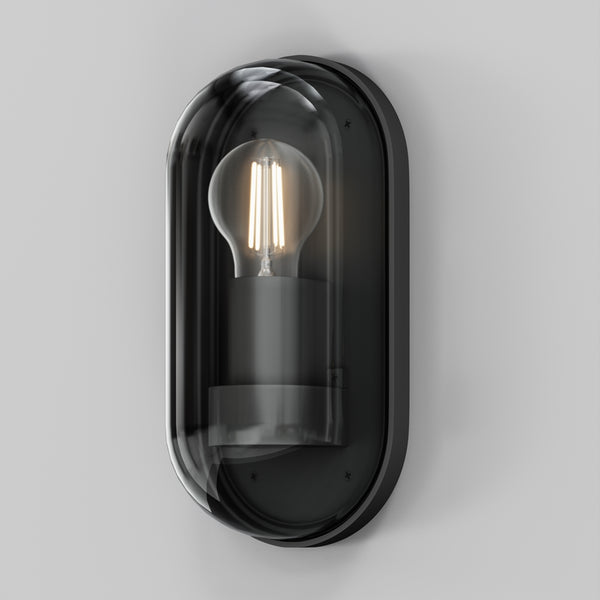
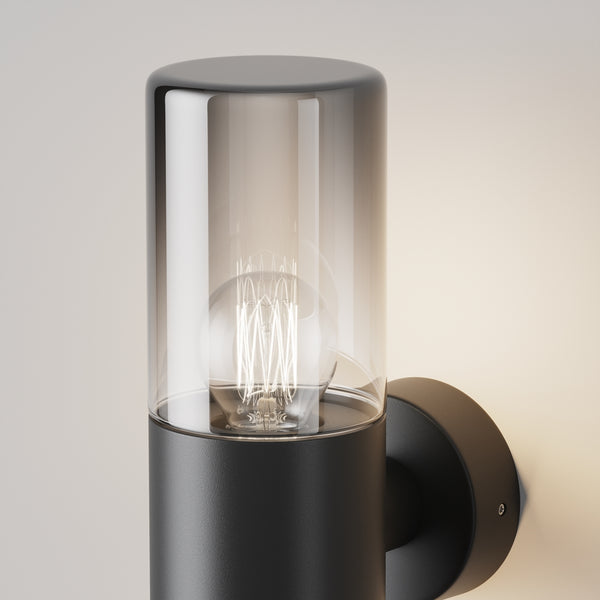
The E27 socket remains the most common in this selection, after integrated LED. Its appeal is simple: the bulb can be replaced, tinted to taste and chosen in warm white for an entrance. CharmeRétro, Hylo, ZenEclat and Rando use this socket. Plan for a bulb intended for outdoor use and suited to the wattage stated on the product page, with models in the collection ranging from about 4 W to 60 W depending on the reference.
Integrated LED: no bulb to buy again
Integrated LED simplifies maintenance and guarantees constant light over the whole life of the fitting. Halo, Terralux, Sentinel, SécuriLuxe and LuminMotion work this way, often at 18 W. G4, for its part, concerns small formats like Eior, where the bulb stays compact. One point to check: colour temperature is fixed at purchase on an integrated LED, whereas it can be changed on an E27 socket.
Motion detector or dusk sensor: how do you secure an entrance?
A motion detector switches the wall light on as you pass, then off after an adjustable time. A dusk sensor triggers at nightfall. Several models in the collection combine both, which suits an entrance, a path or a gate you want to see lit without thinking about it.
Motion detector: for a path or a gate
The detector suits intermittent movement: you step forward, the light comes on, then goes off. It is the right choice for a side path, a gate or a service access. Sentinel, in IP65, and SécuriLuxe, at 18 W with three possible temperatures, belong to this family, also represented by the LED models with detector.
Dusk sensor: light at nightfall
The dusk sensor switches on as soon as daylight fades and off in the morning: the facade stays watched over without any intervention. Faro combines this sensor with a twin beam, lighting the threshold all night at low power. On a busy entrance, combining both automations avoids lighting at full power permanently.
Which outdoor wall light does not rust?
Aluminium is the most common material in this selection and does not rust; paired with glass or acrylic, it needs little maintenance. Models in metal or iron also exist, with a painted finish: they age better on a sheltered wall or under a roof overhang.
Aluminium, glass and acrylic: the easiest to maintain
Aluminium and metal make up the vast majority of references, often with glass or acrylic as a diffuser. A soft cloth and a little soapy water are enough, with no abrasive product on the finish. The white versions and black finishes remain the easiest to keep looking good on a light or dark wall. Low-power models, such as Lumina at 4 to 12 W, heat up little and keep a clean finish for longer.
Metal and iron: what to know before choosing
Painted iron and metal need no special care as long as the paint stays intact. On a facade in full rain, a chip in the paint becomes a starting point: better then to keep these models for a sheltered wall, or choose a non-ferrous material. Several references play on the mix of metal and glass, such as the industrial style or models in grey, which hide run-off marks better.
High-end design, art deco or vintage wall lights: which style for which facade?
The selection runs from contemporary to vintage: fine lines in aluminium and glass for a recent facade, worked metal and glass, cage or rounded shapes for an older house. It does not reproduce period art deco pieces, even if some models echo their codes.
Contemporary and minimalist: recent facades and picture windows
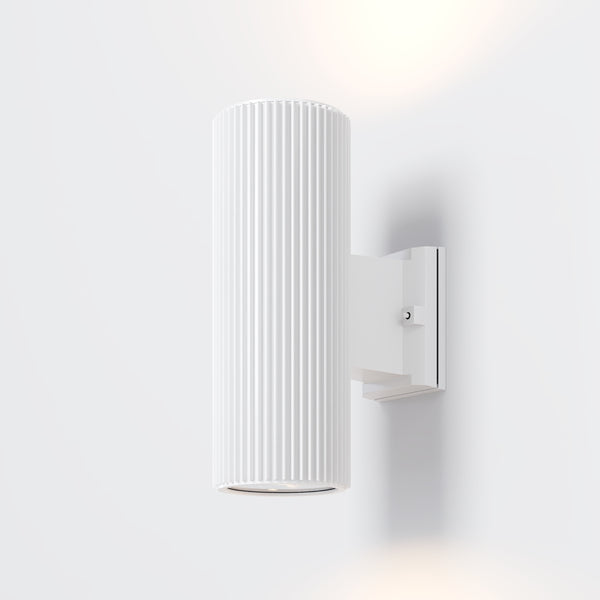
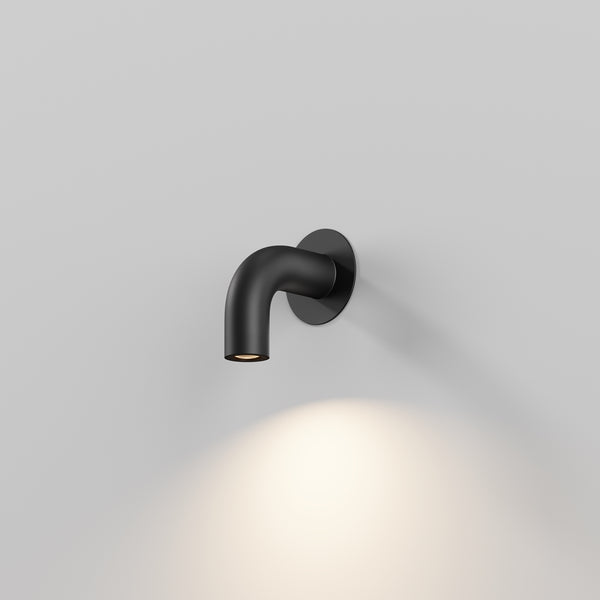
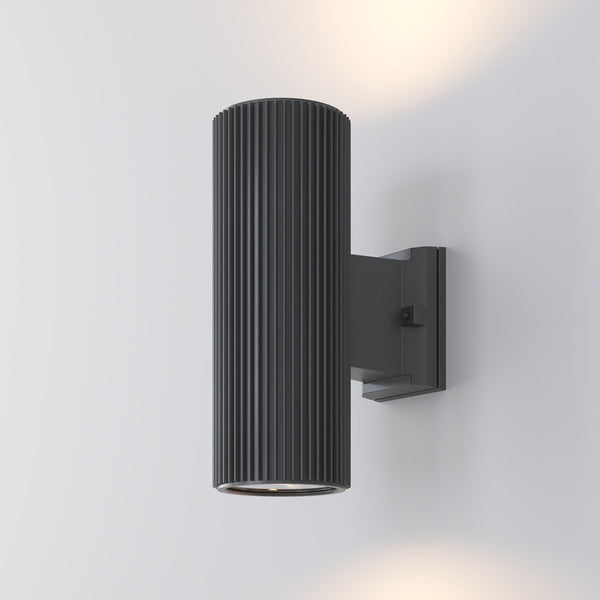
On recent render or a picture window, a fine, discreet profile works better than a wide fitting. ÉclatModerne, at 8 cm, and the models in the contemporary range blend in by day and draw a line of light in the evening. Tube and square shapes dominate in this family, with anthracite and grey finishes that merge into a dark wall.
Vintage, industrial and rustic: stone, brick and dark wood
On an old house, a metal grille or thick glass holds its own better against stone and brick. CharmeRétro, Hylo and ZenEclat echo these codes, with bronze or black finishes and rounded or cage shapes. The retro register remains an inspiration, though, not a period reproduction. The relative price of a model depends mainly on the material and the fineness of the profile, with exceptional pieces found among worked alloys and large dimensions.
To compare the shapes, materials and finishes on offer, browse the Designix lighting catalogue and its outdoor wall lights. Designix customer service answers questions on dimensions and sockets before you order.
Frequently asked questions
Can an outdoor wall light be installed in a living room or bedroom?
Yes for some models in this selection, also listed for the living room, bedroom, bathroom or entrance: this is the case for the Urbano Brillante wall light. Check the room line on the product page, as most models are intended for outdoor use only.
Which wall lights should you choose for a staircase?
For an outdoor staircase or a stairwell wall, a compact wall light directed towards the steps, in a square or tube format, is better. Space them regularly to avoid dark zones and keep the same model from one landing to the next: the light stays even.
Are there wooden outdoor wall lights?
This selection offers no wooden model: the wall lights are in metal, aluminium, glass, acrylic or iron. To recreate the warm effect of wood, pair a black or bronze finish with a warm white light between 2700 and 3500 K instead.
Which E27 bulb should you use in an outdoor wall light?
Choose an E27 bulb intended for outdoor use, at the light temperature you want: warm white around 2700 to 3500 K for an entrance, cooler for a path. The E27 models in the collection take a bulb you replace without changing the wall light.
Which model should you aim for in a high-end design outdoor wall light?
Look at pieces in aluminium and glass with fine lines, such as ÉclatModerne or Halo, which stay discreet on a contemporary facade. The level of the range comes down to the material, the fineness of the profile and the finish, gold, black or white, rather than the size of the fitting.