
Recessed outdoor spotlights
This selection is also available in our French store: Spots d exterieur encastrables




























- Tracked delivery to your country Tracked delivery
- Secure payment at checkout Multiple payment methods
- 14 days to change your mind 14-day returns
- Secure payment Secure payment
Not sure of your style? Find it in 30 seconds
A few questions, and we will show you the pieces made for you.
Frequently asked questions
How do I choose the right light output?
At what height should the light be installed?
What type of bulb?
Compatible with LEDs and dimmers?

Light changes everything
From statement chandeliers to discreet wall lights, we help you choose the right brightness, height and style for every room.
- Tracked delivery
- Pay in instalments, where available
- 14 days to change your mind
- Advice & showroom in Lyon, France
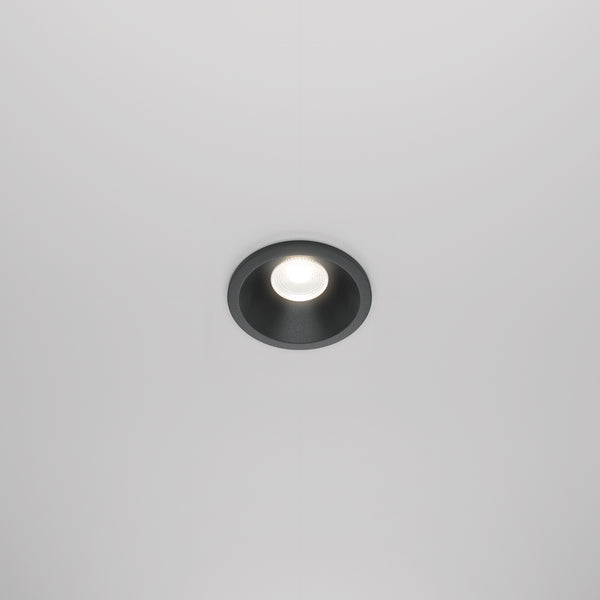
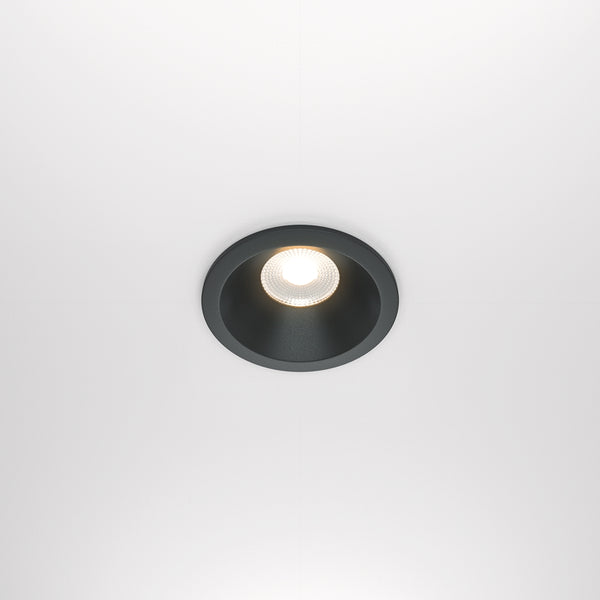
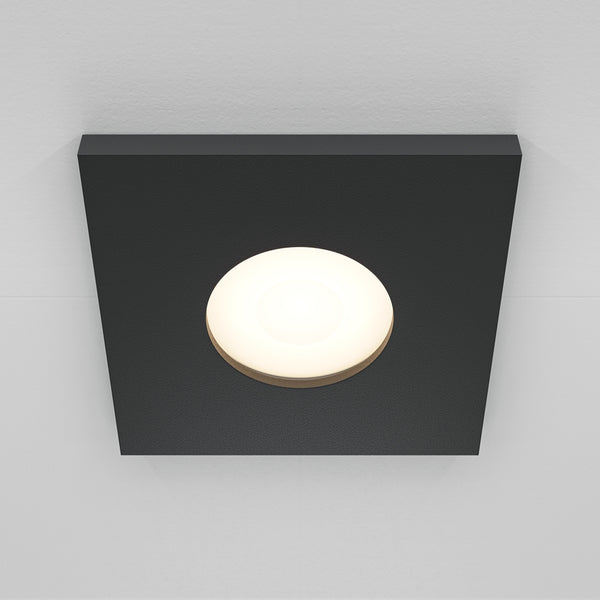
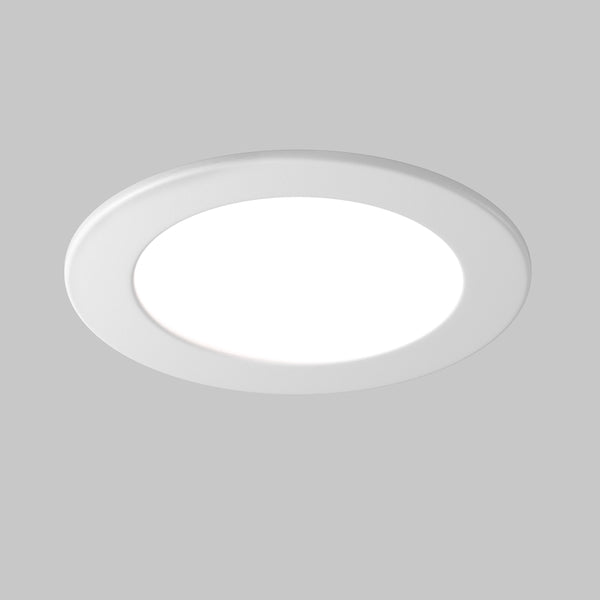
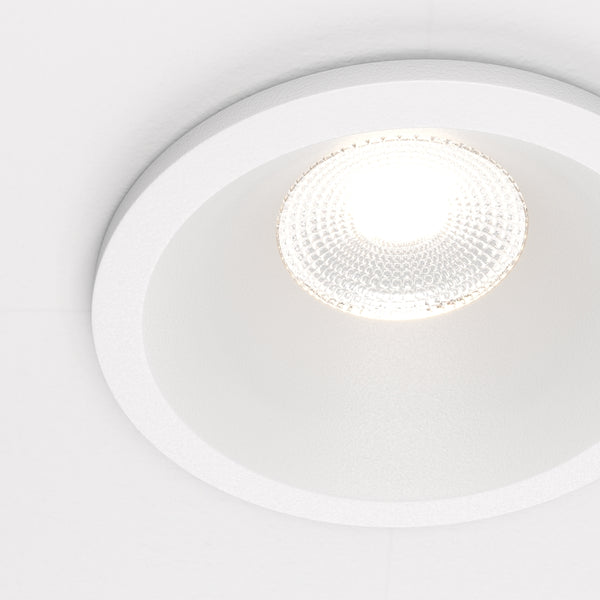
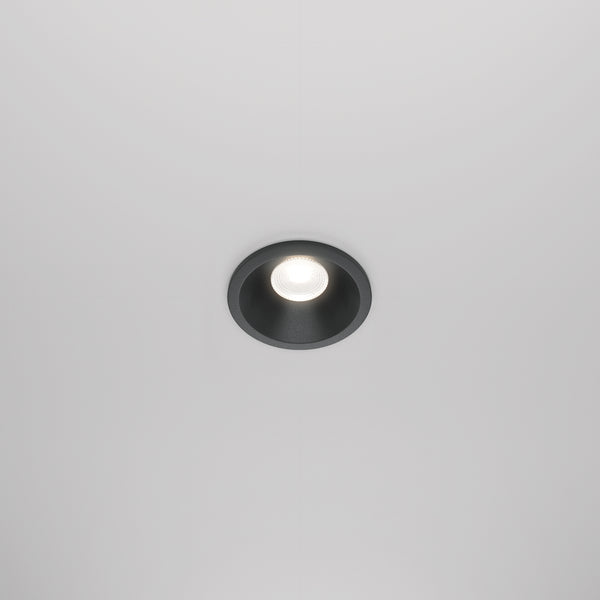
A recessed outdoor spotlight sinks into its mounting surface, whether ground, slab, deck board or wall, and casts directed light exactly where you decide. Choosing one comes down to three points: the location, which dictates the protection rating, the beam, which determines the effect, and the socket, which governs maintenance.
What is a recessed outdoor spotlight and what is it used for?
A recessed outdoor spotlight disappears into the material: ground, slab, deck board or wall. It usually lights at close range to trace a path, illuminate a walkway or highlight a wall, where a wall light would dazzle. Its outdoor version is recognisable by its sealed housing and its protection rating.
What are the different types of recessed spotlights?
There is the flush ground-recessed model, which marks out a path, the deck-board recessed model, the wall-mounted or facade-niche recessed model, and the border recessed model for beds. Models that light at close range avoid sending the beam into the eyes. Part of our lighting range is classified by installation type, which saves time when comparing.
Recessed outdoor spotlights for the garden
In the garden, the spotlight follows the paths: path edge, foot of a wall, edge of a bed. Aim it towards the ground or a trunk, never towards the terrace where people sit. A narrow beam marks a path, a wide wash lights a whole area. Also keep access to the recess: a housing surrounded by dense planting is hard to clean. To compare models designed for outdoors, the recessed outdoor LED spotlights selection groups sealed housings and standard sockets.
How to choose a recessed outdoor spotlight?
You choose first by location, then by light. For a ground or path, a sealed housing and a narrow beam are best; for a wooden terrace, a flush model that does not catch the foot. Then come voltage, socket, colour temperature and finish.
| Location | Type of recess | What matters most | Light required |
|---|---|---|---|
| Garden path or border | Ground-recessed, flush | Resistance to water and foot traffic | Narrow beam that marks the path |
| Wooden terrace | Recessed into the board | Fixing in the wood and sealing | Soft light that does not dazzle seating |
| Terrace or concrete slab | Recessed into the slab | Recess depth and water drainage | Even wash along walkways |
| Facade and low wall | Wall-mounted or niche-recessed | Adjustability and discreet housing | Highlighting the wall |
| Beds and planting | Border-recessed | Access for maintenance | Punctual pools of light |
Recessed outdoor spotlights for the ground
In the ground, water is the first enemy. Check the available recess depth before drilling, then plan drainage: a recess that holds water will eventually reach the seal. The housing must remain accessible without dismantling the whole paving. Dark models are less noticeable on dark paving, as the black finish selection shows.
Recessed outdoor spotlights for wooden terraces
On a wooden board, you want a flush model that does not protrude and does not catch a bare foot. The recess follows the direction of the boards to stay discreet. If running a cable to the terrace is complicated, solar spotlights with no wiring cover supplementary marking without a trench.
What is the standard for an outdoor spotlight and how do you read its data sheet?
The reference to check is the protection rating stated by the manufacturer, which describes the housing's resistance to dust and water, supplemented by the supply voltage and the material. This information appears on the product sheet: without it, it is better to choose another model for outdoor use.
How do you read the protection rating and voltage of an outdoor spotlight?
The protection rating is written in two digits: the first concerns solids, the second water. A spotlight set in damp grass does not have the same constraints as a model sheltered under a canopy. The voltage then indicates whether the luminaire connects directly to the circuit or goes through a transformer. The housing material and the presence of a seal complete the picture. Compare these lines between models before deciding, and look at the outdoor LED lighting as a starting point.
Do you need a transformer for a recessed spotlight?
It all depends on the model. Low voltage requires a transformer; a 230 V spotlight connects directly. If you are unsure, the question is settled at purchase, not after installation.
| Solution | What it involves at installation | When to choose it |
|---|---|---|
| Integrated LED | Nothing to replace, the unit is sealed by the manufacturer | When you want a uniform, sealed housing |
| GU10 socket | Bulb you change yourself, adjustable depending on the model | When you want to be able to change the colour temperature |
| GU5.3 low-voltage socket | Requires a transformer | When a transformer is already in place |
| E27 socket | Screw-in bulb in a larger format | When you want to choose a bulb suited to outdoor use |
| 230 V spotlight without transformer | Direct connection to the circuit | When you want to limit equipment in the circuit |
How do you wire spotlights in series or in parallel?
In series, the spotlights share the same supply and go out together if one fails. In parallel, each point remains independent and keeps the same voltage: this is the usual setup for several outdoor spotlights on one circuit. Wiring is done with the power off, in a water-protected junction box.
Can you wire several outdoor spotlights on the same circuit?
Yes, in parallel, provided you respect the total power allowed by the circuit, the cable cross-section and the upstream protection. These three points should be validated with an electrician: neither the cross-section nor the rating can be guessed from a product sheet. Also allow for the cable run between each recess before drilling, as this often determines the number of points.
How do you connect a recessed spotlight to the outdoor mains?
Switch off the power, pull out the conductors, identify live, neutral and earth, then connect in a waterproof junction box, never in damp open ground. The cable gland and the housing seal do the rest. For hard-to-reach points, adjustable LED models avoid having to reinstall if the beam falls badly.
What outdoor lighting should you choose alongside recessed spotlights?
Alongside a recessed spotlight, a wall light illuminates a wall and a passage area, a bollard marks a path, a solar spotlight avoids running a cable. Two functions are often combined: a low light on the ground for the path, a higher light for the facade or the table.
Which outdoor wall light for a terrace?
A wall light is mounted higher than eye level and does not dazzle guests: it is the natural complement to a recessed spotlight, which stays on the ground. Aim for a model whose light shines downwards, or up and down. Indoors, the same logic guides adjustable recessed spotlights in a hallway or entrance.
Which E27 bulb should you use outdoors?
An E27 bulb is suitable outdoors if the luminaire receiving it is itself designed for outdoor use: it is the housing, with its protection rating, that protects the bulb. Then choose the colour temperature according to use.
| Temperature | Effect | Where to use it |
|---|---|---|
| Warm white (2700 to 3000 K) | Soft, golden light | Terrace, garden, residential facade |
| Neutral white (3500 to 4000 K) | Whiter, crisper light | Path, entrance, circulation areas |
| Cool white (above 5000 K) | Very white light, technical effect | Walkways to light without cast shadow |
Another choice concerns the installation itself: check the recess depth and cut-out diameter before ordering, as this is what prevents a return. Adjustable outdoor spotlights offer that margin of adjustment when the surface is already drilled.
How many spotlights should you plan and how should you lay them out?
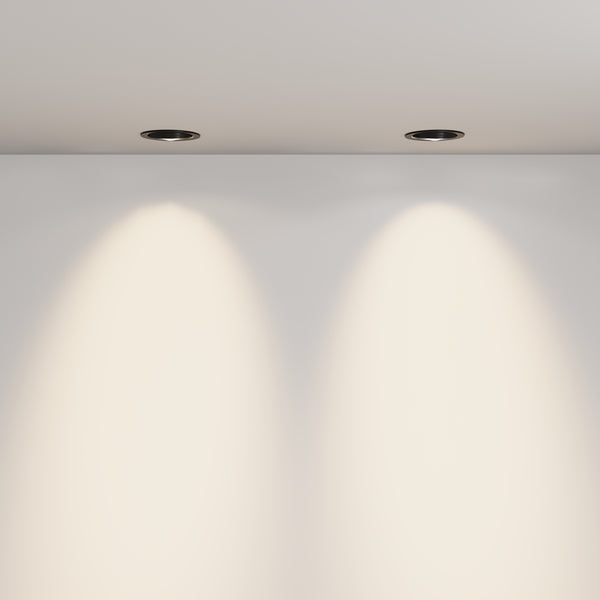
First count your points to light: a path is marked at intervals, a terrace is lit by zones rather than a continuous wash. Too many close spotlights create patches, too few leave black holes. A just number of well-directed beams is better than a regular row.
How many spotlights in a kitchen?
The number depends on the surface area, ceiling height and work zones. Generally, one point above each useful zone, worktop and sink, rather than a regular grid. A kitchen often needs several sources, including under-cabinet lighting. The recessed kitchen lighting selection gathers models suited to these worktops.
How should you arrange spotlights on the ceiling?
First place them on the areas to be lit: worktop, passage, table. Then check that they do not end up behind you or in your eyes when you work. Regular spacing avoids patches and shadow zones. In a living room, recessed spotlights for the living room combine with supplementary light rather than replacing it.
Finishes, materials and adjustable models: how do you match spotlights to the facade?
White to disappear on a light render, black to blend into a dark wall or dark joinery, gold for an old facade: the finish is chosen based on the surface, not the catalogue. An adjustable model is justified when the recess point cannot aim correctly first time.
Recessed outdoor spotlights in white
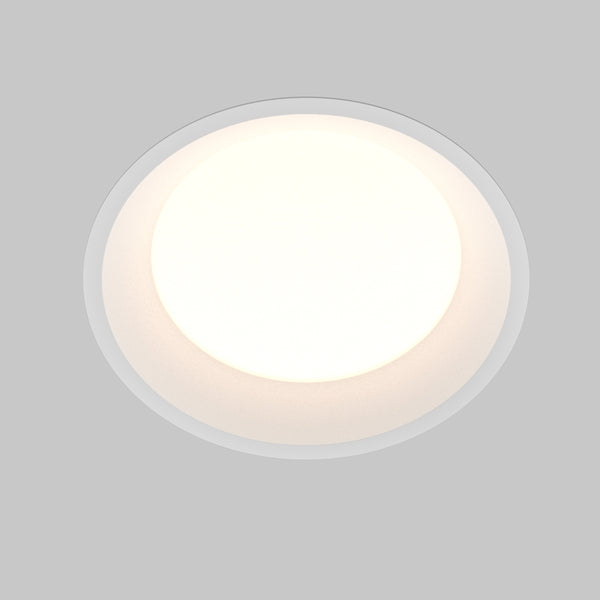
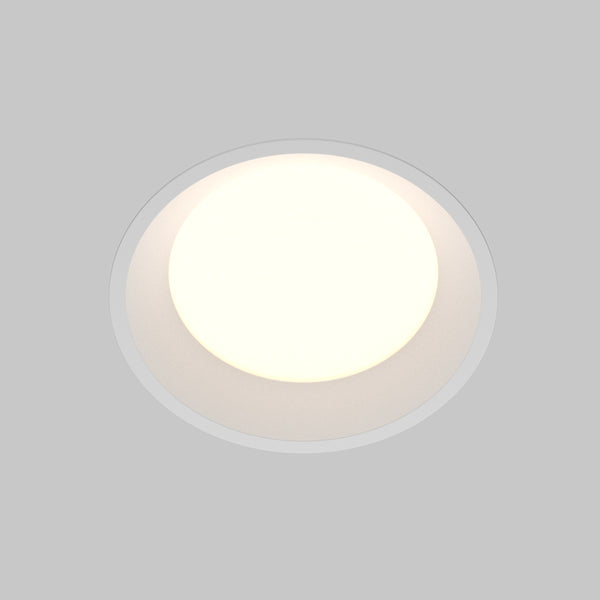
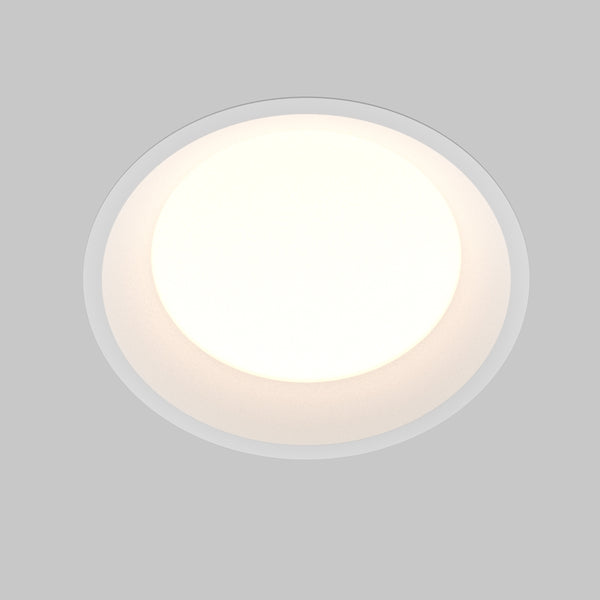
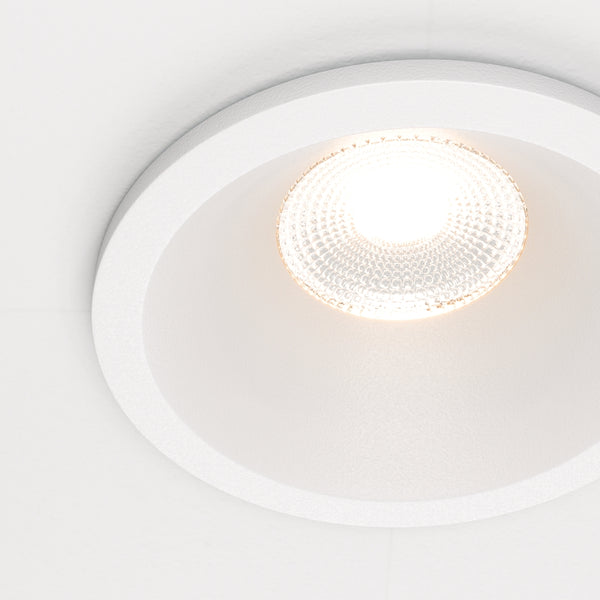
On a light render or limewashed wall, a white housing is barely visible: it is the choice that keeps the light visible and the hardware invisible. Look at the white outdoor spotlights if you want that disappearance, and the white finishes to compare housing shapes.
Recessed outdoor spotlights in black
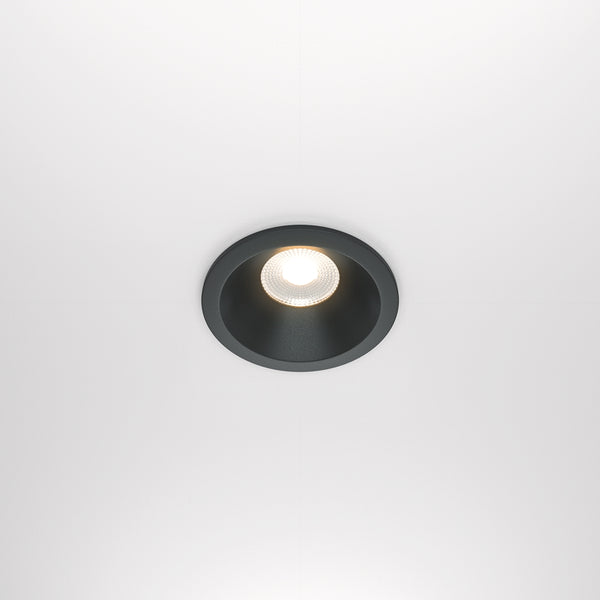
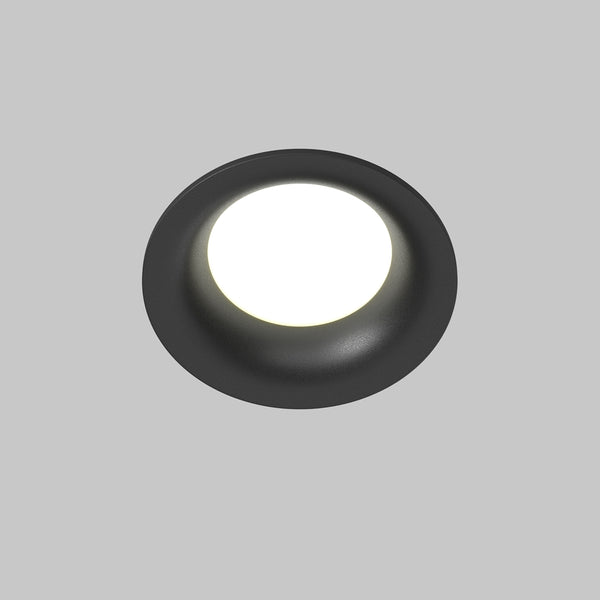
On a dark facade, dark wood cladding or anthracite joinery, black blends better than white, which stands out. A dark housing heats up more in the sun, which matters on an exposed slab. Also compare the Designix lighting range if you want to match the spotlights with other luminaires in the house.
How do you maintain an outdoor spotlight and make its LED last?
An outdoor housing is kept clean with a soft cloth and a little water; the seal and the drainage around the recess are checked from time to time. An LED heats up less than a conventional bulb and lasts longer, provided it is not enclosed without ventilation and the intended voltage is respected.
How do you change a recessed spotlight without clips?
Some housings are removed from the front, others from the back: identify the fixing method before forcing anything. Switch off the power, free the bulb or module, test the new one before refitting the seal. If the housing is sealed and the LED is integrated, the whole unit is replaced.
What is the lifespan of a recessed LED spotlight?
The lifespan stated by the manufacturer is on the product sheet. It assumes correct installation: ventilated housing, voltage respected, no standing water around the recess. The environment matters as much as the reference chosen.
Frequently asked questions about recessed outdoor spotlights
What are the drawbacks of LED lamps?
An LED cannot always be replaced when integrated into the luminaire, it dislikes heat in a sealed housing, and some cannot be used on a dimmer. Its lifespan therefore depends mainly on the installation hosting it, and less on the quality of the bulb alone.
Why do my LED bulbs burn out often?
Three causes recur: a sealed luminaire that does not let heat escape, an unsuitable power supply or transformer, and moisture reaching the socket. Check the bulb's compatibility with the luminaire and the protection rating before blaming the bulb itself.
What is the most efficient outdoor lighting?
Efficiency is judged on three points: the LED, which uses little power for the light produced, the direction of the beam, which avoids lighting the sky, and suitability to the location. A well-directed recessed spotlight lights better than a more powerful source in the wrong place.
Where can I find a recessed LED spotlight for outdoor use?
In the outdoor lighting collections of a lighting retailer, where models are classified by use, finish and installation type. Look for the recessed mention, then check the protection rating and voltage on the product sheet before confirming your basket.
Which E27 bulb should you use outdoors?
An E27 bulb is suitable outdoors if the luminaire receiving it is itself designed for outdoor use: it is the housing, with its protection rating, that protects the bulb. Then choose the colour temperature according to use, warm white for a terrace, more neutral for an entrance.
Order from Designix
Secure payment, tracked delivery, returns and Designix customer service: you order the right model, and if the recess does not match, you can come back to it. Before confirming, check three lines on the sheet: protection rating, voltage, cut-out diameter. For an old facade, also take a look at the gold finish that matches light stone.




