
Outdoor spotlight
This selection is also available in our French store: Spot extérieur
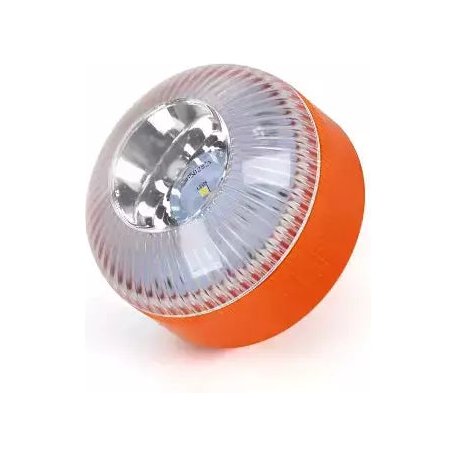
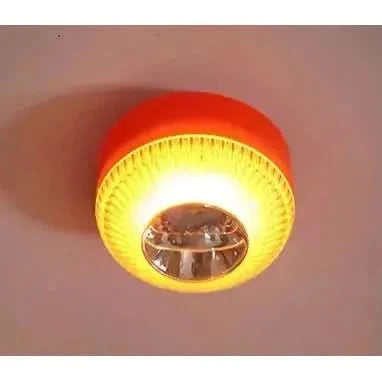

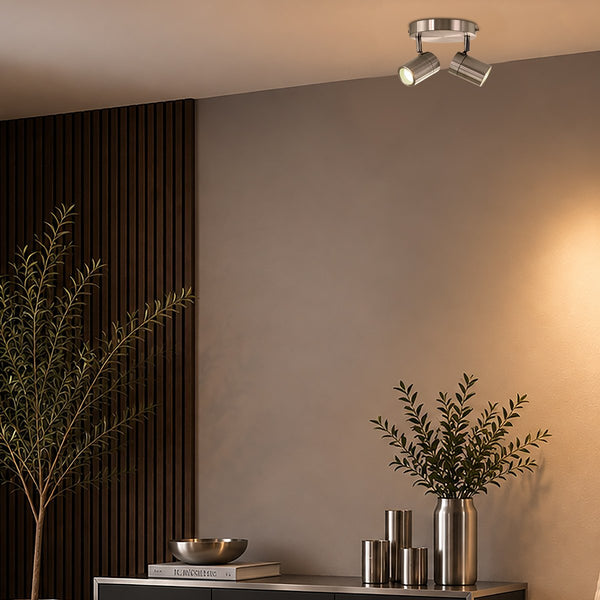
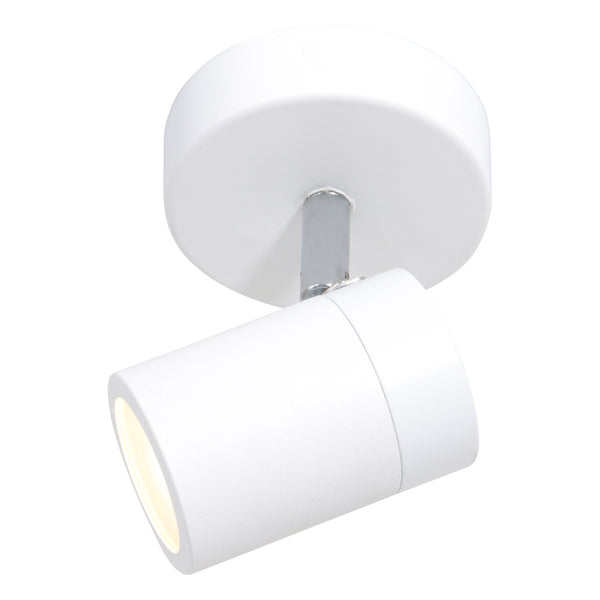
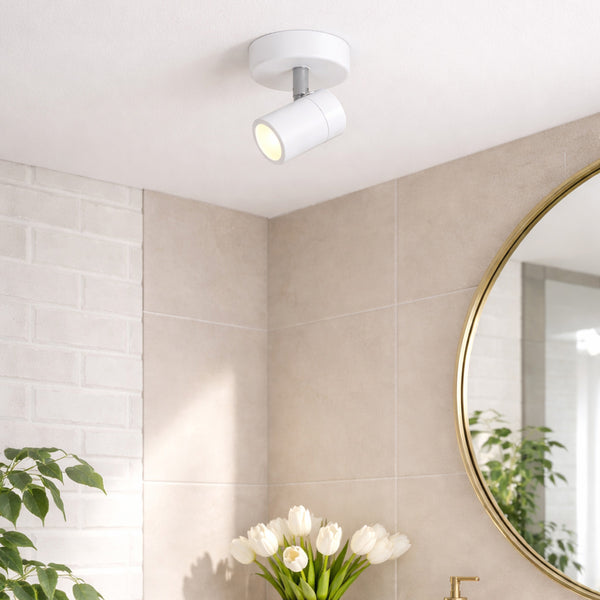


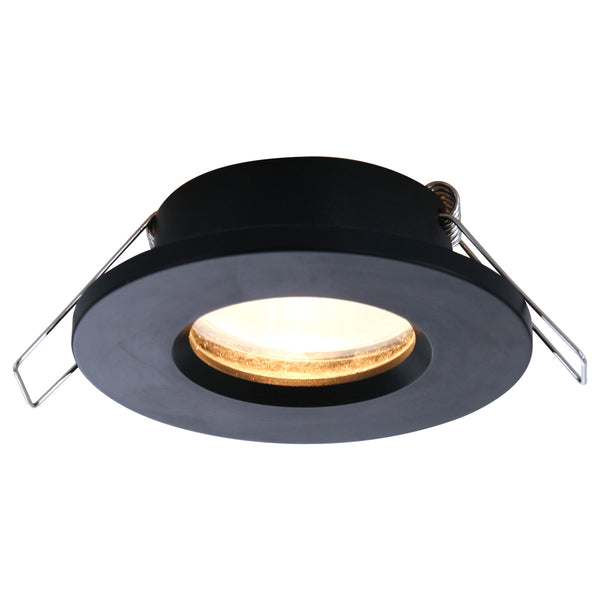
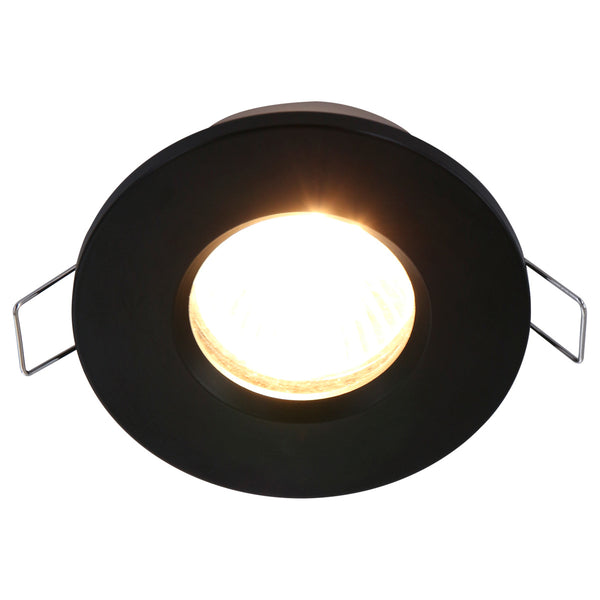


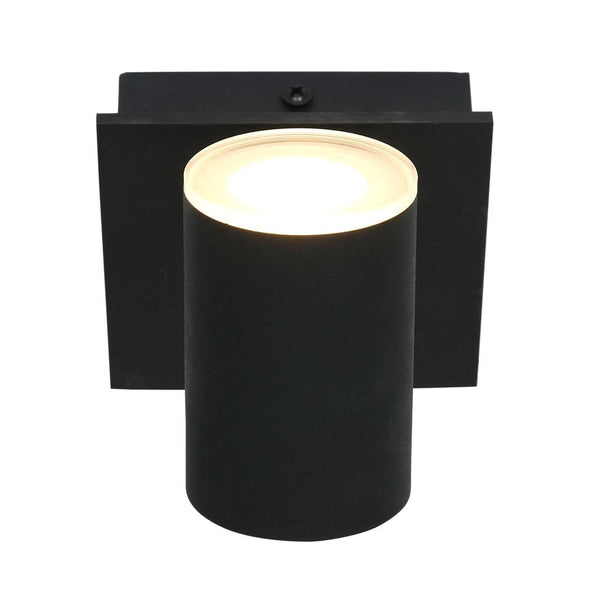
































- Tracked delivery to your country Tracked delivery
- Secure payment at checkout Multiple payment methods
- 14 days to change your mind 14-day returns
- Secure payment Secure payment
Not sure of your style? Find it in 30 seconds
A few questions, and we will show you the pieces made for you.
Frequently asked questions
How do I choose the right light output?
At what height should the light be installed?
What type of bulb?
Compatible with LEDs and dimmers?
Light changes everything
From statement chandeliers to discreet wall lights, we help you choose the right brightness, height and style for every room.
- Tracked delivery
- Pay in instalments, where available
- 14 days to change your mind
- Advice & showroom in Lyon, France
Start by identifying what you want to light, then the possible fixing on site: a spike spotlight in a flowerbed, a recessed ground model, a wall-mounted version on a facade, a floodlight for an entire courtyard. The zone decides the type of spotlight, never the other way around.
Which outdoor spotlight to choose depending on the zone to light?
The choice depends on the zone: a spike spotlight is planted in a flowerbed or lawn, a recessed ground model is set into paving, a wall spotlight lights a facade or a path, a floodlight covers a larger surface. First identify what you want to light, then the possible fixing.
Recessed and waterproof outdoor spotlight: when to choose it?
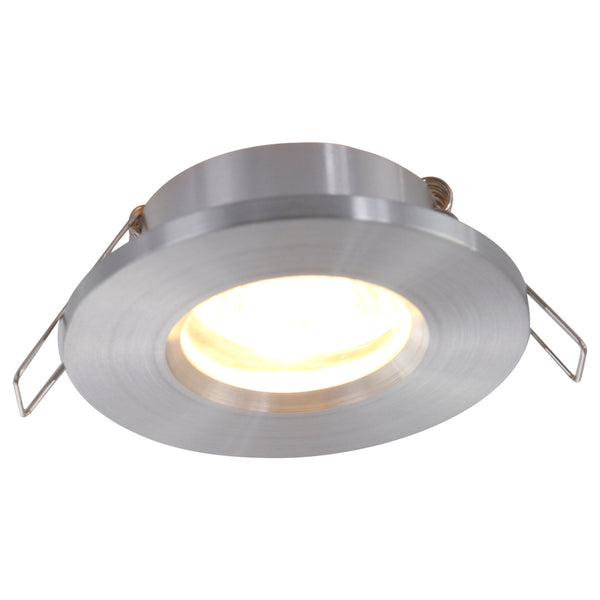
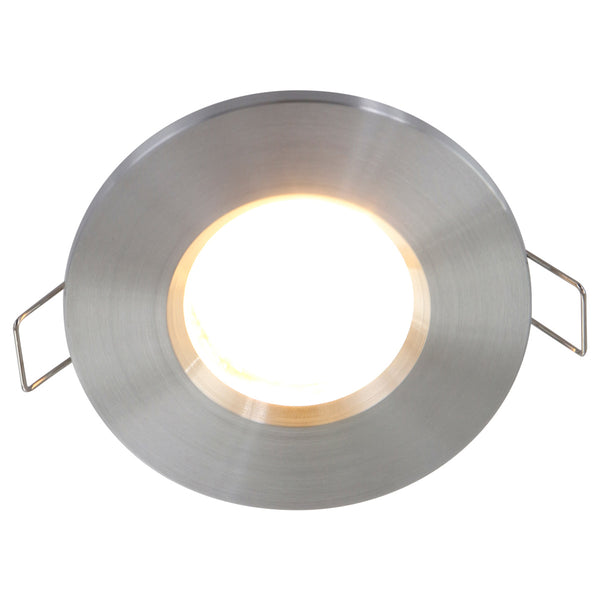
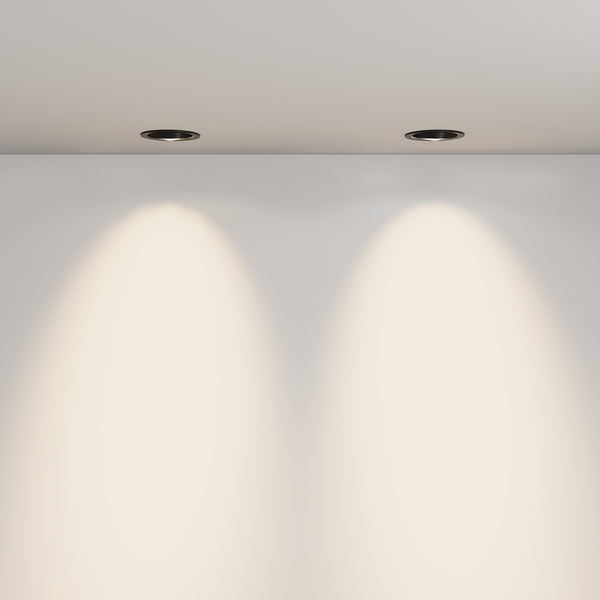
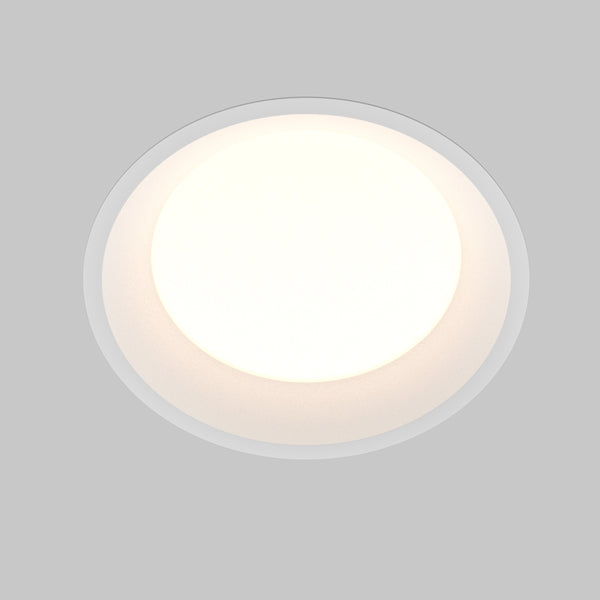
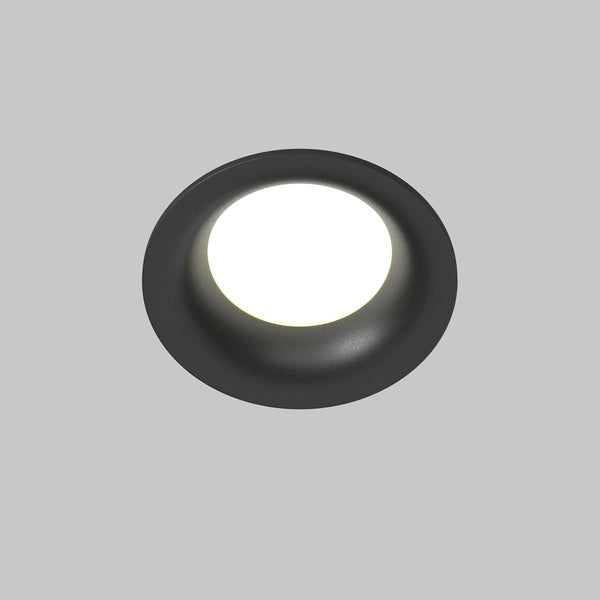
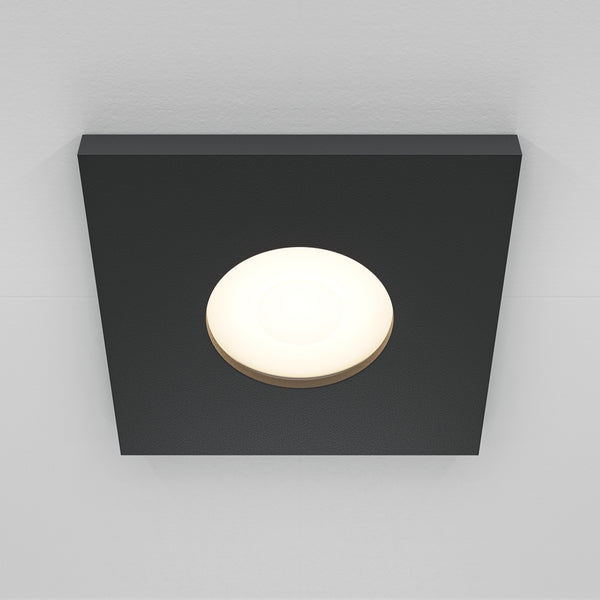
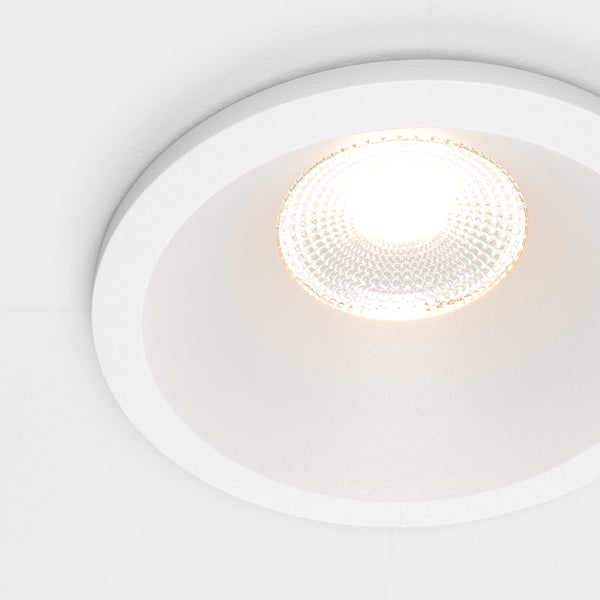
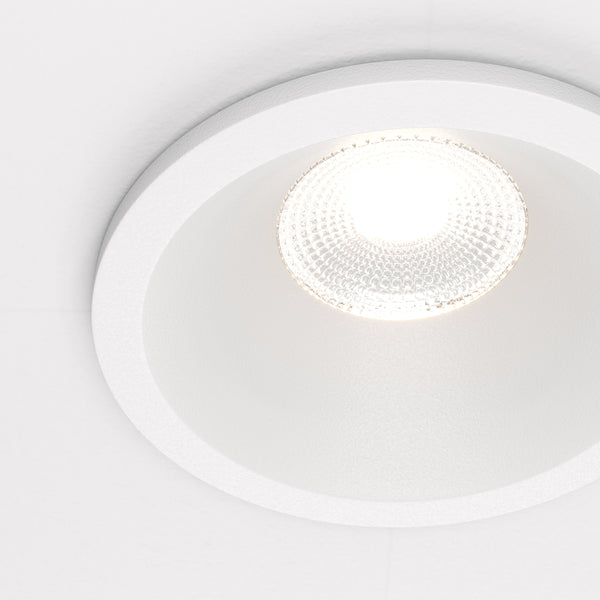
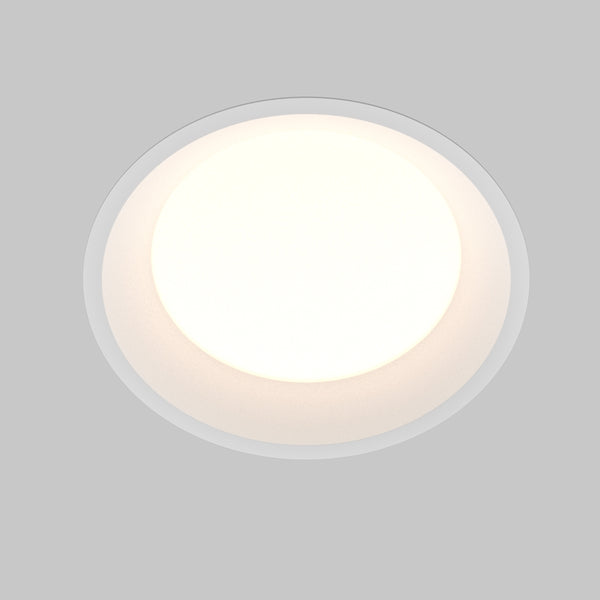
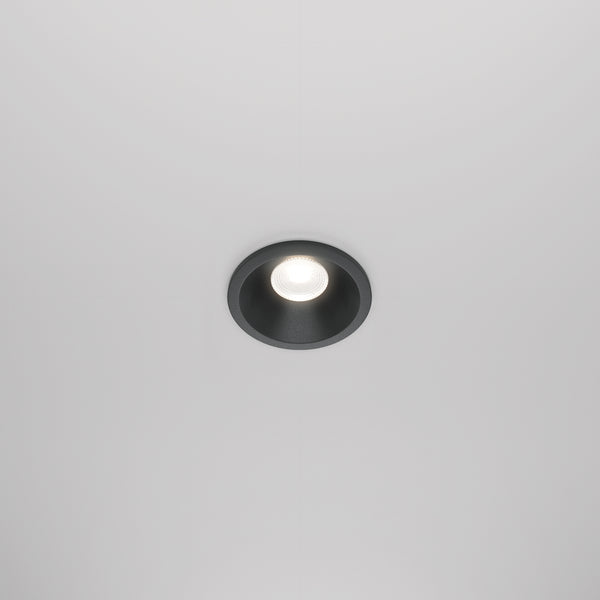
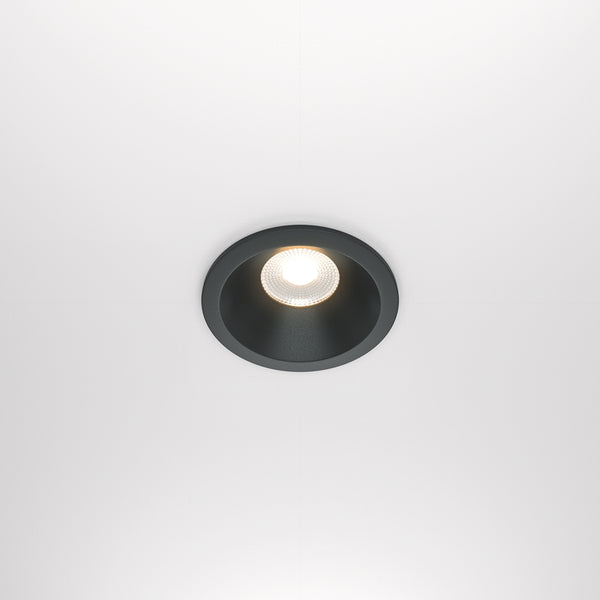
It is recessed when the ground must stay clean: terrace paving, stair step, top of a low wall, pool edge. Set flush, it disappears during the day and highlights a wall or a trunk in the evening. Water is the sensitive point: the housing must drain splashes, and the protection rating must match the real exposure, around IP65 for ground that receives rain and cleaning. Our recessed spotlights come in ground and wall versions, and the recessed LED spotlight version avoids going back to a bulb that needs changing.
Spike outdoor spotlight or floodlight: what is the difference?
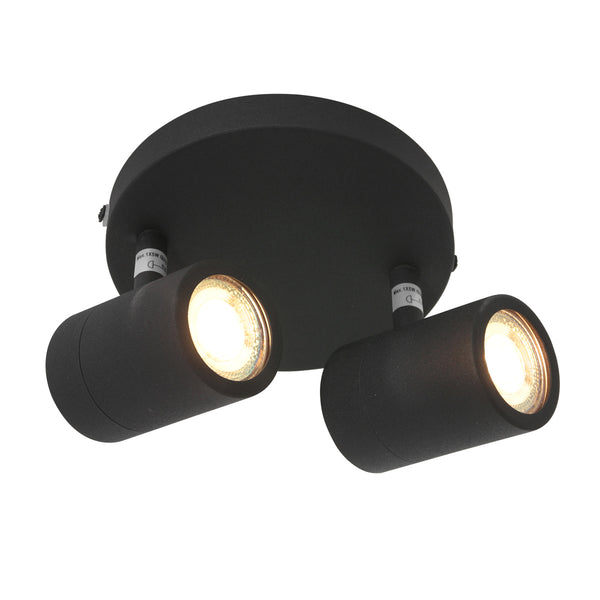
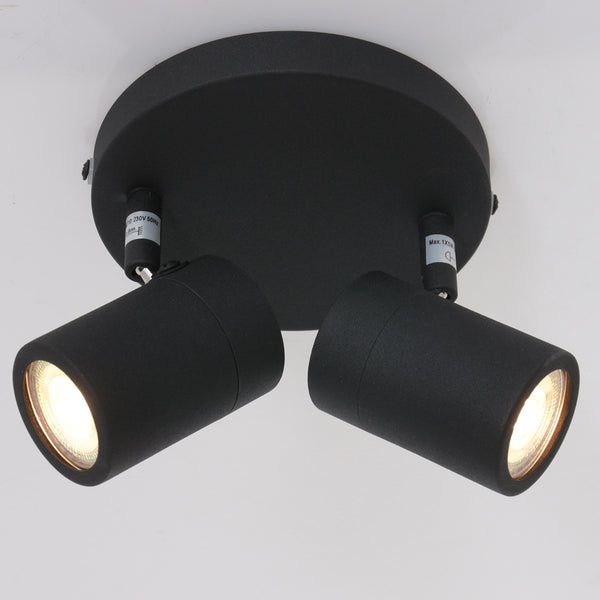
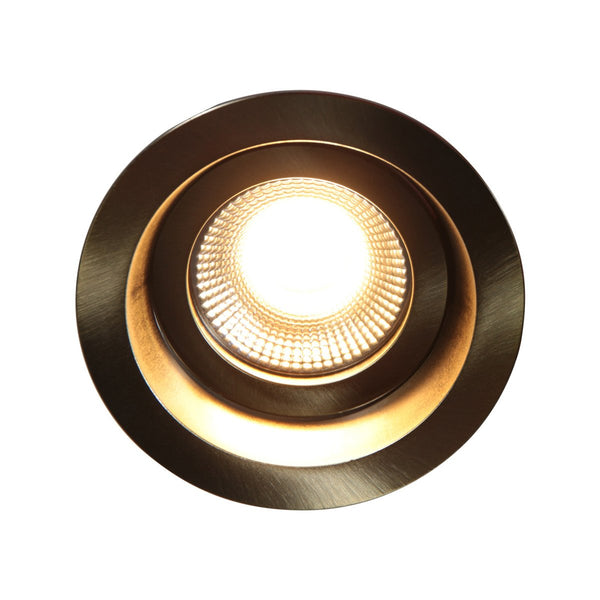
The spike spotlight isolates a subject: a shrub, a border, a statue. The floodlight lights an entire surface, courtyard, wide path, parking area, and also serves on the way in at night. The trap is the same for both: badly aimed, it dazzles. Aim it down or toward the wall, never toward the eyes of someone walking. An adjustable model, like the adjustable spotlights, can be corrected in a second after installation.
| Type of spotlight | Where to place it | What it lights | To check before buying |
|---|---|---|---|
| Spike spotlight | Flowerbed, lawn, path edge | A shrub, a low wall, a plant | Hold in loose soil and beam orientation |
| Recessed ground spotlight | Paving, terrace, path | A wall, a step, a trunk | Waterproofing and water drainage |
| Wall spotlight or wall light | Facade, terrace wall, entrance | A section of wall, a door, a passage | Mounting height and beam width |
| Floodlight | Courtyard, large surface, parking area | An entire movement zone | Risk of glare and orientation adjustment |
| Solar spotlight | Zone without electrical supply | A path, a border, an entrance | Panel sunlight exposure and available brightness |
| Spotlight with sensor | Entrance, path, wall corner | A passage on approach | Sensor range and time delay |
What is the most efficient outdoor lighting?
The most efficient is the one that delivers the desired light with the least consumption and that withstands outdoor conditions: an LED spotlight, placed in the right spot and aimed to avoid glare. In a zone without electrical supply, a well-exposed solar model does the job all year round.
LED outdoor spotlight: what it changes day to day
An LED has no fragile filament: it takes vibrations, temperature variations and humidity without weakening, and its light stays stable over repeated switch-ons. The real gain lies in consumption, but also in the precision of the beam: you light a shrub precisely without flooding the garden. A model with a replaceable source proves more flexible, an integrated LED model more compact. The choice depends mainly on the exposure of your facade and your white outdoor spotlights or dark ones.
Solar outdoor spotlight: when does it become the right choice?
It becomes obvious where running a cable is expensive or damages an already planted garden: at the bottom of a lawn, along a hedge, on an isolated gate. The condition is simple, the panel must see the sun for several hours a day. It is used as marking and as a supplement, rarely as the main source for a dining area. Our solar garden lighting and solar-powered LED spotlights cover both uses.
How many lumens are needed to light an outdoor area?
There is no single number: everything depends on the surface, the mounting height and the desired effect. Path marking is satisfied with discreet light, a facade or a dining area needs more light. Better an adjustable spotlight than a model that is too strong and dazzles.
Marking a path or lighting a facade: two different needs
On a path, the aim is to see where you put your foot, not to turn the garden into a stadium: little light, directed toward the ground. On a facade, the aim is on the contrary to bring out the material of the wall, to draw relief. These are two opposite settings, and often two different fixtures on the same installation. In general, a warm light around 2700 to 3000 K suits a terrace, while a circulation passage tolerates a more neutral tone.
Why a wide beam and a narrow beam are not placed in the same spot
A wide beam covers a living area, a dining corner, a large movement surface, but it also lights what you do not want to show. A narrow beam sculpts a detail, a trunk, a basin, a section of wall, and requires precise adjustment. The two are combined: wide for circulation, narrow for highlighting. The GU10 socket spotlights allow you to change the angle while keeping the fixture.
How to arrange ceiling spotlights and at what distance?
Spotlights are arranged from the useful zones, not at random: a regular alignment along a passage, crossed beams on a facade or wall, a constant spacing on the ceiling to cover the room without creating dark zones or overly marked spots.
Living room ceiling spotlight layout: how to distribute the light points
In a living room, the living room ceiling spotlight layout is thought out from the sofa, not from the ladder: the points are distributed on the periphery or in a square around the living area, aiming them toward the walls, rather than aligning them just above the seats. The light bounces off the walls, the atmosphere stays soft and no one has glare in their eyes. The same logic applies outside, on a terrace wall. See the ceiling spotlights and the living room spotlights for this distribution.
Ceiling spotlight distance: which rule to remember
The useful rule is not a fixed dimension but a principle: a regular gap between the points and a distance to the wall roughly equal to the ceiling height divided by two. Beams that cross smooth the light, beams that are too far apart leave black holes. The orientation is then adjusted before closing up. A model compatible with a dimmer, like the dimmer-compatible spotlights, makes this adjustment more comfortable in the evening.
| Use | Distribution of points | Orientation | Trap to avoid |
|---|---|---|---|
| Path or lane | Regular points on one side or alternating | Toward the ground, narrow beam | Dazzling the person walking |
| Facade or terrace wall | Crossed points along the wall | Grazing upward or downward | Spots too close together and redundant |
| Outdoor dining corner | Periphery of the terrace, not above the table | Wide and diffuse beam | Shadow cast on the table |
| Flowerbed or tree | Two spotlights for the same subject | One from the front, one from the side | Lighting from the front without relief |
| Entrance or gate | One fixed point and one sensor point | Toward the passage and the ground | Sensor triggering constantly |
| Indoor, living room ceiling | Square or periphery around the living area | Toward the walls rather than downward | Aligning spotlights above the sofa |
Solar outdoor spotlight, motion sensor or wireless: which to choose?
Solar suits zones without electrical supply, provided the panel receives daylight. The sensor equips an entrance or a passage on approach. A battery or cable-free spotlight avoids running a line in an already finished wall or an established garden.
Outdoor spotlight with motion sensor: where it really serves
It does not serve to light continuously but to switch on at the right moment: entrance, wall corner, garage ramp, garden corridor. It is placed so as to sweep the passage, not the street, otherwise it triggers with every passer-by. The range and the time delay are set on the device, and a fixed point beside it avoids walking in the dark when detection stops.
Wireless outdoor spotlight: how to power it and where to fix it
Without a cable, the power comes from a battery recharged by a small photovoltaic panel, or from a battery that you bring inside. It is fixed as a wall light on a sheltered facade, or spiked into a flowerbed, with the panel facing south if possible. It serves as marking and as a supplement. For light that must last a long time, it is better to look at connected LED outdoor spotlights.
How to install and wire an outdoor spotlight?
The support is prepared before any connection: drilling, cable routing, waterproof seal around the fixture. The connection is made with the power off, with a link protected from humidity. A recessed spotlight is installed in a suitable housing, a surface-mounted model is fixed directly to the wall or on a mounting box.
Parallel spotlight wiring: how to proceed
Several points are connected in parallel on the same supply: each receives the live and neutral from the common line, without passing through the previous one. A single switch then controls the whole set, which simplifies control of a path or a facade. The power is cut at the panel, the conductors are identified, and each outdoor junction is protected from water with a suitable box. A badly insulated connection is the first cause of failure on an outdoor installation.
Preparing the support of an outdoor spotlight before fixing it
The position is marked, it is checked that no pipe runs through, drilling is done to the right dimensions, then the fixture is presented before tightening. On a recessed ground model, it is checked that water can flow under the housing. On a wall light, the mounting box is aligned so that the body presses well against the wall, otherwise humidity seeps in through the gap.
How to change the bulb of a recessed or adjustable spotlight?
On a spotlight with a bulb, the power is cut, the ring or the cover is removed, the bulb is unclipped and a bulb of the same base is put back, without exceeding the wattage indicated on the fixture. On a model with integrated LED, it is the module or the fixture that is replaced.
Changing the bulb of a recessed ceiling spotlight
The power is cut at the breaker, the spotlight is brought down from its housing by pressing the springs, then the connector is unplugged. On a model with a bulb, the source is replaced with a model of the same base. On a model with integrated LED, the block is sealed: an identical module is put back. The same applies to bathroom spotlights, where any abrasive product on the cover is avoided.
Changing the bulb of an adjustable spotlight or a bathroom spotlight
An adjustable one unscrews or unclips more easily if it is first aimed downward. The base is noted before buying a replacement: an outdoor bulb must be designed for humidity and for outdoor use or use in a wet room. A bulb of the same maximum wattage as indicated on the device is put back, then the ring is closed without forcing.
How to match the outdoor lighting of the living room and the terrace?
When the living room opens onto the terrace, a light close to that of the interior is kept to avoid a break: soft lighting on the periphery of the terrace, spotlights aimed toward the wall rather than toward the eyes, and a wall light on the exterior wall to extend the room in the evening.
Ceiling spotlight and terrace spotlight: what continuity of light
Two atmospheres that are too contrasting on either side of the bay are avoided: a warm tone outside, close to that of the living room, and a more neutral tone only on circulation zones. The transition from the room to the garden must happen without a visible break. The living room LED lighting and the contemporary design spotlights make it possible to maintain this consistency across both spaces.
Outdoor wall light on a terrace: where to place it
It is placed at eye level, neither too high nor flush with the ground, and aimed downward or toward the wall to obtain indirect light. It draws a section of wall and serves as a landmark without lighting the table. Combined with a spike spotlight in a nearby flowerbed, it gives relief to the whole. For a softer result in the evening, a model on dimmable LED spotlights is adjusted according to the moment.
How to choose an outdoor spotlight: the criteria that matter
Four criteria decide, in this order: the possible fixing on the zone, the protection rating suited to the exposure, the material of the body and the color of the housing for the facade, then the beam orientation. The budget depends mainly on the material and on whether the source is replaceable or not.
What the spotlight changes in a courtyard or on a facade
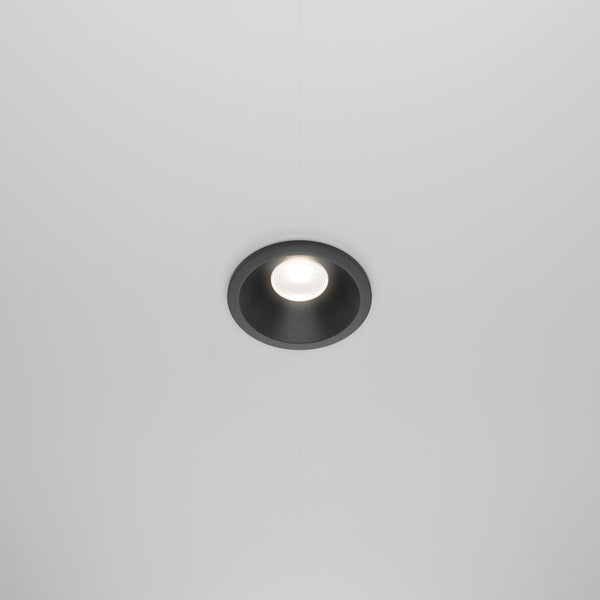
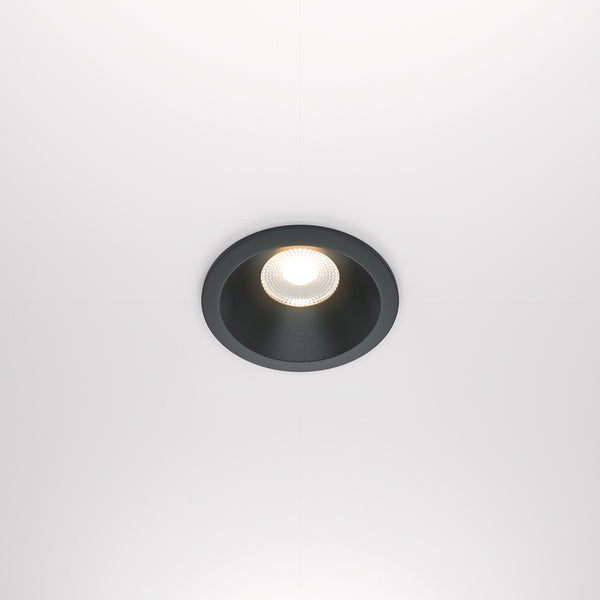
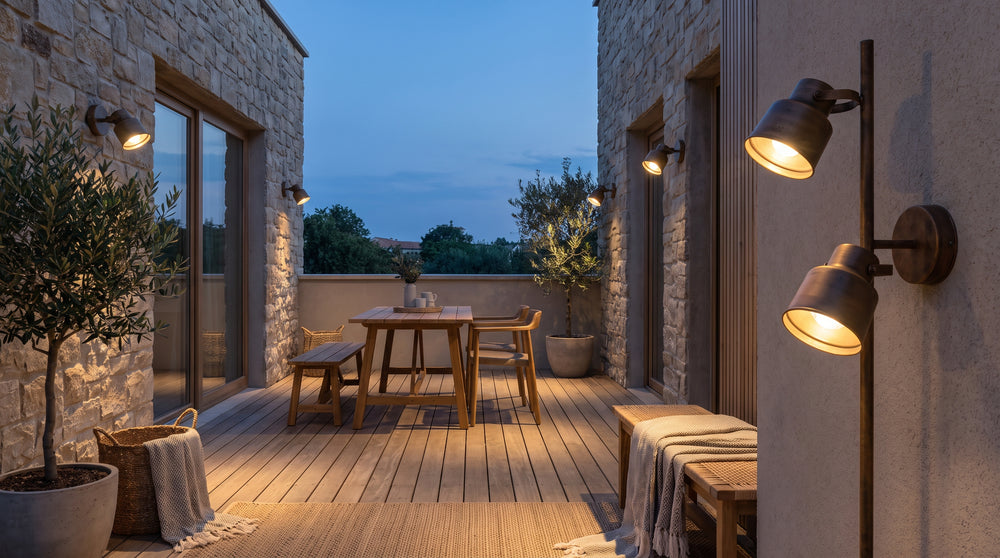
A well-placed spotlight transforms a courtyard into an outdoor room: it draws the relief of the wall, highlights a tree, accompanies a staircase, and secures a passage without flooding it with light. That is what is seen first. A model matching the facade, white on light render, black on stone or dark wood, disappears into the decor. See the black models for dark facades for this discreet work.
Material, color and protection rating: what holds up outside
Aluminium resists corrosion and suits exposed facades, including in salt air. Stainless steel holds up in damp zones and busy passages, powder-coated steel comes in black or white, tempered glass diffuses without dazzling. The protection rating must follow the real exposure: water splashes for a sheltered wall, possible immersion for a terrace floor. In addition, our entire range of fixtures and our whole lighting catalogue cover both indoor and outdoor.
To go further, browse our range of spotlights and the full range of our fixtures to match terrace, path and living room. Secure payment, tracked delivery, returns and Designix customer service support you from choice to installation.
Frequently asked questions about the outdoor spotlight
Which E27 bulb for outdoor use?
An E27 base bulb intended for outdoor use must be designed for humidity and suited to the fixture that houses it. A warm light is chosen for a terrace and a more neutral one to secure an entrance, without exceeding the wattage indicated on the spotlight.
How to wire spotlights in parallel?
Several spotlights are connected in parallel on the same supply: each point receives the live and neutral from the common line, without passing through the previous one. A switch then controls the whole set. The connection is made with the power off, with a link protected from water.
How to change a recessed LED ceiling spotlight?
On a recessed spotlight with integrated LED, a bulb is not replaced: the fixture is taken out of its housing, the connector is unplugged, then an identical module is put back. On a model with a bulb, the bulb of the same base is simply replaced.
Which ceiling spotlight layout for a living room?
In a living room, aligning spotlights above the sofa is avoided: better to distribute them on the periphery or in a square around the living area, aiming them toward the walls. The light becomes even and does not dazzle when seated.
How to change the bulb of a recessed bathroom spotlight?
The power is cut, the ring or the cover of the spotlight is removed, the bulb is unclipped, then a bulb of the same base and the same maximum wattage is put back before closing. A soft cloth is enough for the cover, without abrasive product.




