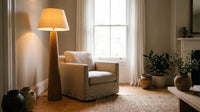
Metal spotlights
- Tracked delivery to your country Tracked delivery
- Secure payment at checkout Multiple payment methods
- 14 days to change your mind 14-day returns
- Secure payment Secure payment


Not sure of your style? Find it in 30 seconds
A few questions, and we will show you the pieces made for you.


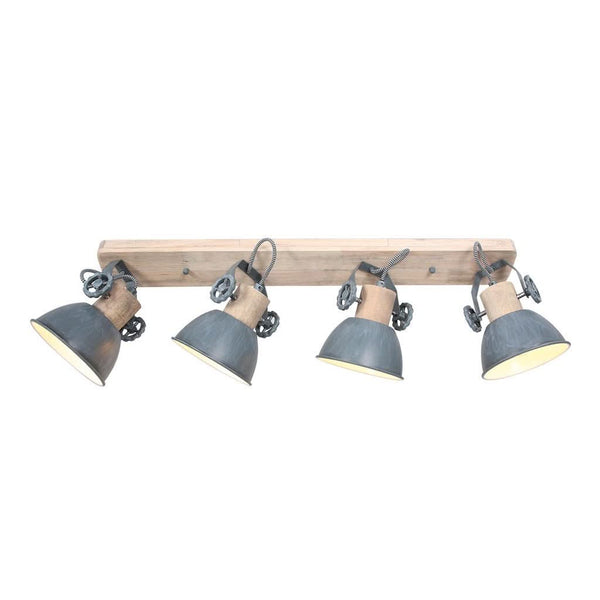
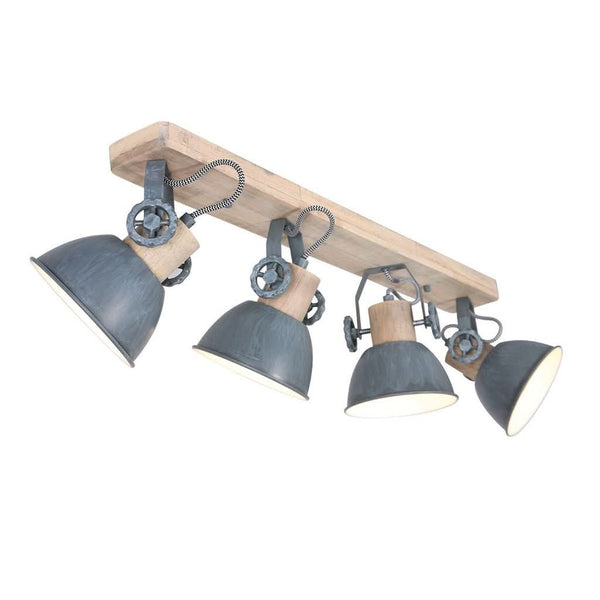


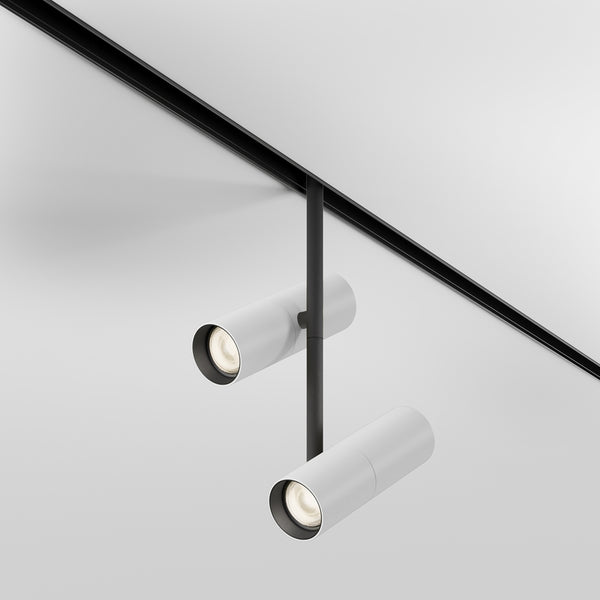












Frequently asked questions
How do I choose the right light output?
At what height should the light be installed?
What type of bulb?
Compatible with LEDs and dimmers?
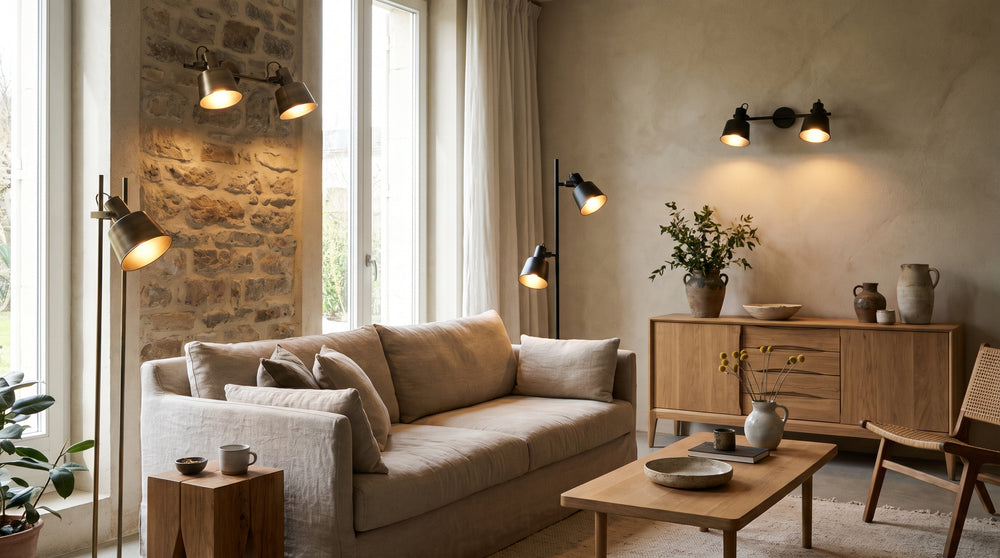
Light changes everything
From statement chandeliers to discreet wall lights, we help you choose the right brightness, height and style for every room.
- Tracked delivery
- Pay in instalments, where available
- 14 days to change your mind
- Advice & showroom in Lyon, France
Start by measuring your ceiling height and looking at your furniture: a low ceiling calls for a discreet recessed spotlight, a wall you want to highlight calls for an adjustable track spotlight. This collection brings together metal spotlights for the living room, hallway, kitchen, entrance and dressing room, mostly in black or white aluminium, with integrated LED, GU10 or E27 sockets.
What are the different types of metal spotlights?
The collection includes ceiling, track and surface-mounted spotlights, with a clear majority of recessed models. Aluminium dominates, complemented by metal and wood on some models. Shapes are mostly round or tubular, in black or white, with GU10, E27 sockets or integrated LEDs.
Recessed, track or surface-mounted spotlight: what are the differences?
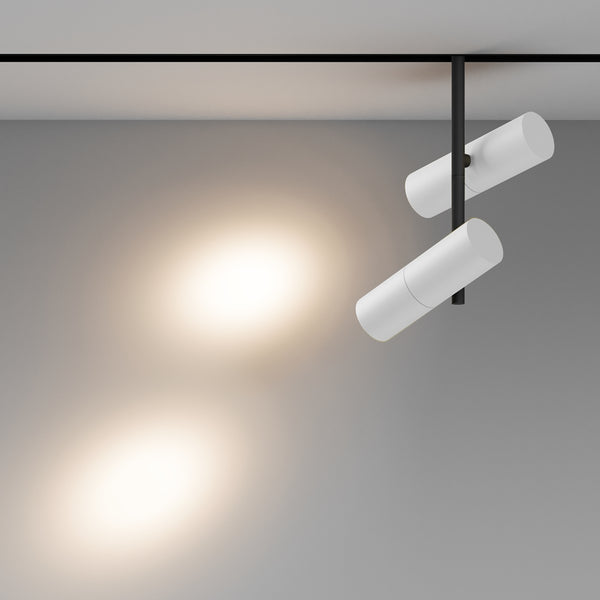
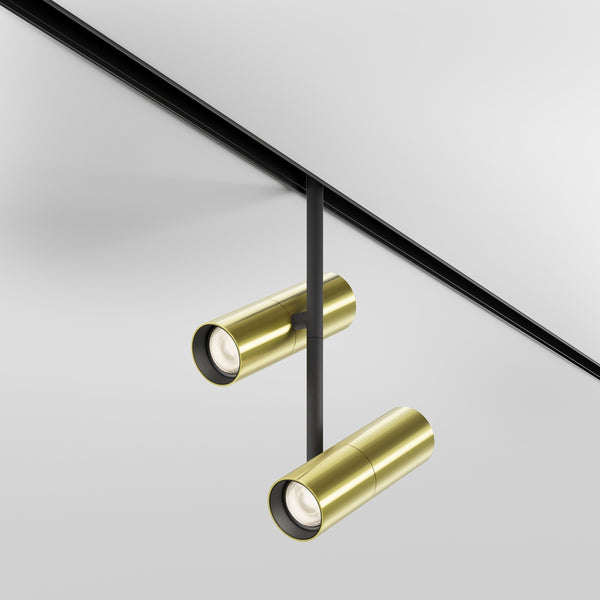
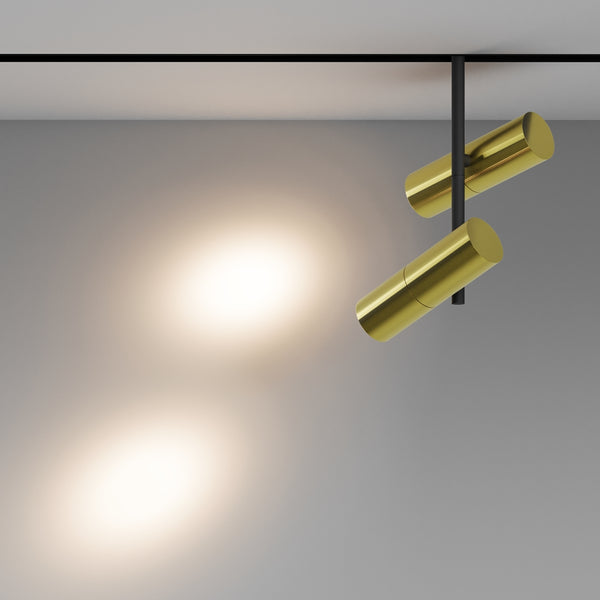
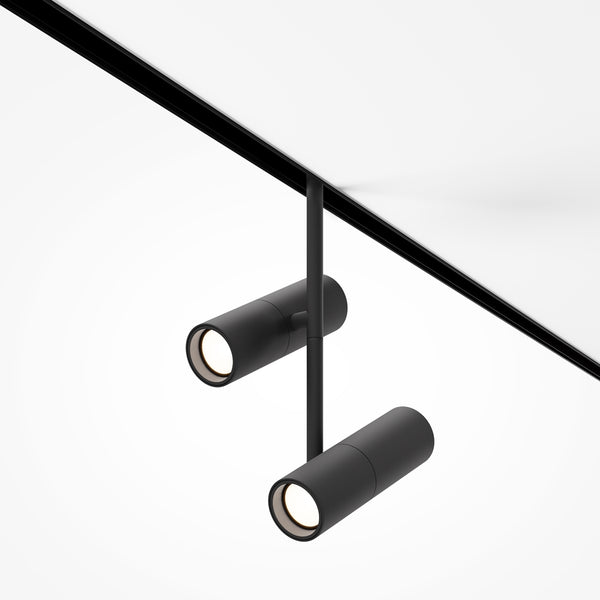
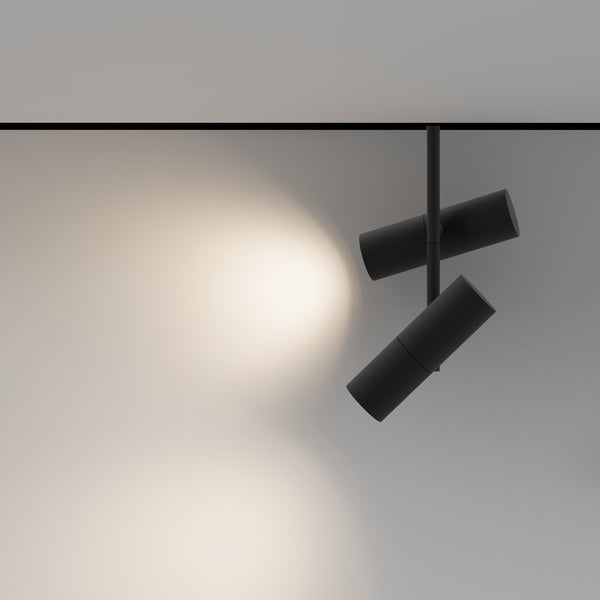
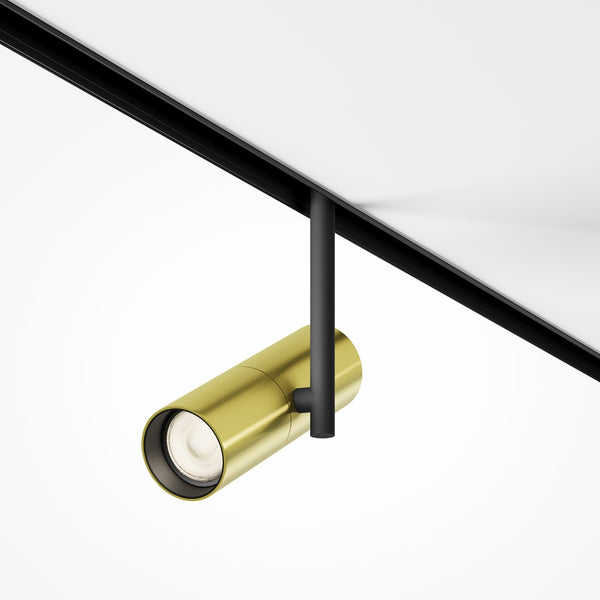
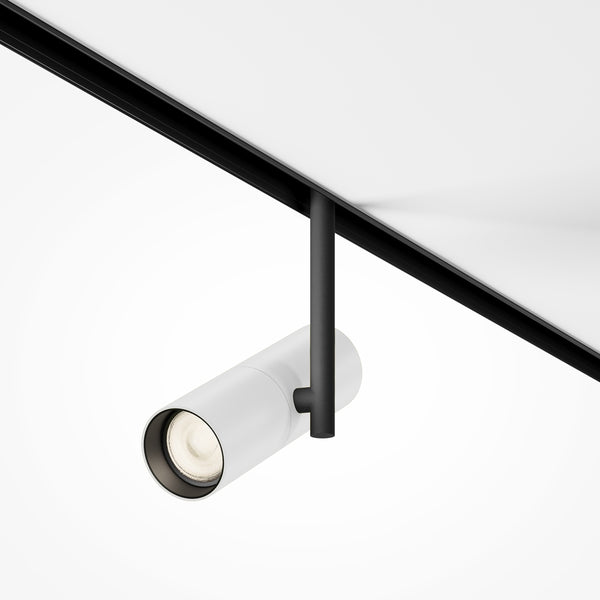
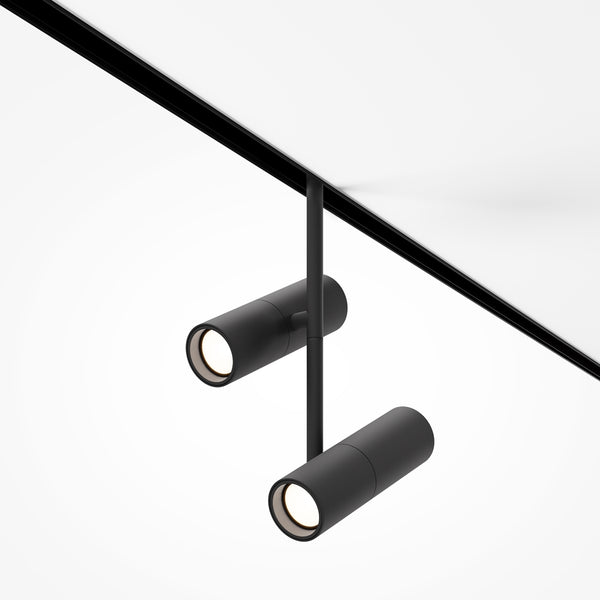
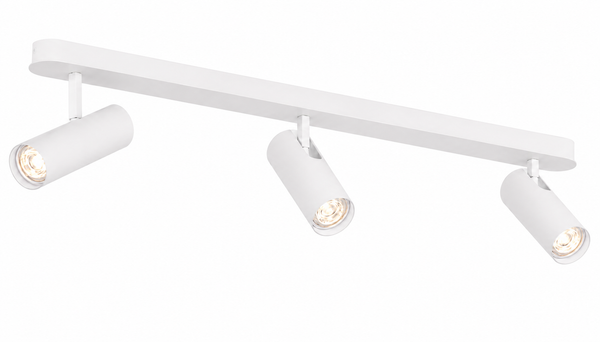
A recessed spotlight sits flush in the ceiling and disappears: the Mirka recessed spotlight measures 12.6 cm square and takes a GU10 bulb. A track spotlight mounts on a base plate and leaves the heads visible and movable, like the Rayline duo, in aluminium, 24 W. Surface-mounted models go up when the ceiling cannot be recessed: this is the format for rooms where you do not want to cut a void, like the Soressa with its round base plate. To compare these families, browse adjustable recessed spotlights.
The price of a spotlight ranges from 14.9 EUR to 189.9 EUR depending on the model.Why choose an adjustable spotlight rather than a fixed one?
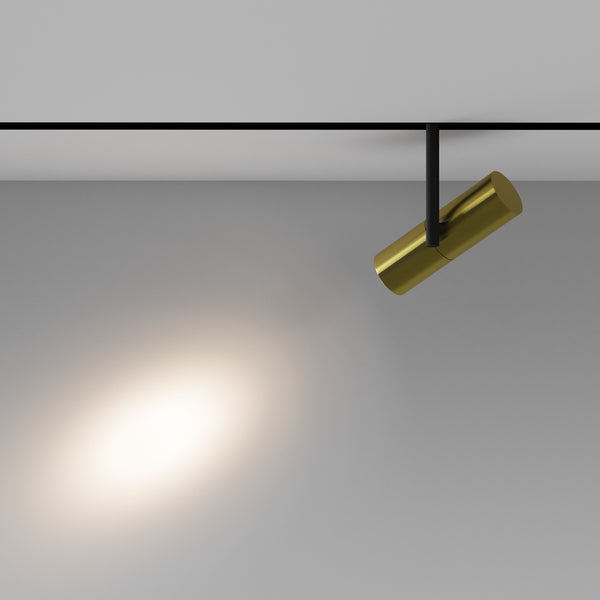
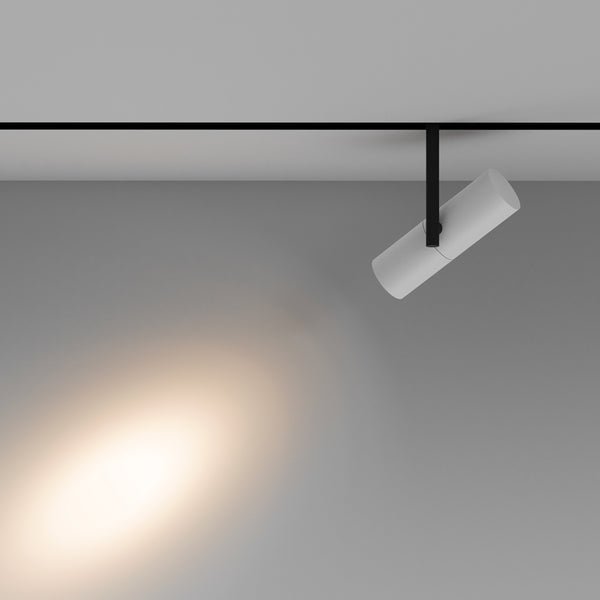
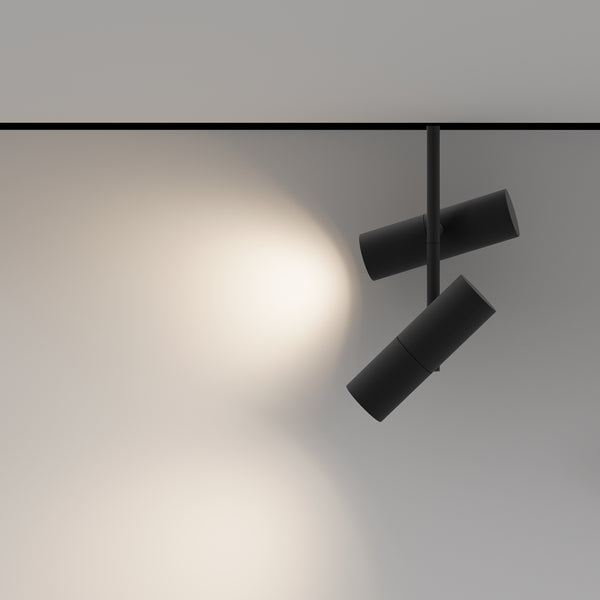
A fixed spotlight gives an even, discreet wash of light, handy for lighting a passage without thinking about it. An adjustable spotlight turns towards a wall, a shelf or a worktop without moving the fitting. That is the case with the Baguor duo and the Iralto, 12 W and dimmer compatible. Find these models in aim the beam where you want it.
| Socket | What it means | Wattages found |
|---|---|---|
| Integrated LED | Slim, bright unit, bulb not replaceable | 10 W and 12 W |
| GU10 | Replaceable bulb, small-diameter spotlight | 10 W |
| E27 | Standard replaceable bulb, larger source | 40 W and 40 W max |
| Dimmer-compatible models | Adjustable brightness on some models | 12 W and 24 W |
| Warranty | 5 years on most of the selection, 2 years on the rest | Depending on the model |
Which metal spotlight should you choose for a living room?
For a living room, the choice comes down to ceiling height and use: recessed for a diffuse, discreet light, track-mounted when you want to aim the beam at a wall or a piece of furniture. Black and white make up most of the selection.
Which colour is ideal for living room lighting?
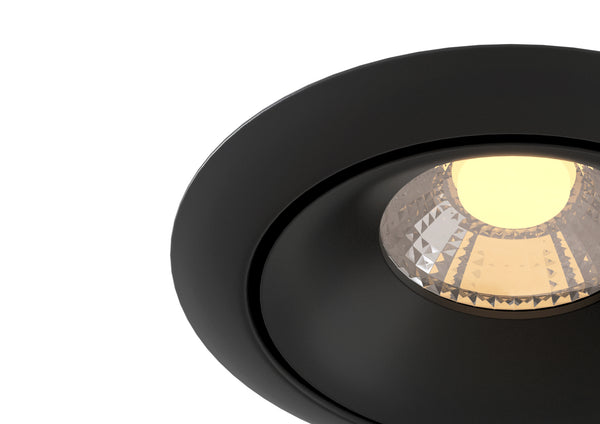
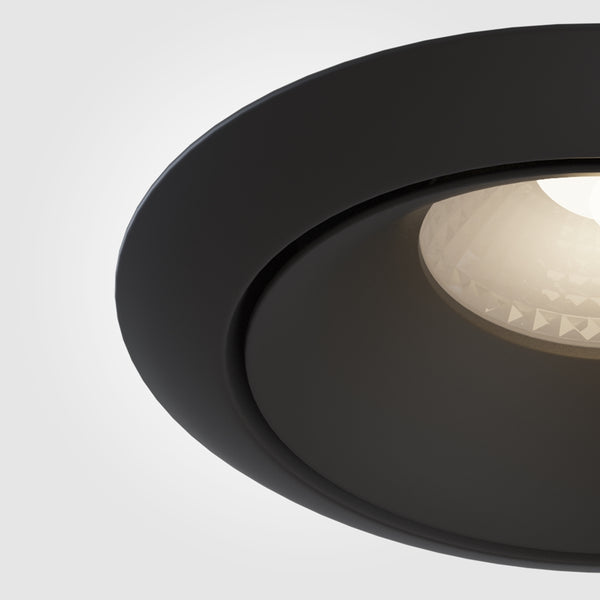
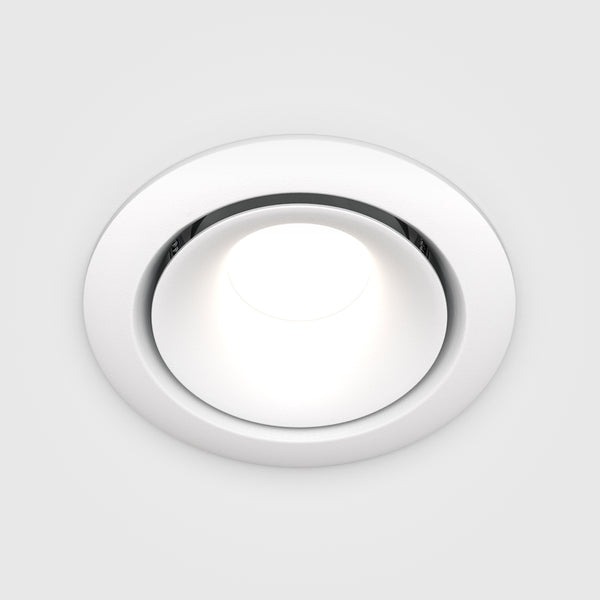
On a white ceiling, a white or cream spotlight disappears and lets the room breathe: the Orbi, a round model with a faceted lens 9.8 cm in diameter, is the typical case. A black spotlight instead draws sharp points on the ceiling and matches dark joinery: see the Luno and its ridged diffuser. To decide, compare black spotlights for dark ceilings and white spotlights that blend into the ceiling.
Living room spotlight: integrated LED or replaceable bulb?
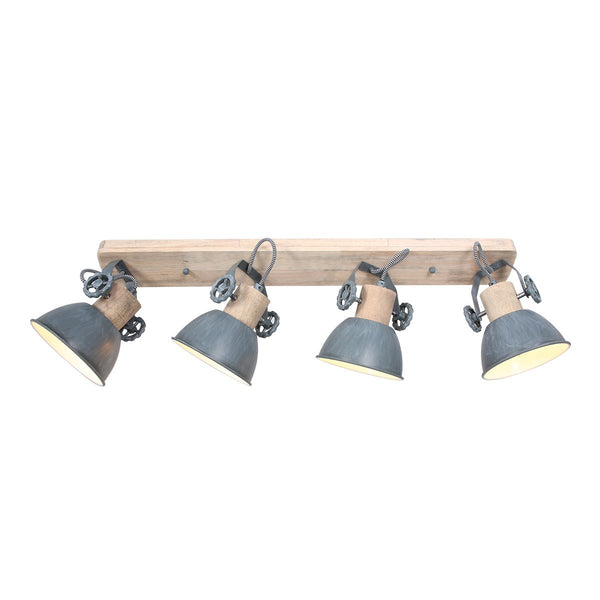
Integrated LED gives a slimmer unit, with no bulb sticking out, but it cannot be replaced. A GU10 or E27 socket, on the other hand, lets you change the source and the light temperature whenever you like. The Tarsicio illustrates the first case at 10 W, the Luciara duo the second with its E27 socket and wood and metal body. Go further with LED living room lighting.
How should you arrange spotlights on the ceiling?
Spotlights are arranged according to furniture and walkways: line the lights up along the paths, space adjustable models apart to wash a wall, and avoid placing a spotlight behind a seated person. The collection is mostly IP20, so designed for dry rooms.
Where should you place spotlights in a living room?
Line them up with living zones rather than the geometry of the room: one row in front of the bookcase, another above the sofa on the reading side. Keep symmetry when the spotlights stay visible, the eye quickly spots a gap. Space two lights far enough apart to avoid a double bright spot on the floor, and prefer an adjustable model above a tall piece of furniture. See a modern, clean look and recessed living room spotlights.
How do you light a long hallway with few light points?
In a hallway, the light should guide you towards the next room: line the spotlights up along the path and tighten the spacing at the ends rather than in the middle. A model with a directed beam does the job with fewer points than a diffusing ceiling light. The square Mirka at 12.6 cm suits this type of walkway. Compare with our hallway selection.
Where should you install a metal spotlight in the home?
The metal spotlights in the selection are aimed first at the living room, then the hallway and kitchen; some are also available for the entrance and dressing room. Most are IP20, for dry rooms. A small number are IP65, the protection suited to areas exposed to moisture or splashes.
IP20 or IP65 spotlight: which should you choose?
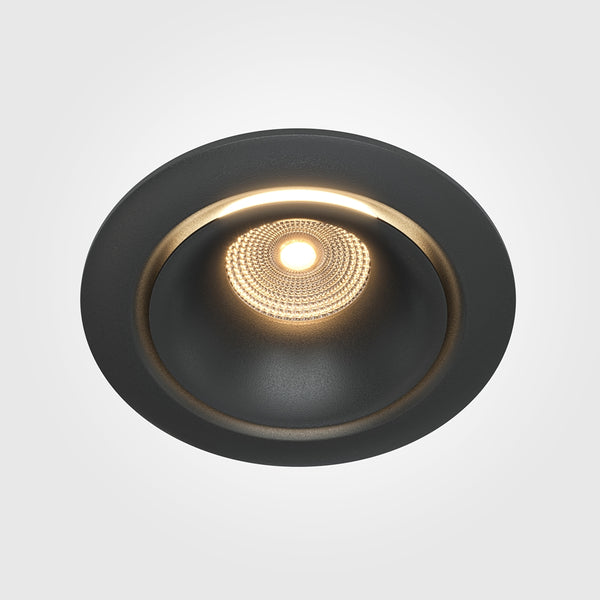
IP20 suits dry rooms: living room, hallway, bedroom, dressing room, kitchen outside splash zones. IP65 adds resistance to dust and water jets, useful near a shower or an exposed sink. The Cervo, a black GU10 recessed spotlight 8.4 cm across, is the IP65-rated model in the collection. Check the rating on each product page.
Which spotlight above a kitchen worktop?
Above a worktop, you need to aim at the surface without dazzling the person cooking: an adjustable track spotlight placed in front of the worktop, tilted towards the back, limits the shadows cast by hands. A beam that is too wide lights the cabinets rather than the worktop. See lighting a kitchen worktop and modern kitchen spotlights.
| Room | Preferred mounting type | IP rating found | Dominant colours and style |
|---|---|---|---|
| Living room | Recessed or track, adjustable to aim at a wall | IP20 | Black or white, modern and minimalist |
| Hallway | Recessed, beam directed along the path | IP20 | Black or white, round shapes and tubes |
| Kitchen | Track above the worktop | Mostly IP20 | Black or white aluminium |
| Entrance | Recessed or surface-mounted | IP20 | White to blend into the ceiling |
| Dressing room | Recessed, light directed at the storage | IP20 | White or black depending on the furniture |
| Wet room | IP65 spotlight only | IP65 on part of the selection | Black, round or square shape |
Which colour and style of metal spotlight should you choose?
The collection leans towards modern and minimalist, with a few contemporary, industrial or jungle-inspired pieces. Colours are mostly split between black and white, complemented by gold, taupe and cream, which warm up a ceiling without overloading it.
Black or white metal spotlights: which should you choose?
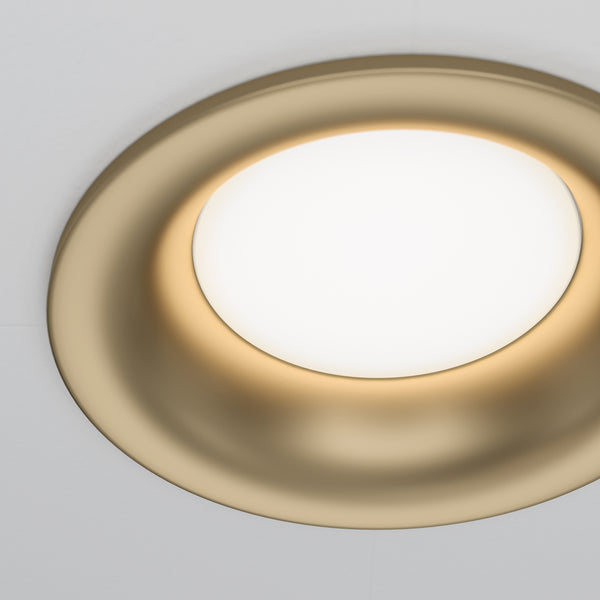
Black marks the ceiling and draws a graphic rhythm, which works well on beams, concrete or dark joinery. White and cream fade away and leave only the light visible. The Nyva, black with a honeycomb reflector, and the Oribi, white with a gold collar, show the two approaches. Explore recessed spotlights in black and adjustable spotlights in white.
Are there gunmetal metal spotlights?
Gunmetal does not appear as a named finish in the collection: the shades offered are black, white, gold, taupe and cream. Matte black remains the finish closest to a dark, understated look, and it suits industrial or minimalist interiors. For a warmer look, gold or taupe add a discreet touch to a light metal. Browse models with crafted shapes and the design LED versions.
Do LED spotlights get hot?
An LED spotlight gets much less hot than a halogen bulb, but it still dissipates heat through its body and heat sink. The collection mixes integrated LEDs and GU10 or E27 sockets: leaving a little air around the spotlight is enough, and a fitting should never be covered with insulation.
What is the lifespan of an LED spotlight?
Lifespan depends on the model and is not stated in our product data: we therefore do not claim it. In practice, heat is what wears out an LED, which is why it is best not to enclose it under insulation or run it permanently at full brightness. A dimmer-compatible model, like the Luxten duo, lets you lower the brightness in the evening. See brightness settings and dimmers.
Can you change the bulb in an integrated LED spotlight?
No: an integrated LED forms a single unit with the fitting and cannot be replaced. That is the trade-off for a slimmer unit with no visible bulb, like the Iralto. If you want to be able to change the source or its light temperature later, choose a GU10 or E27 socket: about half the collection is integrated LED, the rest is split between these two sockets.
What is the difference between a spotlight and a floodlight?
A spotlight concentrates light into a narrow beam and is placed near the surface to be lit; a floodlight lights a wider area from further away. In the collection, adjustable and track spotlights are used to highlight a wall or a worktop, where a floodlight would take up too much space.
The choice therefore comes down to distance: near the wall, a spotlight is enough and blends into the ceiling; to wash a facade or a large volume, you need another family of fitting. For indoor wall highlighting, an adjustable duo like the Livica does the job without clutter. Find the whole range in black adjustable spotlights and all our light fittings.
How do you care for a metal spotlight and make it last?
A soft, dry cloth is enough on aluminium and metal; avoid abrasive sponges and ammonia-based products that dull the finishes. On dimmer-compatible models, use a compatible bulb, otherwise the light may flicker. The warranty is five years on most of the selection and two years on the rest.
Cut the power before any work and let the fitting cool before cleaning it. For a model with a socket, use the bulb change to dust the collar, without ever forcing the metal. You can browse recessed LED spotlights with dimmer, black LED spotlights or go back to the catalogue to see the whole Designix range. Secure payment, tracked delivery, returns and Designix customer service accompany every order.
Frequently asked questions
Which socket should you choose between GU10, E27 and integrated LED?
GU10 corresponds to a small-diameter spotlight, recessed or adjustable, like the Mirka at 12.6 cm. E27 takes larger, replaceable bulbs, like the Luciara at 40 W. Integrated LED cannot be changed but gives a slimmer unit. About half the collection is integrated LED, the rest is split between GU10 and E27.
Can you install metal spotlights in a dressing room?
Yes, the dressing room is one of the rooms the collection addresses: recessed or track spotlights bring directed light onto the storage. In a closed metal cabinet, however, these spotlights are not intended: they are mounted on the ceiling or on a track, in IP20. Plan for lighting that does not heat the clothes.
Can you install spotlights on a bathroom ceiling?
Most spotlights in the collection are IP20, a protection reserved for dry rooms. A small number are rated IP65: that is the one suited to wet rooms exposed to moisture or splashes, like the Cervo. Check the rating on each product page before buying.
Do you need a dimmer for ceiling spotlights?
It is not compulsory, but some models are dimmer compatible, which lets you lower the brightness in the evening. You then need a bulb and dimmer suited to the spotlight technology, otherwise the light may flicker. The Rayline and Duorail duos fall into this category.
Which light temperature should you choose for metal spotlights?
Warm white, around 2700 to 3500 K, is relaxing and suits the living room, bedroom and hallway. Neutral white, around 3500 to 4500 K, gives a cleaner look, useful on a worktop or a reading area. With a GU10 or E27 socket, you only need to change the bulb to switch from one to the other.