
Japanese Wall Lamp
This selection is also available in our French store: Applique Murale Japonaise








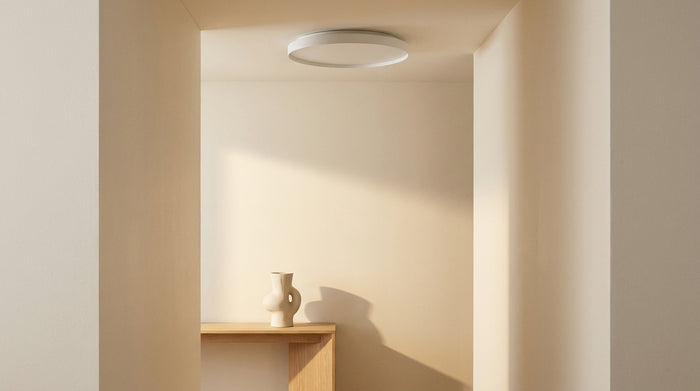
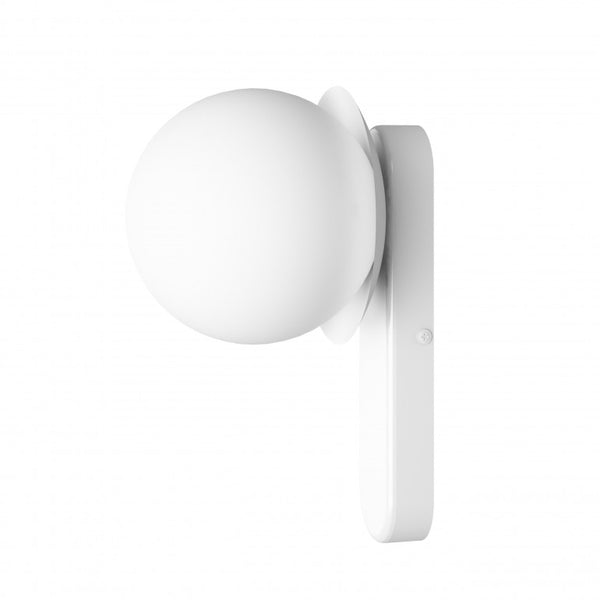
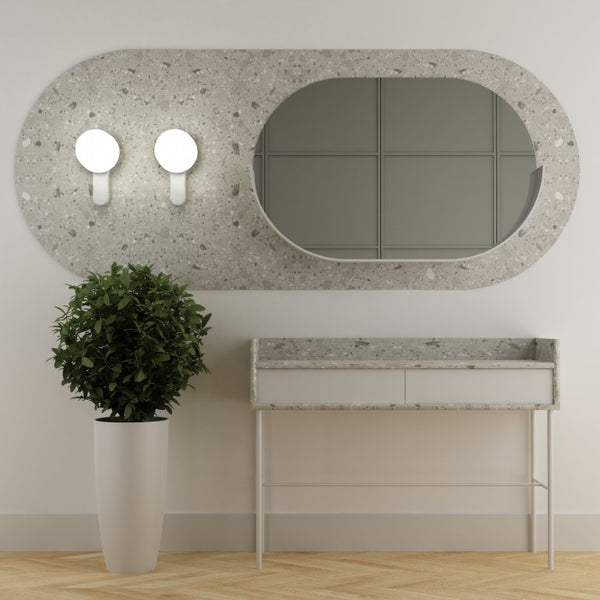

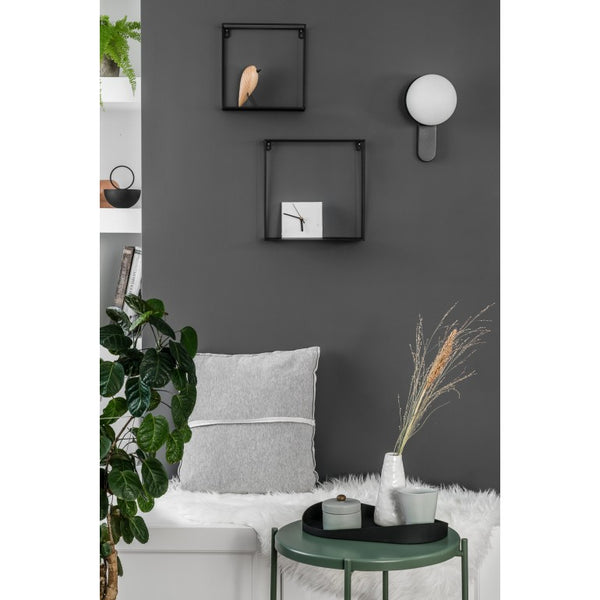














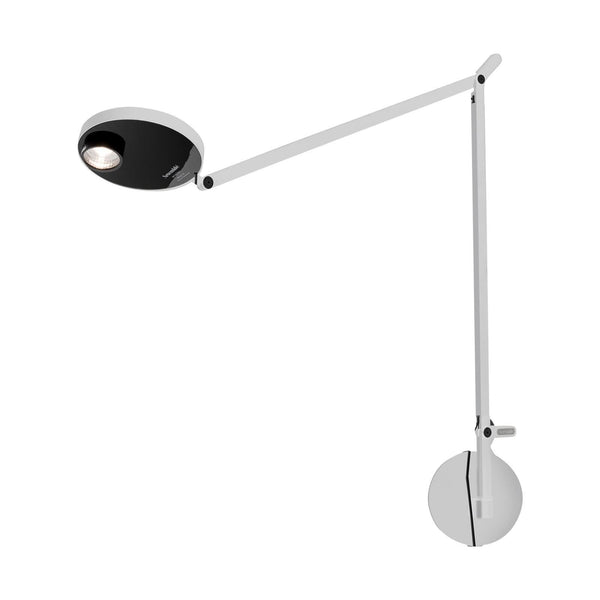


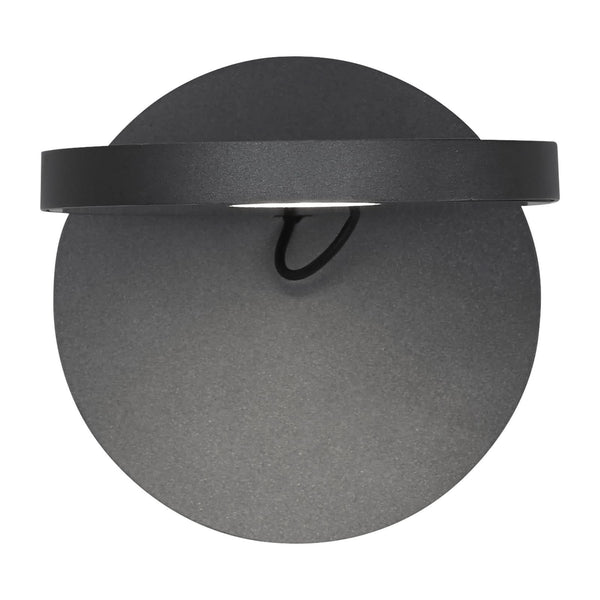


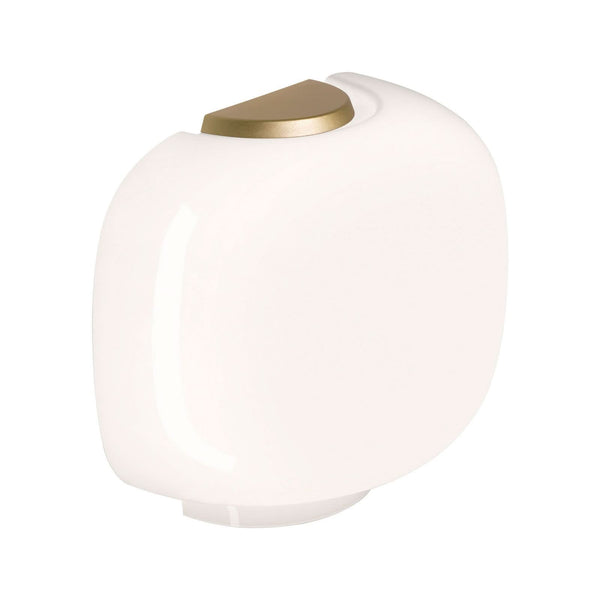


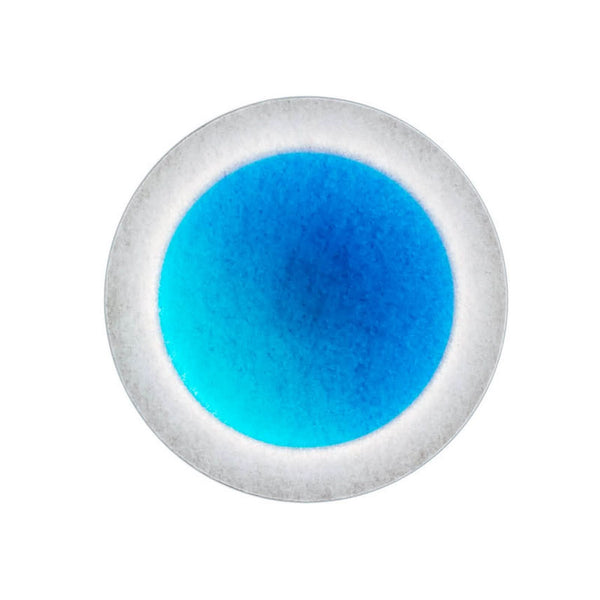




- Tracked delivery to your country Tracked delivery
- Secure payment at checkout Multiple payment methods
- 14 days to change your mind 14-day returns
- Secure payment Secure payment
Not sure of your style? Find it in 30 seconds
A few questions, and we will show you the pieces made for you.
Frequently asked questions
How do I choose the right product?
What are the delivery times?
Can I return an item?
Can I pay in instalments?
An interior that reflects who you are
Carefully selected pieces, shipped from our warehouses. Our team advises you before you buy, so you choose with confidence.
- Tracked delivery
- Pay in instalments, where available
- 14 days to change your mind
- Advice & showroom in Lyon, France
First count the space available on the wall and start from the room before choosing the shape: it is the use that decides the format and the socket. A japanese wall light illuminates a wall with its understated lines, in metal, glass or wood, often black or white, and comes in ball, tube or vertical strip versions.
What is a Japanese wall light?
A Japanese wall light is a wall fixture in the Japanese style, in metal, glass or wood, that diffuses a soft, graphic light. It is mounted in a living room, bedroom or hallway, and is recognisable by its simple lines, its ball or tube shapes and its black, white or brass finishes.
Japanese wall lamp, Asian or Japoniste wall light: what are the nuances?
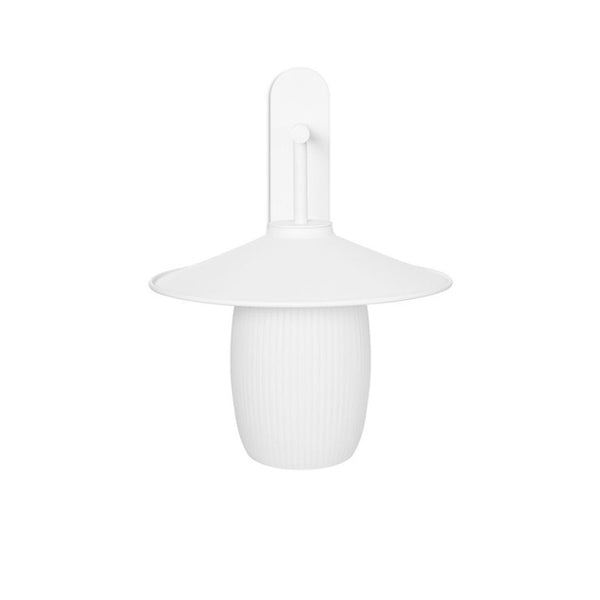
The three terms refer to the same family of wall fixtures. The Japanese wall light emphasises clean lines and matte materials, the Asian wall light sometimes includes paper and bamboo, the Japoniste version borrows lantern or openwork wood codes. In our selection, the dominant material remains metal, often combined with glass, and that is what gives the final look. A model such as the FUNSUI W A wall light in metal, glass and wood shows this mix well: a fine structure, a diffuser that softens the light and a height of 50.6 cm that dresses the wall without overpowering it. To compare structures, browse the metal wall lights, then widen to the glass and metal versions if you are after a softer glow.
Japanese lantern: the visual codes to recognise
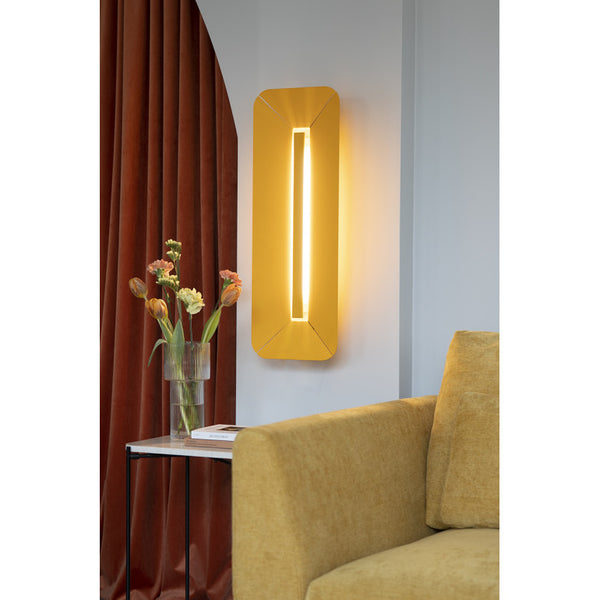
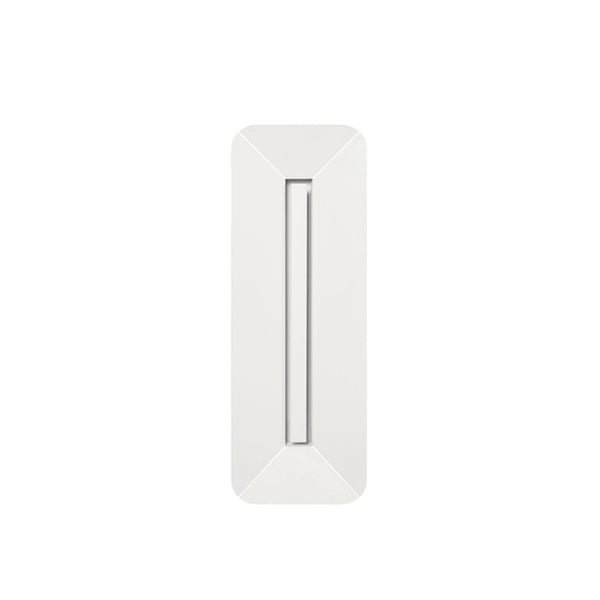
The Japanese lantern is recognisable by its vertical silhouette, its metal frame and its enveloping rather than projected light. In a selection of wall lamps and designer wall lighting, these models take the form of a tube or a strip, like the 103 cm YOTTSU vertical strip, which lights along its whole length. These codes work just as well in a Japanese house as in a contemporary interior, provided you let the wall breathe around the fixture.
Which Japanese wall light should you choose for each room?
The bedroom and the hallway are the most frequent uses, followed by the living room, the entrance and the office. In a bedroom, choose a compact format with soft light; in a hallway, a vertical model; in a living room, a wider diffuser; in a damp room, an IP44 version.
| Room | What you are looking for | Deciding criterion | Format or rating to aim for |
|---|---|---|---|
| Bedroom | A soft light on each side of the bed | G9 or E14 socket and dimmable intensity | Small format, shallow depth |
| Hallway | Rhythm along a long wall without cluttering it | Height or length of the strip | Vertical or linear model |
| Living room | Dress a wall near the sofa | Width of the diffuser and number of points | Medium to large format |
| Entrance | A landmark on arrival | Direction of the beam | Compact model |
| Office | Light a worktop without casting shadows | Adjustable socket or LED module | Long version of 73 or 103 cm |
| Bathroom | Resist water splashes | Protection rating | IP44 |
Japanese bedroom wall light: which format above the bed?
On each side of the bed, a flat model avoids knocking your shoulder when you get up. The ROKKE, with 3.8 cm depth and 56.6 cm height, suits a narrow wall, while the KUUL D IP44 for damp rooms, more compact, also works as a bedside light. Two wall lights are better than one in the centre: they are adjusted separately and frame the space above the headboard. Find more guidance in bedroom wall lighting.
Toilet wall light or designer WC wall light: what to install in a small space?
In a toilet or on a staircase, the constraint is depth. The PARUMA, with 4.1 cm thickness and 60 cm height, slips along a wall without blocking the way, and the LIRO, 8 cm deep and 10 cm high, stays discreet above a mirror. A warm light around 2700 to 3500 K is enough there. Also see the models designed for staircase lighting.
Living room wall light: what light and what power?
The wattages shown on the product pages range from 9 W to 60 W. Models with an integrated LED module, like the YOTTSU strip, light a long stretch of wall; versions with a G9, GU10, E14 or E27 socket take the bulb you choose. A dimmable model adjusts the intensity.
Modern living room wall light: what effect on a wall?
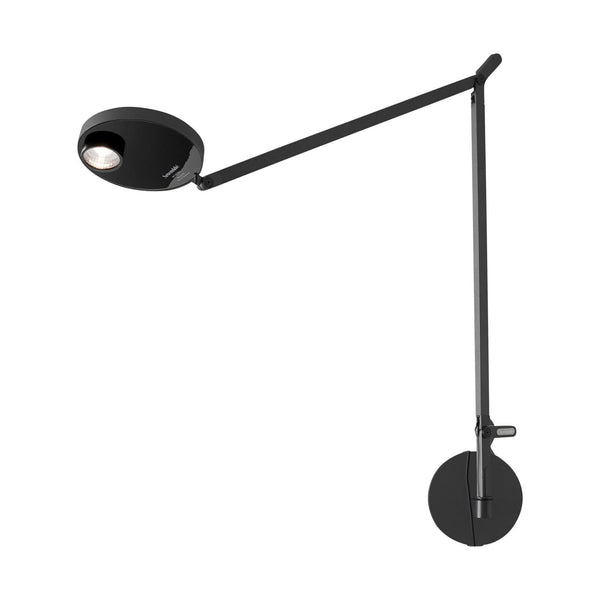
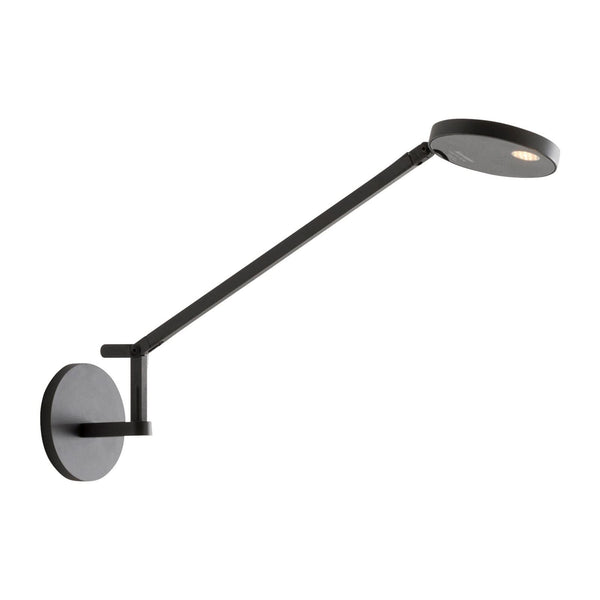
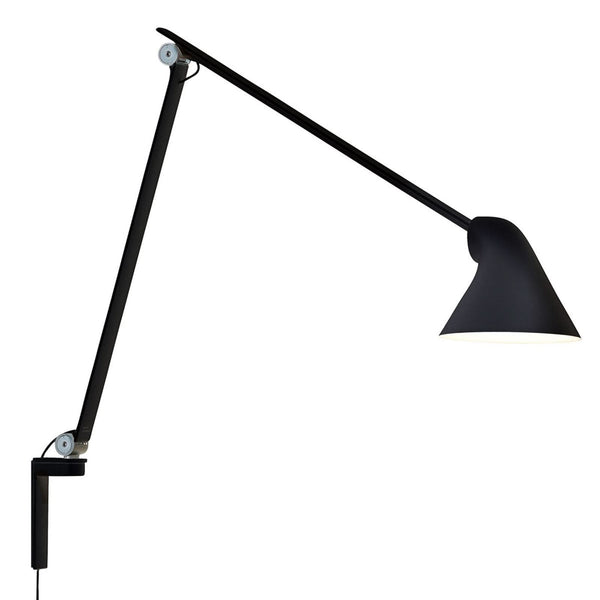
On a living room wall, the diffuser decides the effect: the wider it is, the more the light spreads and the less it casts shadow. The JINGU B and its long arm, with 29.3 cm depth, throws light downwards and illuminates a sofa corner or a dining area without dazzling. The SUPURU, with a GU10 socket, directs the beam where you want it. For a living space, a living room wall lamp is mounted in pairs, at the same height, on either side of a sofa or a console. A wall light with a contemporary design keeps the wall readable.
Dimmer or not: when does adjustable intensity change the use?
More than half of the models in the selection accept a dimmer. This is useful where the same wall light must serve as a night light in the evening and as reading light, in the bedroom as well as the living room. On a powerful LED wall light, dimming avoids lighting a small space too brightly: you lower the intensity rather than change the model.
What dimensions and sockets should you plan for before buying?
The depths shown on the product pages range from 3.8 cm to 29.3 cm, for heights from 10 cm to 103 cm. The socket decides the bulb: G9 and E14 for small spaces, E27 for a larger diffuser, GU10 for a directed beam, integrated LED module when nothing should need changing.
| Type of light | Socket or module | Bulb included | Dimmer |
|---|---|---|---|
| Bulb of your choice | G9 | No, bulb not included | On some models |
| Small screw socket | E14 | No, bulb not included | On some models |
| Standard screw socket | E27 | No, bulb not included | On some models |
| Bayonet socket | GU10 | No, bulb not included | On some models |
| Integrated LED module | LED | Yes, integrated | No |
What height of wall light for a narrow hallway?
On a hallway wall, a vertical model of 50 to 60 cm occupies the height without encroaching on the passage, and its depth remains the real criterion: 3.8 cm for the ROKKE, 4.1 cm for the PARUMA. A 73 cm or 103 cm strip suits wide hallways. The models designed for a hallway cover both cases.
G9, E14 or E27 socket: which bulb should you buy next?
The G9, a small pin socket, fits most models in the collection and lets you choose the colour temperature. The E14 is used on narrower formats, the E27 on generous diffusers like the JINGU B, the GU10 on adjustable wall lights. Allow one bulb per light point, favouring a warm light of 2700 to 3500 K for a restful atmosphere, more neutral around 4000 K in an office.
IP20 or IP44: which wall light for a damp room or a weatherproof exterior?
IP20 protects against contact with fingers, IP44 adds resistance to water splashes. The IP44 models in the collection suit damp rooms such as the bathroom. For outdoor installation, check the shelter, the connection and the installation conditions case by case.
Weatherproof outdoor wall light: what to check before installing
A Japanese outdoor wall light must first be placed under shelter: the protection rating indicates resistance to splashes, not to driving rain. Then check the cable supply, the presence of an accessible junction box and fixing to a sound support, wood, brick or concrete. An indoor Japanese wall light does not become an outdoor model.
Bathroom: where to place an IP44 wall light?
Keep bathroom wall lights out of direct reach of the jet, on either side of the mirror, at eye level. The EPLI MINI W IP44 and the KUUL D IP44 are designed for these damp rooms, with a G9 socket and 12 W. A dimmable model is handy there for switching from accent light to make-up light.
How do you install and care for a Japanese wall light?
A wall light is fixed at eye level or just above the surface it lights, aligning models mounted in pairs. Clean metal and wood with a dry cloth, and use a soft cloth for glass and brass. The wiring must remain accessible after installation.
At what height should a wall light be fixed?
Above a bedside table, allow about 30 to 40 cm above the mattress. Near a mirror, the light is placed at face height, on either side rather than above, to avoid shadows. On a staircase, follow the line of the handrail. Two wall lights are mounted at the same centre-to-centre distance, measured from the centre of each fixture.
How do you install a wall light without drilling?
Without drilling, only lightweight fixtures can be mounted, with an adhesive fixing rated for that weight, on a smooth, dry and clean surface. As soon as a wall light has some weight, in metal or glass, drilling and plugging remain the reliable solution, with the connection left accessible for repairs. For care, a soft cloth is enough: no abrasive product on metal or brass.
How do you match a Japanese wall light with the room's decor?
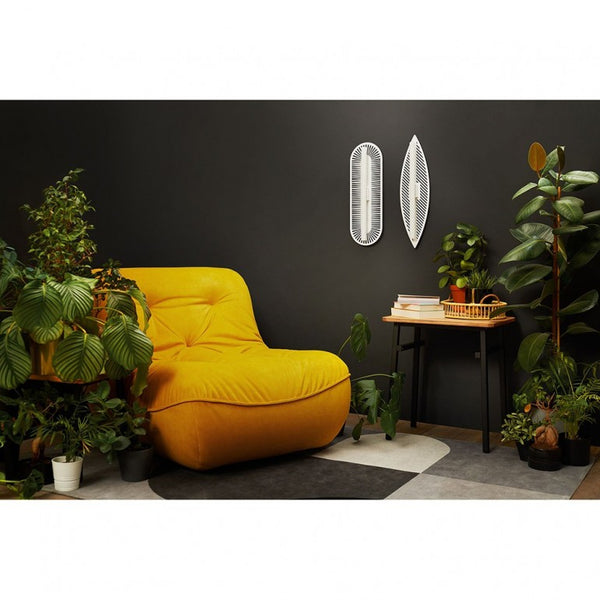
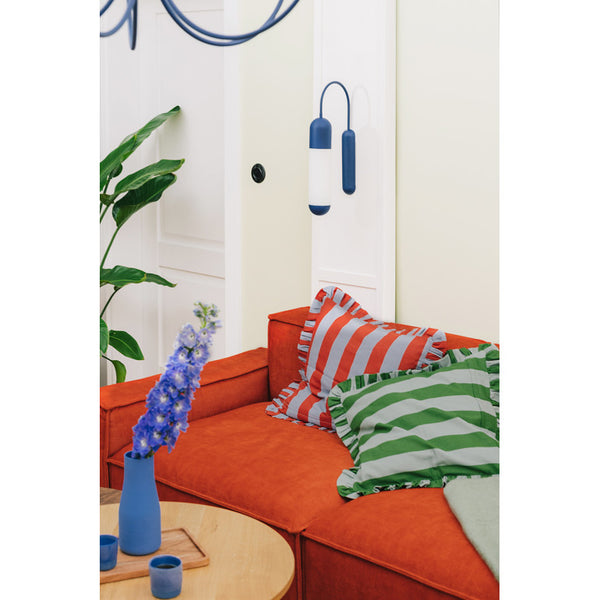
The Japanese style sits well with minimalist, Nordic, zen or a country chic and boho mood, provided you keep the lines simple. White and black work anywhere, brass warms a dark wall, and a bright colour becomes the focal point of a neutral room.
Japanese, country chic or boho style: what balance?
A boho wall light and a Japanese wall light share a taste for natural materials and calm shapes. The KELLO C, in metal, glass and wood, bridges the two worlds, while the brass of the ROKKE matches the pale woods of a country mood. The guideline to keep: one single strong colour on the wall, the rest in white or black. Browse the indoor wall lights to see these pairings across several rooms.
White, black, brass or bright colour: how do you decide?
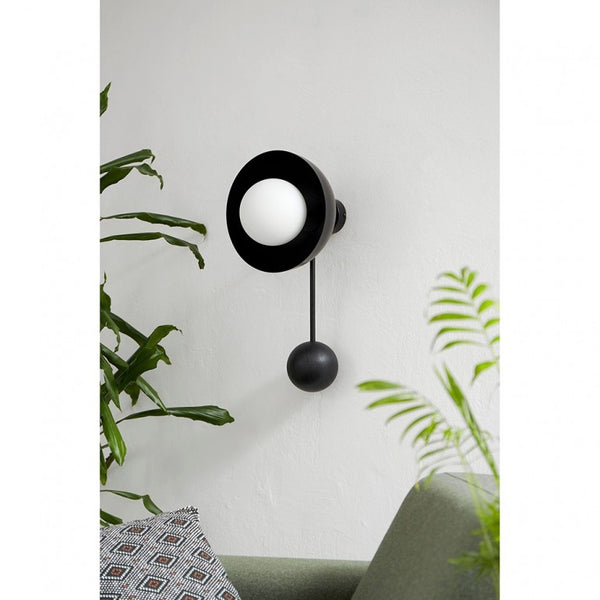
White makes the fixture disappear and leaves only the light visible, useful in a small space or on a wall that is already busy: see the white finishes. Black draws a crisp silhouette on a pale wall, as on the black models. Brass and golden tones warm a dark wall or wallpaper. A bright colour, yellow, blue or red, is reserved for a neutral room where it becomes the only accent.
How do you choose between two similar models and where to order?
Two wall lights in the same format are told apart by the socket, the protection rating, the presence of a dimmer and the materials or finishes. Models in metal and glass, metal and wood or metal and brass do not give the same effect. If the difference comes down to budget, first compare the most affordable models, then move up to a more elaborate piece. For an original wall light, look at the shapes and materials: metal, glass, wood or brass depending on the model.
For a workstation, a wall light for the office in a long version remains the most effective choice: the YOTTSU strip comes in 73 cm and 103 cm, with an LED module, and a light adjustable from warm white to neutral white. Order yours and fix it at the height of your worktop.
Frequently asked questions about the Japanese wall light
Which wall light should you choose?
Start from the room and the wall: bedroom and hallway call for a compact model with soft light, living room and dining room a wider diffuser, bathroom an IP44 version. Then check the socket, the available depth and the presence of a dimmer.
How do you install a wall light without drilling?
Without drilling, only lightweight fixtures can be mounted, with an adhesive fixing rated for that weight, on a smooth and clean surface. For a slightly heavy metal or glass wall light, it is better to drill and plug: the hold lasts and the connection remains accessible.
Which wall light for a weatherproof exterior?
The IP44 versions in the collection, such as the EPLI MINI W IP44 and the KUUL D IP44, are designed for rooms exposed to water splashes. For outdoor installation, the rating alone is not enough: check case by case the shelter from rain and the planned connection.
Which powerful living room wall light do you need for a large room?
The wattages in the collection range from 9 W to 24 W. On a large wall, two light points are often combined rather than one very powerful one, or a long LED strip is chosen. A dimmable model lets you adapt the intensity for everyday use as well as for social moments.
How do you choose a designer WC wall light?
In a toilet, the constraint is space: choose a flat, shallow wall light, like the models 4.1 cm or 3.8 cm thick, with a warm light. A G9 or GU10 socket lets you choose the bulb according to the mood you want.




