
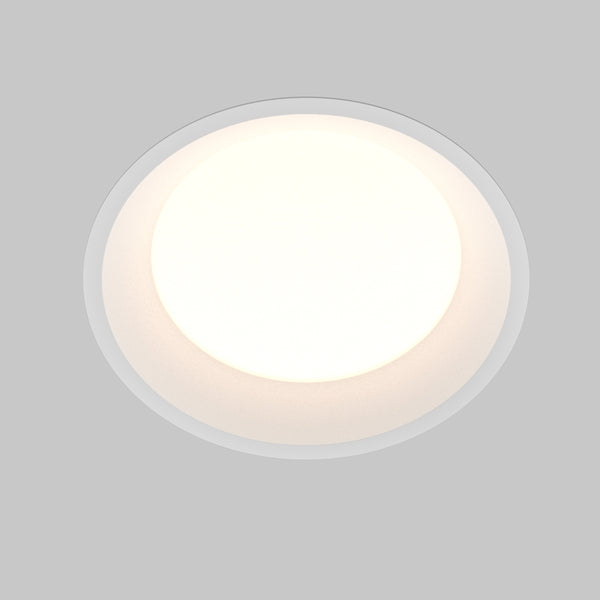
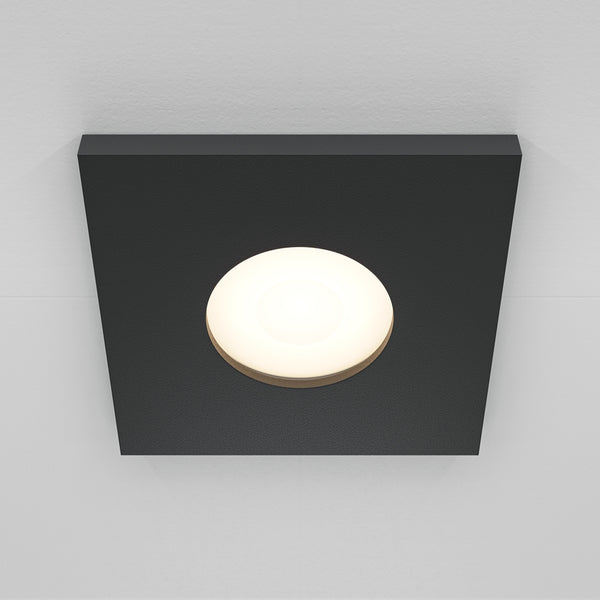
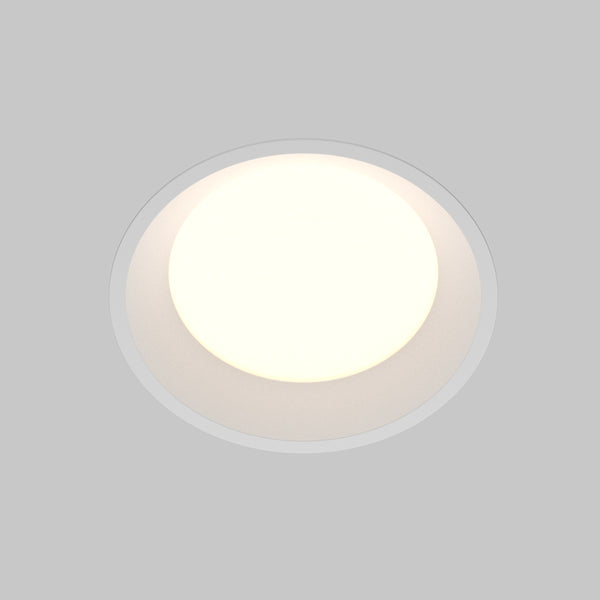
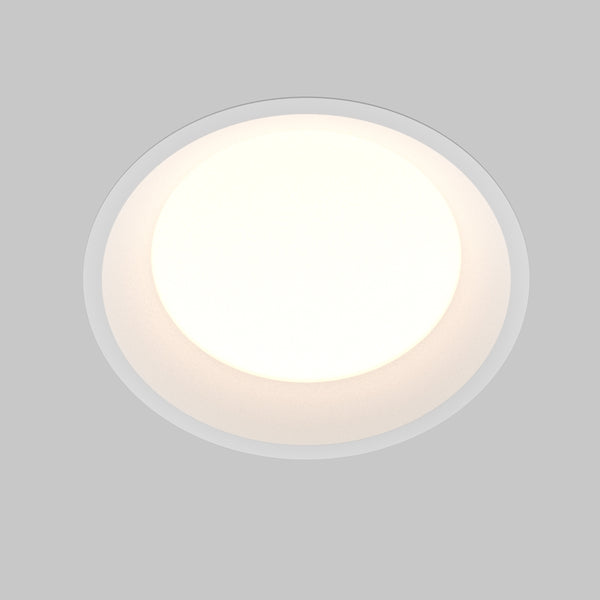
Watertight recessed outdoor spotlights
This selection is also available in our French store: Spots d exterieur encastrables étanches











- Tracked delivery to your country Tracked delivery
- Secure payment at checkout Multiple payment methods
- 14 days to change your mind 14-day returns
- Secure payment Secure payment
Not sure of your style? Find it in 30 seconds
A few questions, and we will show you the pieces made for you.
Frequently asked questions
How do I choose the right light output?
At what height should the light be installed?
What type of bulb?
Compatible with LEDs and dimmers?

Light changes everything
From statement chandeliers to discreet wall lights, we help you choose the right brightness, height and style for every room.
- Tracked delivery
- Pay in instalments, where available
- 14 days to change your mind
- Advice & showroom in Lyon, France
Count three things in this order: moisture resistance, recess format, then light colour. A recessed outdoor spotlights waterproof fixture is chosen on these three points before style. The base, orientation and colour are decided afterwards, once the support and use are clear.
Which recessed outdoor spotlights waterproof model should you choose?
You start with water resistance, then material, then recess format. A flush model disappears into the slab or wall, frees the passage and casts a low light with no visible housing. The shade of white and the orientation are chosen last, once the location is settled.
Recessed outdoor spotlights waterproof: what the protection rating changes
The protection rating indicates whether the luminaire withstands moisture and splashes. Outdoors, the usual markers are IP44 for a sheltered position under an awning and IP65 for a position exposed to rain or jets. The diffuser must be closed: an open cup lets dust and water in. This single check rules out most bad purchases. Find the models designed for outdoors in the outdoor LED spots.
Adjustable or fixed recessed spot: which to choose?
A fixed spot lights straight ahead. An adjustable spot is set after installation and lets you aim at a step, a flower bed or a section of wall, then adjust once night falls. If you are unsure about the angle, adjustable recessed spots save you from redoing the recess. As for material, aluminium and stainless steel hold up outdoors, and metal spots suit a dark facade as well as a pale wall.
Where to install recessed outdoor spots?
They are recessed into a terrace slab, a path, a facade wall or a pool surround, and also find their place in a bathroom. Each support imposes its own constraint: moisture, foot traffic, glare. So the installation is chosen according to the location, never the other way round.
| Location | What matters first | Type of installation | What to avoid |
|---|---|---|---|
| Terrace | Moisture resistance and visual comfort | Recessed into the slab | Lighting straight into the guests' eyes |
| Path and garden | Marking the walkway | Recessed into the ground or along the edge | A halo that glares from the house |
| Facade and wall | Wall fixing and available thickness | Recessed or wall light | Drilling a wall not designed for recessing |
| Bathroom | Moisture and proximity to water | Recessed into the ceiling | A source not designed for moisture |
| Pool surround | Standing water and splashes | Flush recessed | A connection left in contact with the ground |
Recessed outdoor spots waterproof in the bathroom: what changes
In a bathroom, the area near the bathtub or shower requires higher protection than the rest of the ceiling. You rarely go down to the floor there: ceiling installation remains the simplest. Neutral white around 4000 K suits the mirror and the vanity top, while warm white around 2700 to 3000 K relaxes the room in the evening.
Lighting a terrace or path without glare
The classic trap is a light point that is too powerful, placed straight in the line of sight. For a walkway, you want a discreet ground marker, aimed downwards or towards the plants. For a terrace, you prefer peripheral lighting and moderate intensity, dimmable if possible. Design models for a facade give a clean line when the wall remains visible.
How to arrange spots on the ceiling?
You align them with the axes of the room, avoiding placing a spot behind someone seated. You space them regularly in relation to the width of the wall and the area to be lit, then mark with a pencil and check the shadows before drilling.
Aligning the spots with the axes of the room
Two markers are enough: the edge of the wall and the middle of the area to be lit. A regular alignment is immediately visible on the ceiling, and so is an approximate one. If the room runs through, you keep the same spacing on each side. For a pale wall, white finishes for a pale wall blend away, and a dark colour marks the ceiling pattern more strongly.
Marking and testing before drilling
Draw the centres in pencil, then do a dry run: go up a ladder or place a temporary source to read the cast shadows. You then correct by moving a mark, which costs less than a badly placed hole. If you want to lower the intensity in the evening, dimmable recessed spots are controlled without changing the wiring.
How many spots in a kitchen?
The number depends on the surface area, the ceiling height and the areas to be lit, not on a fixed rule. You reason by use: worktop, sink, circulation. It is better to start with the useful areas and add to them than to fill the whole ceiling.
Lighting the worktop before the rest
The worktop is where you chop, so it is the area that needs clear light with no shadow cast by the hand. You place the points above the worktop, not behind the person working. Kitchen spots are chosen first on this criterion, then on the look.
Adjusting after the first installation
A first trial at the end of the day reveals what is missing. You then add a point above the sink or the circulation area, or aim the existing ones. Well-adjusted worktop lighting saves you from turning on the whole room to prepare a meal, and the fine aiming allowed by adjustable LEDs makes this adjustment easier.
How to wire spots in series or in parallel?
In series, the spots share the same circuit: if one goes out, the others follow. In parallel, each spot remains independent and receives the same voltage. Outdoors, you favour parallel wiring and waterproof connections, kept away from standing water.
| Criterion | In series | In parallel |
|---|---|---|
| If one spot stops working | The whole circuit goes out | The others keep lighting |
| Voltage received by each spot | Shared between the spots | Identical for each spot |
| Recommended outdoor use | Not advised | Recommended, with waterproof connections |
| Troubleshooting after installation | Harder to locate | Only one spot is replaced |
Series or parallel: the difference that matters
Series wiring adds up voltage drops and forces you to check everything as soon as one point weakens. Parallel wiring feeds each spot directly, which isolates the fault and makes replacement simple. On an outdoor circuit, this troubleshooting comfort weighs more than the cable saving.
Waterproofing connections outdoors
The weak point of an outdoor installation is not the luminaire but the connection. Junction boxes and connectors must stay out of water, raised above the ground and sheltered from puddles. Cut the power before any work and entrust the connection to an electrician if the circuit cannot be identified.
E27 outdoor bulb: which base for a recessed spot?
The E27 base screws in and is easy to replace, which lets you change the light shade without touching the luminaire. Pin-base spots and models with integrated LED are chosen once and for all, with no bulb to buy again afterwards.
E27 bulb, pin base or integrated LED
An E27 bulb is replaced in seconds and leaves the shade free: warm white for a terrace, more neutral white for circulation. A pin base is required when the recess is narrow. Integrated LED gives the thinnest profile and a flux defined at manufacture, but the whole luminaire follows the source when it weakens.
Choosing a bulb suited to moisture
An indoor bulb in an outdoor housing wears out quickly, even under a closed diffuser. You choose a lamp designed to work in a damp atmosphere, and you check that the spot's seal is in place before screwing it back. For a facade terrace, black outdoor spots pair well with dark joinery.
Recessed spot or wall light for the terrace?
The wall light is fixed in surface mounting on a facade wall and lights downwards, without touching the support. The recessed spot disappears into the slab or wall and frees the passage. The first is installed quickly on an existing wall, the second requires a support to recess into.
What a wall light brings to a facade wall
Placed high up, the wall light draws a cone of light on the wall and accompanies an entrance door without over-lighting the ground. It is replaced without touching the masonry, which suits a renovation. On a stone or concrete wall that is already finished, it is often the cleanest solution.
When recessed remains the only clean option
To mark out a path or a paved terrace, the wall light has no hold. The flush model lights without obstruction and does not protrude from the ground, which matters on a walkway. The solar solution without cable helps out when running a power supply to the bottom of the garden is not possible.
What are the common problems with outdoor lighting?
Failures mainly come from water seeping into a poorly protected connection or housing, a bulb unsuited to moisture and glare that was not anticipated. A prepared support, connections kept away from water and a suitable source remove most of these troubles.
What happens if water gets into an LED bulb?
Moisture attacks the contacts and the electronics before burning out the lamp: the spot flickers, dims or goes out intermittently. You do not put a bulb back into a housing that has taken on water before drying it and checking its seal. Choosing a closed luminaire and a protected connection prevents the problem at the source.
Why an outdoor spot oxidises or yellows
Untreated metal, an ordinary fixing screw or a housing that keeps water at the bottom eventually leave marks. You look at the stated material, aluminium or stainless steel depending on exposure, and avoid hollows where water stagnates. Regular cleaning clearly slows this ageing.
How to maintain outdoor spots and make them last?
Cleaning with clear water and a soft cloth is enough to preserve the glass and the finish. Once a season, you check the seals, the screws and the water drainage around the housing. An LED heats up less when the luminaire is ventilated, which extends its life.
What is the lifespan of an LED?
An LED wears out slowly and loses flux before going out. Its lifespan depends mainly on the quality of its electronics and the ventilation of the luminaire: a source that heats up ages faster. Outdoors, temperature variations also count. A closed but ventilated housing remains the best ally.
Do LED bulbs present a fire risk?
An LED heats up far less than a filament lamp, and the risk comes mainly from a poorly ventilated luminaire or faulty wiring. You respect the power rating specified by the spot manufacturer and do not enclose a source in a closed volume without air exchange. If in doubt about the circuit, an electrician decides.
To complete an outdoor space, browse the white LED models or the solar outdoor lighting. Indoors, the same principles apply to living room spots and to worktop spots, with dimming if you want to vary the mood. The lighting catalogue gathers all the families.
Secure payment, tracked delivery, accepted returns and Designix customer service: you can move forward with confidence. First compare the protection rating and the recess format, then explore the full lighting range and its outdoor LED spots to choose, or browse the lighting catalogue by use if you prefer to start from the room.
Frequently asked questions
Which spot for outdoors?
A spot designed to stay outside: a protection rating suited to moisture, a material that does not rust, a closed diffuser and a source designed to work outdoors. For a flush installation, you choose recessed; for an existing wall, a wall light.
Where can I find a recessed LED spot for outdoors?
In a collection dedicated to outdoor lighting, where models are sorted by colour, type of installation and use. Filtering them by colour and recess format lets you compare what is actually compatible with your support, before looking at style.
Why are LED bulbs rated F?
The rating comes from the energy label, whose scale was tightened towards the top: energy-efficient lamps end up in the lower classes. The letter is read by comparing two products with each other, not as a defect in itself.
What are the drawbacks of LED lamps?
They tolerate poorly ventilated heat badly, their shade varies from one model to another and some cannot be replaced when the LED is integrated into the spot. The unit price can also be higher than that of a classic bulb, to be weighed against consumption and lifespan.
What is the best outdoor lighting brand?
The brand matters less than the characteristics of the model: protection rating, material, fixings, type of source and ease of replacement. Compare these points between two spots for the same use, and check that the recess format matches your support. That is what decides how well it lasts.




