220V recessed spotlights
- Tracked delivery to your country Tracked delivery
- Secure payment at checkout Multiple payment methods
- 14 days to change your mind 14-day returns
- Secure payment Secure payment


Not sure of your style? Find it in 30 seconds
A few questions, and we will show you the pieces made for you.














Frequently asked questions
How do I choose the right product?
What are the delivery times?
Can I return an item?
Can I pay in instalments?
An interior that reflects who you are
Carefully selected pieces, shipped from our warehouses. Our team advises you before you buy, so you choose with confidence.
- Tracked delivery
- Pay in instalments, where available
- 14 days to change your mind
- Advice & showroom in Lyon, France
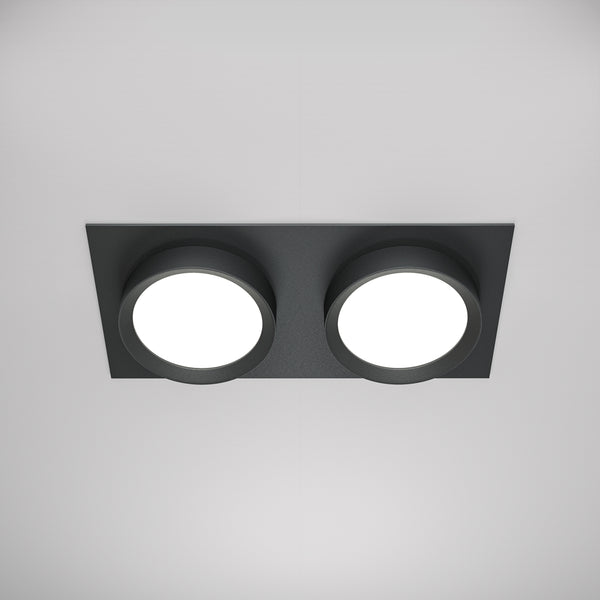
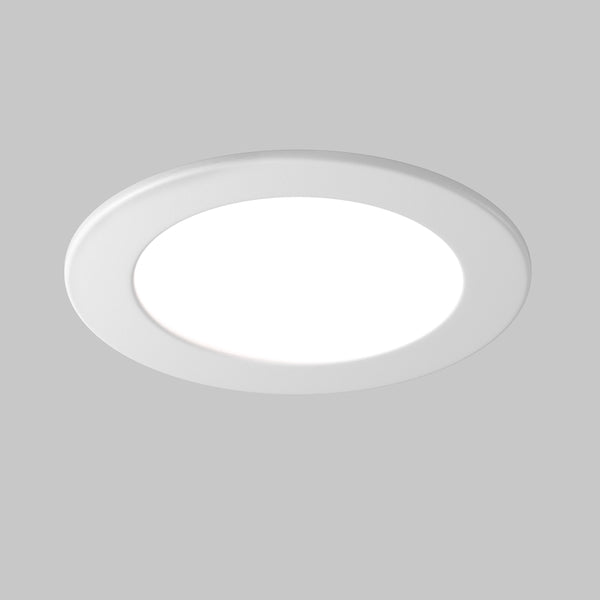
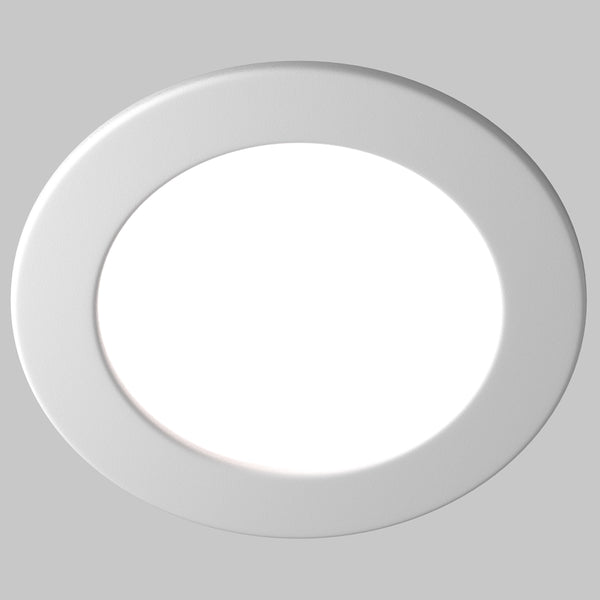
These 220V downlights connect directly to the home's mains supply, with no transformer to fit inside the ceiling void. The selection brings together round and square models in aluminium, in white or black, with GU10 or GX53 sockets or with an integrated LED source, from IP20 to IP65.
What is a 220V recessed downlight and why does it do without a transformer?
A 220V recessed downlight runs on the home's mains supply, at 230V, and connects directly to the supply cable: no transformer to squeeze in above the ceiling. This selection brings together models with GU10 or GX53 sockets and LED versions designed for that same mains supply, mostly in aluminium.
220V recessed downlight without transformer: what changes at installation
Installation comes down to a cable feed, a cut-out and spring fixings. That is what makes the 220V downlight convenient in renovation work: space above a ceiling is often scarce, and a conversion box needs exactly that space. Connection is made with the power off, on the mains cable.
220V downlights: what 220 volts means on a product page
On a product page, 220V or 230V refers to the supply voltage of the downlight, not just that of the bulb. A GU10 socket takes a 230V bulb, a GX53 socket takes its flat module, and an LED model has its source already designed for the mains. In all three cases, nothing is converted. To place this type of downlight within a complete project, browse our full range of lighting.
What is the difference between a 220V LED recessed downlight and a GU10 downlight?
A GU10 downlight takes a bulb that you replace or whose colour temperature you change; an LED downlight has its source fixed in the body and often sits slimmer against the ceiling. Both connect at 220V, without a transformer, and a GX53 socket completes the selection.
220V LED recessed downlight: light decided at purchase
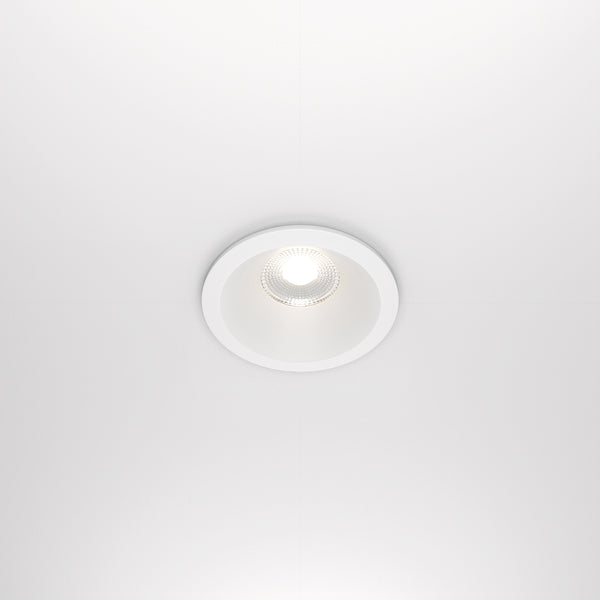
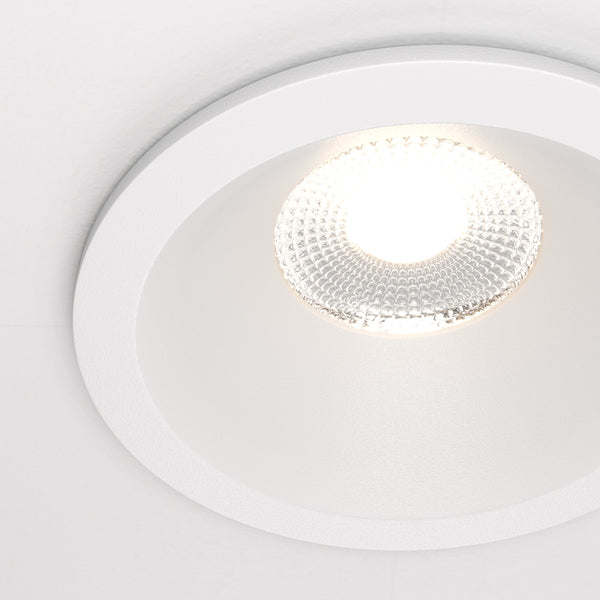
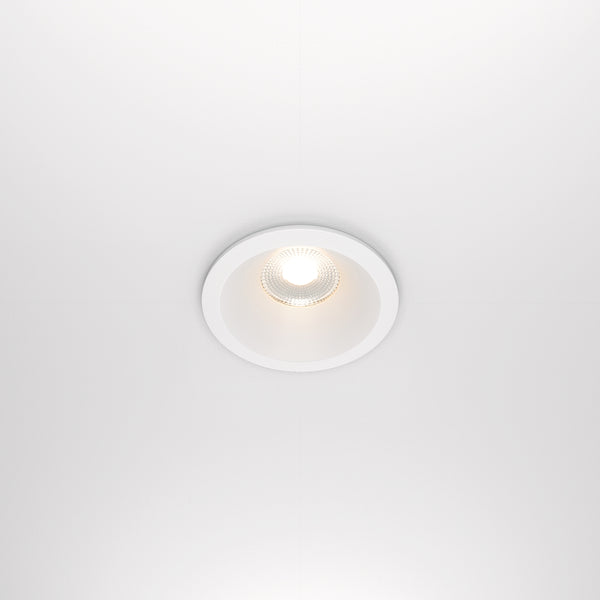
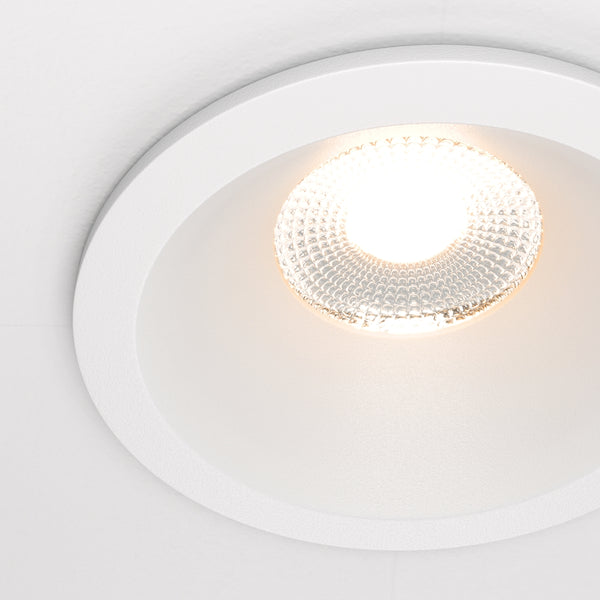
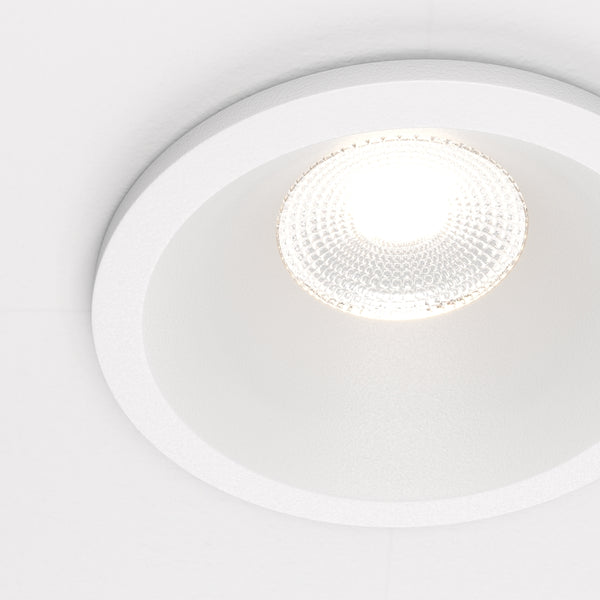
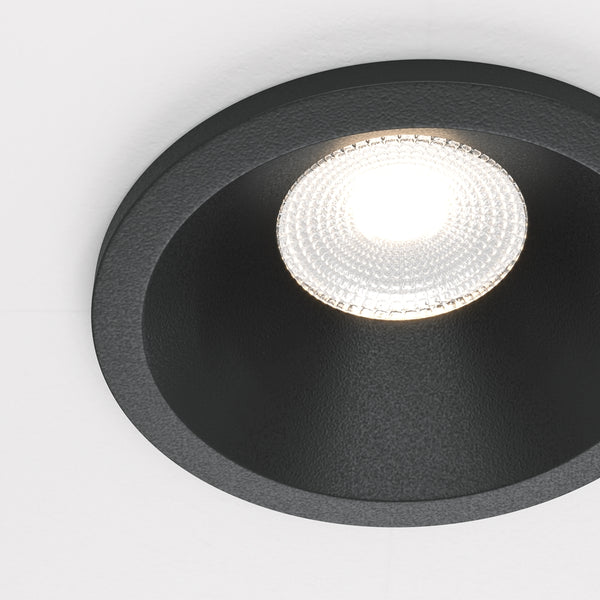
On a model with an integrated source, the light is decided at purchase. Orbi and its faceted lens works in neutral white for crisp lighting, while other LED models stay in warm white, softer in the evening. The advantage lies in the thickness: with no bulb to screw in, the body sits closer to the ceiling.
220V downlights with GU10 socket: replacing the bulb later
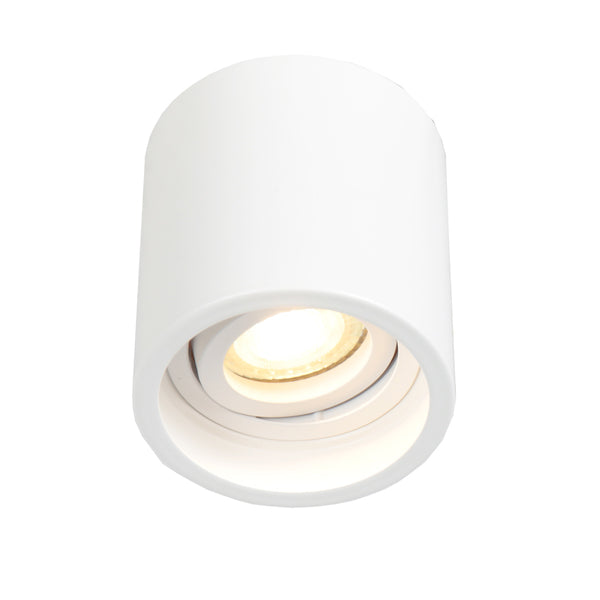
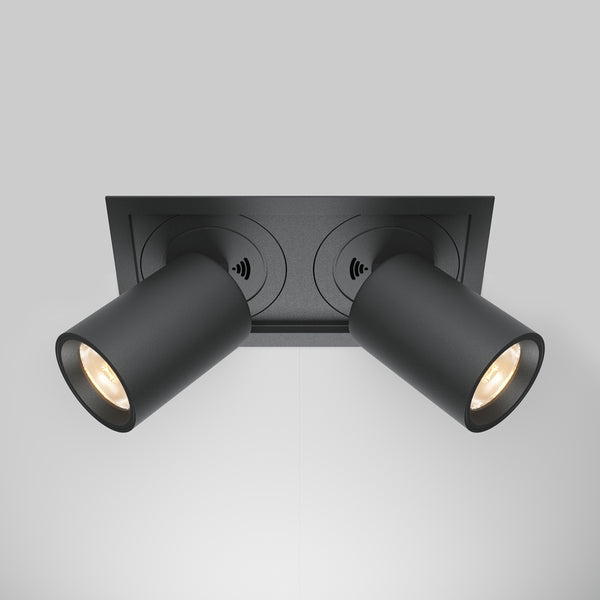
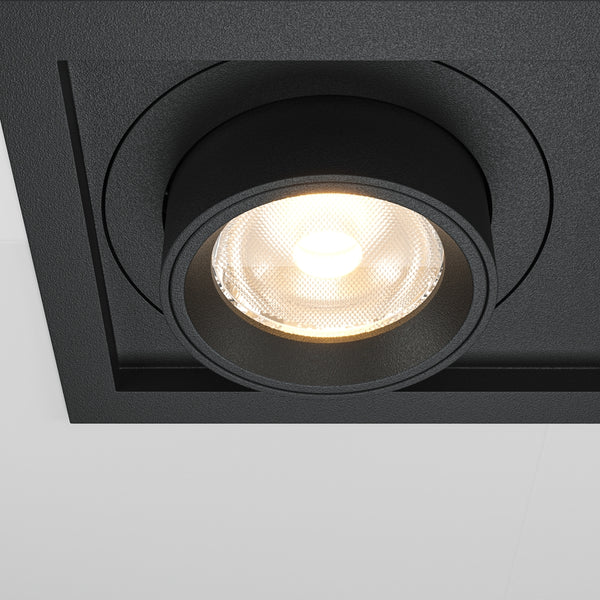
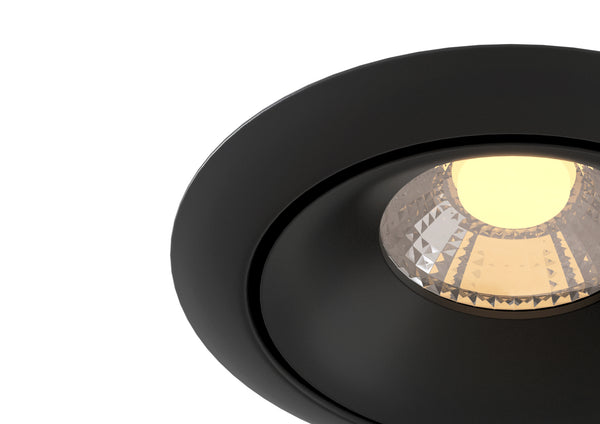
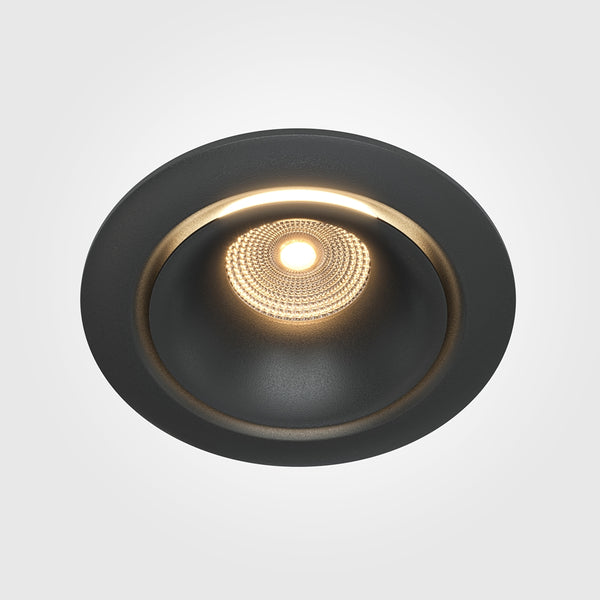
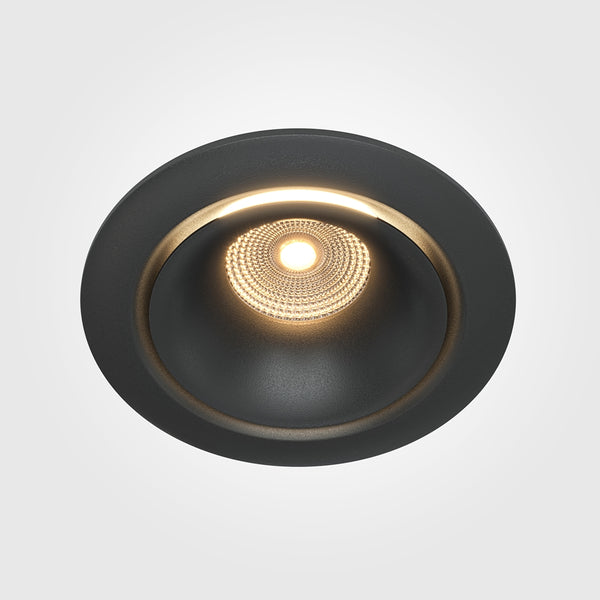
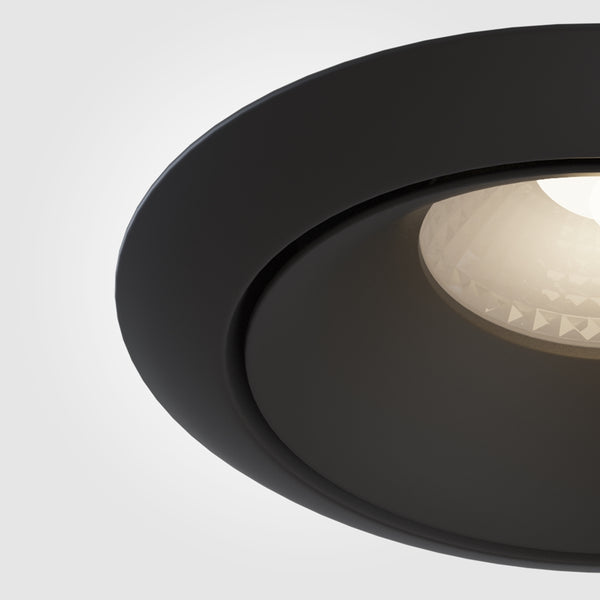
With a GU10 socket, you keep control of the source: you choose the bulb, its wattage and its temperature, and you change it without touching the downlight. That applies to a large part of the selection, including the black adjustable Alto downlight. Check the maximum wattage stated on the product page before buying the bulb.
| Socket | Type of light | Replaceable source | What that means |
|---|---|---|---|
| GU10 | 230V bulb chosen separately | Yes | You replace the bulb and set the colour temperature yourself |
| Integrated LED | Source fixed in the body | No | Slimmer body against the ceiling, light decided at purchase |
| GX53 | Flat LED module | Yes | Flat format used on part of the selection |
How should downlights be laid out on the ceiling?
Downlights are laid out in regular rows, aligned with the walls of the room, keeping the same distance between each point and the same distance from the wall. Symmetry about the centre avoids shadowy areas, and adjustable models can then be aimed at a wall or a worktop.
220V recessed downlight on a living room ceiling: where to start?
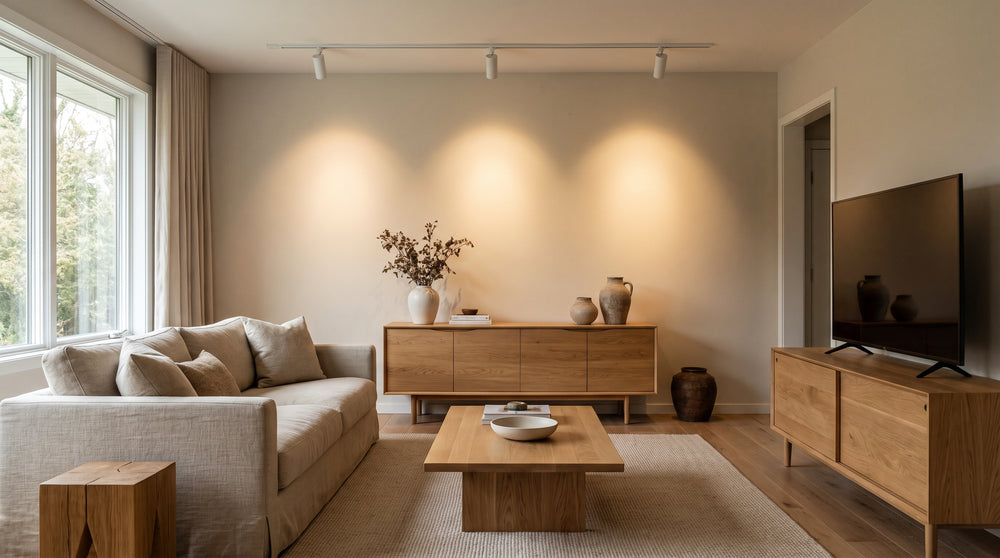
First draw the plan of the room on the floor, then transfer the lines to the ceiling: downlights follow the walls, not the mood of the moment. Two or three parallel rows, symmetrical about the centre, light the room without dark gaps. Recessed downlights for living rooms are then adjusted one by one, once the power is back on.
Hallway: aligning downlights along the line of travel
In a hallway, the axis guides everything: a single centred line, with the same gap between each point, gives continuous light. A small diameter is enough, such as the round models from 6 to 6.8 cm. Adjustable models are mainly used to shift the beam towards a niche or a door.
White, black or gold: which finish for a 220V recessed downlight?
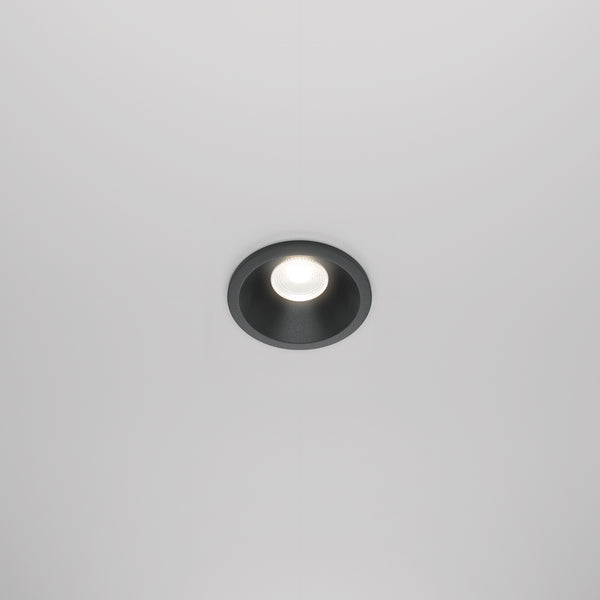
White blends into a painted ceiling and remains the most common finish in the selection; black draws a crisp point, appreciated in modern interiors; gold trims and reflectors add a visible detail, especially once the light is on.
White recessed downlight: the finish that disappears into the ceiling
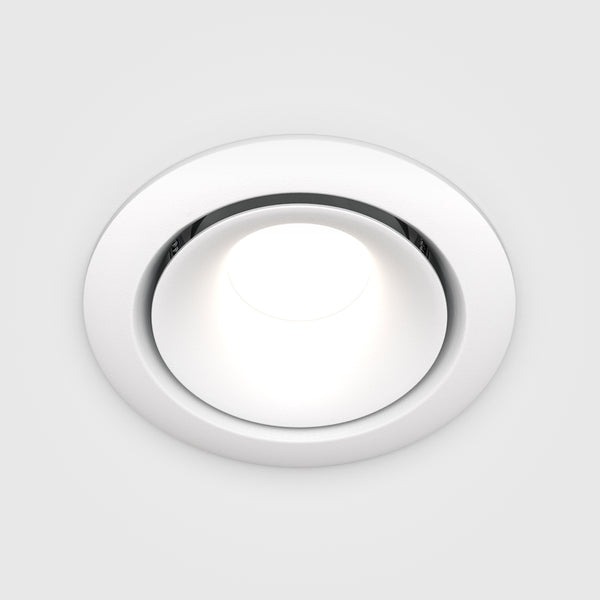
On a white ceiling, the trim disappears and only the cone of light remains. It is the safest choice when several rooms connect, and it suits almost every style. White recessed downlights cover most of the round models from 6 to 10.2 cm in the selection.
Gold trim or black body: the detail you notice
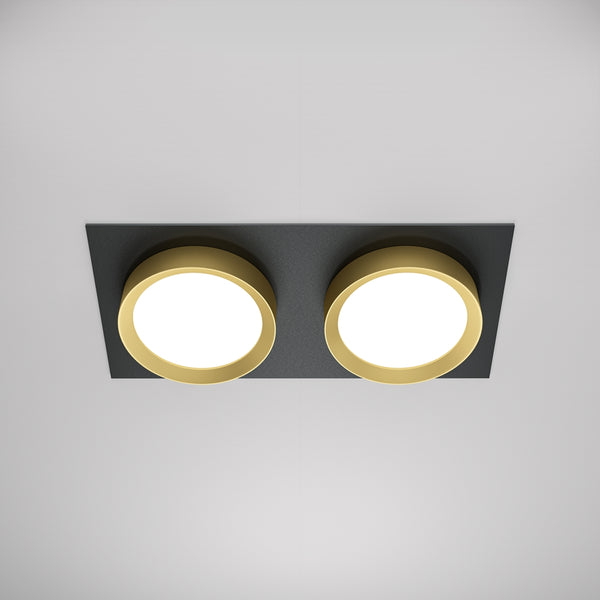
Black marks the ceiling and underlines the geometry of a well-aligned row. A gold trim or a reflector in the same metal catches the light and warms a contemporary interior, as on Rondeo with its gold reflector. Keep to a single family of finishes per ceiling, and look at the black trimmed versions as well as the gold finishes before mixing.
Which rooms suit a 220V recessed downlight?
The rooms most often concerned by this selection are the living room and the hallway, with a few models also designed for the kitchen, the bathroom and the entrance. The protection rating ranges from IP20 for dry rooms to IP44 and IP65 for wet rooms.
220V recessed downlight for kitchen and wet room: IP44 or IP65
In a dry room, IP20 is enough. As soon as there is humidity, splashes or frequent cleaning, aim for IP44, such as the square Quadratis in IP44, or the IP65 of Nixo and its IP65. Kitchen recessed downlights are positioned above the worktop, aimed at the working area.
220V recessed downlight outdoors: what an IP65 rating allows
An IP65 rating indicates protection against dust and water jets, nothing more: it does not make the downlight submersible or intended for immersion. On a covered terrace or under a canopy, that is the level to look for, and it can be checked on the product page. For an evening atmosphere, complete the scheme with LED living room lighting.
Which light temperature for 220V recessed downlights?
The selection offers two families of light: warm white, between 2700 and 3500 K, for an interior atmosphere, and neutral white, between 3500 and 4500 K, crisper under a worktop. On a downlight with a socket, the temperature is chosen with the bulb.
Warm white or neutral white: which to choose?
Around 3000 K, the light leans towards an evening atmosphere: living room, hallway, bedroom, anywhere you spend time. Around 4000 K, it becomes whiter and suits working areas, kitchen or office, where colours are easier to distinguish. On the same ceiling, a single temperature is better to avoid visible differences.
220V LED recessed downlight with dimmer: what to check before buying
Few models in the selection accept a dimmer, and this is stated on their product page. You then need a dimmer compatible with the source, otherwise dimming becomes jerky or the downlight buzzes. Dimmable recessed downlights are rare, and dimmable LED versions even rarer.
How to install and maintain a 220V recessed downlight?
Installation is done with the power off: cut-out at the diameter stated on the product page, direct connection to the mains, then fitting into the cut-out. Aluminium needs only a soft cloth, and the spring fixings should be checked when replacing a GU10 bulb.
Cut-out, connection, fitting: the order of the steps
Mark the points on the ceiling, cut at the exact diameter of the model, run the cable, connect and then clip the downlight in with its springs. An adjustable model is set after fitting, with the light on, to aim at the right wall. Designer downlights are installed in the same way, their difference lies in the design of the trim.
Maintaining an aluminium recessed downlight
With the power off and the body cooled, a soft cloth is enough on aluminium and on metal downlights. Avoid abrasive products on a grained finish. When changing a bulb, take the opportunity to check that the springs press the downlight firmly against the ceiling.
What budget should you allow for 220V recessed downlights?
The budget mainly follows the socket, the material and the finish: an aluminium GU10 downlight, an LED version with an integrated source and a piece with a gold reflector are not in the same bracket. The grid shows the current price, and the warranty is stated on each product page.
Finish, material and warranty: the criteria that make the difference
An aluminium body lasts better than plastic, a gold trim or a faceted lens lifts the range, and a watertight model requires more material. The warranty period, in turn, distinguishes everyday pieces from the most committed models. This is a good moment to compare modern style downlights and the most designed references.
Tracked delivery, returns and secure payment: what Designix offers
Payment is secure, delivery is tracked, returns are provided for, and customer service answers sizing questions before ordering. A question about a cut-out diameter or a protection rating can therefore be settled before purchase. Discover all indoor lighting to place these downlights within your project, then order: Collara and its adjustable trim suits hallways as well as entrances.
Frequently asked questions
Does a 220V recessed downlight need a transformer?
No. A downlight designed for 220-230V connects directly to the ceiling supply cable: the conversion is already handled by the 230V bulb, by a GX53 socket or by the integrated LED source. A transformer only concerns very low voltage installations, a rare case here.
Can a 220V recessed downlight be installed outdoors?
That depends solely on the protection rating of the model. Most of this selection is IP20, reserved for dry rooms; only IP44 and IP65 models are intended for a wet room or an exposed area. Check that line on the product page before buying.
What is the difference between a 220V LED recessed downlight and a 220V bulb downlight?
A downlight with a GU10 or GX53 bulb lets you choose and replace the source: you can change the colour temperature. An LED downlight has its source fixed in the body, often slimmer against the ceiling, but the light is decided at purchase. Both work at 220V.
Can a 220V recessed downlight be adjusted?
Yes, part of the selection is adjustable: the body swivels or tilts to direct the beam towards a wall, a bookcase or a worktop. Round trimmed models then occupy a variable surface on the ceiling depending on the model chosen; the exact dimensions are given on the product page.
Which light colour should you choose for 220V recessed downlights?
Warm white, between 2700 and 3500 K, gives a warm interior light and suits the living room as well as the hallway. Neutral white, between 3500 and 4500 K, lights working areas more crisply. On a downlight with a socket, the choice of bulb sets the temperature.