Recessed 220V LED spotlights
- Tracked delivery to your country Tracked delivery
- Secure payment at checkout Multiple payment methods
- 14 days to change your mind 14-day returns
- Secure payment Secure payment


Not sure of your style? Find it in 30 seconds
A few questions, and we will show you the pieces made for you.













































Frequently asked questions
How do I choose the right light output?
At what height should the light be installed?
What type of bulb?
Compatible with LEDs and dimmers?
Light changes everything
From statement chandeliers to discreet wall lights, we help you choose the right brightness, height and style for every room.
- Tracked delivery
- Pay in instalments, where available
- 14 days to change your mind
- Advice & showroom in Lyon, France
Plan on one recessed LED spotlight 220V per area to be lit, and wire it straight to the mains: no transformer to fit into the ceiling. Then choose the diameter and the available depth, the light temperature for the room, and the protection rating for the humidity of the area.
How does a recessed LED spotlight 220V work, with or without a transformer?
A recessed LED spotlight 220V connects directly to the 230 V mains in the home: no transformer to fit into the ceiling. The light usually comes from an integrated LED, sometimes from a GU10 bulb that you replace yourself without changing the spotlight.
Recessed LED spotlight 220V without transformer: what it simplifies
Wiring is done on the existing lighting circuit, just like an old 230 V halogen spotlight. There is no conversion box to fit above the plasterboard, and nothing to replace when that box fails. That leaves more depth, which widens the choice of models and makes like-for-like replacement easier.
Recessed LED spotlight 220V with transformer: when is it needed?
A transformer stays in place when the original installation has one, for example on an old 12 V spotlight circuit. The spotlight chosen must then remain compatible with the voltage supplied. On a new installation, the question does not arise. If you want to dim the light, you do need a model designed for it: our selection of dimmable lighting gathers the recessed LED spotlights 220V that work with a dimmer.
Which recessed LED spotlight 220V should you choose for the living room?
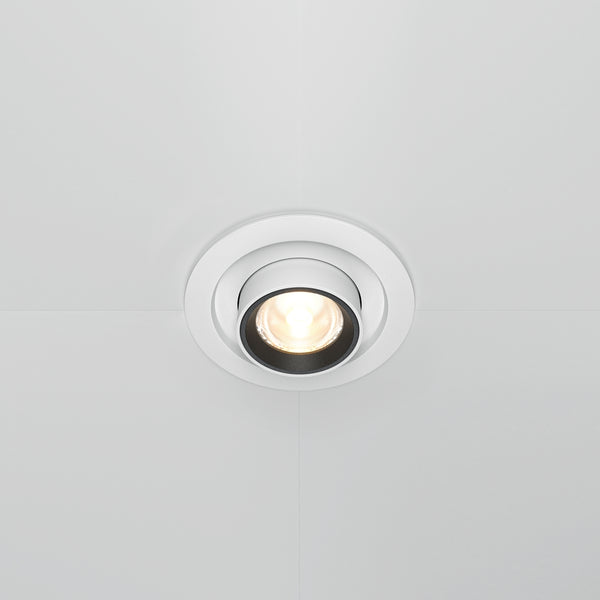
For a living room, start from the need: even general lighting calls for a fixed spotlight of small diameter in warm white, while highlighting a wall or a piece of furniture calls for an adjustable model, sometimes a twin one, whose beam you direct. The wattage on the spec sheet follows that use.
Recessed LED spotlight 220V adjustable: what is it for?
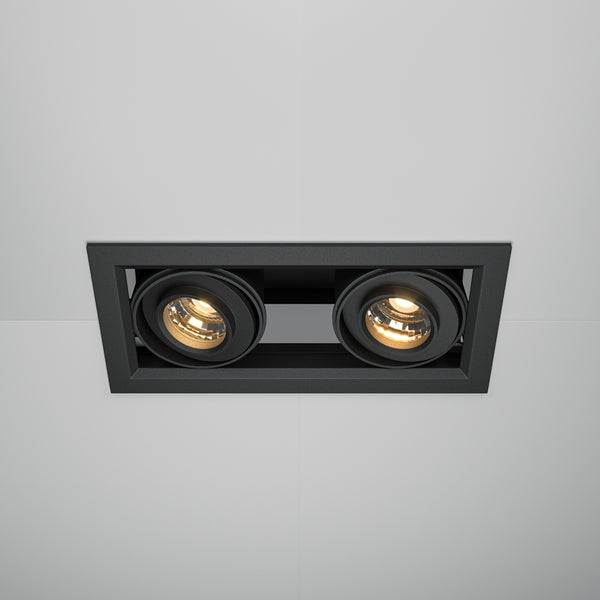
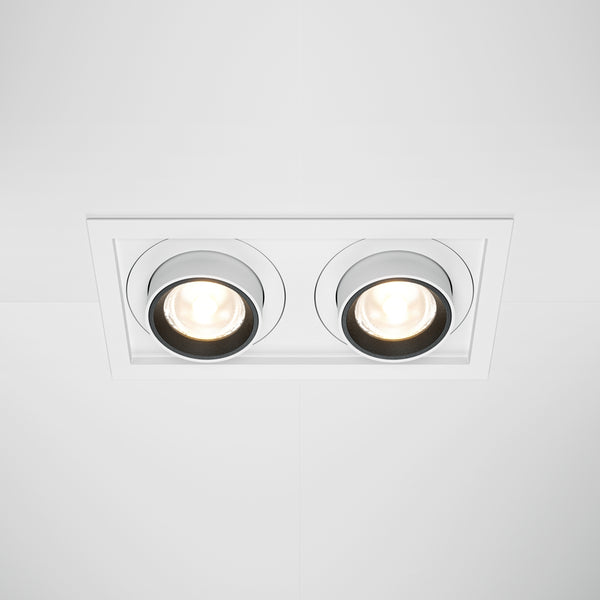
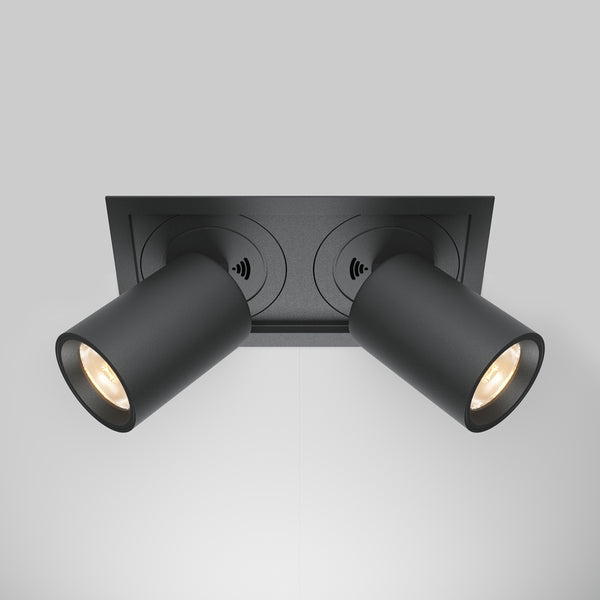
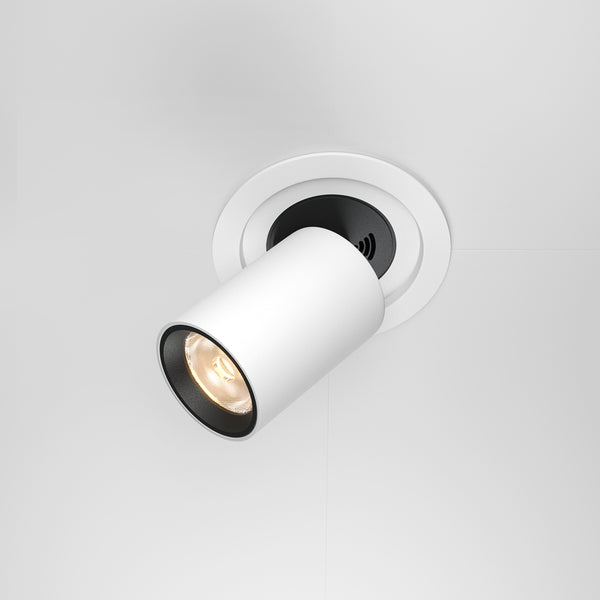
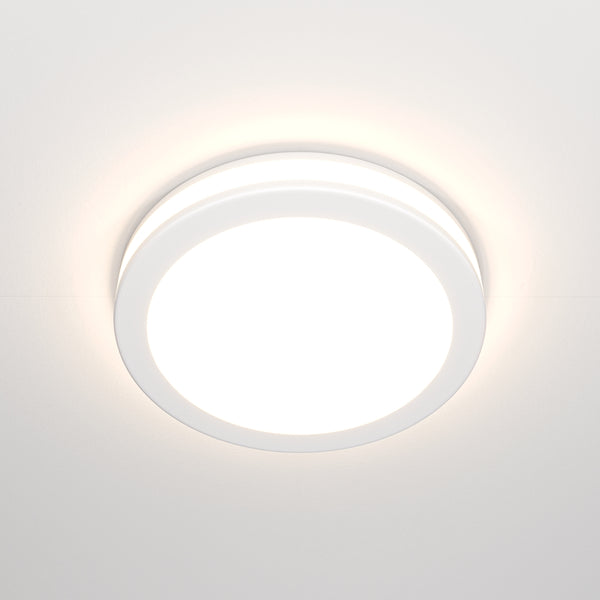
An adjustable model is there to aim: at a bookcase, a painting, a low sideboard. The Soressa spotlight, in aluminium and 12 W, is adjusted by hand without tools and also lights the room in warm light. To cover two nearby points from a single cut-out, the Onix twin adjustable carries two sources for 20 W in total. The rest of the ceiling can keep fixed points, and a few adjustable recessed spotlights are often enough to draw the accents. For the whole room, see how to plan living room lighting.
Recessed LED spotlight 220V dimmable: what to check
Two elements must be compatible: the spotlight and the dimmer. This information appears on the product sheet, and only some models are concerned. As for the dimmer, it must be designed for an LED load, otherwise the light flickers or dims in steps. The Calen spotlight, with a GU10 base, leaves the choice of bulb open while keeping a gold reflector. Finally, check how many points share the same circuit: mixing dimmable and non-dimmable models on one switch makes adjustment harder.
| Use | Light temperature | Rating | Type of light | What it changes |
|---|---|---|---|---|
| Living room, general lighting | Warm white (2700 to 3500 K) | IP20 | Integrated LED | Clean ceiling, even light |
| Living room, wall highlighting | Neutral white (3500 to 4500 K) | IP20 | Integrated LED or GU10 | Beam to direct, sharper relief |
| Hallway, circulation | Warm white (2700 to 3500 K) | IP20 | Integrated LED | Small diameters in line, soft light |
| Wet room, bathroom | Warm white (2700 to 3500 K) | IP44 or IP65 | Integrated LED | Withstands humidity and splashes |
Warm white or neutral white: which temperature for a recessed spotlight?
Warm white, between 2700 and 3500 K, gives an ambient light for the living room and hallway in the evening. Neutral white, between 3500 and 4500 K, lights work areas and details more sharply. It is best to keep a single temperature per room for an even ceiling.
Warm white 2700 to 3500 K: evening atmosphere
This light leans yellow and relaxes a living space. It suits living room, hallway and bedroom ceilings, where you sit or walk. A soft light for the bedroom is built on this base, with low-output points rather than one big flow. Warm white also forgives imperfect alignment, because contrasts are less harsh.
Neutral white 3500 to 4500 K: working light
Whiter, it makes colours and materials easier to read: fabric, paper, food. Keep it for areas where you look at what you are doing, such as a worktop, alongside a setup to light a worktop. In a living room in the evening, it can feel cold; mixing two temperatures on the same ceiling shows immediately and breaks the unity.
Recessed LED spotlight 220V bathroom: which protection rating?
An IP20 rating suits a dry ceiling, such as the living room or hallway. For a wet room, choose an IP44 model, which withstands splashes, or IP65 when humidity is higher. The rating is written on each spotlight sheet and is checked before installation.
IP20: where can it be installed safely?
IP20 simply means no protection against water is provided. These spotlights therefore go on a dry ceiling away from splashes: living room, hallway, bedroom, office. The Encastro spotlight, at 10 W and warm white, belongs to this family. Fitted away from sources of humidity, it fears nothing in particular.
IP44 and IP65: wet rooms and water splashes
IP44 covers splashes, which is enough above a washbasin or a bathtub, at a reasonable distance. IP65 withstands water jets and is a must in a very damp room. These models also exist as recessed spotlights for kitchens, near the sink. If you want to continue outside with outdoor spotlights, the rating is chosen according to exposure to rain.
| Rating | Suitable room | What the rating protects |
|---|---|---|
| IP20 | Living room, hallway, dry ceiling | No protection against water: for dry rooms only |
| IP44 | Wet room, bathroom | Withstands water splashes |
| IP65 | Very damp room, sheltered outdoor area | Withstands water jets |
Integrated LED or GU10 base: which to choose for a recessed spotlight 220V?
An integrated LED is one with the spotlight: the light is set once and for all and the ceiling stays clean. A GU10 base takes a bulb that you replace, or whose temperature you change, without removing the fitting. Both families sit side by side in the selection.
GU10 bulb: change the light without changing the spotlight
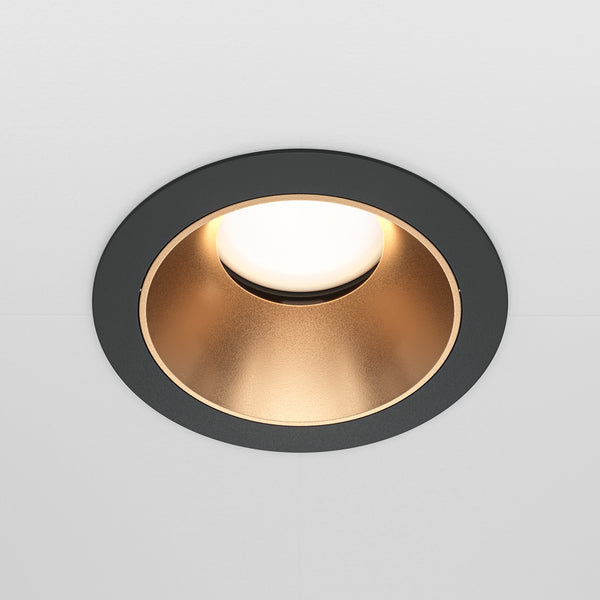
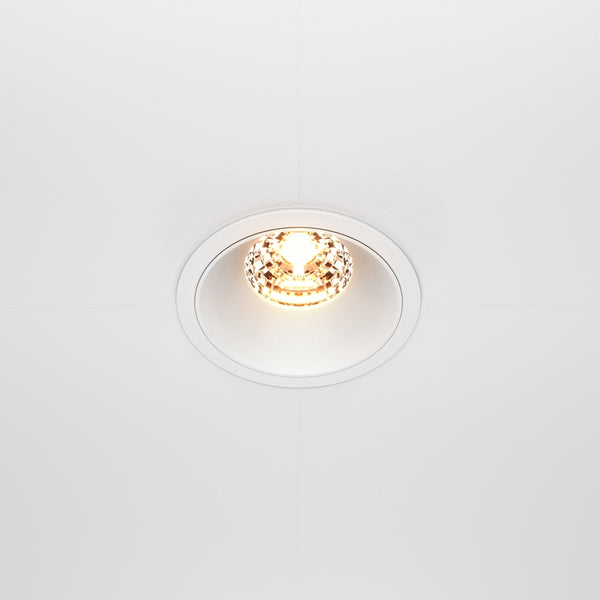
The move is simple: unscrew the bulb, fit another one respecting the maximum wattage shown. It is useful when you want to correct a shade afterwards, or replace a worn source. The Aurel spotlight, with a GU10 base and a black and gold ring, illustrates this approach.
Integrated LED: a light fixed once and for all
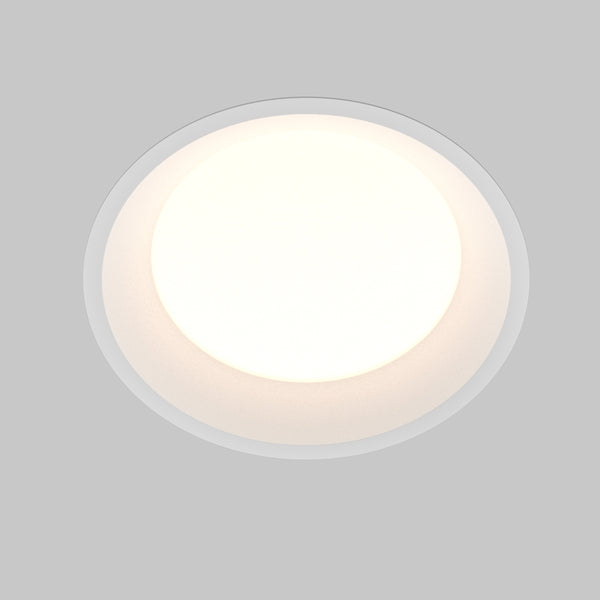
Here the source does not separate from the fitting: the temperature announced is the one you get, and the match between several spotlights on the same ceiling is immediate. The Luno spotlight, in neutral white with a ribbed diffuser, plays that card. The trade-off is known: at the end of its life, you change the spotlight. For a ceiling with several points, design recessed spotlights offer crafted shapes that stay consistent with one another.
How do you install and maintain a recessed LED spotlight 220V?
A recessed spotlight is fitted into a cut-out drilled in the ceiling: check the depth available, align the points, then aim the adjustable models at the areas to be lit. Maintenance is limited to a soft cloth, without product, once the fitting is switched off.
Recessed LED spotlight 220V without transformer, extra flat: when to choose it?
The free height above the ceiling often decides the model. Between a slab, a void occupied by ducts or a thin build-up, a flat model fits where a deeper box will not. Take the measurement before drilling, then check it against the sheet: this is the criterion that avoids a returned parcel.
Aim the spotlights rather than multiplying light points
A directed beam lights more usefully than an extra point placed at random. Aim at a wall, a step, a piece of furniture, and keep the rest of the ceiling understated. That is the logic of a setup to light a staircase, where each step gets what it needs. Over a large area, a few well-aimed adjustable recessed models replace a dense line-up that tires the eye.
Should the spotlights be complemented by a ceiling light, a chandelier or an LED wall light?
Recessed spotlights cover general lighting and accents, while a ceiling light or a chandelier brings a visible central point and an LED wall light dresses a wall. Layering two sources is done by use: one lights the room, the other sets the mood, each with its own moment.
LED ceiling lighting: how do you layer the sources?
The clearest approach is to give everyday lighting to the recessed spotlights, then add a central source for meals or reading. This second source is chosen from all our light fittings, according to the height of the room and the style already in place. Two separate switches let you turn on one without the other, which changes the mood in a single move.
Apply light to the wall rather than the ceiling
A wall light shines upwards or downwards, without adding a point to the ceiling. It suits a narrow hallway, a headboard or a bare wall worth enhancing. To complete the lighting of the room, it sits well with discreet recessed spotlights. The guiding idea stays simple: a calm ceiling, and light where you look.
Which colour and shape of recessed spotlight for a clean ceiling?
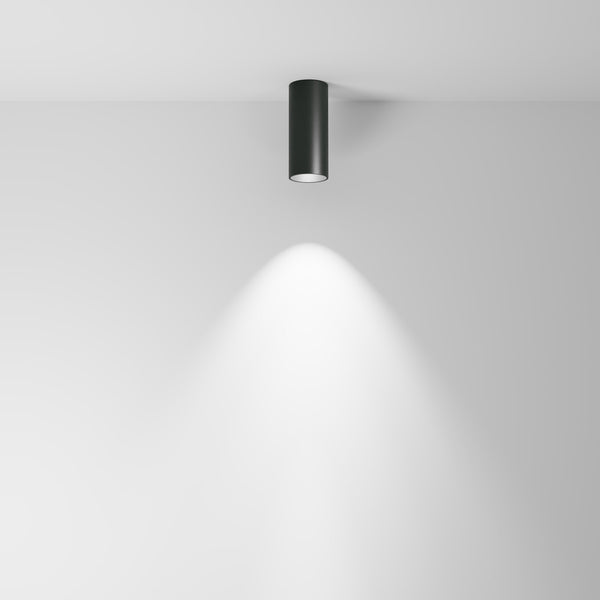
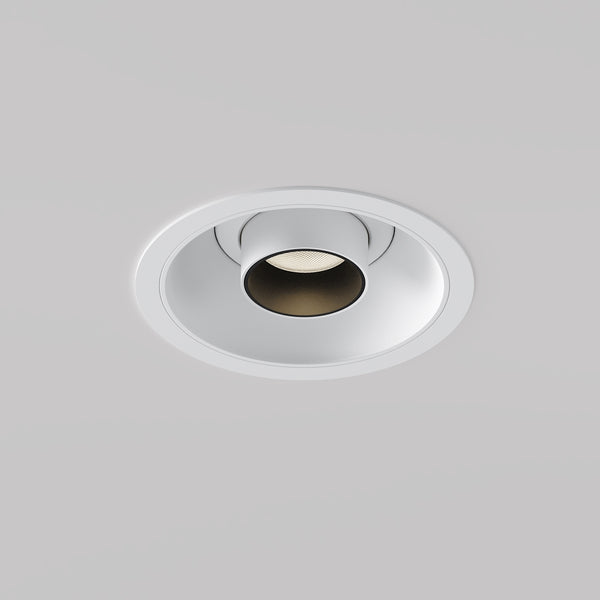
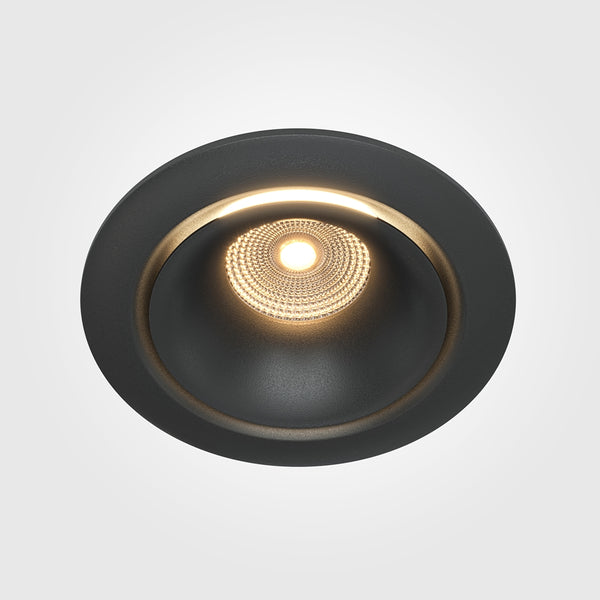
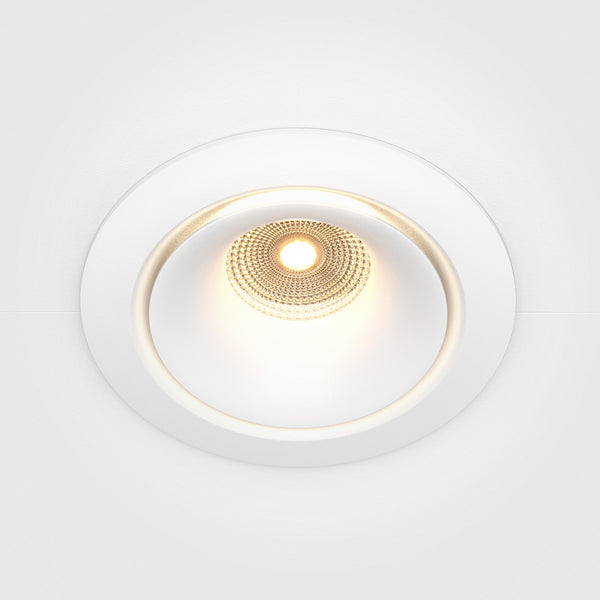
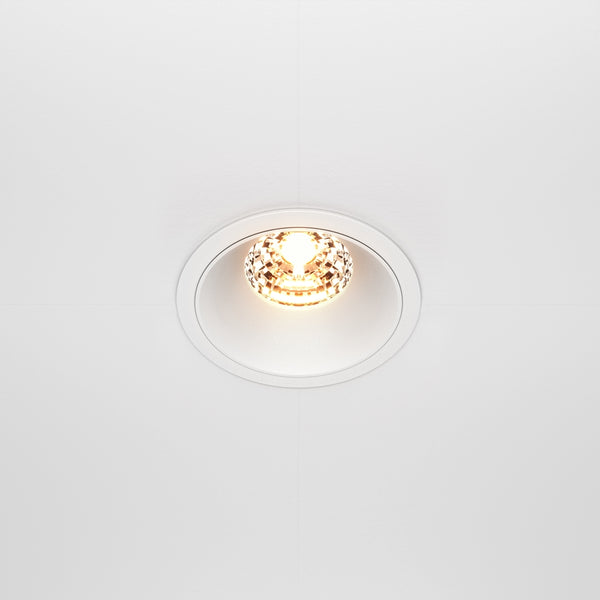
A white finish blends into a white ceiling, a black finish draws sharp points, and gold draws the eye to a detail. In terms of shape, round aligns easily, square follows straight lines and tube draws a line. One single family per room remains the clearest.
White, black or gold: what the finish changes on the ceiling
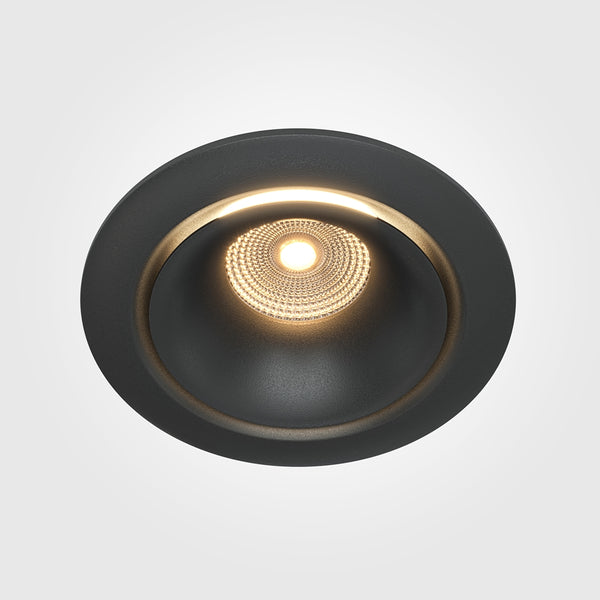
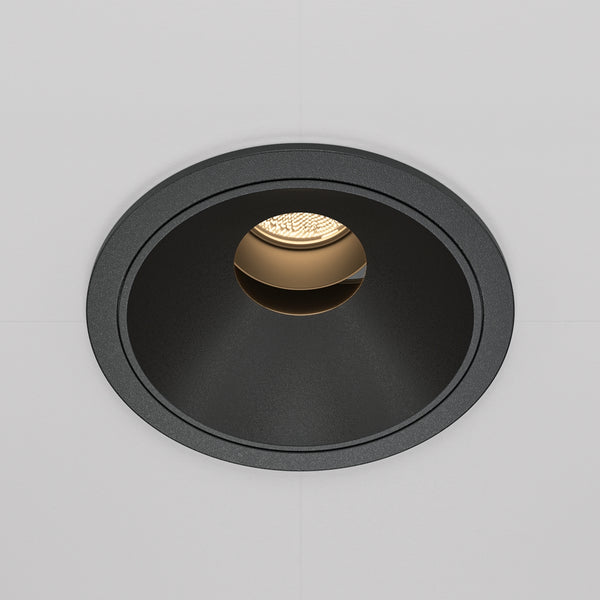
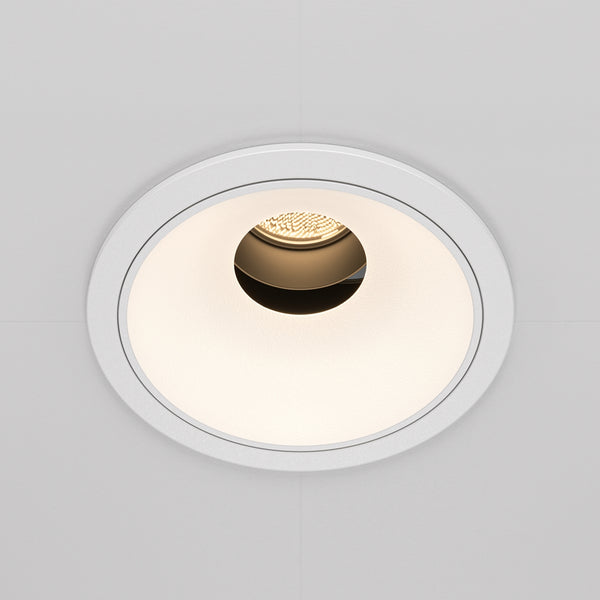
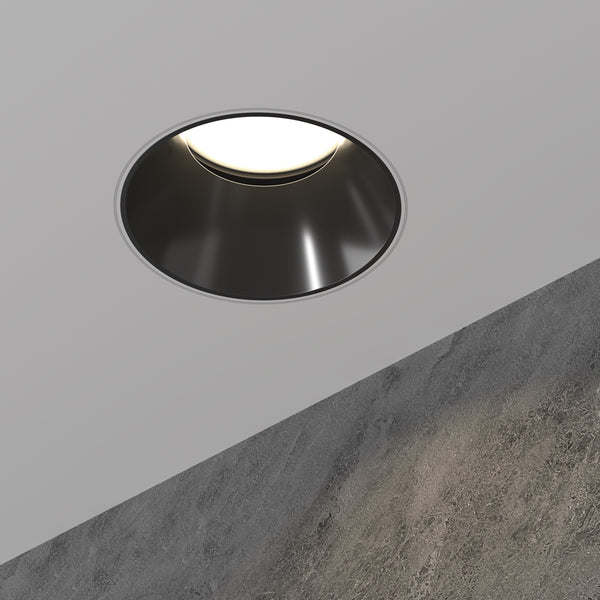
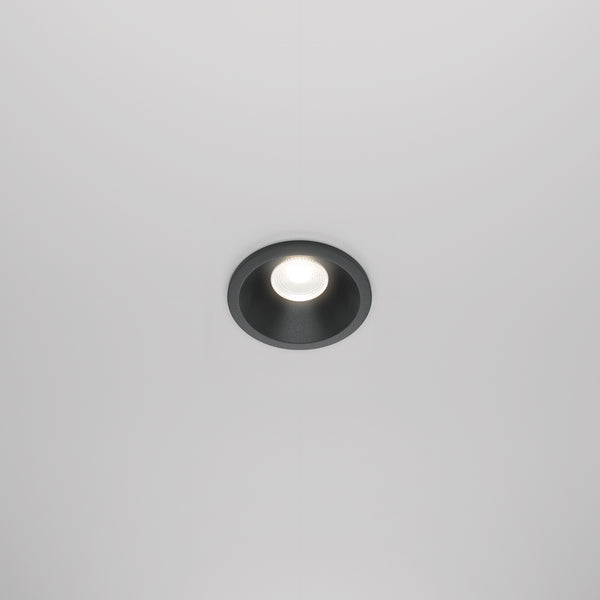
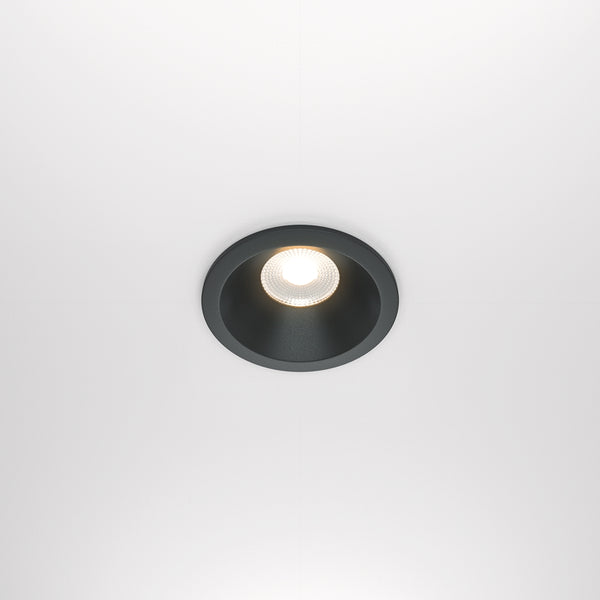
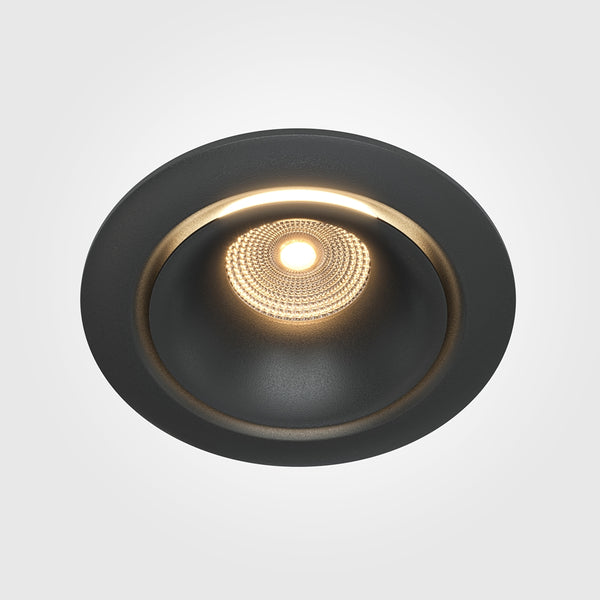
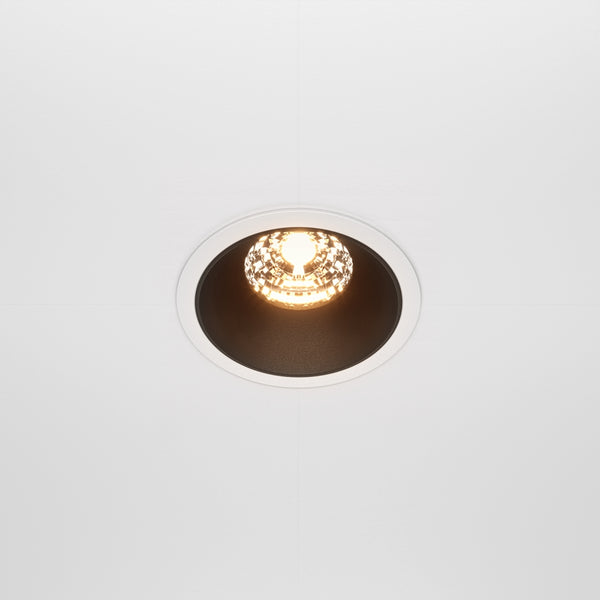
On a ceiling painted white, white finishes almost disappear and let the light show alone. Black recessed spotlights mark each point instead, which structures a high ceiling. A gold rim, as on some pieces with a gold detail, brings a discreet touch without changing the shape.
Round, square or tube: matching the spotlights to one another
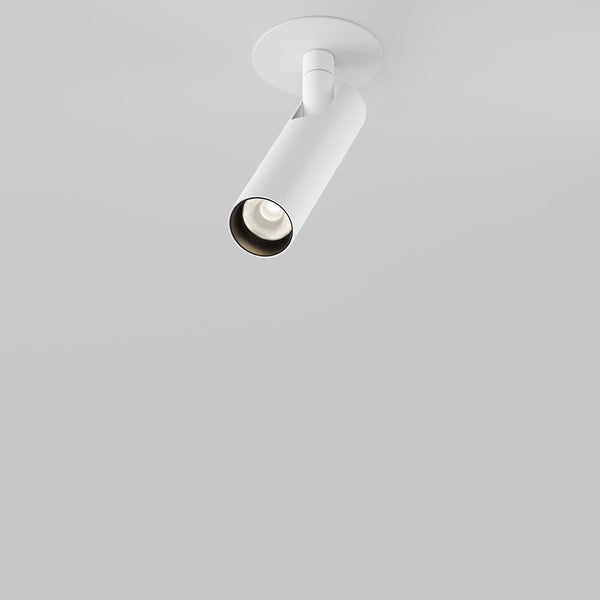
Round forgives approximate alignment and follows the curves of a room. Square suits a kitchen or a ceiling with right angles, and tube draws a continuous line, useful along a hallway. Whatever the choice, keep the same shape, the same finish and the same ceiling height throughout the room.
| Criterion | Options in the selection | What it changes |
|---|---|---|
| Base | Integrated LED or GU10 | The integrated LED sets the light, the GU10 is replaceable |
| Finish | White, black, black and gold, white and black | White fades away, black draws a point, gold draws the eye |
| Shape | Round, square, tube | Round aligns, square follows straight lines, tube draws a line |
| Adjustment | Fixed or adjustable | An adjustable model directs the beam at a wall or a worktop |
| Dimmer | Compatible or not | Only some models can be controlled with a dimmer |
Frequently asked questions about recessed LED spotlights 220V
Recessed LED spotlight 220V without transformer: how does it work?
The spotlight is designed for the 230 V mains: it connects to the lighting circuit without a conversion box to fit in the ceiling. It often replaces an old 230 V halogen spotlight of the same size. Fewer parts, so fewer points of failure and a simpler installation.
Can a recessed LED spotlight 220V be installed in a bathroom?
Yes, provided you choose a suitable protection rating: IP44 for a wet room exposed to splashes, IP65 when humidity is higher. These models exist in the selection. The rating appears on the spotlight sheet and is checked before purchase.
What is an adjustable recessed LED spotlight 220V for?
It lets you direct the beam without moving the fitting: at a wall, a bookcase, a piece of furniture or a worktop. You thus light a precise area instead of washing the whole room. The rest of the ceiling can keep fixed spotlights.
What is a good brand of LED spotlights?
Look at the sheet before the name: body material, base, protection rating, light temperature and warranty. At Designix, a customer service team answers questions on model choice and dimmer compatibility.
What are the drawbacks of LED lamps?
LED light is directional: it marks shadows more than a diffuse source. An integrated LED cannot be replaced, the spotlight has to be changed. Finally, not all models support a dimmer, and a neutral white can feel cold in a living room in the evening.
Choose your model, then check the sheet before ordering
Start with the room and the use, then the diameter and the depth available, and finally the protection rating. A Mirane spotlight at 5 W and small diameter suits a discreet series of points, while a large flush model lights a whole room with fewer points. Compare two or three references on these criteria before deciding.
Designix supports the choice: secure payment, tracked delivery, possible returns and a customer service team available to confirm dimmer compatibility or a protection rating. The whole selection is guaranteed for five years.