
Recessed kitchen spotlights



























- Tracked delivery to your country Tracked delivery
- Secure payment at checkout Multiple payment methods
- 14 days to change your mind 14-day returns
- Secure payment Secure payment
Not sure of your style? Find it in 30 seconds
A few questions, and we will show you the pieces made for you.
Frequently asked questions
How do I choose the right light output?
At what height should the light be installed?
What type of bulb?
Compatible with LEDs and dimmers?
Light changes everything
From statement chandeliers to discreet wall lights, we help you choose the right brightness, height and style for every room.
- Tracked delivery
- Pay in instalments, where available
- 14 days to change your mind
- Advice & showroom in Lyon, France
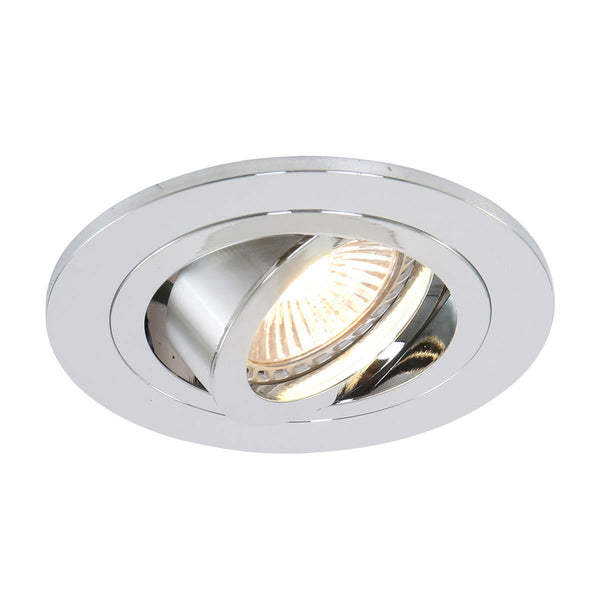
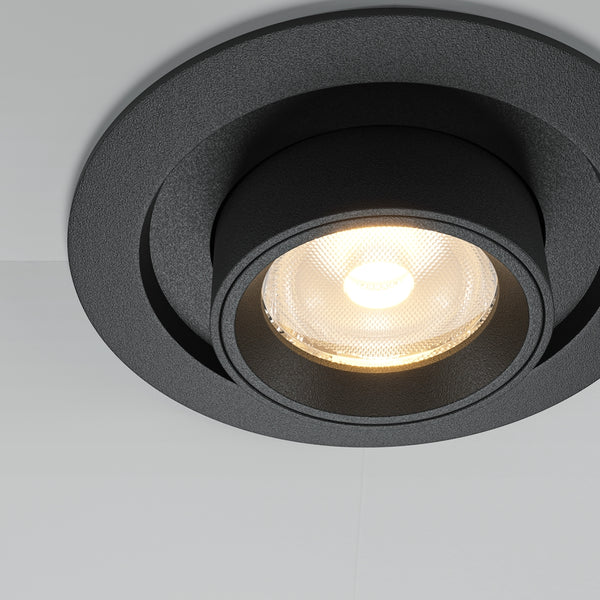
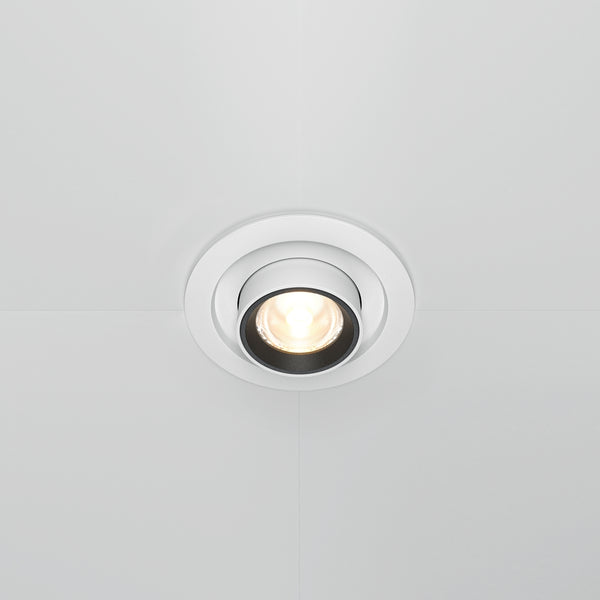
Plan a row of kitchen downlights above the worktop, one or two in the walkway, then light for the dining corner: in a kitchen, recessed spots are distributed by zones, never from a single central point. This selection brings together recessed downlights and one surface-mounted spot, in metal, aluminium, iron or linen, in IP20, with two light temperatures available, warm white 2700-3500 K and cool white 4500-6500 K.
What light does a recessed downlight give in a kitchen?
A recessed downlight sits inside the ceiling depth and lights by points, with no visible volume, unlike a ceiling light or a pendant. In this collection, two temperatures are available: warm white 2700-3500 K and cool white 4500-6500 K, for task or ambient lighting. The ceiling stays clean, worktops become easy to read and shadows fall behind you rather than on your hands.
Which recessed downlight for a kitchen: recessed or surface-mounted?
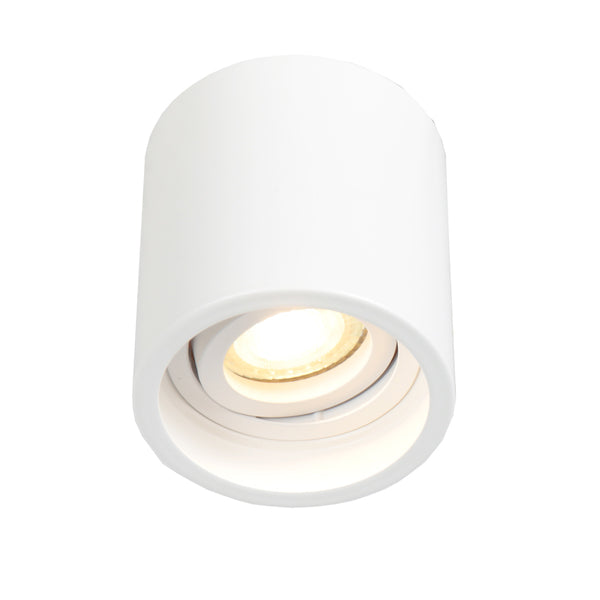
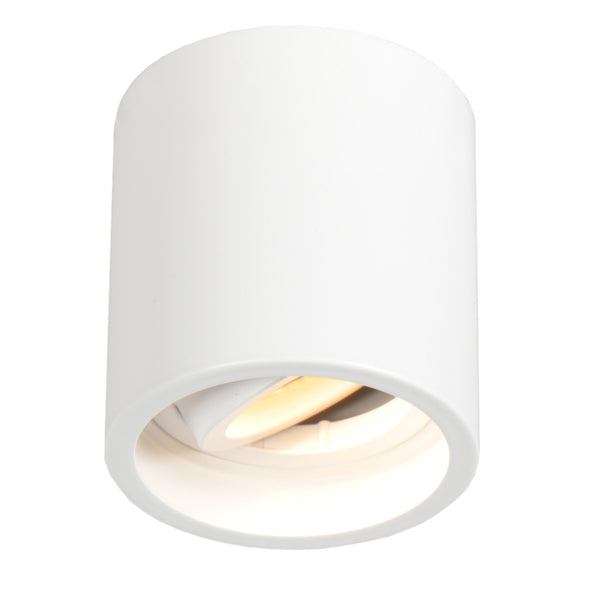
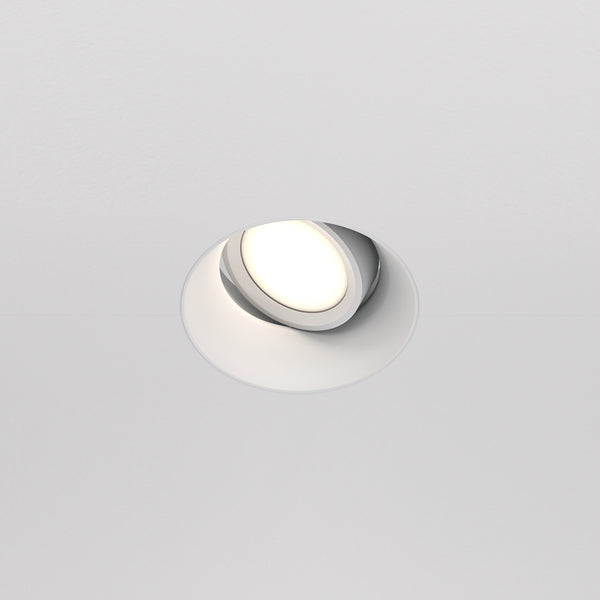
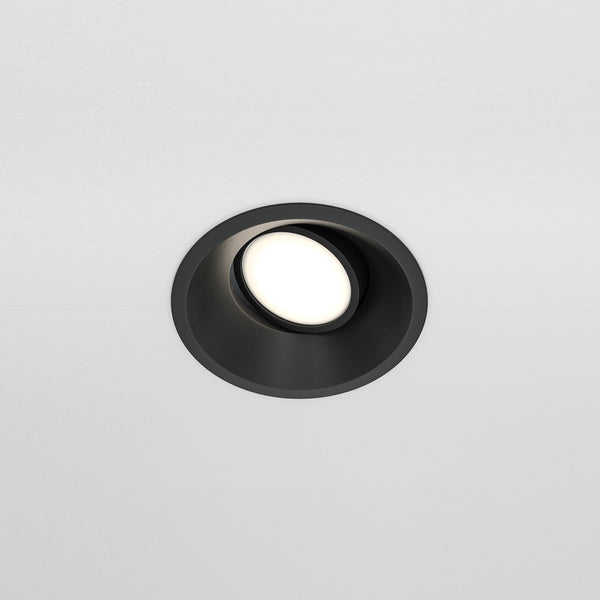
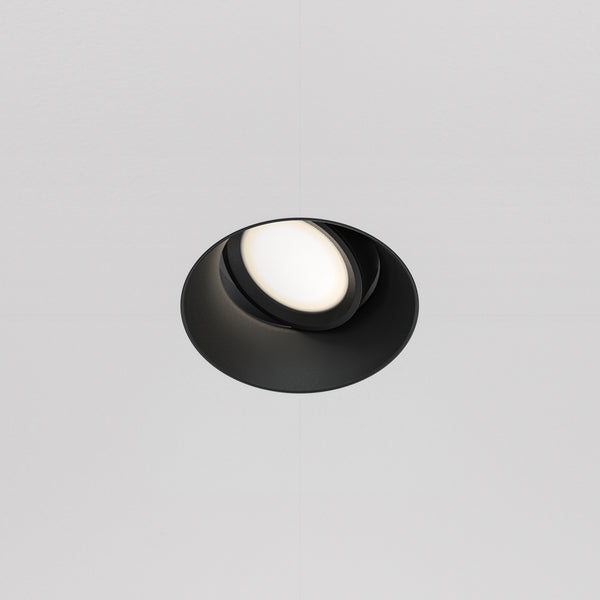
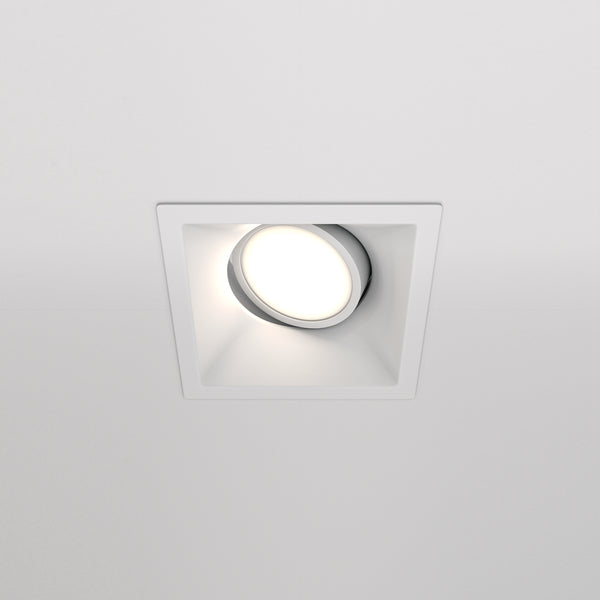
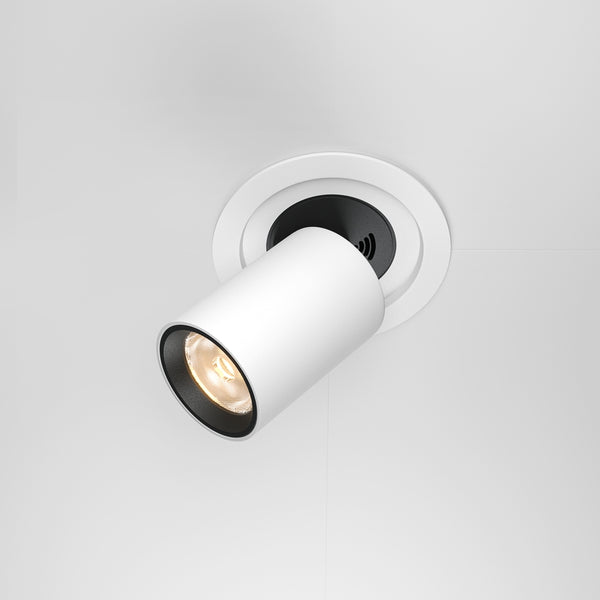
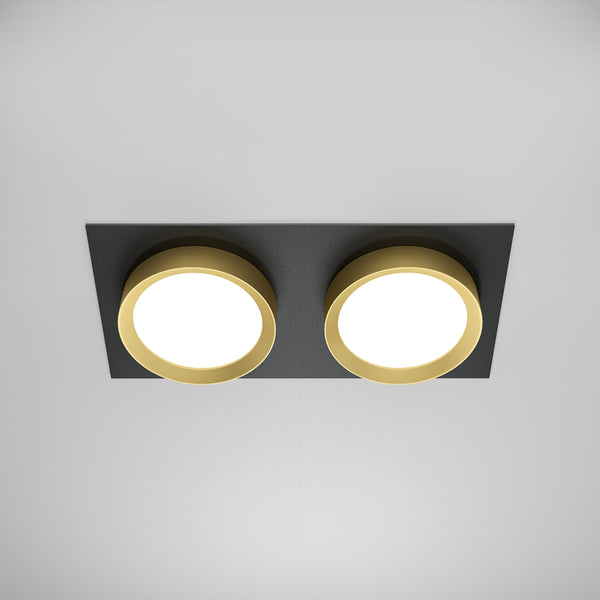
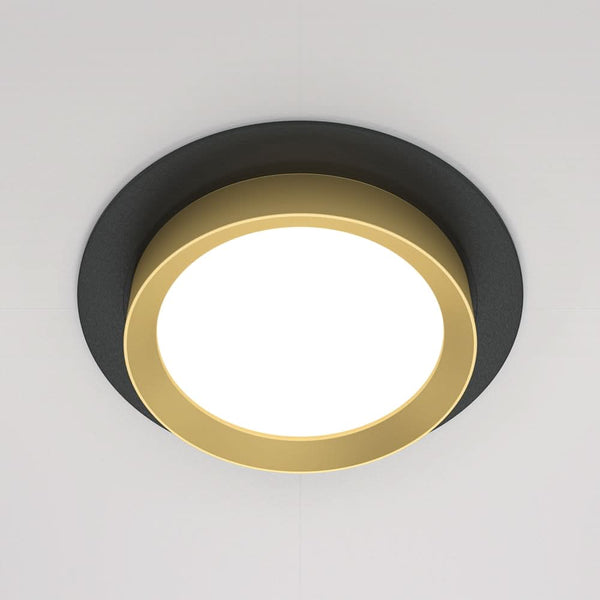
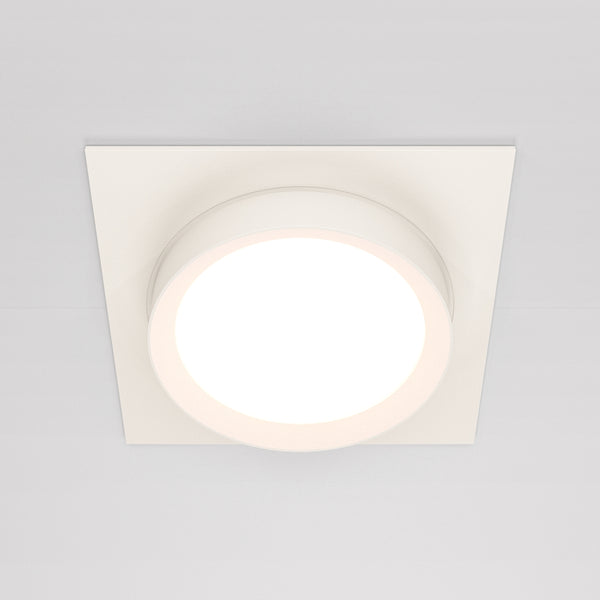
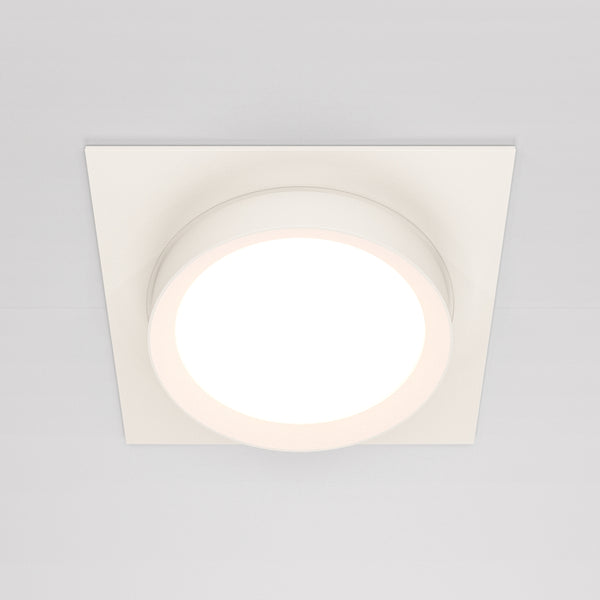
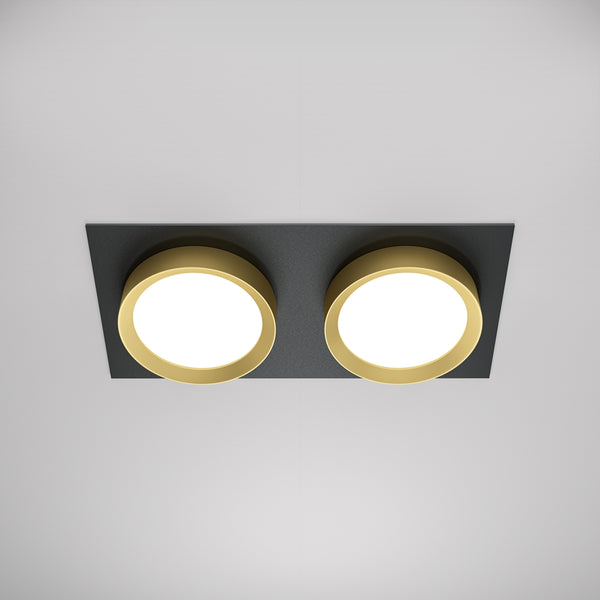
A recessed model sits flush with the ceiling: nothing hangs down, the line stays continuous and the fitting disappears. A surface-mounted spot, like the cylindrical model with a gold reflector, fixes under an already finished ceiling, in a corner or in a room where cutting large holes is not an option. For a false ceiling or a new build, recessed is more understated. For a quick renovation, surface mounting avoids opening the slab. The choice therefore depends less on style than on the space available above your head, to compare in our selection of directional recessed downlights.
Recessed LED downlight for a kitchen: warm white or cool white?
Cool white 4500-6500 K renders colours accurately and movements clearly: it is the light that suits above a worktop and a sink. Warm white 2700-3500 K, softer, accompanies the table and evenings. LED technology equips some of the models in the collection. If in doubt, keep cool above the prep areas and warm for the dining corner. The details of both moods are presented in our selection of LED downlights for kitchens.
How to arrange recessed downlights in a kitchen?
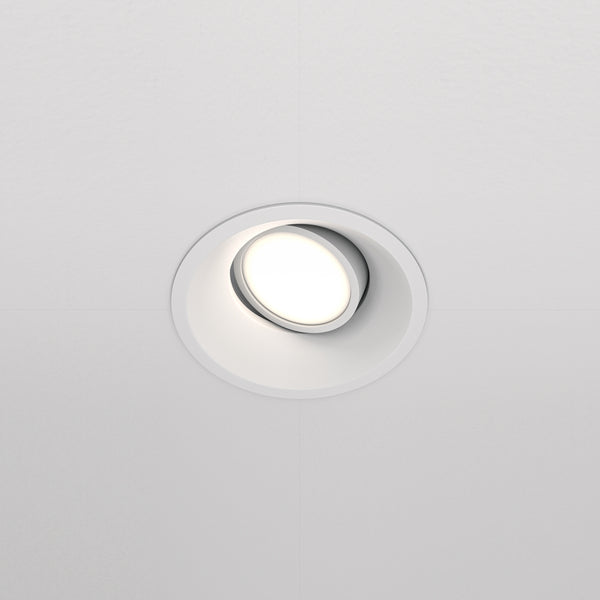
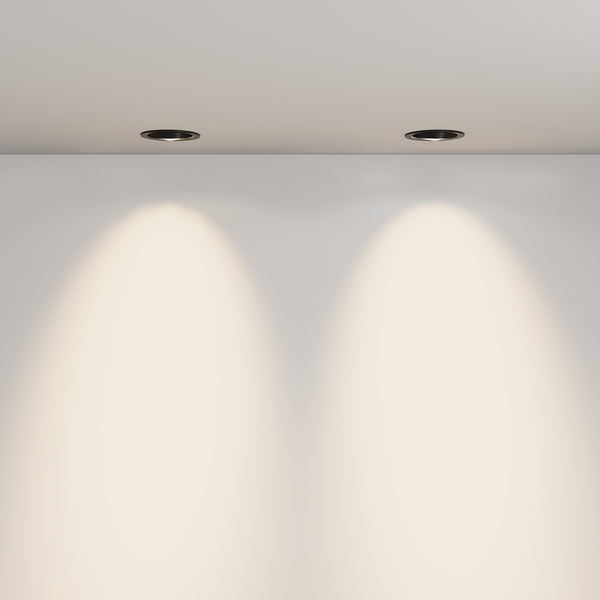
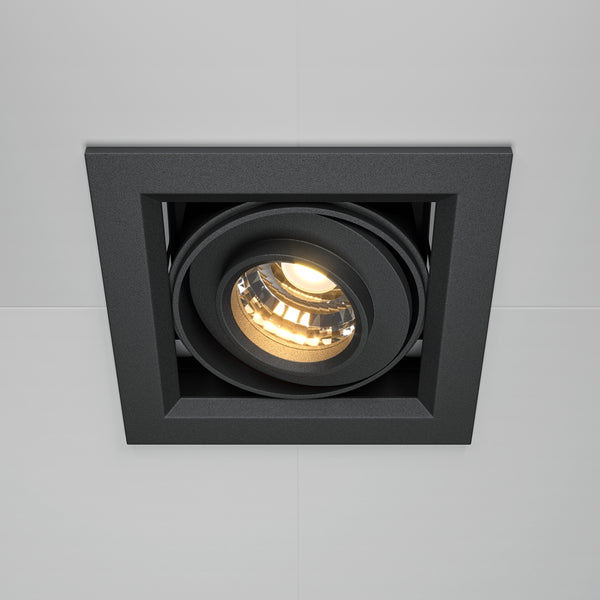
Spots are distributed by zones rather than from a single central point: a row above the worktop, one or two in the walkway, then the dining corner. Models with directional heads let you aim light at the worktops without shining directly into your eyes. A regular alignment, at a constant distance from the wall, always reads better than a random scatter.
Recessed downlight for kitchen units: how to light the worktop?
Place the points set back from the edge of the worktop, so the light falls in front of your hands and not behind you. A compact model slips under a wall unit: the cylindrical spot with a gold reflector measures ø 8.5 cm by 9 cm high, with a directional reflector that sends the beam onto the surface. Its GU10 base lets you change the bulb without removing the fitting. See the cylindrical spot with gold reflector for this type of close installation.
How to distribute spots between the worktop and the walkways?
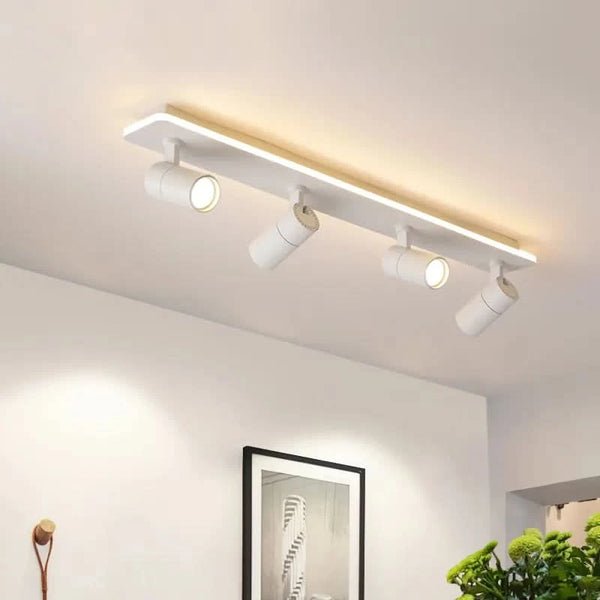
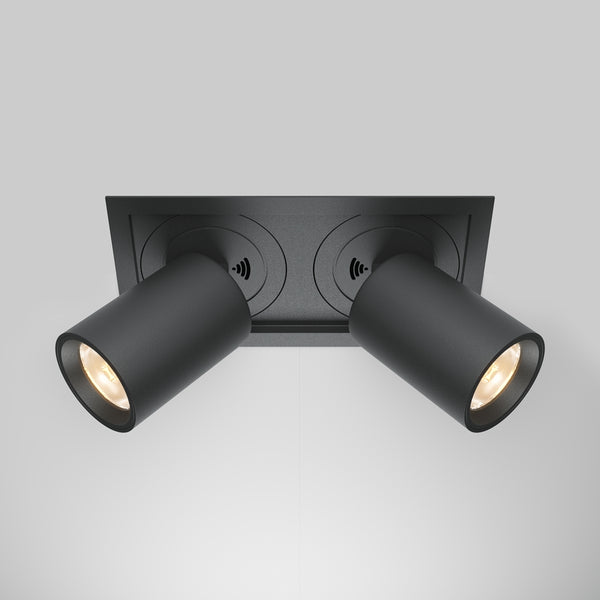
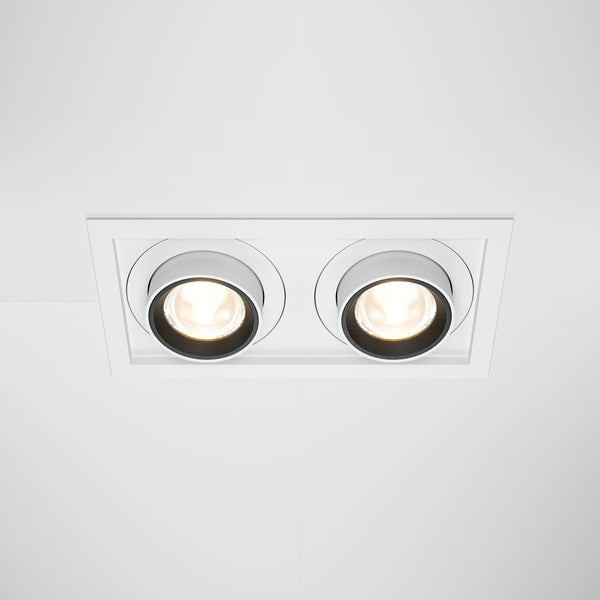
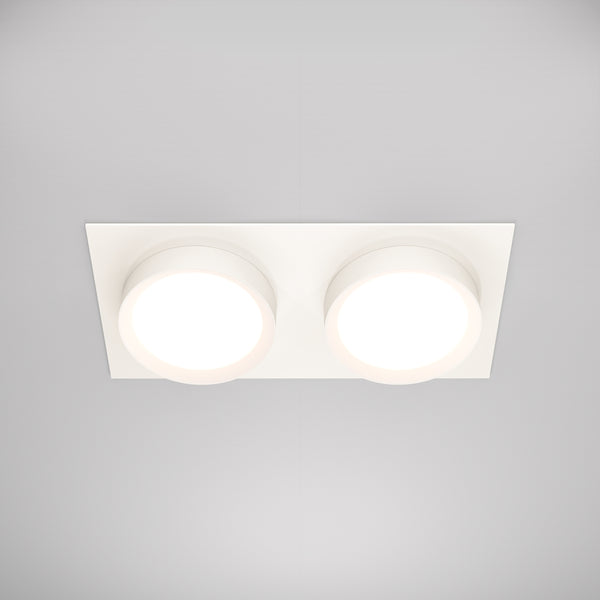
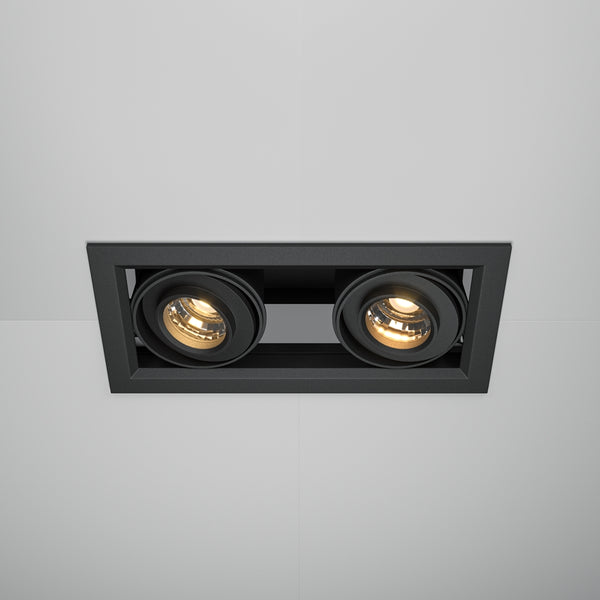
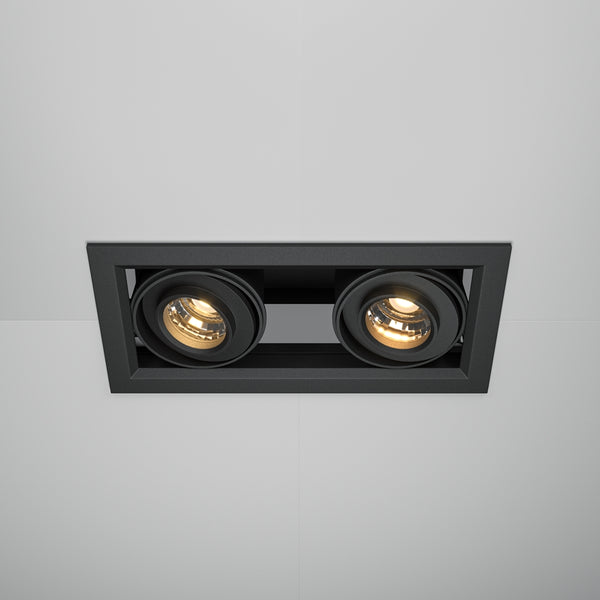
A walkway does not need as much light as a worktop: one or two points are enough to remove dark zones. The Otéa directional-head spot comes in two, three and four heads, with lengths of 35, 60 and 80 cm for 9 cm depth and a head of 10 x 5 cm: a single ceiling cut-out feeds several beams. Find the Otéa directional-head spot and the other recessed directional LED downlights.
How many LED downlights should be installed in a kitchen?
The number depends on the floor area, the ceiling height, the colour of the walls and the wattage chosen. This collection offers models of 10 W, 19 W, 30 W and 40 W. You calculate zone by zone, first the worktop, then the circulation, rather than a single total.
A low ceiling concentrates the light: a few points are enough and you go down in wattage. A high ceiling, dark walls or a dark worktop require additional points instead. A multi-head model covers a greater length with a single supply, which simplifies the layout in a long kitchen.
Ceiling light, pendant or recessed downlight: which fitting for a kitchen?
A ceiling light illuminates the centre of the room, a pendant hangs above an island or a table, a recessed downlight is distributed across several points and frees the ceiling. All three can coexist: spots for working, a pendant or a chandelier to mark the dining corner. This collection contains only spots, recessed and surface-mounted; the other families can be found in our lighting department.
Kitchen ceiling light or recessed downlight: what to choose according to ceiling height?
Under a low ceiling, recessed is more comfortable: nothing hangs down at eye level and the light does not concentrate in a patch in the centre. With good height, a ceiling light or a pendant brings a visible point that structures the room. The usual guide places a pendant above a table at around 75 to 85 cm from the surface, but this height is mostly adjusted by eye, according to the size of the guests and the width of the shade.
Modern kitchen chandelier or kitchen pendant: when to prefer them?
A chandelier and a pendant are chosen when you want a visible object above an island or a table, a point the eye follows on entering. A recessed downlight, on the other hand, fades away in favour of the light alone. In a kitchen open to the living room, mixing the two makes the room readable: a line of recessed LED downlights for kitchens over the worktops, a hanging fitting above the table.
Warm white or cool white: which light colour for a kitchen?
Cool white 4500-6500 K gives a clear light, suited to worktops and precise movements; warm white 2700-3500 K softens the dining corner and evenings. This collection offers both temperatures, which allows you to mix moods within the same room.
In a kitchen open to the living room, stay consistent: an isolated cool white facing a warm white living room creates a visible break. The dimmer, present on some of the models, lets you lower the intensity in the evening without changing the colour. It applies to the dimmer-compatible models.
| Criterion | Values in the collection | What it changes on site |
|---|---|---|
| Ingress protection | IP20 | Fitting intended for indoor and dry rooms, to be protected from splashes |
| Base | GU10 on some of the models | Bulb replaceable without removing the fitting |
| Light temperature | Warm white 2700-3500 K; cool white 4500-6500 K | Cool for working, warm for the dining corner |
| Wattage | 10 W, 19 W, 30 W and 40 W depending on the model | Determines the number of points needed to cover a zone |
| Dimmer | Possible on some of the models | Lets you lower the intensity in the evening |
| Warranty | 2 years on the whole selection | Identical cover whatever the model |
How to match recessed downlights to a modern kitchen decor?
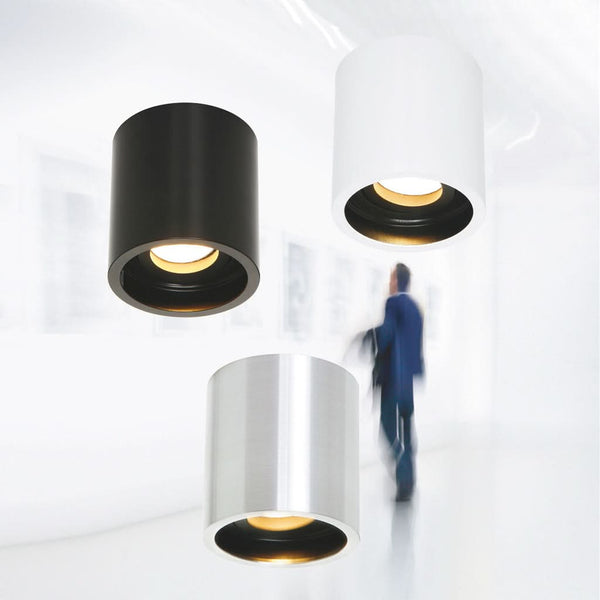
A modern kitchen decor calls for discreet light and consistent colours. This collection offers spots in white, black or grey, in metal, aluminium, iron or linen, in tube or round shape. The chosen colour barely reads on the ceiling: it accompanies the units more than it imposes itself.
Recessed downlights in white or black in a kitchen?
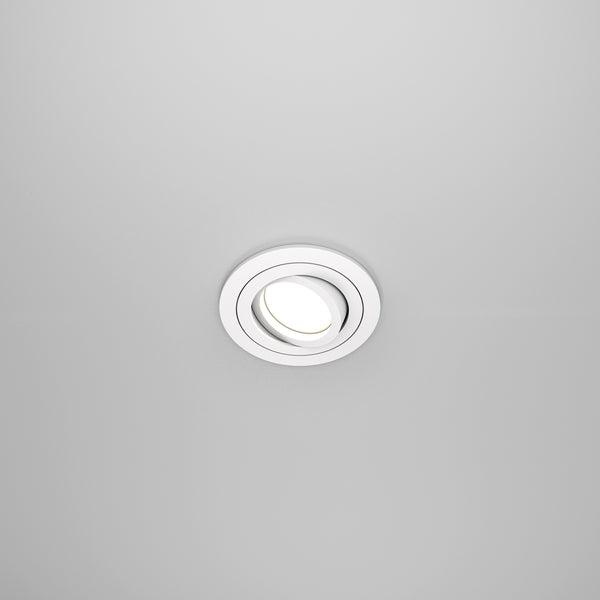
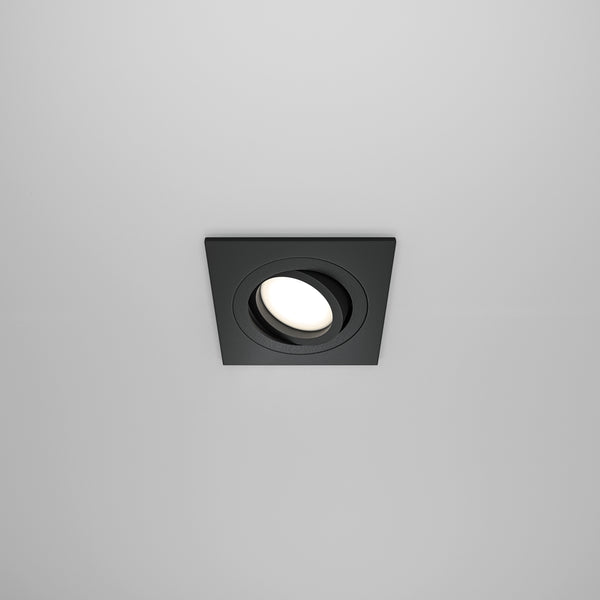
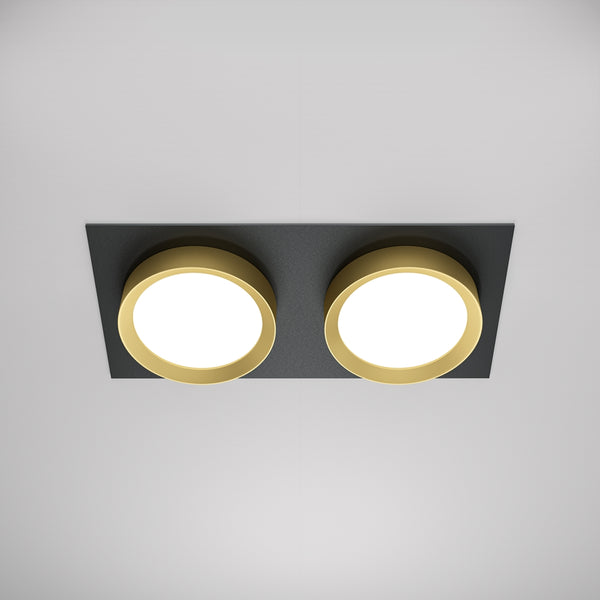
On a white ceiling, a white spot disappears completely and leaves the ceiling smooth, which suits light kitchens and small rooms. Black, on the other hand, draws sharp points and matches dark worktops, graphic splashbacks and anthracite joinery. Grey sits between the two and is used when the units already mix several shades. Compare the results in our white recessed downlights and our black finishes.
Modern kitchen decoration: matching the light to the rest of the room
Shape matters as much as colour. A tube model aligned along the length of the worktop gives a clean line, suited to rectilinear kitchens. A round model, less directional, suits rooms where the units are already highly detailed. The design of the fitting is chosen last, once the zones are defined. Browse our modern kitchen special and our spots with a crafted design to calibrate this result.
| Model | Format and dimensions | Materials | Base | Temperatures | Wattages | Dimmer |
|---|---|---|---|---|---|---|
| Otéa LED spot with directional heads | 2 heads: L35 x W9 x H5 cm; 3 heads: L60 x W9 x H5 cm; 4 heads: L80 x W9 x H5 cm; head 10 x 5 cm | Metal, aluminium, iron, linen | Not specified | Warm white 2700-3500 K and cool white 4500-6500 K | 19 W, 30 W, 40 W | Yes |
| Lunaro cylindrical LED spot with gold reflector | ø 8.5 cm, height 9 cm | Plastic, metal | GU10 | Not specified | 10 W | Not specified |
Can these spots be installed anywhere other than a kitchen?
Yes. These spots also cover the living room, bedroom, dining room and hallway, depending on the model. In a small room, point lighting replaces a central fitting, and directional models let you light a wall or a surface without moving the spot.
Recessed downlights for a living room: what differences from a kitchen?
In a living room, light seeks less to illuminate a task than to relax the room: warm white and points aimed at a wall or a bookcase are preferred. IP20 remains the same, since the room is dry. Both models in the collection find their place there, including the living room version of the gold surface-mounted spot.
What lighting for a hallway, entrance or staircase?
In a hallway, regularly spaced points are enough, without seeking high wattage. An entrance benefits from a clearer light on faces and keys, while a staircase above all needs clear marking of each step, without dazzling the person coming down. These three uses are handled with the same families of spots, to be found in our hallway special, our selection for lighting an entrance and our staircase special. For a bedroom, an office or a circulation room, the approach remains the same: few points, well placed.
How to install and maintain recessed downlights in a kitchen?
First check the depth available above the ceiling and the dimensions of the model, then switch off the power before any work. A model with a GU10 base lets you change the bulb without removing the fitting. The warranty is two years on the whole selection.
For maintenance, dry dusting of the diffuser or reflector is enough. The IP20 that equips the whole collection means that these fittings are intended for dry rooms: direct water splashes, hosing down and installation directly above a sink or hob should therefore be avoided, where a hood and offset lighting are preferred.
For a multi-head model, check the length of the fitting and the space between the heads in relation to your worktop run: look at the Otéa directional-head spot before confirming.
Frequently asked questions about recessed downlights for kitchens
How many LED downlights should be installed in a kitchen?
The number depends on the floor area, the ceiling height, the colour of the walls and the wattage chosen. In this selection, the available wattages are 10 W, 19 W, 30 W and 40 W. You reason zone by zone: worktop, circulation, dining corner, rather than a single total for the room.
How to arrange recessed downlights in a kitchen?
Align the spots with the work zones rather than the centre of the room: one row above the worktop, another in the walkways. Directional models, like the spot with adjustable heads, let you aim light at the worktops without dazzling, while keeping a clean alignment on the ceiling.
Which recessed downlight for a kitchen should you choose?
It all depends on the light you want and the space available. This collection brings together recessed downlights and one surface-mounted spot, in metal, aluminium, iron or linen, in white, black or grey. The available temperatures are warm white 2700-3500 K and cool white 4500-6500 K, with wattages from 10 to 40 W.
Recessed downlight for kitchen units: which one to choose?
For a wall unit or a niche, first look at the dimensions: the cylindrical spot measures ø 8.5 cm by 9 cm high, which fits easily under a unit. Its GU10 base lets you change the bulb without removing the fitting, and its directional reflector sends the light onto the worktop.
Modern kitchen chandelier or recessed downlights?
A chandelier or pendant is chosen when you want a visible light point above an island or a table. Recessed downlights fade into the ceiling and light the worktops. Both can coexist: spots for working, a pendant for the mood of the dining corner.
The survey is simple: note the zone to be lit, the light temperature you want and the space available above the ceiling, then browse the collection with those three answers in mind. To extend to other rooms, our all our light fittings groups every family, and the gold finishes complete the selection for a warmer touch.
--- cle: handle --- recessed-downlights-for-kitchens --- cle: meta_title --- Kitchen downlights: how to choose and arrange --- cle: meta_description --- Kitchen downlights: how to arrange them, which light to choose and which model to install by room. Criteria, GU10 base, IP20 and practical advice.



