
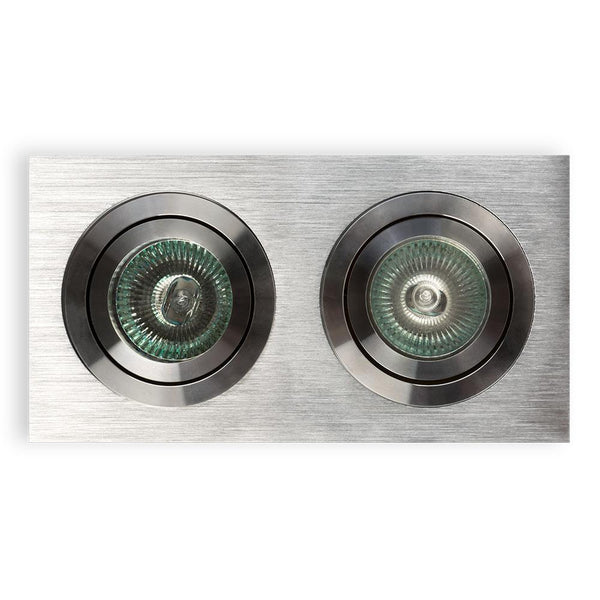
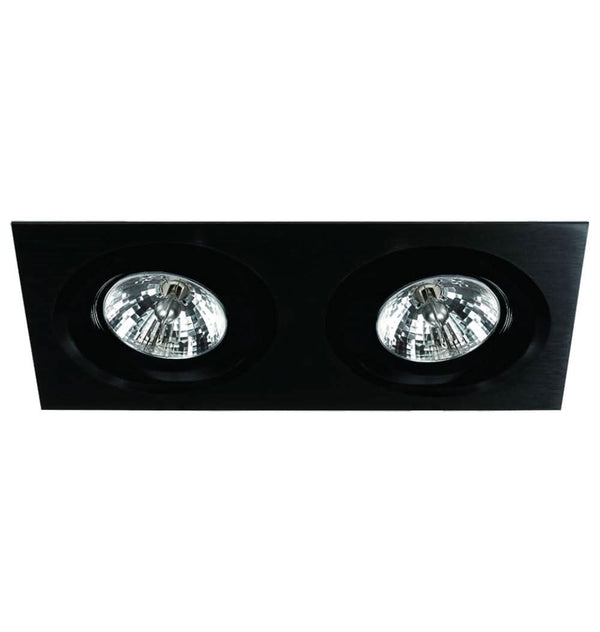
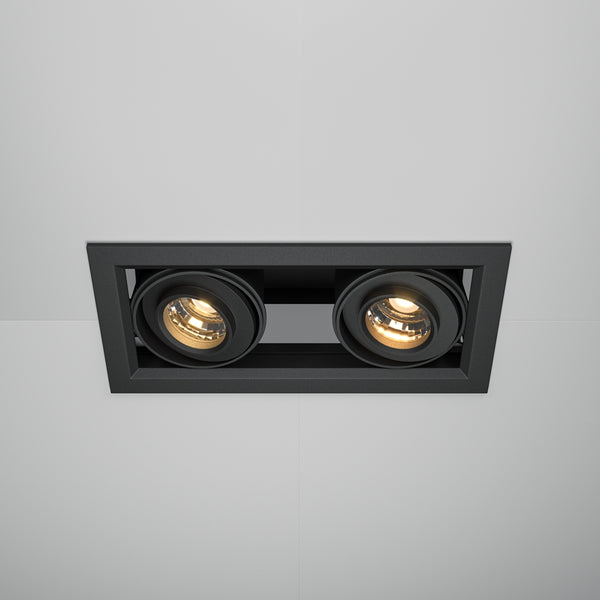
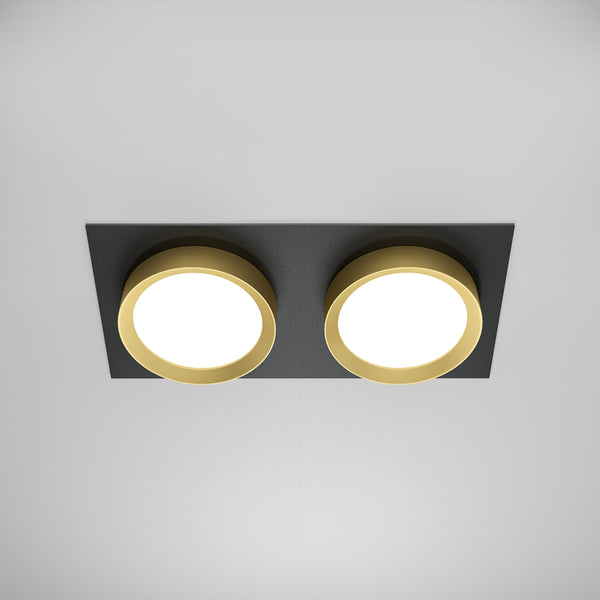
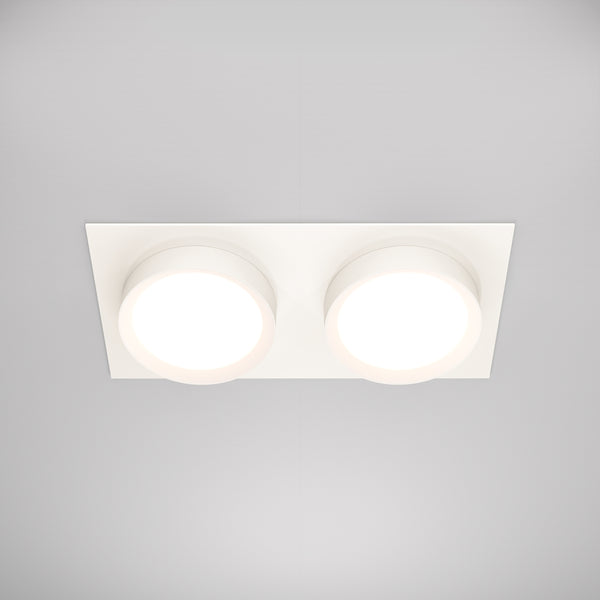
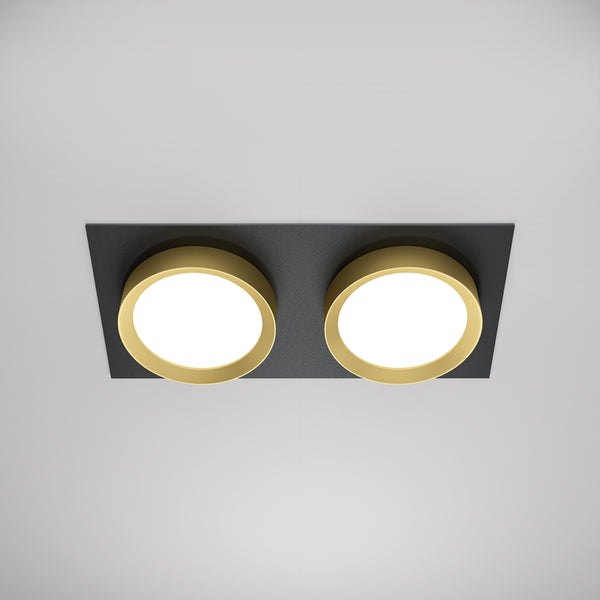
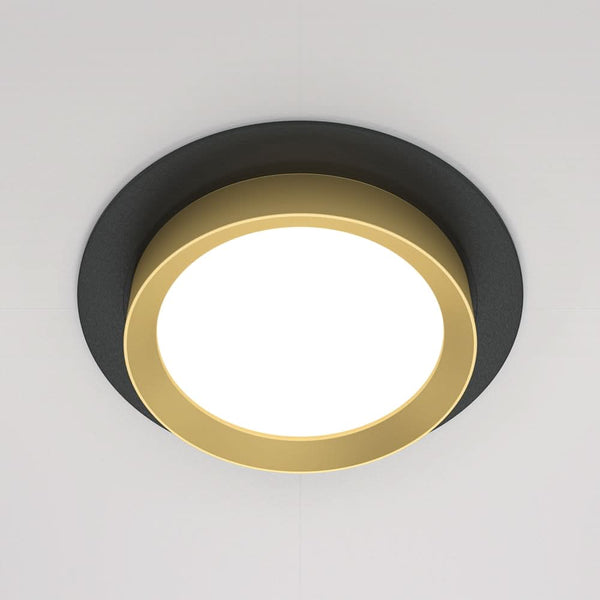
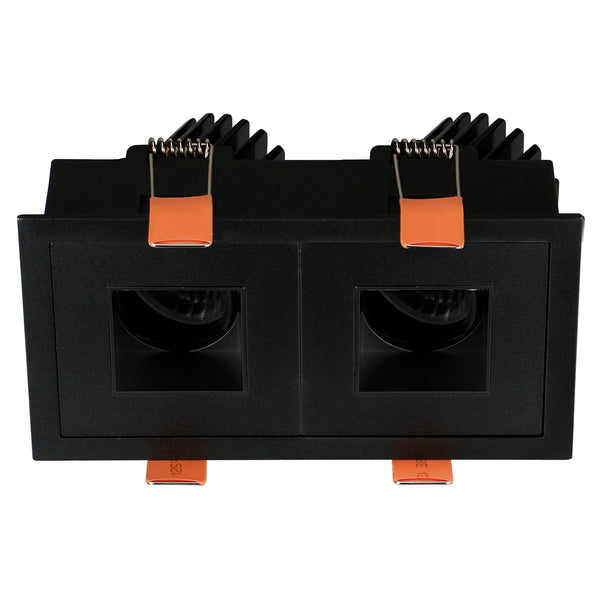
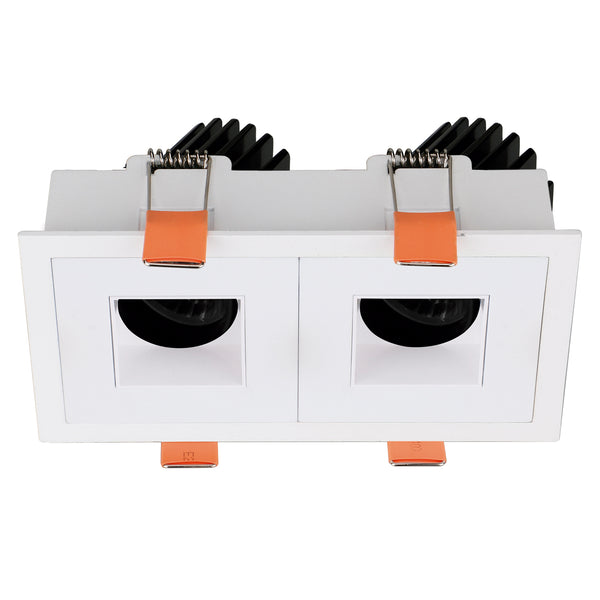
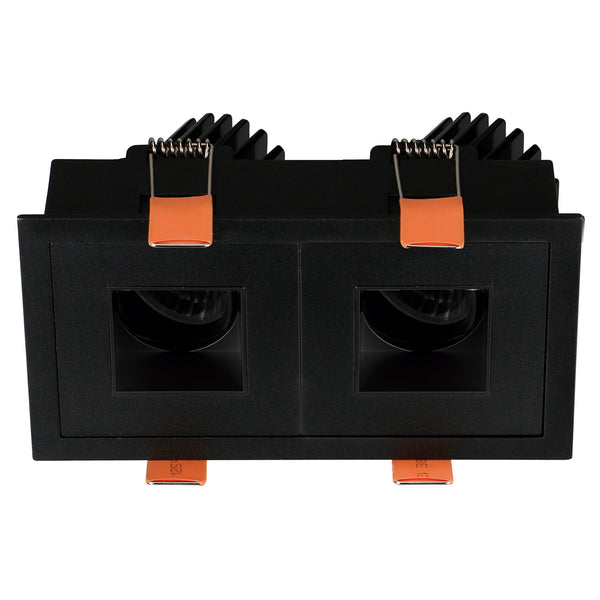
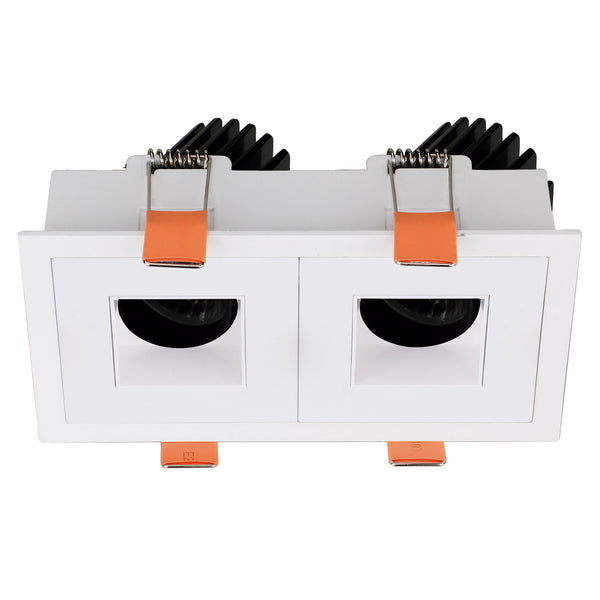
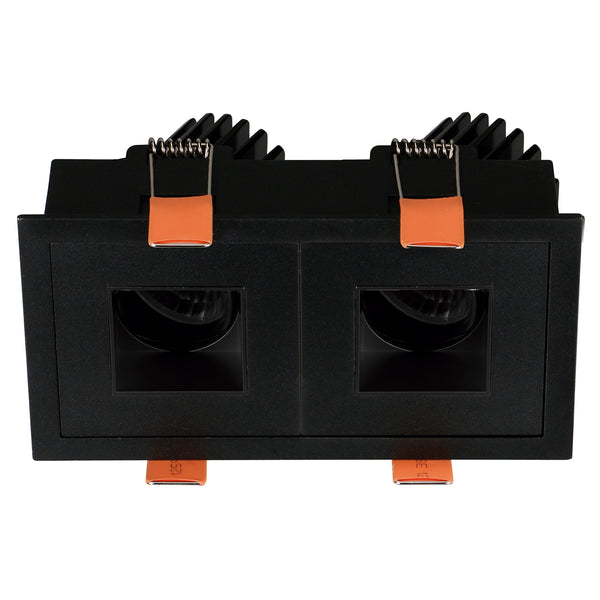
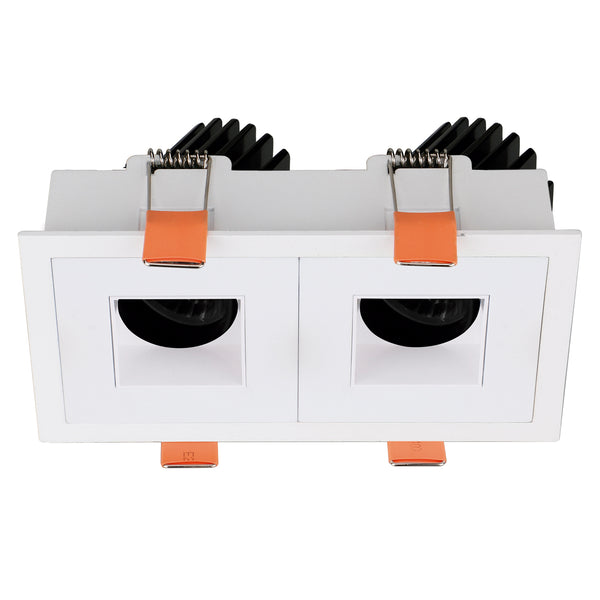
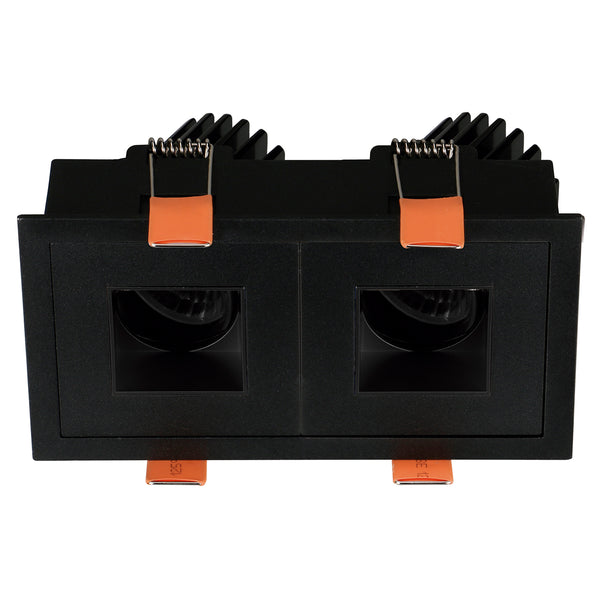
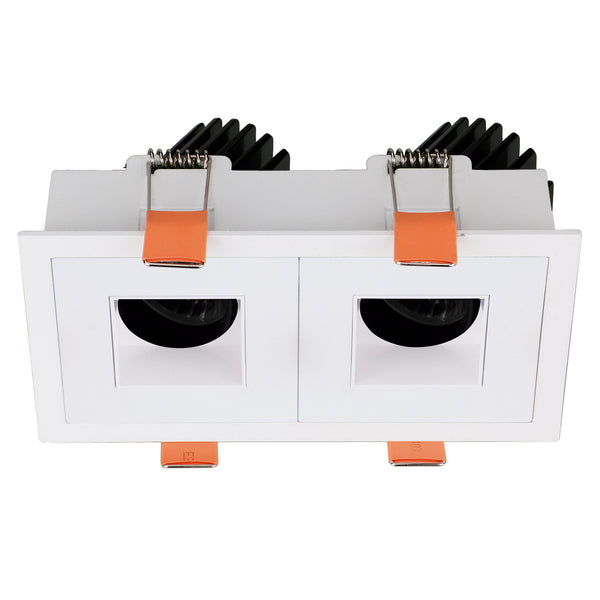
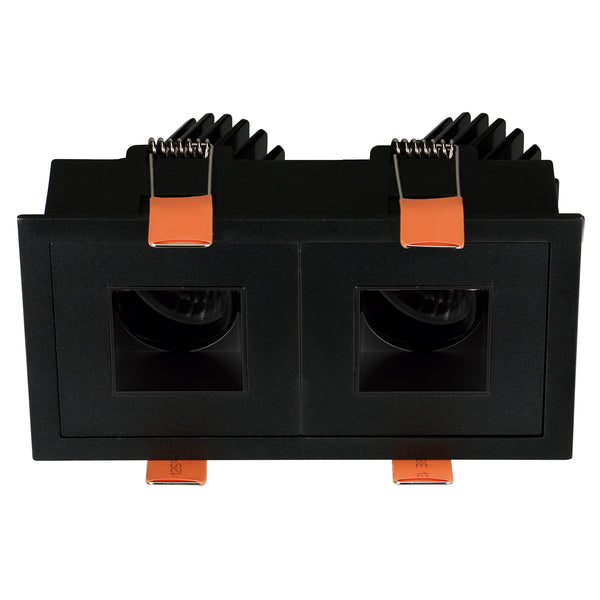
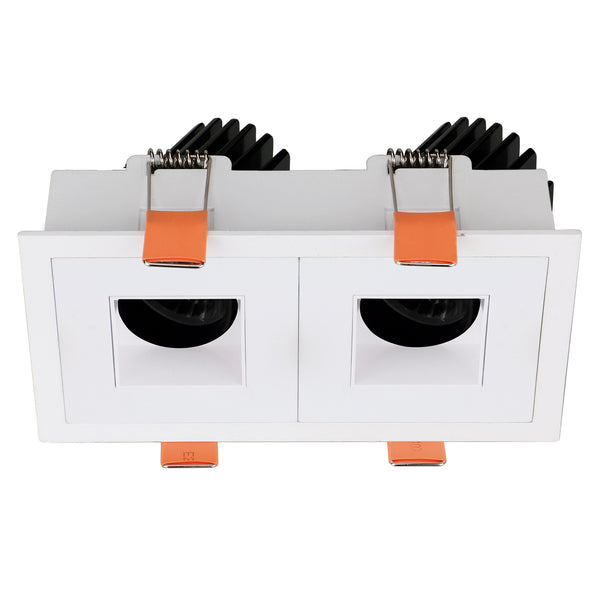
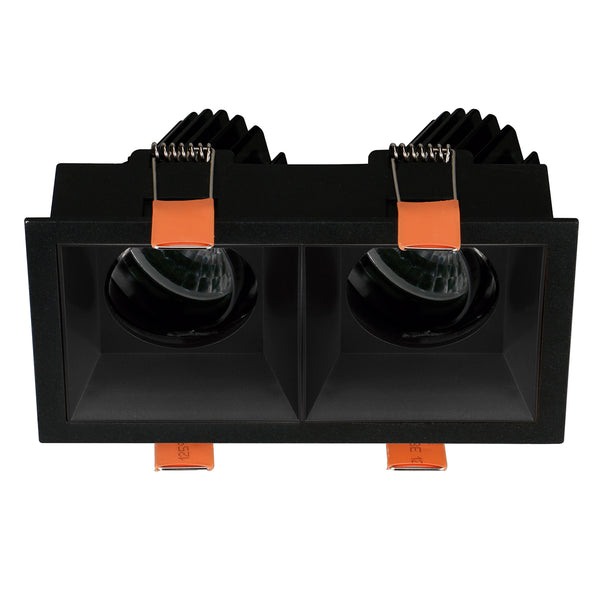
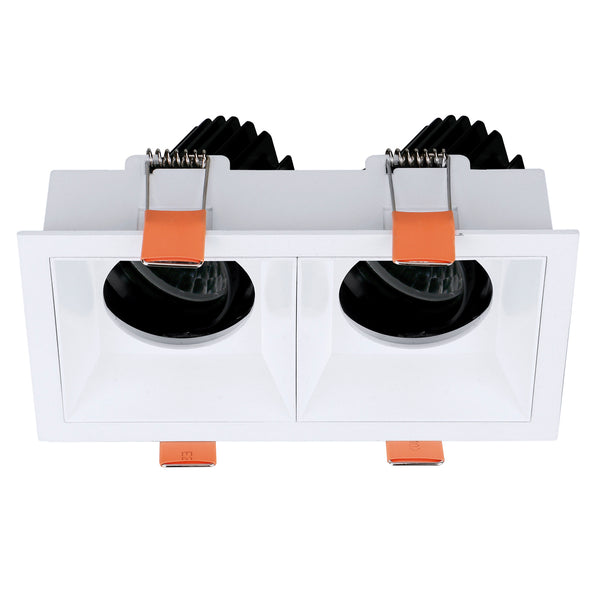
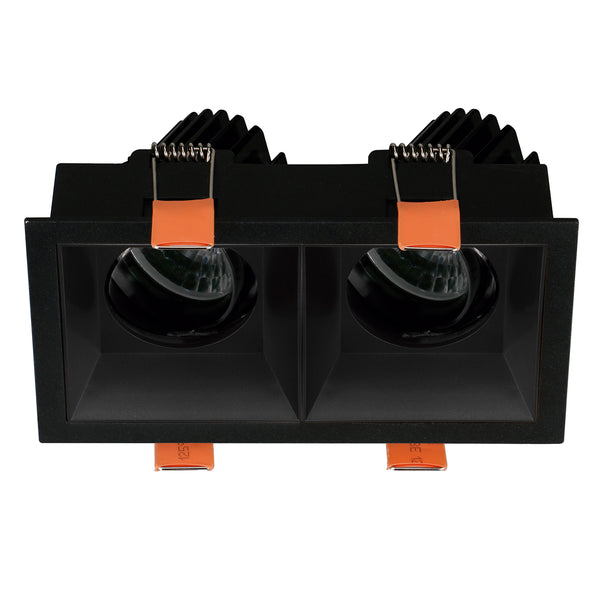
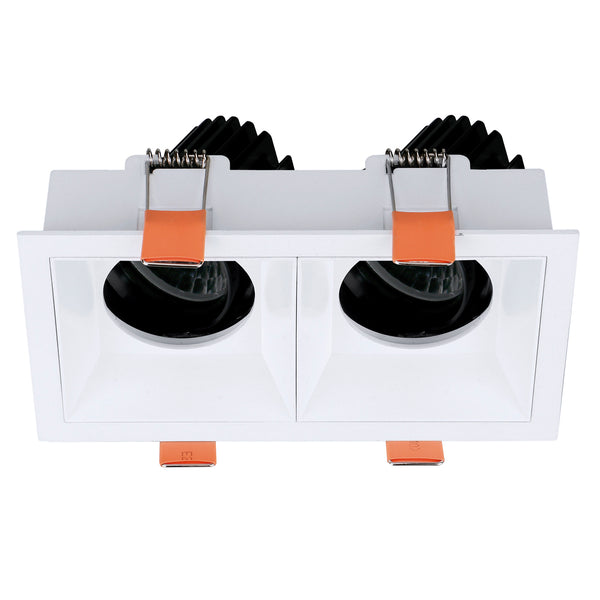
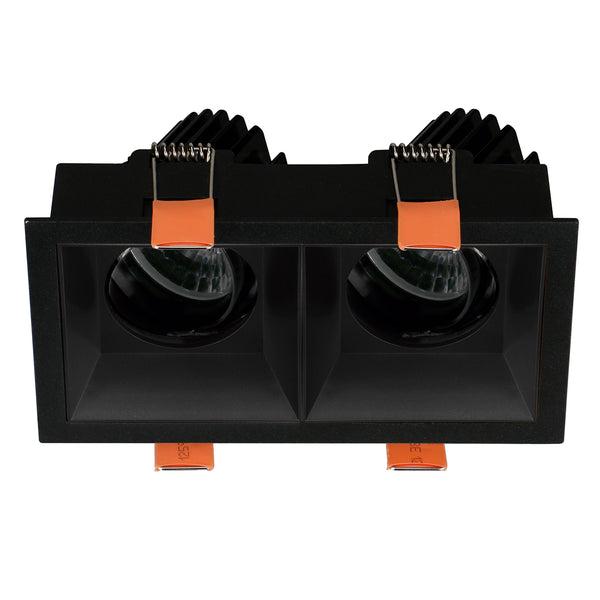
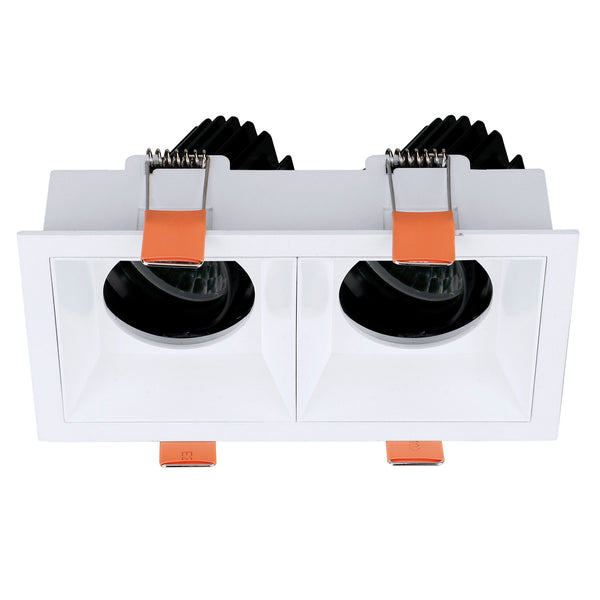
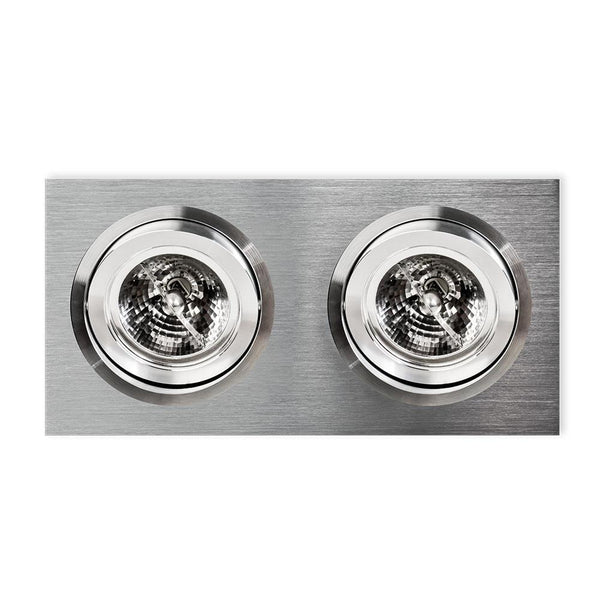
Double ceiling spotlight

































- Tracked delivery to your country Tracked delivery
- Secure payment at checkout Multiple payment methods
- 14 days to change your mind 14-day returns
- Secure payment Secure payment
Not sure of your style? Find it in 30 seconds
A few questions, and we will show you the pieces made for you.
Frequently asked questions
How do I choose the right light output?
At what height should the light be installed?
What type of bulb?
Compatible with LEDs and dimmers?

Light changes everything
From statement chandeliers to discreet wall lights, we help you choose the right brightness, height and style for every room.
- Tracked delivery
- Pay in instalments, where available
- 14 days to change your mind
- Advice & showroom in Lyon, France
A double ceiling spotlight groups two light sources into a single ceiling cut-out: you drill once, the frame stays aligned and the ceiling is not covered in holes. Allow one pair per area to be lit (worktop, wall to highlight, circulation axis) and decide on the orientation before choosing the finish.
- The principle and the light produced
- Fixed or adjustable
- GU10 socket or integrated LED
- Layout on the ceiling
- Bathroom and outdoor
- Changing the bulb or the unit
- Wiring
- Matching the rest of the lighting
What is a double ceiling spotlight and what light does it give?
A double ceiling spotlight groups two light sources into a single cut-out: the ceiling stays clean, without multiplying the drill holes. It is used to light a hallway, a worktop or a bathroom, as accent lighting or general lighting, depending on the orientation and the source chosen.
The housing sits flush with the ceiling and lets out two closely spaced beams. That closeness is what sets it apart from two separate spotlights: one cut-out, one connection, a more readable frame on a living room ceiling. The duo format goes wherever a pair must read as a single graphic point.
To compare neighbouring formats, browse the range of recessed spotlights, and to place the spotlight among the other sources in the home, see all our lighting for the home.
Fixed or adjustable double ceiling spotlight: which to choose?
This collection currently contains no products: neither cut-out, nor depth, nor socket, nor protection rating, nor light temperature, nor dimension, nor finish can be specified here. The page will be completed as soon as the first references arrive.
Adjustable double ceiling spotlight: for what use?
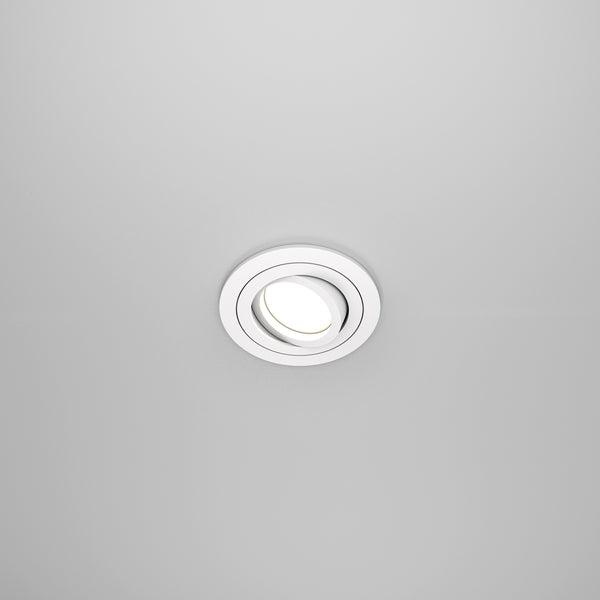
The adjustable version is useful as soon as there is something to highlight: a bookcase, a splashback, a painting, a headboard wall. Each source is adjusted separately, which makes it possible to light two different targets with a single housing. In a hallway, the fixed version is enough and costs less both to buy and to run. The adjustable versions need a little more care when setting up: aim before tightening, never after.
Square or round double recessed spotlight: which shape on the ceiling?
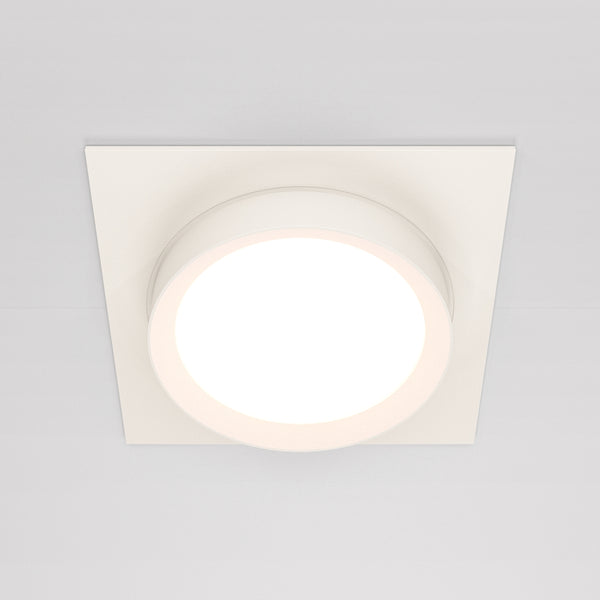
The shape is a graphic choice that follows the lines of the ceiling. The square aligns with the corners of a rectangular room and with the joinery, the round matches a room with soft lines or a ceiling already fitted with round spotlights. A round duo in a very geometric room stands out, a square duo in a curved living room stands out too: it is the only truly subjective criterion in this guide. Find both families in ceiling spotlights.
GU10 socket or integrated LED: how to choose the source?
Two solutions coexist. The GU10 socket takes a bulb that can be replaced and whose colour temperature you choose; the integrated LED cannot be dismantled, the whole unit is replaced. GU10 leaves more freedom over time, integrated LED simplifies installation and maintenance.
Double recessed GU10 spotlight: how much freedom over time?
GU10 is the choice of anyone who wants to be able to change the mood without changing the fixture. A blown bulb is replaced in two minutes, and nothing prevents switching from a warm white to a more neutral white in the same room a few years later. The spotlights with GU10 bulbs do, however, require checking the depth available behind the ceiling before drilling.
Warm white or neutral white: which colour temperature to choose?
As a general guide, a warm white (around 2700 to 3000 K) suits relaxation rooms, living room, bedroom, reading corner. A more neutral white (around 4000 K) renders colours more faithfully in a kitchen or a bathroom, where you want to see what you are doing. A very cool white in a living room gives a waiting-room impression, to be avoided near a sofa.
| Criterion | Double recessed GU10 spotlight | Double recessed integrated LED spotlight |
|---|---|---|
| Bulb | Replaceable, standard socket | Not replaceable, complete unit |
| Colour temperature | Chosen at the time of replacement | Fixed at purchase |
| Maintenance | Replacement part by part | Replacement of the whole unit |
| Cut-out and depth | To be checked on the model sheet | To be checked on the model sheet |
| Recommended use | Rooms where the light is to be adjusted | Rooms that are not to be opened up again |
Self-contained units are found in the integrated LED models, and the full offer in all LED spotlights.
How to arrange spotlights on the ceiling in a living room or a lounge?
There is no universal spacing: the distance depends on the ceiling height and the surface to be covered. Pairs are aligned on an axis, spaced out to avoid a hot spot, and the sources are brought closer together above the work or circulation areas to be highlighted.
What is the ideal distance between two recessed spotlights?
A common guide is to space two sources by about half the ceiling height, then adjust to the desired effect: closer together to highlight, wider apart for even lighting. This guide is not an installation rule, just a starting point. What matters more is the overlap of the beams: two sharp pools of light separated by a dark area are immediately noticeable.
Living room ceiling spotlight layout: the guides to set before drilling
The living room ceiling spotlight layout is thought out by use zones, not as a regular grid. A pair on the perimeter facing a wall or a bookcase, another above the sofa, a regular frame only in the hallway that extends the living room. Avoid lighting a television screen from the front and concentrating all the pairs in the centre of the ceiling. To go further, compare the recessed spotlights designed for the living room and the guides to lighting a hallway; for the kitchen, see kitchen recessed spotlights.
Double ceiling spotlight in a bathroom or outdoors: which protection rating?
The protection rating, noted IP, indicates resistance to water and dust. In a bathroom, it depends on the zone around the bath or shower; outdoors and on a covered terrace, a high rating is needed, because humidity and splashes attack the components.
Double recessed IP65 spotlight: where to place it?
A high rating protects against splashes and dust: it is the level to aim for under a canopy, on a covered terrace or close to a water point. A hallway spotlight, installed in a dry volume, does not need this protection and is chosen differently, in particular on the depth of the unit. Outdoor spotlights are recognisable by their closed housing and their carefully finished cable gland.
Bathroom: which zones around the shower?
The closer you get to the bath or shower, the more the unit must resist humidity and splashes. Above the mirror and the washbasin, a model for damp rooms is generally enough. Directly above the bath, a spotlight should not be installed, even a protected one. Bathroom spotlights gather the references intended for these volumes.
| Room | Recommended source | Orientation | Protection rating to aim for | Point of attention |
|---|---|---|---|---|
| Living room and lounge | GU10 or LED, warm light | Adjustable to aim at a wall | Standard indoor | Do not align all the pairs in the centre of the ceiling |
| Kitchen | GU10 to adjust the light | Adjustable towards the worktops | Reinforced near the sink | Light the worktop, not the face |
| Bathroom | Integrated LED or GU10 | Fixed above the washbasin | Suited to the damp zone | Respect the volumes around the shower |
| Hallway | Fixed | Fixed | Standard indoor | Align the pairs on the circulation axis |
| Outdoor and covered terrace | Integrated LED | Adjustable | IP65 | Check the sealing of the unit and the cable gland |
How to change a recessed spotlight or its bulb?
Switch off the power at the circuit breaker before any handling. On an adjustable spotlight, the bulb is removed after turning the bezel; on a recessed LED unit, the fixing springs are pressed to extract the assembly, then the connector is unplugged. An integrated LED model is replaced entirely.
How to change the bulb of an adjustable spotlight?
Let it cool: a halogen stays hot for a long time. Turn the bezel to reach the socket, then unscrew or twist a quarter turn depending on the model. Never force a stuck bulb, a slight lever with a cloth is enough to free it. Note the power and the temperature of the old bulb before throwing it away, it is the surest way to find the same light again.
Changing a recessed LED spotlight in the ceiling: bulb or complete unit?
First look at what you have: a self-contained unit has no visible bulb, it is dismantled entirely. Press the two side springs, lower the unit out of the cut-out, unplug the connector and note the cut-out dimension before ordering. Switching from an old halogen to an LED in an existing recess often works, provided the compatibility of the transformer is checked. The full department is in our spotlight department.
Spotlight wiring in series or in parallel: what needs to be planned?
In parallel, each spotlight receives the same voltage and remains independent: if one fails, the others keep working. In series, the failure of one point cuts the whole line. Parallel wiring is therefore the norm for domestic lighting, with a connection to the terminal block or connector.
Parallel spotlight wiring: the principle
Each housing receives the live and neutral from the common line, then continues to the next. The result: a local failure does not switch off the room, and a spotlight can be changed without touching the rest. On a double spotlight, the connection is made once for both sources, which simplifies passing the cable through the cut-out. This wiring remains the simplest to repair years later.
What to switch off and check before working
Switch off at the circuit breaker, not just at the switch, then check that there is no voltage. Identify the wires before dismantling, photograph the terminal block if needed. The cable cross-section and the protection rating belong to the existing installation and are validated on site: if in doubt, an electrician decides. Before ordering, compare the depth of the unit with that of your housings in the recessed spotlight department and in our home lighting.
How to match the double spotlight with the rest of the lighting?
A double spotlight pairs well with another light point: a wall light for the wall, a floor lamp for the reading corner, a track for an area with high needs. What matters is to vary the heights and intensities to avoid a uniformly lit ceiling, and to match the finishes.
Wall light and double lighting: how to combine them?
A wall light brings a side light that the ceiling cannot give: it draws a wall, accompanies a hallway, lights a staircase. With a double spotlight on the ceiling, two heights are superimposed and the room becomes more readable in the evening. Match the finishes so the whole holds together: black finishes for a graphic interior, white finishes for a ceiling that fades away.
Dimmable spotlights or spotlight track: when to prefer them?
A dimmer changes everything in a living room: full light for entertaining, low light for watching a film. Check the compatibility of the bulb and the module before installing, otherwise you will get flickering. A track is justified when needs change often or when the ceiling cannot be drilled. See the dimmable-compatible spotlights and a spotlight track as an alternative.
Secure payment, tracked delivery, returns and Designix customer service: you order, you try, you adjust. Take your cut-out measurements and the spacing of the pairs before confirming your basket.
Frequently asked questions
Do LED spotlights get hot?
LED spotlights get less hot than a halogen of comparable power, but the module produces heat at the back, evacuated by its heat sink. A recess therefore needs air around the unit: the clearance space provided is respected and insulation is not placed directly above.
How to change a recessed LED spotlight in the ceiling?
Switch off the power, press the two side springs to lower the unit out of the cut-out, then unplug the connector. If the model is entirely LED, it is replaced complete; if it takes a bulb, only the bulb changes. Note the cut-out dimension before ordering.
What is the ideal distance between two recessed spotlights?
There is no fixed value: the spacing is deduced from the ceiling height and the area to be covered. The pairs are kept aligned, the sources are not concentrated in the same place, and the spotlights are brought closer to the worktops and passageways rather than to the centre of the room.
Can a double ceiling spotlight be installed in a bathroom?
Yes, provided a protection rating suited to the zone is chosen: the closer you get to the bath or shower, the more the unit must resist humidity and splashes. Above the washbasin and the mirror, a model for damp rooms is generally enough.
Black or white double ceiling spotlight: which to choose?
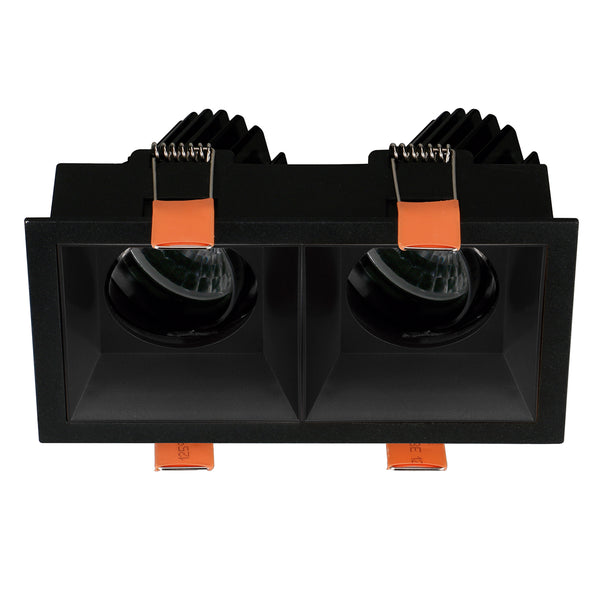
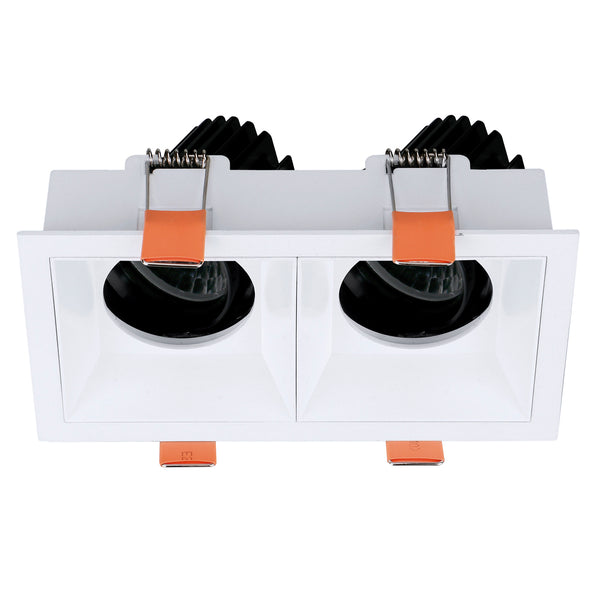
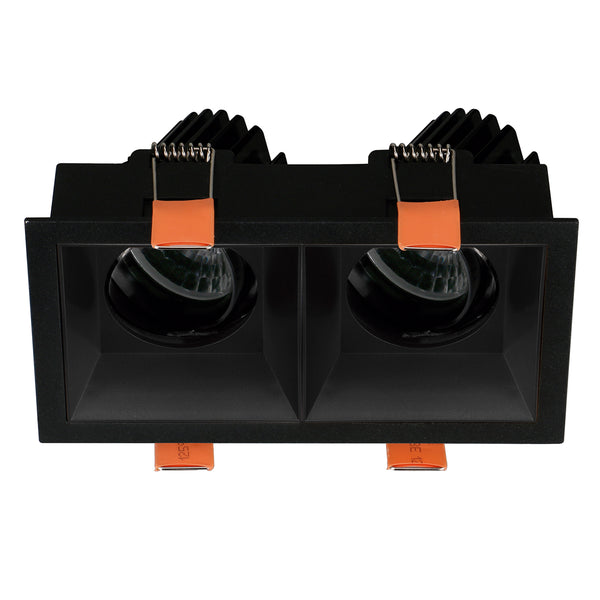
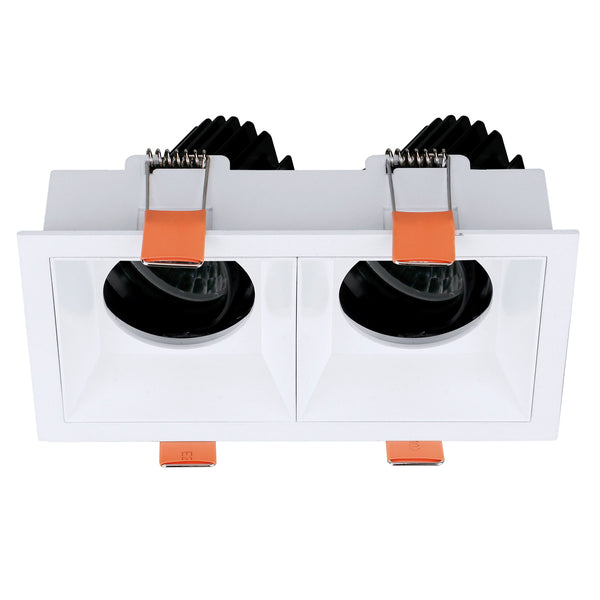
White blends into a light painted ceiling and makes the source almost invisible; black draws a graphic point and highlights the line of spotlights. The choice follows the ceiling colour and the style of the room, not the power of the model.




