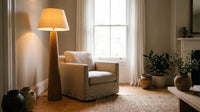
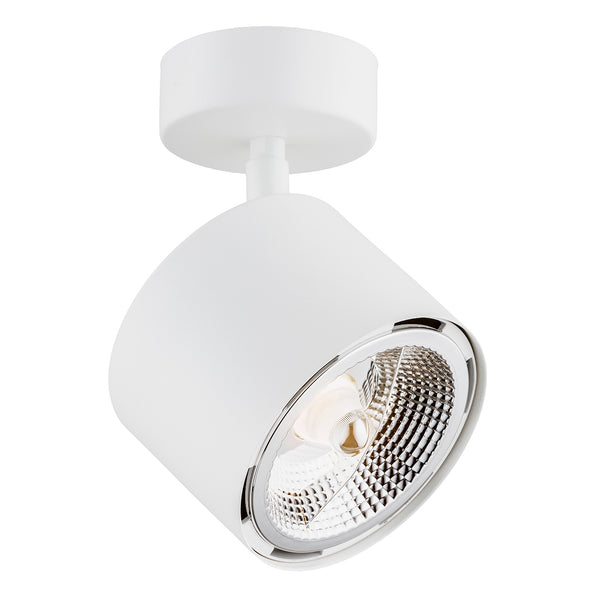
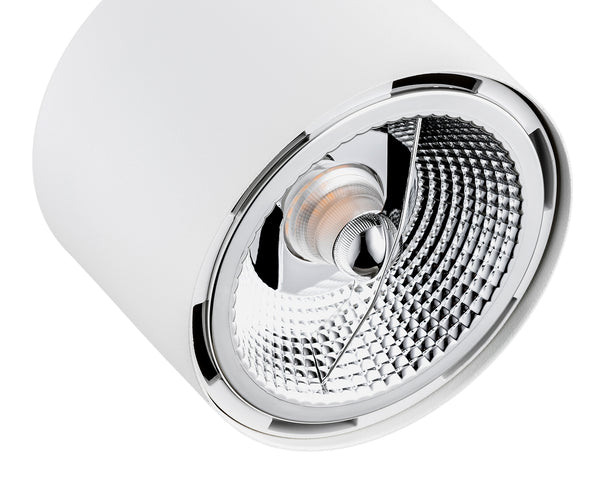
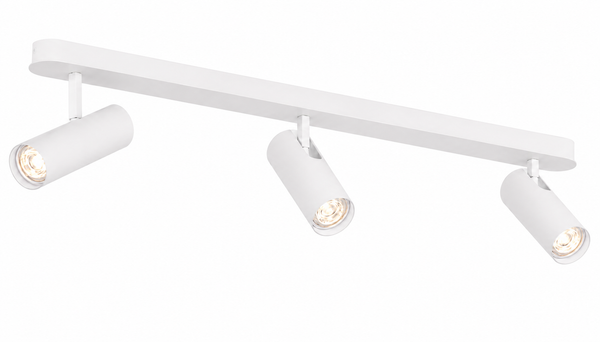
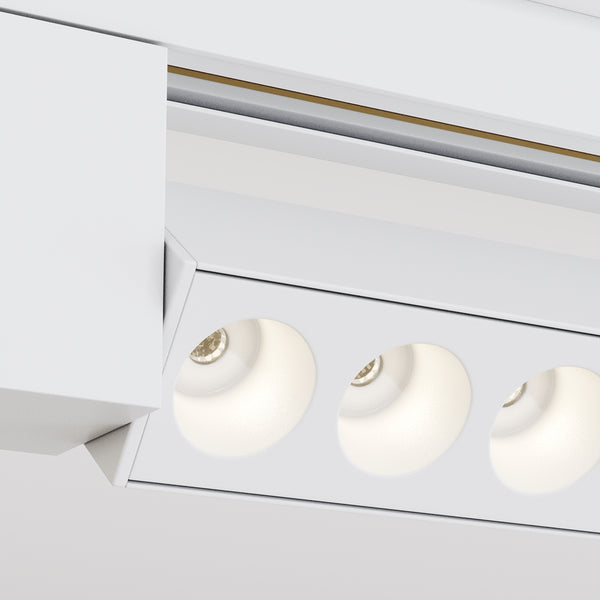
White spotlights
- Tracked delivery to your country Tracked delivery
- Secure payment at checkout Multiple payment methods
- 14 days to change your mind 14-day returns
- Secure payment Secure payment


Not sure of your style? Find it in 30 seconds
A few questions, and we will show you the pieces made for you.


















Frequently asked questions
How do I choose the right light output?
At what height should the light be installed?
What type of bulb?
Compatible with LEDs and dimmers?

Light changes everything
From statement chandeliers to discreet wall lights, we help you choose the right brightness, height and style for every room.
- Tracked delivery
- Pay in instalments, where available
- 14 days to change your mind
- Advice & showroom in Lyon, France
Keep a regular spacing between points, a slight setback from the walls and a colour temperature decided before anything else: these three choices make the look of a room. A white spotlight blends into the ceiling and lets the light do its work, without ever competing with the furniture or the paint.
- How should spotlights be laid out on the ceiling?
- What are the different types of spotlights?
- Is 4000K white or yellow?
- White chandelier or white spotlights: what should you choose for the living room?
- Should you choose coloured spotlights or white spotlights?
- Where should white spotlights be installed, room by room?
- How do you install and maintain white spotlights?
- What is the best lighting for a home?
How should spotlights be laid out on the ceiling?
Spotlights are spaced according to the surface to be lit and the ceiling height: regular spacing between points, with a slight setback from the walls, avoids dark areas and pools of light. A single row is enough in a hallway.
White spotlight: how far from the wall?
Allow generally 50 to 70 cm between the wall and the first point, and keep the same distance along the whole row. Too close to the wall, the light draws a white arc on the paint and leaves the centre of the room in shadow; too far, the wall stays dark and the ceiling looks bare. In a narrow hallway, a single row centred on the axis works better than a tight double row.
Neutral white spotlight: how many points should you plan for?
One point every 1 to 1.5 metres, aligned along the axis of the room, gives an even wash under a standard-height ceiling. With neutral white, it is better to multiply low-intensity points than to concentrate the light in one place: the eye perceives less contrast. This pattern is found in white LED spotlights as well as in white recessed spotlights.
What are the different types of spotlights?
The main types are the recessed spotlight, which sits flush with the ceiling, the adjustable spotlight, whose head pivots to aim at a work surface, the dimmable spotlight, which adjusts the intensity, and the outdoor spotlight, designed for a facade, a terrace or a garden. Installation and use determine the choice.
White recessed spotlights: what changes on the ceiling
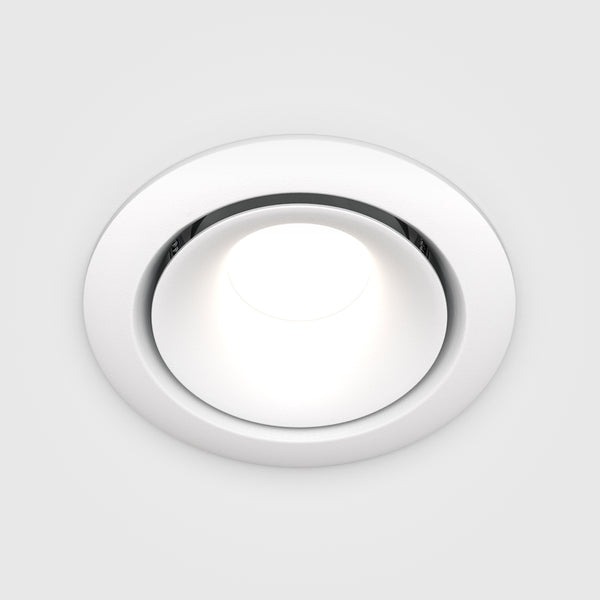
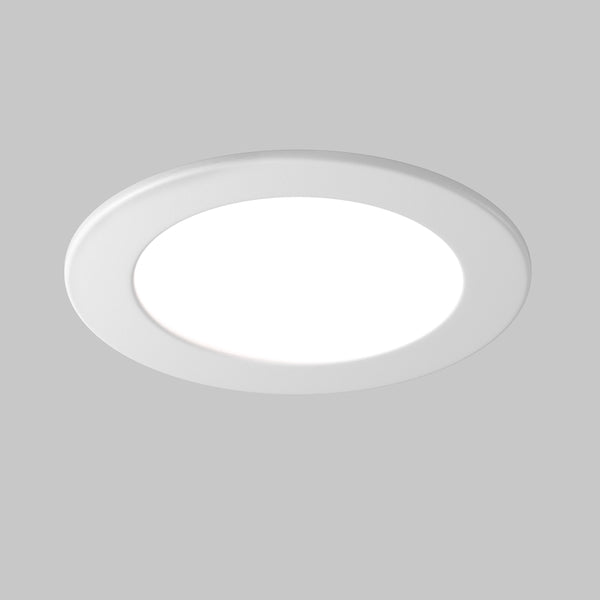
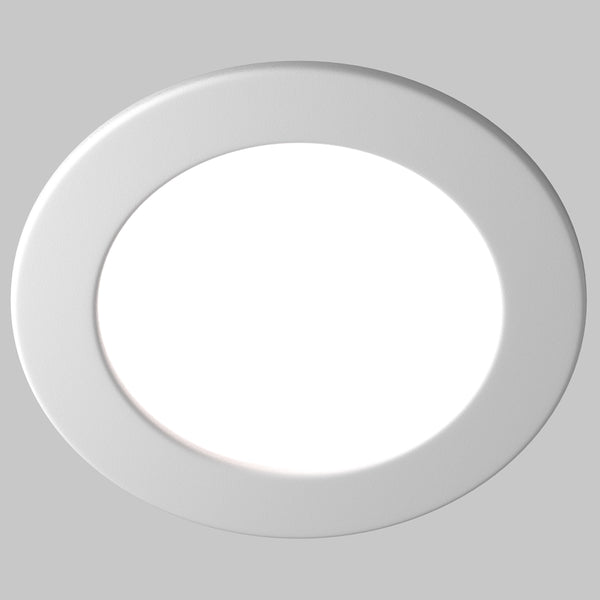
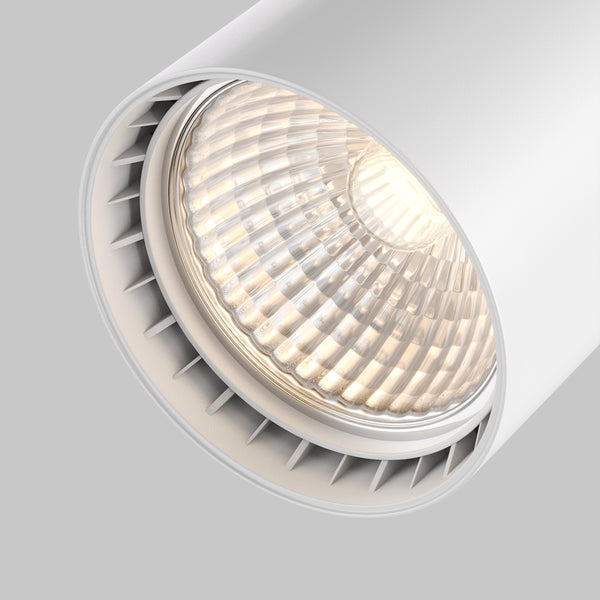
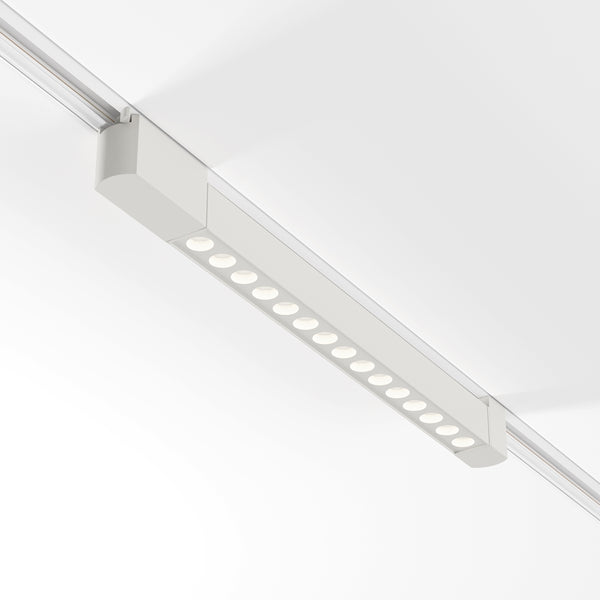
The recessed spotlight sits flush with the surface: the source disappears and only the circle of light remains. This is the installation that leaves the most room for decoration, and the only one possible when ceiling height is limited. In white, it blends into a light-painted ceiling and lets the lighting families placed in the room take centre stage.
White adjustable spotlights: when the movable head really helps
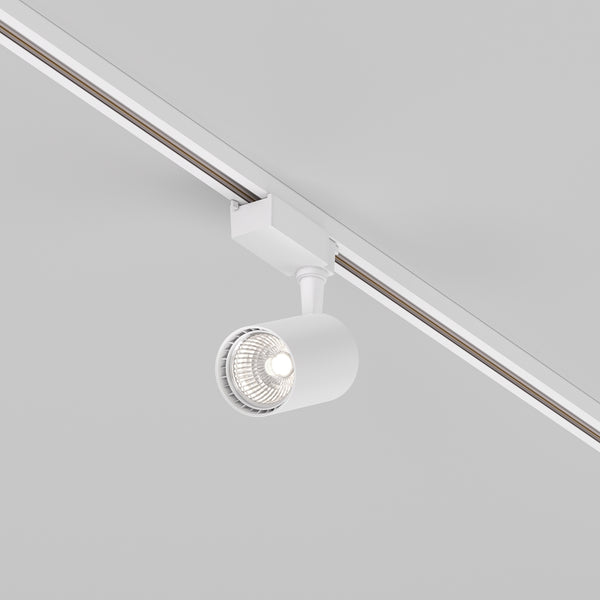
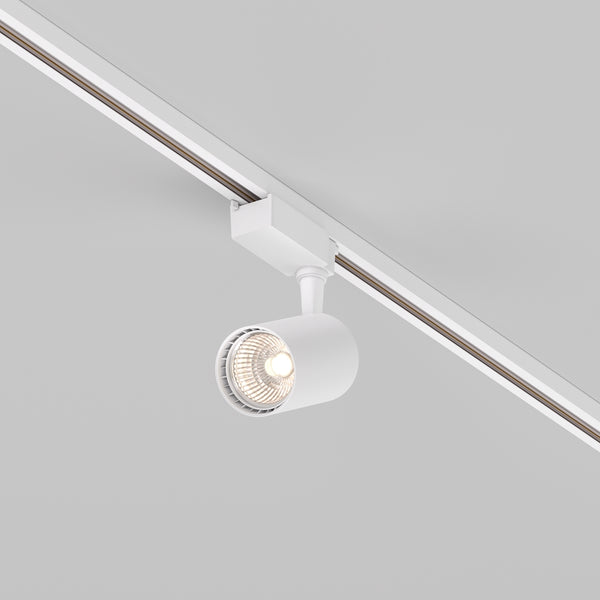
The movable head is useful when the ceiling cannot come down over the working area: a worktop, a sideboard, a painting, a bookshelf. It is tilted towards the point to be lit instead of washing the floor. If you have nothing to aim at, a fixed model is enough and is less noticeable. White adjustable spotlights cover this need, including outdoors with white LED outdoor spotlights.
Is 4000K white or yellow?
A 4000 K light is a neutral white: it is neither yellow like a warm white at 2700-3000 K, nor bluish like a cool white at 5000-6500 K. It is the white closest to overcast daylight, often chosen for kitchens and offices.
What is the whitest light?
Strictly speaking, it is neutral white, around 4000 K: it leans neither towards yellow nor towards blue. Beyond that, towards 5000 and 6500 K, white becomes cool and takes on a bluish cast that cools light woods and skin tones. To read a colour accurately, a fabric, a paint, neutral white is what you need.
Warm white spotlight or cool white spotlight?
Warm white, between 2700 and 3000 K, recalls the filament bulb and suits rooms where you settle in for the evening. Cool white lights far and strong, useful in a garage or on a facade, but harsh in a living room. The choice is made room by room, not once for the whole house.
| Light colour | Temperature reference | Perceived rendering | Rooms where it suits |
|---|---|---|---|
| Warm white | 2700 to 3000 K | Soft light, close to the classic bulb | Living room, bedroom, hallway |
| Neutral white | around 4000 K | White light with no yellow cast | Kitchen, office, bathroom |
| Cool white | 5000 to 6500 K | Very white light, with a bluish cast | Garage, workshop, outdoors |
White chandelier or white spotlights: what should you choose for the living room?
A white chandelier provides a central, decorative light point, while white spotlights distribute even light throughout the room. Many interiors combine both: a chandelier for atmosphere, spotlights for lighting without cast shadows on the furniture.
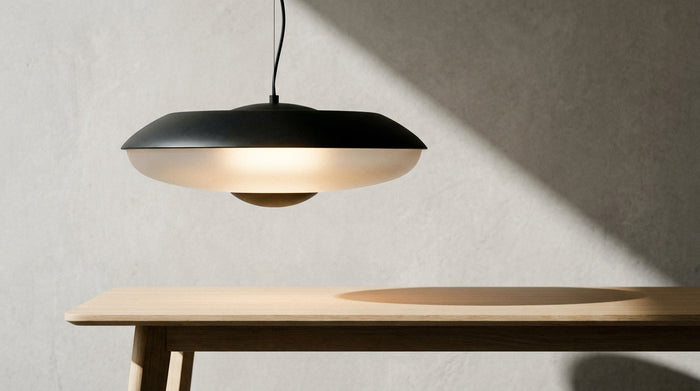
Modern white chandelier: the right height above the table
Above a dining table, the pendant is generally placed 75-85 cm from the tabletop, and about 1.50 m from the floor in a living area. Measure from the bottom of the fixture, not from its attachment point: that is the distance the eye perceives and the head avoids. A very low chandelier crushes the table, a high one lights the room without showcasing it.
White bedroom chandelier: what light for sleeping?
In a bedroom, aim for a warm white around 2700 K and an intensity that can be lowered. A very directional point right above the bed is tiring at the end of the day; two side points work better. The white chandelier provides general light, and dimmable spotlights take over at bedtime.
Should you choose coloured spotlights or white spotlights?
White blends into the ceiling and leaves colour to the walls and furniture. Coloured spotlights, on the other hand, become a visible feature and work better in an already assertive room. In a light interior, white remains the easiest to live with.
Wood and white sideboard: what lighting above?
Two or three adjustable spotlights aimed at the piece of furniture, from a short distance, highlight the grain of the wood and the contrast with the white without dazzling. A neutral white respects the natural tone; a cool white greys the wood. Avoid very concentrated spotlights, which draw a round patch on the front instead of accompanying the furniture.
Matching the spotlight colour to the ceiling and walls
On a white ceiling, a white spotlight disappears; on a tinted or wood ceiling, it stands out and becomes a visible point. For total discretion, match the fixture colour to that of the surface. Otherwise, embrace the contrast with gold finishes, grey spotlights or a green colour.
Where should white spotlights be installed, room by room?
In the kitchen, they light worktops without cast shadows; in a bathroom, they are placed outside water zones; in a hallway, they punctuate the passage; outdoors, they light a facade or a terrace. The room determines the white and the type of installation.
White spotlight for the kitchen: recessed or wall light?
Above a worktop, a recessed spotlight placed in front of the worktop avoids the shadow of your hands when you cut. A wall light is suitable when the ceiling is occupied by a hood or a beam. In both cases, a neutral white renders food and colours accurately. See kitchen lighting and modern spotlights for the kitchen.
White spotlights in a bathroom: what matters
Around a washbasin, two points placed on each side of the mirror light the face without shadows under the eyes; a single point on the ceiling hollows the features. Keep fixtures out of areas directly exposed to water splashes and read the protection rating on the product sheet before drilling.
| Room | Recommended white | Type of spotlight | Why |
|---|---|---|---|
| Kitchen | Neutral white | Recessed or adjustable | Good readability on worktops |
| Living room | Warm white | Recessed, complemented by a central fixture | Relaxed atmosphere in the evening |
| Bedroom | Warm white | Recessed with dimmer | Low intensity before bedtime |
| Bathroom | Neutral white | Recessed outside water zones | Face lit without a yellow cast |
| Hallway | Neutral white | Recessed, aligned | Rhythmic passage without dark areas |
How do you install and maintain white spotlights?
A recessed spotlight is installed in a cut-out made to the diameter indicated on the product sheet, after switching off the power. The white finish is maintained with a soft, dry cloth, without abrasive products, so as not to dull the finish or mark the surround.
Drilling the right diameter for a recessed spotlight
The cut-out diameter is given on the product sheet; that is what counts, not the outer diameter of the fixture. Mark with a compass, check that no joist or conduit passes through that spot, switch off the power at the circuit breaker before connecting. A hole that is too large cannot be fixed without filling.
Cleaning a white spotlight without dulling it
A soft, dry cloth is enough; alcohol and abrasive powders dull the finish and leave matte marks. Dust the trim at the same time as the ceiling, without removing the module. For a model installed outdoors, switch off the power before any work, even a simple dusting.
What is the best lighting for a home?
The best lighting combines several layers: general light on the ceiling, points targeted at activity areas and supplementary light in the evening. White spotlights in neutral white for working, warm white for relaxing: distribution matters more than power.
Warm white or neutral white spotlight depending on the time of day
During the day, a neutral white around 4000 K helps you stay sharp on a task; in the evening, a warm white relaxes. In a room used for both, keep neutral white on the ceiling and add warm supplementary points on a piece of furniture or on the floor. This way you avoid lighting an entire living room like an office.
Varying the intensity with a dimmer
A dimmer takes the same room from work to rest without multiplying fixtures. Not all modules are compatible: check that the spotlight is stated as compatible with the dimmer used, otherwise the light flickers or switches off in steps. This is the point to check before buying, in dimmable LED spotlights.
Budget is a relative matter: an affordable model is enough for a hallway or a dressing room, while a large living room justifies a more refined finish and better colour rendering, in more designer pieces as well as in modern-style spotlights or metal spotlights. For a darker interior, compare with the black version, matte black LED spotlights or black recessed spotlights, and also look at what the Designix lighting catalogue offers once the white is chosen. Secure payment, tracked delivery, returns and Designix customer service support you from choice to installation.
Frequently asked questions
What are the drawbacks of LED lamps?
An LED heats little and consumes less, but its light can be more directional than a classic bulb, and some low-end modules flicker or lean towards blue. The quality of colour rendering therefore varies from one spotlight to another, hence the value of reading the product sheet before choosing.
What is the lifespan of an LED spotlight?
An LED spotlight is advertised by the manufacturer for a number of operating hours, generally high, but the value depends on the module and the use. The product sheet indicates the figure applicable to the model; if not, refer to the information supplied with the module.
What is the best lighting for a home?
The best lighting distributes three levels: general light on the ceiling, points targeted above worktops or the table, and supplementary light for the evening. White spotlights in neutral white for activity areas, warm white for rest, cover most rooms.
Designer white chandelier: how do you match it with white spotlights?
A designer white chandelier remains the central light point, while white spotlights take over around the edges and above useful areas. Keeping the same white family, warm for a living room, neutral for an open kitchen, avoids differences in tone between the two sources.
What lighting for a wood and white sideboard?
A wood and white sideboard is enhanced by even, grazing light rather than by a very concentrated spotlight: two or three white spotlights aimed at the piece of furniture highlight the grain of the wood and the contrast with the white without dazzling. A neutral white respects the natural tone of the wood.