
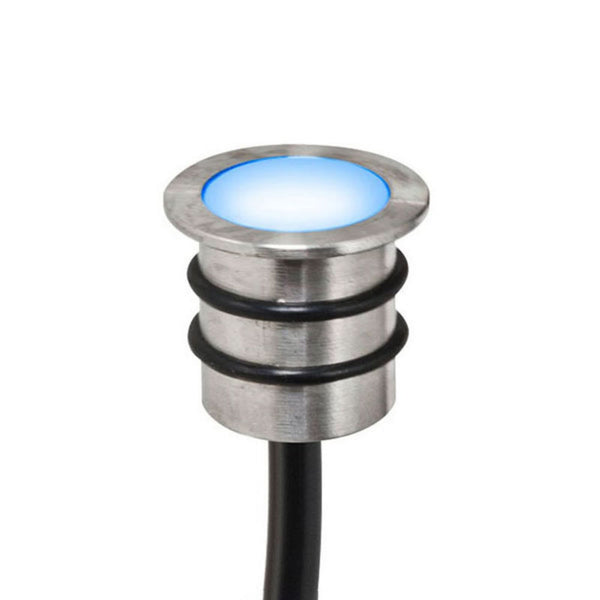
12V IP67 recessed spotlights
This selection is also available in our French store: Spots encastrables 12V IP67

- Tracked delivery to your country Tracked delivery
- Secure payment at checkout Multiple payment methods
- 14 days to change your mind 14-day returns
- Secure payment Secure payment
Not sure of your style? Find it in 30 seconds
A few questions, and we will show you the pieces made for you.
Frequently asked questions
How do I choose the right light output?
At what height should the light be installed?
What type of bulb?
Compatible with LEDs and dimmers?
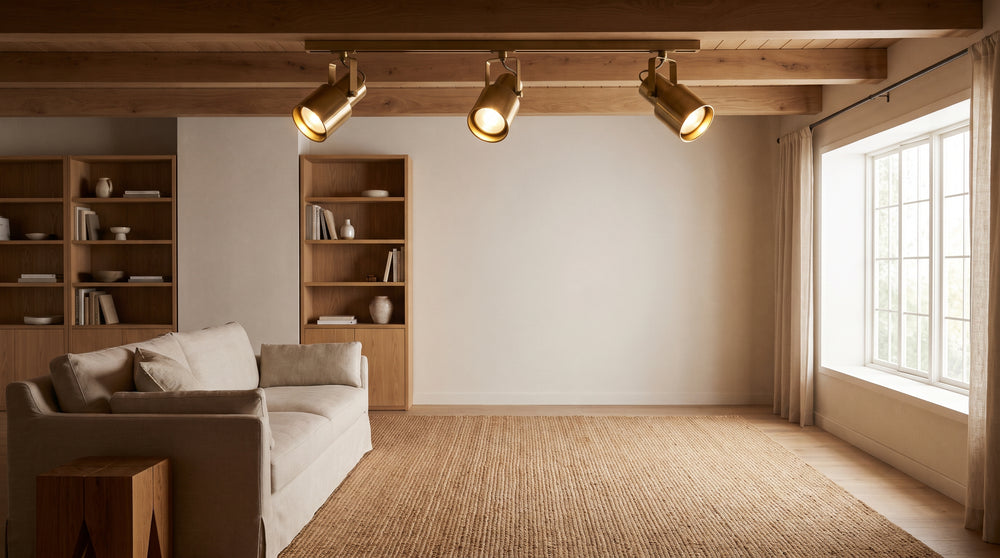
Light changes everything
From statement chandeliers to discreet wall lights, we help you choose the right brightness, height and style for every room.
- Tracked delivery
- Pay in instalments, where available
- 14 days to change your mind
- Advice & showroom in Lyon, France
12V IP67 recessed spotlights are powered by a transformer that steps down the mains voltage, and their IP67 rating protects them from dust as well as temporary immersion. This is the fitting for terrace floors, pathways and very wet rooms, where a 220V spot or an IP44 would let water in. You choose it first by its real use and its protection rating, then by its orientation and finish.
What is a 12V IP67 recessed spotlight and where should you install it?
A grazing halo on a terrace, a bathroom floor lit without harsh glare: the effect comes from positioning as much as from the fitting. On the technical side, very low voltage 12V requires a transformer, and the IP67 rating guarantees dust-tightness and resistance to temporary immersion.
12V IP67 recessed spotlight or 220V spotlight: what does low voltage change?
Low voltage simplifies installation near a water point, since a remote transformer keeps the 220V away from the wet zone. On the other hand, voltage drop must be watched on long runs and the transformer must remain accessible. 220V connects directly and handles distances better, which makes it suited to areas away from water.
IP67 recessed spotlights: floor, terrace or wet room?
Recessed into the floor of a terrace, a pathway or a drive, IP67 is the consistent level: water can pool on the glass without damage. In a bathroom or utility room ceiling, IP65 is often enough, since splashes stay vertical. To compare the two approaches, browse the outdoor recessed spotlights and their floor-mounted variants.
Which IP rating for an outdoor spotlight?
The IP rating must cover both dust and water, with a margin over the real exposure. Under a canopy or on a facade sheltered by a roof overhang, IP65 protects against water jets. As soon as the fitting sits on the ground, on a terrace or in a pathway where water pools, IP67 becomes the safe choice. IP44 remains a wet interior use, not an exposed outdoor one. Also look at the LED versions for outdoor use, which lighten the load drawn from the transformer.
What is the difference between IP44, IP65 and IP67?
The first digit indicates protection against solids, the second against water. IP44 protects against splashes, IP65 against water jets, IP67 against temporary immersion. An IP67 is therefore neither brighter nor more powerful: it is simply more watertight, which matters on the ground and on a terrace.
| IP rating | Solid protection | Water protection | Suitable use |
|---|---|---|---|
| IP44 | Foreign bodies over 1 mm | Water splashes | Wet room, under a sheltered canopy |
| IP55 | Limited dust | Water jets | Sheltered outdoors, facade under an overhang |
| IP64 | Limited dust | Water splashes | Bathroom, very wet interior |
| IP65 | Dust-tight | Lance water jets | Facade spotlight, covered terrace |
| IP66 | Dust-tight | Powerful water jets | Outdoors exposed to rain |
| IP67 | Dust-tight | Temporary immersion | Recessed in the ground, terrace, pathway |
What is the difference between IP65 and IP67?
Both are dust-tight. IP65 resists water jets, which covers driving rain and jet cleaning. IP67 adds resistance to temporary immersion, useful when the fitting sits flush with a floor where water accumulates. At equal voltage, only the watertightness level changes.
What is the difference between IP44 and IP65?
IP44 tolerates splashes and lets fine bodies through; IP65 shuts out dust and withstands jets. The second digit is the real break: an IP44 fitted on a wooden facade takes in water at the first storm. For a terrace wall, compare the adjustable recessed spotlights, which direct the beam toward the wall rather than the sky.
Should you use 12V or 220V spotlights for the bathroom?
The choice depends on the distance to the bathtub or shower and on exposure to splashes. Very low voltage 12V, with a transformer placed outside the wet zone, simplifies installation near water. 220V remains possible further away, around the mirror or above the washbasin.
| Criterion | 12V spotlight | 220V spotlight |
|---|---|---|
| Power supply | 12V transformer or driver required | Directly on the mains |
| Near a water point | Very low voltage, frequent choice | Reserved for areas away from water |
| Cable length | Voltage drop to watch | Less sensitive to distance |
| Recessed in the ground | Common solution, remote transformer | Less frequent outdoors |
| Maintenance | Accessible transformer to plan for | Replacement of the spotlight alone |
12V spotlight in a bathroom: where to place the transformer?
Outside the splash zone, in a dry and accessible place: service duct, box above a removable ceiling, or storage cabinet. An inaccessible transformer means taking everything down the day it fails. Note its power and location on the installation plan.
Is 220V still possible away from the shower?
Yes, as soon as the fitting is no longer directly exposed to splashes. Above a mirror or a vanity top away from the bathtub, a classic recessed spotlight is suitable. For adjustable light around the mirror, dimmable spotlights prevent glare when you wake up.
How to install recessed spotlights in the ceiling?
You mark the position, check for joists and conduit, then drill with a hole saw at the diameter indicated for the fitting. The cable passes through the hole, the transformer stays accessible, the spotlight is fixed with springs. The power is switched off before any handling.
How to prepare the drilling before fitting a spotlight?
A stud detector passed over the area avoids cutting through a joist or a pipe. You draw the grid in pencil and check the alignment by eye from the room entrance, before drilling. The hole saw diameter matches that of the trim, not that of the housing.
Should the transformer be left accessible?
Yes, it is the part that ages fastest on a 12V line. An inspection hatch or a removable ceiling solves the problem. Without access, replacing a driver means working on the whole circuit. For a terrace, cross-check this point with the adjustable terrace models, often installed on the ground with a remote driver.
How to wire spotlights in series or in parallel?
In parallel, each spotlight receives the same voltage and keeps lighting if another fails: this is the preferred wiring. In series, the voltage is shared and one failure cuts the whole line. On 12V, you mainly check the transformer's total power and the cable length.
How to wire spotlights in series?
Series wiring connects the fittings end to end: the supply voltage is divided between them. It is reserved for special cases, because each spotlight receives less voltage and the lighting gradually weakens. A single burnt-out lamp switches off the entire circuit.
Why wire spotlights in parallel?
Because each fitting keeps its independence and full voltage, and troubleshooting is limited to the spotlight concerned. The transformer is sized with a margin over the combined power, and reasonable cable lengths are kept. Designer spotlights are wired the same way; the finish changes nothing in the diagram.
How to lay out spotlights in the ceiling?
You place the points in a regular grid, keeping a distance from the wall to avoid cast shadows, and aligning the rows with the lines of the room. Better a few well-placed points aimed at the areas of use than tightly spaced spotlights lighting empty space.
How to lay out spotlights in a hallway?
In a single line along the axis, evenly spaced, rather than staggered: the eye follows the perspective and regularity matters more than number. Hallway spotlights gain discretion by staying fixed or slightly adjustable. Avoid placing a point right above the entrance door, the shadow of the frame eats the light.
Should you light the walls or the centre of the room?
The centre lights the floor, the wall lights the room. A grazing beam on a wall visually enlarges the space and softens the light; this is the useful move in a living room. For this effect, adjustable recessed living room lighting is better than a grid in the centre.
How many spotlights in a kitchen?
The number is calculated from the surface area, the ceiling height and the power of the fittings, not from a single figure. You light the worktop and the sink first, then the circulation areas, avoiding placing a point right behind the head of whoever is cooking.
Where to place spotlights in a kitchen?
In a line above the worktop, offset from the wall so the beam falls on the board and not on the user's back. The sink and the hob get a dedicated point. Adjustable kitchen spotlights allow this setting to be adjusted after installation.
Recessed spotlights or under-cabinet strip?
An under-cabinet strip highlights the worktop without glare and usefully replaces a badly placed spotlight; the ceiling recessed spotlight provides the general light. The two complement each other. LED kitchen spotlights lighten the load on the circuit and limit heat above the wall units.
Which power to choose for a recessed LED spotlight?
Power is chosen according to use: a low value is enough for ambient or floor lighting, a higher value becomes useful at height or for lighting a worktop. Colour temperature and beam angle matter as much as the watts.
Which power for ambience and for a worktop?
For ambience, you want soft, distributed light with a wide beam: the power stays low. On a worktop or a desk, the beam narrows and the power rises so the task is sharp. A high ceiling requires more power than a low ceiling for the same effect.
Does colour temperature change the result?
Yes. Around 2,700 to 3,000 K, the light leans toward warm white and suits living rooms; toward 4,000 K, it becomes more neutral and readable, useful in a kitchen and a hallway. Above 5,000 K, the result cools and tires the eye in a bedroom. To harmonise several rooms, discreet white finishes and black spotlights blend without visual break.
How to match the spotlight with the rest of the room?
The trim finish decides the discretion of the fitting: white on a painted ceiling, black on dark joinery, gold or metal to embrace contrast. A floor recessed spotlight in metal spotlights withstands foot traffic better than a plastic trim.
Which finish for a ceiling and for a floor?
On the ceiling, the trim blends into the paint: matte white for a white ceiling, and gold models for an interior that plays with brass. On the floor, the material matters more than the shade, with a treated metal and a high IP rating. Black recessed LED spotlights discreetly mark a dark terrace.
Can you mix several orientations in the same room?
Yes, provided you keep the same finish family and the same colour temperature. A fixed one for general light, an adjustable one for the wall: the mix stays consistent if the shade does not vary. To push the adjustment further, adjustable LED variants and dimmable LED spotlights combine on the same line.
Ordering and preparing your installation
Before confirming, note three things: the IP rating required by the location, the drilling diameter and the power available on the transformer. These three figures prevent most returns. Payment is secure, delivery is tracked and returns are handled by the Designix customer service.
To place this fitting among the other families in the home, compare with all the home lighting, then refine by room: recessed LED kitchen spotlights for a worktop, or the full lighting catalogue for a larger renovation project. One last useful marker: a wet room requires a higher rating than a dry room, whatever the style chosen.
Frequently asked questions
What does IP64 watertightness mean?
IP64 combines protection against limited dust and protection against water splashes. It is a wet interior rating, suitable for a bathroom or a utility room, but not for a floor recessed spotlight exposed to rain, where IP67 is more consistent.
What is the difference between IP55, IP65 and IP66?
All three protect against dust to different degrees and against water jets. IP55 tolerates limited dust and moderate jets, IP65 is dust-tight and resists lance jets, IP66 withstands more powerful jets. The choice depends on the real exposure of the fitting.
Is the IP44 standard mandatory for bathroom lighting?
IP44 is a level of protection, not an obligation in itself: the required rating depends on the bathroom zone and proximity to water. Near a bathtub or shower, you increase protection and favour very low voltage 12V. Beyond the wet zone, a lower rating may be enough.
12V IP65 recessed spotlight or IP67 recessed spotlight: which to choose?
A 12V IP65 recessed spotlight is suitable on a sheltered facade, under a canopy or in a wet room ceiling. IP67 is essential as soon as the fitting is placed on the ground, on a terrace or in a pathway where water can pool. At equal voltage, only the watertightness level changes.
Can a 12V IP67 spotlight be installed without a transformer?
No: a 12V spotlight needs a transformer or driver that steps down the mains voltage. This transformer is placed outside the wet zone, in a place accessible for maintenance, and its power must cover all the spotlights connected on the same line.




