Dimmable recessed spotlights
- Tracked delivery to your country Tracked delivery
- Secure payment at checkout Multiple payment methods
- 14 days to change your mind 14-day returns
- Secure payment Secure payment


Not sure of your style? Find it in 30 seconds
A few questions, and we will show you the pieces made for you.















Frequently asked questions
How do I choose the right product?
What are the delivery times?
Can I return an item?
Can I pay in instalments?
An interior that reflects who you are
Carefully selected pieces, shipped from our warehouses. Our team advises you before you buy, so you choose with confidence.
- Tracked delivery
- Pay in instalments, where available
- 14 days to change your mind
- Advice & showroom in Lyon, France
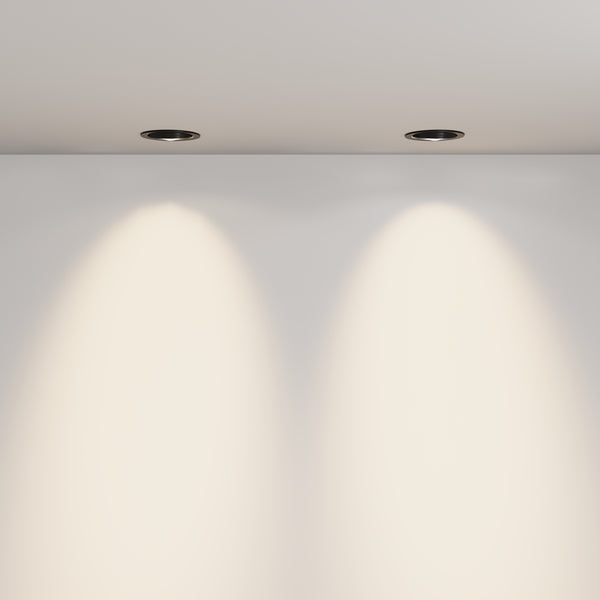
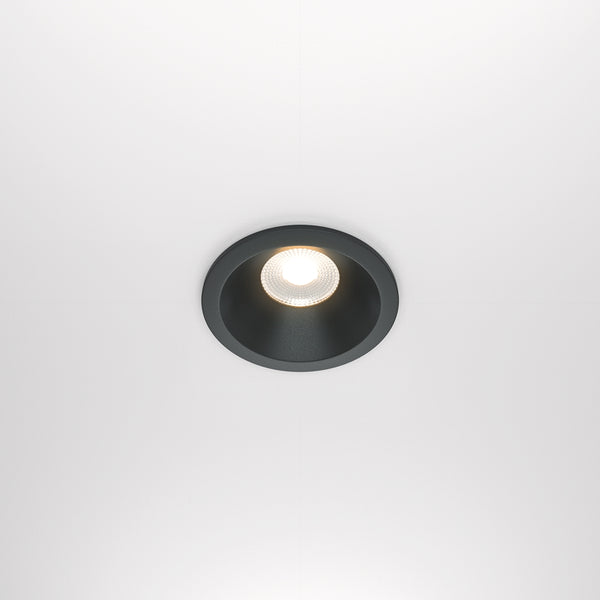
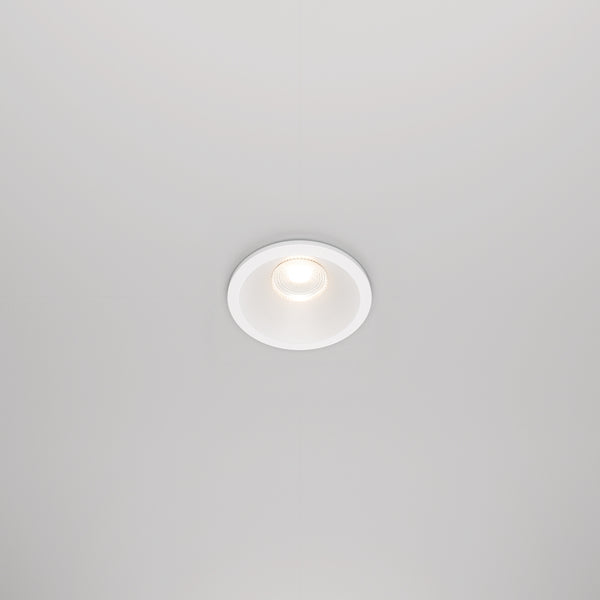
Allow roughly one downlight per metre in a hallway, more in a living room: a dimmable recessed downlight sits in a cut-out in the ceiling and its intensity is adjusted at the wall. This selection brings together mainly models with integrated LED in aluminium, in a white or black finish, most of which accept a dimmer.
What is a dimmable recessed downlight?
A dimmable recessed downlight sits in a cut-out in the ceiling and its intensity is adjusted with a wall dimmer or a remote control. It comes in a version with integrated LED or with a GU10 base and a dimmable bulb. Here, almost all the models can be dimmed.
A recessed downlight with a built-in dimmer
In the integrated LED version, the module and its driver are already inside the housing: nothing to add, dimming is controlled from the wall. This is the case for the vast majority of the models in the selection, most often in aluminium. The other family, rarer, uses a GU10 base: you screw in a dimmable bulb, which you can replace later. You will find both approaches in our range of lighting and in the selection of dimmable recessed LED downlights.
What is the difference between dimmable and non-dimmable?
A dimmable downlight accepts a dimmer and goes down in intensity without flicker. A non-dimmable downlight is only designed for simple switching on: placed on a dimmer, it flickers, buzzes and gets damaged. The information is stated plainly in the product sheet, like the wattage or the protection rating. In this selection, the vast majority of the references are listed as compatible with a dimmer.
Which white should you choose for dimmable recessed downlights?
Warm white, between 2700 and 3500 K, gives a golden light close to halogen, pleasant in a living room in the evening. Neutral white, between 3500 and 4500 K, makes colours sharper and suits a hallway as well as a worktop. Cool white, rarer here, stays reserved for technical areas.
Warm white or neutral white: which to choose?
Warm white is the most represented in this collection, and it is the one that creates an end-of-day atmosphere in a living room. Neutral white comes just behind and takes the advantage as soon as you need to see clearly: hallway, entrance, kitchen. Cool white exists but remains marginal here. A through room can mix the two: neutral along the passage, warm in the relaxation corners. Compare the results in our selection of models in a white finish.
6 W or 12 W: which wattage for which room?
Some models are 12 W, the most versatile wattage for a living room or a hallway. 6 W is reserved for small diameters and accent points, like the Ondor IP65 LED downlight, 6 cm round. 15 W equips the more generous formats, including the square ones. It is better to multiply moderate points than to force a single wattage, especially with a dimmer.
How should recessed downlights be laid out on the ceiling?
Place the downlights above the useful areas, table, worktop or wall to be highlighted, then align the others on the same axis to keep a regular rhythm. It is better to space them regularly than to multiply the points, and to leave enough space between the downlight and the wall.
How should downlights be laid out in a long hallway?
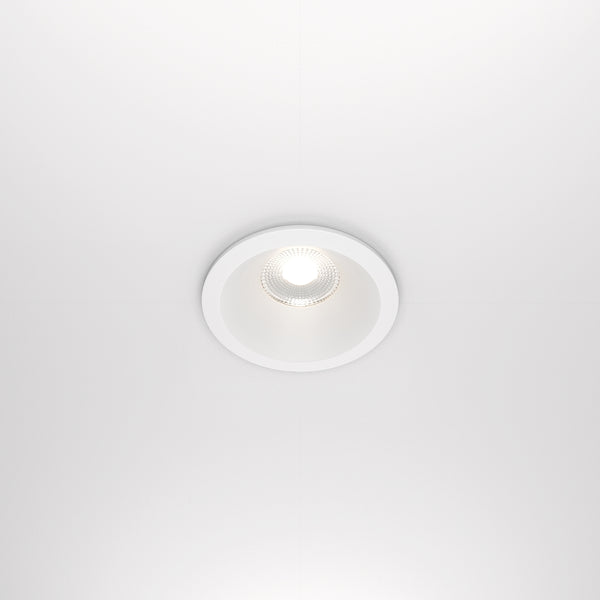
Draw a single axis in the centre of the passage and distribute the points at regular intervals, around one metre depending on the length. One row is enough in a narrow hallway; two rows are justified beyond about one metre fifty wide. Avoid placing a downlight right against a partition wall: the light climbs up the wall and leaves the floor in shadow. Small diameters, like Zanita and its small diameter, fit well in this type of circulation area.
How do you light a worktop or a wall with adjustable downlights?
An adjustable downlight is aimed towards the surface to be lit: worktop, bookcase, painting. Set it back about 40 to 60 cm from the wall to avoid too marked a spot, then tilt the module. This approach works for adjustable recessed downlights as well as for fixed models that are then chosen with a more directed beam.
The guidelines below cross-reference the room, the model and the protection rating.
| Room | Models to favour | Protection rating | Light temperature |
|---|---|---|---|
| Living room | Round or adjustable, white or black | IP20 on a dry ceiling | Warm white in the evening, neutral white for reading |
| Hallway | Small diameters, adjustable to follow the passage | IP20 | Neutral white |
| Kitchen | Protected versions near the sink | IP44 or IP65 | Neutral white |
| Entrance and dressing room | Small discreet diameters | IP20 | Neutral white or warm white |
| Bathroom | IP65 models | IP65 | Warm white or neutral white |
Dimmable recessed downlight in a bathroom: which protection rating?
The protection rating indicates the downlight's resistance to dust and water. IP20 suits dry ceilings, IP44 protects against splashes and IP65 resists water jets. In this selection, the IP65 models such as Ondor, Ulyssa, Aurion or Talvina are the ones to choose for a bathroom.
IP20, IP44, IP65: what does each rating protect against?
IP20 means the housing is closed to dust but sensitive to splashes: this is the usual level for a living room ceiling. IP44 adds protection against water splashes, useful near a water point. IP65 goes further and withstands jets. The simple rule: the closer the downlight is to water, the higher the rating must be. For a bathroom, aim for at least IP44, and IP65 if the downlight is exposed.
Which models should be protected from moisture in this selection?
The IP65 versions are the most numerous after IP20, and several come in white as well as black. The protected white Ulyssa version lights in warm white, while Aurion plays the same role in black. Talvina, the minimalist version, stays in neutral white. For an adjustable model in a wet area, Kalynda is listed as IP44.
Adjustable or fixed recessed downlight: which to choose?
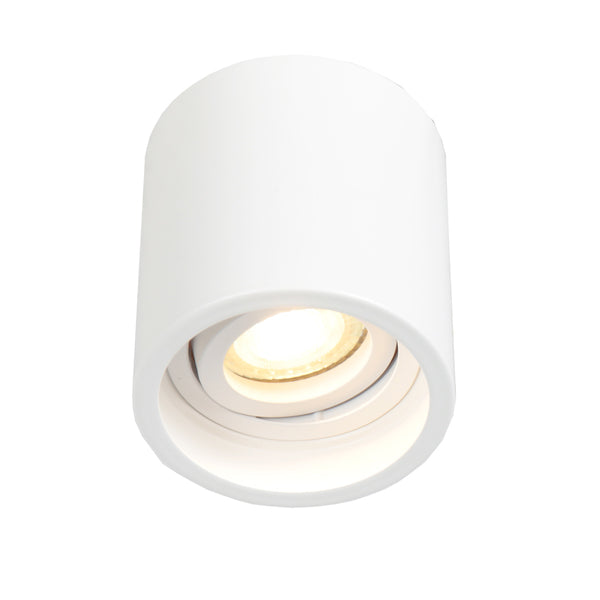
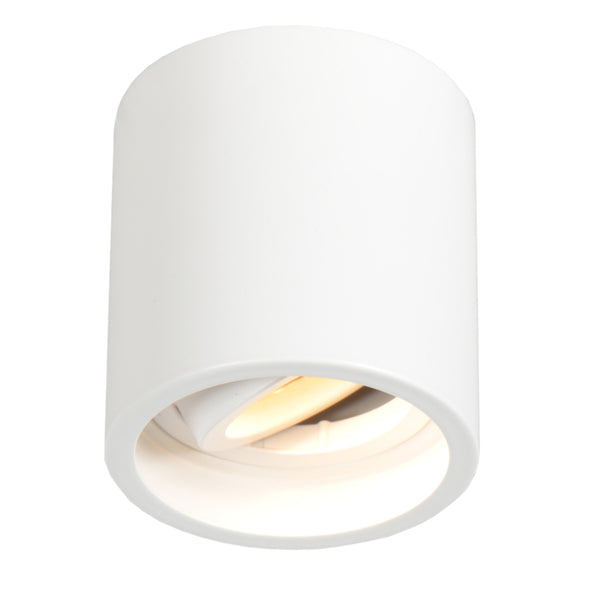
An adjustable downlight lets you direct the beam towards a wall, a bookcase or a work of art, without lighting the whole ceiling. A fixed downlight suits when you want regular, discreet lighting. This selection offers adjustable models such as Kalynda, Rotula or Belsamora, and fixed versions in round, tube or square.
What is an adjustable downlight for?
It is used to correct things after installation. A slightly low ceiling, a wall to highlight, a piece of furniture to set apart: the orientation solves the problem without breaking into the masonry. Kalynda and its gold reflector illustrates this use well, with a large 12 cm diameter and an IP44 finish. Adjustable LED downlights also suit hallways where you want to follow the passage.
Round, tube or square: which shape on the ceiling?
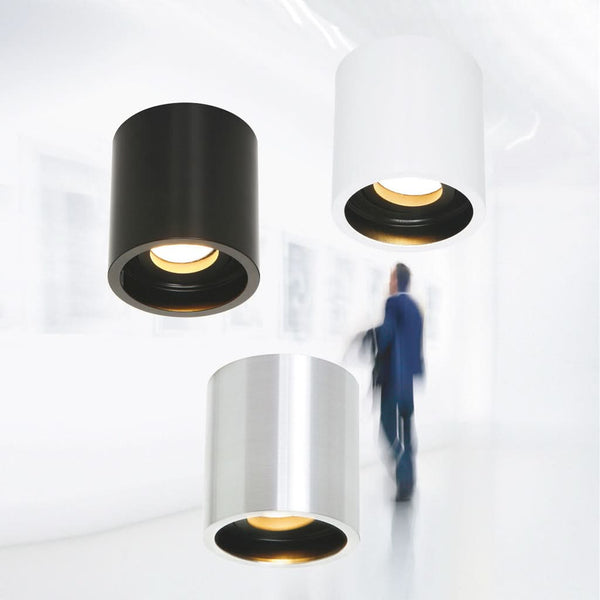
Round dominates widely and blends into a ceiling when the diameter stays small. The tube brings an elongated line, useful for marking a direction. The square suits contemporary ceilings and strict alignments, like Fasetta and its square format of 8.5 cm. Round, tube and square shapes can be found in our selection of downlights with a crafted design.
Which dimmer and which switch for LED downlights?
A dimmer must be listed as LED-compatible, because downlights with integrated LED consume little and some conventional dimmers do not go low enough. It is best to choose a model designed for LED lighting, or to limit yourself to downlights with a GU10 base fitted with dimmable bulbs, controlled by the same wall control.
How do you know if a dimmer is LED-compatible?
Two pieces of information matter: the LED mention on the dimmer, and its minimum load. A dimmer designed for high loads struggles to control a few watts of LED: dimming becomes irregular at the bottom of the range, sometimes with flickering. The dimmer's instructions and the downlight's remain the only reliable references, more reliable than the age of the installation. This is also true for a dimmable downlight as for a dimmable LED downlight.
Which switch for a dimmable downlight?
A dimmer switch, also called a dimmer, rotary or with a control, installed on the wall in the usual place. It must be compatible with the connected load. A non-dimmable LED bulb has no place on this type of control: it flickers and degrades. If in doubt about compatibility, keep the switch on simple operation and reserve dimming for the references listed as dimmable.
How do you install and maintain a dimmable recessed downlight?
Switch off the power, check the cut-out diameter and the available depth in the product sheet, then connect the downlight and hold it in place with its springs. For maintenance, a dry cloth is enough on the trim and the lens.
Which cut-out for a recessed downlight?
There is no single diameter: each sheet gives the cut-out to drill and the depth needed behind the ceiling. A downlight with an 8.5 cm trim does not occupy the same hole as a 12 cm model. Before drilling, also check the space available above, insulation or joist included. Diameters here range from the small round format to the large adjustable model.
How do you clean a recessed downlight?
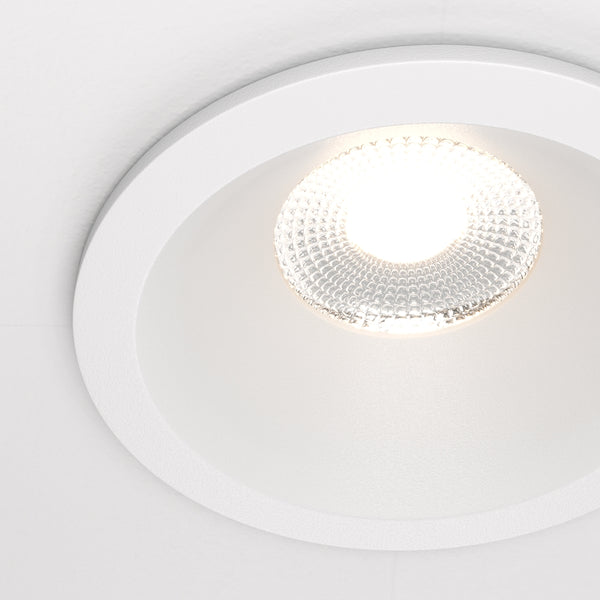
Cut the power, then wipe a dry or very slightly damp cloth over the trim and the lens. Avoid abrasive products and water sprayed on an IP20 model. A ribbed or faceted lens only needs dusting, as on Nyva with its honeycomb reflector. The five-year warranty covers most of the selection, but not the traces of aggressive cleaning.
How do you match recessed downlights with the room's decor?
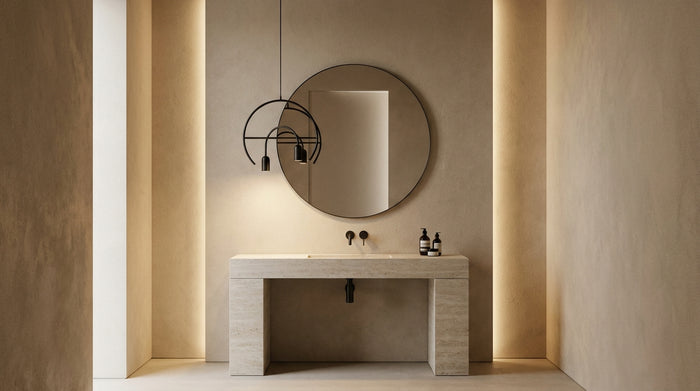
First match the colour of the downlight with the ceiling: white for a light ceiling, black to mark the downlight's design and for dark ceilings. Then come the material, often aluminium, and the style, between minimalist, modern and contemporary. Dimming allows the atmosphere to be adjusted according to the moment.
White or black: which finish on the ceiling?
White blends into a light painted ceiling: it is the majority finish here, and it suits rooms you want calm. Black clearly outlines the downlight and matches dark ceilings or graphic atmospheres. Black recessed downlights and the white versions cover both approaches. A few silver and gold finishes add a detail without changing the whole room, to see in the gold finishes.
Which other lights should these downlights be paired with?
A ceiling of downlights rarely creates an atmosphere on its own: add a low source, lamp or wall light, to avoid purely downward light. Materials respond well to each other, especially aluminium, the majority here, which can be found in the metal downlights. The style is then chosen, minimalist, modern or contemporary, as in our selection of modern style downlights. For a kitchen, look at the versions designed for the kitchen.
| Model | Colour | Shape | Dimensions | Protection rating | Temperature | Wattage |
|---|---|---|---|---|---|---|
| Ondor | Black | Round | Ø 6 cm | IP65 | Neutral white | 6 W |
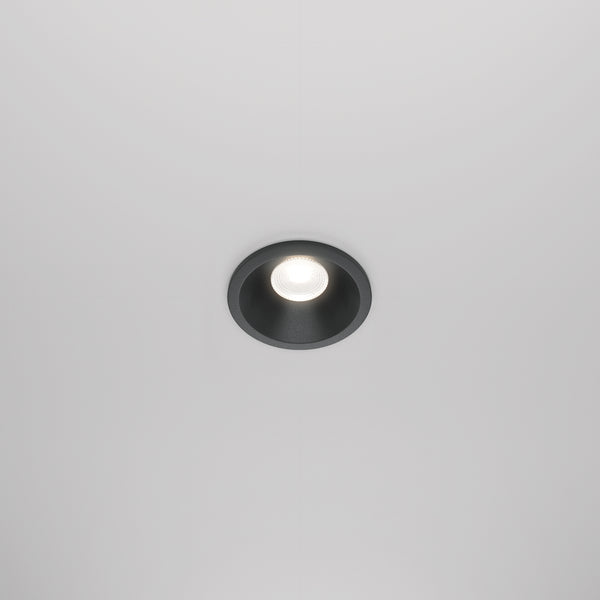
| Zanita | White | Round | Ø 6.5 cm | IP20 | Neutral white | 10 W |
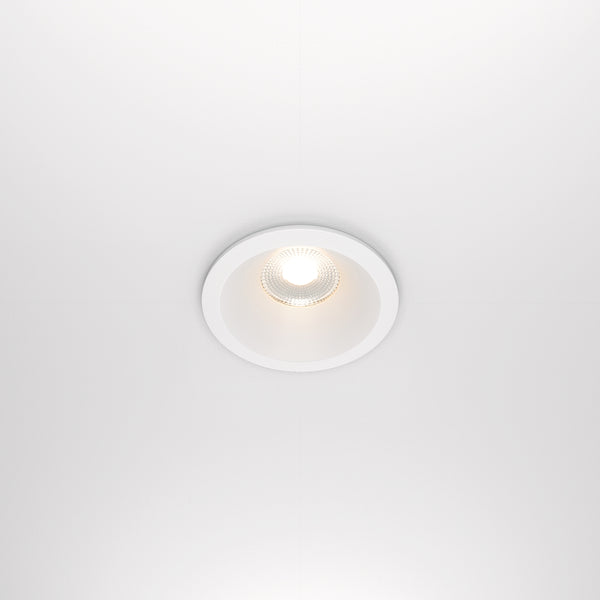
| Ulyssa | White | Round | Ø 8.5 cm | IP65 | Warm white | 12 W |
| Talvina | White | Round | Ø 8.5 cm | IP65 | Neutral white | 12 W |
| Fasetta | White | Square | W 8.5 x D 8.5 cm | IP20 | Neutral white | 15 W |
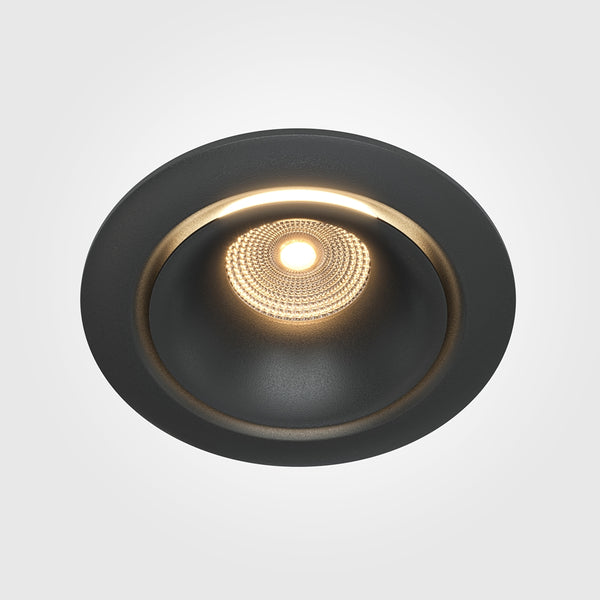
| Kalynda | Black | Round | Ø 12 cm | IP44 | Warm white | 12 W |
One last point before ordering: the cut-out and the base, integrated LED or GU10, are the two pieces of information that make an installation fail. Check them, then compare the models designed for a living room if the room is a lounge.
Frequently asked questions about dimmable recessed downlights
Do LED bulbs work with a dimmer?
Yes, provided the bulb is listed as dimmable and the dimmer is designed for LED lighting. An ordinary LED bulb placed on a dimmer can flicker, buzz or get damaged. In this collection, the downlights with integrated LED are already designed for dimming.
Does a dimmable bulb work without a dimmer?
Yes. A dimmable bulb or downlight switches on normally on a conventional switch, at full intensity. The dimmable mention only indicates that it also accepts a dimmer. It therefore remains usable if you do not install a dimmer straight away.
How do you know if a downlight is dimmable?
The information appears in the product sheet, just like the wattage or the protection rating. In this collection, the vast majority of the downlights are listed as compatible with a dimmer. Also check the base type, integrated LED or GU10.
How should downlights be laid out on the ceiling?
Start with the useful areas: above a table, a worktop or facing a wall to be highlighted. The other downlights align on the same axis, with a regular gap, around one metre in a hallway. Avoid placing a downlight right against the wall so as not to create a light spot.
Can a dimmable halogen floor lamp be replaced by dimmable recessed downlights?
Yes, the use is similar: a light you dim in the evening. The difference lies in the installation, recessed in the ceiling rather than on the floor, and in the light, more directed. An LED-compatible dimmer remains necessary to keep the dimming.
This collection brings together downlights with integrated LED and downlights with a GU10 base, often compatible with a dimmer. The catalogue has enough to equip a living room as well as a bathroom: browse our lighting catalogue and the living room specialists to find the reference that matches your ceiling.