
Recessed LED outdoor spotlights
This selection is also available in our French store: Spots d exterieur LED encastrables




































- Tracked delivery to your country Tracked delivery
- Secure payment at checkout Multiple payment methods
- 14 days to change your mind 14-day returns
- Secure payment Secure payment
Not sure of your style? Find it in 30 seconds
A few questions, and we will show you the pieces made for you.
Frequently asked questions
How do I choose the right light output?
At what height should the light be installed?
What type of bulb?
Compatible with LEDs and dimmers?

Light changes everything
From statement chandeliers to discreet wall lights, we help you choose the right brightness, height and style for every room.
- Tracked delivery
- Pay in instalments, where available
- 14 days to change your mind
- Advice & showroom in Lyon, France
An outdoor recessed LED spotlight sits in a cutout in the ground, a slab or a wall, with only its glass flush with the surface: the light grazes the material and draws a clean line, with no obstacle at foot level or in the eye. The choice then comes down to three readable figures: the protection rating, the beam orientation and the depth available below the surface.
What is an outdoor recessed LED spotlight?
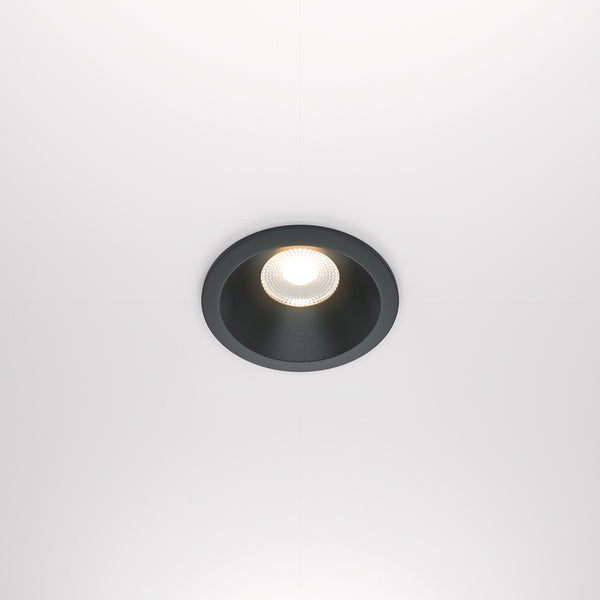
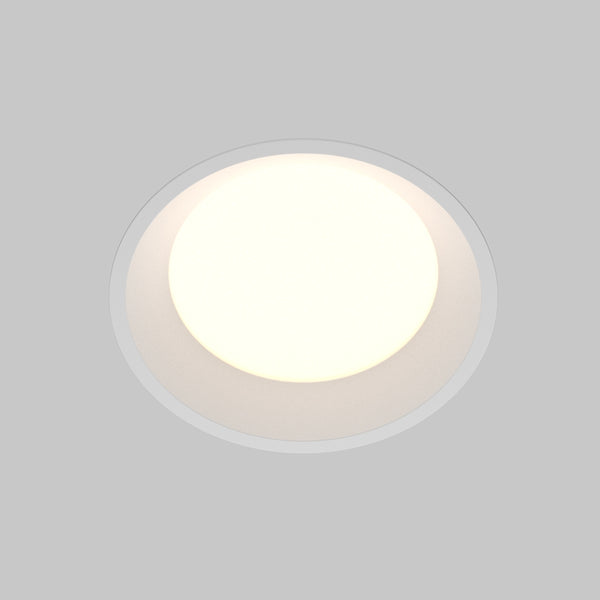
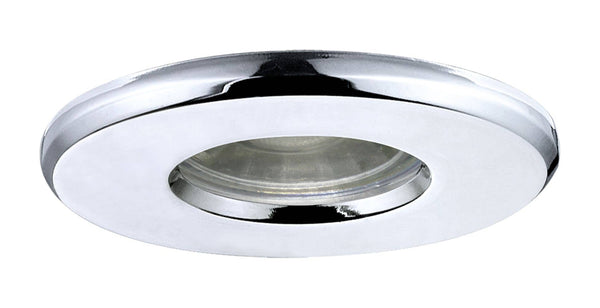
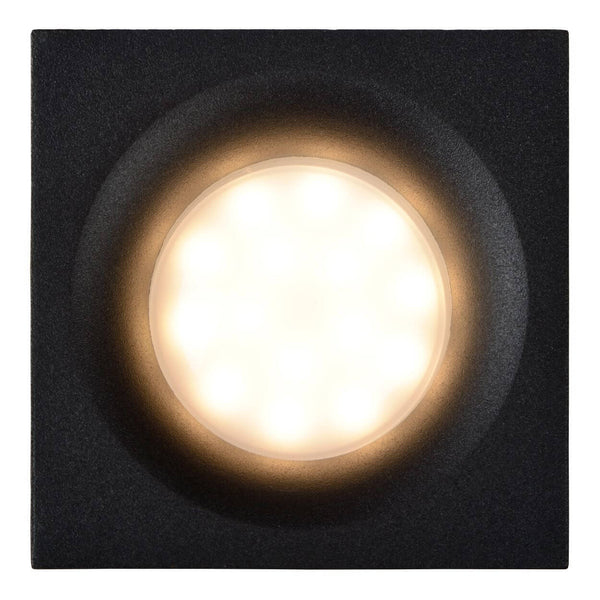
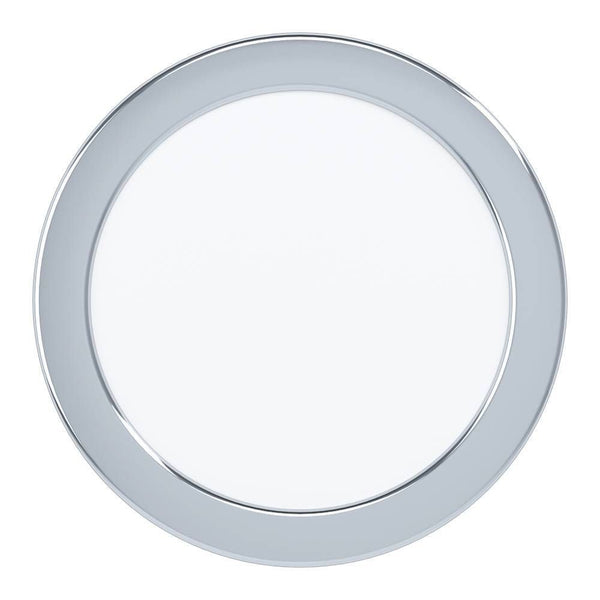
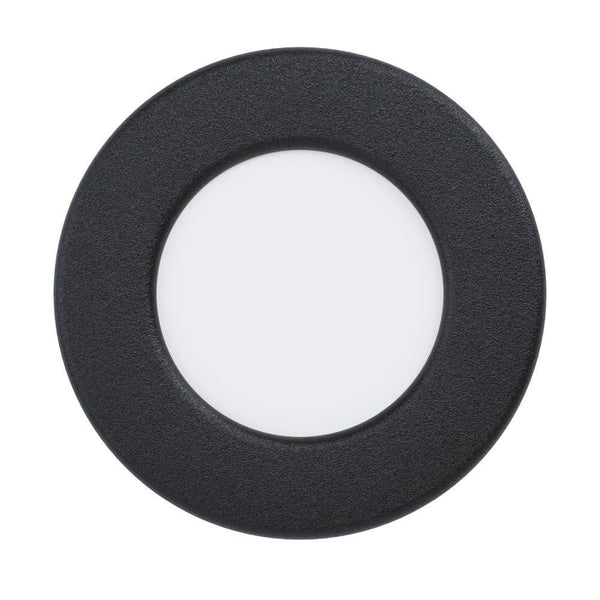
An outdoor recessed LED spotlight is a luminaire set into a cutout in the ground, a slab or a wall, with only its glass flush with the surface. It lights at ground level without creating a visual obstacle: this is the format for terrace edges, paths and facades you want to reveal without hanging a floodlight in plain sight.
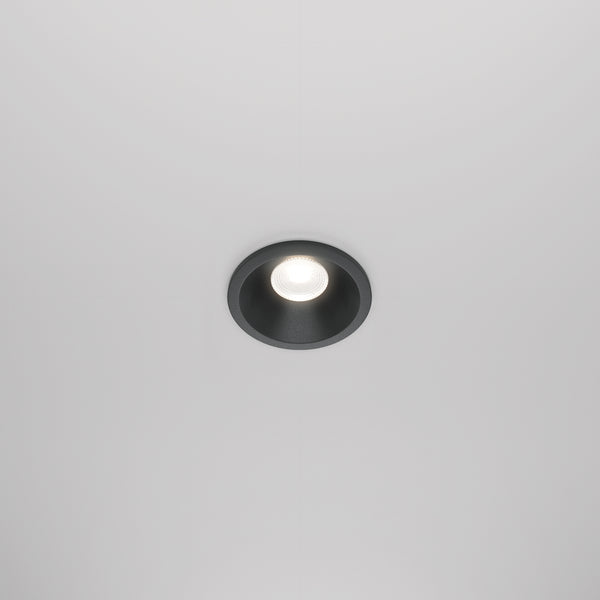
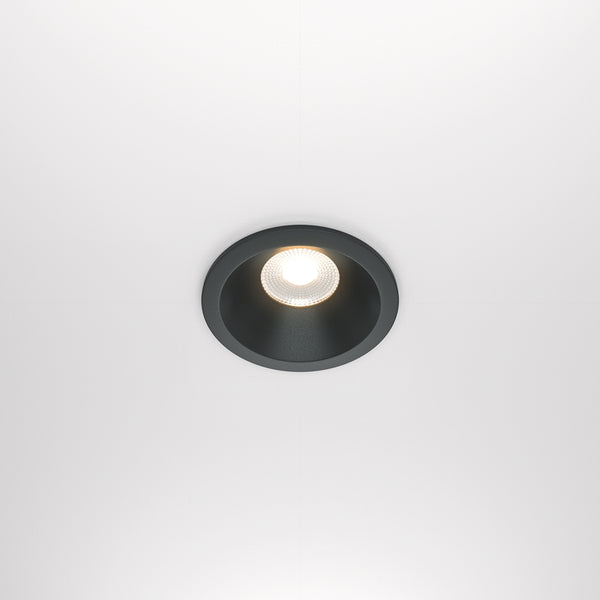
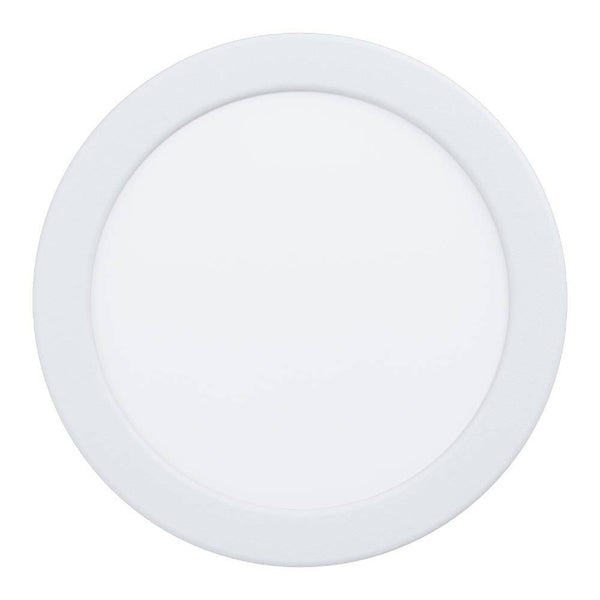
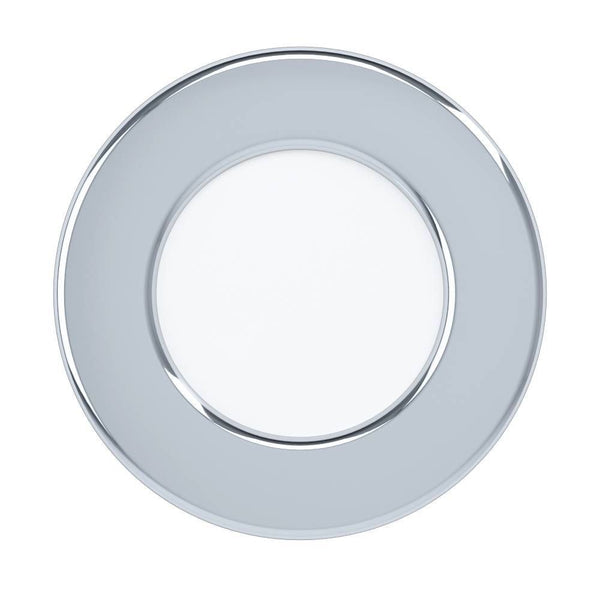
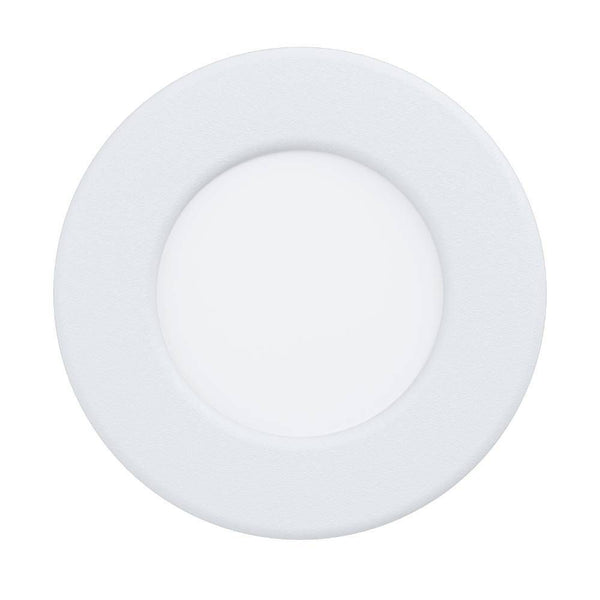
By day, the housing disappears and only a circle of glass remains in the material. The collection has 22 models: the recess depth and the protection rating are shown on each model sheet, along with dust and water resistance. To compare the available formats, browse the outdoor recessed spotlights. This format naturally complements all our Designix luminaires, with which it shares the same lighting codes.
Where to install outdoor recessed LED spotlights in the garden?
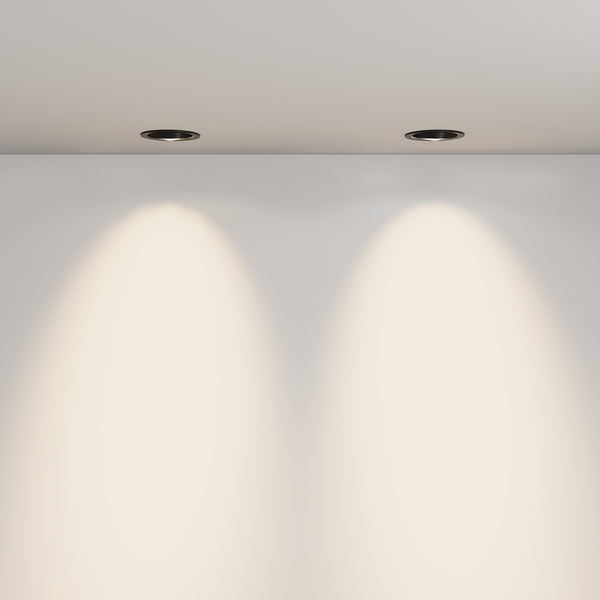
They go along a path to draw a route, at the edge of a terrace to mark the boundary of the wood, against a facade to highlight its material, or in a bed to light a shrub from below. Spacing and beam width determine the result, and marking out on the ground before cutting makes all the difference.
Outdoor recessed LED spotlights for terraces
On a terrace, the aim is not to light brightly but to extend the living room light outdoors. Points are aligned at a regular distance from the edge, parallel to the facade, to get a continuous line rather than a series of patches. A wide, diffuse beam suits a slab; a tighter beam makes more of a mark. These join the family of outdoor LED lighting, designed to work in all weather.
Lighting a path and a bed edge
Along a path, you want marking: points spaced regularly, aimed straight ahead, are enough to guide without glare. At a bed edge, the effect changes, the light rises towards the branches and sets the foliage silhouette against the wall. This is where an adjustable model wins, like the adjustable outdoor spotlights: you correct the axis after installation if the tree has grown or if the light hits the wrong spot.
| Area to light | Type of installation | First criterion to check | Desired effect |
|---|---|---|---|
| Path and walkway | Recessed in the ground, flush | Protection rating and resistance to foot traffic | Mark the path without glare |
| Wooden terrace edge | Recessed in the board or slab | Available recess depth | Highlight the wood boundary |
| Facade wall | Recessed in the wall, grazing light | Beam orientation | Reveal the wall material |
| Bed and shrub | Recessed in the ground, aimed upwards | Axis adjustment | Light the foliage from below |
| Covered terrace and doorway | Recessed in the slab | Watertightness and drainage | Extend indoor light outside |
Which IP rating for an outdoor recessed spotlight?
The IP rating is shown on the product sheet and indicates resistance to dust and then to water. The collection has 22 outdoor recessed LED spotlights: check the figure on each sheet rather than assuming it. Drainage matters as much as the rating.
Outdoor recessed LED spotlights IP65: reading the two digits
The first digit concerns solid bodies, the second water. A high second digit indicates strong protection against splashes and temporary immersion. No value is universal: read the IP line of each model, as some are more exposed than others depending on their location. The light finishes for dark walls come with the same watertightness requirements as dark shades.
Waterproof outdoor recessed LED spotlights: the drainage question
A watertight housing set in a hollow stays wet: it is standing water, more than run-off, that wears out a buried luminaire. So plan a drain below the housing, on a bed of gravel or draining sand, and avoid low points where water collects after rain. The full collection of outdoor recessed spotlights brings together the formats designed for these installations in open ground.
Adjustable or fixed outdoor recessed spotlight: which to choose?
A fixed spotlight shines straight ahead: ideal for marking a path or lighting a wall from bottom to top. An adjustable model can be set after installation, which lets you correct the axis towards a shrub, a step or a house number without redoing the cutout. The decision therefore comes down to whether you need to adjust or not.
Adjustable outdoor recessed LED spotlights
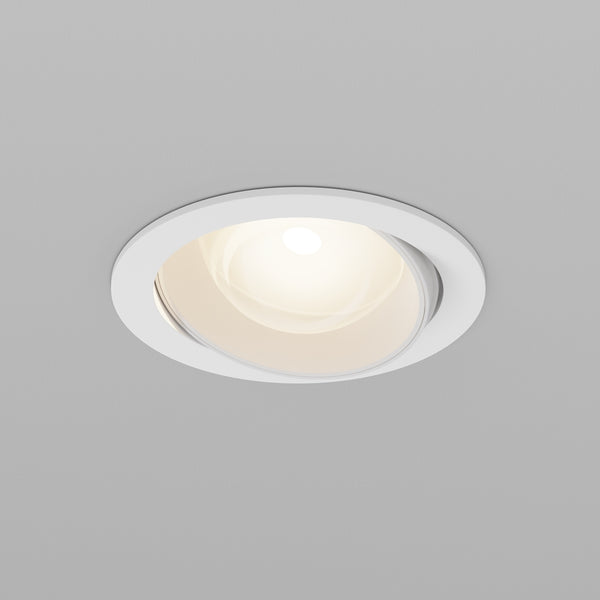
Adjustment is there to correct what you had not planned for: a plant that grows, an uneven wall, a lower step. In return, the swivel needs clearance around it and the cutout must be wider. For strictly linear use, a fixed model gives a stable beam, with no setting to revisit. The recessed adjustable spotlights show the same principle applied indoors.
Double outdoor recessed LED spotlights
A double housing places two light points in a single cutout: handy for lighting both sides of a wide path or covering a wall without multiplying the cuts. The constraint is mechanical: check the distance between the two sources and the cutout width before drilling. The swivel outdoor spotlights are also available in this two-head configuration.
| Type | What it allows | Where it fits | What to check before buying |
|---|---|---|---|
| Fixed | Stable beam, nothing to adjust | Paths, borders, regular lines | The axis is final, the position is decided when marking out |
| Adjustable | Correct the direction after installation | Beds, facades, steps | Clearance needed around the swivel |
| Double | Two light points in a single housing | Wide paths, broad walls | Distance between the two sources and cutout width |
| Solar | No cabling to run | Isolated areas of the garden | Direct exposure of the sensor to light |
| Extra flat | Low depth below the surface | Wooden terraces, thin slabs | Recess depth stated on the sheet |
Which outdoor LED floodlight to choose?
A floodlight is wall-mounted and sends a wide beam over an area you want to highlight, with no cutout in the ground. A recessed spotlight, by contrast, sits flush with the surface and lights at ground level. The choice therefore depends on how discreet you want it, the area to cover and whether you can drill.
Floodlight or recessed spotlight for lighting a facade
A ground-recessed spotlight works in grazing light: it reveals the relief of the render or stone rather than flooding the wall. To light a large area over a great height, a wall light or a floodlight mounted high up will be more effective. The two are often combined on the same facade, one drawing the base, the other carrying the light higher. The outdoor spotlights with a crafted design are chosen when the luminaire stays visible.
Large area to cover or a precise zone
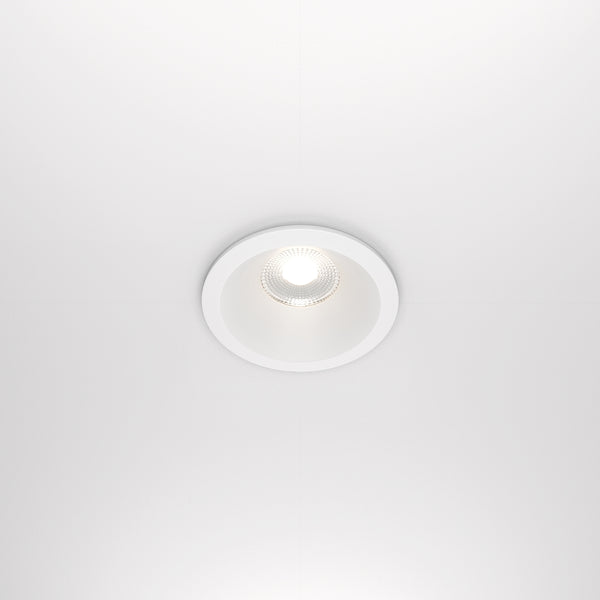
For a large area, first look at the beam shape and whether it can be aimed, to avoid shadow zones that no one fixes afterwards. For a precise zone, one well-placed recessed point is enough and stays invisible by day. The white housings blend into a light render when the luminaire sits flush with a painted wall.
Solar outdoor recessed LED spotlights: how do they work?
A solar spotlight includes a small photovoltaic panel and a battery: it is installed without cabling and switches on at dusk. It is the solution when no cable route is possible, provided the sensor is exposed to direct light and you accept a more modest intensity than a wired model.
Solar outdoor recessed LED spotlights
The result is softer and the intensity varies with the season and sunshine: use it for discreet marking, not for lighting a traffic area. The sensor must be clear, so avoid recessing it under foliage or in a corner that stays in shade. The solar models without cabling suit hard-to-reach garden corners.
When to prefer a wired model
As soon as you want constant light, controlled switching or stable intensity, wired remains the reference. It needs a power supply nearby, which is best planned during building work rather than afterwards. It is also the choice for lighting used for safe movement. These models join the complete luminaire range.
How to install and maintain outdoor recessed spotlights?
Prepare a cutout at the depth stated on the luminaire sheet, plan a water drain below the housing when it is set in the ground, then connect before closing up. Maintenance is limited to cleaning the glass and checking that water does not collect around the seal.
Preparing the cutout and drainage
- Mark the positions on the ground, aligning them and checking the spacings from both ends.
- Cut to the housing diameter, without forcing, checking the depth stated for the model.
- Create a draining bed below the housing and a water drain for ground installation.
- Connect, fit the seal, then close up and test before filling back in.
Cleaning the glass and checking the seals
A damp cloth is enough on the glass, with no abrasive product that scratches the surface and dulls the light. Take the opportunity to check the seal and the slope around the housing, especially after a spell of rain. A model with a shallow housing, like the outdoor LED lighting solutions, needs less clearance below the surface.
How to match outdoor spotlights with the home lighting?
Keep the same light family indoors and outdoors: a consistent white tone between the outdoor spotlights and those in the kitchen, living room or bedroom avoids a break when you look from inside towards the terrace. The housing colour also matters, depending on the material receiving it.
The same white tone indoors and outdoors
Light that is too cool outside and too warm inside creates a visible boundary at the bay window. The simplest approach is to stay in the same white family from one room to the next and extend it onto the terrace. The spotlights that continue the light in the living room and the recessed kitchen spotlights serve as a reference for setting this continuity.
Light or dark colour depending on the material
A dark housing stands out on a light facade and marks a sharp point. On a wooden board or stone, a colour close to the material makes the luminaire disappear into the surface. A dark render, by contrast, calls for a light housing that blends into the wall. The recessed spotlights for a bedroom and the white indoor spotlights follow the same logic of matching, and fitting on dimmable models lets you adjust the mood in the evening.
If you are hesitating between two formats, tell the Designix customer service the area to light and the depth available below the surface: the choice comes down to these two elements. Secure payment, tracked delivery, returns and support from Designix customer service.
Frequently asked questions about outdoor recessed LED spotlights
What ceiling height is needed for an LED spotlight?
It is not the ceiling height that matters, but the depth available behind the surface. The cutout must accommodate the housing and let air circulate around it. Outdoors, the same logic applies to the ground or slab: read the recess depth on the product sheet.
Can an outdoor recessed LED spotlight be installed in a wooden terrace?
Yes, by drilling with a hole saw at the housing diameter. The point to check is underneath: the cutout must not retain water, and the luminaire must sit flush with the board so the foot does not catch. An extra flat model needs less depth below the wood.
Extra flat outdoor recessed LED spotlights: when to choose them?
The extra flat format is used when the available depth is low: a thin terrace board, a slim slab, a wall already lined. It stays visible flush with the surface, so it is also chosen for its discreet look. The depth stated on the product sheet is what counts.
Is one recessed spotlight enough to light a facade?
How can water be prevented from collecting around a ground-recessed spotlight?
Create a drain below the housing, install on a draining bed rather than compacted ground, and check after rain that water does not build up around the seal. A flush glass, with no rim that retains water, also limits puddles.




