
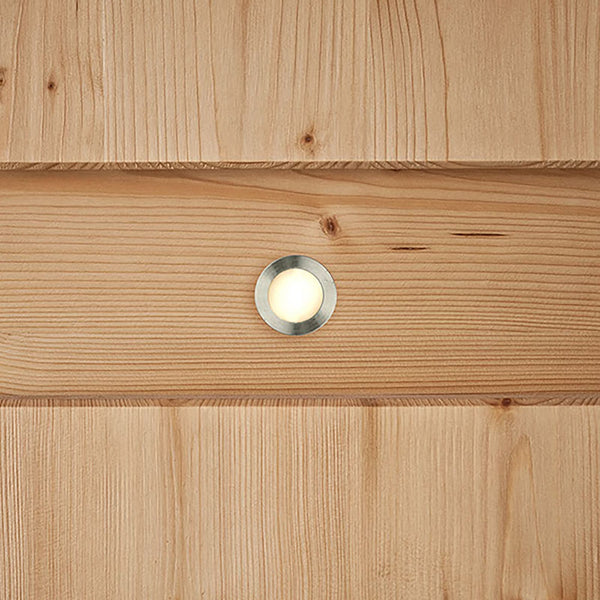
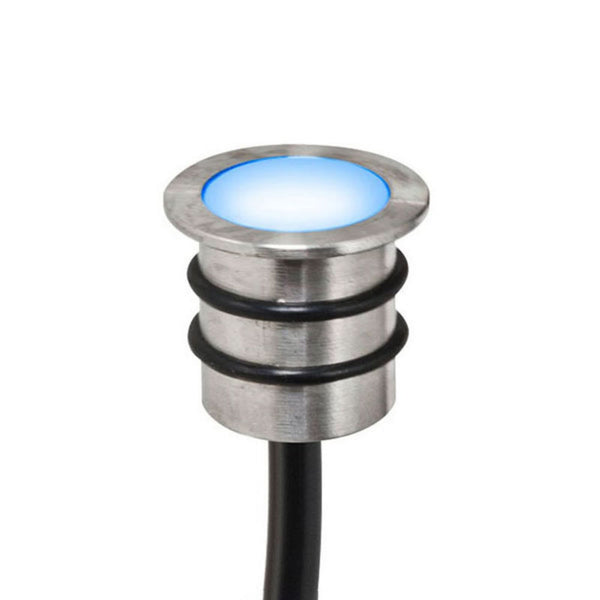
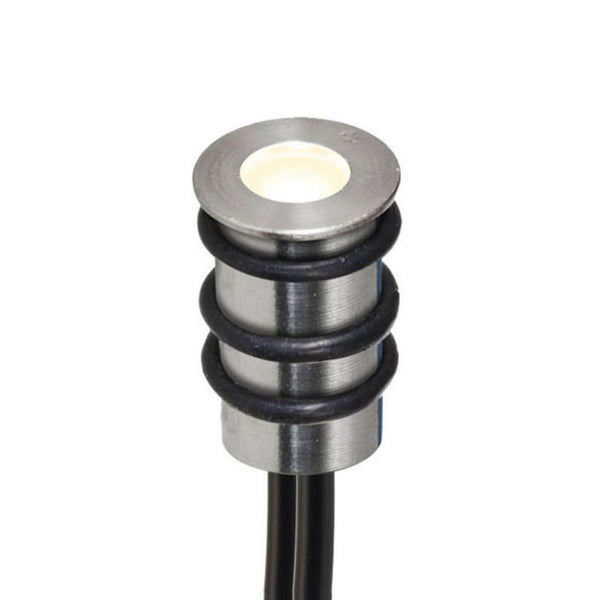
220V IP68 recessed spotlights
This selection is also available in our French store: Spots encastrables 220V IP68





- Tracked delivery to your country Tracked delivery
- Secure payment at checkout Multiple payment methods
- 14 days to change your mind 14-day returns
- Secure payment Secure payment
Not sure of your style? Find it in 30 seconds
A few questions, and we will show you the pieces made for you.
Frequently asked questions
How do I choose the right light output?
At what height should the light be installed?
What type of bulb?
Compatible with LEDs and dimmers?

Light changes everything
From statement chandeliers to discreet wall lights, we help you choose the right brightness, height and style for every room.
- Tracked delivery
- Pay in instalments, where available
- 14 days to change your mind
- Advice & showroom in Lyon, France
These recessed spotlights run on 220-240 V and carry an IP68 rating, which allows continuous immersion. They are intended for terraces, pool surrounds, bathrooms and damp rooms, in ceilings or floors, depending on the finish and socket chosen.
How do you install recessed spotlights in a ceiling?
Locate the cable run, then drill at the diameter given on the spotlight's data sheet, slightly smaller than the trim ring. The unit slides into the cut-out, springs or clips hold it, the gasket seals it. Connection to the terminal block is done with the power off, before final fitting.
IP68 recessed outdoor spotlight 220V: what changes during installation
A model designed for outdoor use adds three constraints to indoor work. The gasket is wider and must be seated perfectly flat, otherwise run-off water finds a way in. The trim ring overhangs more, which is less forgiving of an approximate drill hole. Recess depth matters too: under an exposed surface, the spotlight body must fit within the available thickness without stressing the gasket. Check this on the data sheet before drilling, and bear in mind that these installation figures vary from one model to another.
New build or renovation: what cut-out should you plan for?
In a new build, the opening is set out to the layout plan and leaves enough cable slack to pull the spotlight out of the hole for a future replacement. In renovation over plasterboard, the thickness behind the board is thin: a compact spotlight with integrated LED often fits where a GU10 model will not. In a solid slab, the cut-out is prepared before pouring, not after.
The method is the same for a bathroom ceiling as for a covered terrace: only the sealing requirement changes. To compare the available families, browse the recessed outdoor spotlights and keep in mind that recess depth and cut-out diameter are the two figures to note before any purchase.
Which IP rating should you choose between IP65, IP67 and IP68?
The IP rating describes resistance to water and dust. IP65 withstands jets, IP67 temporary immersion, IP68 continuous immersion. For a bathroom ceiling, IP65 is often enough; for a terrace floor, a pool surround or a room that is regularly wet, aim for IP67 or IP68. An IP68 fitted under a dry ceiling offers nothing more than an IP65.
| Rating | Resists | Consistent location |
|---|---|---|
| IP20 | no protection against water | dry interior ceiling |
| IP44 | water splashes | ceiling of a lightly exposed bathroom |
| IP65 | water jets | covered terrace, sheltered walkway |
| IP67 | temporary immersion | pool surround, frequently wet floor |
| IP68 | continuous immersion | pool, submersible floor, very damp room |
IP67 recessed spotlights: for which locations?
IP67 corresponds to brief, shallow immersion. It is the consistent level for a terrace floor washed down with a hose, a pool deck swept with plenty of water, or a pool surround where splashing is frequent without permanent submersion. In these locations, the recess must also drain water away rather than retain it.
IP65 recessed spotlight 220V: when is it enough?
IP65 covers water jets and suits a covered terrace, a sheltered walkway, a bathroom ceiling or a bathroom exposed to steam and splashes. The second digit of the rating always describes water, the first dust: there is no point over-specifying if the surface stays sheltered.
LED wiring on 220V: how do you connect recessed spotlights?
A 220-240 V spotlight connects directly to the mains: live, neutral and earth on the terminal block, with no transformer. Switch off the power at the breaker, follow the wire markings, then check the connections are tight before switching the power back on. The terminal block must remain accessible in the box or the ceiling void, never buried in insulation.
| Connection | Wiring | Consequence |
|---|---|---|
| Series | the live wire passes through each spotlight one after another | one faulty point breaks the line, a setup to reserve for intended cases |
| Parallel | each spotlight receives live and neutral from the common line | each point works on its own, the usual 220V setup |
| With 12V transformer | a transformer powers one or more spotlights | low-voltage installation, spotlight not connected to the mains |
| With dimmer | the spotlights must be compatible, on the same line | brightness is adjusted without changing the fittings |
How do you wire spotlights in series or in parallel?
In series, the live wire passes through each spotlight one after another: the return of the first feeds the second. A point that breaks the loop switches off the whole line. At 220 V, parallel remains the norm: each spotlight receives live and neutral from the common line and works independently. The terminal block of each unit must be closed properly.
Recessed spotlights 220V or 12V: what is the transformer for?
The transformer only concerns low voltage: it powers one or more points and the spotlight is then not connected to the mains. At 220 V, there is nothing to convert, so nothing to house in the cut-out, which simplifies fitting in a thin slab. Check the voltage on the data sheet before buying.
How should you lay out spotlights in a ceiling?
Position the spotlights according to what you want to light, not according to a theoretical spacing: worktop, circulation, wall to highlight. A regular gap between points avoids dark zones, and sufficient set-back from the wall stops the light from grazing the partition and casting shadows on it.
What gap between two spotlights depending on ceiling height?
In general, you aim for a continuous pool of light on the surface to be lit: the higher the ceiling, the wider the gap, because the beam spreads as it descends. A low ceiling takes closely spaced points, a tall space needs a wider gap or a broader beam. The layout plan is drawn on paper, before drilling.
Where should spotlights go in relation to furniture and walls?
Align the points with the lines of the furniture rather than the centre of the room: a spotlight above the corner of a worktop reads better than one lost in the middle. The set-back from the wall avoids the grazing halo. For a living room, compare the recessed spotlights for living rooms and their beams.
How many spotlights in a kitchen?
The number depends on the surfaces to be lit, not on the size of the room alone: one point above each work area, one for the sink, one for circulation, and dedicated points for the worktop if it is long. Better to spread them out and vary the beams than to multiply spotlights at random.
Worktop, sink and circulation: three zones to treat separately
The worktop needs vertical light, without shadows cast by the body of the person cooking. The sink is treated separately, often with an offset point to avoid reflections on stainless steel. Circulation does not need the same density: a few points are enough. The recessed LED spotlights for kitchens cover these three uses with different beams.
And in a bathroom or a hallway?
In a bathroom, light the mirror and the floor rather than the centre of the ceiling, and the IP rating follows the zone. In a hallway, a regular alignment guides the step better than a single point: see the spotlights for hallways. Distribution matters more than quantity.
GU10 socket or integrated LED: what should you choose for a 220V spotlight?
An integrated LED cannot be replaced and fixes the spotlight's light for its entire service life. A GU10 socket at 230 V lets you change the bulb, the colour temperature or the beam without touching the fitting. On a terrace or a pool surround, this choice is made before purchase.
Warm white or neutral white: which colour temperature outdoors?
Around 2700 K, warm white creates a relaxing corner on a terrace. Around 3000 K, the rendering stays warm but more neutral, consistent on a facade or in a bathroom. At 4000 K, neutral white makes steps and pool surrounds easier to read. Stay within a single family per zone to avoid a visible mix.
Wide or narrow beam depending on what you are lighting?
A wide beam washes a surface, a narrow beam highlights a detail, a planting, a section of wall. If the brightness needs to be adjusted, the fitting and the control must be compatible on the same line: that is the role of the dimmable spotlights. The choice of socket determines this flexibility.
Recessed spotlight in the ground, on a terrace or by a pool: what precautions?
In the ground, the spotlight must be recessed enough not to retain water or obstruct passage, and its IP rating must match the actual exposure: possible immersion, watering, run-off. An adjustable model lets you aim at a wall or a planting rather than lighting up at the sky.
Aim rather than multiply
A well-adjusted adjustable point often replaces two poorly placed fixed points. You aim at the facade, a trunk, a low wall, never at the sky or at the eyes of people walking past. The adjustable recessed outdoor spotlights offer this adjustment, and the recessed outdoor LED spotlights keep the fitting compact.
Material and maintenance of a spotlight exposed to water
Outdoors, the material ages with humidity and cleaning. Stainless steel and anodised aluminium hold up better than a simple finish, and a metal trim ring can be cleaned with a sponge without aggressive products. Remove leaves and soil from the recess so that water drains away. Compare the metal spotlights before deciding.
How do you match spotlights to the finish and style of the room?
The finish is chosen with the surface: a white spotlight disappears into a pale painted ceiling, a black model marks the line on a white background or cladding, a gold colour adds a visible touch on a dark wall. The material also matters outdoors, where metals do not all age the same way.
White, black or gold: what the finish changes in a ceiling
On a white ceiling, white recessed spotlights fade away and let only the light show. Black recessed spotlights draw a graphic point, consistent with dark joinery. Gold finishes are reserved for rooms where the fitting is part of the decor.
Adjustable or fixed spotlight: which should you choose?
Fixed suits when the target is known and will not move: a worktop, a walkway. Adjustable compensates for an imperfect layout and lets you move the focal point with the seasons. For a considered interior, the design selection and the adjustable recessed spotlights offer both options.
One last thing to note before ordering: record the recess depth, the cut-out diameter and the socket of the model you are considering, then check the surface. The all our light fittings catalogue lets you compare the families, and the kitchen range as well as the dimmable LED spotlights complete the overview.
Frequently asked questions
How do you wire spotlights in series?
In series, the live wire passes through each spotlight one after another: the return of the first feeds the second, and so on. If one point breaks the loop, the whole line goes out. At 220 V, parallel wiring remains the norm, with each spotlight receiving live and neutral from the common line.
Can an IP68 recessed spotlight be fitted in a shower or a steam room?
An IP68 resists continuous immersion and is therefore suitable for a very wet room, provided the surface accepts the recess and the connection remains protected. On a bathroom ceiling simply exposed to steam and splashes, an IP65 is often enough.
What is the difference between IP67 and IP68?
The second digit of the rating describes resistance to water. IP67 covers temporary immersion, for a limited duration and depth. IP68 covers continuous immersion, under the conditions specified by the manufacturer. A pool surround or a washed-down floor calls for IP67 or IP68.
Does a 220V recessed spotlight need a transformer?
No. A spotlight designed for 220-240 V connects directly to the mains, on its terminal block, with live, neutral and earth. The transformer only concerns low-voltage setups, where it powers one or more points. Compatibility must be checked before buying.
Can 220V recessed spotlights be installed under a terrace or by a pool?
Yes, if the IP rating matches the actual exposure: run-off, watering or possible immersion. The recess must drain water away and not retain a puddle on the fitting. An adjustable model lets you aim at a facade or a planting instead of lighting up at the sky.
Ordering from Designix
Payment is secure, delivery is tracked and returns are possible. Designix customer service answers installation questions before and after purchase: cut-out diameter, socket, IP rating, compatibility with a dimmer. Take the time to check each model's data sheet on the collection grid, then confirm your basket.




