Track lighting
This selection is also available in our French store: Barre de spots






















- Tracked delivery to your country Tracked delivery
- Secure payment at checkout Multiple payment methods
- 14 days to change your mind 14-day returns
- Secure payment Secure payment
Not sure of your style? Find it in 30 seconds
A few questions, and we will show you the pieces made for you.
Frequently asked questions
How do I choose the right light output?
At what height should the light be installed?
What type of bulb?
Compatible with LEDs and dimmers?
Light changes everything
From statement chandeliers to discreet wall lights, we help you choose the right brightness, height and style for every room.
- Tracked delivery
- Pay in instalments, where available
- 14 days to change your mind
- Advice & showroom in Lyon, France
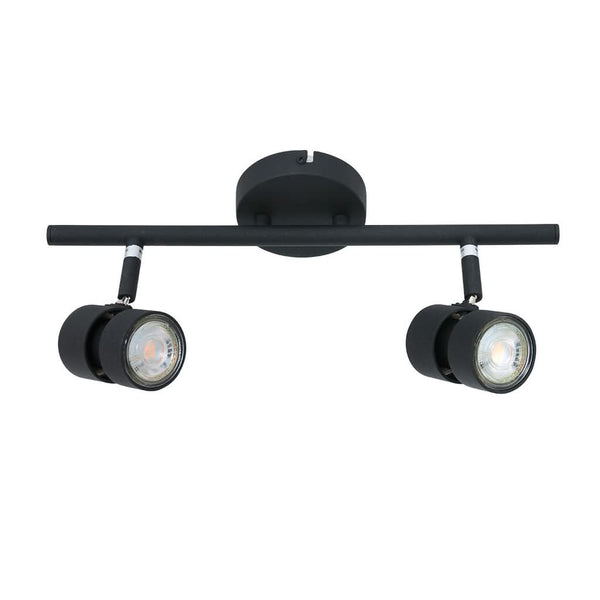
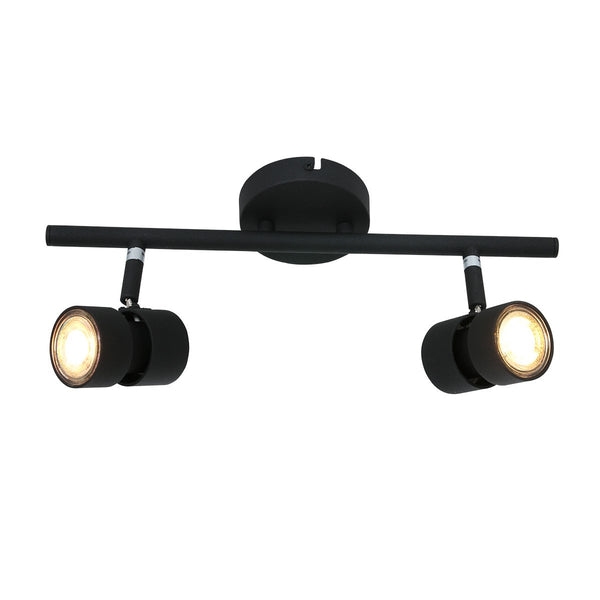
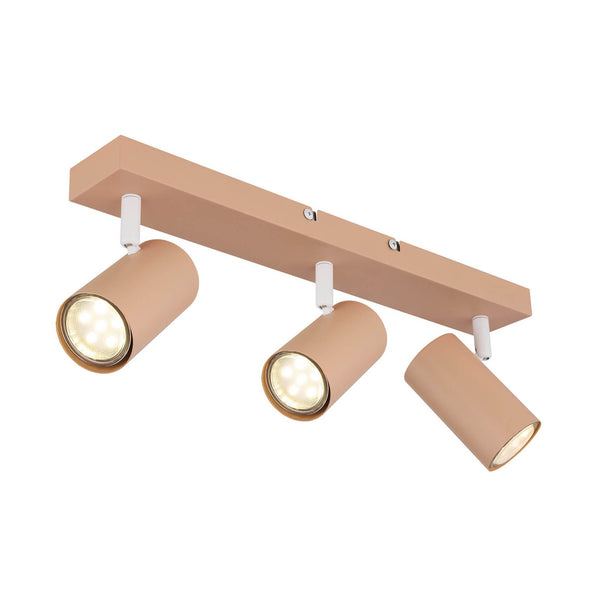
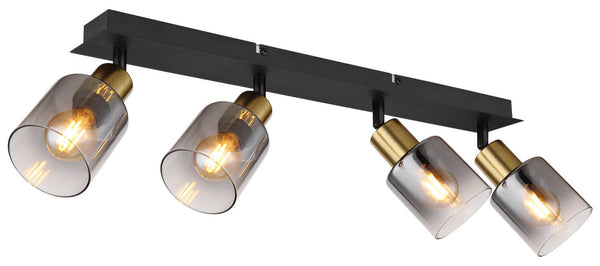
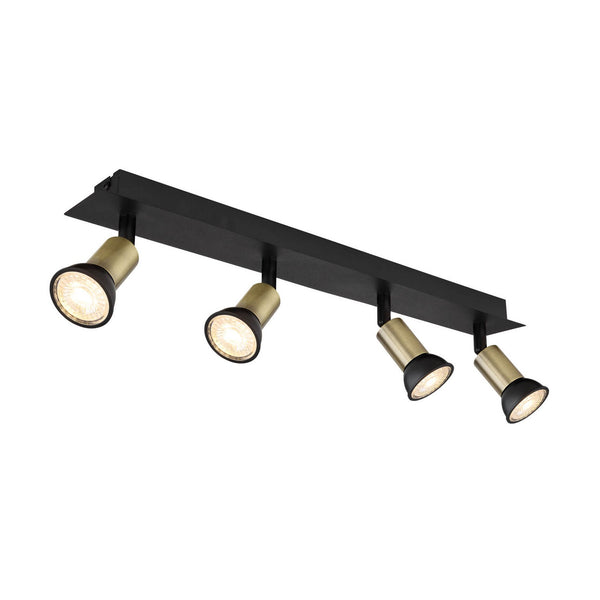
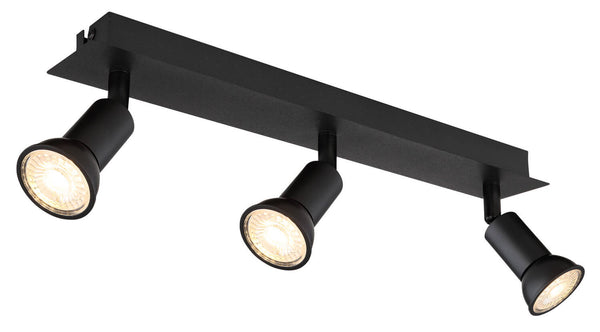
Plan one spotlight bar per zone to light: three heads over a worktop, two in a hallway, four for a long run. A spotlight bar brings several sources together on a single support, surface-mounted to the ceiling or wall, with no false ceiling or cut-out. Choose the number of heads and the rail length before the finish.
Types of spotlights · Light and rooms · Finishes and materials · Bases · Lengths · Layout · Kitchen · Installation · Frequently asked questions
What are the different types of spotlight?
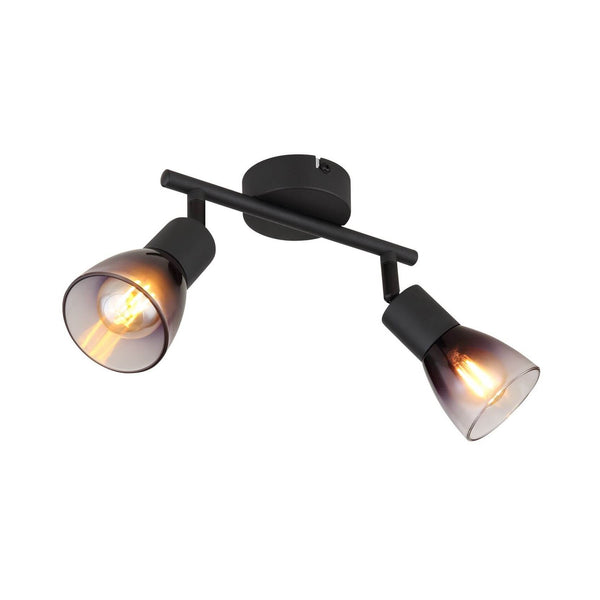
A spotlight bar brings several sources together on a single support: cylindrical heads, round projectors, wire cages or globes, aligned on a tube or arranged in a circle. It is surface-mounted to the ceiling or wall, with no cut-out. A recessed spotlight, by contrast, needs a cavity in the ceiling and a trim set flush into the surface.
Ceiling spotlight bar or wall spotlight bar?
A ceiling spotlight bar lights a wide area, a worktop or a passage. The wall version, fixed above a headboard or along a hallway, gives a grazing light that draws out volumes rather than flooding them. The support is the same, only the orientation changes. Adjustable models are set once the fixture is in place: you screw, you connect, then you turn each head towards the wall or the furniture. A ceiling spotlight is chosen first for the area it has to cover, then for its shape.
Spotlight bar or recessed spotlights?
Recessed requires a hollow ceiling, a hole cut to the trim diameter and a connection accessible through the cavity. A bar only needs a flat surface and a power supply, which makes it compatible with a concrete or already painted ceiling. It can also be removed without any work.
What light does a spotlight bar give and which room should it go in?
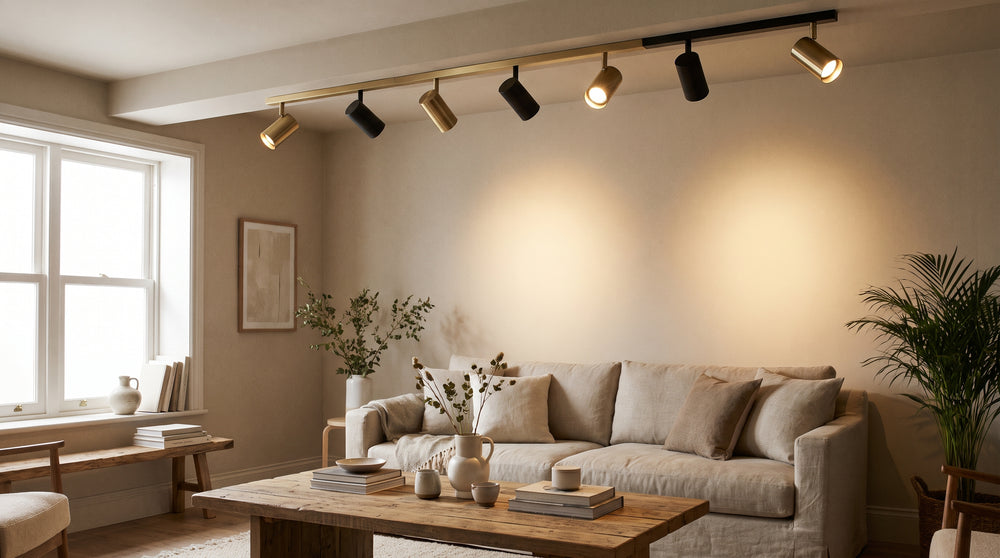
A spotlight bar is used first in a kitchen, a hallway or a living room, where it replaces several light points with a single fixing point. It also works well in an entrance or a dressing room. The beam is directed at a worktop, a wall or a passage, which changes how the room is perceived without altering its volumes.
Spotlight bar for the kitchen
Above a worktop, the light should fall on the chopping board, not in your eyes. Adjustable heads, tilted towards the wall or the worktop, sort this out in a minute. For kitchen lighting with LED bars placed under wall units, another format is better suited: each family of fixtures answers a specific zone. Kitchen lighting with LED bars usefully complements a ceiling bar.
And in a hallway or living room?
In a hallway, the bar lines up with the circulation axis and two or three heads are enough to avoid harsh shadow areas. In a living room, it lights a wall, a bookcase or a picture, alongside a table lamp. LED bars for the bedroom follow the same indirect light logic, and the full Designix lighting range lets you compare the families before deciding.
How do you choose between a black, white or silver spotlight bar?
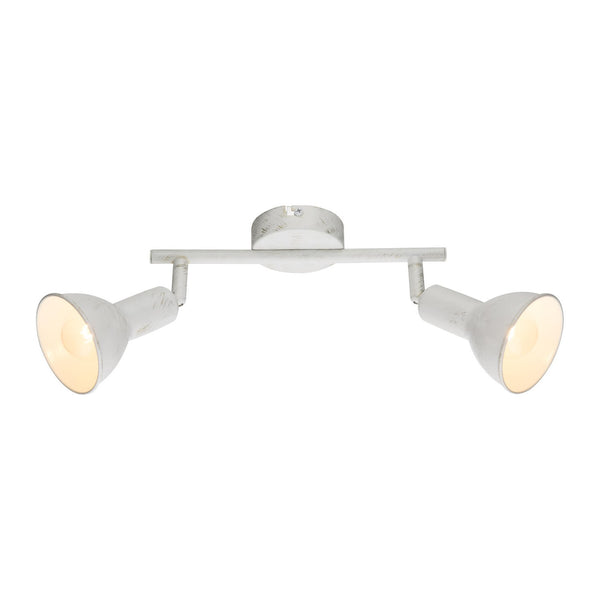
Black dominates the selection, followed by white, silver, beige and taupe. A black bar blends into a dark ceiling and underlines an industrial style; white and silver melt into a light ceiling. Shape matters as much as colour: tube, round, globe or cage. The black bar with ten aligned spotlights and the white rail with a slim profile show this difference in effect clearly.
A black spotlight bar for which style of room?
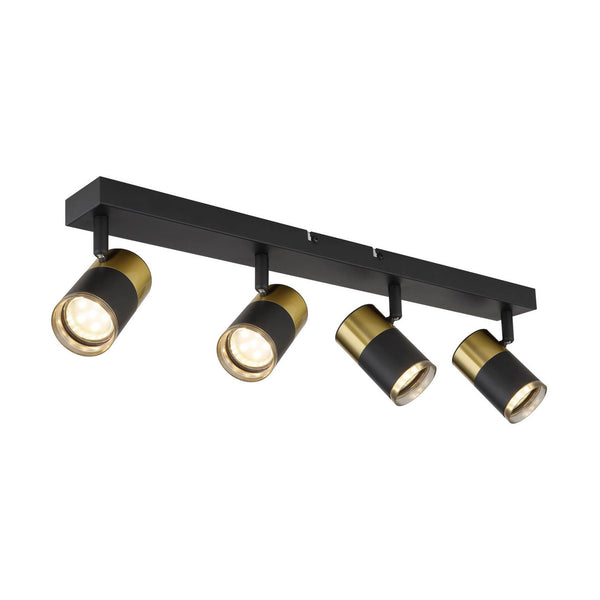
Black suits contemporary, modern and industrial interiors. It structures a white ceiling, frames a kitchen with matt fronts and works well with clear glass bulbs. On an already dark ceiling, it disappears and leaves only the light visible. For a softer look, beige and taupe pair well with woodwork.
Metal, steel, aluminium or wood?
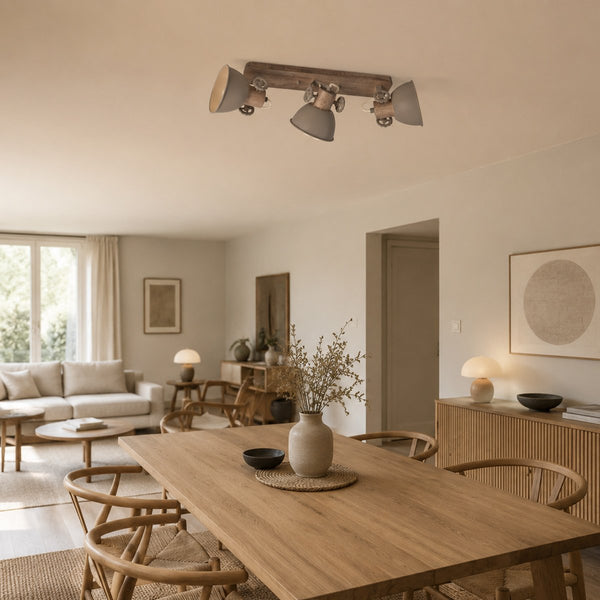
Metal and steel dominate the selection, ahead of plastic, aluminium and wood. Painted steel holds its colour over time, aluminium visually lightens a long rail, wood brings a warm note: the triple wood bar in an industrial style is a good example. These materials are mood choices, not quality levels: they change the look, not how it works.
Which base should you choose between GU10, E14, E27 and integrated LED?
GU10 and E14 mean a bulb to choose and replace; E27 takes large screw bulbs, and integrated LED cannot be changed. The base therefore decides how much freedom you have over light temperature and how long the fixture lasts. The whole selection is IP20, so for indoor use, away from moisture.
| Base | Source | What it changes | Models concerned |
|---|---|---|---|
| GU10 | Bulb to choose separately | You choose the temperature and wattage, and you replace the bulb | Umbrara, Othara, Trillo Noir, Dashiell, Aveno, Roskaneno |
| E14 | Screw bulb, small base | Compact format for round glass heads | Tokki L 41 cm, Tokki L 56 cm |
| E27 | Screw bulb, large base | Suits large cage or globe heads | Veltorora |
| Integrated LED | Non-replaceable source | Nothing to change, but the source is part of the fixture | Candella, Brumalis, Davida, Karystos, Barria, Zapata, Tiberio |
Can the bulb be changed?
Yes on GU10, E14 and E27 models: a blown bulb can be replaced without dismantling the fixture. On an LED spotlight bar, the source is sealed into the module and cannot be replaced; you keep the fixture for as long as it works. This is the first criterion to look at if you like changing the light tone through the seasons.
Warm white, neutral or cool: which light?
Warm white (2700 to 3500 K) remains the reference for an interior in the evening, close to halogen. Neutral white (3500 to 4500 K) suits a worktop or a passage room, and cool white (above 4500 K) suits a hallway or a garage. Light temperature is chosen per zone: it should not be mixed on the same rail.
What bar length and how many heads for my room?
The bars in the selection range from a short rail to a 100 cm bar, with two to ten heads. A narrow room is fine with two or three heads, a long worktop calls for four to ten aligned sources. Length is chosen according to the area to cover and the fixing space available on the ceiling.
| Model | Dimensions | Heads | Base | Finish |
|---|---|---|---|---|
| Trillo Noir | 39 cm | 2 | GU10 | Black |
| Othara | H 20 cm | 3 | GU10 | Black |
| Tokki L 41 cm | 41 cm | 3 | E14 | Black |
| Davida L 58 cm | 58 cm | 3 | LED | Silver |
| Dashiell | 100 cm | 3 | GU10 | Multi |
| Brumalis | 27.4 cm | 10 | LED | Black |
3-spotlight bar: for what area?
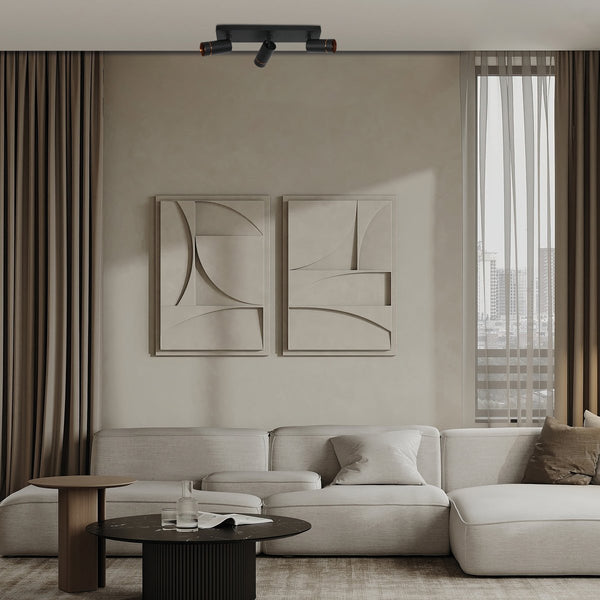
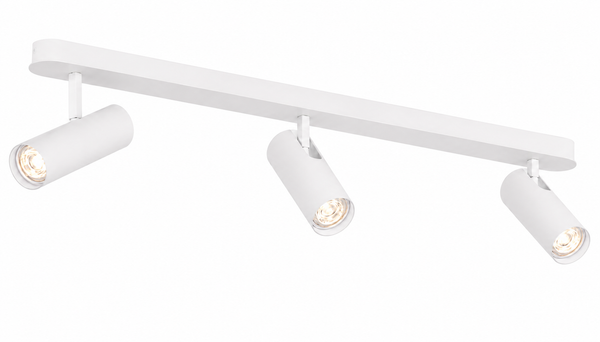
A 3-spotlight bar covers a work zone or a section of wall, not a whole room. Count it for a few metres of worktop, a short hallway or an entrance. The black rectangular bar with three heads and the silver spotlight with three adjustable heads show this common format.
When should you choose a 100 cm bar?
Beyond about two metres of worktop, or to light a large wall, a 100 cm bar avoids multiplying fixing points. The 100 cm adjustable bar comes in several finishes and is mounted on its own on a rail. A short rail of 27 to 40 cm is enough, however, for an entrance or a sideboard. For large open-plan areas, LED bars for garages take over.
How should spotlights be arranged on the ceiling?
Line the bar up with the area to be lit: worktop, hallway, entrance wall. The heads are spread evenly along the rail, then adjusted once the fixture is in place. It is better to light a useful zone than to spray the whole room, especially with a low ceiling where each beam creates a visible halo.
What distance between two ceiling spotlights?
The bar itself sets the spacing of the heads: you only choose the gap between two bars, if there are several. As a general guide, keep a distance from the wall of about one third of the ceiling height to avoid glare, and space two separate fixtures so that their beams touch without overlapping.
How many spotlights are needed for a 40 m2 room?
There is no single answer: it depends on the zones to be treated, the height and the colour of the walls. In 40 m2, think in terms of tasks, one group above the worktop, another over the table or the passage, rather than by total surface. A diffuse ceiling light completes the setup, while bars bring precision.
How many spotlights in a kitchen?
The number depends on the surface, the ceiling height and the zones to be lit: worktop, sink, table. A bar with three or four heads suits a linear worktop; for a large kitchen, a longer bar avoids multiplying fixing points. Add a source over the sink rather than packing the rail more densely.
How many spotlights above a worktop?
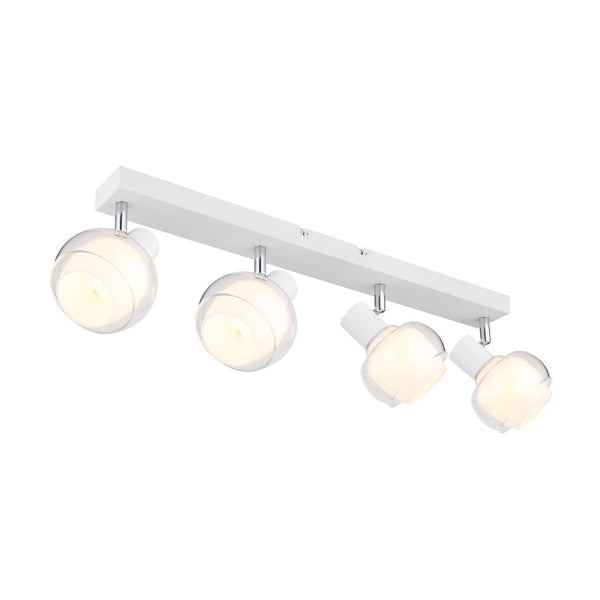
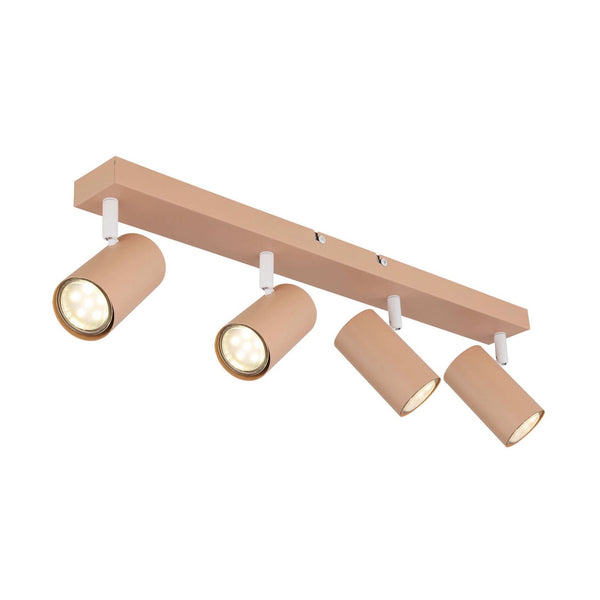
One spotlight every 40 to 60 cm along the worktop gives continuous lighting over a standard working depth. The four round projectors on a white bar and the curved nickel and white bar cover this type of run with a single fixing point.
Lighting the worktop without glare
Aim the heads towards the wall or the back of the worktop, not into the room. Setting the fixture back about 30 to 40 cm from the wall stops the light bouncing into the eyes of the person standing at the worktop. If the ceiling is low, reduce the tilt. Light bars under wall units complete this setup when shadows remain pronounced.
How do you install and connect a spotlight bar?
A spotlight bar is surface-mounted: you screw the support to the ceiling or wall, then connect the power supply to the housing. No false ceiling or cut-out is needed, unlike recessed models. Connection is made with the power off, and by a professional if the circuit does not yet exist.
How do you install a bar without a false ceiling?
Locate the power supply, screw the support into a solid material, then fix the fixture. The job takes half an hour on an existing circuit. Rechargeable LED bars offer a wiring-free alternative when no power supply is available.
Series or parallel: what changes in the connection
In series, the fixtures follow one another on the same circuit and switch on together; in parallel, each keeps its own connection and can be controlled separately. On a bar, the connection is made at the fixture housing. The fire hood, meanwhile, concerns spotlights that pass through a ceiling that must resist fire, not a surface-mounted bar.
Tracked delivery, secure payment, returns and Designix customer service accompany every order. If you are hesitating between two lengths, compare the black two-head adjustable bar with a longer model: the guide to lighting by room helps you decide. For another type of rail fixture, see bar suspensions.
Frequently asked questions about the spotlight bar
How do you install recessed ceiling spotlights?
A recessed spotlight is fitted into a cavity: you need a false ceiling or a hollow ceiling, a hole cut to the trim diameter, then a recessed connection. A spotlight bar, by contrast, is surface-mounted, with no cut-out: the support is screwed to the existing ceiling and the housing remains accessible.
Is it possible to fit spotlights without a false ceiling?
Yes, provided you choose a surface-mounted fixture. The whole selection shown here is surface-mounted: the bar is screwed directly to the ceiling or wall, with no cavity or cut-out, which makes it compatible with a concrete ceiling or an already finished ceiling.
Do LED spotlights get hot?
LEDs get less hot than halogens at comparable wattage, but the module and its driver still dissipate heat. So allow a little air around the housing and avoid covering the fixture. A GU10 or E14 bulb can be replaced if needed, an integrated LED cannot.
Why is a spotlight fire hood mandatory?
The hood, or fire-rated box, protects the ceiling when a spotlight passes through a structure that must resist fire: it prevents heat and flames from passing through the hole. It is required depending on the nature of the ceiling and the applicable regulations, not on a surface-mounted spotlight bar.
What is the best LED bar?
There is no best bar in absolute terms: it all depends on the room, the available length and the base you want. An integrated LED means no bulb to change, a GU10 or E14 base lets you choose the light temperature. The right bar is the one that matches the area to be lit.