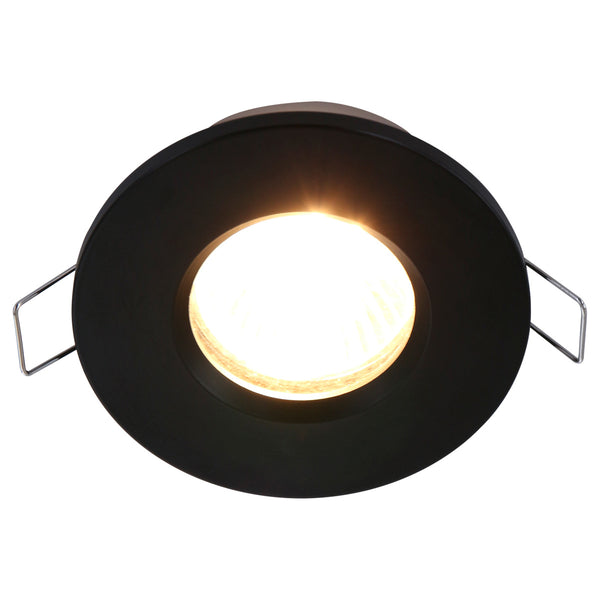
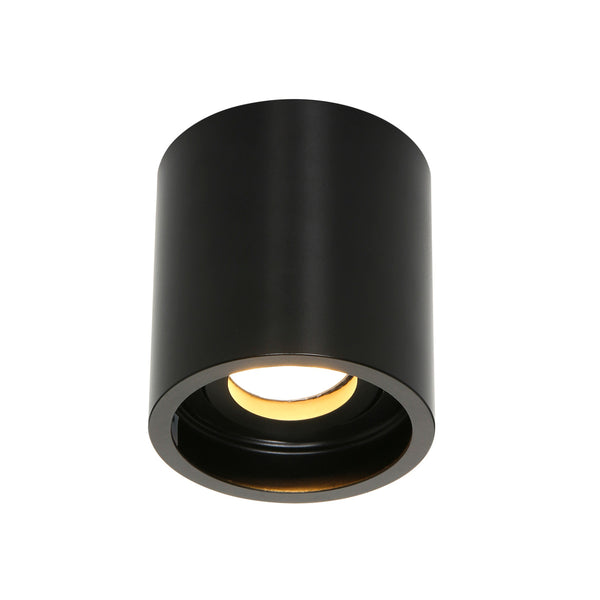
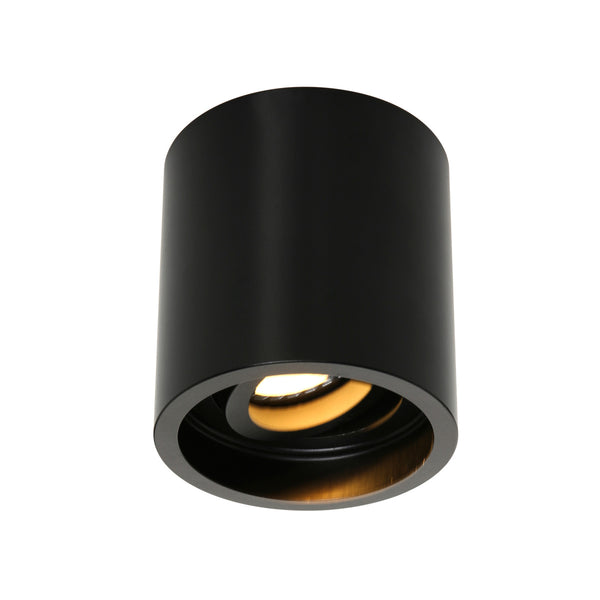
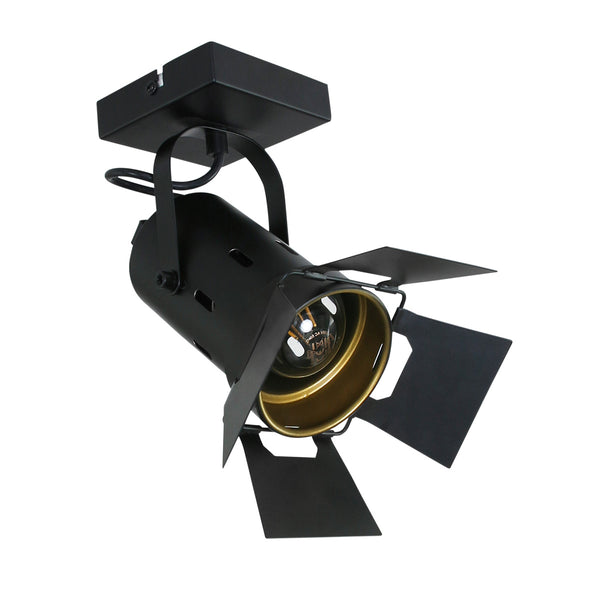
Black surface-mounted spotlights
- Tracked delivery to your country Tracked delivery
- Secure payment at checkout Multiple payment methods
- 14 days to change your mind 14-day returns
- Secure payment Secure payment


Not sure of your style? Find it in 30 seconds
A few questions, and we will show you the pieces made for you.
















Frequently asked questions
How do I choose the right light output?
At what height should the light be installed?
What type of bulb?
Compatible with LEDs and dimmers?

Light changes everything
From statement chandeliers to discreet wall lights, we help you choose the right brightness, height and style for every room.
- Tracked delivery
- Pay in instalments, where available
- 14 days to change your mind
- Advice & showroom in Lyon, France
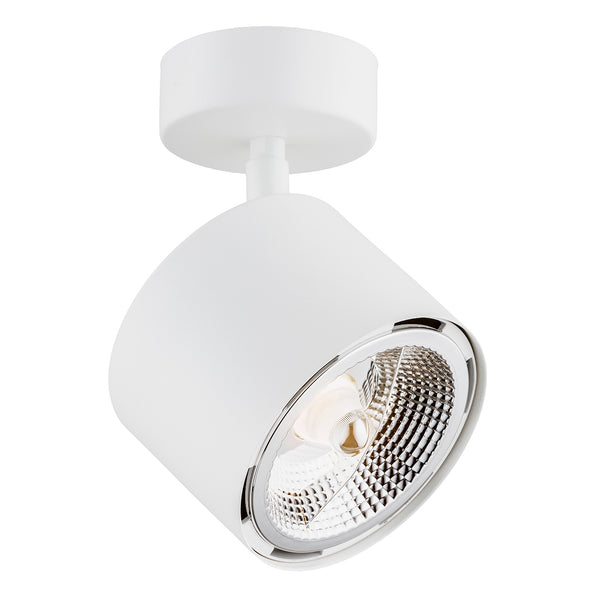
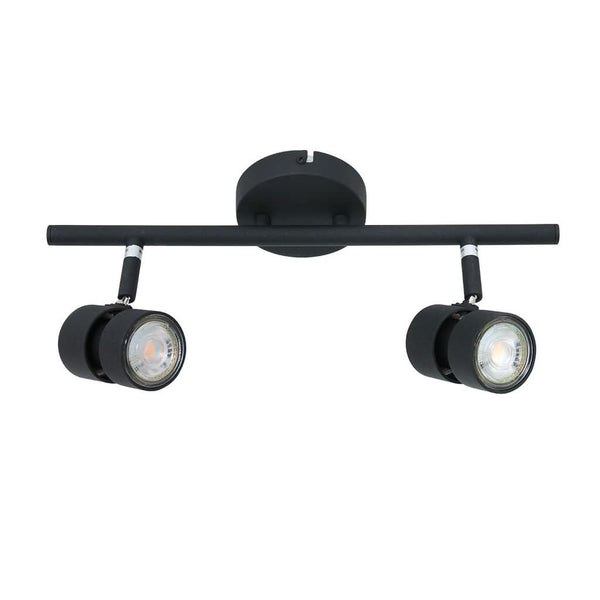
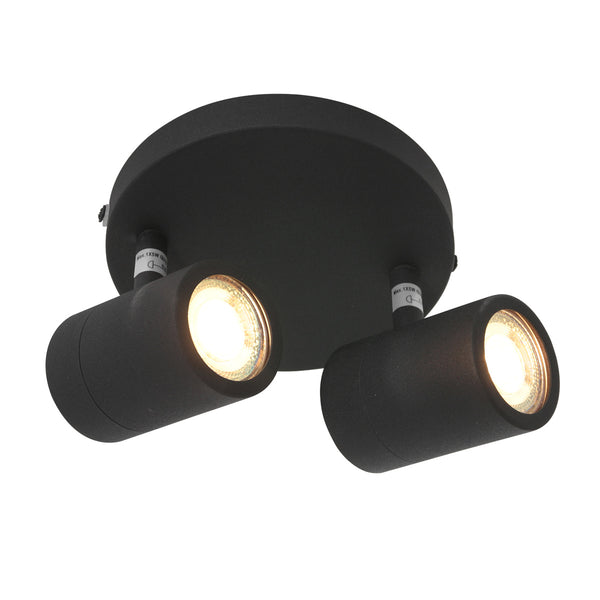
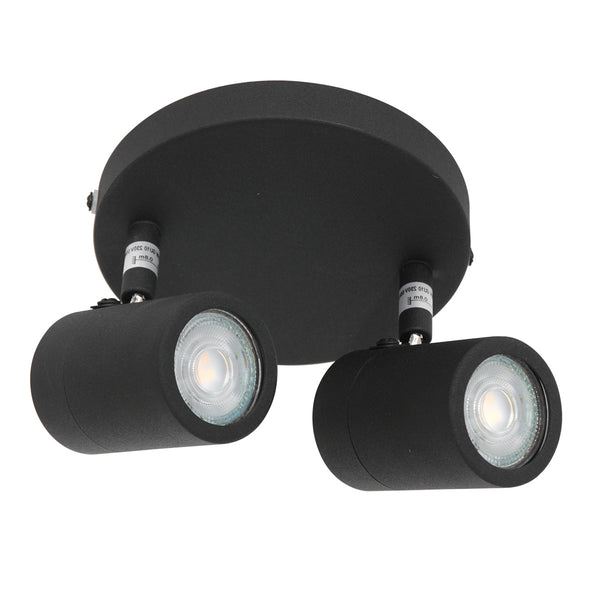
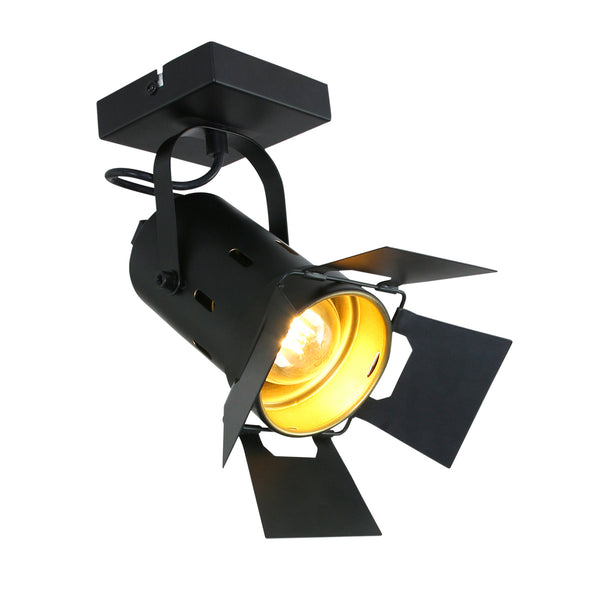
A surface mounted spotlight fixes directly to the ceiling or wall, with no recess box, and directs light to a precise point: a worktop, a painting, a hallway. In black, it blends into a dark ceiling or stands out against a light wall, with adjustable heads, a GU10 or E14 base and, on several models, an IP44 rating.
What is a black surface mounted spotlight?
A surface mounted spotlight fixes directly to the ceiling or wall, with no recess: the visible part stays on the surface. The black finish blends into a dark ceiling or stands out against a light wall. Models in this collection run on GU10, E14 or E27 sockets, or on integrated LED.
Surface mounted or recessed spotlight: what is the difference on a ceiling?
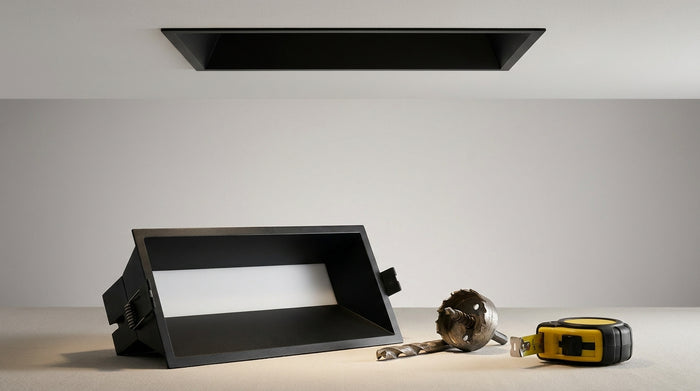
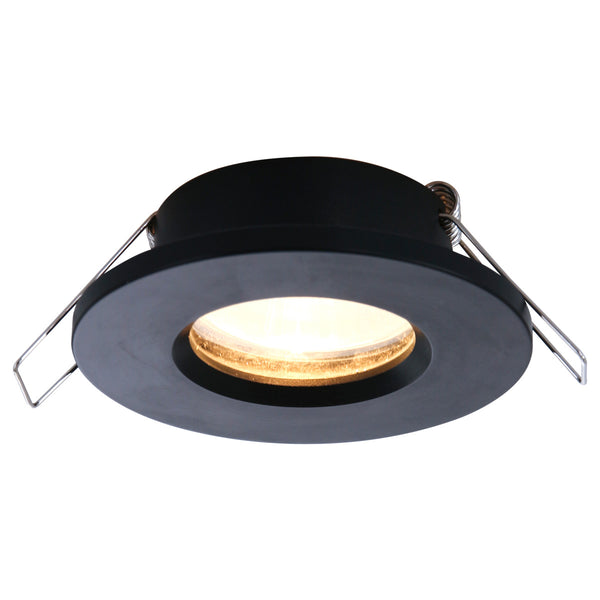
A recessed spotlight needs a cut-out in the ceiling: the body disappears, only the light remains visible. A surface mounted spotlight sits on the surface, with no major drilling, which suits solid ceilings, closed false ceilings or a retrofit. It stays visible, so it counts in the decor of the room. For a look that fades away, see the recessed ceiling models.
Why choose a black spotlight rather than a white one?
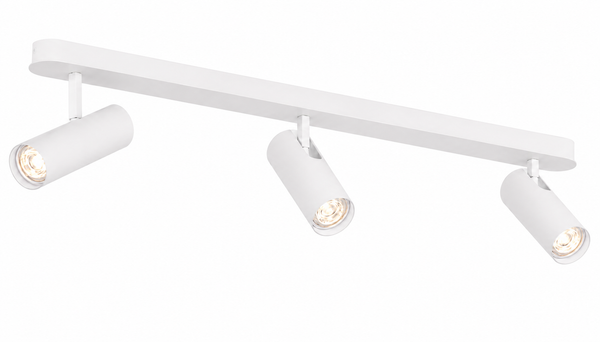
On a dark ceiling, a black spotlight visually disappears and the light seems to come from nowhere. On a light wall, it draws a bold graphic line. White, on the other hand, fades into a white ceiling and goes almost unnoticed. In the same room, the two finishes work very well together when the surfaces differ. The same in white gives the opposite effect.
| Room | What the light needs to do | Model in the collection | Base and rating |
|---|---|---|---|
| Living room | accent lighting aimed at a wall or a painting | Ceylo, Neressa | integrated LED, IP20 |
| Kitchen | sharp light on the worktop, adjustable heads | Sermilina, Noro | GU10, IP20 or IP44 |
| Hallway and entry | a low-profile line of guide lights | Tubola, Mirtorena | GU10, IP20 or IP44 |
| Walk-in wardrobe | lighting a wardrobe front or rail | Aveno, Trimora | GU10 or E14, IP20 |
| Bathroom | resisting water splashes | Cylia | GU10, IP44 |
| Bedroom | soft light on both sides of the bed | Melisande, Velmore | E14 or E27, IP20 |
How should spotlights be laid out on a ceiling?
Surface mounted spotlights are laid out along the area to be lit rather than in the centre of the room: above a worktop, facing a wall, or in a line down a hallway. Adjustable heads let you correct the angle after fitting, without taking the spotlight down again. Better to spread several points than rely on one very powerful unit.
How should spotlights be laid out in a narrow hallway?
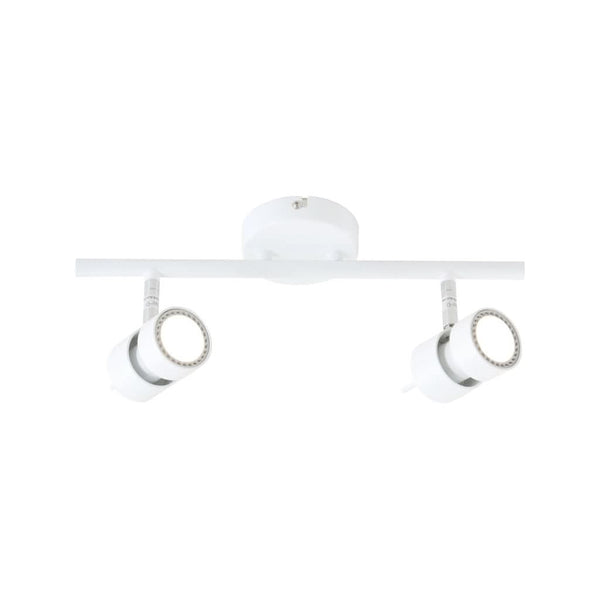
In a hallway, a straight line along the axis works better than a staggered layout: the eye follows the direction and the guide lighting stays even. A two-head model such as Sermilina and its two heads covers a longer length from a single power point, which limits drilling. For a long corridor, add black adjustable models.
Downwards or towards the wall: how should the heads be aimed?
A head aimed downwards gives a crisp, useful light, on a worktop or a step. A head tilted towards the wall lights indirectly and softens the room, which suits a living room. Both settings combine on a single multi-head fitting, for example Quadrilux and its four spotlights.
Which base and wattage should you choose for a black surface mounted spotlight?
The base determines the source you can replace: GU10 for most models, E14 for multi-head versions in smoked glass or fabric, E27 for the larger ones, integrated LED when the source is fixed. Stated wattages range from 5W maximum to 40W.
GU10, E14 or integrated LED: what changes in use
A GU10 or E14 socket leaves the bulb choice open: you adjust wattage, colour temperature and beam without changing the fitting, and you replace the source if it dims. Integrated LED cannot be replaced, but it simplifies fitting and needs no bulb purchase. Both approaches exist in black LED spotlights.
Which LED spotlight wattage should you choose to light a living room?
It all depends on the use. Accent lighting is happy with a modest source, around 8 to 10W. A bulb-based spotlight takes up to 40W, useful for lighting a surface brightly. The GU10 or E14 socket is precisely what lets you change wattage without replacing the fitting. For a living room, better to multiply discreet points than go strong on a single one. See lighting a living room.
| Base | Source required | Stated wattage | What it means |
|---|---|---|---|
| GU10 | GU10 bulb, replaceable | 10W, 1 x 5W max, 1 x 12W max, 2 x 10W | the standard source for adjustable spotlights, swappable at will |
| E14 | small base bulb | 40W | mostly fitted to two, three or four head models |
| E27 | large base bulb | 40W | reserved for models with wider heads |
| Integrated LED | none, the source is inside the spotlight | 8W, 2 x 8W | nothing to buy, but nothing to replace either |
IP20 or IP44: which black spotlight for a bathroom and damp rooms?
The IP rating indicates resistance to dust and water. The vast majority of spotlights in this collection are IP20, reserved for dry rooms such as a living room, kitchen or hallway. IP44 models withstand water splashes and suit damp rooms.
What the IP20 or IP44 rating actually changes
At IP20, the spotlight is protected against solid objects but not against water: it stays in dry rooms. At IP44, it handles splashes, which allows fitting near a water point or under a sheltered porch. In practice, an IP20 hallway spotlight is enough, a bathroom spotlight needs IP44.
A black spotlight in a bathroom: which version should you choose?
For a bathroom, look for the IP44 mention on the product page, then check the base: a replaceable GU10 lets you adjust the bulb colour temperature to the mood you want. The IP44 Tubola spotlight illustrates this approach. More options in metal spotlights.
Which shape and material for a black surface mounted spotlight?
The collection mostly plays with the tube and the round shape, more rarely the sphere or the square. Metal dominates, often combined with plastic to keep the fitting light, with a few models in smoked glass, steel or fabric, and gold touches inside the tubes.
Single tube, double tube or multi-head spotlight: which to choose?
A single tube suits a single point, above a sink or in a hallway. A two or three head model covers a wider area and limits drilling. The choice mainly depends on the length to be lit: a two-head bar such as Melisande, a double tube with a gold interior structures a wall better than a single spotlight.
Metal, smoked glass or fabric: what it changes in the look
Metal gives a clean line and ages well. Smoked glass filters the light and softens the halo, as Trefolo in smoked glass does. Fabric, rarer, brings a matt surface that breaks the technical feel. These differences are visual: they change nothing about the base or the wattage.
Black industrial chandelier, black wall light or surface mounted spotlight: which to choose?
A black industrial chandelier lights widely, suspended in the centre of a room. A black wall light, industrial or wooden, lights a wall and is fitted high up. The surface mounted spotlight, meanwhile, fixes to the ceiling or wall and directs light to a precise point, often in a series.
When is a black living room chandelier still the right choice?
A chandelier suits a room that needs general light from the centre, above a table or a living area. It comes down into the space and becomes a visible feature. The spotlight stays discreet and is spread around. The two complement each other: a chandelier for atmosphere, two or three spotlights for accents. Compare with all the lighting families.
Industrial black wall light and designer black bathroom wall light: the difference
Both fix to the wall, but the IP rating separates them. A living room wall light stays IP20, a damp room wall light needs IP44. The industrial style plays with steel and raw shapes, the designer version works the line and the materials. The principle is the same as for a wall spotlight.
Red and black bedroom: which lighting should you avoid overloading?
On already coloured walls, a very graphic fitting adds contrast and clutters the room. Better to choose a sober model, aimed at the wall, and a warm light around 2700 to 3000K. A discreet spotlight avoids the layering effect, unlike a bulky pendant hung in the centre of the bedroom. See also modern styles.
How do you install a black surface mounted spotlight?
Switch off the power, fix the mounting plate to the surface, connect the wires to the spotlight terminals then screw or clip the body on. One, two or three head models fit on the same base. For a network, parallel wiring keeps each point independent.
Is it better to wire LED spotlights in series or in parallel?
Parallel keeps each spotlight independent: if one goes out, the others keep working. In series, the whole set stops at the first fault and the voltage is shared, which is a problem as soon as the models differ. For a line of spotlights, parallel remains the usual solution. Have the wiring checked by an electrician.
Black and white surface mounted spotlights: can you mix the finishes?
Yes, and it is mostly done when the surfaces differ: a dark ceiling and a light wall, for example. Black stands out on a light background, white disappears into a white ceiling. A room stays coherent with both, as long as you keep the same shape and the same base. Black spotlights across all families gives an overview.
Can a surface mounted spotlight be fitted to a wall rather than a ceiling?
Yes, surface fixing works on a wall, provided you adjust the direction of the head and stay in a dry room unless IP44 is stated. On a wall, the spotlight is a good replacement for a wall light when you want a narrow beam. Just check that the surface is solid enough for the mounting plate.
Care, lifespan and warranty of a black surface mounted spotlight
A GU10 or E14 spotlight lasts a long time: it is the light source that gets replaced, not the fitting. A dry cloth is enough to dust the metal body, with no abrasive product. The whole selection is covered by a 2 year warranty.
What is the average lifespan of an LED spotlight?
On a socket-based spotlight, it is the bulb that wears out and you replace it, keeping the fitting. On an integrated LED model, such as Ceylo or Neressa, the source is inside the body and cannot be replaced: the service life is that of the electronics. The light colour also depends on the bulb fitted, not only on the spotlight.
What are the drawbacks of LED lamps?
The main one is the non-replaceable source on integrated models: when it dims, the fitting is replaced. On a GU10 or E14 socket, the problem disappears. Another point: the warm colour temperature stated around 2700 to 3500K depends on the bulb model chosen, not on the black spotlight itself.
Choosing your black surface mounted spotlight at Designix
The guide above helps you settle the room, the base and the IP rating; the collection grid then shows the current price of each model. Secure payment, tracked delivery, returns and Designix customer service come with every order.
For a worktop, hallway guide lighting or wardrobe lighting, start from the base you want and then the IP rating. Noro, an adjustable cylindrical head covers dry rooms as well as damp ones, while spotlights designed for the kitchen are intended for work surfaces. To widen the search, the full lighting range groups the other families, and dimmer-compatible models are for rooms where you want to adjust brightness.
Frequently asked questions
What is a surface mounted spotlight?
It is a spotlight that fixes to the surface, on a ceiling or a wall, with no recess in the support. The body stays visible and the light is directed to a precise point. In this collection, it comes in black, with one or more adjustable heads, on a GU10, E14 or E27 base or integrated LED.
How many spotlights are needed for a 40 m2 room?
There is no figure that works everywhere: it all depends on ceiling height, the wattage of each source and what you want to light. In a large room, better to spread several points than rely on one very powerful unit, and to favour adjustable heads so you can fine-tune after fitting.
Which LED spotlight wattage should you choose to light a living room?
It all depends on the use: accent lighting is happy with the most modest models in the collection, around 8 to 10W, while a bulb-based spotlight takes up to 40W. The GU10 or E14 socket is precisely what lets you change wattage without replacing the fitting.
Is it better to wire LED spotlights in series or in parallel?
Parallel wiring keeps each spotlight independent: if one goes out, the others keep working. In series, the whole set stops at the first fault. For a line of surface mounted spotlights in a hallway or above a worktop, parallel remains the usual solution.
Can black and white surface mounted spotlights be combined in the same room?
Yes. Combining black and white spotlights is mostly done when the surfaces differ, a dark ceiling and a light wall for example. Black stands out on a light background, white disappears into a white ceiling. A room can stay coherent with both, keeping the same shape and the same base.