
Waterproof outdoor spotlights





 Guide & inspirationBlack metal pendant light: how to choose it, hang it and light itRead the guide →















- Tracked delivery to your country Tracked delivery
- Secure payment at checkout Multiple payment methods
- 14 days to change your mind 14-day returns
- Secure payment Secure payment
Not sure of your style? Find it in 30 seconds
A few questions, and we will show you the pieces made for you.
Frequently asked questions
How do I choose the right light output?
At what height should the light be installed?
What type of bulb?
Compatible with LEDs and dimmers?
Light changes everything
From statement chandeliers to discreet wall lights, we help you choose the right brightness, height and style for every room.
- Tracked delivery
- Pay in instalments, where available
- 14 days to change your mind
- Advice & showroom in Lyon, France
Start by looking at how exposed the area is: under a canopy, a splash-resistant spotlight is enough; on a facade, a path or a terrace edge, you need reinforced protection against water and dust. The IP rating, the colour and the beam direction are chosen next, area by area, according to what the light needs to illuminate.
Which spotlight for outdoors?
The right spotlight depends on how exposed the area really is, then on the format. Under a canopy or a covered pergola, a splash-resistant model is enough; a facade, a path or a terrace edge exposed to rain require stronger protection. The choice then comes down to recessed, spike-mounted or surface-mounted.
Waterproof outdoor spotlights, recessed, spike-mounted or surface-mounted: for which area
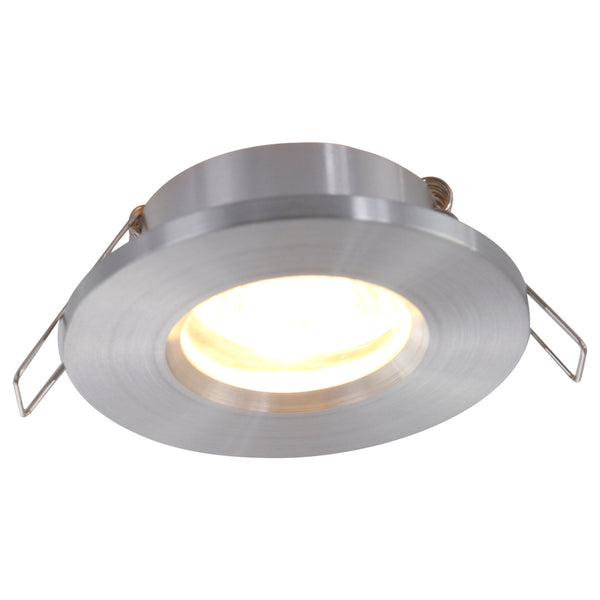
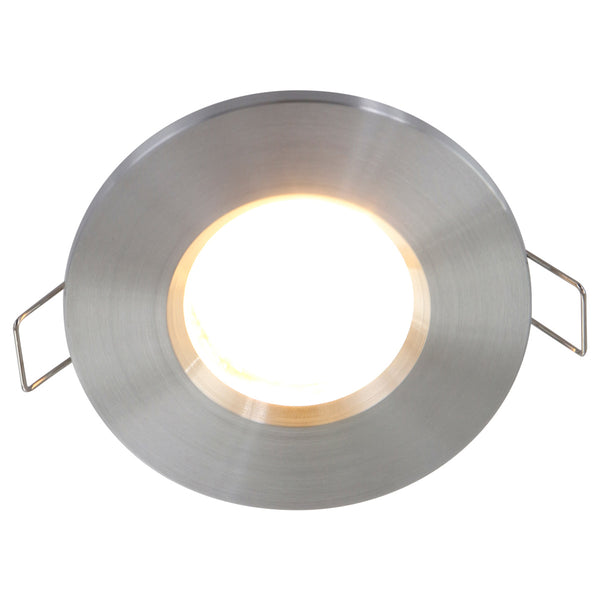
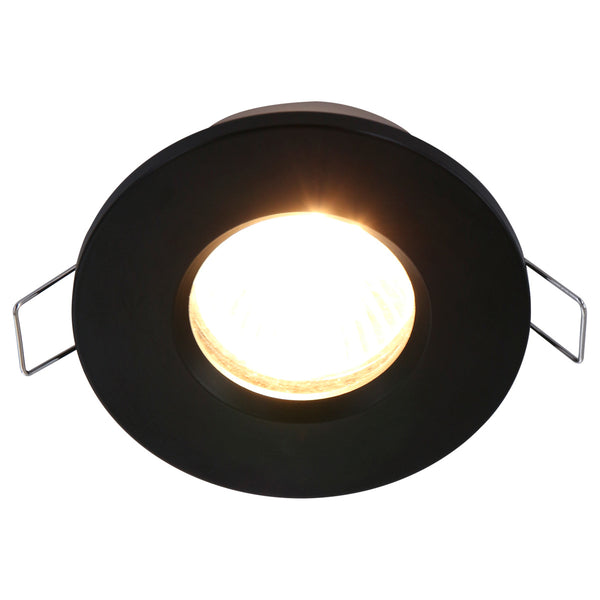
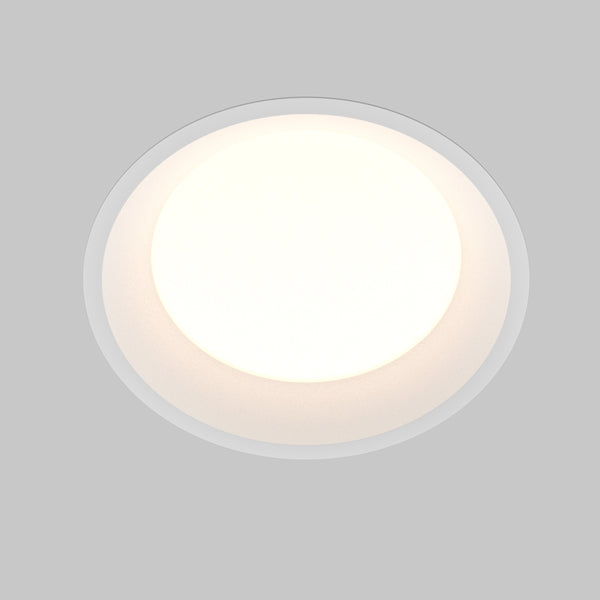
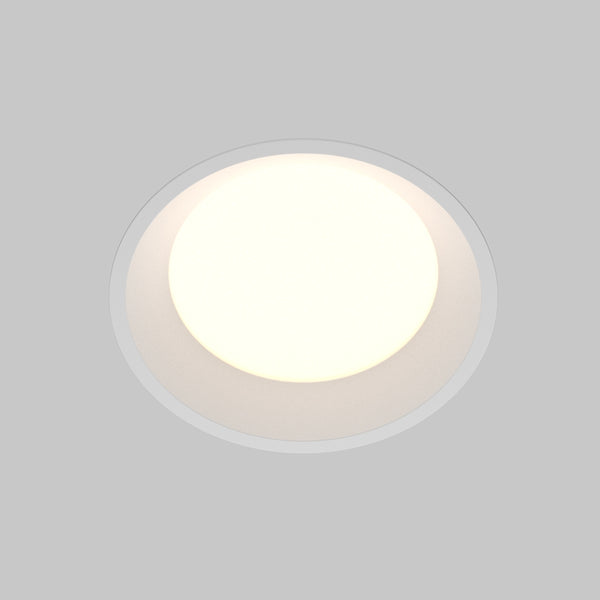
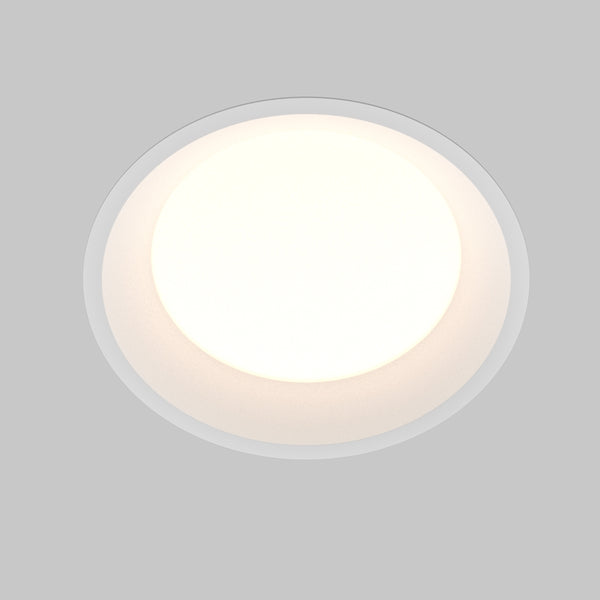
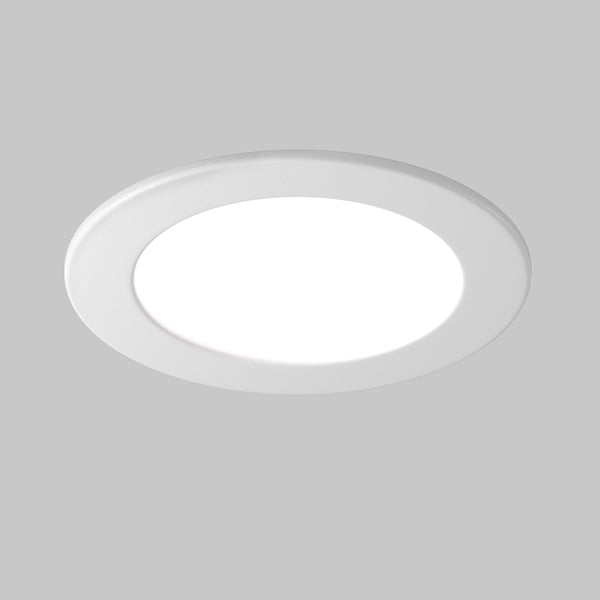
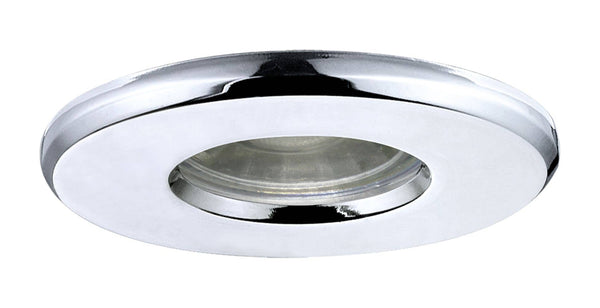
A recessed model disappears into a ceiling or a soffit: under a canopy, it brings the light down without showing anything. A spike-mounted model moves with the planting beds and lights from below, which shapes the volumes of the garden. The surface-mounted version, fixed to the wall, remains the simplest on a facade when you do not want to cut into the support. See the white recessed spotlights for a painted soffit, and the outdoor LED spotlights for all formats.
Waterproof outdoor spotlights in black or white: what effect on a facade
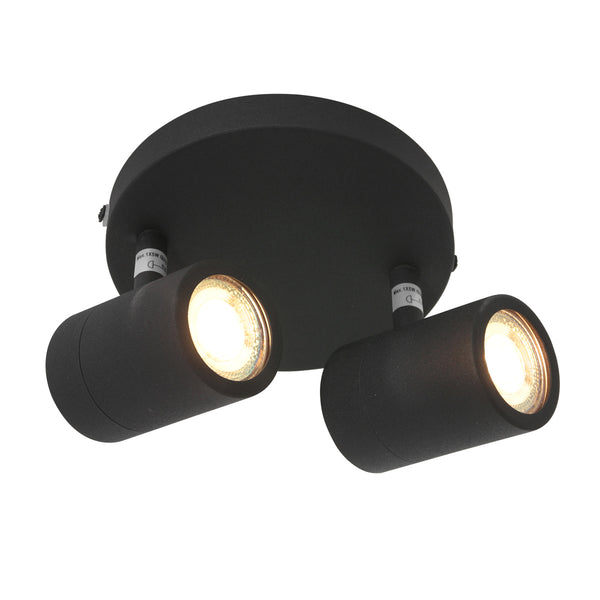
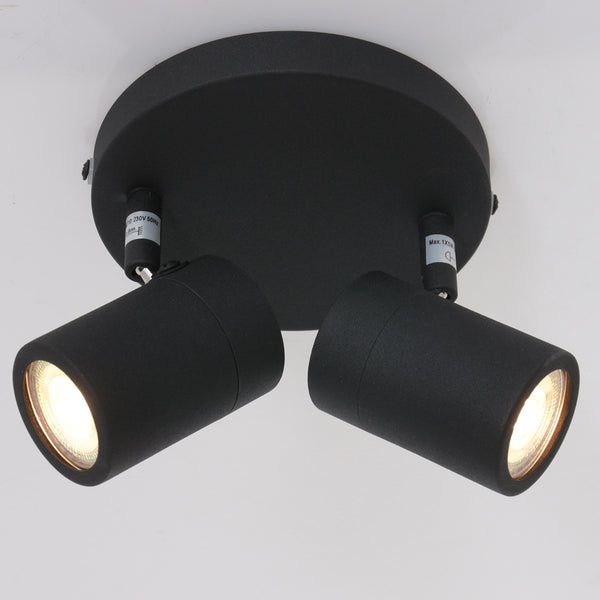
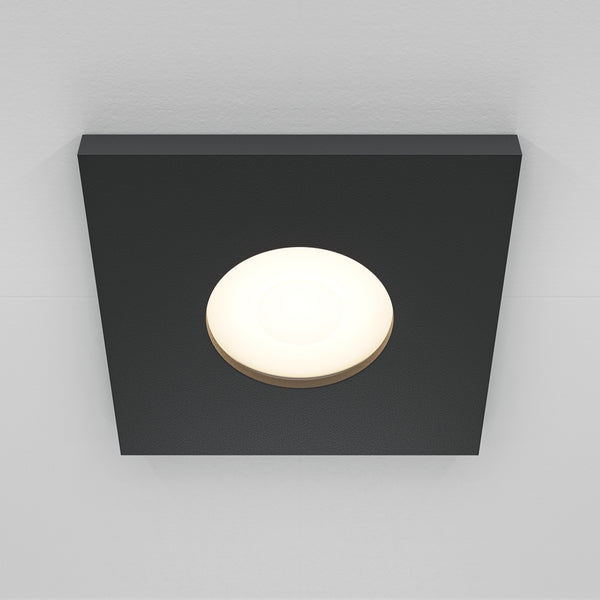
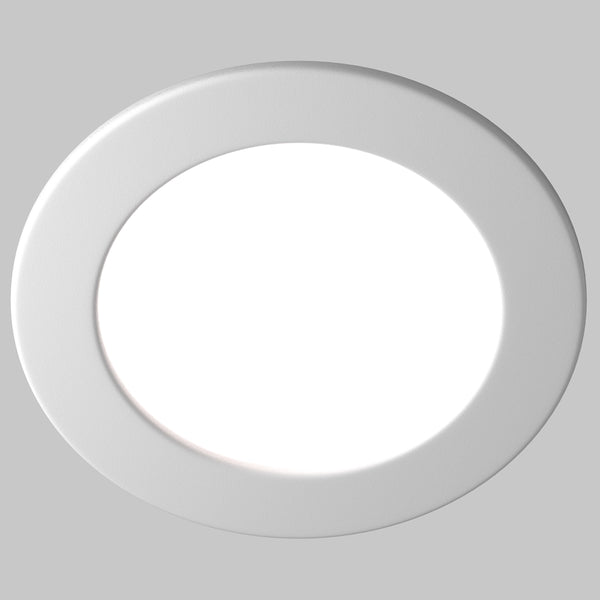
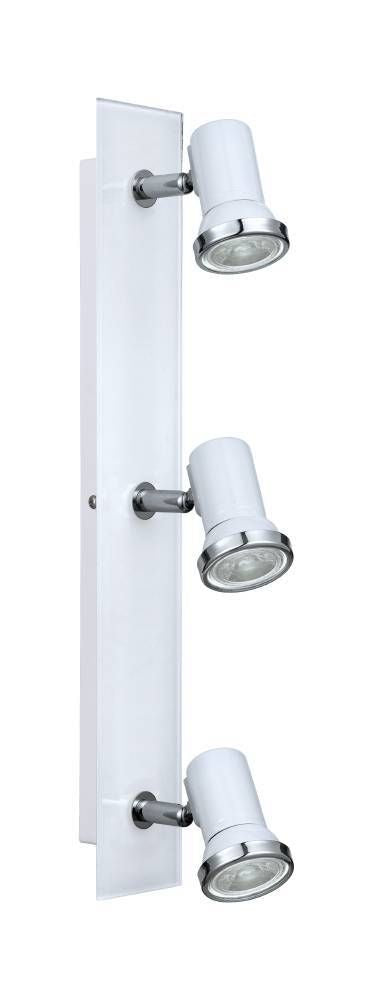
A black housing goes unnoticed on a dark wall, dark grey joinery or dark stone; white blends into a light render or roughcast. Neither changes the water resistance. To decide, compare the outdoor spotlights in black and the outdoor spotlights in white: the colour is chosen to match the surface, not the spec sheet.
What is the difference between IP44 and IP65?
In an IP rating, the first digit covers protection against solid objects and dust, the second covers protection against water. IP44 means resistance to water splashes, for a sheltered use or under a canopy. IP65 adds resistance to water jets and dust, for direct exposure to rain.
Reading the two digits of an IP rating: water and dust
The higher the first digit, the better the luminaire withstands dust; the higher the second, the more water it takes. Outdoors, the second digit decides. An IP44 is not "almost" an IP65: between the two lies the difference between a few splashes and a strong jet. The IP rating says nothing, however, about airtightness, which is another characteristic: for wall or suspended ceiling installation, refer to the manufacturer's instructions.
Which IP rating for a facade, a terrace or a poolside
A poolside combines splashes and jet cleaning: aim for the highest protection and keep the spotlight out of the direct contact zone. A path or a planting bed takes rain and ground moisture, a covered entrance far less. The selection of spotlights with a contemporary design covers these uses, with the rating stated on each product page.
| Area to be lit | Exposure to water | IP rating to aim for | Recommended spotlight type |
|---|---|---|---|
| Under a canopy, a covered pergola or a roof overhang | Sheltered, a few splashes | IP44 | Recessed ceiling spotlight, adjustable |
| Facade or wall exposed to rain | Direct rain | IP65 | Surface-mounted spotlight or wall light |
| Path, garden, planting bed | Rain and ground moisture | IP65 | Spike-mounted or ground-fixed spotlight |
| Around a water feature or a pool | Splashes and spray | IP65 or higher protection | Ground-recessed spotlight, outside the contact zone |
| Covered entrance, garage, utility room | Sheltered | IP44 | Ceiling or wall-mounted spotlight |
Which light colour is best for outdoors, warm white or cool white?
Warm white brings out stone, wood and plants and creates a welcoming light on a terrace or a facade. Cool white, more neutral, lights circulation areas, a path or an entrance, more strongly and stands out faster. It is best to keep the same temperature on every point of the same scene.
Warm white or cool white depending on the area: facade, terrace, path
On a stone or wooden facade, a grazing warm white reveals the material without flattening it. On a terrace where you dine, it creates a welcoming atmosphere. On a path or a staircase, a neutral white guides the step without drawing the eye to the luminaire. Cool white is reserved for the entrance, the gate and purely functional areas. Adjustable spotlights are precisely what let you direct this light where it is useful.
Keeping the same colour temperature across an entire outdoor scene
Two different temperatures on the same wall are immediately visible and give a patchy facade. Choose one temperature for the whole house, then vary only the intensity and the direction. Dimmable spotlights help you adjust the evening mood without changing the light source.
| Area | Desired effect | Colour temperature | Type of light |
|---|---|---|---|
| Stone or wooden facade | Bring out the material | Warm white | Grazing, directed towards the wall |
| Terrace and dining area | Welcoming atmosphere | Warm white | Diffuse, without glare |
| Path and walkway | Guidance and safety of the step | Neutral white | Beam directed towards the ground |
| Entrance and gate | Visibility and orientation | Neutral to cool white | Functional lighting |
| Plants and planting beds | Shaping volumes | Warm white | Backlight or uplighting |
How many lumens are needed to light an outdoor space?
There is no single value: the useful flux depends on the surface to be covered, the mounting height, the beam angle and the use, ambience or functional lighting. The right method is to start from the desired effect, then compare the fluxes stated on the product pages, without relying on wattage alone.
Adjusting the flux according to the area: entrance, facade, terrace, path
An entrance needs enough to recognise a face and read a lock: the light must be strong and well placed. A facade is satisfied with a moderate flux, highly directed, because a wall reflects a lot. A terrace is treated as ambience, with discreet sources, while a path needs low, regular points to mark the step. Spotlights in a modern style cover these four situations with very different fluxes.
Wide or narrow beam: what the direction changes
A narrow beam concentrates the light on a detail and creates contrast; a wide beam lights without relief. On a wall, narrow it to bring out a texture; on the ground, widen it to avoid spots. The adjustment often matters more than the stated power.
How should spotlights be laid out on a ceiling?
Under a canopy, a pergola or a roof overhang, it is better to spread the light points in regular lines rather than grouping them, keeping the same distance between each spotlight and a sufficient setback from the edge. The beam is then directed towards the wall to be highlighted or towards the ground to be lit.
Spacing spotlights under a canopy, a pergola or a roof overhang
The rule is simple: as much space between two spotlights as between the last spotlight and the edge, otherwise the light concentrates on one side. The deeper the overhang, the more points are needed to cover the area. If running a cable is complicated, solar LED models with no wiring save you from running a line.
Directing the beam towards the wall or towards the ground
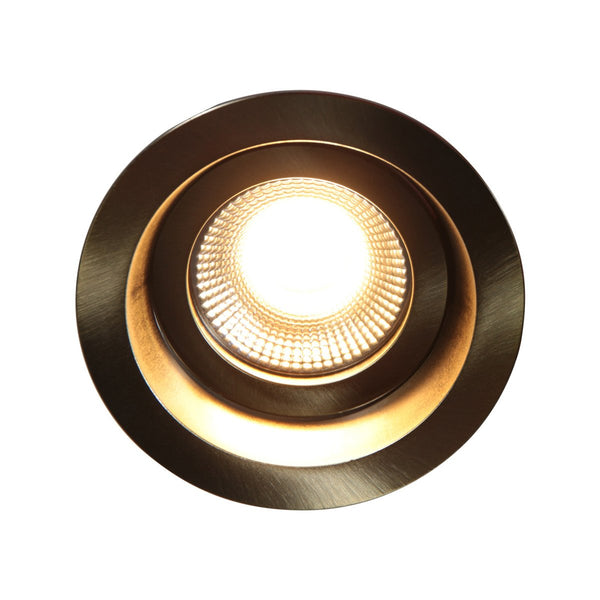
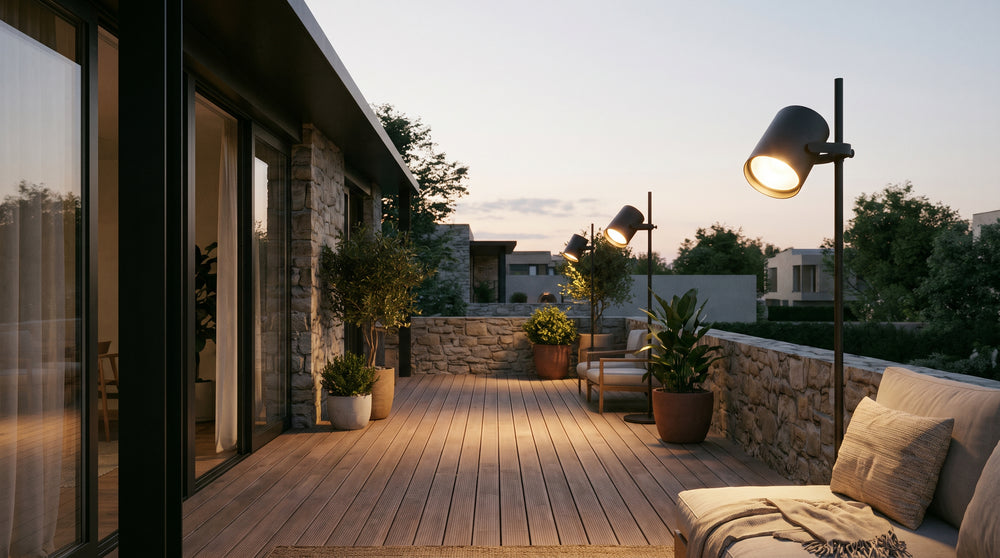
Towards the wall, you light the material and visually enlarge the space. Towards the ground, you light circulation. A mix of the two works well on a terrace: half the points grazing, the other half towards the ground. Adjustable black spotlights can be set without tools and readjusted from one season to the next.
Should you choose an E27 bulb spotlight or an integrated LED spotlight?
An E27 socket spotlight takes a replaceable outdoor bulb: handy when you want to adjust the colour temperature or replace the source without changing the luminaire. An integrated LED spotlight cannot be taken apart, but it forms a complete, sealed unit, whose IP rating is stated by the manufacturer.
E27 outdoor bulb: when the standard socket remains practical
The standard socket leaves the choice of source and lets you correct a colour temperature that is too cool after installation, or start again with a new bulb without touching the mounting. It does, however, require a bulb genuinely designed for outdoor use and a seal in good condition on the luminaire.
Integrated LED spotlight: what a sealed luminaire changes
The unit is sealed, with no access to the source, which limits the entry points for water and dust: an advantage on a facade or by the sea. The trade-off is that the whole luminaire is replaced at the end of its life. For a discreet look on a light render, look at the white LED spotlights.
Outdoor wall light for a terrace: how to match it with spotlights?
The wall light illuminates the wall and the immediate surroundings, the adjustable spotlight highlights a detail or extends the light onto the ground. They are combined by keeping the same colour family and the same colour temperature, and by avoiding multiplying light points in a narrow area: two well-placed sources are enough to structure a terrace.
Composing a coherent outdoor scene: wall light, spotlight and accent point
A wall light carrying the wall, one or two spotlights directed towards the ground or the plants, and that is all: the scene stays readable and each source has a role. Same metal, same colour, same light temperature, consistency does the rest. Adjustable white spotlights and metal spotlights share the same finishes, which makes matching easier.
Avoiding dispersion: too many points kill the effect
Six sources in ten square metres create flat, tiring lighting, with no hierarchy. Two strong points and one accent point are better than a row of identical luminaires. Space them out, direct them, and accept the shadow areas: they are what give relief.
How to install and maintain a waterproof outdoor spotlight?
Installation starts with the location: a clear area, a sound support and a protected cable route. Cut the power before any work and follow the manufacturer's instructions, particularly for tightening the seals. For maintenance, gentle cleaning and a visual check of the seals and screws are enough to preserve the waterproofing.
Before drilling: support, height and access to the wiring
First locate the electrical supply and the available depth: this decides the format, recessed or surface-mounted. Check that the support is sound, neither crumbly nor soaked with moisture. Allow access for future maintenance, otherwise the slightest intervention will become a building site. For a planting bed or a path edge, solar outdoor spotlights do away with the connection.
Seasonal maintenance: seals, screws and vegetation
Twice a year, cut the power, wipe the diffuser with clean water and check that the seals have not hardened. Tighten the screws if they have moved, and clear the vegetation that holds moisture against the housing. A spotlight that takes on water often does so through a pinched seal after reassembly, not through a manufacturing defect.
Waterproof outdoor spotlights: which criteria to keep and what budget to plan?
The criteria that matter, in order: the real exposure of the area and the stated IP rating, the type of mounting (recessed, spike-mounted, surface-mounted or wall light), the colour temperature, the beam direction and how easy the source is to replace. Entry-level models cover the functional lighting of an entrance or a path; more elaborate pieces, in metal and with careful finishes, are reserved for facades and staged terraces. The budget therefore follows the use, not the size of the room. To see the full picture, browse all the luminaires in the house and the designer outdoor LED spotlights.
Secure payment, tracked delivery, returns and Designix customer service accompany every order. The complete lighting catalogue remains one click away if you are also looking to light your interior.
Frequently asked questions about waterproof outdoor spotlights
Does IP44 protect against rain?
IP44 protects against water splashes, not against driving rain or a direct jet. A spotlight installed under a canopy, a pergola or a roof overhang remains within its intended use. On an exposed facade, on a path or near a water feature, a higher rating such as IP65 is more suitable.
What is the most effective outdoor lighting?
The most effective places the light where it is needed, with the least loss: an adjustable LED spotlight directed towards the wall, the ground or the plants lights better than a wide, dispersed source. Effectiveness comes from the direction, the beam angle and the consistency of the scene, not from the number of luminaires alone.
Are 1000 lumens enough to light well?
It all depends on the surface to be covered, the mounting height and the beam angle. The same flux seems powerful concentrated on a small planting bed and weak dispersed over a large terrace. The useful reference remains the desired effect, ambience or functional lighting, then the comparison of the fluxes stated on the product pages.
Waterproof outdoor spotlights in a bathroom: is it a good idea?
A waterproof spotlight can find its place in a bathroom, provided you choose a model suited to damp rooms and comply with the zones defined by the regulations in force. The IP rating indicates resistance to water and dust; it does not remove the need to check the use intended by the manufacturer.
Waterproof outdoor spotlights in black or white: which to choose?
The colour is chosen first to match the surface: a black housing disappears on a dark wall, dark grey joinery or dark stone, while a white housing blends into a light render, roughcast or a painted roof soffit. The colour has no effect on the IP rating.




