GU10 recessed spotlights
This selection is also available in our French store: Spots encastrables GU10
- Tracked delivery to your country Tracked delivery
- Secure payment at checkout Multiple payment methods
- 14 days to change your mind 14-day returns
- Secure payment Secure payment


Not sure of your style? Find it in 30 seconds
A few questions, and we will show you the pieces made for you.













































Frequently asked questions
How do I choose the right product?
What are the delivery times?
Can I return an item?
Can I pay in instalments?
An interior that reflects who you are
Carefully selected pieces, shipped from our warehouses. Our team advises you before you buy, so you choose with confidence.
- Tracked delivery
- Pay in instalments, where available
- 14 days to change your mind
- Advice & showroom in Lyon, France
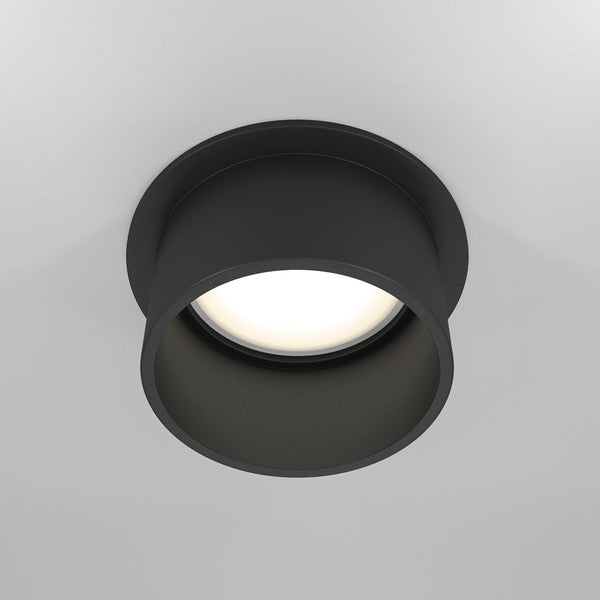
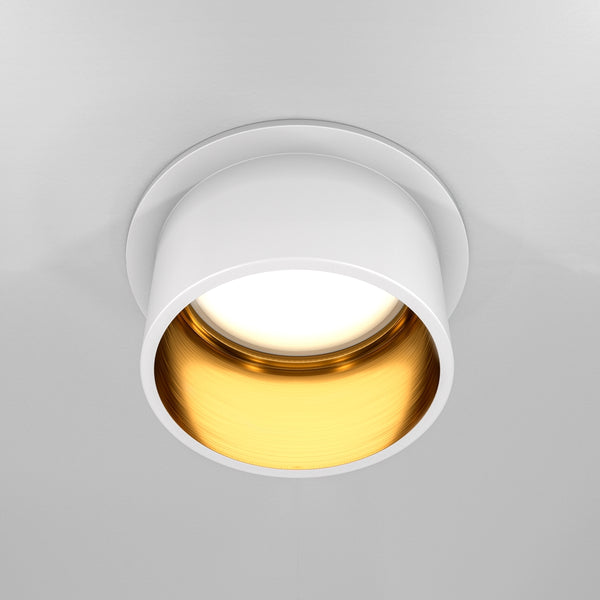
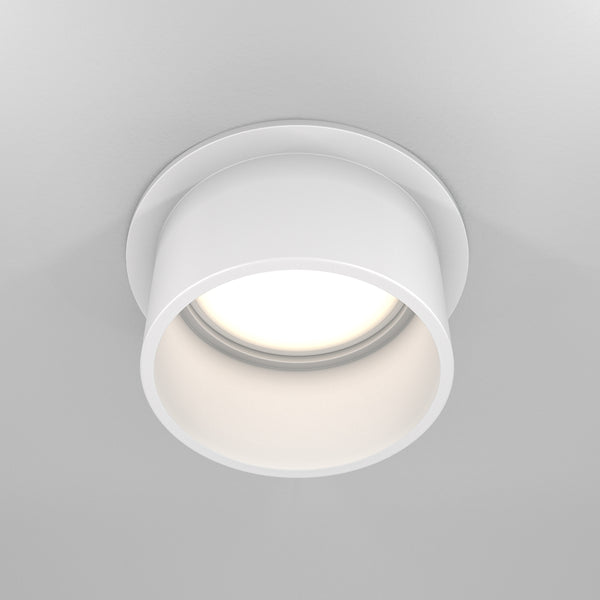
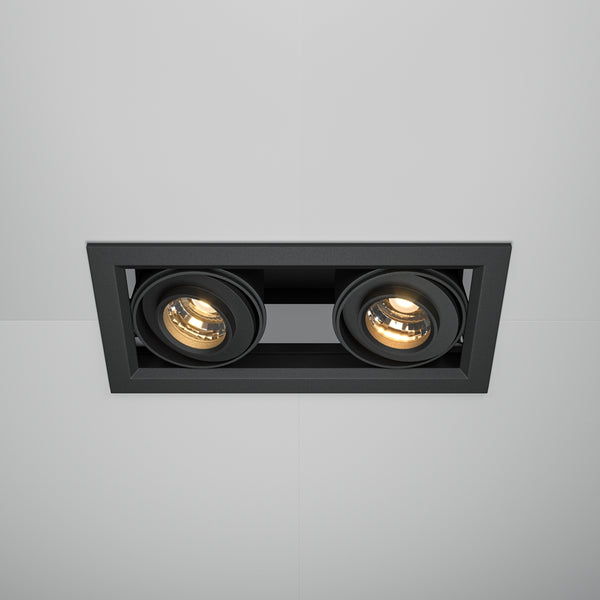
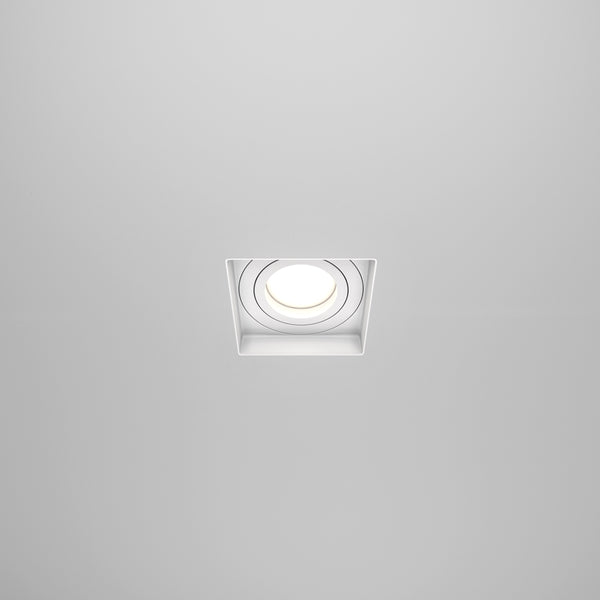
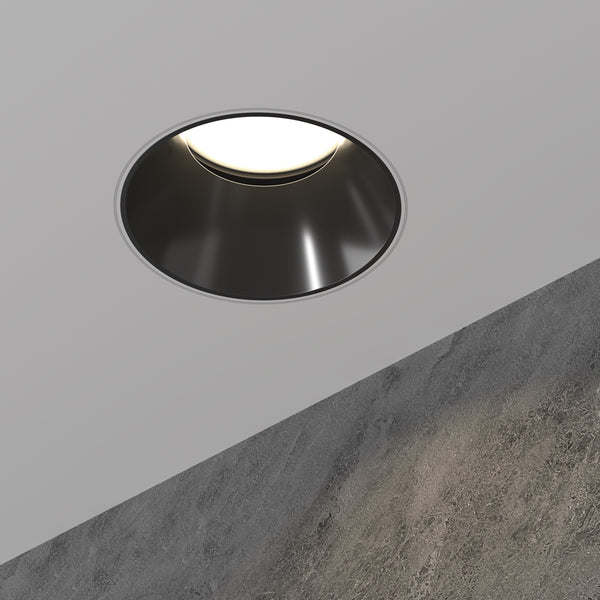
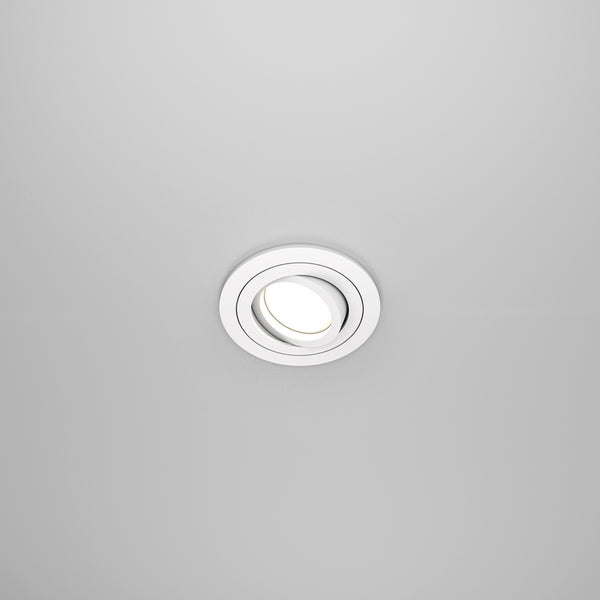
A GU10 downlight sits flush in the ceiling and takes a 10 W GU10 bulb: it lights a precise area rather than the whole room. The entire selection shares this base, with aluminium trims, round, square or tubular, in black, white or gold, IP20 for dry rooms and IP65 for wet areas.
What is a GU10 downlight, and what light does it give?
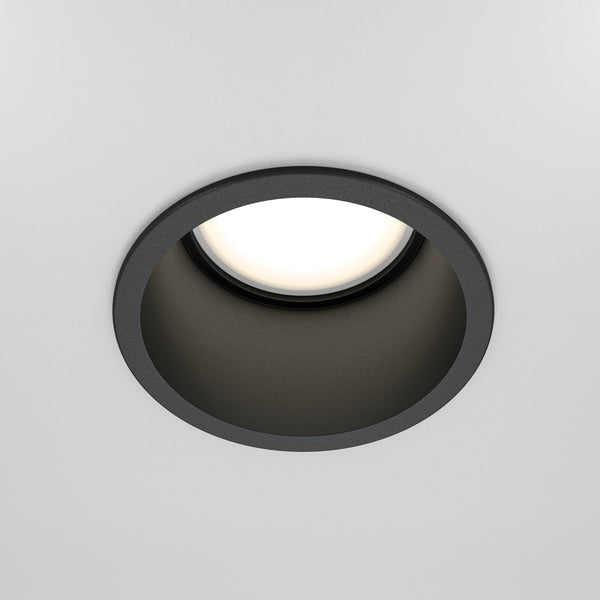
A GU10 downlight is a flush fitting: only the trim stays visible, the body disappears into the ceiling. The GU10 base takes a bulb you change yourself, without tools. The light is directional, which suits a worktop, a wall or a walkway more than general room lighting.
Fixed, tiltable or trimmed downlight: what are the differences?
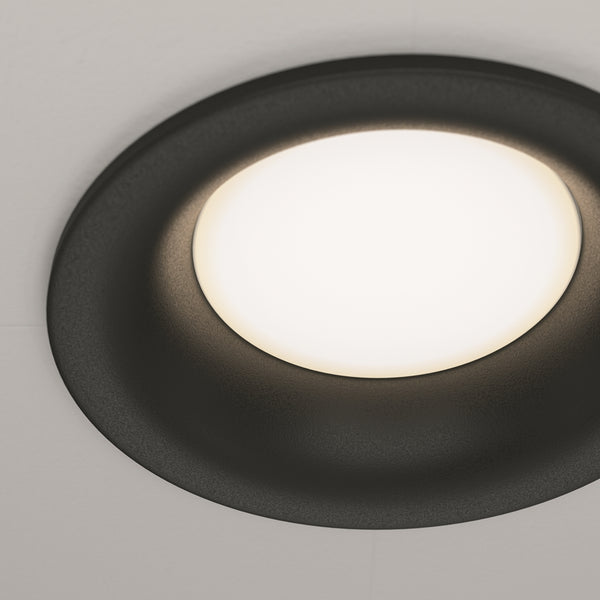
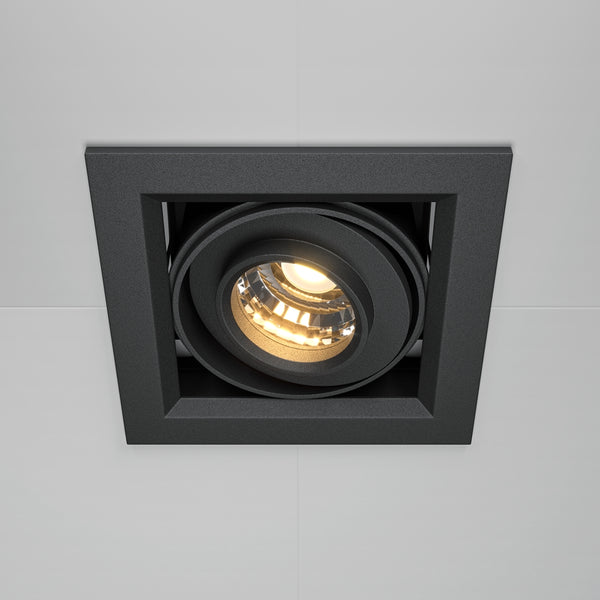
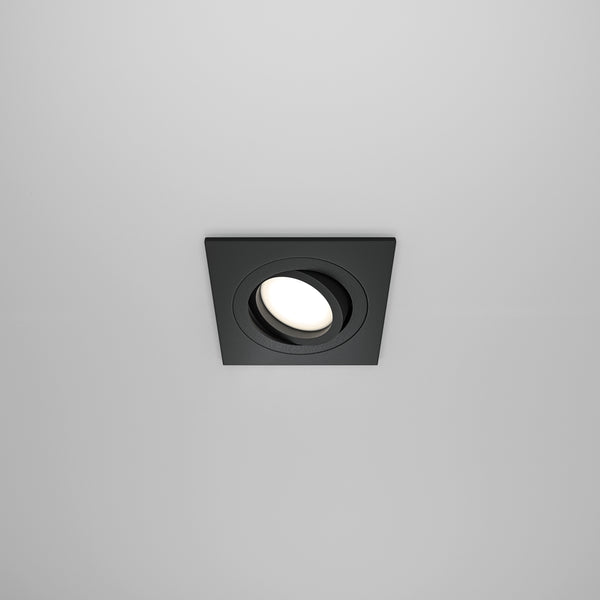
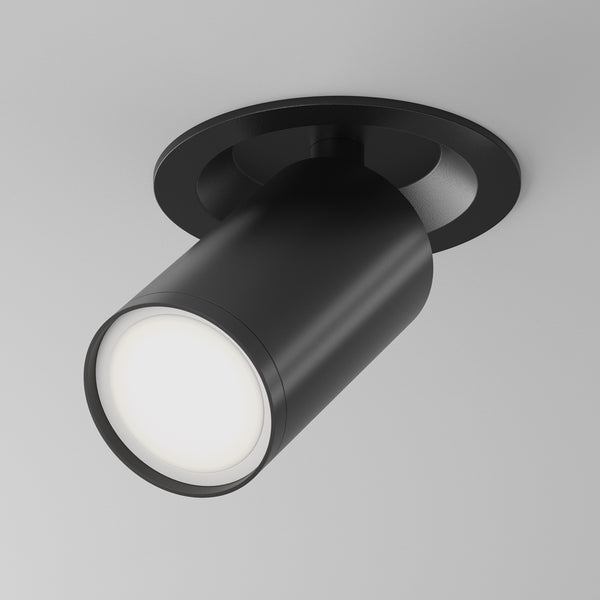
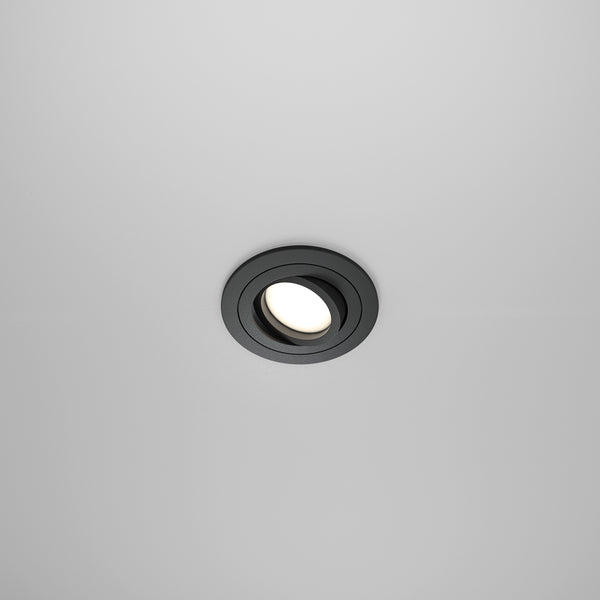
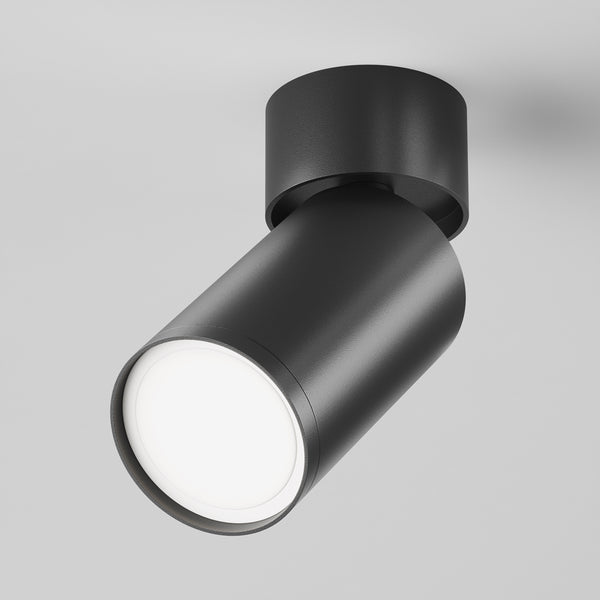
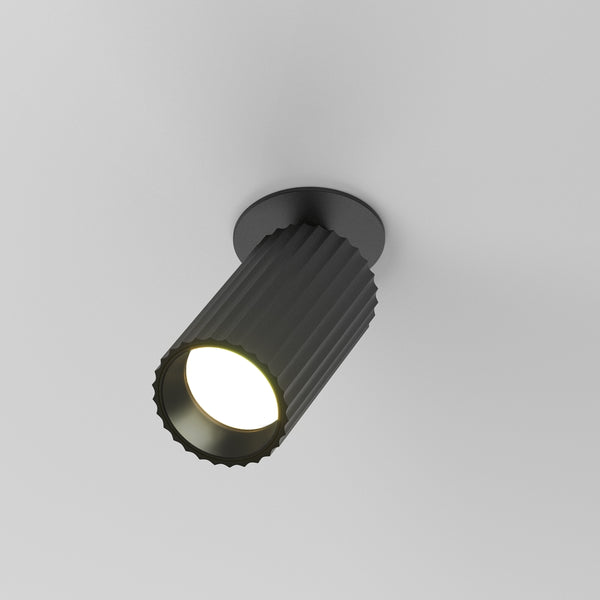
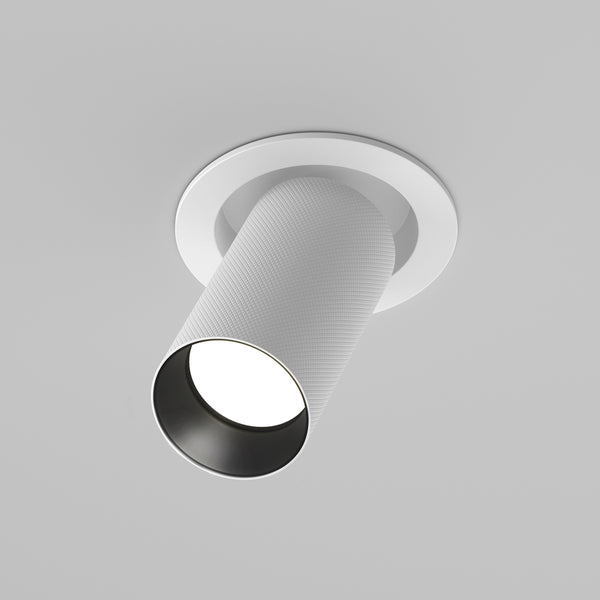
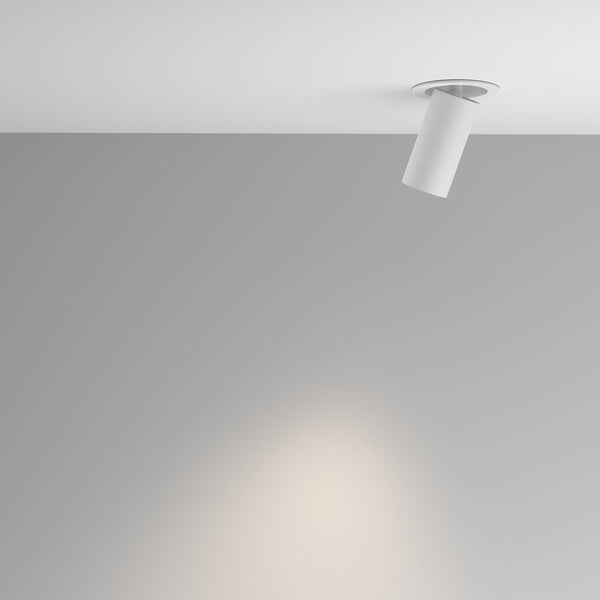
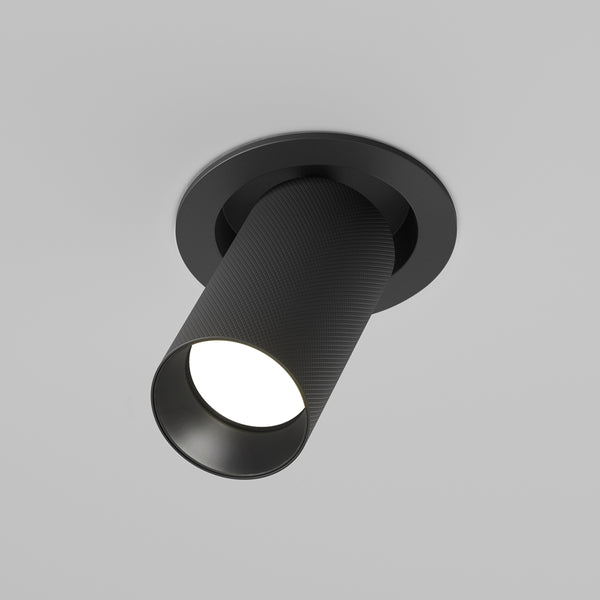
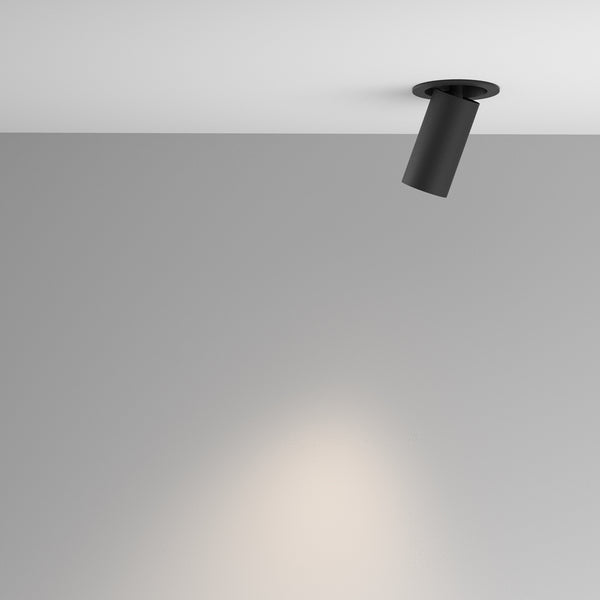
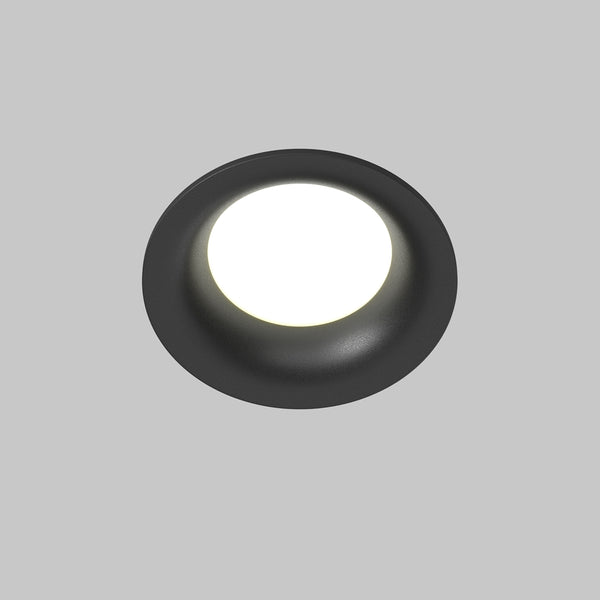
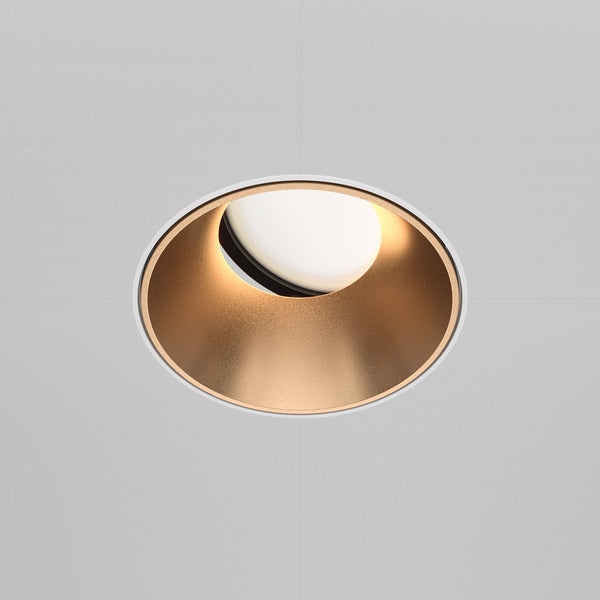
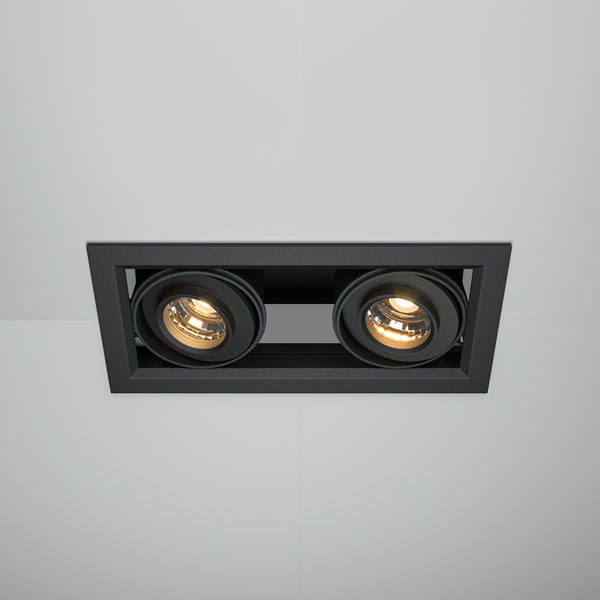
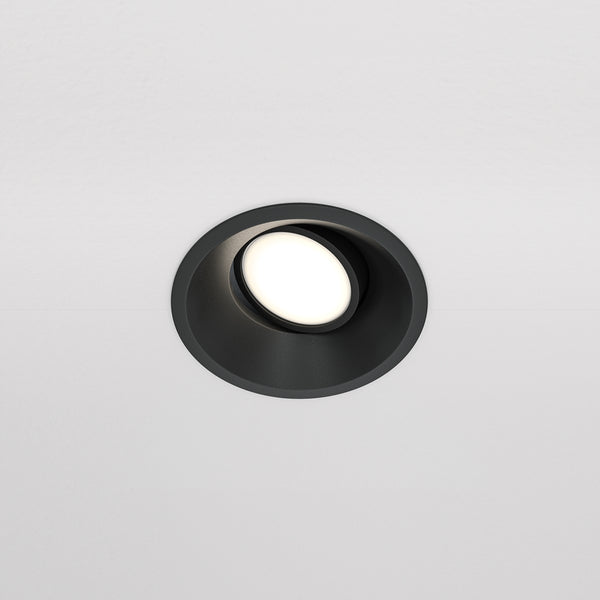
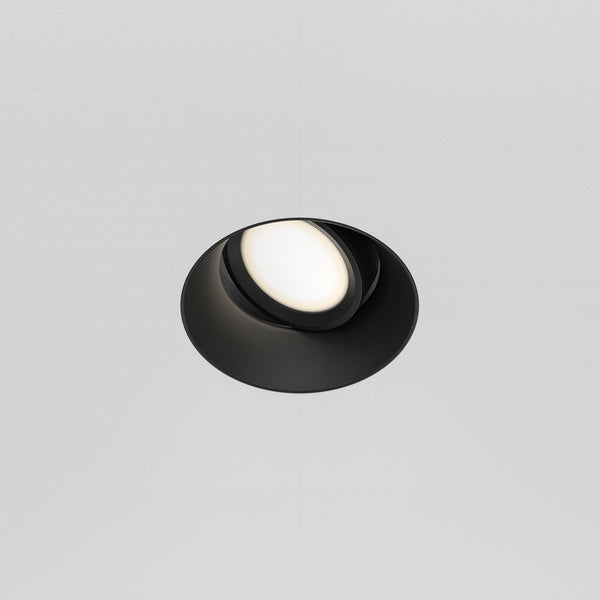
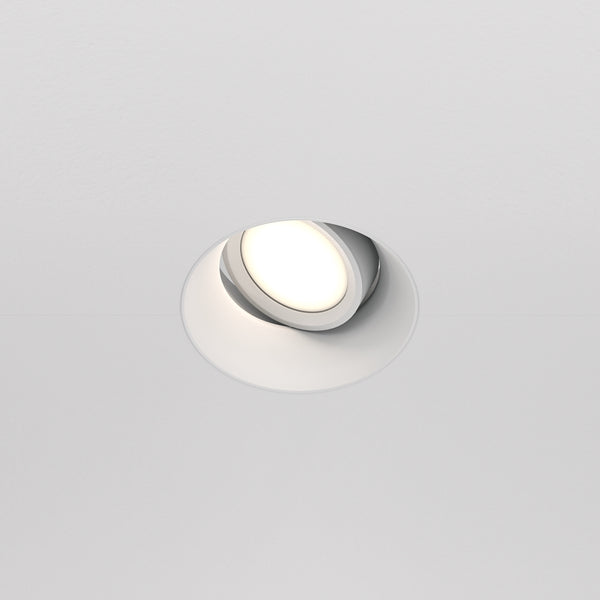
The fixed model projects straight down. A tiltable downlight aimed at a wall is adjusted by hand to move the beam without taking anything apart. That is the case with the Alto tiltable downlight, a cylindrical body 6 cm in diameter. The trim, for its part, widens the visible circle and dresses the cut-out: Ombrio and its 5.2 cm diameter are a compact example.
Why the GU10 base changes the way you choose
The fitting and the bulb are two separate parts. The downlight provides the shape, the material and the protection rating; the GU10 bulb provides the colour temperature, from warm white around 2700 K to cool white around 4000 K, as well as the intensity. You therefore replace the bulb alone to change the mood, while the fitting stays in place. The full range of Designix light fittings works on this principle.
How should downlights be laid out on the ceiling?
You start from the centre of the room, draw a regular grid then align the downlights with the strong axes: walkway, table, worktop. The spacing stays constant along the same line and the points closest to the walls are set further back. Tiltable models are then positioned to aim at a wall or a piece of furniture.
Where should the first downlight go when starting from the centre of the room?
The first point goes on the central axis, directly above the area to be lit first, often above the table or the sofa. You then move forward step by step, keeping the same spacing. It is better to draw in pencil and check from the doorway before drilling, rather than correcting a cut-out.
How to align downlights with furniture and walkways
A downlight on the axis of a hallway guides the step; a downlight on the axis of a worktop lights your hands. On a kitchen ceiling, avoid placing a point just behind you, where it casts a shadow on the worktop. The result is always judged from the entrance to the room, never with your nose to the ceiling.
Which downlights to choose depending on the room and the style?
For a living room or a hallway, an IP20 aluminium downlight is enough: that applies to the vast majority of the selection. Round models 6.8 cm and 8.5 cm in diameter cover most ceilings, in a tiltable or trimmed version. In a wet room or one exposed to splashes, an IP65 rating is needed. The colour is chosen to match the ceiling shade.
Which GU10 downlight for a living room or a hallway?
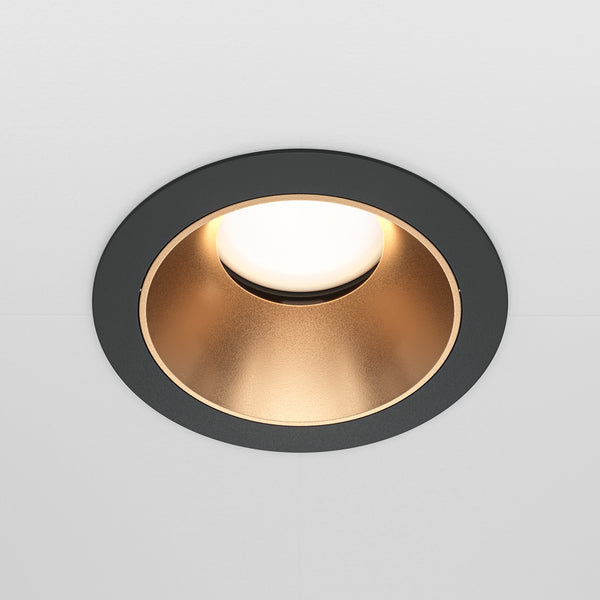
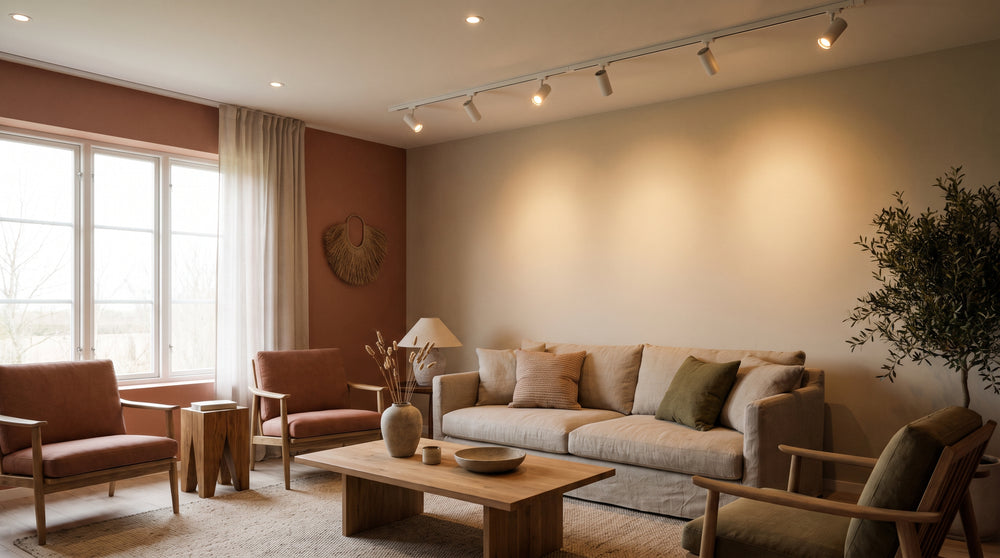
A living room ceiling calls for discreet, regular points, often complemented by a wall light or a floor lamp. The 6.8 cm rounds keep the line understated, such as Temis and its gold reflector, or Rovea and its opal diffuser that softens the beam. For a brighter result in a passageway, well-gridded living room lighting is better than tightly packed points.
Which colour for a white or dark ceiling?
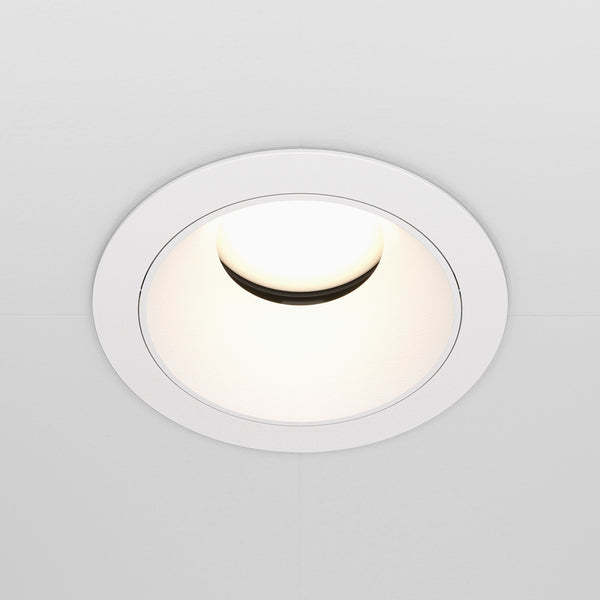
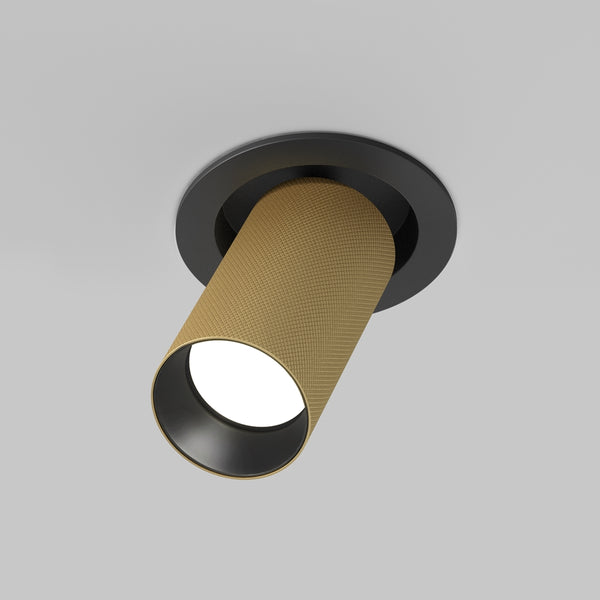
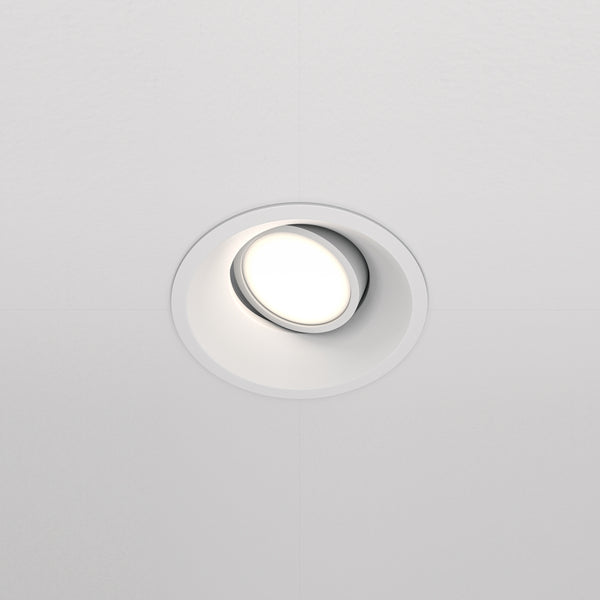
On a white ceiling, a white trim blends into the surface and stays discreet: see the white downlights. On a dark ceiling, a black trim goes unnoticed, unlike the black models placed on white, which draw a sharp contrast. Gold finishes play an accent role, to be kept for a few points.
| Colour | Associated style | Effect on the ceiling | References |
|---|---|---|---|
| Black | Minimalist, modern | Sharp contrast on a light ceiling, discreet on a dark ceiling | Alto, Ombrio, Nerio II, Zarel, Wynnifred, Temis |
| White | Minimalist, contemporary | Blends into a white ceiling | Orientis, Rusco, Orio, Nixo, Oribi, Calen |
| Gold | Modern | Jewellery effect, draws the eye | Aurelis, as well as the gold reflectors of Oribi, Temis and Calen |
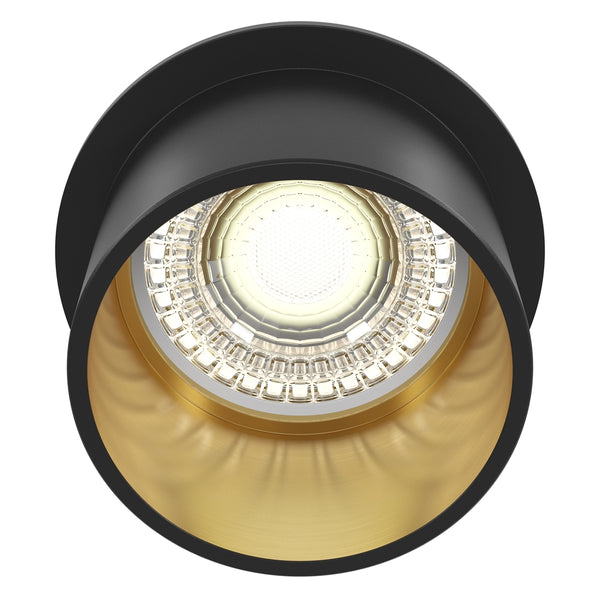
| Two-tone | Modern | Contrast that outlines the downlight | Lysan, Aurel |
What distance between two downlights and how many for a room?
No single figure applies: the distance depends on the ceiling height, the GU10 bulb fitted and the intended use. The reliable marker remains the regularity of the grid and the alignment with furniture. Surface area alone is not enough to decide, since this type of lighting remains focused.
How many downlights for a large room?
You think in zones rather than in surface area: one line for the walkway, two or three points for the table, a complement for a wall. A very high ceiling calls for more widely spaced and more powerful points; a low ceiling takes closer but more discreet points. Tiltable LED versions let you adjust the result after installation.
How to avoid shadow areas between two downlights
Too wide a gap leaves dark bands between the cones of light, especially with a narrow beam. You tighten the line or choose a wider-beam bulb. A light reflector, such as the one on Temis and its gold reflector, sends light downwards and limits this drop-off.
What is the hole size for a GU10 downlight?
The hole is drilled to the diameter of the trim, which covers the cut-out. In this selection, round trims range from 5.2 cm to 10.2 cm in diameter and the square model measures 8.4 cm per side. You therefore check the stated dimension on the product page before drilling.
What cut-out for a GU10 downlight 6.8 cm in diameter?
A 6.8 cm trim corresponds to a slightly smaller cut-out, adjusted to the passage of the body and the grip of the springs. Temis, Oribi, Orio, Zarel and Rovea share this diameter, which keeps a consistent line on the same ceiling. Transfer the measurement from the product page to the marking gauge before drilling.
How to check the dimension before drilling
You measure the trim at rest, compare it with the product measurement, then drill a first test hole in an offcut of plasterboard when possible. A model such as Ombrio, tiltable with a trim, shows a 5.2 cm diameter: the cut-out must remain compatible with the bulb housing.
| Shape | Dimensions | Rating | Colour | References |
|---|---|---|---|---|
| Round | 5.2 cm diameter | IP20 | Black | Ombrio |
| Round | 6 cm diameter | IP20 | Black, white | Alto, Orientis |
| Round | 6.8 cm diameter | IP20 | Black, white | Temis, Oribi, Orio, Zarel, Rovea |
| Round | 8.5 cm diameter | IP20, and IP65 on Aurelis | Black, white, gold | Nerio II, Wynnifred, Lysan, Rusco, Aurel, Aurelis |
| Round | 10.2 cm diameter | IP20 | White | Calen |
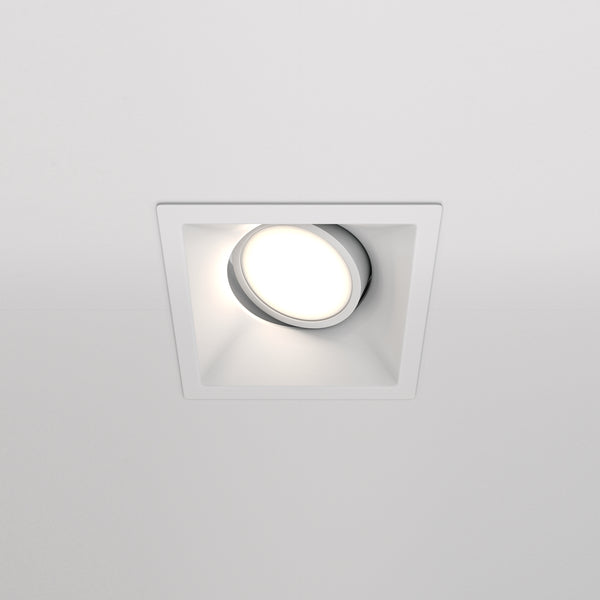
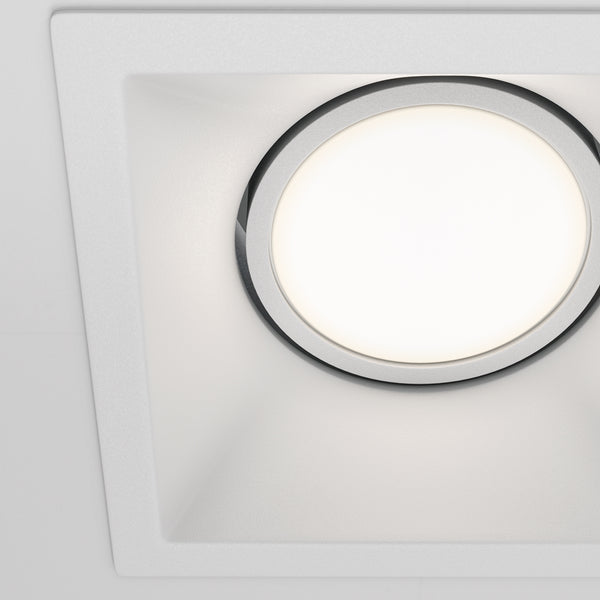
| Square | 8.4 x 8.4 cm | IP65 | White | Nixo |
IP65 GU10 downlight: for the bathroom or outdoors?
The protection rating indicates the fitting's resistance to water and dust. Most of the selection is IP20, reserved for dry rooms such as the living room or hallway. For a wet room or an area exposed to splashes, an IP65 model is needed, such as Nixo or Aurelis.
GU10 downlight for the bathroom: which rating?
Around a bath or a shower, splashed water requires a protected fitting. You would choose Nixo, round or square in IP65, available in 8.4 cm per side or in diameter, or Aurelis and its gold trim in 8.5 cm diameter. Elsewhere in the room, an IP20 is enough.
Can a downlight be installed outdoors?
Under a canopy or a roof overhang, an IP65 fitting withstands splashes, provided the ceiling is sheltered and the connection is designed for outdoor use. In full wind and driving rain, the question is more about the electrical installation than the fitting: you leave it to the electrician.
GU10 downlight without bulb or dimmable: what to plan for
The GU10 downlight is most often sold without a bulb: only the fitting is supplied and the GU10 bulb is chosen separately. Dimming, for its part, depends on the bulb, which must be compatible with the dimmer, and on the electrical installation.
GU10 downlight without bulb: what else do you need to buy?
You need one GU10 bulb per light point, 10 W for these references, and a consistent colour temperature across the whole ceiling. Buying all the bulbs at once avoids differences in shade from one line to another. Dimmable downlights are then controlled from the circuit.
Dimmable downlight: what depends on the bulb
The fitting holds the bulb, so it is the bulb that does or does not support dimming, just like the circuit supplying it. A well-diffused point, such as Rusco with an opal diffuser, gives an even light that you can adjust without glare. The dimmable LED versions group the relevant references.
How to install and maintain a GU10 downlight in the ceiling?
After switching off the power, you cut the hole to the diameter of the trim, connect the fitting, secure it in the ceiling then screw in the GU10 bulb. Replacing the bulb is done from below, without dismantling the downlight, and maintenance is limited to a soft cloth.
How to replace the GU10 bulb of a recessed downlight?
Let it cool, remove the bulb with a quarter turn from below, then insert the new one in the same direction until it locks. No tools are needed and the fitting does not move. Check that the new bulb complies with the 10 W specified for the reference.
How to clean a downlight without damaging it
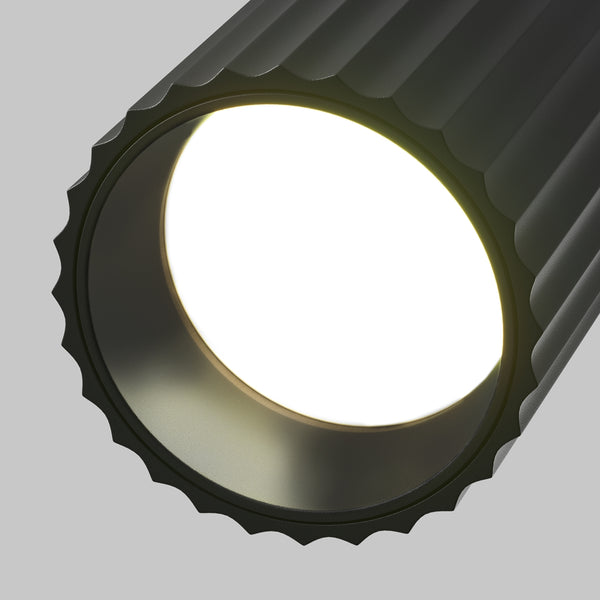
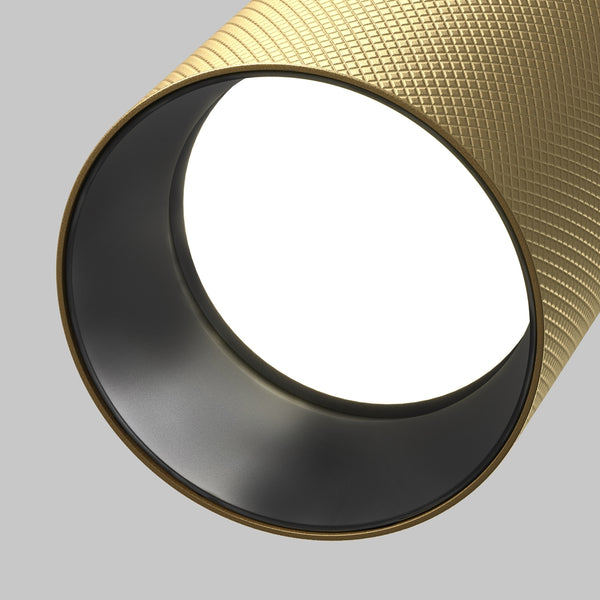
A soft, dry cloth is enough on the aluminium; avoid abrasive products and scouring pads. A grained trim is dusted with a soft brush. The modern style references and the more design-led models are cleaned in the same way, without dismantling.
Every reference in this collection comes with a 5-year warranty. For ordering, payment is secure, delivery is tracked and returns are possible; the Designix customer service team remains available to confirm a dimension or a rating before purchase. Once the trim diameter and the protection rating are settled, all that is left is to choose the colour and place your order.
Frequently asked questions about GU10 downlights
How many downlights should be installed in a 12 m2 bedroom?
In this selection, all the references work with a 10 W GU10 bulb, but the number of points depends above all on the use: general lighting or specific areas. The downlights are therefore spread over a regular grid, without concentrating the points, then adjusted to suit the desired result.
Is a downlight trim essential?
No. What is called a trim is the visible ring that dresses the cut-out in the ceiling. A downlight can do without this element, while trimmed models, such as Ombrio, Nerio II or Aurelis, show a wider circle that structures the ceiling.
How should downlights be laid out on the ceiling?
You start from the centre of the room and draw a regular grid, then align the downlights with the walkways and furniture. The spacing stays the same along a line, and the points closest to the walls are set further back. A tiltable model is then adjusted towards the wall to be highlighted.
What is the hole size for a downlight?
The hole is cut to the diameter of the trim, which then covers it. The round trims in this selection range from 5.2 cm to 10.2 cm in diameter and the square model measures 8.4 cm per side. You therefore need to note the dimension on the product page of the chosen model.
GU10 downlight without bulb: should a bulb be planned separately?
Yes, the fitting and the bulb are two separate elements: the downlight takes a GU10 bulb, to be chosen separately. The references in this collection are designed for a power of 10 W. It is therefore useful to buy the bulb at the same time as the downlight.