
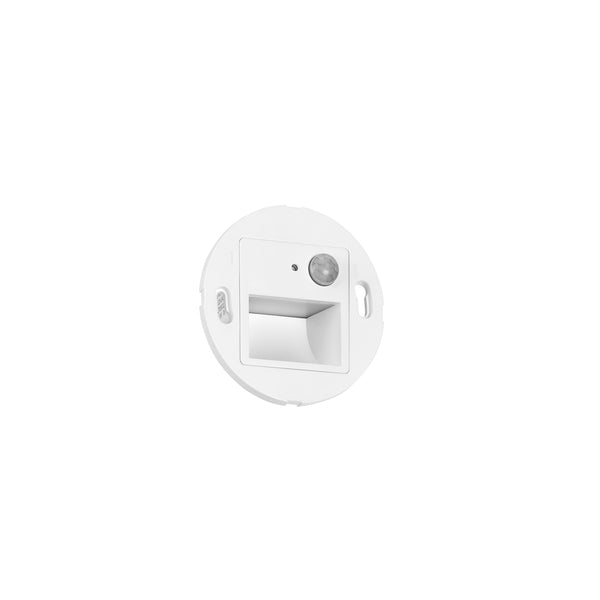
LED outdoor motion sensor spotlights

- Tracked delivery to your country Tracked delivery
- Secure payment at checkout Multiple payment methods
- 14 days to change your mind 14-day returns
- Secure payment Secure payment
Not sure of your style? Find it in 30 seconds
A few questions, and we will show you the pieces made for you.
Frequently asked questions
How do I choose the right product?
What are the delivery times?
Can I return an item?
Can I pay in instalments?

An interior that reflects who you are
Carefully selected pieces, shipped from our warehouses. Our team advises you before you buy, so you choose with confidence.
- Tracked delivery
- Pay in instalments, where available
- 14 days to change your mind
- Advice & showroom in Lyon, France
Plan for one light per passage area: a compact model aimed at the ground at the entrance, a wider beam at the gate and along the driveway. The sensor turns the LED on as soon as someone enters its detection zone, then switches it off after a set delay, which avoids leaving the light on all night.
What is an outdoor LED security light with motion sensor?
It is an LED light fitted outdoors that switches on by itself as soon as movement is detected in its detection zone, then switches off after an adjustable delay. The LED lights without heating up, the sensor avoids leaving the light on all night, and the housing is designed to withstand the weather.
Three elements sit together in the same housing. The outdoor housing, usually aluminium, protects the electronics and is fixed to a wall, a post or into masonry. The LED source does the lighting work, with no filament and no bulb to change. The sensor, a passive infrared detector, picks up a moving heat variation in its field. What this type of light changes in an ordinary evening is simple: you arrive with your hands full, and the light is already on. The rest of the time, it is off.
Outdoor LED security lights with motion sensor: how the sensor triggers the light
The sensor constantly scans the scene it faces. When a person enters its field, it compares the heat it picks up against the background of the scene and switches the light on immediately. The light then stays on for the set duration after the last movement detected, then goes out. Two settings matter: sensitivity, which decides how easily it triggers, and the time delay, which decides how long it stays on. Both are usually found on the housing.
Outdoor LED security light or floodlight with sensor: what is the difference?
The family of outdoor LED security lights covers very different formats, from a small discreet housing that marks the threshold to a wide floodlight that floods a courtyard. The small format blends into the facade and lights a person, not a plot of land. The wide format covers a whole driveway but dazzles more easily. In between, you find adjustable models to aim after installation, which make up for an angle miscalculated at fitting. To compare the families, start from outdoor LED security lights without a sensor: they clearly show the formats available.
Where should you install an outdoor motion sensor light?
The most useful locations are the entrance, the gate, the driveway, the terrace and the passage along a facade, where you arrive with your hands full. A light aimed at the ground lights the path without dazzling, and a recessed model blends into a slab or a finished wall.
Each area brings its own constraint. At the entrance, you want a tight field and light that falls in front of the door, not in the visitor's eyes. At the gate, the question is range: it must catch the arriving car without triggering for every passer-by on the road. On a terrace, you light a use, a route to the table, rather than the table itself.
| Area to be lit | Recommended type | Fixing | First criterion to check |
|---|---|---|---|
| Entrance and door | Compact light aimed at the ground | Surface-mounted, under a canopy | Tight detection angle |
| Gate and driveway | Wide-beam light or floodlight | Post, wall or stake | Adjustable range and sensitivity |
| Terrace and slab | Recessed light | Recessed into the slab | Housing protection rating |
| Wall corner and facade | Adjustable recessed light | Recessed into the wall | Aiming after installation |
| End of garden with no mains | Solar sensor light | Stake or wall fixing | Panel exposure |
| Light facade or dark cladding | Light with matching housing | Surface-mounted | Colour and material |
Lighting a driveway or gate without leaving the light on
Along an access path, the sensor should look at the path, not the street. Aim the head towards the ground and towards where people come from, from the gate towards the house for example. Adjustable outdoor floodlights are handy here: you adjust the direction once the light is fitted, without taking it down again. For an area far from the electrical panel, solar garden lighting avoids running a cable.
Under a canopy, an overhang or along a facade
Under a canopy, the light is partly sheltered but still exposed to wind and splashes. This is the typical case for a surface-mounted housing, with a protection rating consistent with that exposure. Along a facade, a model recessed into the wall gives a clean finish, with no visible housing: see the recessed outdoor lights and, if you want to adjust the angle despite the recess, the models that are both recessed and adjustable. Indoors, the same scanning logic applies to lighting a staircase step by step.
How do you choose an outdoor LED sensor light?
You first compare the housing protection rating, the detection angle and range, the head orientation, the time delay and the light output. Colour and material are chosen afterwards, in keeping with the facade. The product page states these values for each reference.
The order of reading matters because the criteria do not carry the same weight. A poorly protected housing will fail before the electronics. A badly sized sensor will trigger for anything and everything, and you will unplug it within a week. Light output comes last, not because it is secondary, but because it is easy to correct: a warm tone around 2700 to 3000 K brings out stone and render, a more neutral tone around 4000 K gives a whiter light on a path.
IP protection rating: the criterion to read first
The IP rating describes the housing's resistance to dust and water. Outdoors, a housing sheltered under a canopy and a housing battered by rain do not have the same needs, and the product page always states the rating chosen. Remember the logic rather than the number: the more exposed the light, the higher the rating must be. A light placed at sprinkler height or on a west-facing facade deserves greater protection than one tucked under an overhang.
Angle, range and time delay settings
The detection angle is the width of the monitored field, the range is the distance at which movement is picked up. A door threshold is satisfied with a narrow field; a driveway needs a wider one. An area that is too large triggers for vehicles, animals and branches. The time delay sets how long the light stays on after the last movement: short for a passage, longer for an entrance where you look for your keys.
White or black colour: matching the light to the facade
On light render, a white housing disappears; on dark cladding, it is black that fades away. White finishes for a light facade and black housings on dark cladding cover the two most common cases. If the fitting is meant to stand out, look instead at outdoor lights with a crafted design.
| Criterion | What it indicates | What it changes in use |
|---|---|---|
| Protection rating | Housing resistance to dust and water | Whether it withstands exposure to rain |
| Detection angle | Width of the monitored field | Triggers too early, too late, or just right |
| Detection range | Distance at which movement is picked up | Covers the driveway or only the threshold |
| Sensitivity | How easily it triggers | False triggers from animals and vehicles |
| Time delay | How long it stays on after the last movement | Comfort of the passage, controlled consumption |
| Power supply | Mains or solar | Whether a cable needs to be run |
Recessed, adjustable or solar: which version should you choose?
A recessed light disappears into masonry or a slab and suits careful projects. An adjustable model is set after installation. A solar light is installed without wiring where bringing a power supply is complicated. Everything therefore depends on the location and the electrical supply available.
The surface often decides for you. A poured slab, a finished wall, a tiled terrace: drilling cleanly for a recessed fitting takes a little method, but the result shows only a lens. Conversely, a stone wall or a gate post is better suited to a surface-mounted housing, simpler to fit and to replace.
Recessed outdoor LED security lights: when to choose them
They are made for surfaces already finished or about to be finished: terrace slab, rendered wall, coping. The finish is clean, with no protruding housing, and the sensor stays discreet. The trade-off is preparation: you must house the body of the light and the power supply before pouring or laying the covering.
Aiming the light after installation: the benefit of an adjustable head
An adjustable head makes up for an angle you failed to anticipate, corrects glare from the door and lets you aim at the ground without redoing the fixing. It is the choice that forgives the most approximations in a plan drawn on paper. Compare the adjustable models to aim after installation with the lights recessed into a slab or a wall according to your surface.
Solar models: for areas with no electrical supply
At the end of the garden, near a shed or a distant gate, running a mains supply costs a lot in trenching and labour. A solar sensor light is fitted on a stake or with a wall fixing, provided the panel receives daylight. Look at the solar lighting without wiring for these situations.
How do you install and adjust a motion sensor light?
Fix the light so that it scans the passage area, with the sensor aimed towards where people come from and not towards a road, vegetation or a heat source. Then adjust the orientation, the sensitivity and the duration, testing the trigger several times on foot.
The support must be stable: a vibrating pole or a moving gutter will trigger the sensor for no reason. Tighten the cable glands and make sure the cable entry stays facing downwards, so that water does not follow the wire. Connecting to the electrical network is a job for a professional: beyond testing the trigger, you do not improvise an outdoor circuit.
Avoiding unwanted triggers
A sensor reacts to passing animals, vehicles, branches moved by the wind and sometimes to surfaces that heat up, such as a ventilation outlet or a chimney. The fix comes down to three actions: lower the sensitivity, aim the sensor towards where people walk, and clear the immediate surroundings of any vegetation that sweeps through the field.
Setting sensitivity and duration once the light is in place
Adjust at night, actually walking through the area, from the gate towards the door for example. Look for the lowest setting that still catches your passage: beyond that, you are catching the street. For the duration, a short time delay suits a simple passage, a longer one suits an entrance where you linger.
Maintenance and durability: what keeps an outdoor light reliable
An outdoor light is kept clean: a sensor covered in dust, cobwebs or hidden by a branch loses accuracy. Clear the surroundings, wipe the lens dry and check the seal and the cable entry after winter. If the light flickers, check the connections first.
Ageing rarely comes from the LED itself. It comes from the sensor lens becoming covered, from growing foliage, from a worn seal letting moisture through, from a poorly tightened cable entry. These are simple maintenance points, not breakdowns.
Cleaning the sensor lens without damaging it
A soft, dry cloth is enough. No abrasive product, no water jet aimed directly at the lens or the housing. A clean lens means a sensor that triggers at the right moment and light that stays even.
Checking the seal and cable entry after winter
After the bad season, check the housing seal and the cable gland. If water pools around the cable entry, redo the orientation of the wire and the tightening. If the light flickers, check the connections before suspecting the LED. More broadly, the Designix lighting range groups all our families, and the full lighting catalogue lets you find collections by use.
What mistakes should you avoid with an outdoor LED sensor light?
The most frequent mistakes: monitoring an area that is too large, aiming the sensor towards a busy road or a heat source, neglecting the protection rating, and setting too long a duration. A precise detection zone and light aimed at the ground are better.
This family of fittings reacts to its environment more than any other. A powerful light aimed badly dazzles a visitor climbing the steps and stops them seeing where they put their feet: the opposite of the goal. A housing undersized for its exposure will give up within a few seasons, even if the electronics were good.
Area too large or sensor aimed badly: what to correct
Start by reducing the sensitivity and tightening the aim towards the ground. If the trigger still comes from the street, turn the sensor towards where people walk. Adjustable indoor lights apply the same aiming logic in a room, and LED lights for the living room show how directed light avoids glare when seated.
Housing unsuited to exposure: the trap of the wrong protection rating
A protection rating chosen too low for the actual exposure is the most common cause of premature replacement. Reread the product page of the model before fitting it on a highly exposed facade, and favour a housing designed for outdoors rather than an indoor fitting moved outside. For very wet or unsheltered areas, compare the outdoor lights for a light facade and their dark equivalents according to your wall.
Choose the support and exposure first, then the format, then the colour: that is the order that avoids taking down a light fitted the day before. The adjustable lights and the solar models cover the two most frequent cases, and all our light fittings can be browsed by room or by use.
- Secure payment across the whole Designix shop.
- Tracked delivery of your order.
- Returns possible according to the shop conditions.
- Designix customer service to help you choose the right format.
Frequently asked questions
How does an outdoor LED security light with motion sensor work?
The sensor constantly monitors the area it faces and detects a person entering its field. It then switches the LED on immediately, and cuts the lighting after a set duration. Sensitivity and time delay are usually adjusted on the housing itself.
What range and angle should you choose for an outdoor sensor light?
Adapt the range and angle to the actual surface to be monitored: a front door is satisfied with a narrow zone, a driveway needs a wider field. The stated value appears on the product page of each model. A field that is too wide triggers for passers-by and vehicles.
What IP protection rating is needed for an outdoor sensor light?
The protection rating indicates the housing's resistance to dust and water. It must be consistent with the actual exposure: sheltered under a canopy and exposed to driving rain do not require the same protection. This rating is always stated on the product page.
At what height should you install an outdoor motion sensor light?
The criterion is not height alone but the way the sensor scans the passage: it must aim at the area where people come from, neither too high so as not to miss a child, nor towards a road or vegetation moved by the wind. You confirm by testing on foot.
Solar sensor light or mains sensor light: which should you choose?
Solar is fitted without wiring, which suits the end of a garden, a shed or an area with no electrical supply. A mains supply offers lighting available whatever the conditions. The choice therefore depends mainly on whether you can run a supply to the fitting point.




