Industrial-style metal light fixtures
- Tracked delivery to your country Tracked delivery
- Secure payment at checkout Multiple payment methods
- 14 days to change your mind 14-day returns
- Secure payment Secure payment


Not sure of your style? Find it in 30 seconds
A few questions, and we will show you the pieces made for you.







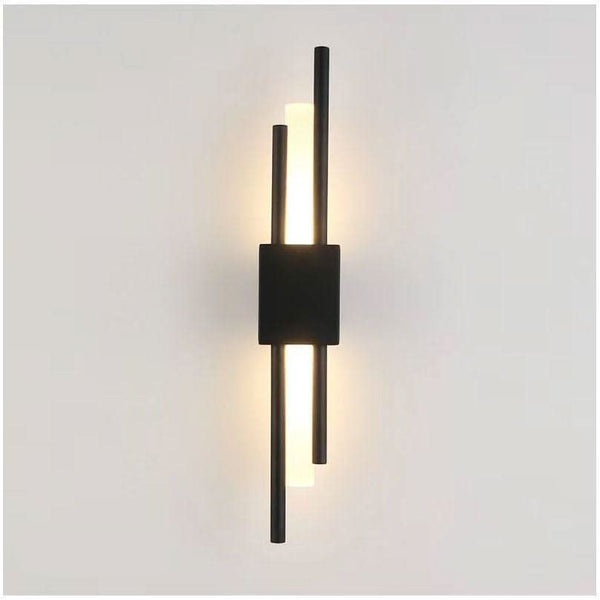


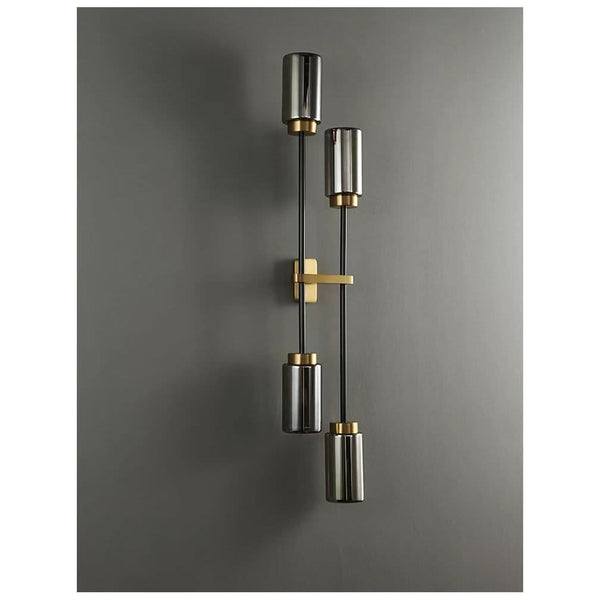


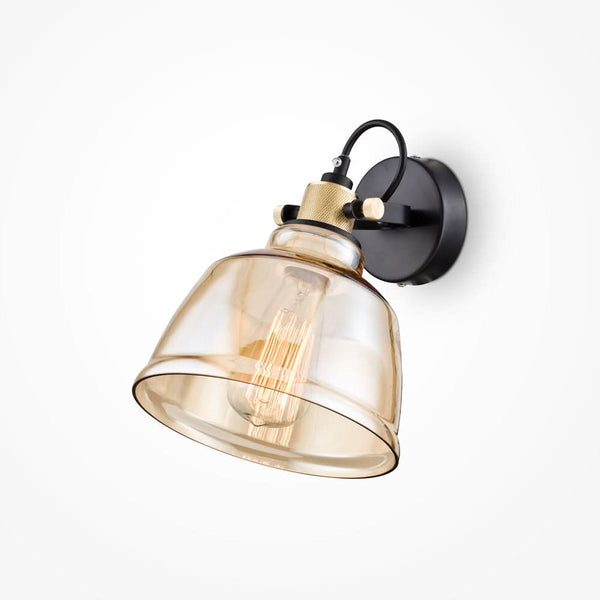
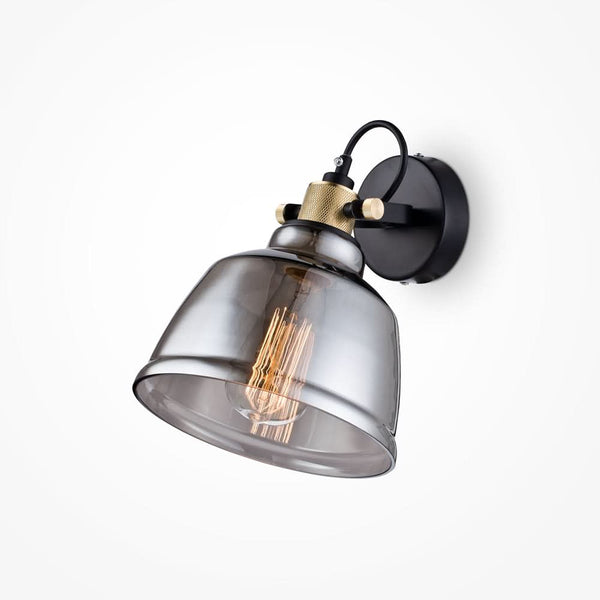







Frequently asked questions
How do I choose the right product?
What are the delivery times?
Can I return an item?
Can I pay in instalments?
An interior that reflects who you are
Carefully selected pieces, shipped from our warehouses. Our team advises you before you buy, so you choose with confidence.
- Tracked delivery
- Pay in instalments, where available
- 14 days to change your mind
- Advice & showroom in Lyon, France
For industrial metal lighting, start with the room and the available height: a pendant or chandelier above a table, a directional wall light in a hallway, a compact ceiling light in a WC. The socket and the light temperature decide comfort, before colour or shape.
- What is industrial metal lighting
- Materials of the industrial style
- Choosing by room
- Socket and light temperature
- Are industrial lights worth it
- Making a suspended light
- Chandelier and large industrial chandelier
- Lyon and clearance stock
- WC and small hallway
What is industrial metal lighting?
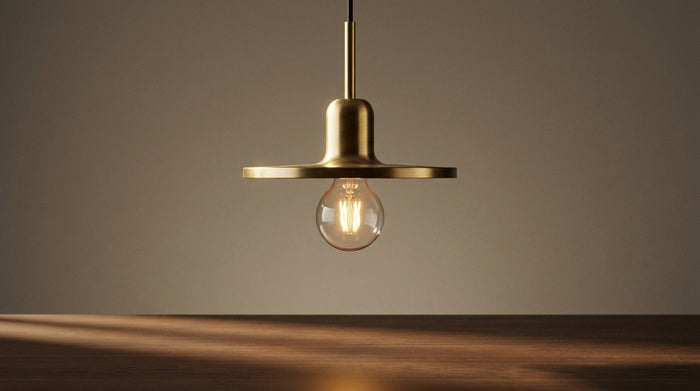
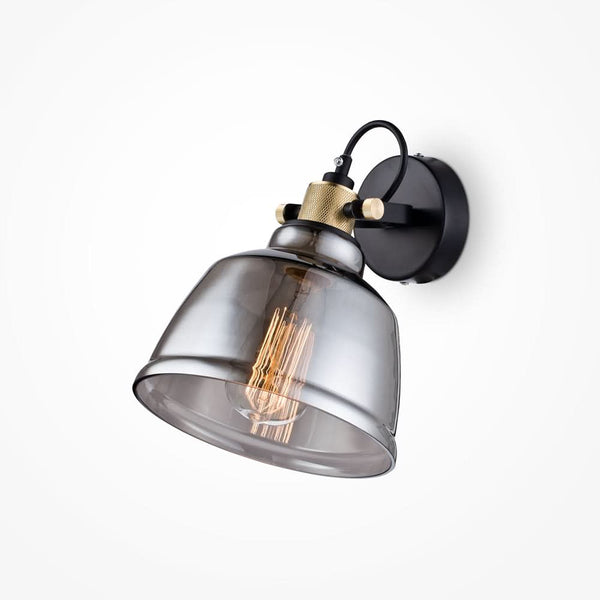
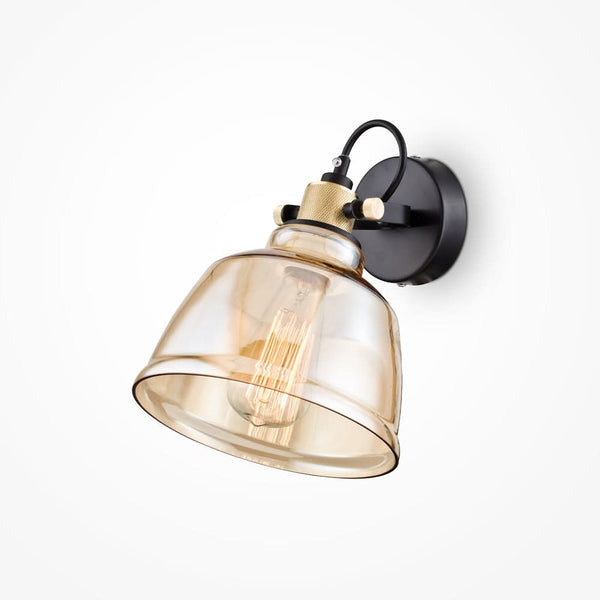
Industrial metal lighting is a light whose visible structure is made of metal, iron, aluminium or brass, with simple shapes: tube, ball, round, oval or square. It is recognised by its exposed material, its visible fixings and a light that is often directed, with an E27, E14, G9, G4 socket or integrated LED.
The signs that distinguish an industrial light
Nothing is hidden: arms, rods, cages and screws stay visible. Metal dominates the materials in the collection, black is very present in the colours, and tube and ball shapes come back most often. The Vilo pendant shows the spirit: a slim metal and brass rail that stretches light over a whole length.
From vintage industrial light to contemporary model
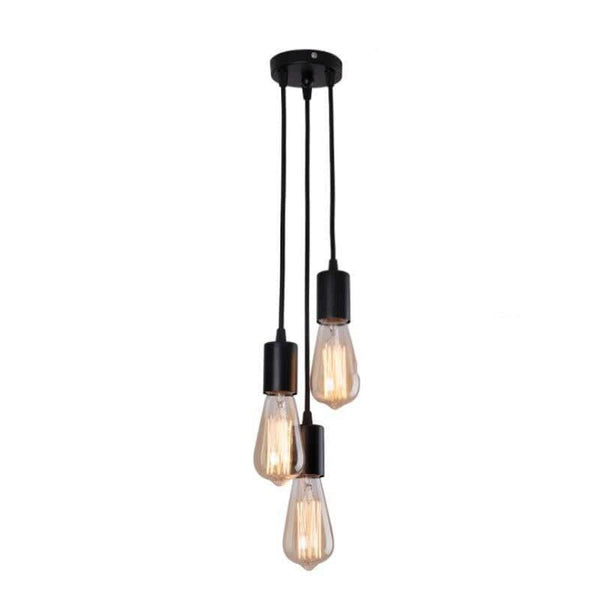
The vintage register keeps the visible socket and textile cable, the contemporary one smooths the silhouette without denying the material. Between the two, the basis does not change: exposed metal, replaceable bulb, IP20 for dry rooms. The complete lighting catalogue brings together pendants, chandeliers, wall lights and ceiling lights.
What materials are used in the industrial style?
Metal dominates, often iron or aluminium, with brass or steel on some finishes. Glass, acrylic and wood appear as complements, in shades, diffusers, bases or structures. These combinations explain the black, gold, white, beige or bronze tones of the collection.
What each material changes in the room
Metal structures, glass diffuses, wood warms, brass pulls the tone towards gold, present on half the models. A wall light like the Zula wall light in iron and aluminium plays on finesse and accepts a dimmer. On the warm side, copper pieces take on a patina that changes over time.
Care and durability
A soft cloth is enough, never abrasive on metal. Brass patinates, that is normal. Wood fears standing water. To contrast, black wood lights combine the warmth of wood with dark metal, with a shade that filters the light like the Iora ceiling light and its bronze tint.
Which industrial metal light to choose by room?
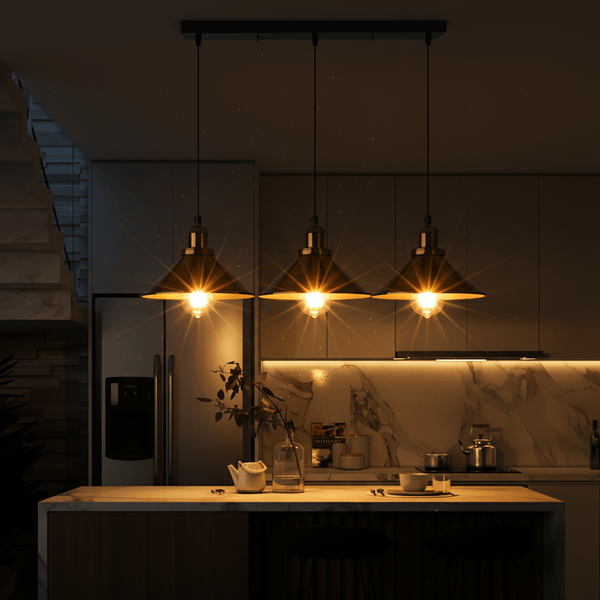
In the living room and dining room, a pendant or chandelier above the table. In a bedroom, a wall light or a small ceiling light. In the kitchen, a short pendant. In the hallway and on the stairs, a directional wall light. The available height and the socket guide the choice more surely than the style.
Living rooms
Above a table, allow for a light whose diameter stays about a third smaller than the width of the tabletop, and 70 to 80 cm between the bottom of the light and the tabletop. For a large table, the Cara pendant, up to 65 cm in metal, glass and brass, lights widely. Find other formats in dining room lighting and modern living room lights.
Bedroom, hallway and office
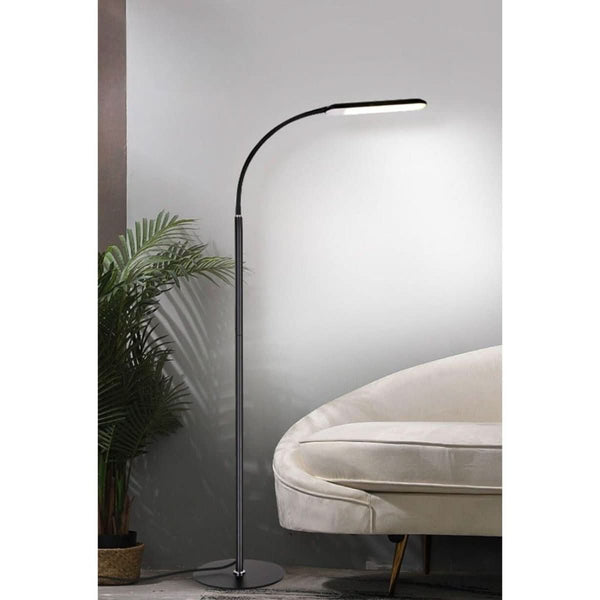
In the bedroom, a wall light at reading height and a warm light. In a hallway, a wall light directed downwards avoids glare. At the office, the Fila lamp, 180 cm, E27 socket frees the work surface; see also floor lamps. In the kitchen, compare short formats in kitchen lights.
| Room | Recommended type | Common sockets | To check |
|---|---|---|---|
| Living room | Pendant, chandelier, floor lamp | E27, E14, G9, G4, LED | Height under pendant, clearance, base stability |
| Dining room | Pendant or chandelier above the table | E27, E14, G9 | Table width and clearance above the tabletop |
| Kitchen | Short pendant or metal ceiling light | E27, LED | Clearance above the work surface |
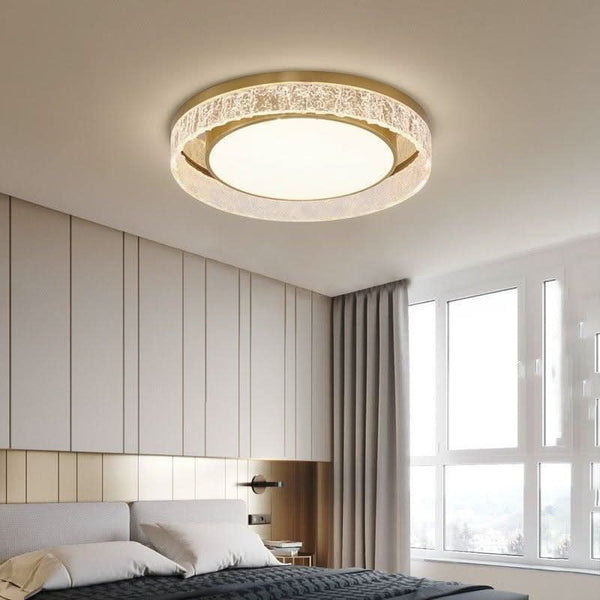
| Bedroom | Wall light, ceiling light or round chandelier | E14, E27, LED | Warm light and easy access to the bulb |
| Hallway and stairs | Directional wall light | E27, E14, LED | Passage height, cable length |
| WC | Compact ceiling light, wall light, recessed | E27, LED | Reduced format and closed diffuser |
How to choose your socket and light temperature?
E27 and E14 sockets accept interchangeable bulbs, G9 and G4 more compact bulbs, and some models have integrated LED. For atmosphere, warm white (2700 to 3500 K) warms the interior, cool white (4500 to 6500 K) lights more sharply, neutral white sits between the two.
Choosing the socket by use
E27 for pendants, ceiling lights and common wall lights; E14 for wall lights and chandeliers with small globes, like the Ario chandelier and its metal structure with four heads; G4 and G9 for slim silhouettes. Integrated LED simplifies the choice but cannot be replaced. Only 13% of models are stated as dimmer-compatible.
Choosing the light temperature
Warm white for the living room, bedroom and relaxation areas; cool white for a hallway or a workstation; neutral white for a kitchen. 40% of models are stated as warm white, 37% as cool white. For a living room entirely in LED, living room LED lighting gathers the simplest solutions.
| Socket | Bulb type | Observed temperatures | Typical use |
|---|---|---|---|
| E27 | Standard screw | Warm white, neutral, cool | Pendant, ceiling light, wall light |
| E14 | Small screw socket | Warm white, cool white | Wall light, chandelier, reduced format |
| G9 | Compact with pins | Warm white, cool white | Slim pendant with shade |
| GU10 | Pins with reflector | Warm white | Chandelier with driftwood structure |
| Integrated LED | Non-replaceable module | Warm white, cool white | Slim wall light and ceiling light |
Are industrial lights worth it?
Yes, if you are looking for useful light and a durable material. Metal ages better than many materials, E27 and E14 sockets can be replaced without changing the light and simple shapes remain readable in an interior that evolves. Everything then depends on the format and the protection rating.
It fits less well with a low ceiling in a cramped room, or with a desire for fully diffused light. On budget, stay relative: some models are entry level, others are exceptional pieces, the gap playing on material and finish. The warranty is two years on most of the selection and goes up to five years on some models. To compare, open original lights before deciding.
How to make an industrial suspended light?
You need an E27 or E14 socket, a textile or sheathed cable, a ceiling fixing and a shade or metal cage. The sensitive point remains the power supply: connection is done with the power off and is entrusted to someone who knows electricity if the circuit does not exist yet.
Gather the equipment, cut the cable to the desired length, wire the socket, fix the plate to the ceiling, then connect to the terminal block. The limit of DIY: distances, weight support and insulation remain your responsibility. A pendant ready to install, among pendants with industrial design, settles these three points in advance. For a darker look, black pendants get straight to the point.
Industrial chandelier and large industrial chandelier: how to match them?
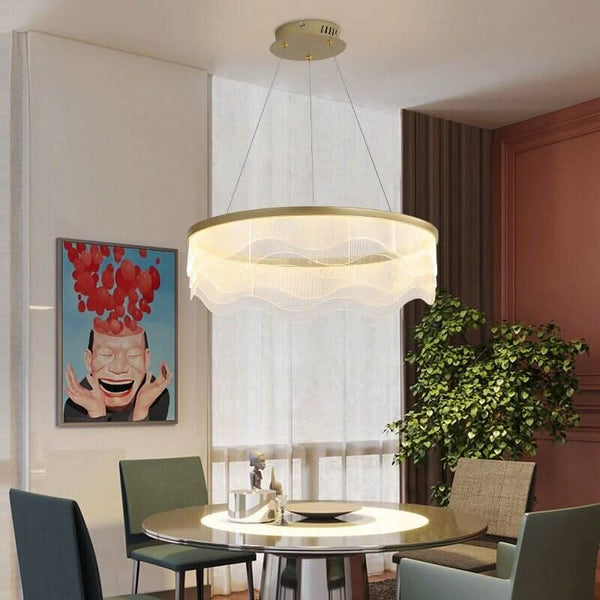
An industrial chandelier with several light points is placed in the centre of a living room or above a table. A large industrial chandelier requires height and clearance: check the stated dimensions and weight before fixing, then match the number of light points to the surface to be lit.
Chandelier or pendant: the right scale
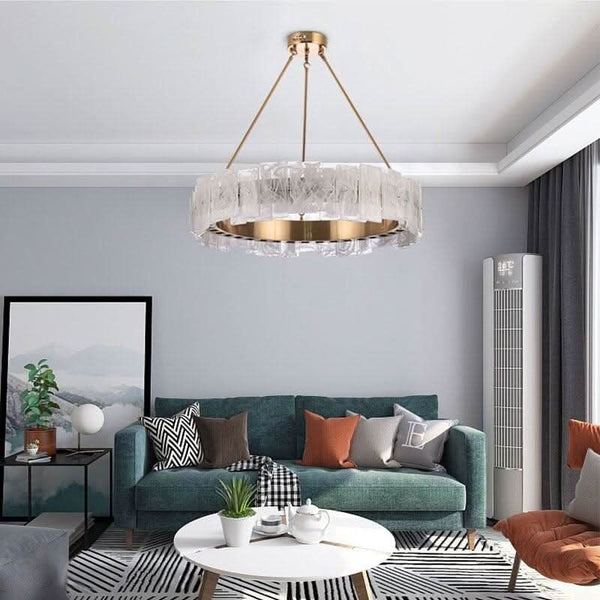
The pendant lights a zone, the chandelier lights the room. A large chandelier of 100 to 130 cm in diameter calls for a large living room or a large table. The Olen chandelier, from 108 to 120 cm, in driftwood and metal, works in GU10 and warm white.
Height and volume
Under a standard ceiling, keep at least 2.10 m of free passage under the light, and allow the chandelier to be a third to half the width of the table. These models with several sources match well with the large pieces of our luxury lighting selection.
Where to see industrial metal lighting in Lyon and how to spot clearance stock?
A lighting shop in Lyon is judged on what can be checked on site: real dimensions, material, socket and protection rating. Lighting clearance stock is interesting on end-of-line items, provided you check the wiring, socket compatibility and the presence of fixings.
What to check before buying
Measure the free height of the room and the floor footprint, then ask for the socket, protection rating and weight. An IP20 model suits dry rooms, an IP65 one suits areas exposed to water splashes, the latter representing 3% of the collection.
Lighting clearance stock Lyon: what to check
On lighting clearance stock in Lyon, check the condition of the wiring, the presence of the plate and screws, the exact reference and the availability of bulbs for the socket concerned. An end-of-line item can be a good choice if the room matches. Otherwise, everything can be browsed online at all Designix lights, with secure payment, tracked delivery, returns and customer service. For a large industrial chandelier, compare the dimensions on the product page: large metal pendants often give the same effect with less height.
Which light to install in a WC or a small hallway?
In a WC, a compact ceiling light, a wall light or a recessed spot is enough: sharp light, reduced format, nothing sticking out. The collection is mostly IP20, intended for dry rooms; for an area exposed to water splashes, choose a model whose product page states IP65.
In a hallway, a wall light directed downwards, placed at passage height, lights without glare. For a room that stands out, the Bonhomme wall light and its silhouette remains a clear choice. See also toilet lights, recessed lights for a low ceiling, and bathroom lights if the area is damp.
You have the room, the height and the socket: all that remains is to choose the model and add it to the cart. Secure payment, tracked delivery, returns, and Designix customer service for any question before purchase.
Frequently asked questions about industrial metal lighting
Are industrial lights worth it?
They are worth it for functional light and a material that remains readable over time. Metal withstands daily life, E27 and E14 sockets can be replaced without changing the light and simple shapes age less quickly. Above all, check the format, installation height and protection rating.
What materials are used in the industrial style?
Metal, often iron or aluminium, with brass and steel on some finishes. Glass, acrylic and wood complete the whole as shades, diffusers or bases. These materials explain the black, gold, white, beige, bronze and grey tones present in the collection.
How to make an industrial suspended light?
An E27 or E14 socket, a sheathed or textile cable, a ceiling fixing and a metal cage or shade are enough. All connection is done with the power off. If the installation makes you uneasy, a pendant ready to install settles distances and proper support in advance.
What type of light for a WC?
A compact ceiling light, a wall light or a recessed light, with a closed diffuser and sharp light. The collection is mostly IP20, intended for dry rooms. In an area exposed to water splashes, choose a model whose product page states IP65.
Can an industrial light be installed on a dimmer?
Not always: only some models in the collection are stated as dimmer-compatible. Check this mention on the product page, as well as the bulb type, because a non-dimmable bulb can flicker or buzz even on a correctly installed dimmer.