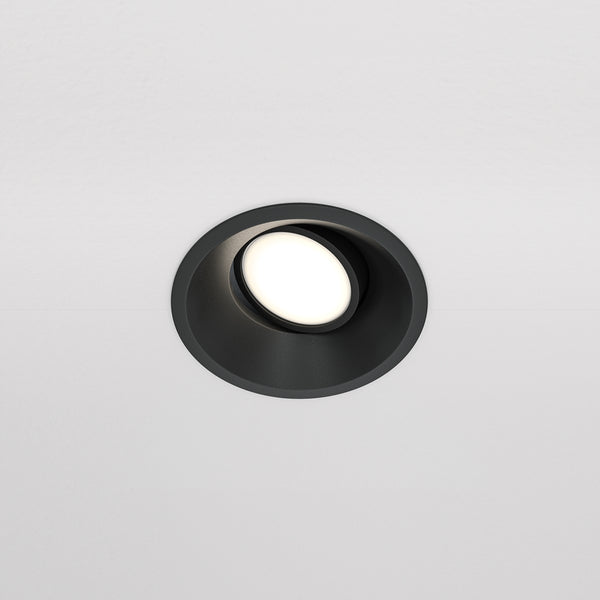
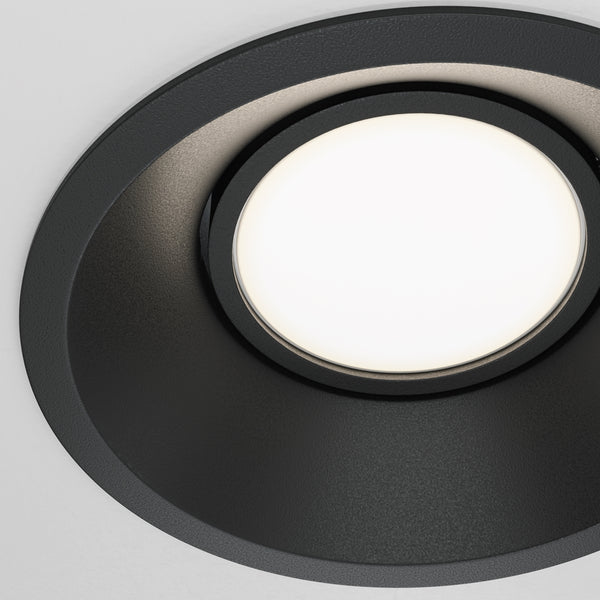
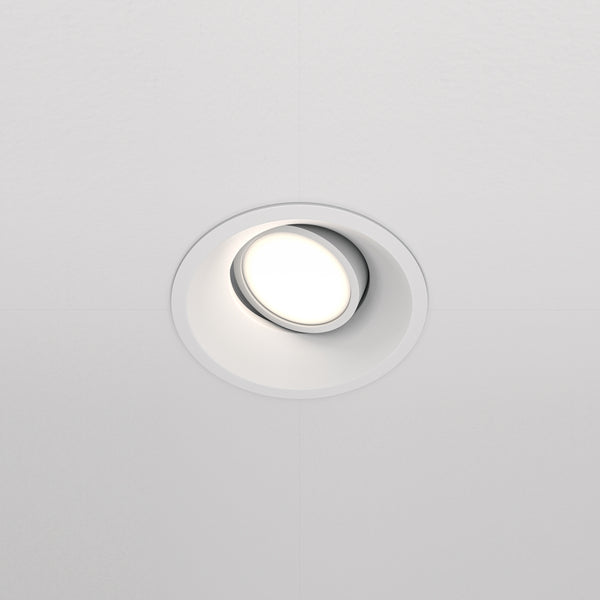
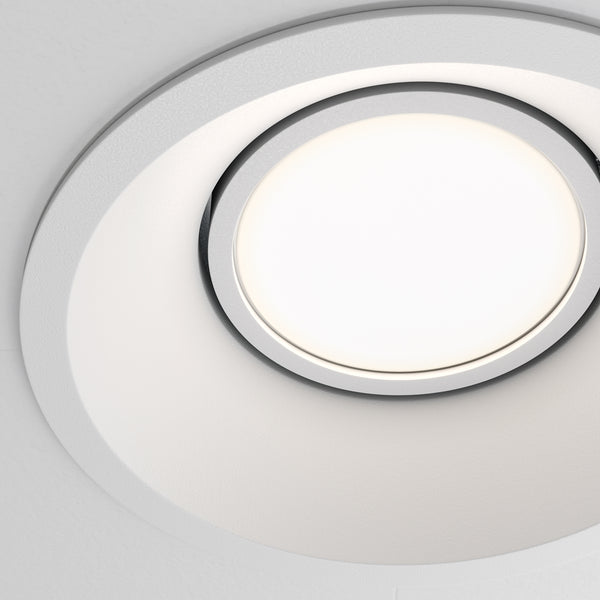
Directional spotlight
- Tracked delivery to your country Tracked delivery
- Secure payment at checkout Multiple payment methods
- 14 days to change your mind 14-day returns
- Secure payment Secure payment


Not sure of your style? Find it in 30 seconds
A few questions, and we will show you the pieces made for you.











Frequently asked questions
How do I choose the right light output?
At what height should the light be installed?
What type of bulb?
Compatible with LEDs and dimmers?
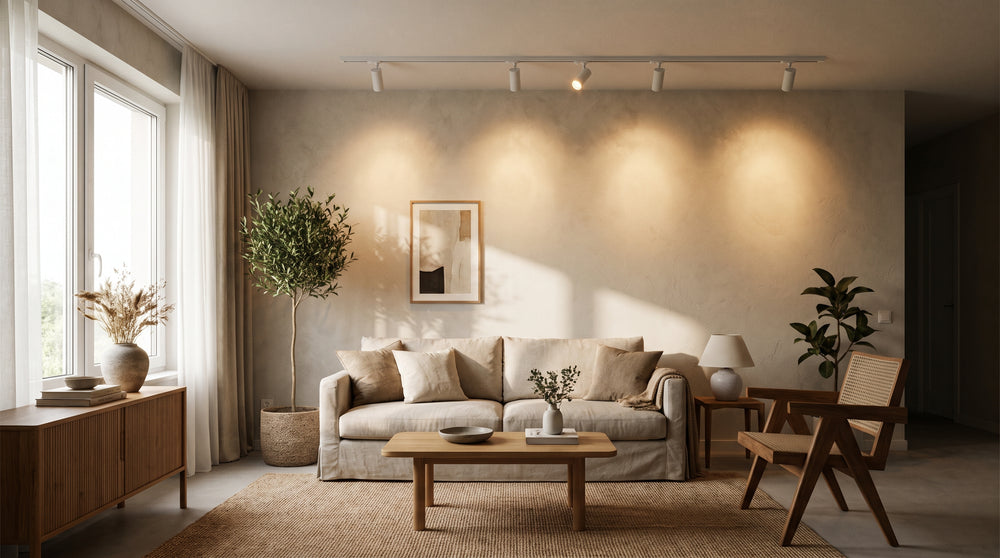
Light changes everything
From statement chandeliers to discreet wall lights, we help you choose the right brightness, height and style for every room.
- Tracked delivery
- Pay in instalments, where available
- 14 days to change your mind
- Advice & showroom in Lyon, France
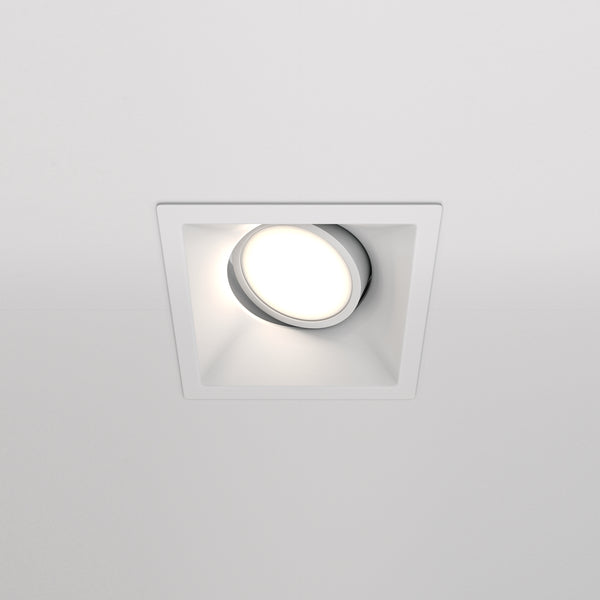
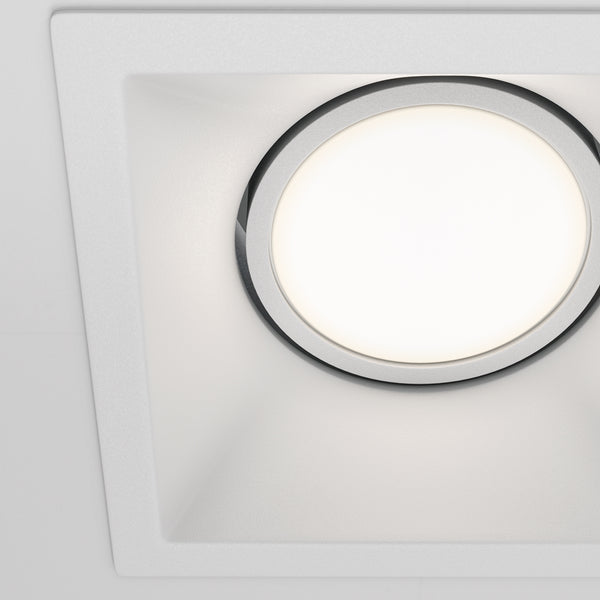
An adjustable spotlight is made for aiming: its head tilts to place light on a worktop, a wall or a picture, instead of scattering it across the ceiling. This selection brings together spotlights to fix to the ceiling or the wall, in steel, with a GU10 or E27 socket, rated IP20 for the dry rooms of the home.
- What is an adjustable spotlight?
- How should spotlights be arranged on the ceiling?
- Ceiling spotlight layout for a living room
- The different types of spotlights
- What diameter for an adjustable spotlight?
- GU10 or E27
- How do you wire an adjustable spotlight?
- Where to install an adjustable spotlight?
What is an adjustable spotlight?
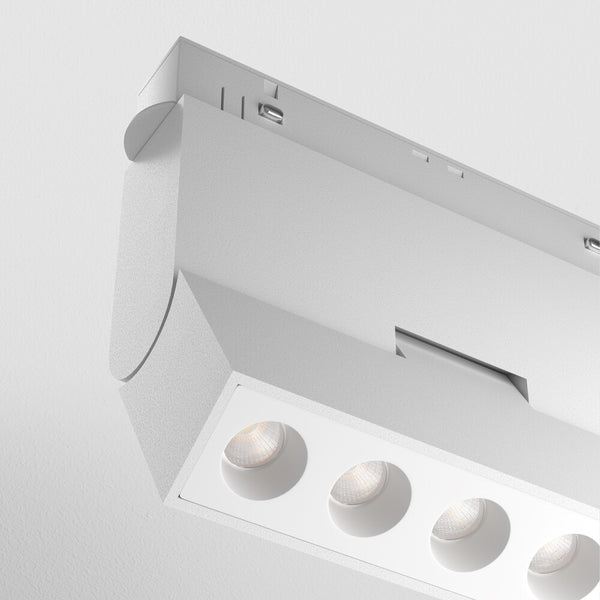
An adjustable spotlight is a light fixture whose head tilts to aim at a precise point: a worktop, a wall, a picture. In this collection, the models are fixed to the ceiling or the wall, in steel, with a GU10 or E27 socket and an IP20 protection rating, for the dry rooms of the home.
Ceiling adjustable spotlight: light comes from above
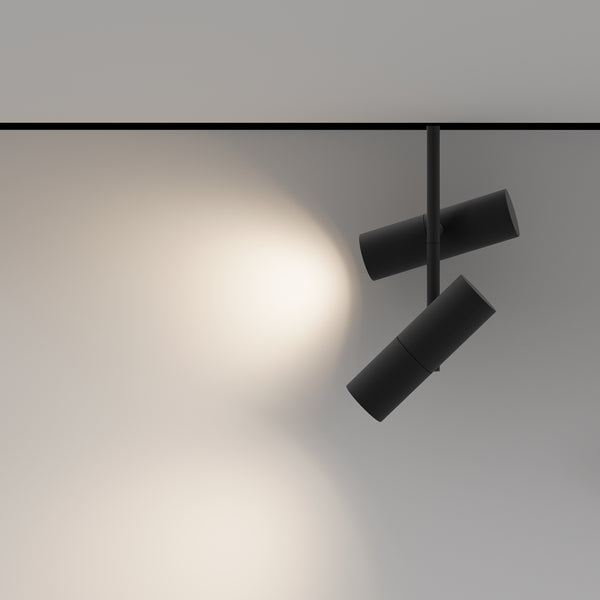
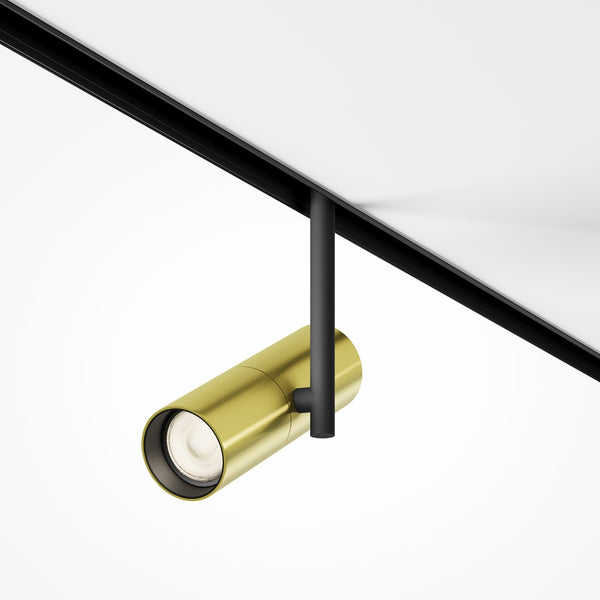
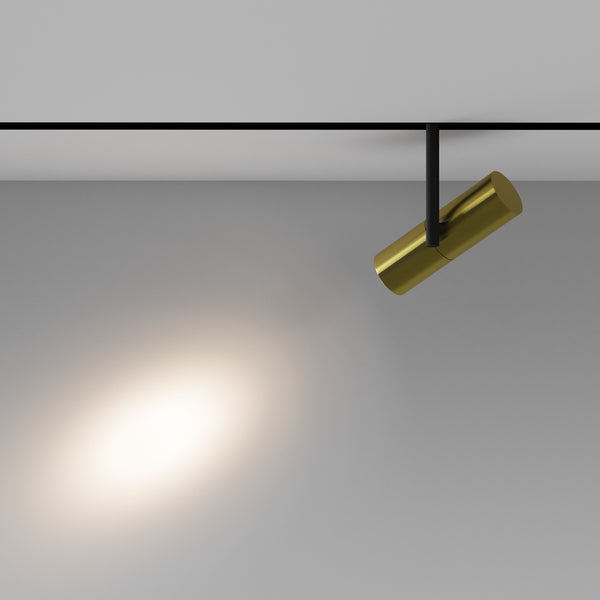
On the ceiling, the tilted head sends light towards a chosen area: a worktop, a splashback, a counter. The rest of the room keeps a soft light and the eye is not caught by a dazzling source. In steel and fitted with a GU10 socket, the Torello Spotlight in steel is adjusted by hand before tightening, to set the angle once and for all.
Wall adjustable spotlight: lighting without a ceiling light
On the wall, it replaces a ceiling light when the ceiling must not be drilled or when the room is low: it lights an entrance, a mirror, a wardrobe shelf, and the bulb stays accessible without a ladder. To build a coherent set between wall and ceiling, browse our lighting for the home, then compare with our full range of spotlights.
How should spotlights be arranged on the ceiling?
Spotlights are distributed according to what they must light, not according to the number of points available: one spotlight in front of each work area, another to clear a walkway. The layout is drawn on the room plan, then the gap between two spotlights is checked before drilling the ceiling.
Ceiling spotlight layout: where to start
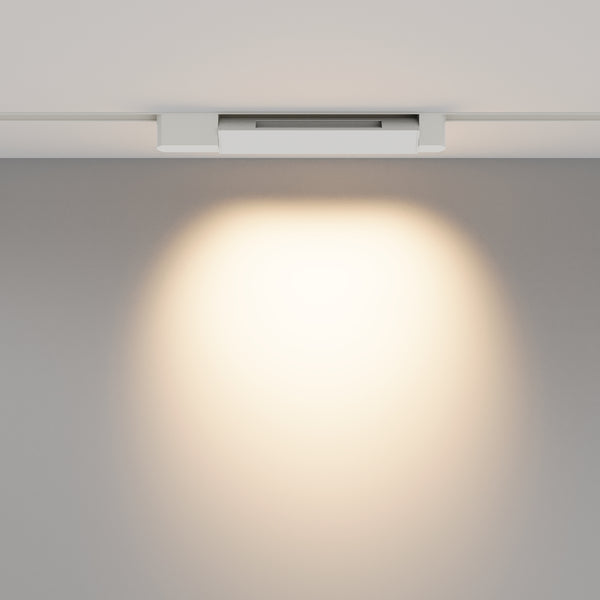
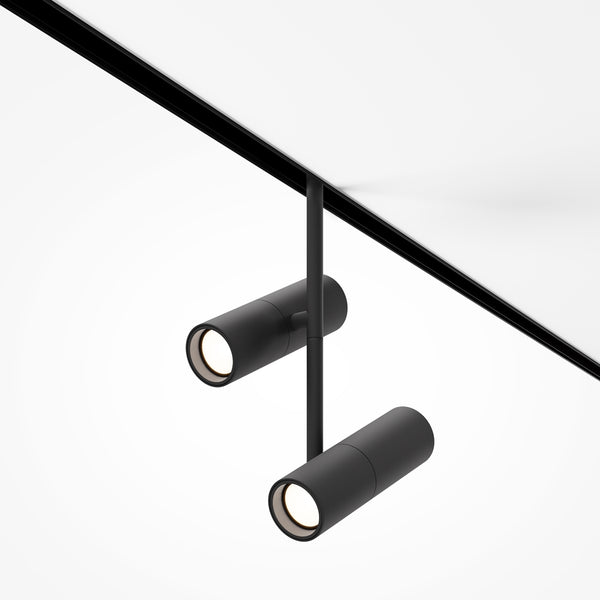
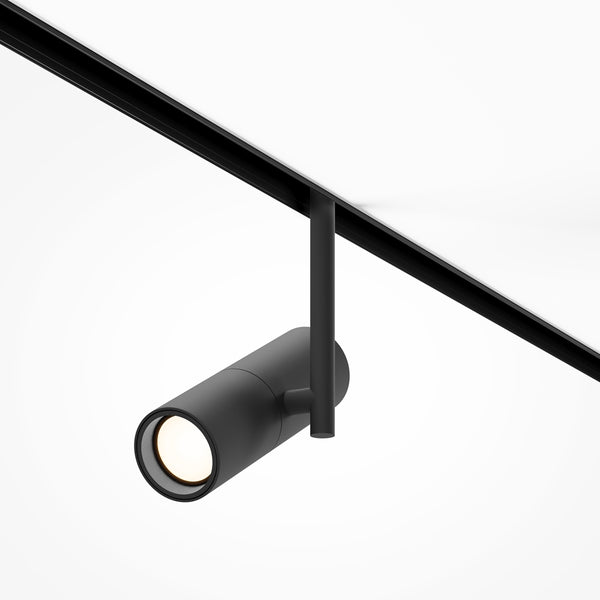
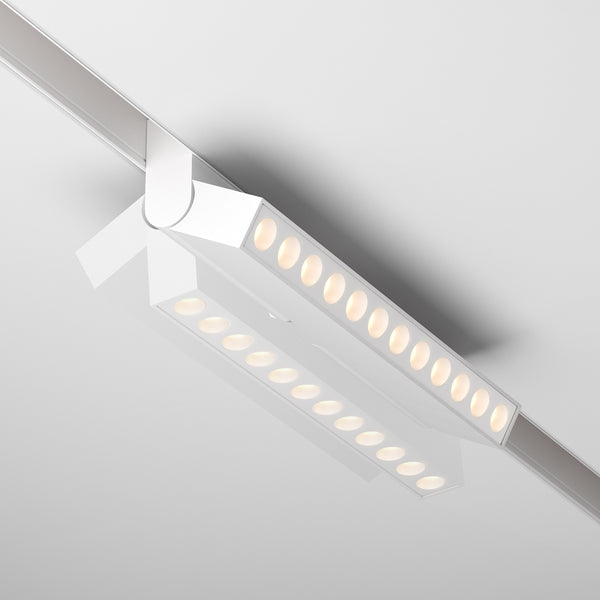
Draw the room plan and mark first what must be lit: the table, the worktop, the passage to the hallway. The points are placed on these areas, not on a regular grid chosen at random. A track with several spotlights simplifies the rest: the heads move and turn without new drilling.
Ceiling spotlight distance: what gap between two spotlights
In general, a regular gap between two points is sought, to avoid light holes and overly marked zones. The wider the gap, the broader the beam must be, otherwise the floor is covered in round patches. On a ceiling to be finished, recessed models give a flat surface, with no visible housing.
Living room ceiling spotlight layout: how to light a living room?
In a living room, spotlights are placed around the perimeter, along the walls, rather than in the centre: the light grazes the surfaces and the sofa stays comfortable. The adjustable spotlight is then used to aim at a picture, a bookcase or a reading corner, in black or gold depending on the ceiling.
Modern living room ceiling spotlight: which finish to choose
On a white ceiling, a colour close to the surface goes unnoticed and only the light remains visible. On a beam, concrete or dark ceiling, tinted steel asserts the line and becomes a decorative detail: black spotlights stand out less than a white that clashes. Also take the wall colour into account, since the tilted head directs the eye towards the surface.
Living room adjustable spotlight: lighting a wall rather than the floor
Instead of washing the floor, tilt the heads towards the wall: a lit wall enlarges the room and highlights a frame, a bookcase or a curtain. This is the gesture that changes the mood of a spotlight for the living room. The same principle works in a bedroom, in a softer version, with bedroom spotlights at moderate intensity.
What are the different types of spotlights?
A spotlight is chosen first by how it is mounted: recessed in the ceiling, as a wall light, on a track or surface-mounted. Then by its head, fixed or adjustable. This collection gathers adjustable spotlights to be mounted on the ceiling or the wall, designed for dry rooms.
Recessed adjustable spotlight: what it changes
Recessed, the fixture disappears into the ceiling and only the light remains. Marking out must be right before cutting, because a badly placed hole cannot be fixed. Recessed LED spotlights suit new ceilings or suspended ceilings, while a surface-mounted model is fitted on a solid support, with no cutting.
Adjustable or fixed spotlight: which to choose
An adjustable head lets you set the angle after installation, which forgives an approximate layout and allows the beam to be moved from one piece of furniture to another. A fixed head is only justified for uniform lighting. Compare adjustable spotlights before making your choice, the flexibility is mostly paid for in adjustments.
What is the diameter of an adjustable spotlight?
The diameter depends on the model: the Horta Spotlight comes as a compact format of around 6 cm, the Net Spotlight as a wider format, around 13 or 14 cm, two sizes that do not take up the same space on the ceiling. A small diameter slips into a narrow hallway, a wider format structures a living room ceiling. These values are orders of magnitude: the product sheet gives the exact dimensions.
A compact format, also called an extra-flat spotlight, goes unnoticed on a low ceiling and can be repeated without overloading the surface. A more generous diameter stands out and requires clean alignment, otherwise the line reads poorly. In the same room, keep a single format to avoid mixing sizes.
| Model | Socket | Maximum power | Material | Colour |
|---|---|---|---|---|
| Net Spotlight | E27 | 1 x 15 W | steel and plastic | black, green, gold |
| Torello Spotlight | GU10 | 1 x 5 W | steel | gold, black |
| Horta Spotlight | GU10 | 1 x 5 W | steel and plastic | black |
For a narrow passage, the compact format of the Horta Spotlight, compact format limits the bulk. For a main room, the Net Spotlight with E27 socket opens up the choice of bulbs, including LED spotlights and low-consumption bulbs.
GU10 or E27: which socket to choose?
The GU10 socket is the most represented here: it fits the Torello Spotlight and the Horta Spotlight, for a maximum power of 1 x 5 W. The Net Spotlight takes an E27 bulb, up to 1 x 15 W. The choice therefore comes down mainly to the bulb you want to reuse.
GU10 is a compact, recessed format, common for a narrow beam directed at a worktop. E27 accepts more bulb models, including longer shapes, which helps when you want to harmonise the lighting of a room. Find spotlights with a GU10 socket on one side, and what you need to dim the intensity in the evening on the other, with a compatible bulb.
How do you wire an adjustable spotlight?
The wiring depends on the model: a spotlight designed for the room's mains supply is connected directly, and a transformer is only justified if the fixture or the bulb requires one. In all cases, live, neutral and earth are identified before any power is switched on.
Wiring spotlights in series or in parallel: what you need to know
Parallel wiring is the usual solution: each point receives the same voltage and works independently of the others. In series, a failure cuts the whole circuit. The power is switched off at the breaker, the conductors are identified, then the instructions supplied with the fixture are followed before switching the power back on.
How to tell if a spotlight needs a transformer
The fixture sheet and the bulb type settle it: a spotlight stated for the room's mains supply needs none. If the model comes with a housing or a specific supply voltage, that housing remains necessary and is connected as indicated. If in doubt, the wording on the housing or the instructions is the reference.
Where to install an adjustable spotlight in the home?
The models in this collection are rated IP20: they are intended for dry rooms, kitchen, hallway, living room, entrance or wardrobe. In a bathroom or outdoors, where moisture is present, a higher protection is required, such as the spotlights designed for those rooms.
Kitchen adjustable spotlight: lighting the worktop
In the kitchen, the main use remains the worktop and the splashback: you see what you are cutting, without casting a shadow on your hand. One spotlight per useful area, aimed at the worktop, is better than a single light in the centre of the room. See lighting a kitchen to position the points above the worktop and the sink.
Bathroom spotlight: why IP20 is not enough
In a wet room, the protection rating matters more than the style. The usual reference in a bathroom rises to around IP44, and up to IP65 near a shower or a bath, depending on the distance from water. An IP20 spotlight has no place there: turn to a wet room such as the bathroom, and to outdoor lighting for a facade or a terrace.
| Room | What is lit | Recommended mounting | To avoid |
|---|---|---|---|
| Kitchen | worktop, splashback | ceiling spotlight aimed at the worktop | lighting only the centre of the room |
| Hallway | walkway, end of the hallway | spotlights aligned along the axis, small format | multiplying points in a narrow passage |
| Living room | wall, picture, reading corner | spotlights around the perimeter, head tilted towards the wall | directing all spotlights at the floor |
| Entrance | furniture, mirror, access | ceiling or wall spotlight aimed at the furniture | leaving the entrance in shadow |
| Wardrobe | hanging rail, shelves | spotlight tilted towards the clothes or shelves | lighting only the floor |
Once the socket and the format are settled, all that is left is to install. Designix provides secure payment, tracked delivery, returns and a customer service team reachable for wiring questions. Find the three models highlighted in our selection, and more broadly spotlights with a clean design to complete a ceiling, or the whole Designix catalogue to equip the rest of the home. In use, the spotlight head pivots through 360 degrees and tilts to aim at a wall or a worktop, and the colour temperature is chosen according to the mood: around 2700 to 3000 K for a warm interior, 4000 K to light a worktop. These details appear on each product sheet.
Frequently asked questions about the adjustable spotlight
Is a recessed spotlight cover mandatory?
The cover depends on the fixture: some recessed spotlights include one, others do not. It is not justified everywhere and its usefulness varies with the model and the support. Always check what the spotlight sheet provides before adding an accessory, otherwise you buy a useless part.
Do you need a transformer for an LED spotlight?
Not systematically. An LED spotlight designed for the room's mains supply is connected directly, without a transformer. The device is only necessary if the fixture or the bulb requires one, which is stated on the product sheet or on the housing.
How do you wire a 220 V LED spotlight without a transformer?
A spotlight designed for the room's mains supply is connected directly: switch off the power, identify live, neutral and earth, then connect according to the supplied diagram. The connection is made with the power off, and the final check before switching the power back on.
Is it better to wire spotlights in series or in parallel?
Parallel wiring is the usual solution for spotlights: each point receives the same voltage and works independently of the others. In series, a failure cuts the whole circuit. In practice, the fixture instructions are followed and the conductor identification is respected.
Do LEDs consume a lot of electricity?
An LED adjustable spotlight consumes little compared with the light it gives. In this collection, the stated powers range from 1 x 5 W to 1 x 15 W maximum depending on the model. Actual consumption then depends on the bulb you install in the GU10 or E27 socket.