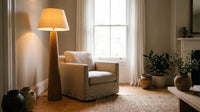
Motion sensor wall lights
- Tracked delivery to your country Tracked delivery
- Secure payment at checkout Multiple payment methods
- 14 days to change your mind 14-day returns
- Secure payment Secure payment


Not sure of your style? Find it in 30 seconds
A few questions, and we will show you the pieces made for you.








Frequently asked questions
How do I choose the right product?
What are the delivery times?
Can I return an item?
Can I pay in instalments?
An interior that reflects who you are
Carefully selected pieces, shipped from our warehouses. Our team advises you before you buy, so you choose with confidence.
- Tracked delivery
- Pay in instalments, where available
- 14 days to change your mind
- Advice & showroom in Lyon, France
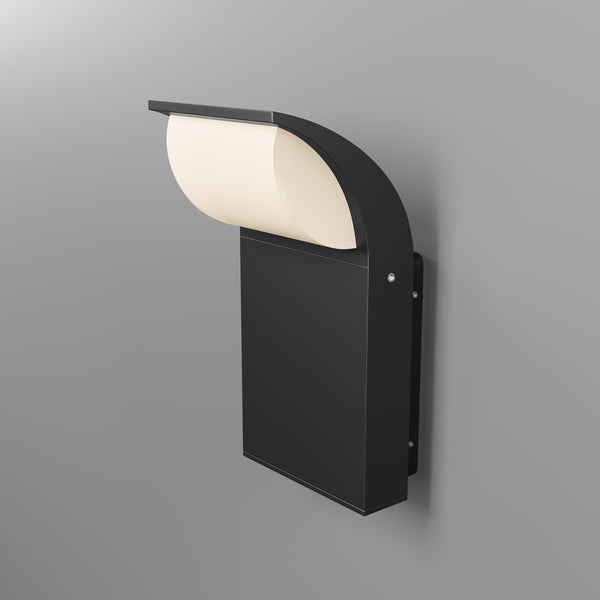
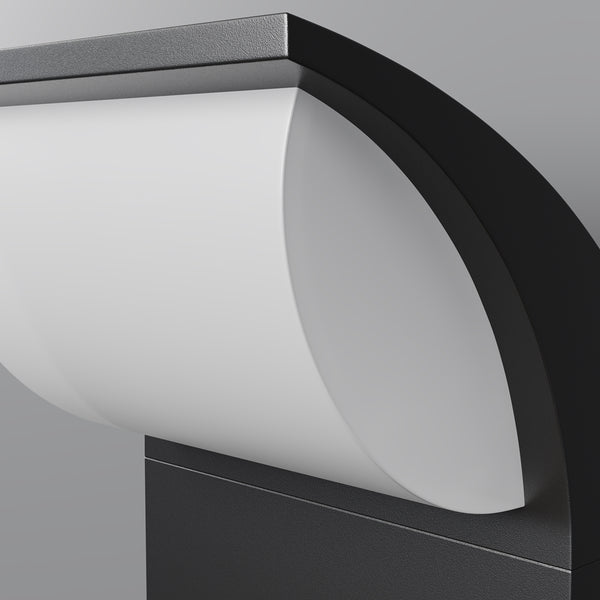
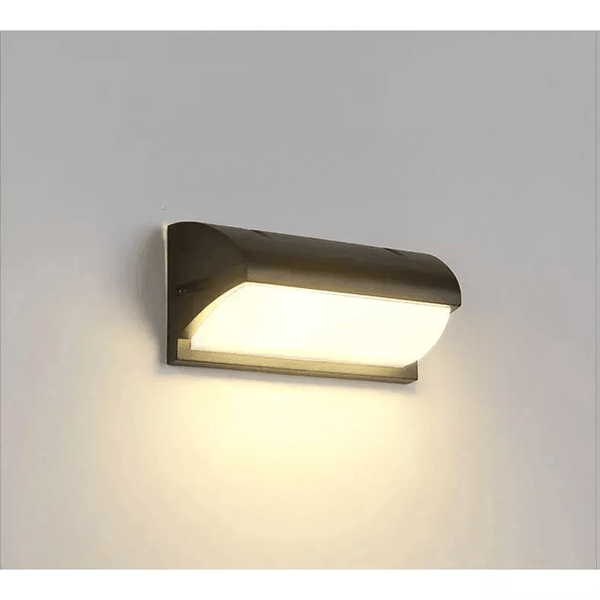
Allow one wall light per crossing point: entrance, stair landing, terrace, facade or bathroom. A motion sensor wall light switches on by itself as you pass, with integrated LED, GU10 or E27, and an IP44, IP54 or IP65 rating chosen according to how exposed the wall is.
What is a motion sensor wall light?
A motion sensor wall light is a wall-mounted fixture that switches on automatically when someone passes through its detection field. The selection brings together models for outdoors, the entrance, the terrace and the bathroom, with integrated LED, GU10 or E27, and IP44, IP54 and IP65 protection ratings. To place this type of fixture within a complete installation, browse our full range of lighting.
Motion sensor wall light: how does it work?
A sensor housed in the body of the fixture detects movement and triggers the light, then switches it off after a delay. On the models in the selection, the detection head is adjustable on several references, so you can aim it at the top of the steps or the edge of the terrace. Some models also accept a dimmer: see the dimmable models if you want to adjust the brightness.
Outdoor motion sensor wall light: what is it used for?
It is mainly used where you arrive with your hands full: facade, gate, terrace, shed. The aluminium or metal body, the glass or acrylic diffuser and the IP rating determine how well it holds up outside. The catalogue of outdoor motion sensor wall lights covers these uses, and the general lighting guide helps you place each family.
Where to install a motion sensor wall light in the home?
It goes where you arrive in the dark or with your hands full: entrance, hallway, staircase, terrace, facade and bathroom. The IP rating follows the location more than the style. A sheltered entrance, a hallway or a bathroom are fine with IP44; a facade exposed to rain needs IP65; an area under a canopy, IP54.
Indoor motion sensor wall light: entrance, hallway, staircase
Indoors, the sensor saves you hunting for the switch. On a staircase, it lights the top of the steps without staying on permanently: the collection dedicated to staircase lighting gives installation guidelines, and the selection for hallways covers narrow passages. For a wet room, see the bathroom.
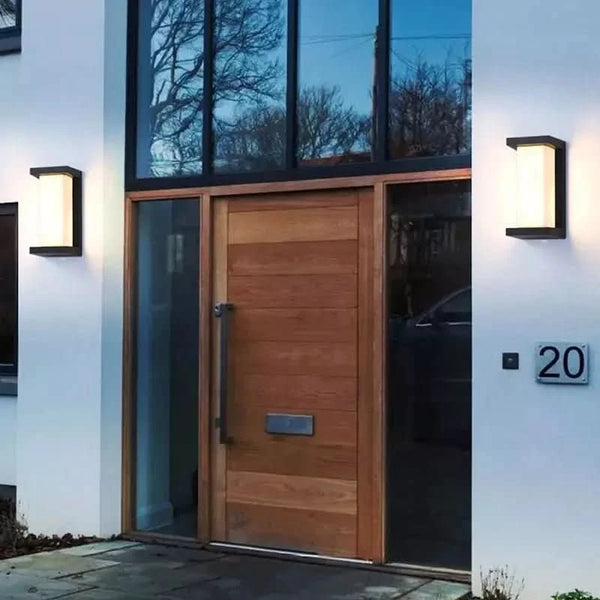
Outdoor motion sensor wall light: facade, terrace, under a canopy
Outside, the same logic applies with the added constraint of water and dust. A covered terrace tolerates an IP54 such as Cubix or Lapidus. A facade fully exposed to wind calls for IP65: Astrum, Noctivis, Nerva, SecuriLuxe, SensorLux, Sensoria, VisionLumiere, LumiGuard or Sentinel. The modern outdoor style gathers the most current designs.
Which IP protection rating should you choose for an outdoor wall light?
The IP rating indicates resistance to dust and water. For an exposed facade, IP65 is the safest; IP44 is enough for a sheltered entrance or a bathroom; IP54 suits a semi-sheltered area. Always check the actual location before choosing, because that is what decides.
| Location | Rating | Models in the selection | What it means |
|---|---|---|---|
| Sheltered entrance, bathroom | IP44 | Sensora, Cylindor, Captor | Protection against water spray |
| Semi-sheltered area | IP54 | Cubix, Lapidus | Dust and splashes, to be fitted under a canopy |
| Facade exposed to rain | IP65 | Astrum, Noctivis, Nerva, SecuriLuxe, SensorLux, Sensoria, VisionLumiere, LumiGuard, Sentinel | Dust and water jets, suitable for outdoors |
IP65 or IP44: which one for an entrance exposed to rain?
If rain can hit the fixture head-on or at an angle, choose IP65. The catalogue of waterproof outdoor wall lights gathers these references. An IP44 remains relevant under a deep porch, where water does not reach the unit.
Waterproof outdoor wall light: what does IP54 or IP65 really mean?
The first digit concerns solids, the second liquids. IP54 covers dust and splashes; IP65 goes as far as water jets. Neither rating replaces a correct installation: seals in place, cable sloping downwards, protected junction box.
How to choose between integrated LED, GU10 and E27 on a sensor wall light?
Integrated LED cannot be replaced and keeps a consistent output; GU10, adjustable, is easy to change; E27 accepts a wide range of bulbs. In the selection, LED dominates, GU10 and E27 complete the range, and one solar model runs on G4. The choice mainly depends on whether you want to change the bulb one day.
| Base | Share of the selection | Models | Advantage |
|---|---|---|---|
| Integrated LED | Majority | Astrum, Cubix, Lapidus, Sensoria, LumiGuard, Sentinel | No bulb replacement |
| GU10 | Minority | Sensora, Cylindor, Captor | Adjustable and replaceable bulb |
| E27 | Minority | Noctivis, Nerva, Tesvesessa | Bulbs in various shapes and wattages |
| G4 | Very rare | Eior | Compact format for a solar wall light |
Wireless motion sensor wall light: what options are there?
The self-contained option in the selection is solar: Eior, solar wall light with integrated panel, with a G4 base and IP65. It is fitted where the facade receives daylight. Other options are gathered in the self-contained solar versions.
Can you change the bulb on a sensor wall light?
Yes on GU10 and E27 models, no on integrated LED. If you want to be able to change the mood or the output later, look at the E27 wall lights, for example Noctivis in cylindrical glass. For a facade that demands LED, SensorLux IP65 18 W and VisionLumiere square LED offer the three shades of white. See the selection of LED sensor models.
Which light to choose: warm white, neutral white or cool white?
Warm white (2700-3500K) warms up an entrance or a terrace; neutral white (3500-4500K) stays balanced for a passage; cool white (4500-6500K) gives a sharper look on a facade or a circulation area. Several models offer all three temperatures, others just one: check each product page.
Which colour temperature for an entrance in the evening?
Warm white is the most comfortable when you come home: it lights without glaring. It is the most common shade in the selection, carried by Astrum, Sensora, Cubix, Cylindor, Lapidus and Eior. To extend this mood indoors, the living room and the bedroom follow the same logic.
Cool white or warm white for a facade?
On a facade, cool white makes reliefs and faces more readable, useful for a gate or a passage area. SecuriLuxe, SensorLux, Sensoria, VisionLumiere, LumiGuard and Sentinel cover this shade, often with warm white and neutral white as a complement. Conversely, warm white softens a terrace where you settle in.
Which materials and shapes to match the wall light to the facade?
The selection combines aluminium, metal, glass, acrylic and plastic, in square, tube, arc, round or cage shapes. Black dominates, with white, transparent, gold or grey versions. Choose the shape according to the style of the facade and the material according to exposure: aluminium and glass age better outdoors.
1930s art deco wall lights: how to adapt a sensor wall light?
Art nouveau wall lights: how to match a sensor wall light?
The selection is contemporary, but a strict geometry sits well with an art deco spirit. A square, cage or tube model, in black or gold and black metal, fits in without pastiche. For old art deco wall lights, replace the piece with a current design and keep the match through the finish: see how to pair gold and black.
Wooden wall lights: what alternatives are there in the selection?
Wood does not feature here: the models are in aluminium, metal, glass, acrylic or plastic. To bring back the warmth of wood, play with warm white, a cage shape or a gold and black frame, rather than an imitation. The black metal finishes give that understated, durable look.
How to install and adjust a motion sensor wall light?
Fix the wall light at a height where the sensor sees the approach without being hidden by a canopy or a hedge. Aim the head towards the passage area, set the range and the delay according to use, then check the detection field by walking in front of it, by day and by night. A real test beats the manual.
At what height should a sensor wall light be fitted?
Generally, it is fitted at shoulder height or slightly above, between 1.80 and 2.20 m, so the sensor sweeps the passage area without being hidden. Under a canopy, go lower rather than higher. Actual dimensions vary: 26 x 13 x 10 cm for SensorLux, 23 cm high for Sensora.
How to avoid unwanted triggering?
Keep the head away from a branch, a hedge or a moving car, the classic sources of triggering. Do not aim it at the street or a neighbouring passage. Lower the sensitivity if the setting exists, and check after a few nights. A well-aimed model triggers on approach, not at random.
How to care for an outdoor wall light and make its sensor last?
Clean the glass or diffuser with a soft, non-abrasive cloth, dust the sensor lens and check the seals after spells of rain. The selection includes models with a 2-year warranty and others with a 5-year warranty, to be checked product by product. No aggressive chemicals on the acrylic or the lens.
What should you do to keep a sensor reliable?
A sensor covered in dust or insects loses accuracy: a wipe with a dry cloth is enough. Check the tightness of the screws and the condition of the seal once a year, before winter. For the families concerned, the waterproof catalogue and all our lighting families give the range guidelines.
What warranty for an outdoor wall light?
Part of the selection has a 5-year warranty, the rest 2 years. The material alone never decides: look at the product page of the model you want. On this point, an aluminium or metal housing and glass rather than plastic are good indicators of durability over time.
Reassurance: secure payment, tracked delivery, returns, Designix customer service.
Discover the outdoor motion sensor wall lights: you will find the models mentioned, from the recessed square to the glass cylinder.
Frequently asked questions about motion sensor wall lights
Living room wall lights: how to integrate a motion sensor?
In a living room, detection is mainly useful for a passage or an adjoining entrance. As this selection is mostly for outdoors, keep detection for the entrance, the hallway or the terrace, and choose an IP44 for sheltered rooms. See the LED wall lights for living rooms.
Adult bedroom wall lights: does a sensor wall light have a place?
It can serve as a night light on the way to a hallway or an adjoining bathroom. In that case, favour a discreet model, in warm white, and check the material and IP rating according to the location. The LED wall lights for bedrooms give style ideas.
High-end designer wall lights: which criteria should you look at?
Look at the material (aluminium, metal, glass), the shape, the finish and the colour temperature. An IP65 model in aluminium or glass, with integrated LED or GU10, suits a demanding facade. The 5-year warranty, available on part of the selection, is a good indicator of durability.
Staircase wall lights: which model should you install?
An indoor or sheltered staircase is fine with an IP44 or IP54, such as Sensora, Cylindor, Captor or Cubix. For a stairwell open to the outside, an IP65 is safer. Choose a model whose detection aims at the top of the steps without being hidden: see the designer wall lights for staircases.
Solar motion sensor wall light: how does it work?
The solar model in the selection, Eior solar with integrated panel, combines a panel, a G4 LED and a warm white temperature. It is fitted where the facade receives daylight, with no dedicated wiring. Check the exposure and the IP65 rating before installation.