Teen bedroom lighting: light that grows with them
This article is also available in French: Éclairage chambre ado
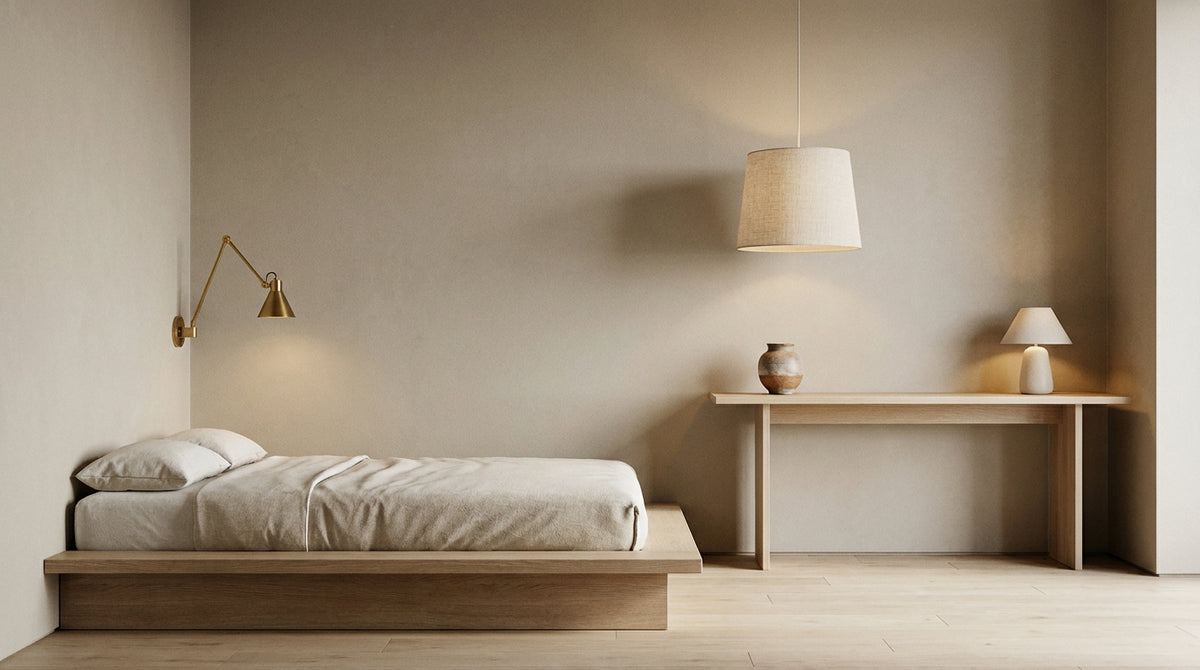
Aim for 200 lumens per square metre for general light, then 400 to 500 lumens directed onto the desk. A 12 m² bedroom therefore works with a dimmable 2,400 lumen ceiling light, a desk lamp and a source near the bed. Three sources, three uses, one room.
How many lumens for a teen bedroom?
Aim for 200 lumens per square metre for general light, and 400 to 500 lumens on the work surface. A dimmable 2,400 lumen ceiling light, chosen from our bedroom ceiling lights, covers a 12 m² room without glare. Distribution matters more than the total: a single very powerful point flattens the room.
How many lumens to light a desk in the evening?
Aim for 400 to 500 lumens concentrated on the notebooks, not 2,000 lumens spread around the room. A teenager working after 7 pm looks at a screen and paper: the source comes from the side, never behind them or facing them.
- Directed flux: a deep shade or an adjustable head, not a globe that lights the neighbouring wall
- 4000 K for homework, a neutral white that does not yellow the pages
- Dimming to go low when the desk becomes a gaming corner again
The per-surface calculation is detailed in how many lumens for a bedroom.
How many watts for a bedroom: the question to forget
Watts measure consumption, not the light received. An 8 W LED gives as much light as a 60 W halogen. Look for lumens on the packaging, then the base (E27, E14, G9) and the colour temperature: that trio decides the result, not the stated power.
Which ceiling light or pendant for a teen bedroom?
A 2,400 to 3,000 lumen LED ceiling light covers 10 to 14 m². A pendant takes over when the light point needs to come down: above an offset desk, a reading corner, or to mark the centre. In both cases, the source must be able to dim.
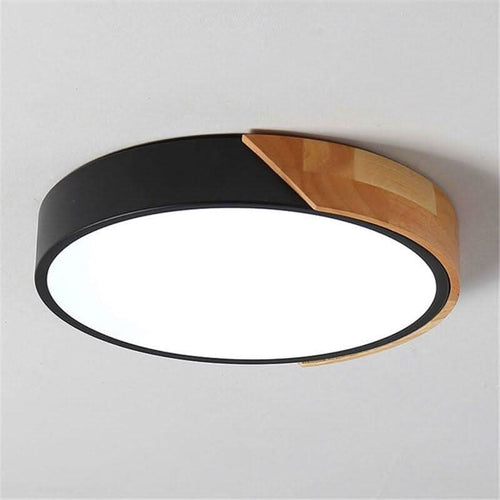
Teen bedroom LED ceiling light: the central point that adjusts
A ceiling light holds the room without crushing it, provided it can vary. 2700 K at rest, 4000 K for homework, a dimmer that really goes low.
- Diameter suited to the room: a large model overwhelms a 10 m² bedroom
- IP20 rating is enough in a bedroom, no need for sealing
- 6500 K to avoid: cold blue light gives a classroom feel
Dimmable LED ceiling lights settle this point without any work.
Which pendant for a bedroom?
A pendant hangs low and should be chosen light: 2.10 m from the floor at its lowest point to move around, 60 to 70 cm above a work surface. A deep shade directs the flux, a pale shade diffuses it. That is what separates a task pendant from a designer light fitting for atmosphere.
Teen girl's bedroom, teen boy's bedroom: the same method?
Yes. Mounting heights, Kelvin and circuits do not change. What changes is the shade material, the colour and the type of atmosphere. A teen girl's bedroom and a teen boy's bedroom are designed with the same reference points; the trendy bedroom light fitting is only a layer on top.
The light selection for a teen bedroom
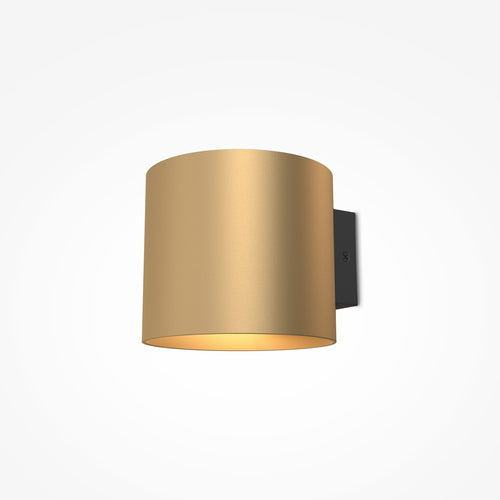
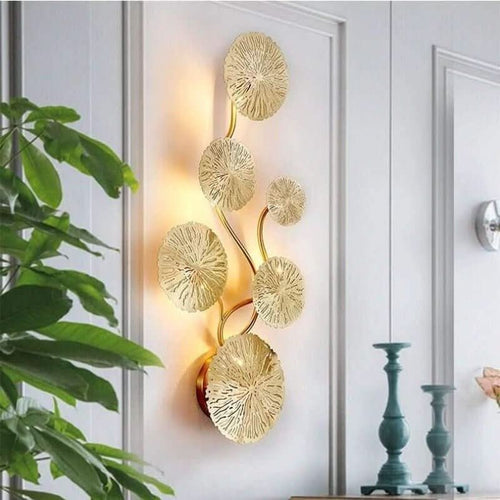
 Wall light | Radiana
 Wall light | Kena
 Wall light | Aide
 Wall light | Pictor
 Wall light | Oliviero
 Wall light | Hilora
See the whole selection: Bedroom wall light, Lighting and Bedroom Wall Lamp
How to light the desk and the bed without one ruining the other?
Separate the circuits: the ceiling for general light, the desk on an adjustable source, the bed on a wall light or a bedside lamp. Three controls, three intensities. Separation is what settles the conflict between working and sleeping, not power.
How to light a teenager's desk without reflection?
Place the light on the side of the hand that is not writing, and never in front of the screen. An articulated-arm lamp comes down to 40 cm from the work surface and points at the notebooks, not at the face.
4000 K keeps lines crisp; a white that is too warm yellows the pages and lowers contrast on printed text. The choice of base and flux then follows from which bulb for a bedroom.
Headboard wall light or bedside lamp?
The wall light frees the shelf and goes at 1.20 m from the floor. The bedside lamp moves and changes as moods do. The two coexist very well: wall light for reading, lamp for atmosphere.
| Criterion | Headboard wall light | Bedside lamp |
|---|---|---|
| Shelf | Freed | Occupied |
| Mounting | Fixed, 1.20 m from the floor | Placed, movable |
| Reading | Adjustable arm | Opaque shade on the bed side |
From a survey of 201 bedroom wall lights in our catalogue as of 19 November 2026, 74% state metal, 40% an E27 base, 27% glass and 96% an IP20 rating; on the listings that state the information, 35% offer dimming. Metal dominates, dimming remains the exception: ask for it. Headboard wall lights are chosen for the reach of the arm, not for the finish alone, and the height of a bed wall light is set to the centimetre.
For a bedside lamp, prefer an opaque shade on the wall side: the light stays on the book instead of flooding the room.
Which light for sleeping?
2700 K, under 100 lumens, and nothing pointing towards the pillow. Cold light delays falling asleep; the body needs a warm, low signal in the hour before bedtime. The detail is in which light for sleeping.
If you are redoing the whole room, a bedroom and desk lighting project is validated before the work, not after. And if the heights still make you hesitate, the team can review your plan before you order: simply write to us via the contact page.
What is the weak point of the bedroom today?
Where to put LEDs in a teen bedroom, and how to pay a fair price?
Behind the desk, under the shelf, along the headboard: three useful places, one principle. A strip goes where it lights a work surface or draws a line. Not across a whole wall to add colour. And it is chosen in lumens, not in metres.
How to put LEDs in a bedroom without drilling?
- Adhesive strip on a clean, smooth painted wall, never on textured wallpaper
- Glued profile under a shelf or desk, cable run in a trunking
- Floor-standing or rechargeable bar when no socket is free
Bedroom LED bars stand on a base or stick on, without touching the wall. On rechargeable models, battery life decides the real use. Buyer feedback can be read on the Designix Google listing.
Bedroom LED price: what really makes up the bill
Four items make up the price: the profile material (aluminium or PVC), the length, the base and socket of the light fitting that hosts it, and whether a dimmer is included. An adhesive strip costs less than a bar with a remote transformer. Dimming adds a driver, not LEDs. The same logic applies to light fittings: what makes the price of a designer lamp comes down to material and finish. To price a whole room, simply talk to us about your lighting project.
In stock · shipping costs shown at checkout · up to 30% off in your cart
Ready to turn inspiration into reality?
Tell us about your room, your style and your budget, and we will show you the pieces that truly suit your project.
Get guidance in 30 seconds →