
E14 LED Bulb, Warm White, Cool White, Powerful
This selection is also available in our French store: Ampoule LED E14






- Tracked delivery to your country Tracked delivery
- Secure payment at checkout Multiple payment methods
- 14 days to change your mind 14-day returns
- Secure payment Secure payment
Not sure of your style? Find it in 30 seconds
A few questions, and we will show you the pieces made for you.
Frequently asked questions
How do I choose the right product?
What are the delivery times?
Can I return an item?
Can I pay in instalments?
An interior that reflects who you are
Carefully selected pieces, shipped from our warehouses. Our team advises you before you buy, so you choose with confidence.
- Tracked delivery
- Pay in instalments, where available
- 14 days to change your mind
- Advice & showroom in Lyon, France
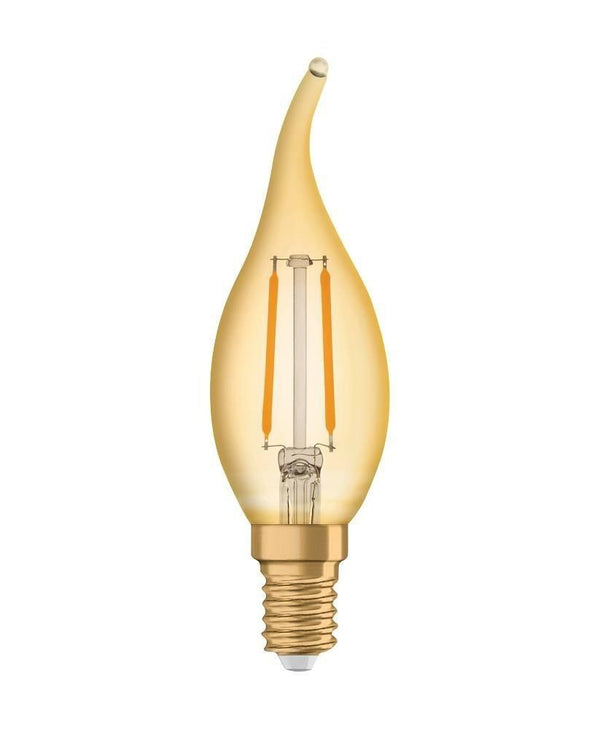
An E14 LED bulb comes down to three pieces of information: a 14 mm screw base, a wattage and a lumen output suited to the use, then a colour temperature, around 2700 K for a bedroom and 3000 K for a hallway. Note these values before ordering: they appear on the product page and on the lamp holder.
What is an E14 LED bulb and how do you recognise one?
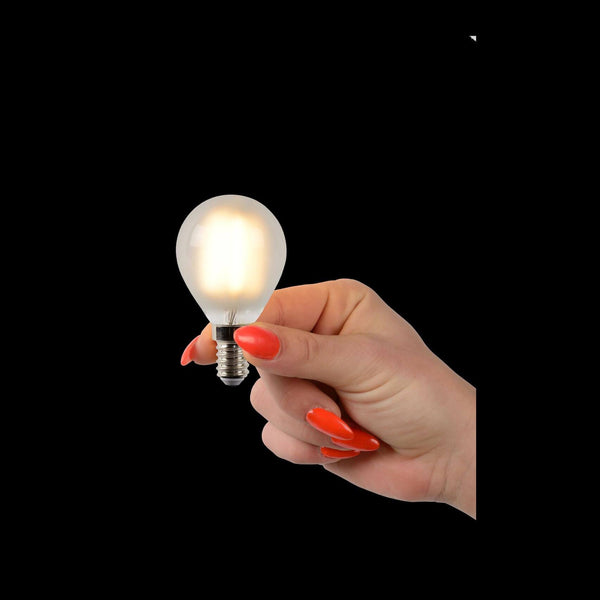
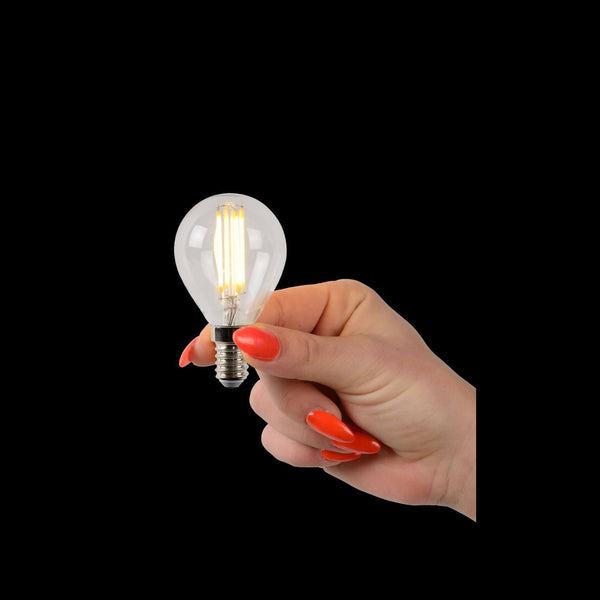
E14 refers to the diameter of the screw thread, measured in millimetres. A small base bulb fits compact light fittings, where a large base will not go. It belongs to the same family as the all small base bulbs gathered in the shop.
How does the E14 base compare with the E27 base?
E14 measures 14 mm in diameter, E27 measures 27. Both screw in clockwise, but neither fits the other's socket. An E14 is therefore shorter and slimmer, which suits wall lights, chandeliers and small table lamps.
How do you recognise a small base bulb before buying?
Three clues: the E14 marking on the packaging or the product page, the thread diameter compared with a coin, and the overall shape of the bulb. If your fitting takes a large base, look at E27 large base bulbs.
Which fitting takes an E14 bulb: LED wall light, chandelier or ceiling light?
An E14 bulb fits anywhere the socket is small: wall light, chandelier, light pendant, bedside lamp, compact ceiling light, night light or fridge lighting. First of all, check the base marked on the fitting and the maximum wattage it accepts.
Does a living room LED wall light take an E14 bulb?
Only if the wall light has an E14 socket rather than an integrated LED. Look at the socket or the old bulb: if the light source is soldered in, it cannot be replaced. For a living room wall light, aim for warm light and a moderate output, since the wall light illuminates a wall more than a whole room. Our lighting range gathers the shapes that take this type of bulb.
How do you choose an E14 bulb for a chandelier or a compact ceiling light?
Count the number of sockets and the space between each one. On a chandelier, filament bulbs give a decorative look and leave the source visible; chandelier bulbs with an opal diffuser soften the light. In a closed ceiling light, prefer a short format that lets air through.
What wattage and how many lumens for an E14 bulb?
The use dictates the wattage, not the other way round. A night light or fridge light is happy with a very low wattage bulb, whereas a bedside lamp or a wall light needs a little more light to read comfortably.
E14 LED bulb 1 W or 10 W: how do you decide?
A 1 W bulb works as a permanent extra: night light, stair light, string lights. A 10 W bulb or more lights a reading area or a worktop. First look at what the socket allows, then adjust.
Should you aim for 1000, 1200 or 1500 lumens with an E14 base?
Output is judged by the surface to be lit. A high output is justified for a whole room, a more moderate output is enough for a table lamp. The product page gives the real lumens; compare that value with the maximum wattage of your socket rather than with the old bulb.
| Use | Wattage often sought | To check before buying |
|---|---|---|
| Night light, fridge, string lights | low wattage | That the socket accepts a low wattage bulb and that the format closes |
| Bedside lamp, extra wall light | medium wattage | The space available and the colour temperature |
| Living room wall light, small pendant | medium to high wattage | The output stated in lumens on the product page |
| Replacing a very bright classic bulb | high wattage | The maximum wattage marked on the fitting |
E14 or E27 bulb: how do you avoid choosing the wrong base?
One base does not screw into the other, and you should never force it: a different thread damages the socket without holding. Read the base on the fitting or on the old bulb before ordering, then check the maximum wattage marked nearby.
How do you read the base on a socket?
The marking is often moulded into the plastic or ceramic of the socket, sometimes stuck inside the fitting. Look for E14 or E27. For pin base fittings, the markings are different: GU10 spotlight bulbs for recessed spots, and G9 pin models for compact chandeliers.
What should you do if the bulb will not screw in?
Stop straight away. A base that is too large or too small will not fit, and forcing it breaks the thread or the socket. Also check the voltage of the installation: a bulb designed for a 220 V socket will not work on a low voltage installation, and vice versa.
| Base | Format | Typical fittings | Related collection |
|---|---|---|---|
| E14 | Small screw base, 14 mm | Wall light, chandelier, pendant, bedside lamp, night light | E14 bulbs |
| E27 | Large screw base, 27 mm | Ceiling light, table lamp, large pendant | E27 LED bulbs |
| GU10 | Pin base | Recessed or track spotlight | GU10 LED bulb |
| G9 | Compact pin base | Chandelier, small wall light | G9 LED bulbs |
| 12 V | Base depending on model | Camper van, string lights, low voltage installation | 12V LED bulbs |
Warm white or cool white: which E14 bulb for which room?
Warm white, around 2700 K, suits bedrooms, living rooms and extra lights. Cool white, around 3000 K, lights a kitchen, an office or a hallway more sharply. Colour temperature is chosen at purchase: on a standard bulb, it cannot be adjusted.
In a living area, stay with warm white for warm white bulbs and keep cool white for circulation areas. If you light a worktop or a desk, cool white ambiences give a sharper result. A cooler white remains reserved for the garage or the workshop.
Can an E14 LED bulb work with a dimmer?
Only under two conditions: the bulb must be designed for dimming and the dimmer must be compatible with LEDs. A bulb that is not designed for it may flicker, buzz or refuse to light. Look for the dimmer marking on the product page before buying.
How do you recognise a dimmable E14 bulb?
The marking appears on the packaging or the product page, never on the base alone. In the shop, E14 bulbs compatible with a dimmer are identified as such, with dimmable small base variants depending on the shape you want.
Why does a bulb buzz on a dimmer?
Most often, the dimmer is not suited to LEDs or to the bulb's load being too low. Test the bulb on a fixed socket, without a dimmer: if it lights normally, the dimmer is the cause. The dimmable LED bulbs range gathers the models designed for this type of control.
Is there an E14 bulb that changes colour?
Yes, some E14 models change colour, controlled by an app or a remote, alongside fixed white bulbs. They suit ambiences, night lights and extra lights. Check the control method and the compatibility with your installation before ordering.
Keep in mind that a connected bulb needs a network or a remote to work: without control, it often falls back to a fixed white. The bulbs with a current design show the shapes available for this type of use.
How do you install and maintain a small base bulb?
Switch off the power at the circuit breaker, let the bulb in place cool down, then screw or unscrew without forcing the base. A dry cloth is enough to clean the diffuser; avoid abrasive products. Never exceed the maximum wattage marked on the fitting.
How do you unscrew a stubborn E14 bulb?
Wait for it to cool completely, then press gently on the glass with a clean cloth to increase grip. If the base turns without catching, stop: the socket is probably worn and should be replaced rather than forced.
When should you replace a bulb that flickers?
Flickering on a fixed socket signals a bulb at the end of its life or a bad contact. Test it on another socket: if the problem continues, replace it. In a closed, poorly ventilated fitting, the electronics heat up more and wear out faster.
Which mistakes should you avoid before buying an E14 LED bulb?
The most common traps: choosing the wrong base, ignoring the maximum wattage of the fitting, buying a non dimmable bulb for a dimmer, choosing a colour temperature unsuited to the room, or confusing a 12 V installation with a 220 V one. Also check the shape and the length, as a bulb that is too tall can stop the fitting from closing.
Get into the habit of noting base, wattage and temperature before ordering. If you are looking for low voltage references, look at the 12 V low voltage bulbs; for a standard installation, 220 V bulbs match the domestic mains.
Frequently asked questions about the E14 LED bulb
What are the drawbacks of LED bulbs?
An LED bulb heats up through its base: in a closed, poorly ventilated fitting, the electronics wear out faster. Some models do not support dimming, the colour temperature is fixed at purchase, and the light can seem more directional than an incandescent bulb.
Which is the most powerful E14 bulb?
It depends above all on your fitting: each socket states a maximum wattage not to be exceeded. Spot the brightest models by the output stated in lumens on the product page, then compare that value with the use of the room before choosing.
E14 LED bulb 12 V: is that common?
12 V concerns low voltage installations: camper vans, string lights, some furniture lighting. A bulb designed for 12 V should never be fitted to a socket supplied at 220 V. Check the voltage of your installation before buying.
Can you put an E14 bulb in a ceiling light or an LED chandelier?
Only if the fitting has an E14 socket and takes a replaceable bulb. A ceiling light with an integrated LED cannot be dismantled: the source is soldered to the fitting. Look at the base marked on the fixture or on the old bulb before ordering.
Why does my E14 LED bulb flicker?
Flickering often comes from an incompatible dimmer, a bad contact in the socket or a bulb not designed for dimming. Test the bulb on a fixed socket, without a dimmer: if it lights normally, the dimmer is the cause.
Ordering from Designix
Secure payment, tracked delivery and returns: the Designix customer service team remains reachable if any doubt remains about a base or a wattage. Once the base, the wattage and the colour temperature are noted, browse the bulb range then all our light fittings to match the bulb with its fixture.




