
Concrete light fixtures





















































- Tracked delivery to your country Tracked delivery
- Secure payment at checkout Multiple payment methods
- 14 days to change your mind 14-day returns
- Secure payment Secure payment
Not sure of your style? Find it in 30 seconds
A few questions, and we will show you the pieces made for you.
Frequently asked questions
How do I choose the right product?
What are the delivery times?
Can I return an item?
Can I pay in instalments?
An interior that reflects who you are
Carefully selected pieces, shipped from our warehouses. Our team advises you before you buy, so you choose with confidence.
- Tracked delivery
- Pay in instalments, where available
- 14 days to change your mind
- Advice & showroom in Lyon, France
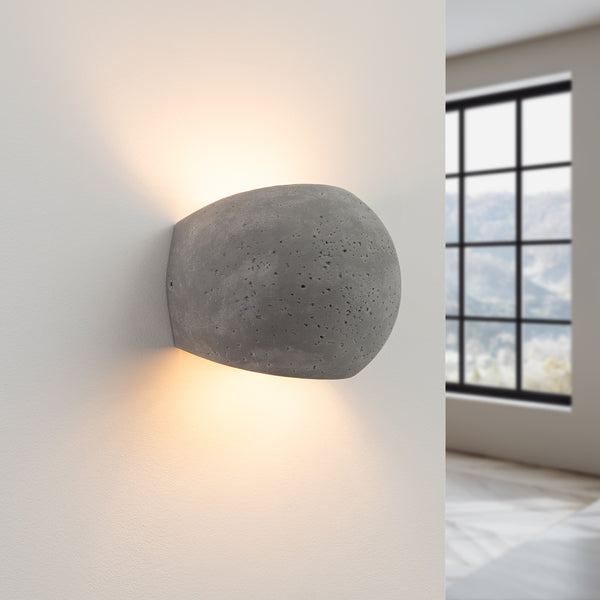
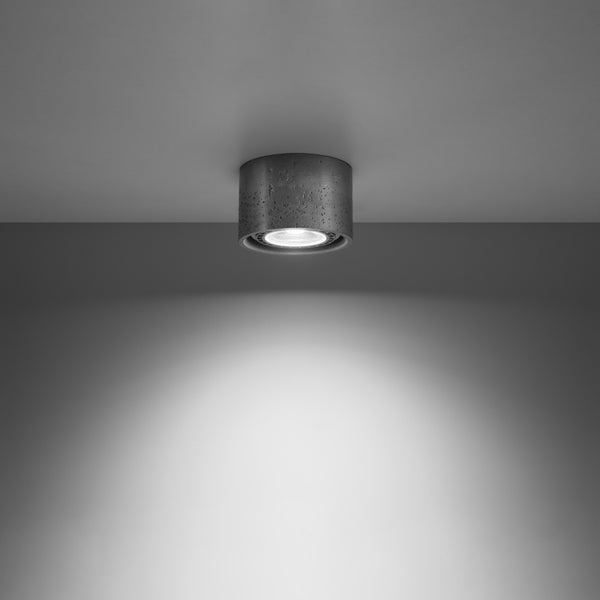
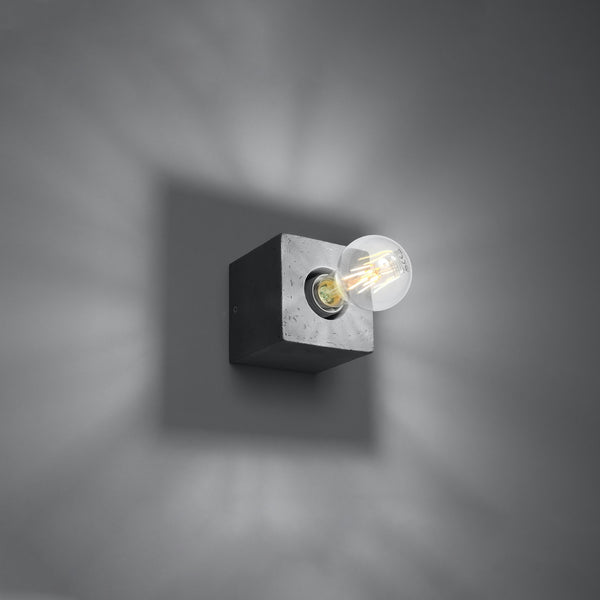
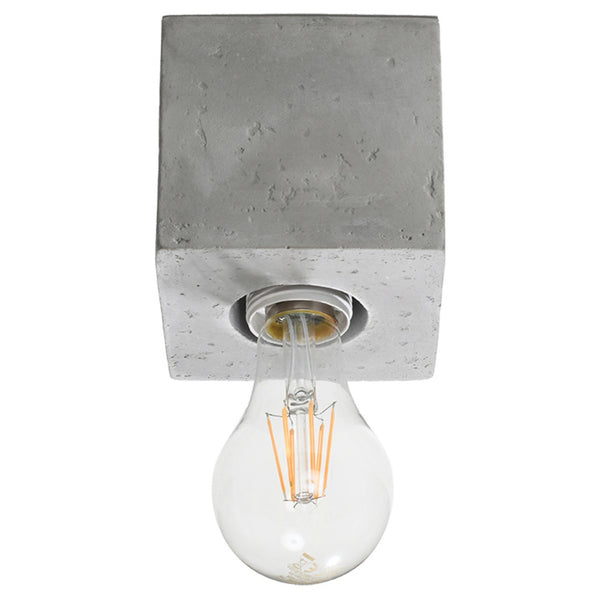
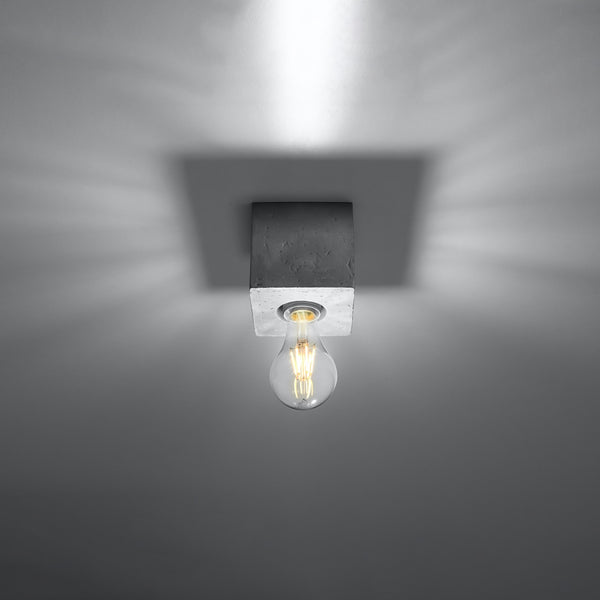
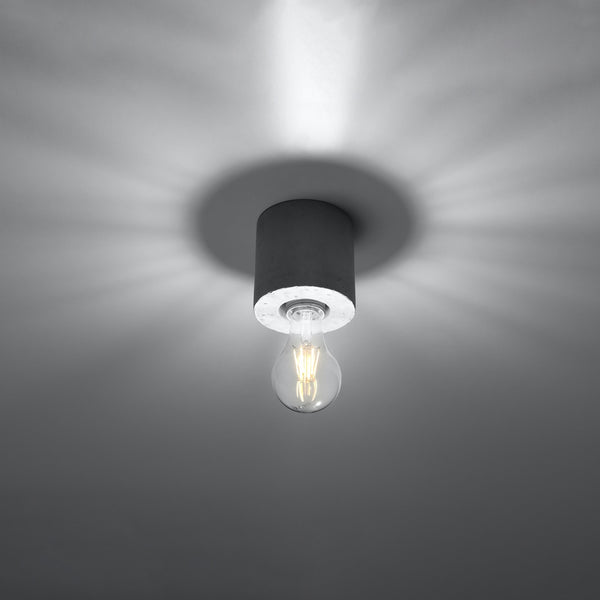
Count one concrete lamp per area to light, no more: a pendant above the table or the worktop, a wall light in the hallway, a bedside lamp near the bed. The cast body gives a mineral grey that stays neutral in the room, and the bulb does the rest. All the models in this collection are IP20, so indoor use only.
What is a concrete lamp and what light does it give?
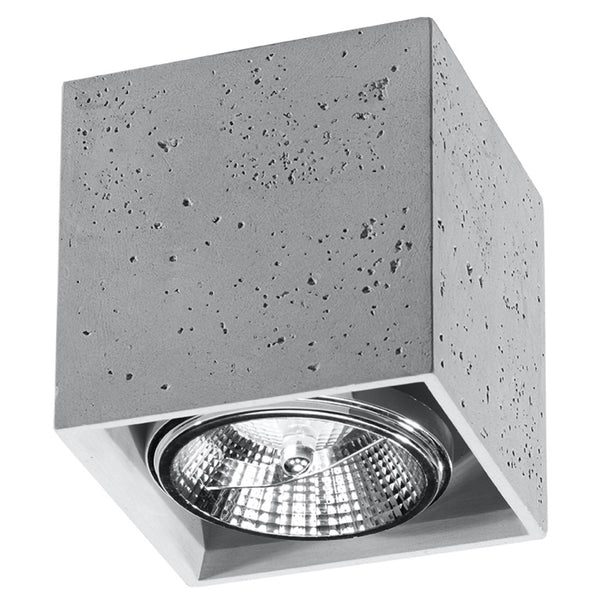
A concrete lamp is a light whose body is cast in that material, often combined with steel for the fixing or the base plate. In this collection, it takes a bulb or an LED module, with colour temperatures from warm white to cool white depending on the model, and it is meant for indoor use. Mineral grey dominates, with a few pieces in black or white.
Raw concrete, polished concrete or grey concrete: what are we talking about?
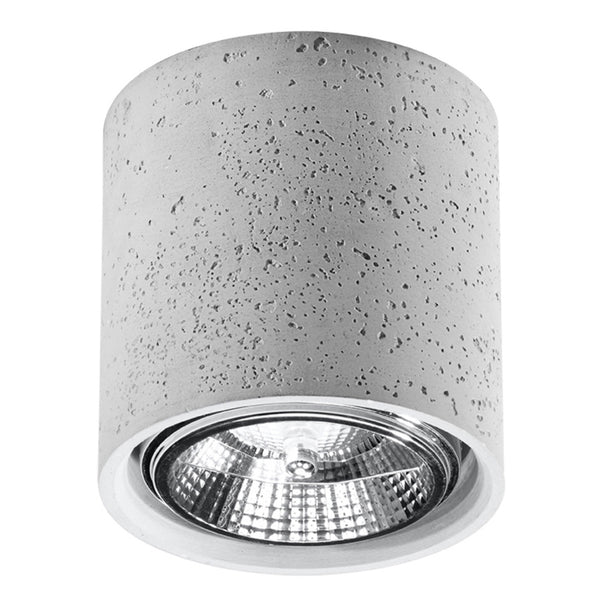
Raw concrete keeps a matt, slightly grainy surface that catches the light and shows up every shade. Polished concrete, smoother, reflects a more even tone. Grey concrete, the most common shade, blends into a neutral interior. These finishes change the look, not the nature of the lamp: the body stays mineral, and that is what gives it its presence, switched off as much as switched on. Find these finishes in our lighting collection.
Warm white or cool white: which temperature for which room?
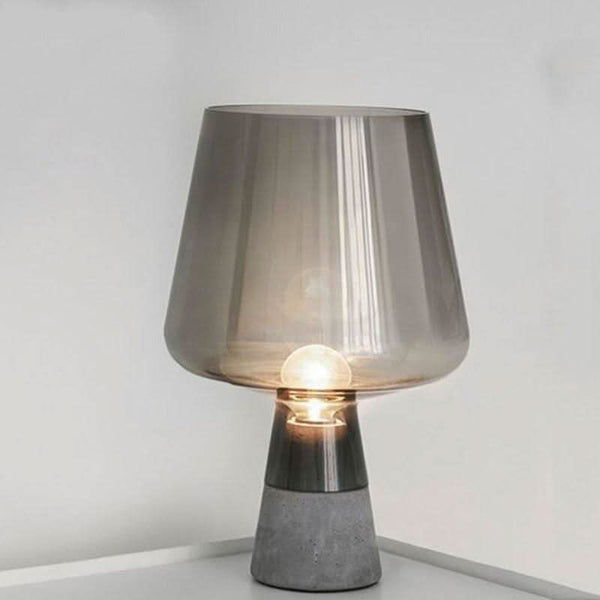
Around 2700 to 3500 K, warm white suits the living room, the bedroom and the dining room: it relaxes the room and flatters concrete. Between 4500 and 6500 K, cool white wakes up a kitchen, a worktop or a desk. A dimmable bedside lamp such as the Galéa bedside lamp takes both, so you choose depending on the hour.
Where to install a concrete lamp at home?
Concrete works anywhere in the house: as a pendant above a living room or a table, as a wall light in a corridor, a staircase or an entrance, as a bedside lamp in a bedroom and as a floor lamp in a lounge. Use stays indoors, since the protection rating of the collection is IP20. The room dictates the format, not the other way round.
Living room and dining room: which pendant above the table?
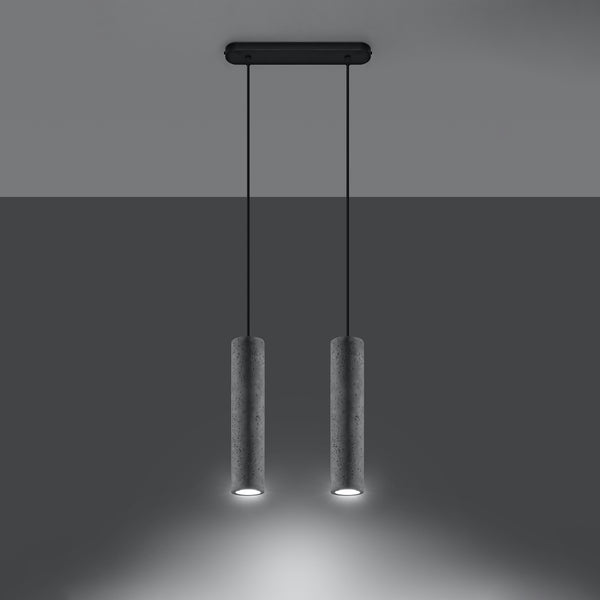
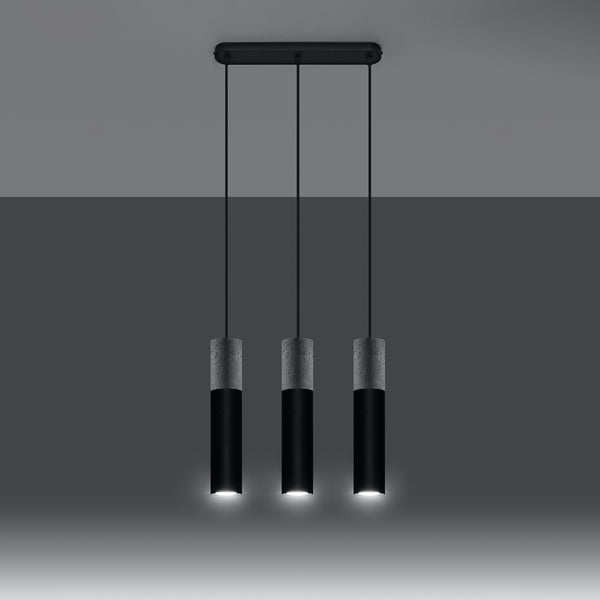
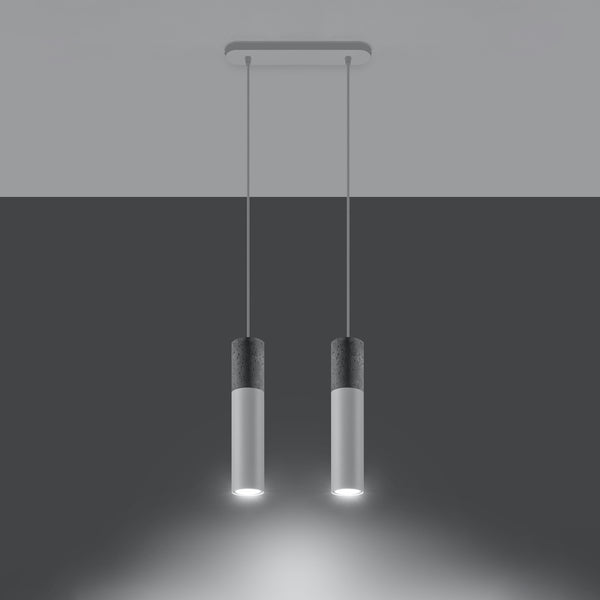
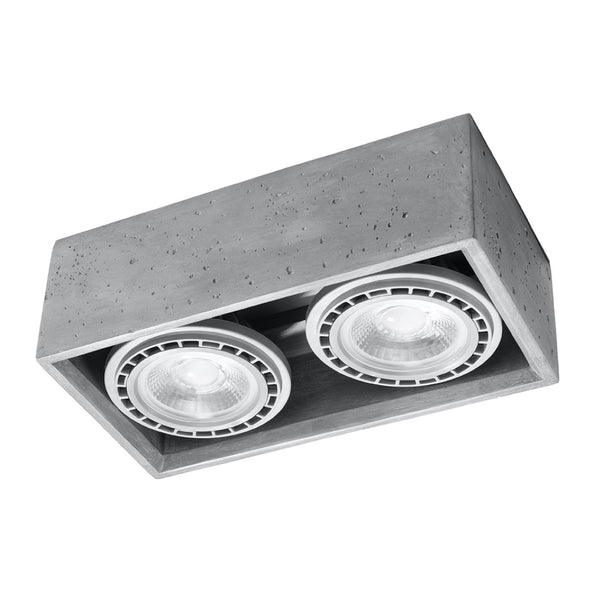
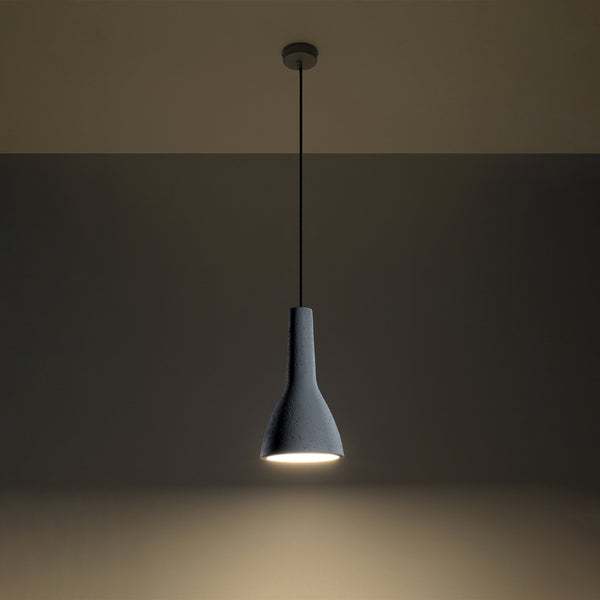
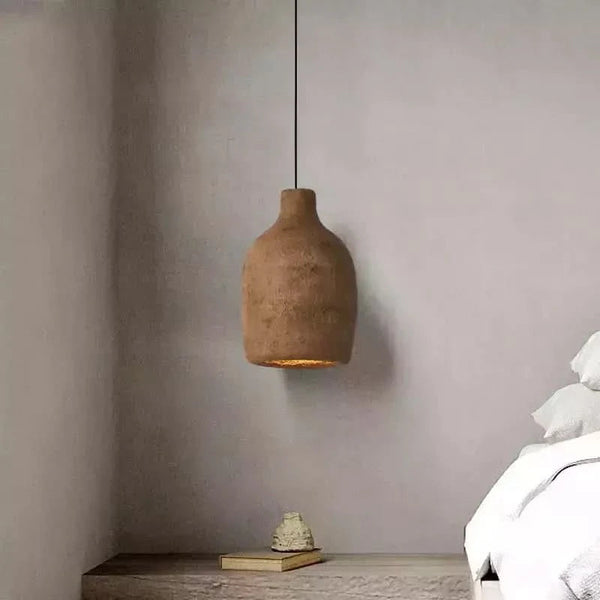
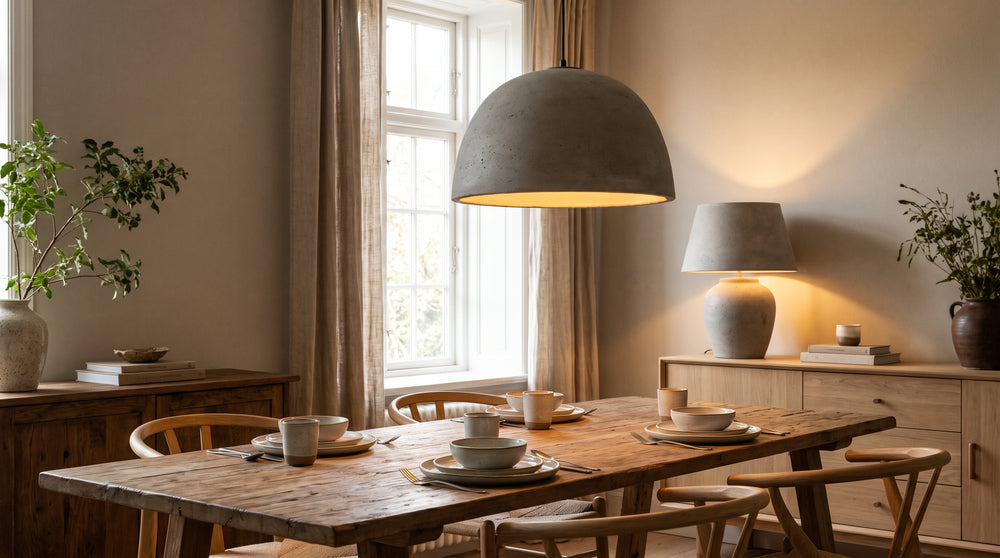
Above a table, a pendant lights the surface and structures the space. A model with two or three cylinders covers a large table, a simple format is enough over a small one. Grey concrete matches stainless steel as well as light wood, and the modern dining room lights give you a lead on cable height. In the lounge, living room LED lighting often completes the pendant with a wall light or a floor lamp.
Kitchen, entrance, corridor, toilet: what works in small rooms?
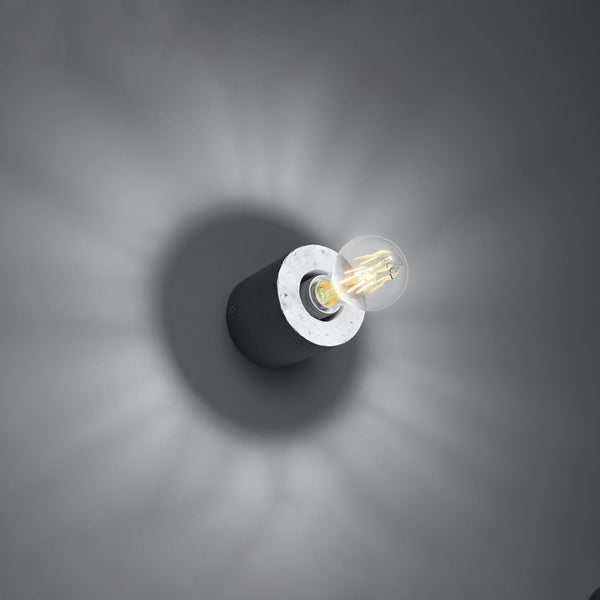
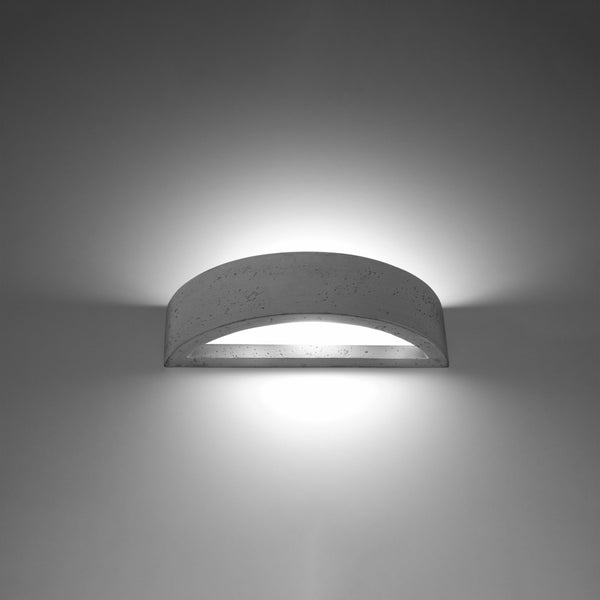
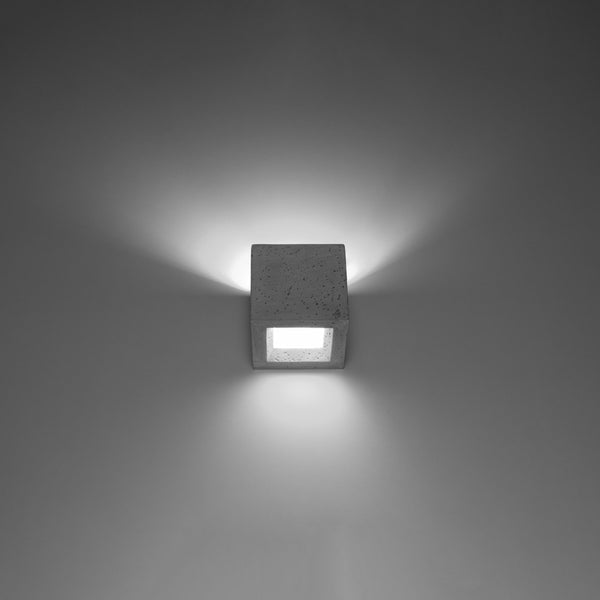
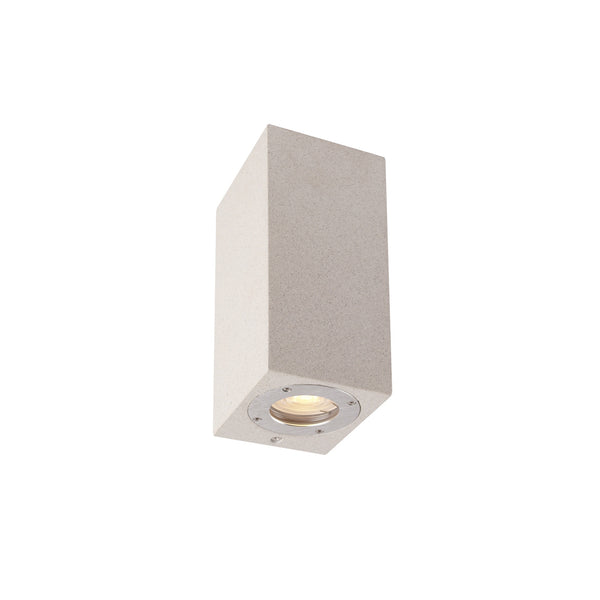
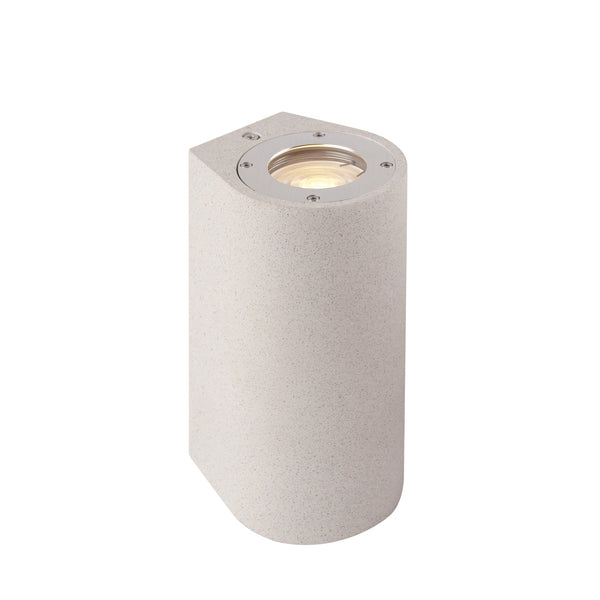
In a kitchen, a pendant above the island lights the prep area without glare; the models designed for the kitchen favour a directed beam. In a corridor, a staircase, a dressing room or an entrance, the Aventa wall light frees up the floor and the ceiling, with its grey concrete body 180 mm high and its G9 socket. For toilet lighting, aim for a compact format that is easy to clean, always away from water spray.
Pendant, wall light, bedside lamp or floor lamp: which format of concrete lamp to choose?
The format is chosen according to the surface to light and the height available. A pendant lights the centre of a room or a table, a wall light frees up the ceiling in a passage, a bedside lamp serves for reading, and a floor lamp needs no work. The maximum cable height is stated on each product page.
| Format | Where to place it | Stated socket | What it changes |
|---|---|---|---|
| Cylindrical pendant | Living room, kitchen, entrance, corridor | GU10, 10 W | Directed beam, above a table or a worktop |
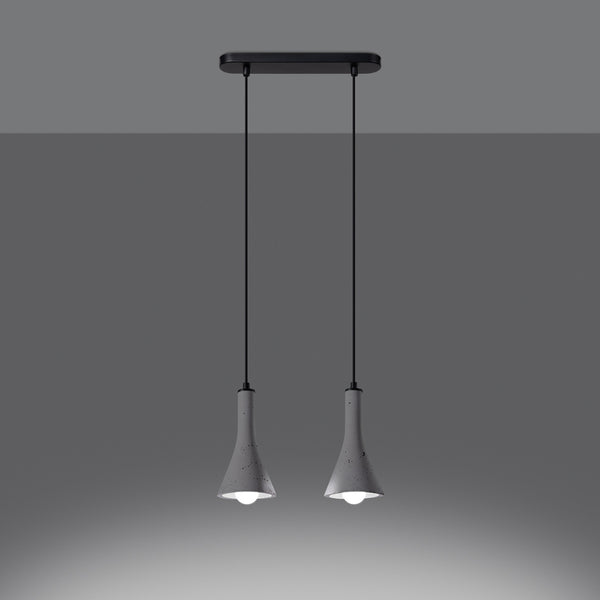
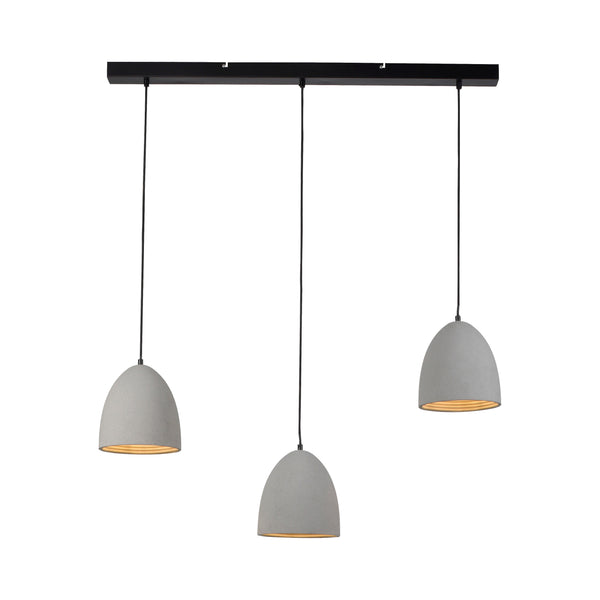
| Pendant with several cylinders | Dining room, large kitchen, living room | GU10, 10 W | Covers a wider surface and fills the space |
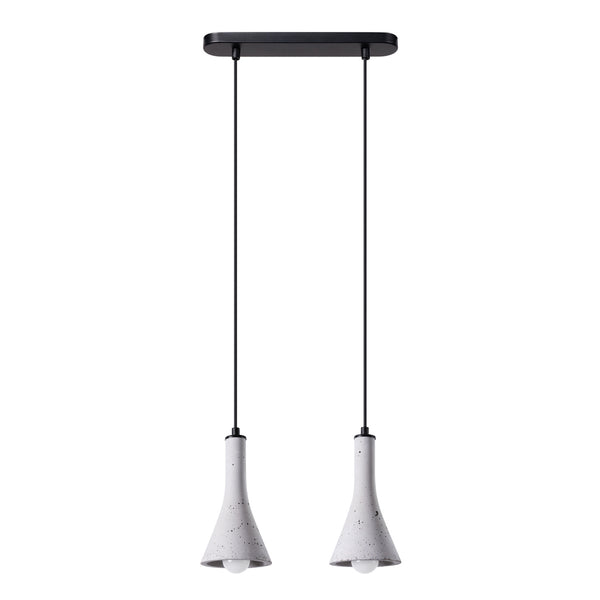
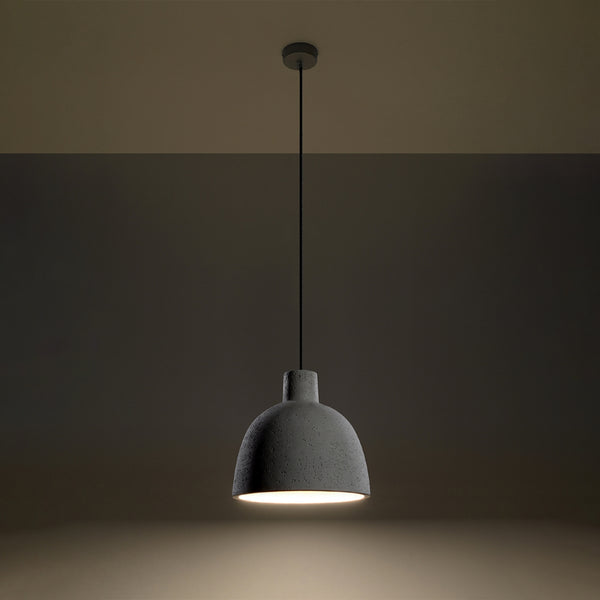
| Pendant with a large shade | Living room, entrance, bedroom | E27, 15 W | Lights widely and stays visible from afar |
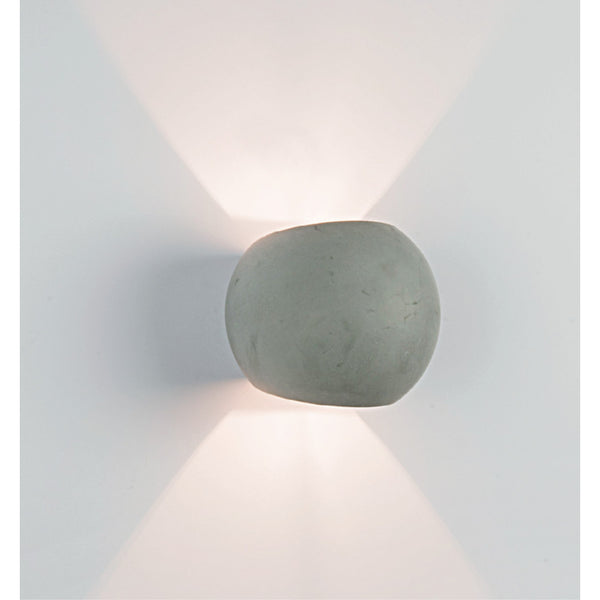
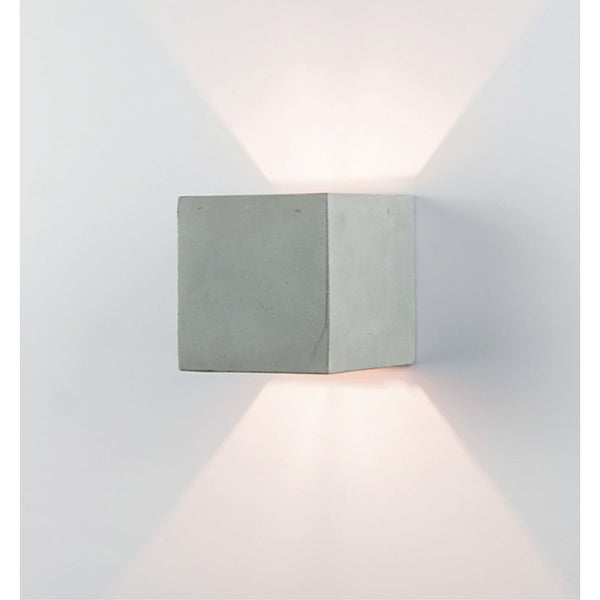
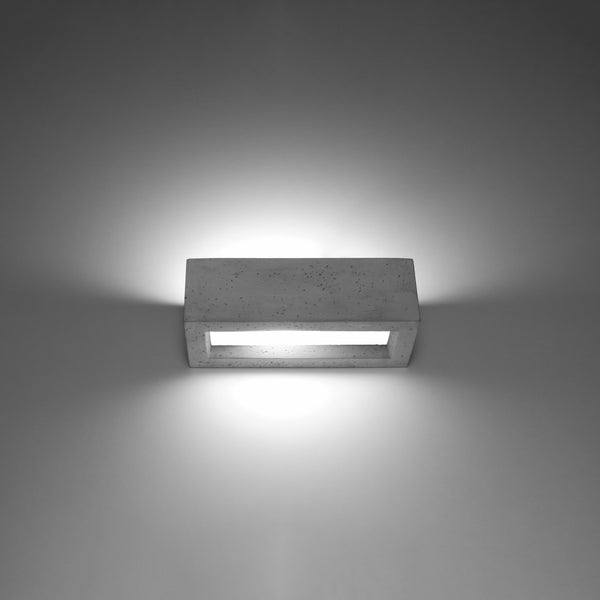
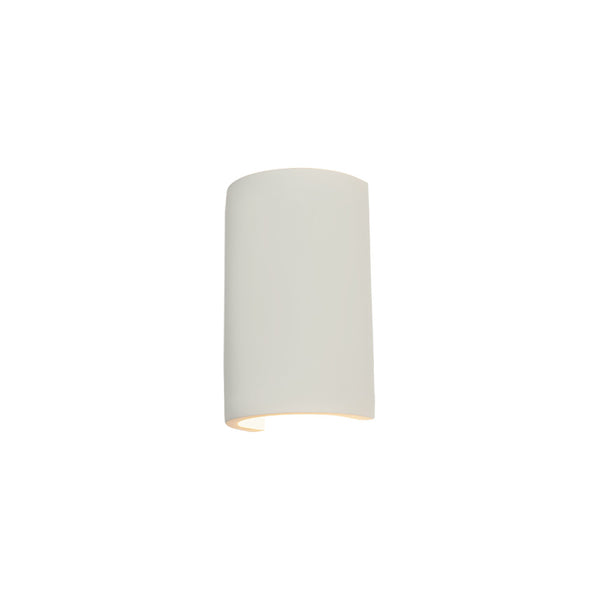
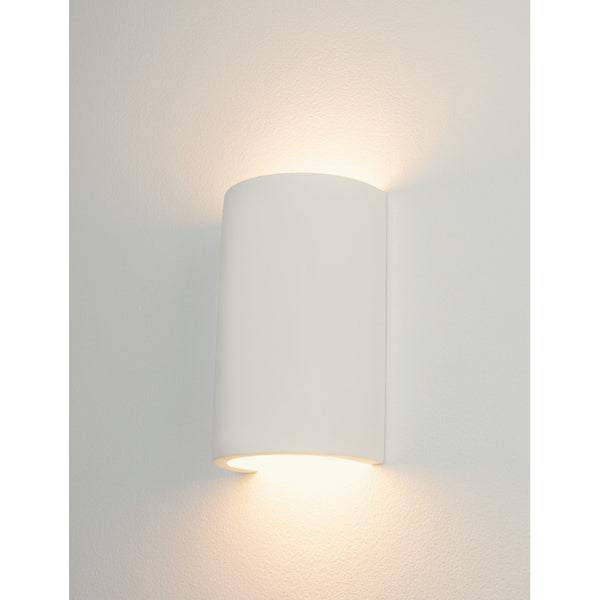
| Wall light | Corridor, staircase, entrance, dressing room, toilet | G9 | Lights a passage without using the ceiling or the floor |
| Bedside lamp | Bedroom, desk | G9 or E27/E14 | Lights for reading, some models take a dimmer |
| Floor lamp | Living room, bedroom | E27, 60 W | Creates a reading corner with no work needed |
How many light points above a table?
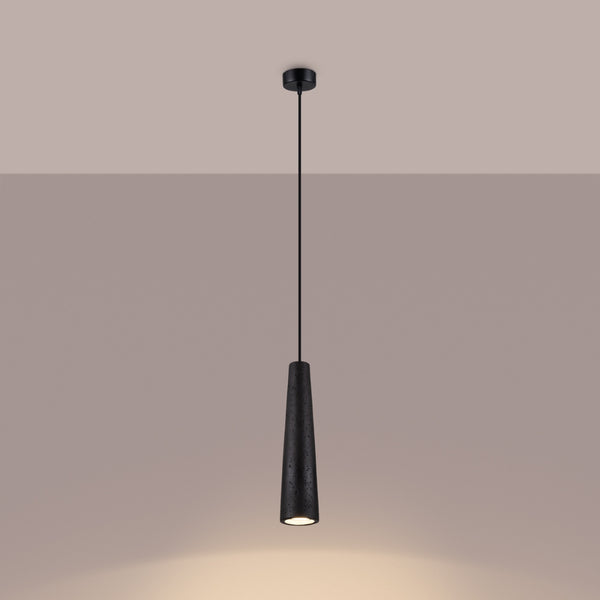
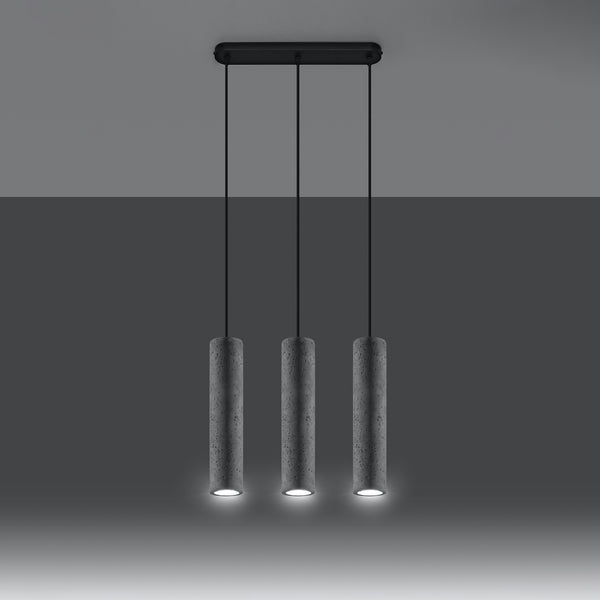
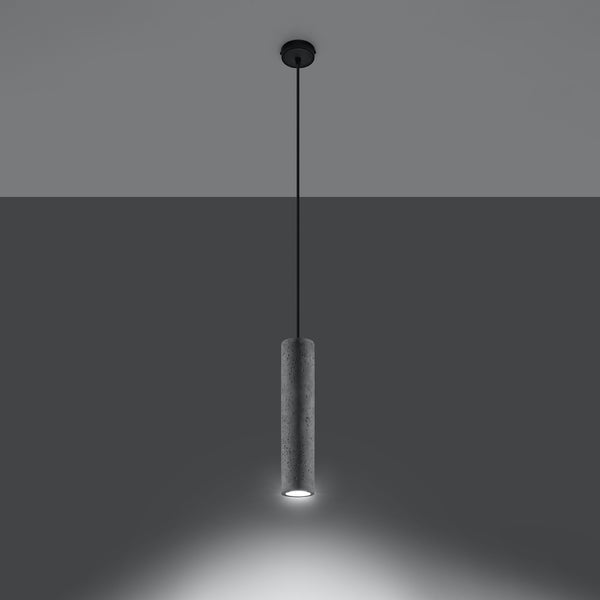
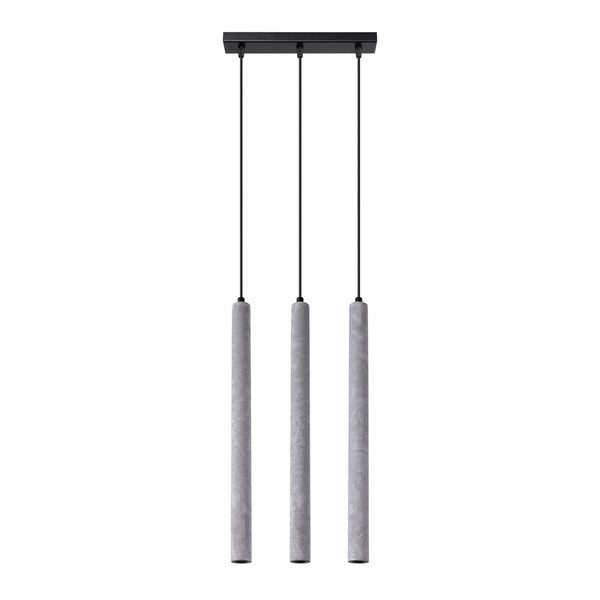
One point is enough over a small table, provided it lights the centre of the surface. Over a large table, two or three aligned sources work better than a single one, too high to light properly: the Ravina three-cylinder pendant spreads the light over a 45 cm base plate. A single cylindrical pendant, such as the Ilyana raw concrete pendant, suits narrower tables and entrances.
Plug-in or hardwired lamp: which one needs work?
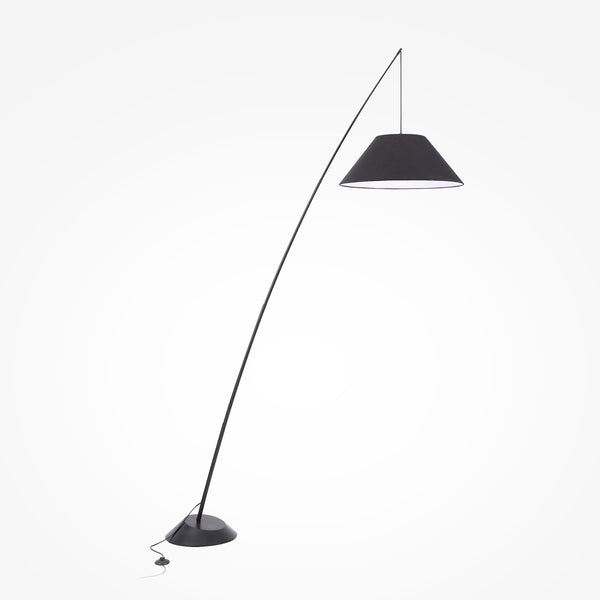
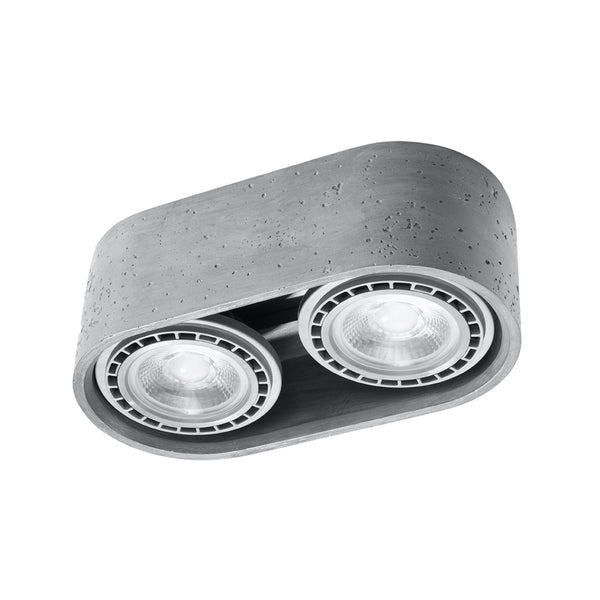
A bedside lamp, a floor lamp and some table lamps plug into a socket, with no intervention. A pendant, a ceiling light or a wall light need a connection to the ceiling or the wall, so a spare supply or a small electrical job. If you do not want to touch the wiring, look at the floor lamps: the Orilinissa floor lamp just needs a socket and stands 235 cm tall. For a spotlight or a recessed ceiling light, allow space in the ceiling and a dedicated supply.
GU10, G9 or E27 socket: which concrete lamp for which bulb?
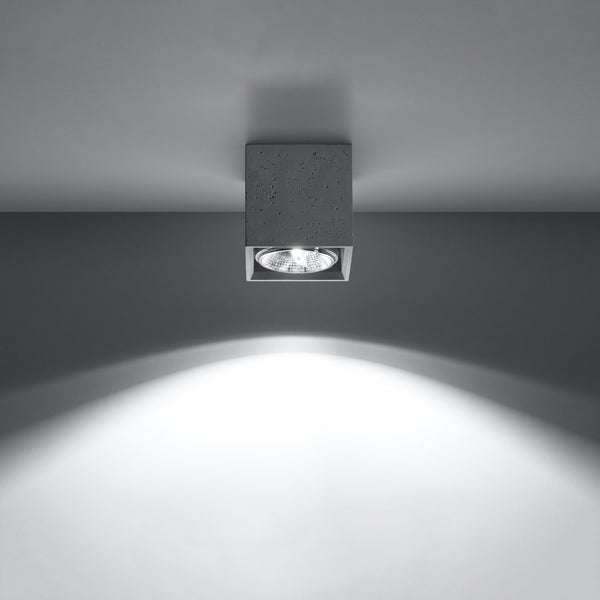
The socket determines the bulb to plan for. GU10, common on cylindrical pendants, gives a directed beam; G9 equips wall lights and small lamps; E27 takes wider bulbs, including filament ones, on shaded pendants and floor lamps. Some models have integrated LED and need no bulb at all.
| Socket | Bulb type | Formats concerned | To remember |
|---|---|---|---|
| GU10 | Pin spotlight, directed beam | Cylindrical pendants, tubes, multi-point models | Best for accent lighting above a table or a worktop |
| G9 | Small pin bulb | Wall lights, bedside lamps | Compact format, handy in small lamps |
| E27 | Wide socket, various bulbs including filaments | Shaded pendants, floor lamps | The easiest to replace and to upgrade |
| E14 | Small screw socket | Some bedside lamps | Check on the product page before buying the bulb |
| Integrated LED | Light module | LED pendants | No bulb to buy on top |
Do you need a bulb supplied with the lamp?
Almost never on socket models: the holder is there, the bulb is up to you, which leaves you free to choose the colour temperature. Integrated LED models are the exception, the module is already fitted. The wattage stated on the page shows what the lamp accepts, for example 10 W on GU10 pendants and 60 W on an E27 floor lamp.
Filament bulb or spotlight: what look on concrete?
A filament bulb on an E27 socket gives a warm, enveloping light that brings out the grain of the concrete on a shaded pendant such as the Ondlinella pendant. A GU10 spotlight lights more sharply and frames a table or a worktop better. The choice comes down to use: atmosphere in the living room, efficiency in the kitchen.
How to match a concrete lamp with the style of the room?
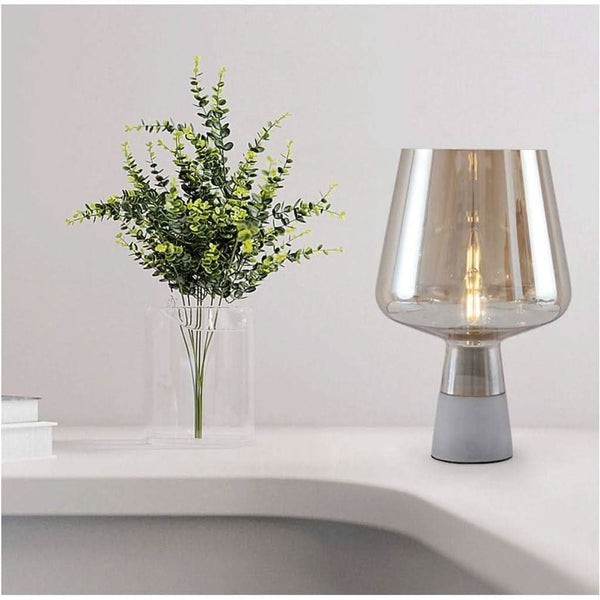
Grey concrete acts as a neutral base. It pairs with steel and black for an industrial interior, with light wood and white for a Nordic look, with smoked glass for a more dressed-up feel. Minimalist, modern and contemporary styles dominate the collection, with a few bolder pieces.
Vintage lights: which materials to pair with concrete?
Play on contrasts: concrete with its simple lines pairs with warm materials such as wood, rattan or copper, and with visible filament bulbs. The mineral grey stops the vintage decor from becoming too busy. To take the idea further, see how to pair concrete with light wood or how copper lights warm up a mineral room.
How many concrete lamps in the same room?
One or two pieces are enough: beyond that, the room loses its breathing space. A pendant plus a wall light works well, or a pendant plus a table lamp. If you want a silhouette that breaks away from the usual circle, the unique design creations and the black pendants offer tube shapes and assemblies. For a very graphic lounge, the design pieces for the living room complete the set.
How to install and care for a concrete lamp?
Above a table, adjust the pendant so it lights the surface without hiding faces; the maximum cable height ranges from 90 to 125 cm depending on the models in the collection. The connection is made at the ceiling, with the power off. Caring for concrete comes down to a soft, dry cloth.
How to set the height of a pendant above a table?
Shorten the cable until the bottom of the lamp comes to eye level, seated at the table: you should see your guests, not the bulb. Models with a 90 cm cable such as the Ravina or the Jolana are meant for rooms with standard ceilings; those that go up to 105 or 125 cm cover greater heights. The adjustment is made once, at installation.
Concrete and moisture: why stay indoors?
Concrete does not cope well with repeated moisture and the IP20 rating of the collection does not protect against water spray or fine dust. These lamps therefore stay indoors, in a living room, a bedroom, a corridor or a kitchen. For an exposed bathroom or a terrace, look for models with a higher protection rating.
Chandelier, ceiling light, concrete floor lamp: how to name the lamp you are looking for?
Words vary with habit: people say chandelier or ceiling light for a lamp fixed to the ceiling, pendant when a cable brings it down, lamp or floor lamp for a freestanding model. In this collection, the ceiling lights are pendants, completed by wall lights, bedside lamps and floor lamps.
Chandelier or concrete pendant: what is the difference?
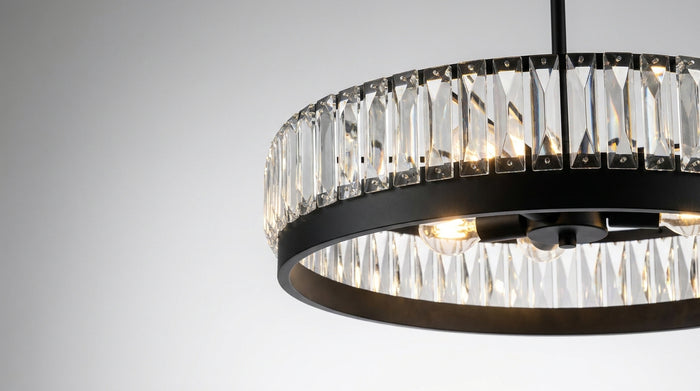
A chandelier traditionally means a lamp with several branches, often decorative. A pendant is simpler: one or more shades carried by a cable and a ceiling rose. In concrete, the pendant format is the most common, from the single cylinder to three-volume assemblies such as the industrial design pendants.
Concrete ceiling light: when to choose a pendant instead?
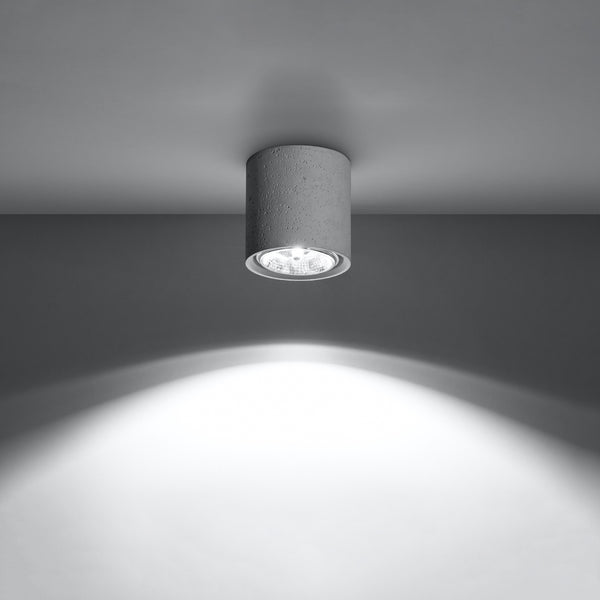
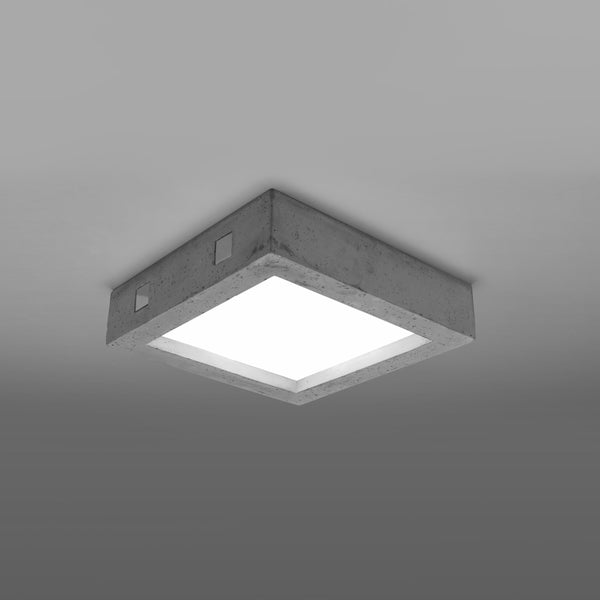
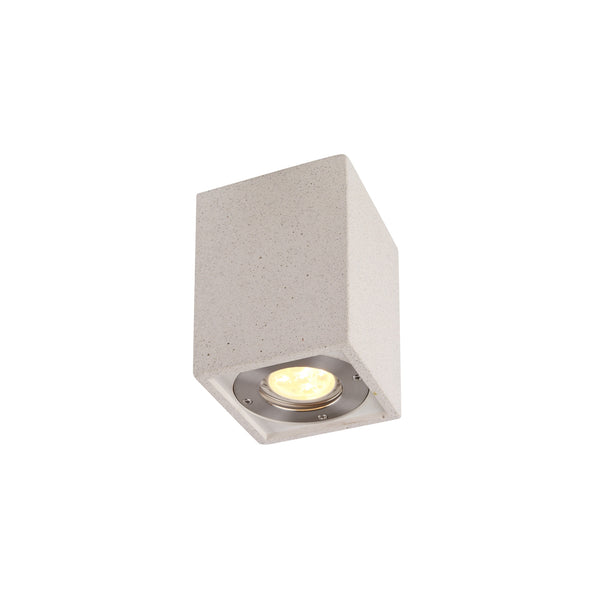
A ceiling light sits flush with the ceiling and suits low rooms, where a cable would get in the way. A pendant comes down and lights a table or a worktop precisely. If the ceiling height is low, a short model or a wall light stays more comfortable. For real accent lighting with no work, compare with the whole lighting universe.
Where to find concrete lamps, in a shop in Lyon or online?
Online, the product page states the material, the socket, the dimensions and the protection rating: everything you need to check compatibility before ordering. In Lyon, searches for a lighting shop or clearance outlet often lead to a showroom, but the online selection stays available everywhere in France.
How to check that a concrete lamp will suit your room?
Three lines are enough: the diameter or length of the lamp for the space available, the maximum cable height for the ceiling, and the socket for the bulb. Add the protection rating, IP20 here, so indoor use.
What budget for a concrete lamp?
The budget depends mainly on the format and the number of light points: a wall light or a simple pendant sits in the entry range, a floor lamp with a fabric shade or a multi-volume piece goes up a notch. Also allow for the bulb, not supplied on most models. The luxury lights and smoked glass finishes push towards the top.
Before you confirm, identify the area to light and the height available: that is what decides between a pendant and a wall light. For an open kitchen, also look at the design kitchen lights and the smoked glass models, which pair well with concrete.
Designix: secure payment, tracked delivery, returns and customer service to guide you from choosing the bulb to fitting. Add your selection to the basket, the bulb can be ordered at the same time.
Frequently asked questions about concrete lamps
What are the trending lights?
Concrete lamps, cylindrical pendants, tube shapes and black or grey finishes are centre stage, in an industrial or minimalist spirit. Raw concrete paired with steel and light wood remains the most sought-after combination for a living room or a dining room.
How can I make a lamp myself?
Concrete can be cast in a mould, but a lamp must meet electrical safety rules: cable routing, insulation, fixing and socket compatibility. For a reliable result, it is better to choose a concrete lamp that is already assembled, with its holder and cable, then add your bulb.
Where to find a lighting shop in Lyon?
In Lyon, lights are found in a showroom or a specialist shop, and many searches also target lighting clearance. To compare materials, sockets and dimensions without travelling, the online selection groups the models with their full specifications and their warranty.
What lights for a toilet?
In a toilet, favour a compact lamp that is easy to clean: a wall light or a small pendant placed above the basin. Grey concrete suits this room well, provided it stays IP20 and away from direct water spray, like the models in this collection.
What lights for the kitchen?
A pendant above the island or the worktop lights the prep area without glare. Models with several cylinders suit large tables, simple formats suit small rooms. Grey concrete matches stainless steel as well as light wood, and a GU10 socket frames a worktop well.




