Replacing an integrated LED: repair or change the light fitting
This article is also available in French: Remplacer led intégrée
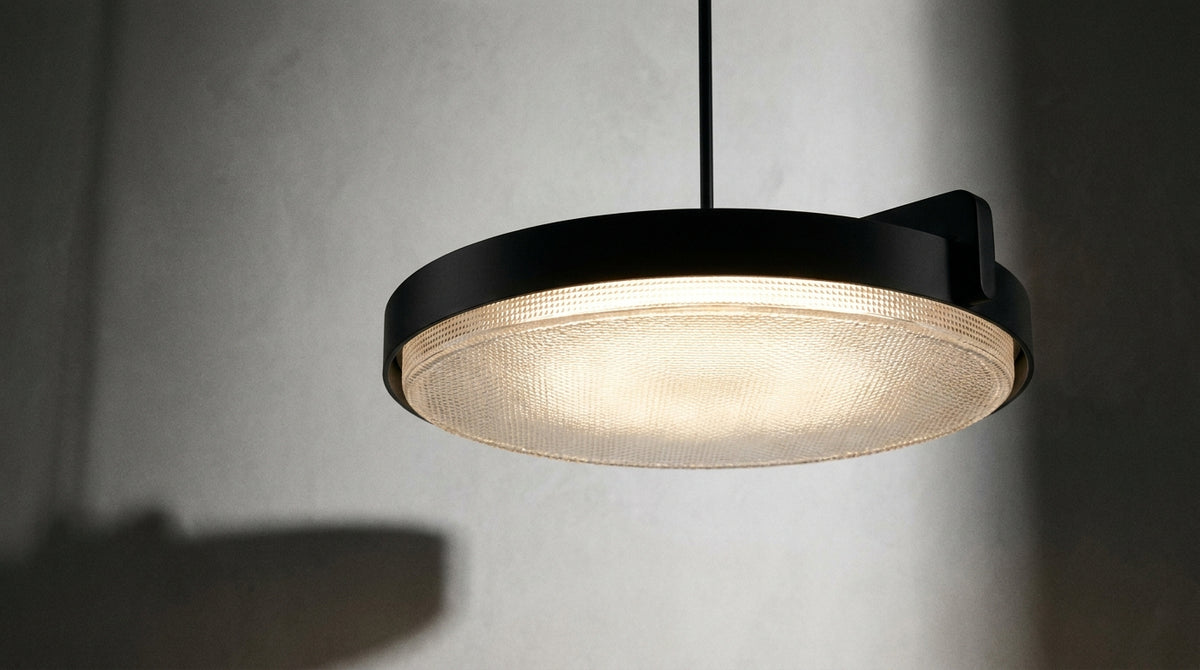
An integrated LED cannot be replaced: the chip is soldered to the module and wired to a driver. First identify what has failed: module, driver or circuit. If the unit unclips or unscrews, it can be replaced. If not, the entire light fitting must be changed.
What is an integrated LED, and why can't it be changed like a bulb?
An integrated LED is a light source fixed inside the light fitting, with no socket. It is not screwed in or clipped in like an E27 or GU10 bulb: a driver powers it, and the unit containing it often stays sealed. Hence its slimness, its even light, and the difficulty of replacing it.
Start by looking underneath the light fitting. A LED ceiling light exposes its unit, screws and connector; a sealed pendant shows nothing. That difference determines everything that follows.
Integrated LED or LED bulb: the difference is the socket
In a survey of 250 references from our catalogue on 29 September 2026, 226 listings state a socket. Two equal shares emerge: 26% carry the LED mention, 26% an E27 socket. In the same selection, one lamp in four therefore accepts a bulb you change yourself.
- E27 or E14 socket: standard bulb, replaceable in seconds, including filament versions.
- GU10 socket: spot with a socket, common on track lights and adjustable ceiling lights.
- LED mention without socket: integrated module, to be replaced as a whole or not at all.
- G4 and G9 sockets: small sockets for wall lights and spots, often overlooked when replacing.
Module, driver, circuit: what you are really looking at
Three elements coexist in a light fitting: the light source, the driver that converts 230 V, and the power circuit. Understanding how an LED works prevents random dismantling. A driver is replaced fairly often; a sealed-in source, never.
Is it possible to change an integrated LED bulb?
No, not in the sense of a bulb you screw in. What can be replaced is the complete module, clipped or screwed in, or the driver alone when it remains accessible. On other models, the source is fixed to the light fitting: repairing then means changing the entire light fitting.
Four configurations exist, and only one decides what happens next.
| Element | Replaceable? | What gives it away |
|---|---|---|
| E27 or GU10 socketed bulb | Yes | Visible socket, bulb that screws in |
| Clipped or screwed LED module | Yes | Flat unit, plug-in connector |
| LED soldered to a board | No | No screws, no connector |
| Separate driver | Yes | Small box between the 230 V supply and the LED |
How to change an integrated LED bulb with a trim ring
A trim ring unscrews or unclips with a quarter turn. Switch off the breaker, slide the gasket without bending it, free the unit, then unplug the connector before pulling. A module that resists is a screwed module: look for screws hidden under the gasket.
How to change an integrated LED bulb without a trim ring
Without a trim ring, the source is often glued or sealed in. A module that does not move after unscrewing was not designed to be replaced, and forcing it damages the finish. The method for changing the bulb without clips describes the cases where the part still comes out, and those where you have to give up.
How do you know if an integrated LED light fitting is repairable?
Three signs are enough: a flickering light, half a module out, a delayed start. These symptoms almost always come from the driver, the most replaceable part. A source that is uniformly dead, without prior flickering, rather indicates a module at the end of its life.
Flickering, dimming, going out: read the symptom
Regular flickering betrays a tired driver or a loose contact. A gradual dimming often points to insufficient heat dissipation. Before ordering, the guide LED lamp flickering details the checks, in order.
The bathroom mirror case
A backlit mirror stacks source, driver and sometimes sensor in a small thickness. Few models provide for replacing the unit. The procedure for changing the LED in a bathroom mirror explains how to open the profile without compromising the seal.
The case of spots and ceiling lights
In a ceiling, the difficulty is not the source but access. An LED spot is removed from below, with springs or compressed tabs, when the cut-out leaves room for a hand. On a ceiling light, removing the shade does all the work.
Before ordering anything, get the diagnosis settled: photograph the connector and note the light fitting's reference, then ask our team. The seriousness of a service can also be checked, and the Designix Google listing gathers the feedback left by customers.
When repairing is no longer worthwhile, which light fitting should you choose?
When the module is sealed and the driver is embedded in resin, replacement becomes the only option. Then choose a light fitting whose source remains accessible, or whose lighting quality justifies not replacing it. It is a deliberate purchase, not one more repair.
What to choose from: on 29 September 2026, our LED light fitting collection brings together 18,850 references, from the discreet ceiling light to the dining room centrepiece.
Designer LED light fittings to take back control of the light


Colour temperature: the choice you will no longer be able to correct
An integrated module fixes its temperature for the entire life of the light fitting. 2700 K gives a warm, enveloping light, 4000 K a more neutral, almost white rendering. The guide warm or cold light helps you decide depending on the room.
Which light fitting for which point to light?
A well-chosen wall light replaces a tired ceiling light in a corridor, without touching the ceiling.
In a living room, a chandelier takes on the role of centrepiece and diffuses upwards.
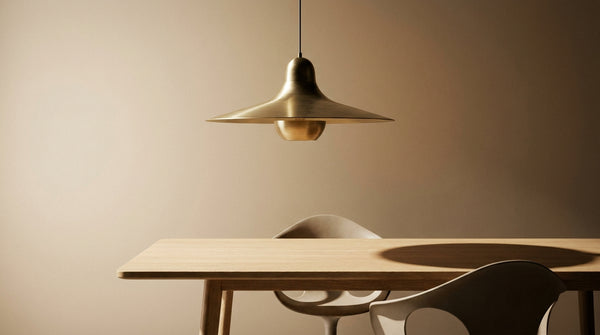
Above a table, a pendant light brings the light down exactly where it is needed.
What protects the purchase
- 2-year warranty: stated on 100% of the 250 listings surveyed on 29 September 2026. Details are on our after-sales and warranty page.
- Protection rating: IP20 is enough in a living room, aim for IP44 or higher near a water point.
- Dimming: stated on 106 of the 250 listings surveyed, with 35% yes. A non-dimmable light fitting stays that way.
- Mounting: the survey shows 42% pendants and 36% wall-mounted, two very different installation methods.
One last reflex: switching to all-LED is prepared room by room, keeping a socketed light fitting where the source will work the longest.
Which light fitting replaces your failed integrated LED?
On the same subject
In stock · shipping costs shown at checkout · up to 30% off in your cart


Ready to turn inspiration into reality?
Tell us about your room, your style and your budget, and we will show you the pieces that truly suit your project.
Get guidance in 30 seconds →