Lighting a room without a ceiling light: the 3-layer method
This article is also available in French: Comment Éclairer une pièce sans plafonnier

Use at least three sources: a high one that bounces light upwards, a wall light at shoulder height, and a low one near the sofa or bed. All of them plug into existing sockets. Aim for light spread across the room rather than a single point.
What are the alternatives to a ceiling light for lighting a room?
An arc floor lamp, a wall light, a pendant on a long cable and a table lamp can replace it, provided you combine them. Each one occupies a different height: that distribution matters more than total wattage.
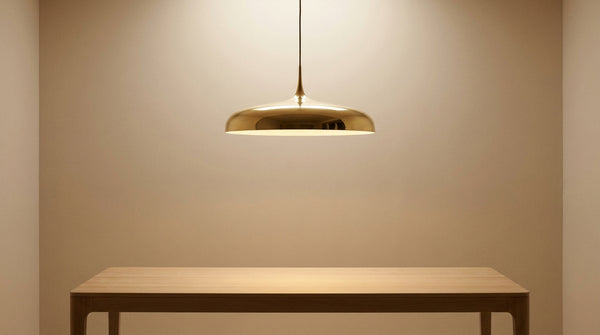
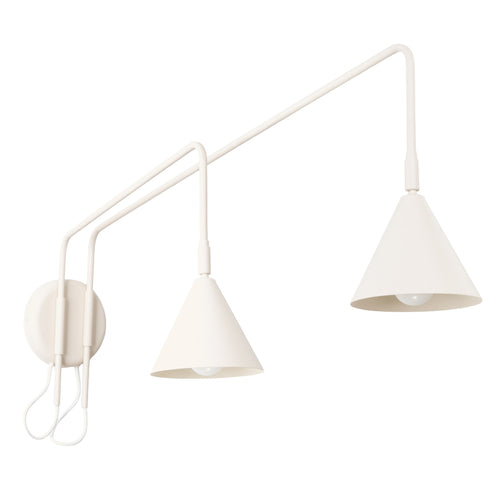
The real criterion is not the number of watts, but the shape of the beam: wide and bounced towards the ceiling, or narrow and directed at a surface. An adjustable designer light fixture covers both uses depending on the angle you give it.
| Solution | What it lights | Connection | Height |
|---|---|---|---|
| Arc floor lamp | The centre of the room | Floor socket | Diffuser above 1.80 m |
| Wall light | Walls and faces | Wall socket or back box | 1.70 m to 1.80 m |
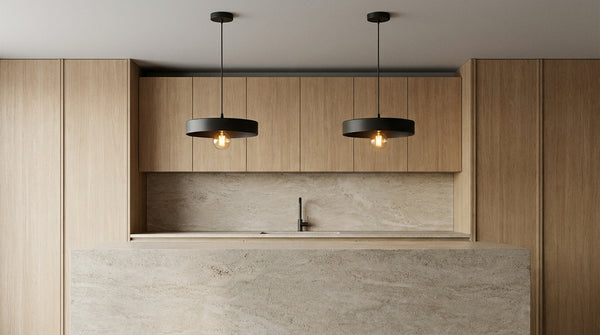
| Pendant on a long cable | A specific surface | Socket, cable along the wall | 60 to 75 cm above the table |
| Table lamp | The evening ritual | Socket | Shade around 1.10 m |
| Battery ceiling light | A high point without a cable | Rechargeable | On the ceiling, no chasing |
If you would rather start from a plan than try lamps one by one, you can describe your room and your sockets on this page: we start from the floor area and how you use the room, not from the catalogue.
What can you do when there is no ceiling light?
You light in layers: a high source that bounces off the ceiling, a middle one that lights faces and surfaces, and a low one for the evening. Three well-placed sockets are enough, provided you do not cluster them in one corner.
The three layers, and the role of each
- High layer: light bounced towards the ceiling, provided it is white or very pale.
- Middle layer: wall light or pendant at face height, for reading and moving around.
- Low layer: table or bedside lamp around 1.10 m, for the evening mood.
- Dimmer: turning the brightness down to 20% changes the room more than swapping the shade.
This layering is called ambient lighting, and it is designed room by room. Our living room and family room lighting project starts from the floor area and how you use the room rather than from a set model.
How many sockets, and where?
- Behind the sofa: the hidden socket powers the floor lamp with no visible cable.
- On each side of the bed: two power points are better than an extension lead running across the bedroom.
- Up high: a wall light connects to a wall socket or a back box, never to a cord on the floor.
- A switch that controls nothing on the ceiling often controls a wall socket: check before drilling.
To size things properly, it is better to calculate the amount of lighting room by room than to buy one very powerful lamp and leave it in the same spot.
How do you light a living room without a ceiling light?
An arc lamp in the corner by the sofa, a low source near an armchair, a wall light above a piece of furniture: the living room gains three zones instead of one. Light follows how you use the room, reading, conversation, screen, instead of falling on people's heads.
The low source, the one that changes the room in the evening
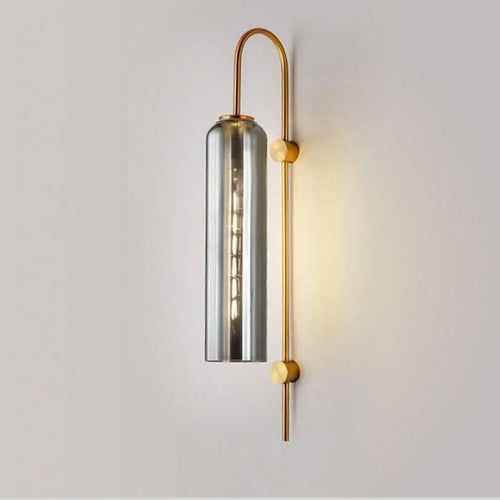
A floor lamp with a fabric shade gives a low, warm light at 2700 K that keeps faces relaxed. A different register with an ambient floor lamp in smoked glass or black metal, which becomes an object in the room even when switched off.
Task lighting near the sofa
- Reading: a narrow beam around 1.10 m, never in the eyes of the person opposite.
- Screen: indirect light behind the screen to remove harsh contrast.
- Moving around: a low wall light illuminates the floor without dazzling.
These three positions fall under task lighting, the kind that makes a living room usable in the evening without lighting the whole room.
Light fixtures that illuminate a room without a ceiling light


How do you light a bedroom or bathroom without a ceiling light?
In the bedroom, two wall sources on either side of the bed replace the ceiling light and free up the bedside tables. In the bathroom, a wall light above the mirror and a strip above the worktop are enough, provided you respect the water zones.
Two wall lights rather than a bedside lamp
- Height: 1.10 m to 1.20 m for an adjustable reading light, 1.50 m for soft light.
- Temperature: 2700 K at the bedside, the bedroom cannot take cool white.
- Reading as a couple: each side switches on alone, without waking the other.
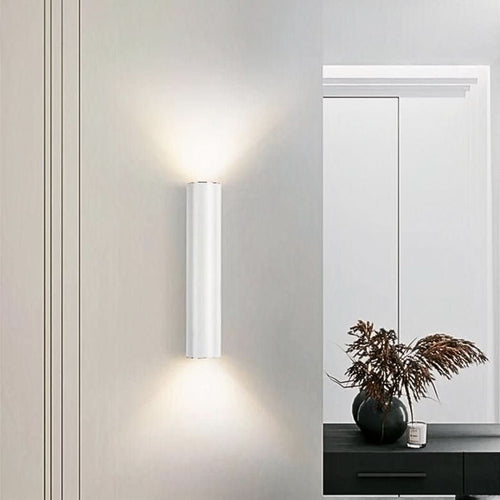
An adjustable bedroom wall light replaces the bedside lamp without cluttering the table. If you do not want to drill or run a cable, the wireless wall light recharges and attaches with adhesive.
The bathroom and the protection rating
Near water, forget the IP20 of ordinary light fixtures: from a survey of 222 references in our Large ceiling lights collection on 5 October 2026, 2% are IP44 and 98% are IP20. So look for IP44 bathroom wall lights, the only ones protected against splashes.
Without a ceiling light, which room should get light back first?
How do you light a large room without electrical installation on the ceiling?
You multiply plugged-in sources and favour long arms, which carry light towards the centre. Two opposing arc floor lamps light a large room more evenly than a single badly placed pendant, and a plug-in wall light fills in the shadow areas.
Two long arms are better than one central point
- Opposition: two sources at 180 degrees remove overlapping shadows.
- Uplighting: light towards a pale ceiling spreads without dazzling.
- Wall pairing: two wall lights facing each other widen the room.
When no cable goes up to the ceiling, the exposed cable solution remains, detailed in our guide to installing a ceiling light without an electrical supply.
How do you create a ceiling light when there isn't one?
Three routes: run a supply from an existing switch, fit a battery-powered model, or run the cable of a pendant along the wall to a socket. The last is the easiest to revise, and our article on the ceiling light without drilling details adhesive fixings. If you are unsure about having your sockets surveyed, the reviews published on the Designix Google listing can be checked in one click.
In stock · shipping costs shown at checkout · up to 30% off in your cart
Ready to turn inspiration into reality?
Tell us about your room, your style and your budget, and we will show you the pieces that truly suit your project.
Get guidance in 30 seconds →