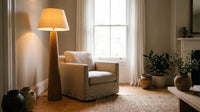
Retro wall lights
- Tracked delivery to your country Tracked delivery
- Secure payment at checkout Multiple payment methods
- 14 days to change your mind 14-day returns
- Secure payment Secure payment


Not sure of your style? Find it in 30 seconds
A few questions, and we will show you the pieces made for you.






Frequently asked questions
How do I choose the right product?
What are the delivery times?
Can I return an item?
Can I pay in instalments?

An interior that reflects who you are
Carefully selected pieces, shipped from our warehouses. Our team advises you before you buy, so you choose with confidence.
- Tracked delivery
- Pay in instalments, where available
- 14 days to change your mind
- Advice & showroom in Lyon, France
A vintage wall light usually combines a metal base with a glass diffuser, using an E14, E27 or G9 socket, and it lights a room without taking up floor space. It goes above a sideboard, a bed or along a hallway, with warm white light or an LED module.
What is a vintage wall light and what light does it give?
The vintage look starts with the material: a metal base in steel or aluminium, a glass diffuser, and an E14, E27 or G9 socket. The light is usually warm white, 2700 to 3500 K, as on Alavesina, Arko or Kairo; cool white 4500 to 6500 K appears on Éclat Mystique. Sizes run from Ø 10 cm/L 10 cm to Ø 50 cm/H 14 cm, for a living room, bedroom or hallway, with IP20, or IP44 like Mireia.
Vintage wall light in glass: what effect?
Ribbed or fluted glass diffuses the light and softens the bulb, which suits a spot near a sofa, a bed or in a hallway. Clear or smoked glass shows the source and gives a more graphic look, best kept for walls where you do not sit right next to it. A globe glass, on the other hand, spreads light widely upwards and downwards.
Which bulb for a vintage wall light?
The E14 socket takes a small screw bulb, perfect for a compact format. The E27 socket accepts a standard bulb, useful when you want strong light. The G9 takes a small pin module, common on slim wall lights. Some models have an integrated LED and take no bulb at all: check before buying in the wall lights with a standard socket or in all Designix lighting.
Where to install a vintage wall light in the home?
In this selection, vintage wall lights are aimed first at the bedroom, living room and hallway, then the entrance and outdoors. For a damp room, go for IP44, IP54 or IP65. On a staircase, line up several points and check the projection so you do not block the way.
Living room wall lights: where on the wall?
Allow one wall light on either side of a sofa, a painting or a bookcase, at seated shoulder height. A ribbed glass model such as Calvesano lights without glare. For a living room, LED wall lights for living rooms give a continuous wash of light, with no floor lamp.
Adult bedroom wall lights: on each side of the bed?
Yes, in a symmetrical pair, about 60 to 70 cm above the mattress and 15 cm from the edge of the bed. An adjustable arm lets you aim the light at a book, as on Lirienna and its conical shade. More placement ideas are detailed in LED wall lights for bedrooms.
A hallway takes slim, closely spaced models, with hallway models that have a low projection. On a staircase, one wall light every two to three metres and a design wall light for stairs at the bottom of the flight. In a bathroom, a vintage wall light for bathrooms rated IP44 minimum, such as Mireia IP44 and its round shape. In a kitchen, IP20 is enough on a dry wall, IP44 near the sink. Outdoors, only waterproof outdoor wall lights will do. The collection has 345 products.
| Room | Recommended IP rating | Common socket | Style |
|---|---|---|---|
| Living room | IP20 | E14 or E27 | Vintage, art deco |
| Bedroom | IP20 | E27 or E14 | Vintage, retro |
| Hallway | IP20 | E14 or G9 | Vintage, modern |
| Entrance | IP20 or IP44 | E27 or G9 | Contemporary |
| Bathroom | IP44, IP54 or IP65 | G9 or E27 | Vintage, design |
| Outdoor | IP65 | E27 | Industrial |
How to choose between vintage, art deco, art nouveau and industrial styles?
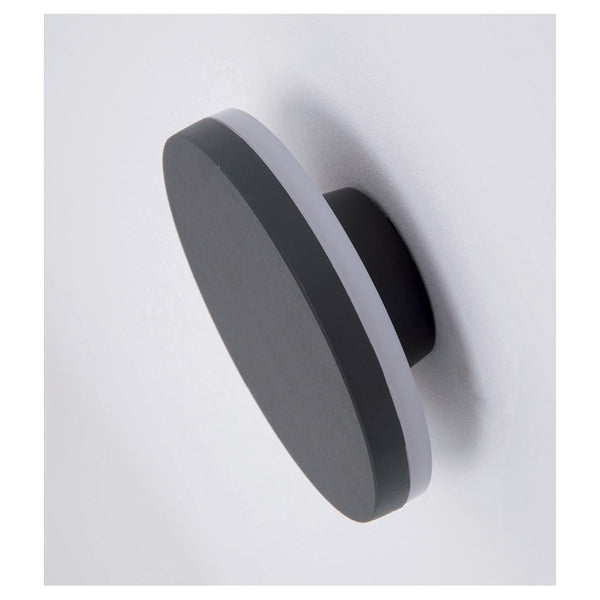
The vintage look plays on brass, ribbed glass and curved lines. Art deco favours geometry, discs and circles, like Dorella and its offset disc. Art nouveau looks for plant-like curves, and industrial owns black metal and the visible bulb. Choose by the architecture of the room, not just the colour.
1930s art deco wall lights: what signs to look for?
Circles, half-discs, fan motifs, gilded metal and worked glass. This vocabulary suits 1930s interiors as well as contemporary schemes. You find it in gold finishes, often placed in pairs on either side of a mirror.
Art nouveau wall lights: which shapes to favour?
Soft curves, slim stems, leaf or flower ornaments. An articulated arm wall light such as Adara picks up the spirit without falling into pastiche. For a rawer look, black industrial style and its metal cage change the mood completely.
Which materials and colours for a vintage wall light?
Metal and glass dominate this selection, with gold, black, white, beige or bronze finishes. Gold dresses up vintage and art deco models, black stays discreet, ribbed glass diffuses the light. Wood is not the main material of these vintage wall lights: look for it in a dedicated collection.
Wooden wall lights: where to find this style?
Wood pairs well with a fabric shade and warm light, but it is rare on vintage wall lights in metal and glass. For a wood look, look instead at wooden wall lights, closer to a Scandinavian feel than a 1930s one.
Gold or black vintage wall light: which colours to pair it with?
Gold warms a white, beige or taupe wall and matches the brass of a handle. Black gives structure to a pale wall and disappears against a dark background. In this selection, models with a metal cage such as Mona make a feature of the visible bulb, which calls for a filament bulb or an opal globe.
How to install, adjust and care for a vintage wall light?
Switch off the power at the breaker before any work, then mark the height and projection in pencil. In a living room, fit at seated reading height; in a bedroom, at bedside height. Check the reach of adjustable arms, then leave the electrical connection to a professional.
At what height should a wall light be fitted?
As a rule, allow 1.50 to 1.70 m from the floor in a hallway, 60 to 70 cm above a worktop or mattress, and at seated shoulder height next to a sofa. These markers vary with the room and the size of the occupants. Projection matters as much as height: on a passage, stay under about ten centimetres.
How to care for the glass and metal?
Dust dry, then wipe the glass with a soft, slightly damp cloth and an ammonia-free glass cleaner. On metal, avoid abrasive products that scratch the finish, especially on gold and bronze. Always cut the power before removing a diffuser.
What are the trends for wall lights in 2026?
Vintage wall lights keep ribbed glass, gold tubes and globe shapes, with a growing share of LED and dimmer-compatible modules. Black and gold remain the strong colours of the selection. Warm white 2700 to 3500 K suits warm interiors, cool white 4500 to 6500 K stays in the minority.
The return of ribbed glass and gold tubes
Models with two ribbed glass tubes and gold spheres are back on living room walls, often placed in pairs. Fluted glass diffuses a soft light and hides the bulb, which explains its presence in this selection. The spirit continues in designer LED wall lights.
LED and dimmers in the vintage style
More and more models pair an old shape with an LED or a dimmer, to lower the intensity in the evening. These versions are found in dimmable wall lights. Check bulb compatibility: a non-dimmable LED buzzes on an old dimmer.
High-end design wall lights: what justifies the price gap?
High-end shows in the metal finish, the quality of the glass, the precision of the shapes and the length of the warranty. A well-integrated E14, E27 or G9 socket and accurate dimensions matter as much as the overall look.
Finishes, materials and warranties
A gold or bronze finish that lasts needs a thicker coat than a simple lacquer. Thick glass withstands regular cleaning without clouding. A piece in tinted glass such as Éclat Mystique aims for a quality of light rather than plain illumination.
Original shapes and exceptional pieces
A signature shape, an offset disc or a large-diameter globe change how a whole wall reads and work as a single object. Vintage metal works in the same spirit, with more elaborate finishes, as in our vintage metal selection.
Which vintage wall lights to choose by room and socket?
First choose the IP rating by room, then the socket: E14 for a compact format, E27 for a standard bulb, G9 for small modules, LED for integrated models. In a dry interior, IP20 is enough. In a bathroom or outdoors, go up to IP44, IP54 or IP65.
| Socket | Bulb needed | Recommended use | Possible colour temperature |
|---|---|---|---|
| E14 | Small screw socket | Bedroom, hallway | Warm white 2700-3500 K |
| E27 | Standard screw socket | Living room, bedroom, entrance, outdoor | Warm or cool white 4500-6500 K |
| G9 | Small pin socket | Compact modules, bathroom | Warm white 2700-3500 K |
| LED | Integrated module | No visible bulb | Warm white 2700-3500 K |
For a hallway or a staircase, a tube or round shape is enough. For a bathroom, check the IP rating first. For outdoors, go for IP65 outdoor wall lights. And for a softer mood, kitchen models or a wall light with a fabric shade do the job.
Designix supports you throughout the order: secure payment, tracked delivery, returns and customer service to check a socket, a dimension or a compatibility before you drill.
See the Dorella wall light and its offset disc, the Mireia IP44 or the Lirienna with its conical shade to move from choosing to fitting.
Frequently asked questions about vintage wall lights
Which wall lights should I choose?
Start with the room: a discreet E14 format for a hallway, an E27 for a living room, a G9 or LED for a bathroom. Then check the IP rating, the projection and the colour. Metal and glass dominate this collection, often in gold, black or white.
Living room wall lights: how to choose them?
Favour a wall light that illuminates without glare: ribbed glass, a diffuser or a globe, with an E14 or E27 socket. Place it on either side of a sofa or a painting, at seated shoulder height. Gold warms, black gives structure, white blends in. Measure the projection before drilling.
Adult bedroom wall lights: which model to choose?
A vintage wall light with an adjustable arm or a conical shade lets you read without lighting the whole ceiling. E14 and E27 sockets are the most common here. Choose warm white light, 2700 to 3500 K, and IP20, enough in a dry area, then fit the pair at the same height on each side of the bed.
Art deco wall lights: what are their features?
Art deco wall lights play on circles, discs and geometric lines, often in gilded metal with worked glass. The Dorella wall light is one example, with its offset disc and G9 socket. This style suits 1930s interiors as well as contemporary schemes.
Staircase wall lights: how to install them?
Fit several wall lights in line at hand height, checking that they do not stick out into the passage. Models with a low projection and an E14 or E27 socket work well. In a dry interior, IP20 is enough. Leave the electrical connection to a professional.