Retro ceiling lights
- Tracked delivery to your country Tracked delivery
- Secure payment at checkout Multiple payment methods
- 14 days to change your mind 14-day returns
- Secure payment Secure payment


Not sure of your style? Find it in 30 seconds
A few questions, and we will show you the pieces made for you.




Frequently asked questions
How do I choose the right product?
What are the delivery times?
Can I return an item?
Can I pay in instalments?
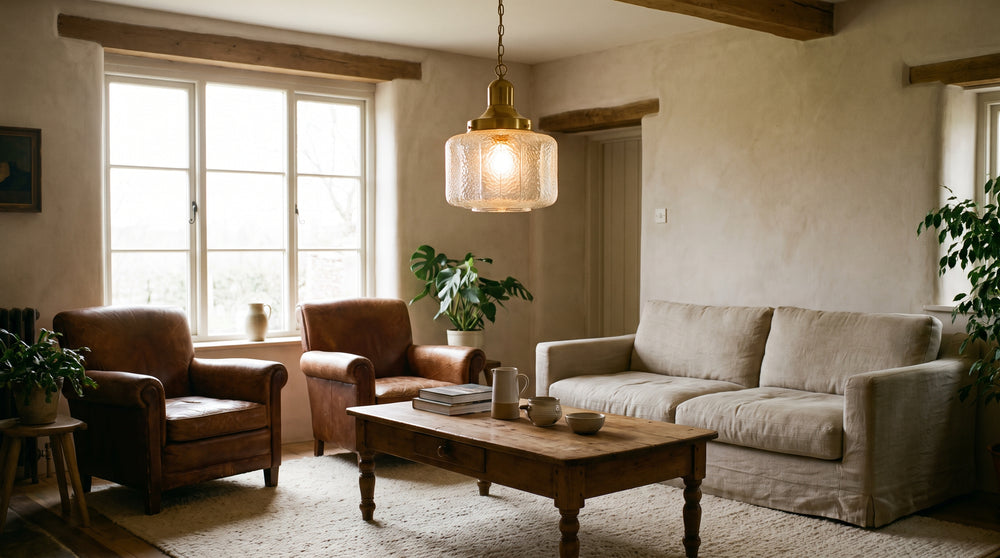
An interior that reflects who you are
Carefully selected pieces, shipped from our warehouses. Our team advises you before you buy, so you choose with confidence.
- Tracked delivery
- Pay in instalments, where available
- 14 days to change your mind
- Advice & showroom in Lyon, France
A retro ceiling light comes down to three things: the number of globes, the socket (E27, E14 or G9) and the diameter of the fixture. These glass and metal models cast a soft downward light and dress up the living room, bedroom or hallway. Allow three to six globes depending on the area to cover and the ceiling height.
- What a retro ceiling light is
- Which model for which room
- Glass, metal and finishes
- The types of ceiling lights
- Matching several globes
- Installation and relocating the power supply
- Care and bulbs
- Alternatives to a ceiling light
- Frequently asked questions
What is a retro ceiling light and what light does it give?
A retro ceiling light is a fixture fixed to the ceiling that borrows vintage codes: opal, smoked or cream glass globes, metal rims, gold or bronze rods. In this collection, the light points down into the room and uses an E27, E14 or G9 socket, with warm white on the models that state it.
The first thing you see is the glass: a ball, a globe, a round or ribbed disc. Opal glass diffuses widely and hides the bulb; smoked glass lets the source show through and gives a more graphic look. The rims and rods do the rest: they shape the silhouette and set the era.
What else is a ceiling light called?
Depending on the catalogue, it is also called a ceiling fixture, or a low pendant when the model hangs slightly below the ceiling. In everyday language, it is the living room ceiling light or the kitchen one. The name changes nothing about the fitting: a ceiling plate and a connection to the existing circuit.
Why choose a ceiling light rather than a pendant?
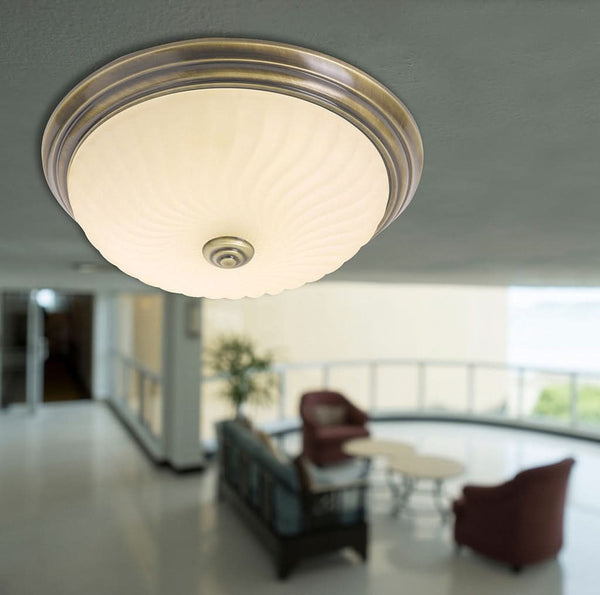
Above a table, a pendant drops to eye level and frames the meal. A ceiling light illuminates the whole room without putting anything in your line of sight, and leaves the floor and walls free. For a hallway or an entrance, it is the format that takes up the least space. To compare the families, browse the entire lighting catalogue. A model such as the Bronzinia round ceiling light in cream glass shows this downward light well, with no bulb visible behind the ribbed glass.
Which retro ceiling light for the living room, bedroom, kitchen or hallway?
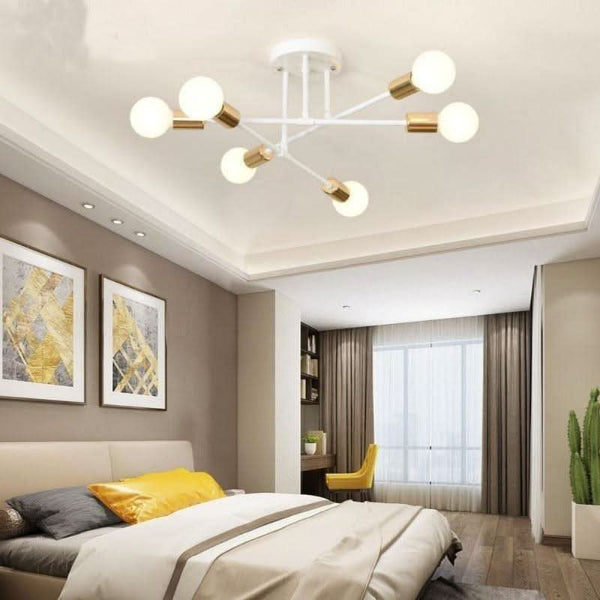
For a living room, multi-globe models such as Amaris or Teslineta dress the space; for a bedroom or hallway, a round, closed format such as Bronzinia works better. The kitchen and entrance are fine with a compact model and, in a bathroom, an IP44 model such as Silnorina is the best fit.
| Room | Model in the collection | Socket | Protection rating | What sets it apart |
|---|---|---|---|---|
| Living room | Amaris LED ceiling light | E27 | IP20 | Six ball globes, black and gold frame |
| Bedroom | Bronzinia ceiling light | E27 | IP20 | Ribbed cream glass, bronze rim, warm white 2700-3500K |
| Kitchen | Teslineta LED ceiling light | E14 | IP20 | Three opal globes on gold rods |
| Hallway and entrance | Gulliver LED ceiling light | E14 | IP20 | Four graphite globes on gold rods |
| Bathroom | Silnorina LED ceiling light | G9 | IP44 | Compact round format, available in several colours |
| Office and dining room | Cilvaro LED ceiling light | E14 | IP20 | Three smoked globes, gold rods |
The living room takes the largest diameter: it is the room where the fixture stays visible from the sofa. To go further on this room, see the ceiling lights for the living room and the ceiling lighting for the bedroom, where a more understated format sits better above the bed.
Retro kitchen light: which model to choose?
In a kitchen, the ceiling light works above the worktop and the floor, often with a low ceiling. A compact three-globe model such as Teslineta, with an E14 socket, lights without hanging too low. It is easy to clean and does not catch steam the way a fabric shade model does. Find more ideas in the kitchen ceiling lights.
Which retro ceiling light for a hallway or an entrance?
In a hallway, the fixture has to light widely and withstand passing traffic. The four graphite globes of Gulliver and its four graphite globes give an even light with no harsh spot. In an entrance, go for a fixed, shallow model that is easier to dust. See also the solutions to light a hallway.
Retro ceiling light in glass, metal or gold finish: which material to choose?
Glass diffuses a soft, even light, while metal shapes the silhouette and pairs with gold or bronze rods. Most models in the collection combine the two, in a black, gold, bronze or cream finish. Opal glass softens, smoked glass is more graphic.
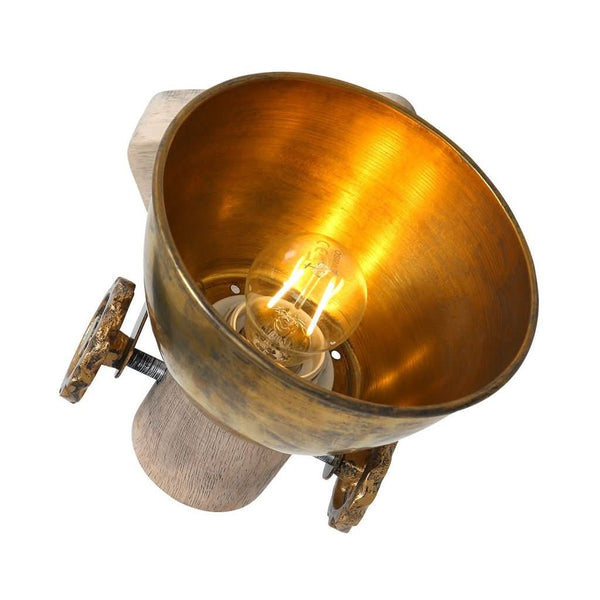
Hammered metal, as on the Carvino adjustable reflector, throws a more directed light and takes on a beige, gold or bronze tone depending on the finish. Aluminium is reserved for compact, lightweight models, with a more neutral look.
Retro glass ceiling light: opal, smoked or cream?
Opal glass completely hides the source: an enveloping light, no glare from the sofa. Smoked glass lets a sliver of light through and keeps a stronger, graphic look that works well on a pale wall. Ribbed cream glass, as on Bronzinia, warms the tone and echoes old fixtures.
Chic retro light: which gold or bronze finishes?
A gold finish warms the room and pairs with brass handles, furniture legs and frames. Bronze, more matte, matches dark woods and rustic interiors. Black, finally, contrasts with a white ceiling. Compare the gold finishes and the black metal ceiling lights before deciding.
What are the different types of ceiling lights in this collection?
The models vary first by the number of light points and the socket: E27 for Carvino, Amaris and Bronzinia, E14 for Gulliver, Teslineta and Cilvaro, G9 for Silnorina. Some are LED, others take replaceable bulbs, and Silnorina carries an IP44 protection rating.
| Socket | Models | Stated wattage | Light temperature |
|---|---|---|---|
| E27 | Carvino, Amaris, Bronzinia | 40 W max (Carvino), 40 W (Bronzinia), not stated (Amaris) | Warm white 2700-3500K on Bronzinia |
| E14 | Gulliver, Teslineta, Cilvaro | 10 W (Gulliver, Cilvaro) | Not stated |
| G9 | Silnorina | 8 W | Not stated |
The E27 socket takes the widest choice of bulbs, including exposed filament models when the globe is open. The E14 socket suits small globes, on models with three or four light points. The G9, smaller still, is used on round, compact formats.
LED ceiling light or E27 bulb ceiling light?
An LED ceiling light has its source built in and switches on with no bulb to buy. A model with an E27 or E14 socket stays flexible: you choose the colour temperature, you replace a burnt-out bulb without changing the fixture. Both are installed the same way. To compare integrated units, see the modern style LED ceiling lights and the E27 socket models.
Globe ceiling light or closed round ceiling light?
With globes, the fixture multiplies the sources and spreads light over a large circle: ideal above a big room. Round and closed, it forms a single block of glass against the ceiling, more discreet, easier to clean and better suited to low ceilings. The choice comes down first to the area to cover.
How to match a retro ceiling light with several globes in a room?
Globes are chosen by their tint: opal for an enveloping light, smoked for a stronger look, cream for a rustic feel. Match the rim with the other metals in the room, black or gold, and keep to a single colour family per room to avoid mixing.
Chic retro light: which rim colour?
Look at the dominant metal in the room: handles, table legs, kitchen pendant. A gold rim answers brass, a black rim answers dark profiles and frames, a bronze rim answers warm woods. A room with no visible metal takes any of these three finishes.
Retro glass chandelier and globe ceiling light: how to pair them?
In the same room, it is better not to mix two very different glass sources. A smoked glass chandelier above the table can take a discreet ceiling light or a wall light, not a second, strongly patterned globe model. The Amaris vintage ceiling light with six globes holds its own in a large room. For more graphic variants, see the designer LED ceiling lights and the Cilvaro, three smoked globes on gold rods.
How to install a retro ceiling light, even without a ceiling supply?
Installation is done on the existing junction box, with the power off, respecting the live, neutral and earth markings. Without an electrical supply at the ceiling, the power is brought over from a nearby socket or light point, with a trunking or exposed cable depending on the room, keeping the connection accessible.
Switch off the breaker before removing the old fixture and check the power is off with a tester. The weight is carried by the ceiling plate, not by the wires.
How to relocate a ceiling light?
Relocating means taking the power from a nearby socket or light point, then running the cable to the ceiling light in trunking, along the skirting or exposed. Keep the connection accessible and hand the work to an electrician if the existing circuit does not allow it. A model fitted with a dimmable ceiling light needs a compatible control.
Which ceiling light for a sloped ceiling?
On a sloped ceiling, an adjustable ceiling light takes over from a fixed model: the reflector is set to aim at the area to light, as on the Carvino adjustable reflector, whose shade measures 15 cm in diameter by 24 cm. Failing that, a small closed round ceiling light, set flat against the slope, avoids shadow play. For circulation areas, see also the modern ceiling lights for hallways.
How to care for a retro ceiling light and change its bulbs?
Switch off the power before any handling, then dust the glass globes with a soft cloth, with no abrasive product on bronze or gold rims. Models with an E27, E14 or G9 socket are replaced bulb by bulb, respecting the maximum wattage stated for each fixture.
A slightly damp microfibre cloth is enough on glass. On hammered metal, wipe without pressing into the hollows, where dust collects.
How to clean a glass ceiling light without scratching it?
Opal or ribbed cream glass is cleaned with warm water and mild soap, then dried immediately to avoid marks. Avoid alcohol and powders on gold finishes, which lose their shine. Removable globes are washed separately; closed models are done in place, without forcing the ceiling plate. For easy care on a large globe model, Gulliver and its four graphite globes are dusted globe by globe.
Can you put LED bulbs in a retro ceiling light?
Yes, on models with an interchangeable socket: an E27 or E14 LED bulb replaces a classic bulb without changing the fixture or the perceived brightness, as long as you stay under the stated maximum wattage. On a closed globe, choose an LED that gives off little heat. The Teslineta ceiling light and its three opal globes runs on E14, with bulbs chosen according to the tint you want.
What are the alternatives to a ceiling light for lighting a room?
When ceiling fixing is not possible, a pendant, a track spotlight, a wall light or a floor lamp takes over. A ceiling light moved onto a rod or placed near a high corner remains a simple solution, and a floor lamp lights the corner with no work.
A floor lamp or a wall light rather than a ceiling light?
A floor lamp lights around the edges, near the sofa or the reading chair, and can be moved. A wall light frees the floor, aims light up or down and suits narrow hallways. In both cases, the light is less even than that of a ceiling light: multiply the points rather than looking for a single one.
How to light a room without drilling the ceiling?
Light through the walls and the floor: plug-in wall lights, a floor lamp, a string of lights on a taut cable. A work room takes two crossed sources, one for the worktop, one for the mood. For work stations, look at the ceiling lights for the office and the rest of all our lighting ranges, keeping in mind choosing a light suited to each room.
Frequently asked questions about retro ceiling lights
How can I install a ceiling light without an electrical supply?
Without an electrical supply at the ceiling, use a wall light or a floor lamp plugged into a socket, or a plug-in pendant kit with exposed cable. Direct connection at the ceiling requires an existing circuit; otherwise, an electrician creates the point.
What can you do when there is no ceiling light?
You can light with wall lights, a floor lamp, a pendant on another fixing or track spotlights. If the ceiling has no light point, the simplest solution remains a floor lamp or a wall light plugged into a socket.
Which lamp can replace a ceiling light?
A pendant, a floor lamp, a wall light or track spotlights replace a ceiling light when fixing it is not possible. For a light close to that of a ceiling light, choose a lamp that shines upwards or a multi-globe pendant.
Can you put a retro ceiling light in a bathroom?
Yes, provided you choose a protected model: in this collection, the Silnorina IP44 ceiling light carries an IP44 rating, suited to damp rooms, while the other models are IP20 and are meant for dry rooms such as the living room, bedroom or hallway. Other references are gathered in the bathroom ceiling lights.
Does a retro ceiling light use a lot of power?
The wattages stated in the collection range from 8 W to 40 W maximum depending on the model and socket. An LED bulb of the same socket uses far less than a filament bulb for a comparable light output, and stays under the limit stated on the fixture's product page.
All the models in this collection are covered by the warranty stated on their product page. Designix provides secure payment, tracked delivery and returns, with a customer service team available to confirm a socket or a dimension before ordering.
Start with the room and the number of light points: three globes for a medium living room, a round closed format for a hallway or bedroom. Then check the socket and the diameter against your ceiling, and choose the glass tint. The Amaris vintage ceiling light with six globes leads the way for a large room.