Spider ceiling light
- Tracked delivery to your country Tracked delivery
- Secure payment at checkout Multiple payment methods
- 14 days to change your mind 14-day returns
- Secure payment Secure payment


Not sure of your style? Find it in 30 seconds
A few questions, and we will show you the pieces made for you.










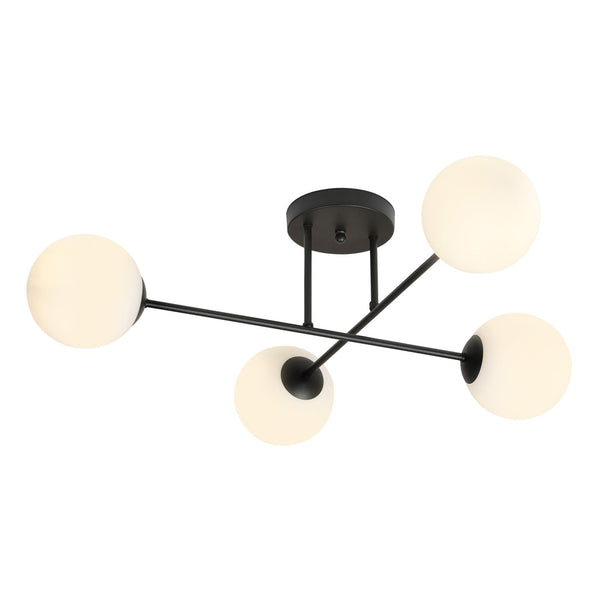


Frequently asked questions
What size ceiling light?
For what ceiling height?
Integrated LED or bulbs?
Is it suitable for a bathroom?
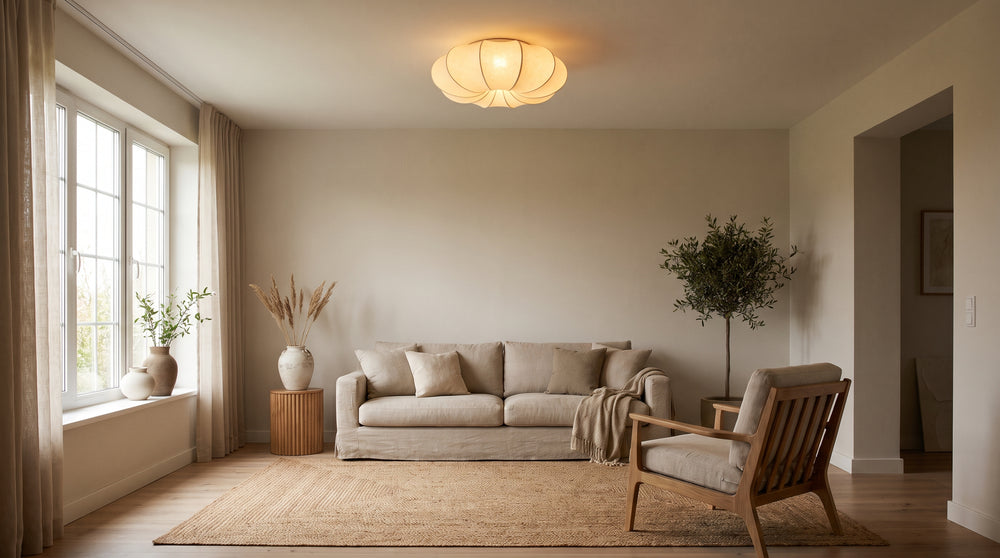
Light changes everything
From statement chandeliers to discreet wall lights, we help you choose the right brightness, height and style for every room.
- Tracked delivery
- Pay in instalments, where available
- 14 days to change your mind
- Advice & showroom in Lyon, France
A spider ceiling light is chosen for its span and the number of light points, not for its stated wattage: three sources are enough in a hallway, five suit a standard living room, eight are justified under a high ceiling. These metal-arm pendants share E27, E14, G9, GU10 sockets or an integrated LED, and an IP20 rating that makes them suitable for dry rooms.
What is a spider ceiling light and what light does it give?
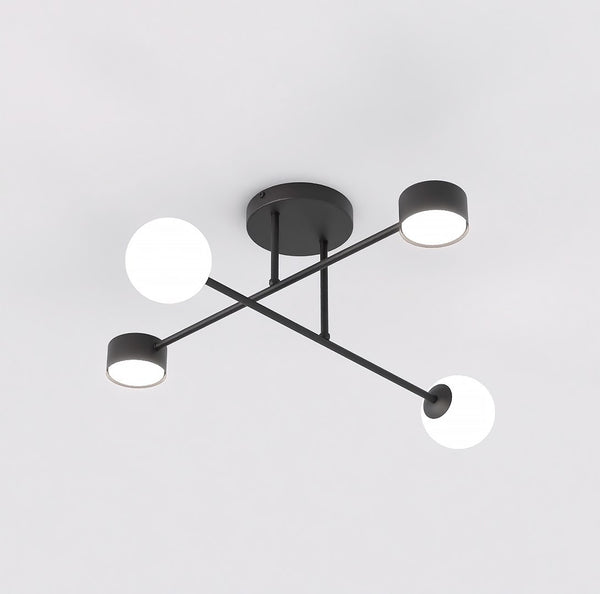
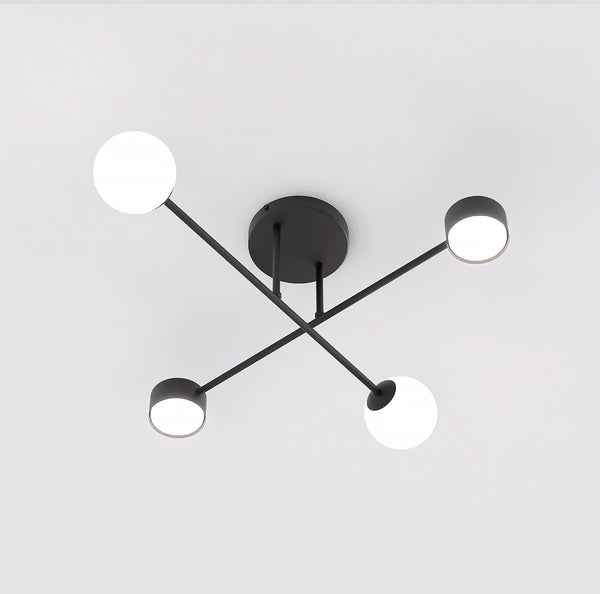
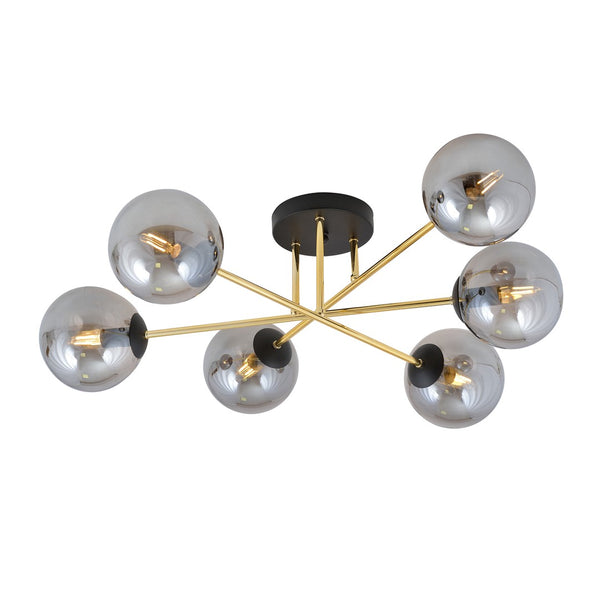
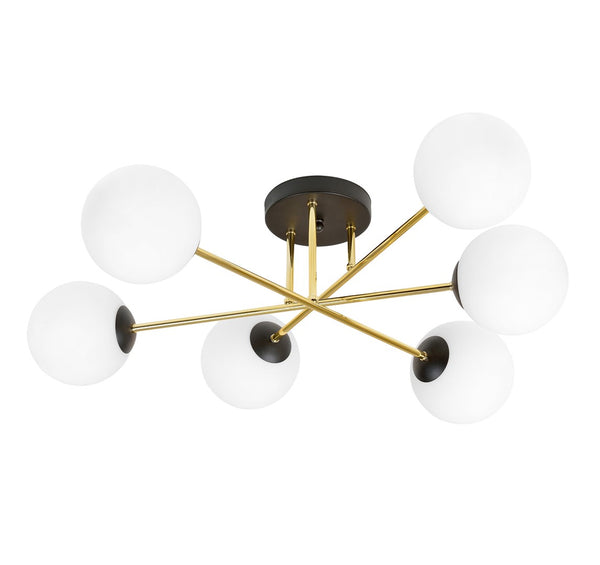
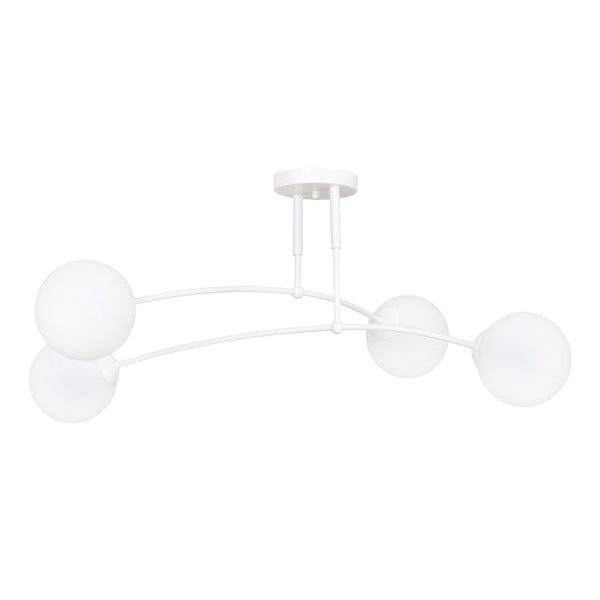
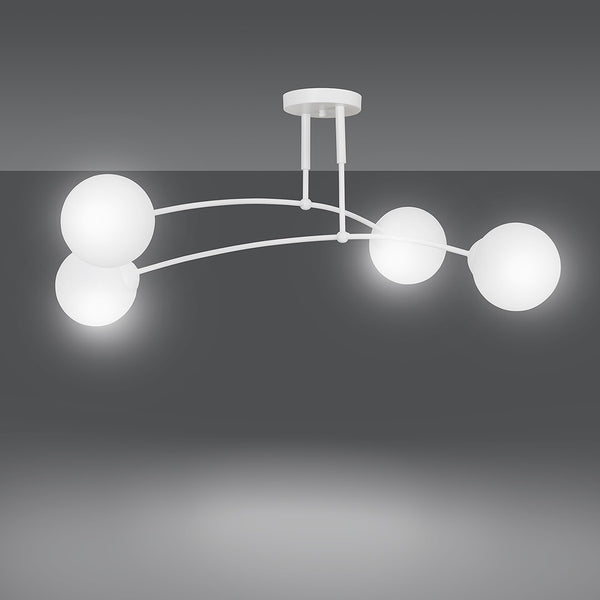
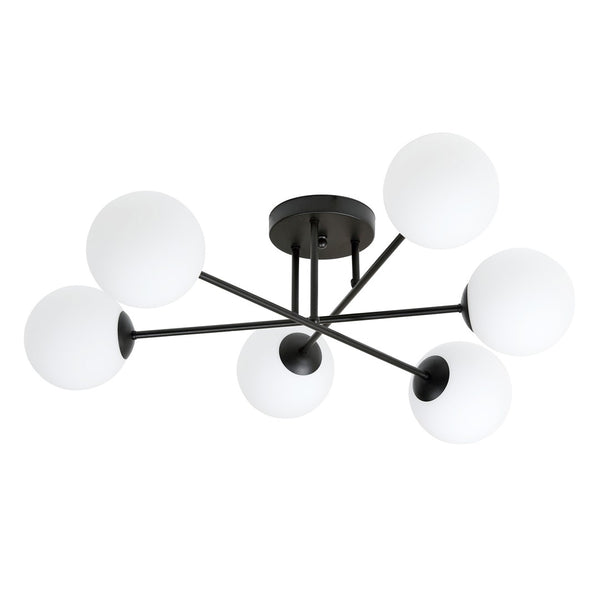
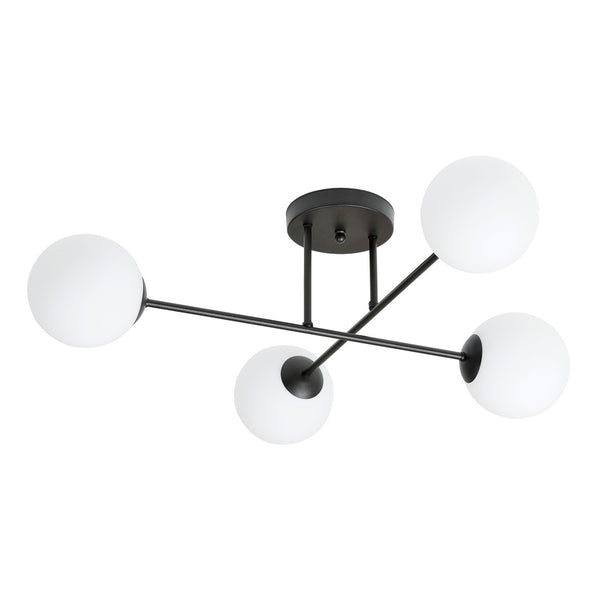
A spider ceiling light is a pendant whose several slim arms radiate from a central point to carry as many light points. The light spreads across the whole room instead of falling in a single beam, which limits harsh shadows. The models in this selection combine metal with glass, crystal or acrylic.
Metal comes first among the materials, ahead of glass, steel and aluminium: it draws the silhouette and lets the light through. The large Lumière Zenith LED ceiling light (120 x 15 cm) lines up its points on a narrow strip, the Turound black unfolds a circle 91.5 cm in diameter, and the ESKOLA 140 wall and ceiling lights and ESKOLA 70 in steel, E27 socket, cover large square areas.
Spider chandelier or spider pendant: what is the difference?
Both terms refer to light fittings with multiple arms radiating from a centre. The word chandelier is used for pieces dressed in glass, crystal or brass, with decorative points, such as the TX models in crystal and brass. Pendant refers to lighter metal shapes, close to the contemporary ceiling light. The choice therefore comes down to materials and look, not technique.
White, black or gold spider ceiling light: which effect?
Black dominates the selection and strongly structures the room; gold and brass warm the light; silver and matt aluminium lighten the volumes. A white model blends into a pale ceiling once switched off. These finishes can be found in the ceiling light range, and the whole family in all our light fittings.
Which ceiling light lights a living room best?
For a living room, a wide, shallow spider ceiling light covers the room better than a narrow, very bright model in the centre. The large formats in the selection run from 70 to 140 cm across, or up to 91.5 cm in diameter, with several light points or an integrated LED.
The useful rule comes down to span, read as a ratio to the area to be lit. In a living room of 20 to 25 m², a 140 cm square or a 91.5 cm circle spreads the light over the seating and the walls, not only over the coffee table. The living room light fittings cover both open-plan and compact living rooms here. For a retro look, rope pendants and filament bulbs bring a vintage character appreciated in industrial interiors.
Large living room ceiling light: which format to plan for?
Allow 20 to 25 m² for a ceiling light 110 to 140 cm across, against 12 to 15 m² for a 70 cm format. The height of the fitting matters just as much: 12.4 cm for the ESKOLA 70, 22.5 cm for the ESKOLA 140. Under a 2.40 m ceiling, a model that hangs low keeps the room readable, and living room light fittings in a pared-back style meet this constraint well.
Powerful LED ceiling light: how to light a large room?
Better to multiply the points than to push the wattage of a single source: five 10 W points spread out tire the eye less than a very bright module in the centre. An integrated LED, as on the Turound silver, gives even light with no bulb to change; E27 sockets, on the other hand, let you vary shade and intensity. Also worth seeing in the LED ceiling lights.
How many arms or light points to choose: 3, 5 or 8 lights?
The number of light points is chosen according to the area and the height: three bulbs are enough for a hallway or a small bedroom, five suit a standard living room, eight are justified in a large room or under a high ceiling. Each point is then set by the bulb you choose.
| Light points | Suitable room | Effect in the room | To check |
|---|---|---|---|
| 3 points | Hallway, entrance, small bedroom | Spread light but not wide | The span of the fitting against the width of the passage |
| 5 points | Living room, dining room, adult bedroom | Even spread, soft contrast | The ceiling height and the distance to the wall |
| 8 points | Large living room, high room, generous entrance | Ample light over several zones | The weight on the ceiling and the fixing provided |
3-wire spider pendant: for which room?
Three points suit passages and small volumes: hallway, entrance, guest bedroom. The span matters more than the wattage, a 70 cm fitting such as the ESKOLA 70 staying in proportion to a wide hallway, whereas a large circle would look overpowering there. For these circulation areas, see the hallway ceiling lights.
8-bulb spider chandelier: when to choose it?
Eight points are justified in a large living room, a generous entrance or a room with a high ceiling, where a single source would leave dark zones. Then check the weight and the type of ceiling fixing, then the spread: evenly spaced points light better than points bunched in the centre. The modern models with long arms meet this use.
Which spider ceiling light for the bedroom, kitchen or hallway?
In a bedroom, favour a warm white light of 2700 to 3500 K and points that do not glare; above a kitchen worktop, a closed model in glass or metal is easier to clean; in a hallway, a small 70 cm format is enough. All require a dry room, at IP20.
| Shape | Look | Room where it works | Technical note |
|---|---|---|---|
| Ball | Spherical points, graphic silhouette | Living room, bedroom, hallway | Check the glass material and the diameter of each sphere |
| Round | Even circle with radiating arms | Living room, dining room, kitchen | The large formats in the selection reach 91.5 cm in diameter |
| Oval | Elongated silhouette, designed for tables | Dining room, large kitchen | Allow clearance from the wall and the worktop |
| Tube | Straight lines, contemporary spirit | Living room, office, entrance | Low-hanging volume, suited to low ceilings |
| Cascade | Points tiered over several levels | Dining room, high entrance, stairwell | Requires significant clear height under the fitting |
On-trend kitchen ceiling light: which materials to choose?
Above a worktop, a model with closed glass or a panel wipes clean in one go, whereas very open slim arms hold cooking grease. Aluminium and matt steel stand up well to daily use. IP20 remains the standard for these fittings: they suit a dry kitchen, not a damp room. See the kitchen light fittings and, for a more pared-back interior, the contemporary kitchen.
Bedroom ceiling light: which colour temperature?
For the evening, stay between 2700 and 3500 K: warm white relaxes and does not harden faces. Dimmable models, such as the Zambelis 49W dimmable matt gold, let you lower the intensity without changing the bulb. A wide five-point ceiling light lights the whole room; for a smaller volume, the ESKOLA 70 is enough. Find these references in the bedroom lighting.
How to choose according to socket, material and dimming?
The socket determines the bulb: E27 and E14 for classic holders, G9 and GU10 for small holders, or an integrated LED that is not replaced. The material changes the effect: metal structures the silhouette, glass and crystal diffuse the light. Dimmable models are only dimmable with a compatible bulb.
E27, E14, G9 or GU10 socket: which to choose?
E27 accepts the widest choice of replaceable bulbs, including dimmable or connected models. E14 and G9 fit into compact points, often protected by glass. GU10, with a reflector, is easy to find in an LED version. The metal frames and the glass and crystal models in the selection follow this logic, all at IP20.
Dimmable spider ceiling light: how to check compatibility?
A fitting is only dimmable if the bulb and the dimmer are too. On integrated LED references such as the Zambelis 50W dimmable sand black or the 49W matt gold model, the information appears on the product page. For the others, check the wording on the bulb packaging before ordering. The dimmable ceiling lights gather the models concerned.
Modern, bohemian or art nouveau spider ceiling light: which style for which decor?
The style follows the finish: black metal for an industrial or minimalist spirit, gold and brass for a bohemian or art nouveau look, crystal to play with reflections. Contemporary models keep slim, even arms, bohemian versions have more decorative points, with the same IP20 for dry rooms.
Modern LED ceiling light: which effect for a pared-back interior?
A pared-back interior calls for even lines and few materials: matt aluminium, black steel, a discreet panel. The Zambelis 69W matt gold in aluminium plays this card on a large format, just like the Lare ceiling light in metal and acrylic, GU10 socket. The finishes are grouped in the black models and the contemporary ceiling lights.
Wicker or metal ceiling light: which natural effect?
This selection does not offer wicker. The natural effect comes from gold and brass finishes, open arms and crystal, which warm the light without plant material. A brushed gold model on a white ceiling gives this warm effect, available in the gold finishes.
How to install and care for a spider ceiling light?
A spider ceiling light is fixed to the ceiling cable outlet, after switching off the power. If there is no ceiling supply, the fitting is hung from a hook and powered by a flexible cable connected to a switched socket. The model must stay at IP20.
How to hang a pendant from the ceiling with no electrical supply?
Choose a hook or eye bolt suited to the weight of the fitting, fixed into the slab, then run a flexible cable down the wall to a socket, preferably switched so you do not have to unplug it each time. All connections are made with the power off. The final connection is a job for an electrician. The ceiling light fittings of this type are installed in the same way.
At what height should a spider ceiling light be installed?
Above a dining table, allow about 75 to 85 cm between the bottom of the fitting and the tabletop, taking the size of the model into account. In a hallway, the aim is to keep the passage clear: the height of the room minus 2.10 m at least. For a standard volume, a large format such as the Lumière Zenith sits flush with the ceiling.
Delivery, returns and payment: ordering a spider ceiling light from Designix
You choose your model online, payment is secure, delivery is tracked and returns are handled by Designix customer service, reachable for any question about a socket, a dimension or compatibility with a dimmer. The dining room ceiling lights and the models for the office complete the family if your room calls for another format.
Before confirming, check three points: the span against the room, the clear height under the fitting, and the compatibility of the bulb with your dimmer. Once these measurements are taken, all that is left is to choose the finish that holds the room.
See the collection of spider ceiling lights and choose your model
Frequently asked questions about the spider ceiling light
Which ceiling light lights best?
The one whose light points cover the surface rather than the centre: a wide model with several sources, or a spread integrated LED. A large ceiling light of 120 x 15 cm or a round piece 91.5 cm in diameter lights more evenly than a very powerful compact model in the same place.
Which ceiling light to choose for a living room?
A model whose span matches the living room: 70 to 140 cm across for square wall and ceiling lights, up to 91.5 cm in diameter for round shapes, with five light points or an integrated LED. Warm white of 2700 to 3500 K suits relaxed moments.
How to hang a pendant from the ceiling with no electrical supply?
Fix a solid hook in the ceiling, hang the fitting from it, then run a flexible cable down the wall to a socket, preferably switched. The connection is made with the power off. This setup is reserved for dry rooms, as IP20 does not protect against damp.
What is the difference between a spider chandelier and a spider pendant?
Both refer to light fittings with multiple arms radiating from a central point. The word chandelier is often used for models dressed in glass, crystal or brass, with very decorative points; pendant refers more to light metal shapes, close to the contemporary ceiling light.
How many bulbs to choose for a spider chandelier?
Three bulbs are enough for a small bedroom or a hallway, five for a standard living room or dining room, eight for a large room with clearance. The number matters less than the spread: evenly spaced points light better than points bunched in the centre.