IP44 ceiling lights
- Tracked delivery to your country Tracked delivery
- Secure payment at checkout Multiple payment methods
- 14 days to change your mind 14-day returns
- Secure payment Secure payment


Not sure of your style? Find it in 30 seconds
A few questions, and we will show you the pieces made for you.





















Frequently asked questions
How do I choose the right product?
What are the delivery times?
Can I return an item?
Can I pay in instalments?

An interior that reflects who you are
Carefully selected pieces, shipped from our warehouses. Our team advises you before you buy, so you choose with confidence.
- Tracked delivery
- Pay in instalments, where available
- 14 days to change your mind
- Advice & showroom in Lyon, France
A bathroom ceiling light rated IP44 resists solid objects over 1 mm and water spray from every direction: this is the rating to look for in a bathroom, kitchen or hallway. In practice, it handles everyday condensation and splashes, without ever allowing immersion.
What does the IP44 rating mean on a ceiling light?
A bathroom ceiling light rated IP44 resists solid objects over 1 mm and water spray from every direction. This is the rating carried by most of the bathroom, kitchen and hallway ceiling lights in this selection. It does not mean the fixture can be immersed.
What each digit protects against
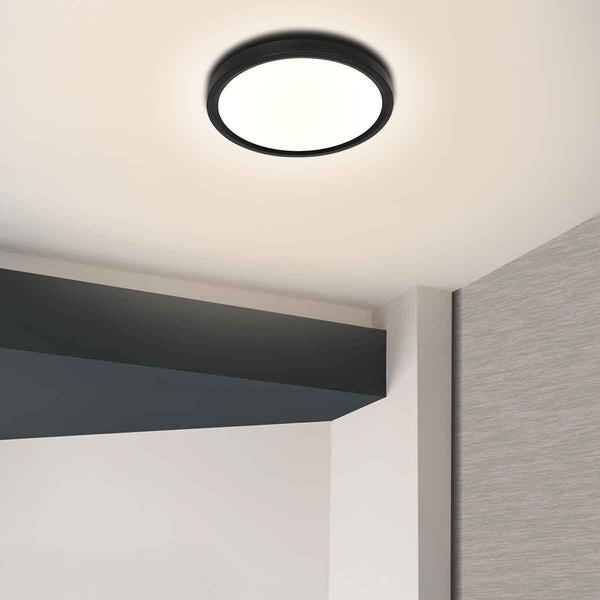
IP stands for ingress protection, and the two digits are read separately. The first, 4, protects against solid objects over 1 mm, so thick dust and insects. The second, 4, protects against water spray from all directions, not just vertical rain. A cylindrical ceiling light such as Sylvar, in black aluminium, 15 W integrated LED and Ø 9 cm, or the Nevara at Ø 17.6 cm, both in warm white 2700-3500 K, mount on the ceiling without fear of splashes. You will find these models among our full range of lighting.
Is an IP44 rating waterproof?
No, IP44 is not waterproof in the sense of immersion. It resists water spray and fine dust, which matches the normal humidity of a bathroom, kitchen or entrance hall. For a fixture that is regularly wet or submerged, you need a higher rating such as IP67. The ceiling lights designed for the bathroom in the home are mostly IP44.
Which IP rating for a bathroom ceiling light?
For a bathroom ceiling, an IP44 rating is enough in most cases: it protects against water spray and condensation. A higher rating becomes useful for a fixture placed very close to the shower or directly exposed to the jet. On the ceiling, a fixed model is preferable to a pendant.
IP44 bathroom pendant or ceiling light: which to choose?
An IP44 pendant works in a spacious bathroom, provided you keep it out of reach of direct spray and respect a safety height, generally more than two metres from the floor. In a small room or directly above a shower, a fixed ceiling light remains simpler to install and maintain. If you go for a standard bulb, take a look at E27 ceiling lights.
Where to install an IP44 ceiling light in the bathroom?
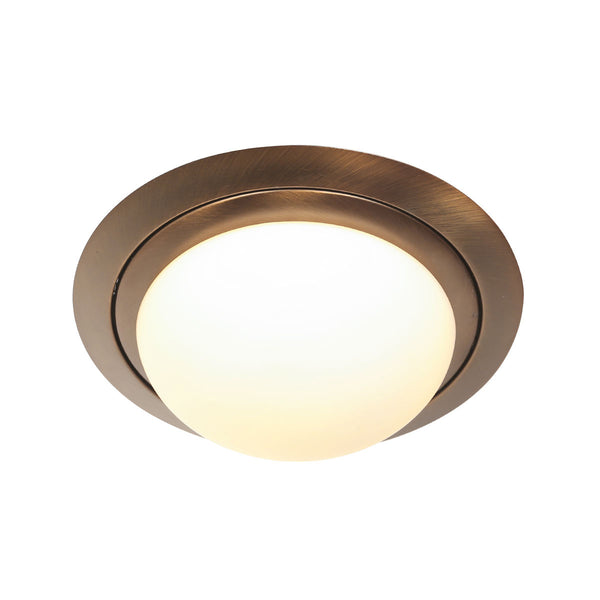
In the centre of the ceiling, IP44 covers the need. The Valvesina, in ribbed glass and aluminium with an E27 socket over 19 cm, plays on luminous relief, in black, transparent or gold. The Ariranina, round, brushed bronze with an opal diffuser over 24 cm, is dimmer compatible. These clean-lined models work just as well above a vanity unit as in a utility room.
How to choose an IP44 ceiling light or fixture by room?
The choice depends mainly on the volume of the room: a compact round ceiling light suits a hallway or entrance, while a globe shape or a multi-globe model fills a living room or dining room better. In a bedroom, a soft output and a discreet ceiling model are preferable.
IP44 ceiling lights for living room and dining room
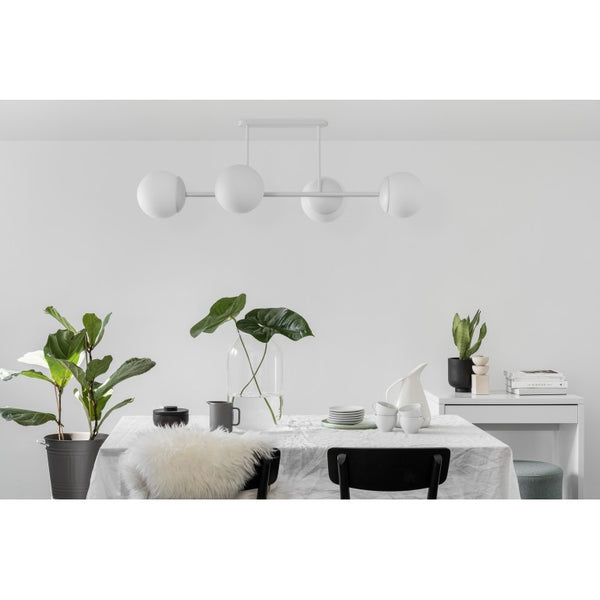
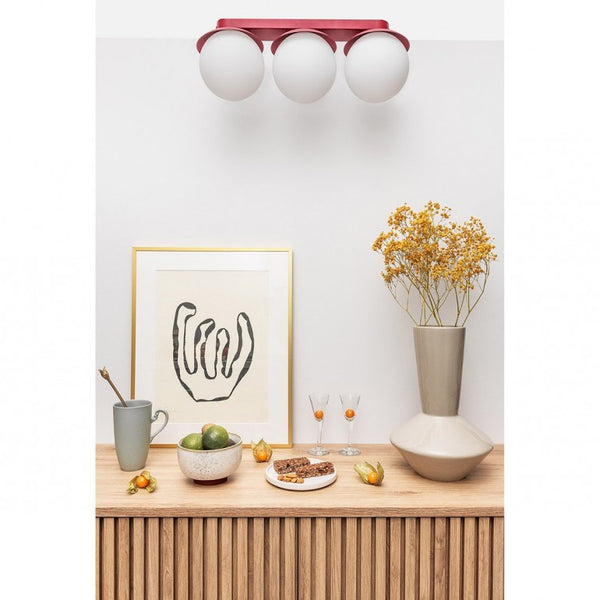
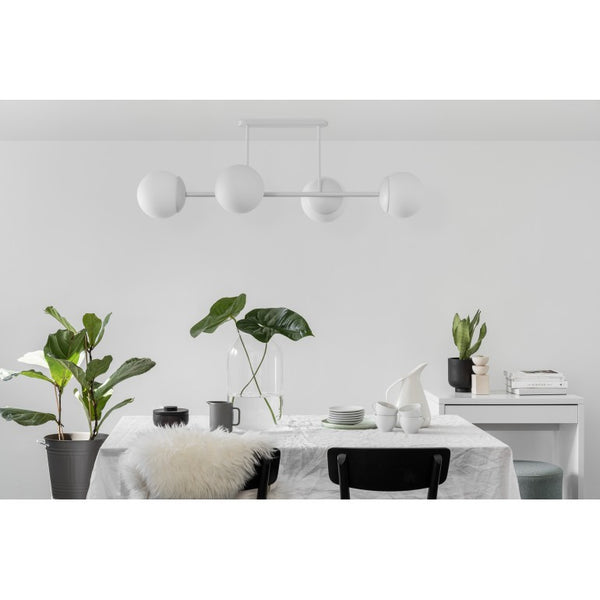
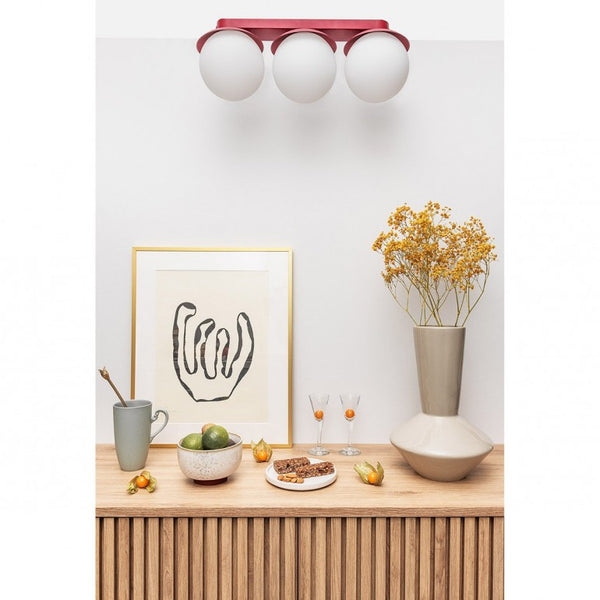
A large volume supports a more generous piece: globe, ring, several globes. The Tatiana, in metal and glass over 120 cm long and 15 W, lights a table without overpowering it. The Nerlinina, with three globes on G9 sockets, spreads the light over several points. Our living room ceiling lights gather these formats.
IP44 ceiling lights for bedroom, hallway and entrance
In a hallway, you want even light and a small footprint. The Alinea and the Lucido, at Ø 8.2 cm, fill that role. In a bedroom, a ceiling-mounted model leaves the eye free. Browse the hallway lights and the bedroom light for other silhouettes.
What is the difference between IP44, IP54, IP55, IP65 and IP67?
IP44 protects against water spray, IP65 adds dust tightness and resistance to water jets, IP67 goes as far as temporary immersion. The higher the second digit, the more the fixture withstands water under pressure. For an indoor ceiling light, IP44 covers condensation and splashes.
| Rating | Solid objects | Water | Where you find it |
|---|---|---|---|
| IP20 | Solid objects over 12.5 mm | No protection | Dry rooms: living room, bedroom, office |
| IP44 | Solid objects over 1 mm | Water spray from all directions | Bathroom, kitchen, hallway, entrance |
| IP54 | Dust partially retained | Water spray | Damp and dusty rooms |
| IP55 | Dust partially retained | Directed water jets | Spaces cleaned with a jet |
| IP65 | Dust tight | Water jets | Sheltered outdoor, high humidity |
| IP67 | Dust tight | Temporary immersion | Uses highly exposed to water |
What is the difference between IP44 and IP65?
IP44 protects against solid objects over 1 mm and water spray, nothing more. IP65 is dust tight and resists water jets, so higher pressure. For a damp room in the home, IP44 is enough; if you are looking for the most designer pieces in the home, the rating is still dictated first by the room, not by the look.
Which IP rating is the most waterproof?
The higher the second digit, the more the fixture resists water: IPX4 for spray, IPX5 and IPX6 for jets, IPX7 for temporary immersion. IP67 is therefore more waterproof than IP44. A high rating is only worth it if the room truly requires it: in a hallway or bedroom, IP44 is already comfortable.
LED, E27, G9 or GU10: which light source for an IP44 ceiling light?
An integrated LED cannot be replaced and gives an even output; an E27, G9 or GU10 socket lets you change the bulb or choose its white temperature. Adjustable GU10 spotlights concentrate the light, while an LED diffuser lights broadly. Check dimmer compatibility before buying.
| Socket or source | What it changes | Bulb replacement | Examples in the collection |
|---|---|---|---|
| Integrated LED | Even output, slim silhouette | Not replaceable | Sylvar, Nevara, Jacinda, Ariranina |
| E27 | Wide choice of bulbs and white temperatures | Yes, standard bulb | Valvesina, Ponente, Tatiana |
| G9 | Compact format for globes and decorative pieces | Yes, pin bulb | Veltora, Silnorina, Nerlinina |
| GU10 | Directed beam, adjustable orientation | Yes, socket spotlight | Alinea, Lucido |
| E14 | Small screw socket | Yes, small-format bulb | Compact models in the collection |
IP44 bathroom spotlights or socket ceiling light?
Adjustable GU10 spotlights concentrate light on a worktop or a basin, and are adjusted one by one. A ceiling light with a diffuser lights the whole room from a single point. In a small bathroom, the ceiling light avoids multiplying holes in the ceiling. Black metal ceiling lights play on contrast against a light wall.
Dimmer and light temperature: what to check?
Only some models accept a dimmer: these are the dimmer-compatible models to target if you want to adjust the intensity. On temperature, a warm white around 2700-3000 K suits the living room and bedroom, a more neutral white around 3000-3500 K works better in a kitchen or bathroom. An E27 bulb leaves you that choice; an integrated LED fixes it once and for all.
Styles, materials and finishes: which IP44 ceiling light for your decor?
Glass diffuses a soft light and pairs with classic as well as contemporary interiors; metal and aluminium structure the silhouette and come in white, black or gold. Woven rattan models bring a warmer feel. The material is chosen first according to the style already present in the room.
Modern, contemporary or minimalist IP44 fixture: what are the differences?
Minimalist goes for the simple volume: cylinder, thin round, little visible material. Contemporary plays on contrasting finishes, such as the Ponente, globe and tube in metal, glass and brass over Ø 20 cm. Modern embraces clean geometric shapes, like the Silnorina in aluminium and glass. White finishes blend into the ceiling.
Glass, metal or aluminium: which material to choose?
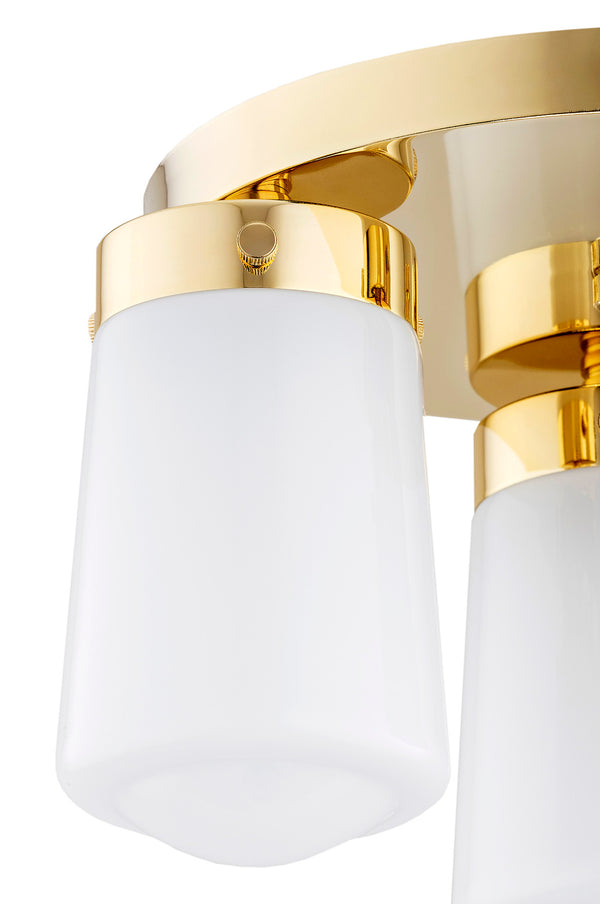
Ribbed or opal glass softens the beam and does not yellow. Metal wipes clean in one stroke and accepts wide shapes. Aluminium, lighter, suits small diameters. For a warm feel, the Jacinda, in wood and bamboo over Ø 50 cm, is worth a look, as are the wooden ceiling lights. On finish, gold accents warm up a dark interior, and black and white pairings frame a graphic decor.
IP44 outdoor fixture: does IP44 protect against rain?
IP44 resists water spray, not immersion or prolonged heavy rain. Under a canopy or on a covered terrace, it can work; directly exposed to the weather, a higher rating such as IP65 is better. Indoors, it easily covers the humidity of a bathroom or kitchen.
Does IP44 protect against rain?
It holds up to splashes and light rain, when sheltered. Sustained, repeated showers with water running over the fixture require higher waterproofing. The Designix lighting catalogue is designed for the damp rooms of the home: that is where IP44 comes into its own.
Where is an IP44 ceiling light really in its place?
On a bathroom, kitchen, utility room, hallway or entrance ceiling. In a kitchen, install it above the worktop rather than above the hob, where steam and grease rise. The ceiling lights for kitchen lighting and those in the office and workspace range follow the same logic: one ceiling light, one room, one intensity.
How to install and maintain an IP44 ceiling light?
Switch off the power at the breaker, check the strength of the fixing point and the weight it supports, then connect the fixture before screwing it to the ceiling. For maintenance, a soft, slightly damp cloth is enough. Avoid abrasive products on opal diffusers and on brass or gold finishes.
How to fix an IP44 ceiling light to the ceiling?
- Switch off the breaker for the lighting circuit and check there is no voltage.
- Check the strength of the fixing point and the weight the bracket accepts, especially for a large diameter.
- Connect the wires according to the instructions, live, neutral and earth.
- Present the fixture, then screw without forcing on a plasterboard ceiling.
How to clean an IP44 ceiling light without damaging it?
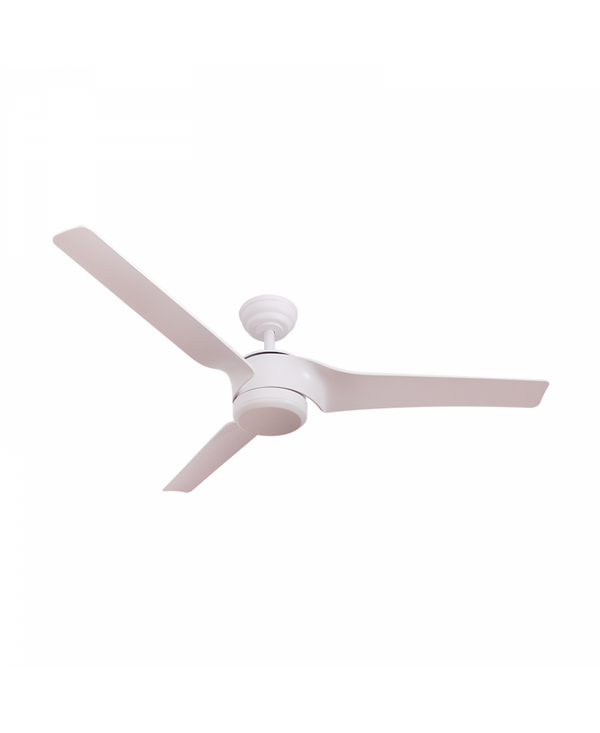
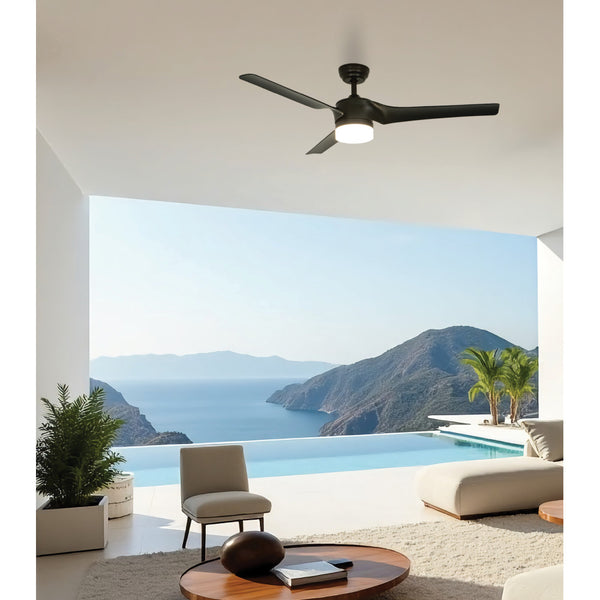
A soft, barely damp cloth on the diffuser and the structure. No abrasive product on an opal diffuser, which scratches, or on a brass or gold finish, which tarnishes. Regular dusting is enough on glass or metal models, and the Valdoro, a contemporary ceiling fan light of Ø 1,520 mm, is cleaned with the blades stopped.
Choosing and ordering your IP44 ceiling light from Designix
Three checks before you confirm: the rating suited to the room, the choice between integrated LED and replaceable socket, and the colour in keeping with the ceiling. A white ceiling calls for a light model, a dark ceiling supports black, bronze or gold. At Designix, payment is secure, delivery is tracked and returns are provided for if the piece does not suit. Our customer service answers dimension questions before you order. For a graphic interior, take a first look at the gold metal ceiling lights.
Frequently asked questions about IP44 ceiling lights
What is the IP44 rating?
IP44 is a two-digit ingress protection rating. The first, 4, means the fixture is protected against solid objects over 1 mm. The second, 4, indicates resistance to water spray from all directions. It is the common rating for bathroom and kitchen ceiling lights.
Does IP44 protect against rain?
IP44 resists water spray, not prolonged heavy rain or immersion. Sheltered under a canopy, an IP44 fixture can hold up; directly exposed to the weather, a higher rating is better. Indoors, it covers the condensation of a bathroom.
Which IP rating for a bathroom ceiling light?
On a bathroom ceiling, IP44 is usually enough: it protects against water spray and condensation. A higher rating becomes relevant for a fixture located just above the shower or exposed to the jet. A fixed model is then chosen rather than a pendant.
What is the difference between IP44 and IP65?
IP44 protects against solid objects over 1 mm and water spray. IP65 is dust tight and resists water jets, so higher pressure. For an indoor ceiling light in a damp room, IP44 is enough; IP65 is required for exposed outdoor use.
Is an IP44 bathroom pendant a good solution?
An IP44 pendant works in a spacious bathroom, provided you keep it out of reach of direct spray and respect the safety height. In a small room or above a shower, a fixed IP44 ceiling light remains simpler to install and maintain.