E27 ceiling lights
- Tracked delivery to your country Tracked delivery
- Secure payment at checkout Multiple payment methods
- 14 days to change your mind 14-day returns
- Secure payment Secure payment


Not sure of your style? Find it in 30 seconds
A few questions, and we will show you the pieces made for you.



































Frequently asked questions
How do I choose the right product?
What are the delivery times?
Can I return an item?
Can I pay in instalments?

An interior that reflects who you are
Carefully selected pieces, shipped from our warehouses. Our team advises you before you buy, so you choose with confidence.
- Tracked delivery
- Pay in instalments, where available
- 14 days to change your mind
- Advice & showroom in Lyon, France
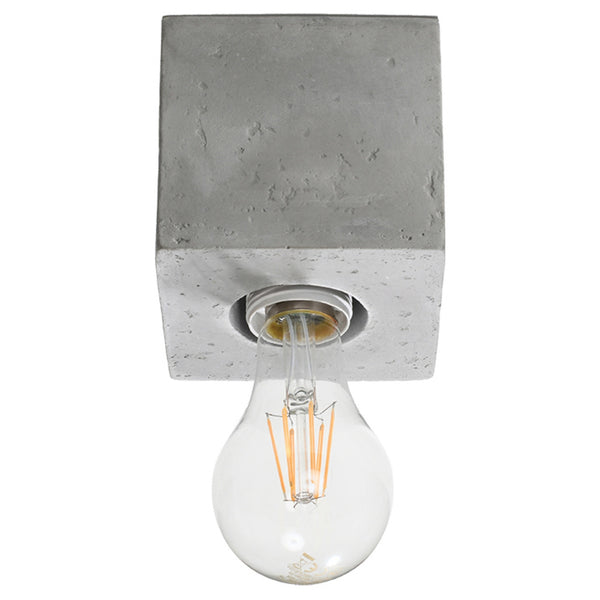
An E27 ceiling light is recognisable by its socket: the 27 mm diameter screw fitting takes the most widely used bulb in Europe. The fixture decides the shape and the diffusion, the bulb you screw in decides the intensity and the colour of the light.
- What is an E27 ceiling light
- Which ceiling light for which room
- Which ceiling light lights best
- Which material to choose
- Classic E27 or LED
- Installation and care
- Budget and warranty
- Frequently asked questions
What is an E27 ceiling light and how do you recognise it?
The E27 socket takes a screw bulb of 27 mm diameter, the format found everywhere, in LED as in halogen. The fixture itself sets the style and the way the light comes out: direct under a dome, filtered behind opaline glass, scattered by pendants. Neither the finish nor the shape changes the cap: round, square, ring or dome, the socket stays the same.
What is an E27 cap?
The E27 is a 27 mm screw socket, the standard for bulbs in ceiling lights, bedside lamps and pendants in France. It is distinct from the smaller E14 cap, narrower, reserved for small fixtures. An E27 fixture therefore takes a standard bulb that you choose freely according to the light you want. That freedom is the point of the format: you keep the fixture and change the source.
Ceiling light, chandelier or E27 fixture: what are the differences?
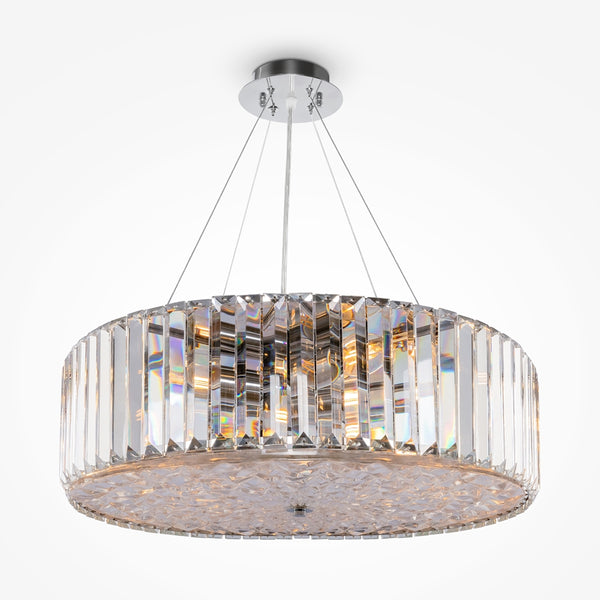
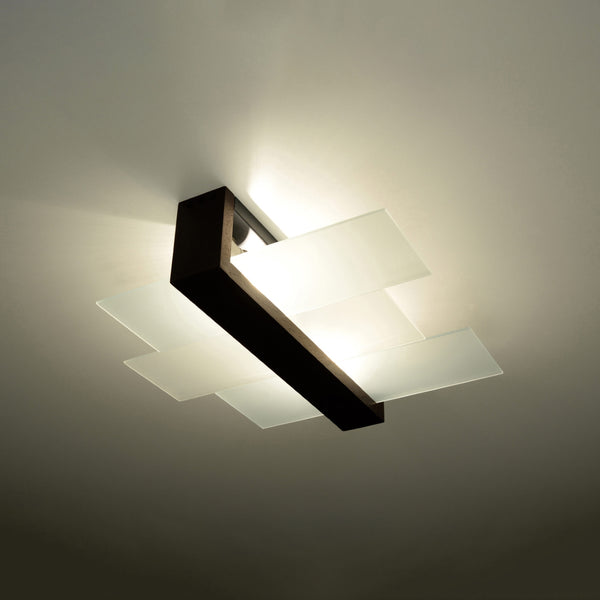
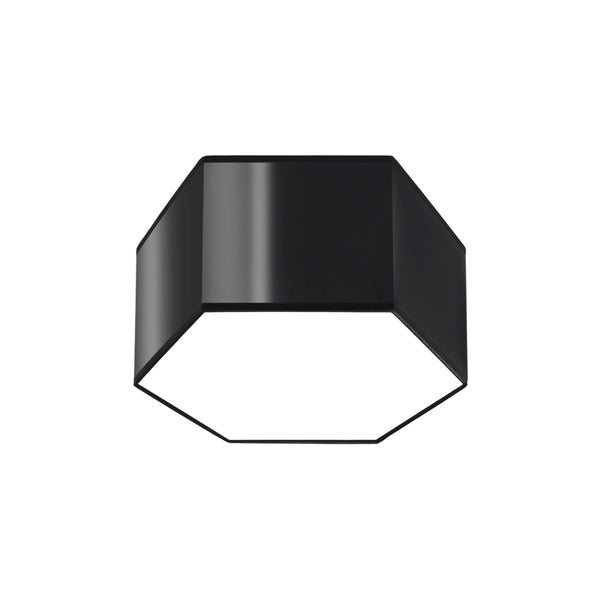
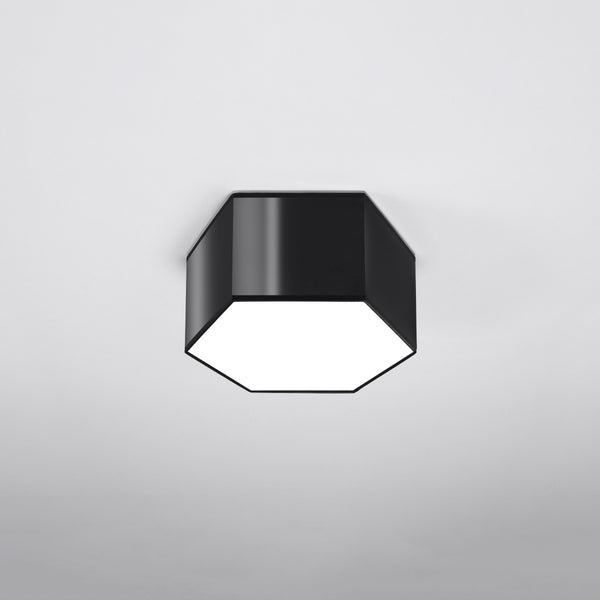
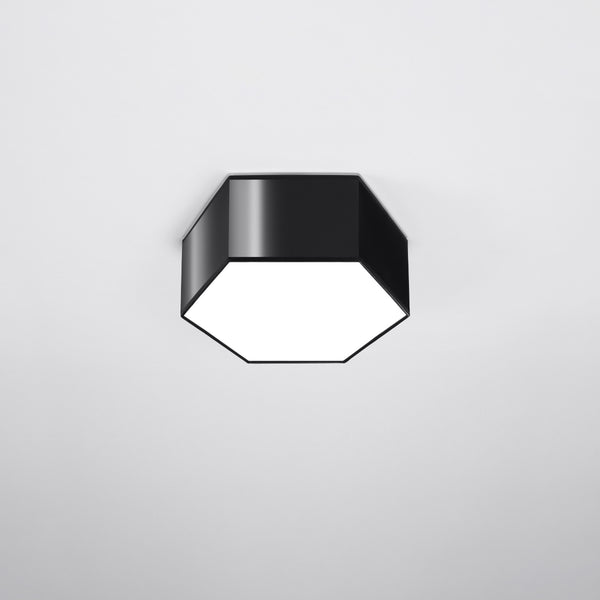
The word fixture covers any lighting device fixed to the ceiling, from the flat model to the armed chandelier. A ceiling light mounts flush or close to the ceiling, without a chain. An E27 chandelier hangs down, stands out and plays the ceremonial card, often with pendants. In our full selection of fixtures, the scales run from the compact model, such as Sirona, to the large Chrysanne crown.
Which E27 ceiling light to choose for each room?
The living room calls for a large diameter to cover the space, the bedroom a compact format that does not dazzle from the bed, the hallway a model that takes up little room. The kitchen and the dining room benefit from a square format or several adjustable light points, easier to position above a worktop or a table. In general, the larger the room, the more the diameter of the diffuser counts.
| Room | Recommended format | Type of light | Models in the collection |
|---|---|---|---|
| Living room | Large diameter, Ø 43 to 57 cm | Broad and even | Résilla, Dorvian, Annea |
| Bedroom | Compact, Ø 31.5 to 35 cm | Softened by a diffuser | Sirona, Kelya, Mirvesessa |
| Hallway | Small diameter, Ø 31.5 to 35 cm | Direct, on the way through | Mirvesessa, Sirona |
| Dining room | Large format or multiple points | Set above the table | Chrysanne, Halona |
| Kitchen | Square 55 x 55 cm or adjustable spotlights | Directed where you work | Ubaldo, Ventus |
E27 ceiling lights for the living room and the bedroom
In the living room, aim for a generous diffuser: Résilla and Dorvian, with fabric shades, or Annea, with an openwork ring, cast an enveloping light without patches on the ceiling. For ceiling lighting for the living room, the simple rule remains the diameter, around 45 to 55 cm in an average living space. In the bedroom, you go down a notch: Kelya, Mirvesessa and Sirona stay within 31.5 to 35 cm and avoid glare from the bed.
E27 ceiling light for the bathroom: what to check
All the models in this collection are rated IP20, a rating that destines them for dry rooms: none is suitable for a bathroom, an unsheltered terrace or a damp utility room. For those rooms, you need a fixture with a higher protection rating, designed to withstand splashes. Look at the models designed for damp rooms before ordering.
Which ceiling light lights best?
With the same cap, it is the bulb that makes the light. What changes from one ceiling light to another is the way it lets it through: an opaline glass diffuser or a fabric shade spreads an even light, a model with adjustable spotlights concentrates it where you need it. The fixture alone does not light better than another.
Does an LED ceiling light light well?
A well-chosen LED lights as much as a classic bulb, for less consumption and a longer life. The result depends on the flux and the colour temperature of the bulb, not on the shape of the ceiling light. To give you an idea of the orders of magnitude: around 1000 lumens, the light seems bright in a small hallway and soft in a large living room with dark walls. A flux of 2000 lumens is justified in a large room or under a high ceiling, and can dazzle in a small bedroom.
What are the drawbacks of LED lamps?
Three points come up: a sensitivity to heat that is poorly dissipated in a closed fixture, a possible flicker with certain old dimmers, and a colour temperature fixed at purchase. As a guide, a light around 2700 K stays warm and restful for a bedroom, 3000 K gives a soft white for a living room, 4000 K suits a worktop. Test one bulb before buying several.
Metal, glass, crystal or fabric: which material to choose?
Metal structures the silhouette and cleans with a cloth, glass diffuses the light and stands out even when switched off, crystal plays with reflections in a large room, fabric softens the light and dresses the bedroom. In this selection, metal dominates, often combined with glass, then crystal and fabric.
| Material | Rendering | Care | Models |
|---|---|---|---|
| Metal and glass | Clean silhouette, directed or diffused light | Soft cloth, no abrasive | Sirona, Kelya, Mirvesessa, Laitonis |
| Frosted or opaline glass | Even, without glare | Slightly damp cloth | Depolio, Zensameta |
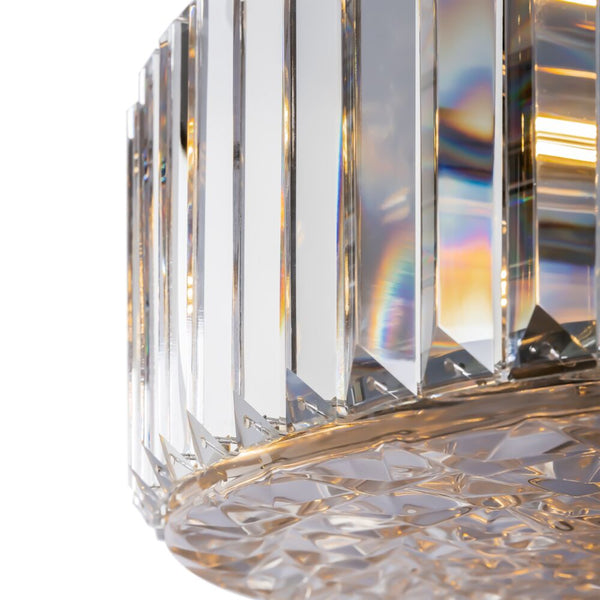
| Crystal and pendants | Reflections, ceremonial effect | Dry cloth, delicate touch | Chrysanne |
| Taut fabric or shade | Softened, dressed room | Vacuum with soft brush | Annea, Dorvian, Résilla, Simone |
| Steel and plastic | Fine structure, orientation | Damp cloth | Ventus, Ubaldo |
E27 ceiling lights in black, white or gold: which colour to choose?
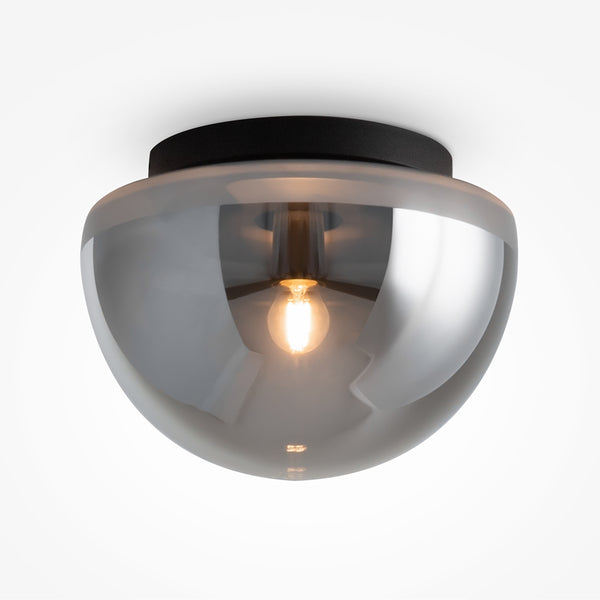
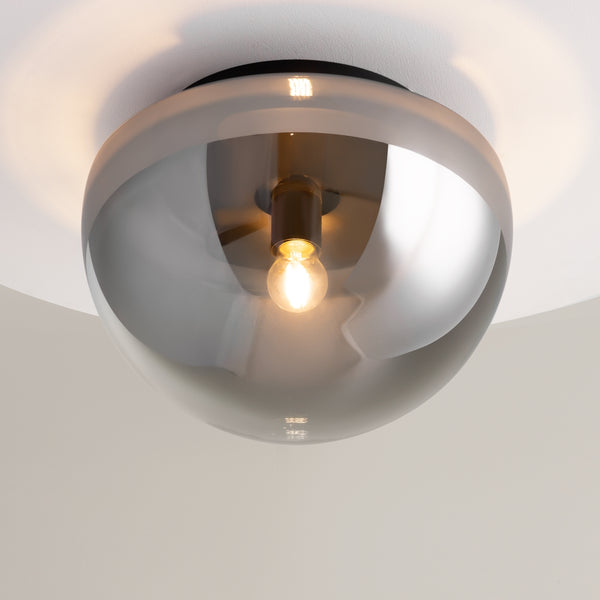
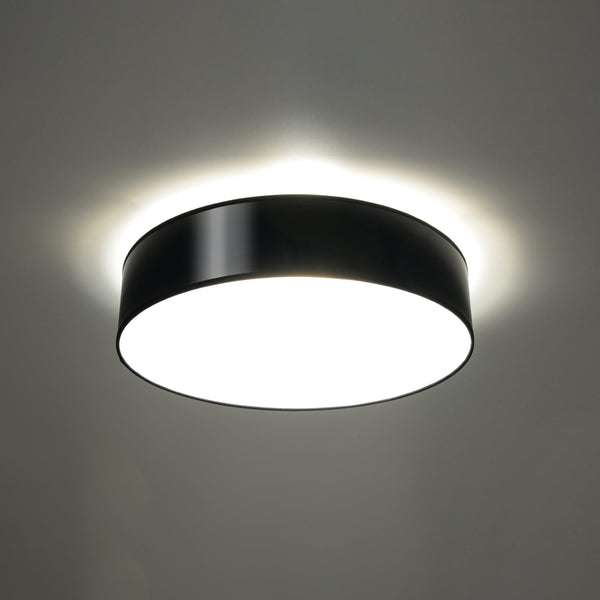
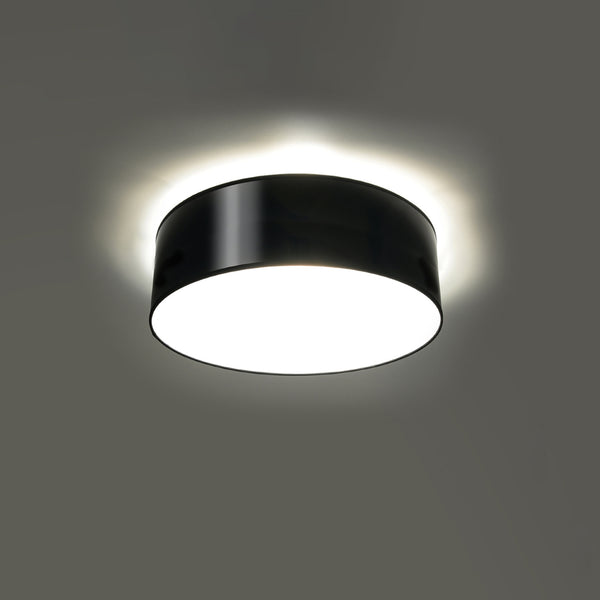
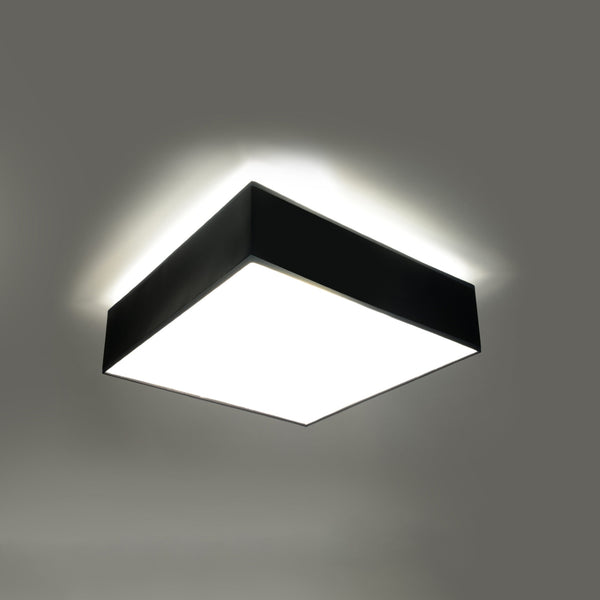
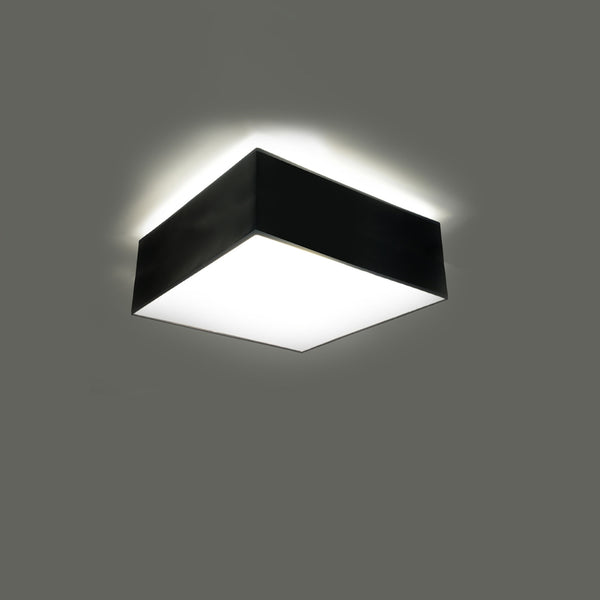
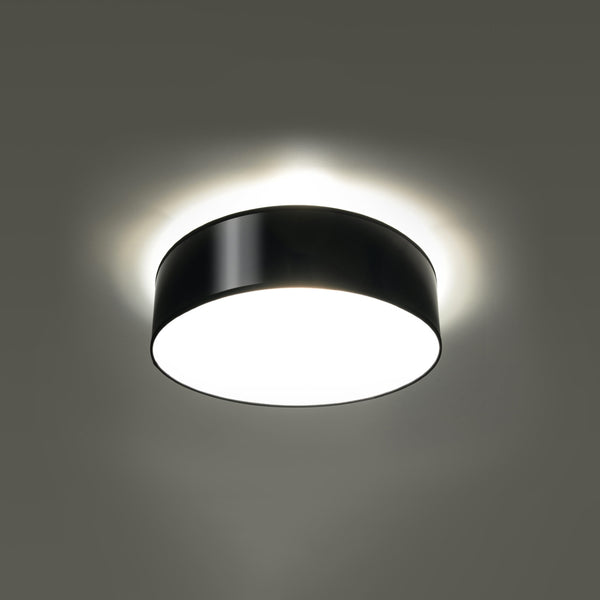
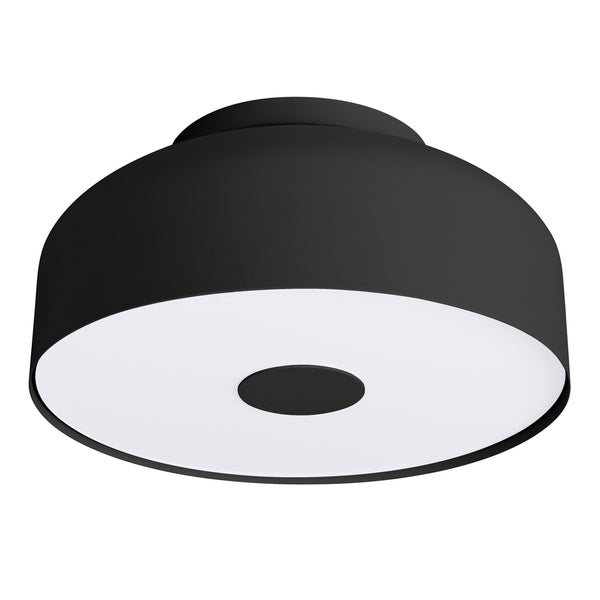
Black stands out against a pale ceiling and draws a clean silhouette: Kelya, in ribbed smoked glass, is the most typical case. Find other black ceiling lights if you are looking for that contrast. White, on the other hand, blends into the ceiling and suits small rooms and pale interiors. Gold and aged brass warm the room, to be reserved for an already bright ceiling.
Fabric, smoked glass or opaline glass: which light rendering?
Taut fabric and the shade diffuse the softest light, ideal above a table or in a bedroom. Smoked glass tempers it and creates a more hushed atmosphere, like the Kelya ceiling light and its ribbed smoked glass. Opaline or frosted glass, as on Depolio and Zensameta, gives the most uniform light, the one that leaves no marked area of shadow.
Classic E27 ceiling light or LED ceiling light: what to choose?
All the models in this selection have an E27 cap, but not all are rated for the same wattage. It is the wattage shown on the fixture's spec sheet that you must respect when choosing the bulb, so as not to overheat the socket. Classic E27 ceiling light: the bulb is interchangeable, you choose the colour temperature and the wattage as you wish. LED ceiling light: the source is integrated and not replaceable, often more economical and slimmer. It is up to you, depending on your need for flexibility or simplicity.
E27 ceiling light with 3 bulbs: how to light with several light points?
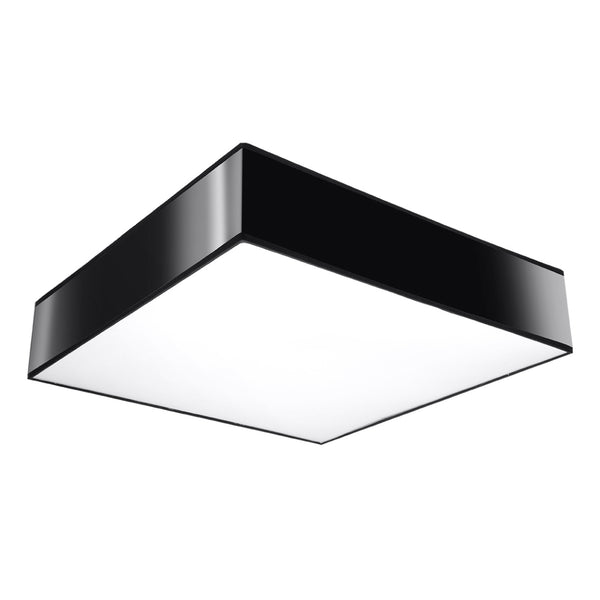
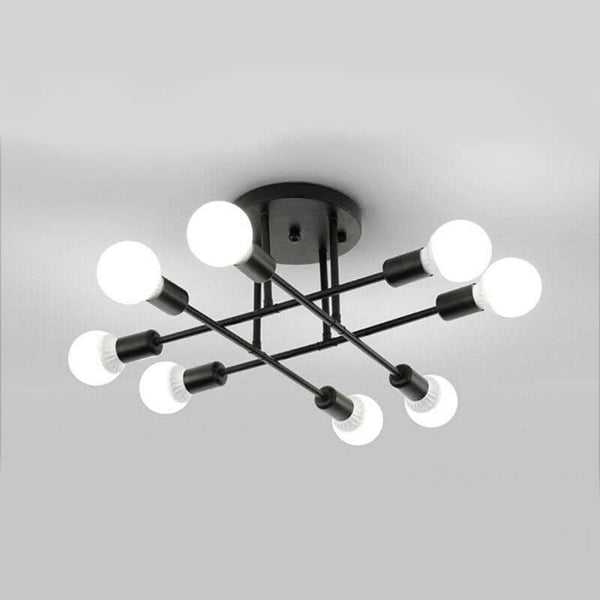
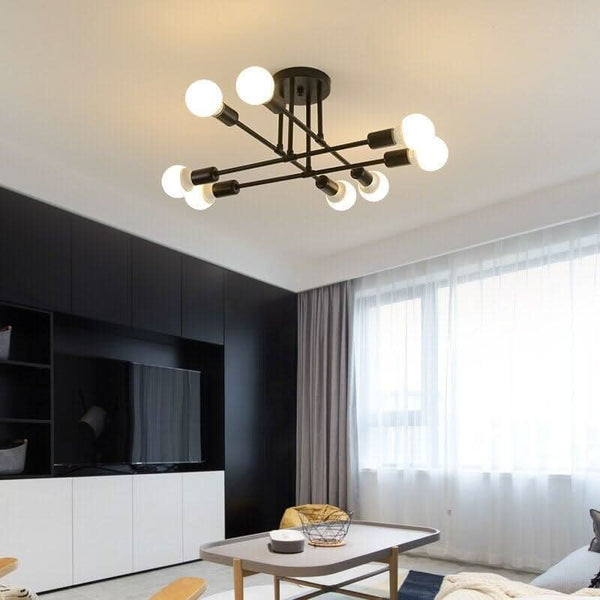
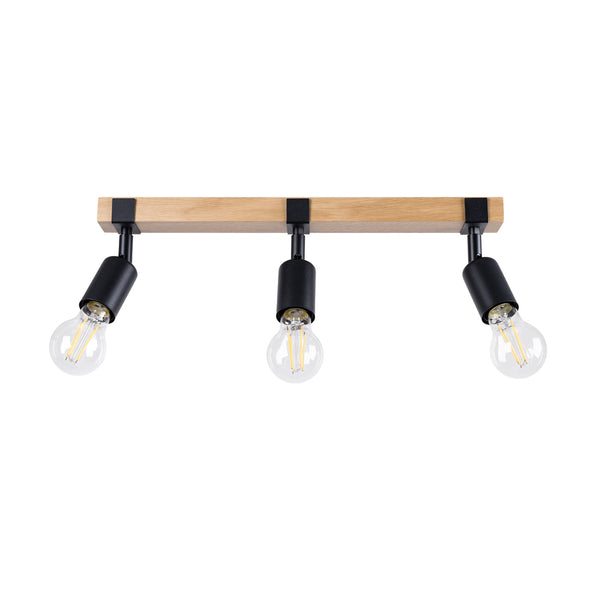
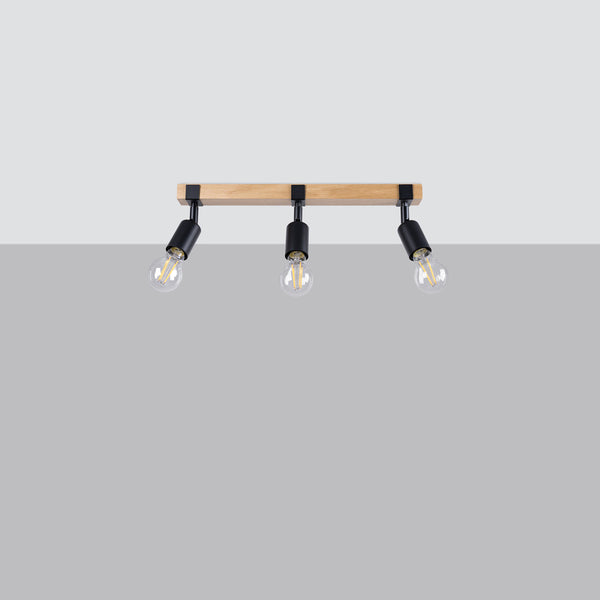
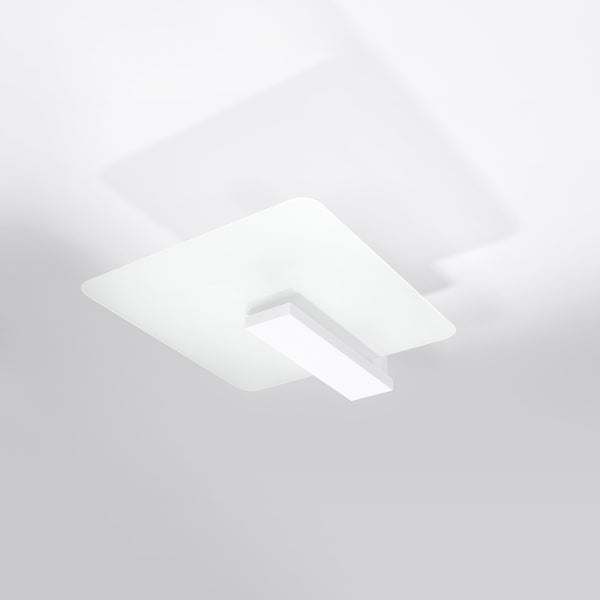
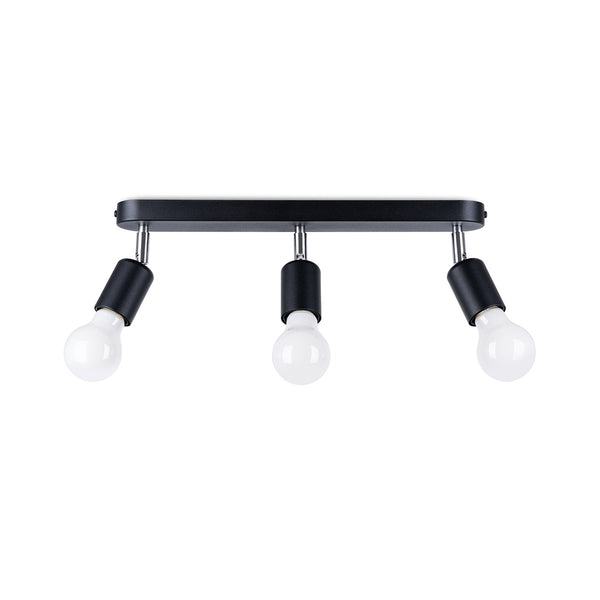
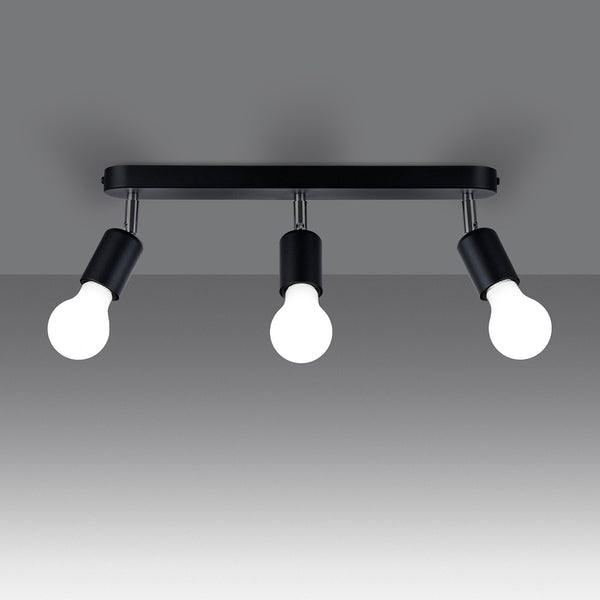
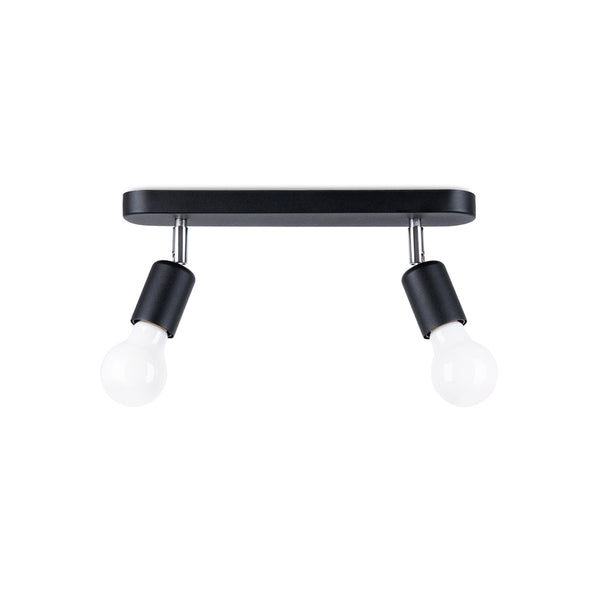
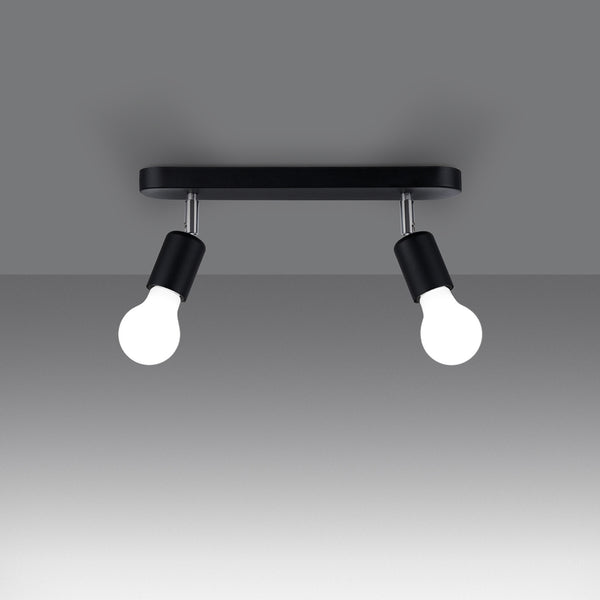
Several light points serve to direct the light rather than increase it. The Ventus and its three adjustable spotlights lets you aim at a worktop, a wall or a table, in a kitchen as in a living room. Halona, with a crown of 6 or 8 heads, lights a large table or a tall space. A square model such as Ubaldo, at 55 x 55 cm, covers an entire room.
E27 ceiling lights and dimmer: compatible?
Only some of the models are stated as dimmer compatible. If you want to adjust the intensity, check this mention on the spec sheet before ordering, then choose an E27 bulb that is also dimmable to avoid any flicker. Browse the dimmer compatible models if this point is decisive for you.
How to install and care for an E27 ceiling light?
You cut the power at the breaker, fix the base plate to the ceiling, connect the wires then screw in the bulb. All the models in this collection are rated IP20, so reserved for dry rooms. Care is limited to dusting the surface according to the material, without aggressive products and without taking the fixture down.
How to change the bulb in an E27 ceiling light?
Cut the power, let the previous bulb cool, unscrew it and screw in the new one without forcing. Respect the maximum wattage stated on the fixture's spec sheet: that is what protects the socket from overheating. If the fixture has a diffuser, remove it as per the instructions, then refit it before restoring the power.
Cleaning a metal, glass or fabric ceiling light
On metal and steel, a soft cloth is enough. Glass is cleaned with a slightly damp cloth, then dried to avoid marks. Crystal requires a dry cloth and a careful touch around the fittings. Fabric is dusted with a vacuum, soft brush, without rubbing. None of these steps requires taking the fixture down from the ceiling.
What budget should you plan for an E27 ceiling light?
The budget depends on the diameter, the material and the finish. A round ceiling light in metal or glass, rated for an E27 bulb, remains affordable, while a large diameter dressed in crystal or an aged brass finish belongs to the statement piece. The five-year warranty covers almost the entire selection.
Spotting the entry-level models
A compact format, a fabric shade and a white or silver finish make up the most affordable models: Sirona, Simone, Mirvesessa or Zensameta. These ceiling lights save nothing on the essentials, namely an E27 socket and proper diffusion. They suit a bedroom, a hallway or an entrance. Also look at the white ceiling lights for a low ceiling.
The finishing details that change everything
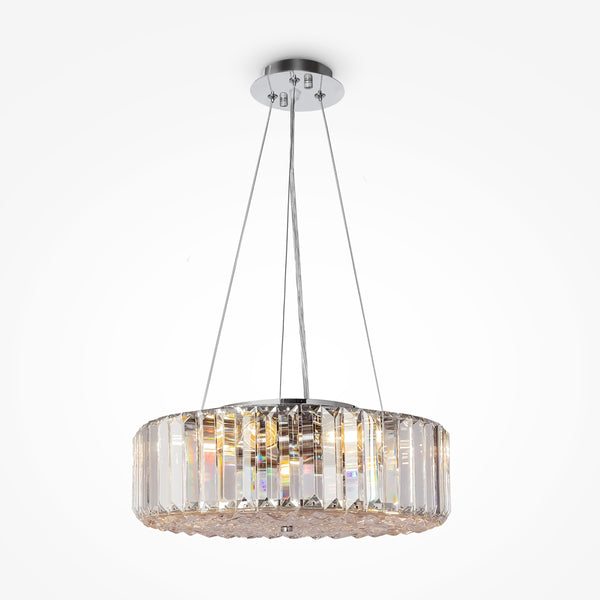
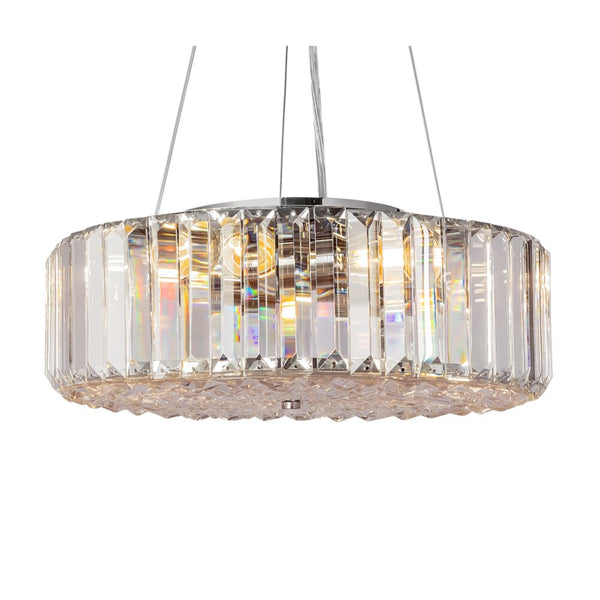
The aged brass of Laitonis, the faceted pendants of the Chrysanne ceiling light and its crystals, the openwork ring of Annea: these details are what take a ceiling light from functional to decorative. Allow for a wider diameter and a worked finish for a reception room. For an industrial look, the Halona model and its light points remains the reference.
Secure payment, tracked delivery, possible returns and Designix customer service: you order without risk, and you can change the bulb as many times as needed without touching the fixture. Take the time to check diameter, stated wattage and colour before confirming your basket.
Frequently asked questions about E27 ceiling lights
What is the most powerful E27 bulb?
The maximum wattage is not set by the bulb alone but by the fixture. It is the wattage stated on the model's spec sheet that you must respect, to avoid overheating the socket. In this selection, some ceiling lights are rated for 60 W, others for 40 W or 15 W.
How many lumens do you need for a ceiling light?
The number of lumens depends on the bulb you screw in, not on the ceiling light: the E27 socket imposes no flux. To choose, compare bulbs with each other at equal wattage, then take into account the surface of the room, the height of the ceiling and the colour of the walls.
Do 1000 lumens light well?
A flux of 1000 lumens cannot be judged on its own: the same bulb will seem bright in a small hallway and soft in a large living room with dark walls. What counts is the relationship between the flux, the lit surface and the mounting height. On an E27 ceiling light, changing the bulb is enough to adjust.
What is the lifespan of an LED ceiling light?
The lifespan of the fixture and that of its source are often confused. On a ceiling light with an E27 socket like those in this selection, it is the bulb that wears out and is replaced without touching the fixture: the structure, the finish and the diffuser stay in place. The fixture outlives several bulbs.
Can you use an E27 bulb outdoors?
An E27 bulb is only used outdoors in a fixture designed for outdoor use, with a protection rating suited to rain. The E27 ceiling lights in this collection are rated IP20, a rating that destines them for dry rooms in the home, not for an unsheltered terrace.