
Blue table lamps
This selection is also available in our French store: Lampes à poser coloris bleu


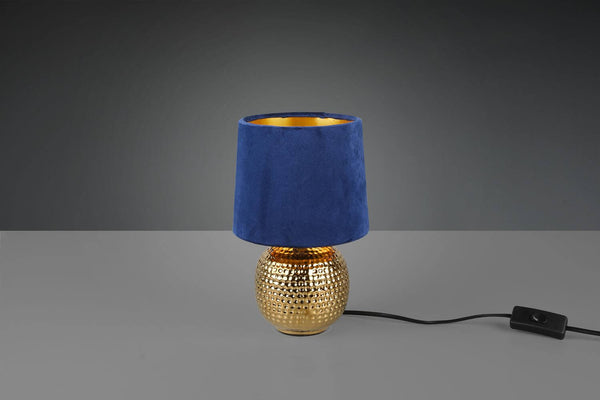

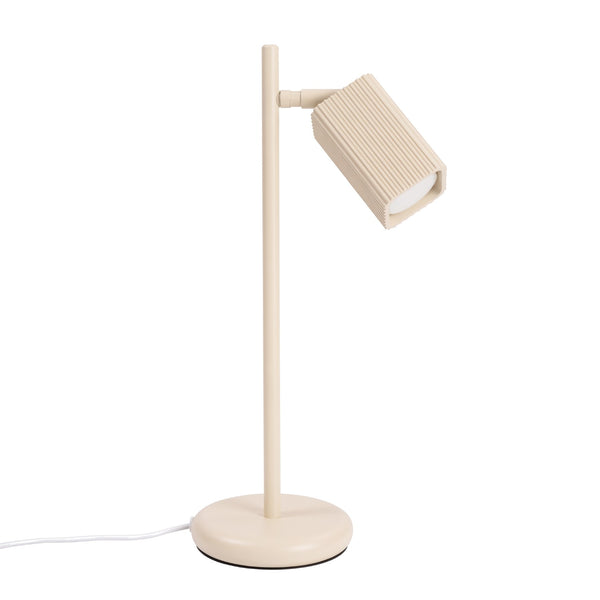


- Tracked delivery to your country Tracked delivery
- Secure payment at checkout Multiple payment methods
- 14 days to change your mind 14-day returns
- Secure payment Secure payment
Not sure of your style? Find it in 30 seconds
A few questions, and we will show you the pieces made for you.
Frequently asked questions
What table size for how many people?
Which tabletop material should I choose?
Extendable or fixed?
How do I care for the tabletop?
The right furniture, in the right place
Check the dimensions with our fit checker and receive pieces made to last. Unsure? Our team will answer your questions.
- Tracked delivery
- Pay in instalments, where available
- 14 days to change your mind
- Advice & showroom in Lyon, France
Place the blue table lamp where light is missing, not where there happens to be a free corner: next to the sofa, on the bedside table, on the worktop. The blue finish installs a stable point of colour in the room, from sky blue to navy. This guide helps you choose the shade, the format and the bulb.
Which blue table lamp should you choose for each room?
In a living room, a blue table lamp serves as accent lighting next to the sofa or on a console. In a bedroom, it lights up reading on the bedside table. In an office, it provides localised lighting on the worktop.
What are the most beautiful living room lamps?
A living room lamp is judged first on its silhouette when placed on a low piece of furniture: a slim stem or a solid sphere do not tell the same story. Light matters as much as shape, because an accent lamp shines downwards or towards the wall, rarely towards the face. To compare silhouettes, browse the designer table lamps for the living room. If your interior is already busy with patterns, the more understated lines of the modern models for the living room hold the room together better.
A blue table lamp for the bedroom
At the bedside, you want low, adjustable light to read without waking the other person. The bedroom lamps with a crafted design focus on material and volume, while the LED versions for the bedroom make adjusting the brightness simpler.
Blue in the office
On a worktop, blue sits on a stable base with a head that tilts down towards the keyboard. A blue desk lamp brings a cool colour that helps you stay focused, provided the beam is aimed at the task and not at the screen. The designer table lamps for the office cover this use, and the metal desk lamps stand up better to daily handling.
Which blue to choose: light blue, sky blue, teal or navy?
Light blue and sky blue brighten a room and blend into a white or wooden decor. Teal brings a deeper, more dressed-up note. Navy structures the space and stands out against a light wall. The choice depends above all on the room's natural light.
| Shade | Effect in the room | Room where it works best | To pair with |
|---|---|---|---|
| Light blue | Brightens, stays discreet | Bedroom, office | White, light wood, beige |
| Sky blue | Fresh, luminous effect | Bedroom, hallway | White, pearl grey |
| Teal | Deep, enveloping note | Living room, office | Beige, leather, brass |
| Navy | Structures the room, strong contrast | Living room, office | White, dark wood, gold |
| Klein blue | Bold colour, very present | Living room, hallway | Neutral decor, chrome metal |
Light blue and sky blue, brightening without erasing
These two shades go almost unnoticed on a white wall and are very visible on a grey wall. They suit dimly lit rooms, because they give an impression of freshness without making them darker. The Scandinavian style often uses them with light wood.
Teal and navy, the depth
A strong blue sits like a spot of colour in the room: one lamp is enough, two create a rhythm. On a dark wall, prefer a light material or a diffuser that lets the light through. To see how these shades live alongside other families, open the entire lighting collection.
Which colour goes with blue paint?
Blue goes with white, beige, light grey and natural woods, which soften it. A bold blue like Klein blue calls for a neutral decor so as not to saturate the room. With a blue bubble sofa, an off-white or gold table lamp creates the contrast.
With a blue bubble sofa or a Klein blue pendant
A very present blue sofa calls for a discreet or deliberately contrasting lamp, never a third close shade that muddles the reading. The designer white table lamps fill this role without competing with the fabric. Under a Klein blue pendant, a base in crystal table lamps reflects the light and lightens the mass of colour.
Wood, linen and brass to soften blue
Natural materials calm a bright blue. Linen diffuses a soft, matte light, wood warms, brass adds a warm reflection that offsets the coldness of the pigment. The linen table lamps and the gold and black models play exactly this balancing role.
Table lamp, globe lamp or floor lamp: which format to choose?
A table lamp slips onto a table, a console or a shelf and moves as needed. A globe lamp concentrates light in a rounded volume and stands on its own. A floor lamp lights higher and frees up the surface.
| Format | Where to place it | Main use | To check before buying |
|---|---|---|---|
| Small bedside lamp | Bedside table, shelf | Reading, accent light | Height and direction of light |
| Desk lamp | Desk, worktop | Localised lighting | Direction, stability of the base |
| Globe lamp | Console, side table | Ambience | Diameter and diffusion |
| Living room lamp | Console, low furniture | Ambience and accent | Size relative to the furniture |
| Floor lamp | Floor, reading corner | Reading and general light | Height, footprint, stability |
Designer globe table lamp
A globe lamp goes where you can walk around it, otherwise it loses its point. Its diffusion is often even, with no marked direction: it creates an atmosphere rather than lighting a page. Compare the black table lamps for the living room if you want the same shape in a more graphic register.
Floor lamps, when the floor takes the light
A floor lamp replaces a small lamp when there is no side furniture or when the seating needs light over the shoulder. It needs floor space and a base heavy enough not to tip over. A movable head changes everything: look at the adjustable table lamps before deciding.
What sets an Italian design table lamp apart
Italian design is recognisable by its graphic lines, simple volumes and crafted materials such as glass, metal or ceramic. The silhouette stays strong, the light stays soft. A concrete choice for an already furnished interior, for example among the metal and glass table lamps, with a large lampshade that structures the low furniture it rests on.
How do you wire several table lamps to a single power supply?
Several lamps are connected in parallel: each lamp receives the live, neutral and earth from the same junction box. The conductors are connected on terminals or connector blocks, without cutting the supply cable. Switch off the power before working and call an electrician if in doubt.
Wiring several lamps in parallel
In parallel, all the lamps share the same conductors but each keeps its own cable. If one lamp blows or is disconnected, the others keep working. The wire cross-section and the rating of the terminals must match what comes into the box. On low-consumption light fittings, these connections stay simple, as on the designer LED table lamps.
Wiring 3 lamps and 1 switch
The switch cuts the common live upstream: the three lamps come on together, with no separate control. If you want to switch on a single lamp, you need one switch per point or a lamp with built-in control. The neutral and earth never pass through the switch.
How do you arrange your lamps and spotlights to light a room well?
Successful lighting combines three levels: general light from the ceiling or a pendant, accent light near the points of use, and accent light on a wall or shelf. Ceiling spotlights are placed in regular rows, at a distance from the walls, to avoid shadow areas.
How to arrange ceiling spotlights
Keep the spotlights away from the walls by about half the distance between them, then align them on the room's axis. Too close to the wall, they draw a visible cone on the paint; too close together, they create patches. In a living room, add a table lamp to bring the light down to working height.
Which lamp to light a room?
There is no single lamp: count on general light, one accent light per use and one accent light. The table lamp handles the accent, next to the sofa, the bed or the desk. To choose a model with visual weight in a dark room, the modern models for the living room and the modern black finishes blend in more easily than a very light blue.
At the bedside, a small black metal bedside lamp leaves room for the book and lights just enough. Place it at shoulder height when seated to avoid the shadow of your hand on the page.
How do you care for a blue table lamp and choose its bulb?
Dust the lampshade or diffuser with a soft, dry cloth: moisture can dull certain finishes. For the bulb, check the cap indicated on the product sheet, then choose a colour temperature suited to the atmosphere.
Cleaning a blue finish without dulling it
A lacquered or metallic blue is cleaned dry, without abrasive products or scouring sponges. For a ceramic or glass base, a slightly damp cloth followed by immediate drying is enough. Switch off and let it cool before handling the lampshade, especially on a lamp with a powerful bulb.
Choosing the bulb's colour temperature
In general, warm light (around 2700 to 3000 kelvins) suits the living room and bedroom, while a more neutral light (around 4000 kelvins) suits the office and worktops. Also check whether the lamp accepts a dimmer: this information is on the product sheet, not on the bulb box.
How do you order from Designix?
First choose the shade and the place, then the format: that is the order that avoids a return. This collection currently offers no products: to find a blue table lamp, see discover the whole Designix catalogue.
Frequently asked questions
Wiring 3 lamps and 1 switch: how do you do it?
The three lamps are connected by spur from the same box: the live, neutral and earth arrive at the first, then continue to the next. The switch cuts the common live and thus controls the three light points. Switch off the circuit breaker before working.
How do you wire several lamps in parallel?
In parallel, each lamp receives the same conductors from the junction box: the live, neutral and earth are connected on terminals or connector blocks. If one lamp goes out or is disconnected, the others keep working. Choose terminals suited to the wire cross-section.
Which lamps change colour?
Lamps fitted with a bulb or an LED module with variable colours let you change the shade of the light, often from a remote control or an app. They differ from fixed-light lamps, whose shade depends only on the bulb chosen. The finish of the light fitting itself does not change.
Who invented the blue LED?
The blue LED was developed by researchers Isamu Akasaki, Hiroshi Amano and Shuji Nakamura, whose work was awarded the Nobel Prize in Physics. This breakthrough made white LED light possible, by combining the blue diode with a phosphor. It paved the way for domestic LED lighting.
Designer globe table lamp: which room should it go in?
A globe lamp goes where it can be walked around, without being hidden: a hallway console, a low living room piece of furniture or a side table. Its diffusion is often even and with no marked direction, which makes it an ambient light rather than a reading light.




