Smart outdoor lighting
- Tracked delivery to your country Tracked delivery
- Secure payment at checkout Multiple payment methods
- 14 days to change your mind 14-day returns
- Secure payment Secure payment


Not sure of your style? Find it in 30 seconds
A few questions, and we will show you the pieces made for you.
























Frequently asked questions
How do I choose the right product?
What are the delivery times?
Can I return an item?
Can I pay in instalments?

An interior that reflects who you are
Carefully selected pieces, shipped from our warehouses. Our team advises you before you buy, so you choose with confidence.
- Tracked delivery
- Pay in instalments, where available
- 14 days to change your mind
- Advice & showroom in Lyon, France
- Which light for an entrance, a facade or a terrace
- How to control a smart outdoor light
- Wall light, spotlight or floodlight
- Mains-powered or solar bollard light
- Ingress protection rating and bulb base
- Installation and maintenance
- Style, material and colour
- Frequently asked questions
A smart outdoor light is chosen first by the area to be lit: a wall light for an entrance, a spotlight for a step or a passage, a floodlight or a linear light for a facade and a garden. Then come the ingress protection rating and the light temperature, with IP65 on a facade exposed to rain, a warm white of 2700 to 3500 K for a terrace and a cool white of 4500 to 6500 K to clearly mark an access point.
What is the best outdoor light for an entrance, a facade or a terrace?
There is no single best model in absolute terms: for an entrance, a wall light illuminates the door from above; for a wide facade or a garden, a floodlight or a bollard light covers a larger surface. Choose IP65 for areas exposed to rain.
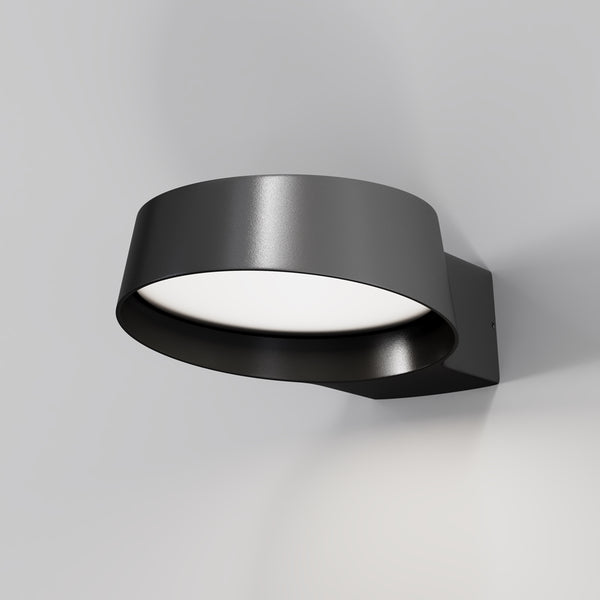
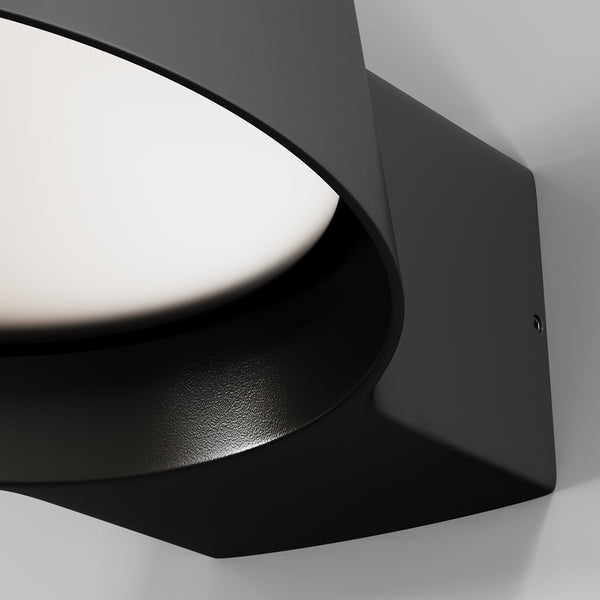
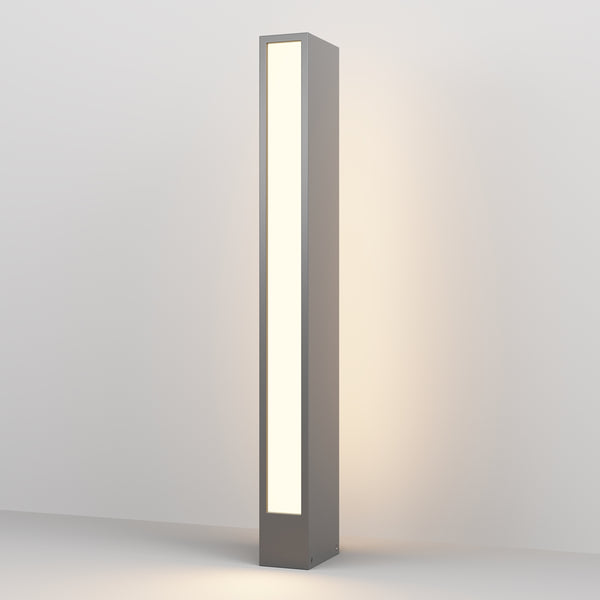
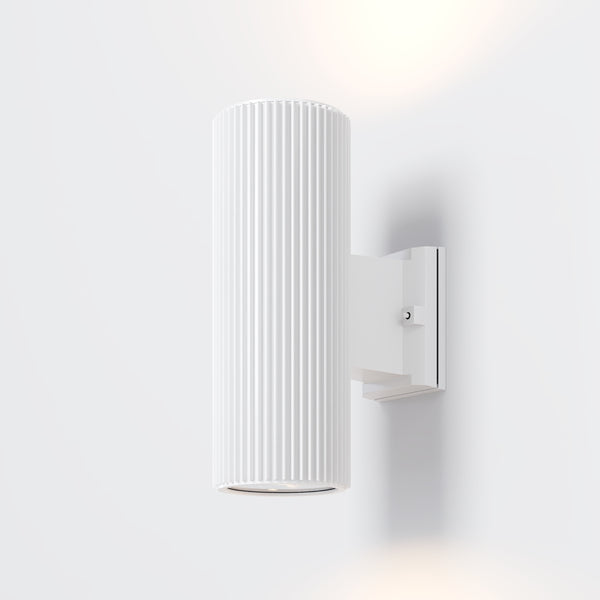
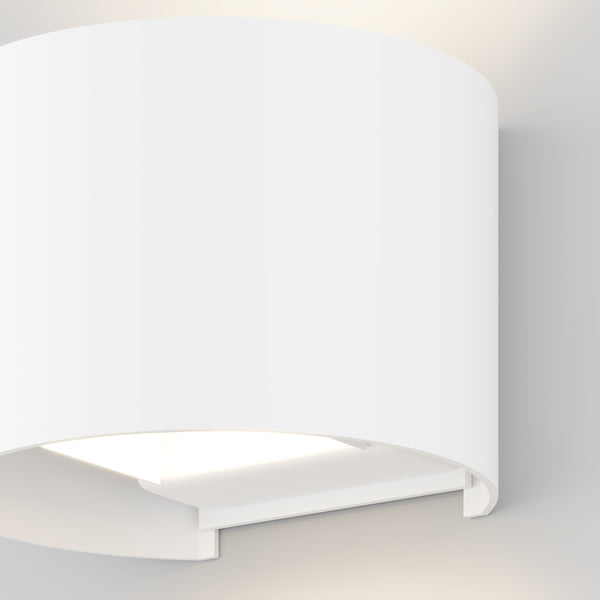
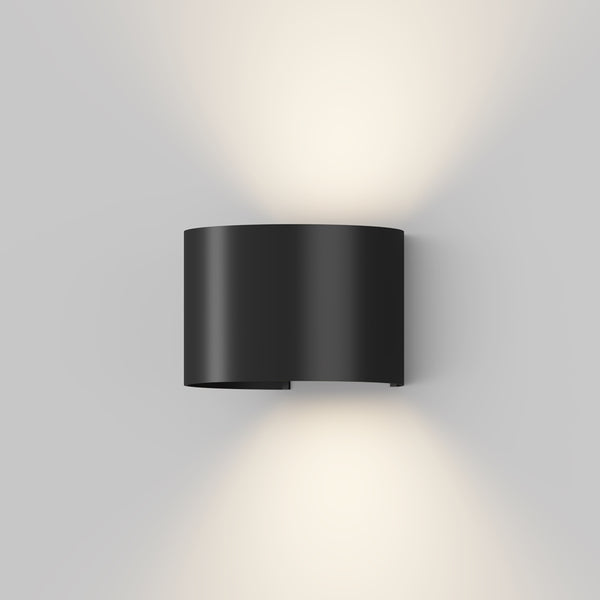
On an access point, the Halo round wall light, 18 W measures 17 x 10 cm and diffuses warm or cool white, while the Sentinel wall light with sensor adds a motion sensor in a 26 x 12.5 cm format. For a long wall, the Eclat outdoor light, IP67 comes in lengths from 40 to 240 cm and accepts a dimmer. On a terrace, the Betone low bollard light, 7 W marks the edge without glare. The useful reference remains the surface to be covered, not the wattage alone. To control the lighting, the collection offers lights compatible with protocols such as Zigbee or Wi-Fi, and some integrate with ecosystems like Philips Hue.
How to control a smart outdoor light?
Control depends on the model: some lights in the selection accept a dimmer, and an integrated LED is controlled through its power supply. Others take an E27 or GU10 bulb: the chosen bulb then provides the desired control.
How to connect a smart outdoor light?
An integrated LED, the most common case here, is controlled by its driver: the command sits upstream, on the power line. A light with an E27 or GU10 base accepts a smart bulb, provided the bulb is also designed for outdoor use, since the housing ensures the sealing. In both cases, check the cable entries and the sealing before adding anything. The LED outdoor lights and the rest of our full lighting range can be compared on this point, spec by spec.
Do you need a dimmer to control an outdoor light?
No, a dimmer is not mandatory: it concerns only a minority of the models in the selection. If you want to lower the light late in the evening, choose a dimmer-compatible light, such as some lengths of the Eclat model, then check the module's compatibility with the power supply. Without a dimmer, control is limited to switching on and off, which is enough for an access point.
Wall light, spotlight or smart outdoor floodlight: which shape for which surface?
A wall light illuminates the door or the wall it is mounted on, a spotlight directs a narrow beam onto a passage or a flower bed, and a wide floodlight covers a garden or a facade. Choose the surface and mounting height first, then the ingress protection rating.
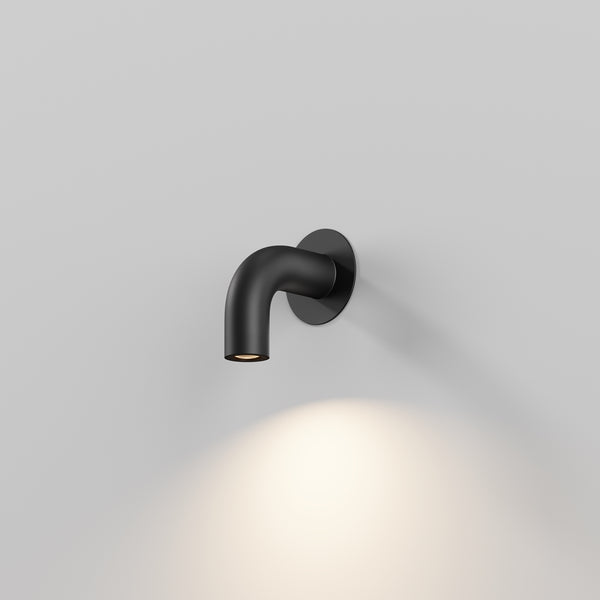
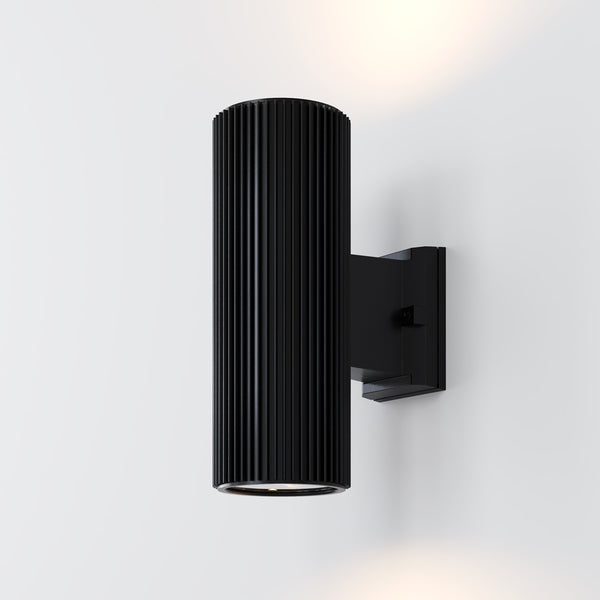
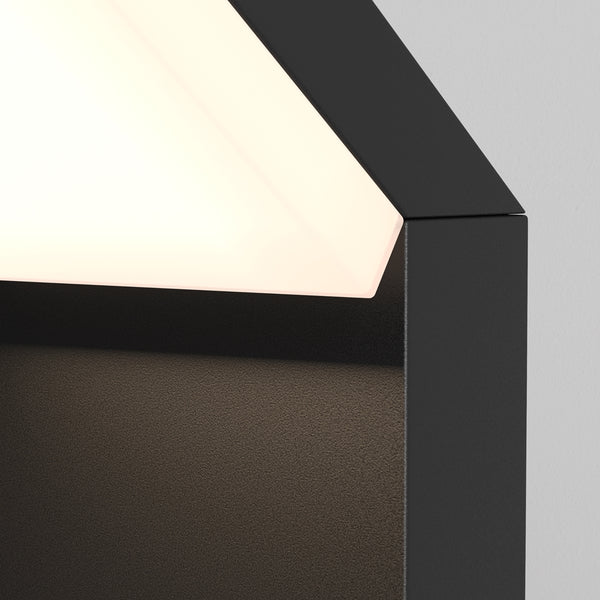
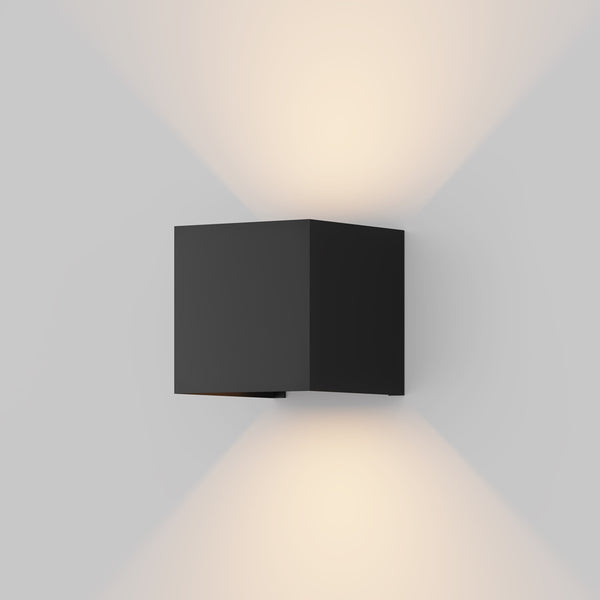
The wall lights and wall-mounted lights in the selection are around 26 x 12.5 cm, with more compact formats at 17 x 10 cm, often 18 W and IP65. Directional models stay small, between 4 and 10 W, with a 12 cm by 3.7 cm housing for the Noctis II or 11 cm by 10 cm for Nael in glass. The linear format goes up to 240 cm to light an entire path in a single line.
Which smart outdoor spotlight should you choose for a terrace?
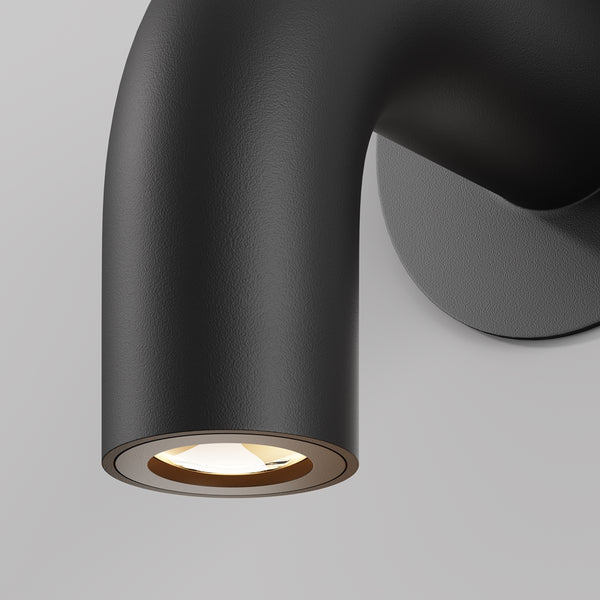
On a terrace, a 4 to 10 W spotlight is enough: it draws a clean cone on a step or a wall corner without flooding the neighbours. The small models in the selection often have metal housings with a diffuser, rated IP54 when the area stays sheltered under a roof overhang. Aim the beam at the ground, not at eye level.
Which smart outdoor floodlight for a garden or a long wall?
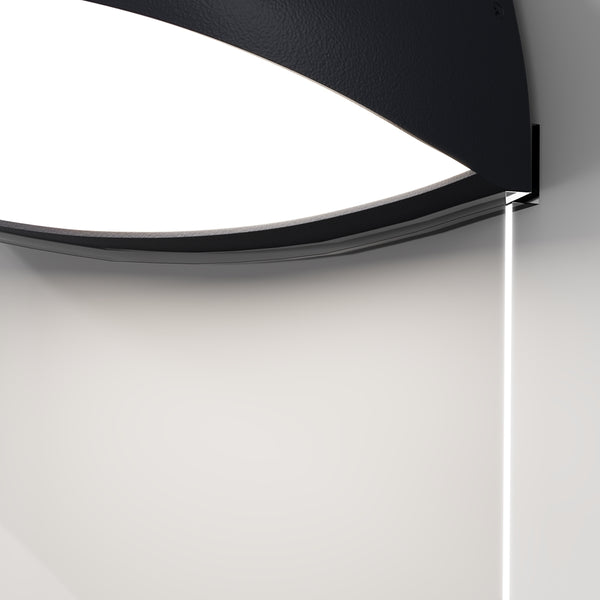
For a garden or a long facade, aim for a linear light or a floodlight, with higher wattages from 15 to 60 W depending on the length, and IP65 or IP67 when rain hits from the front. The long format is installed in a wash along a wall, which a single wall light cannot do. In terms of look, the contemporary style largely dominates this family.
Smart outdoor bollard light or smart solar bollard light: which to choose?
In this collection, the lights run on mains power: nothing to recharge, the light is constant. A solar model depends on the sun and suits mainly very open areas. Check the diameter and mounting height before choosing between a bollard and a bollard light.
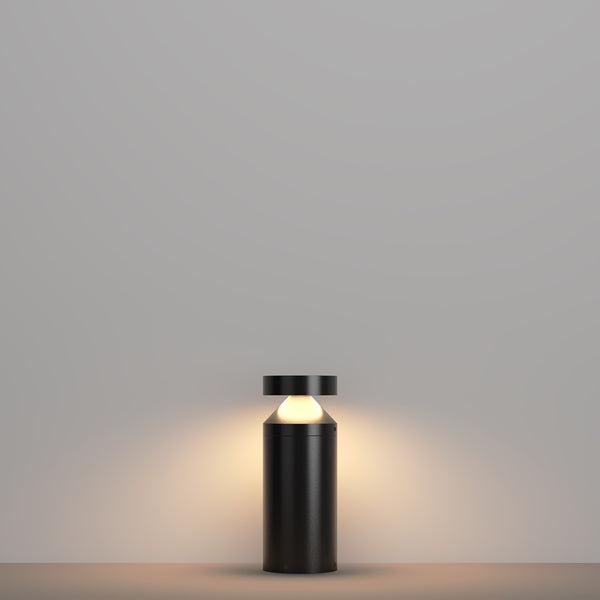
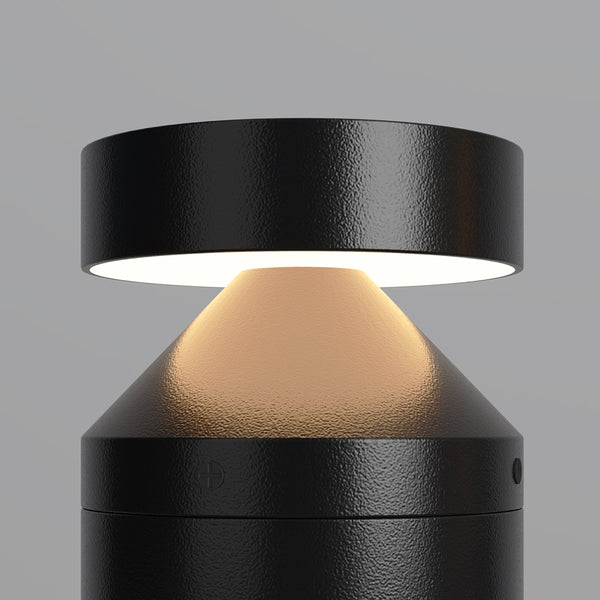
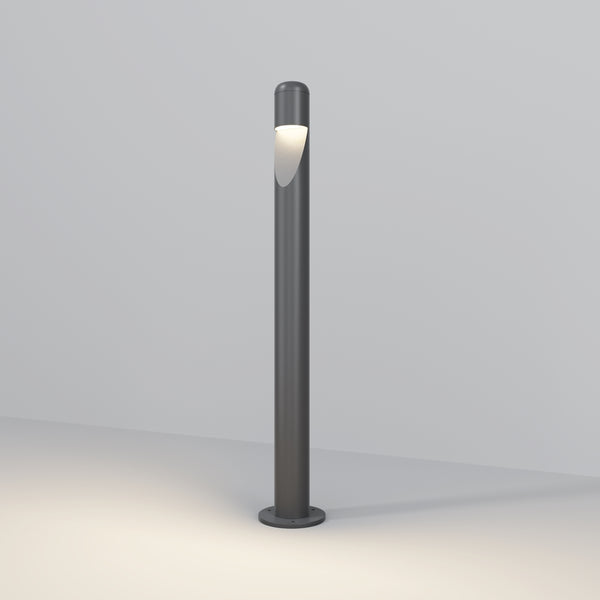
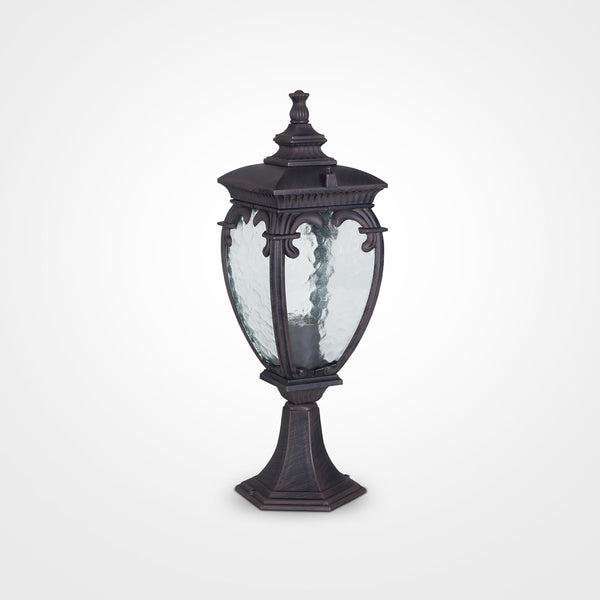
The small free-standing formats go down to Ø 5.5 cm for a depth of 11.7 cm, with an adjustable height from 8.8 to 15.9 cm, at 5 W and IP65. The medium formats go up to Ø 13 cm for 23 cm of depth, adjustable from 19.2 to 26.7 cm, at 30 W. The low bollards measure 10 cm wide for 30 cm of depth at 7 W, in grey or white depending on the finish.
Which smart outdoor bollard light for a path?
On a path, a 30 W free-standing light covers several metres between two points, while a 7 W bollard is enough to line the edge of a terrace. Space the points evenly: repeated light guides the eye better than a single very powerful source. In terms of look, the white models blend into a light-coloured wall and new render.
Can a smart solar bollard light be installed under a porch?
Under a covered porch or a shaded entrance, a solar model delivers less light since it depends on sunlight to recharge. A mains-powered light, on the other hand, keeps a constant intensity whatever the weather, which suits a poorly sun-exposed access point better. For these areas, compare instead all outdoor lights with conventional power.
Which IP rating and which bulb base should you choose for an outdoor light?
The IP rating indicates resistance to dust and water: IP44 for a sheltered area, IP65 for a facade exposed to rain, IP67 for occasional immersion. Most of the selection is IP65, with integrated LED, and a few models with an E27 or GU10 base.
IP44 or IP65: what does the rating really protect against?
The first digit covers dust, the second water. An IP44 protects against splashes, which is enough under a canopy or a roof overhang. An IP65 withstands water jets: it is the dominant rating in the selection and the right choice for a facade or an unsheltered entrance. In between, an IP54 holds up on a partially covered terrace. IP67 remains rare and concerns points close to a pool edge.
E27, GU10 or integrated LED: what is the difference?
The integrated LED, by far the most common, cannot be replaced: when it stops, the light goes with it. An E27 or GU10 base, on the other hand, lets you change the bulb, adjust its colour temperature or choose a smart model. It is more flexible in use, with a housing that must be protected from water in all cases.
| Type of light | Where to install it | Common IP rating | Light temperature | Typical wattages |
|---|---|---|---|---|
| Outdoor wall light | Entrance, facade, terrace wall | IP65 or IP44 | Warm white or cool white | 6 W to 18 W |
| Spotlight and small directional light | Step, passage, flower bed | IP54 or IP65 | Warm white | 4 W to 10 W |
| Floodlight and long linear light | Garden, long facade, path | IP65 or IP67 | Warm white to cool white | 15 W to 60 W |
| Bollard and low light | Path, terrace edge | IP65 | Warm white | 7 W |
| Medium free-standing light | Terrace, patio | IP65 | Warm white | 30 W |
How to install and maintain a smart outdoor light?
Install the fixture out of reach of direct jets, use cable glands and check the sealing of the cable entries. For maintenance, a soft cloth and soapy water are enough; avoid abrasive products on aluminium and glass, and switch off the power before any work.
At what height should an outdoor wall light be installed?
Aim for eye level, around 1.60 to 1.80 m from the ground, to illuminate a visitor's face and the lock without glare. A round 17 x 10 cm wall light goes near the door, a 26 x 12.5 cm wall light a little higher to wash the wall. Keep at least 30 cm between the fixture and a glazed opening.
How to maintain an aluminium outdoor light?
The aluminium and metal forming the housing are cleaned with warm soapy water, without an abrasive sponge or solvent. Frosted glass or acrylic is washed the same way, focusing on insect marks. Switch off the circuit before any work and take the opportunity to check the cable glands are tight, the main cause of moisture inside a housing.
Style, material and colour: matching your outdoor light to the facade
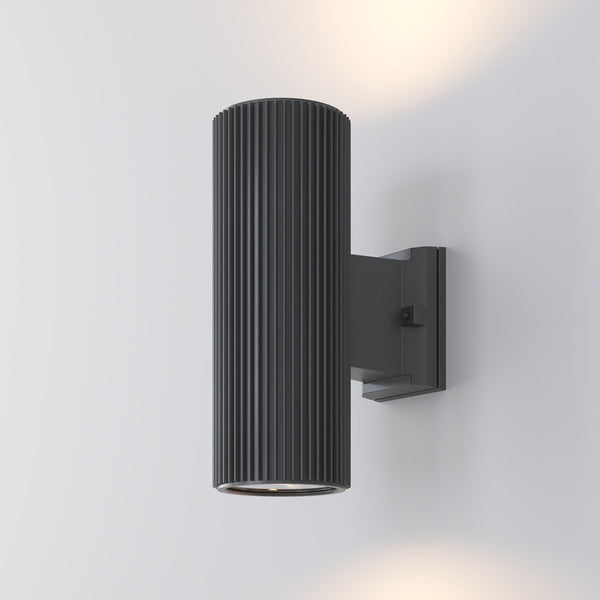
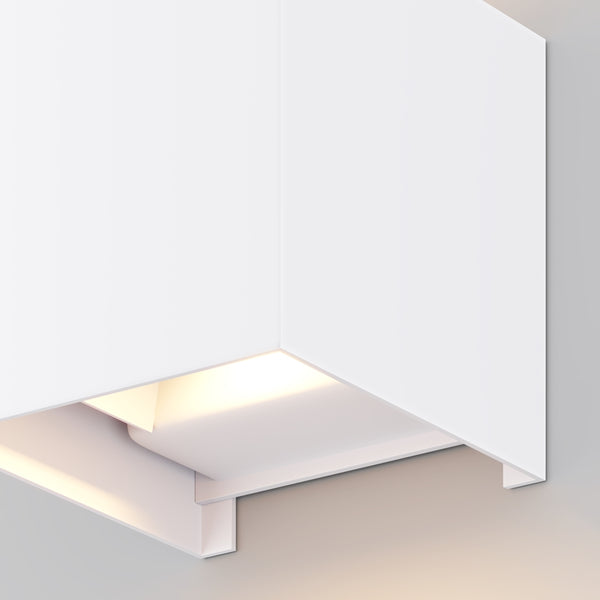
Aluminium and metal dominate the selection, often combined with a glass or acrylic diffuser. A black housing blends into a dark facade or a stone wall, a white one is less visible on a light render; grey and gold add a more discreet or more striking touch.
Aluminium or metal: which material to choose for outdoors?
Aluminium is the most common material, often paired with metal for the structure and completed by a glass diffuser or an acrylic one that softens the light. Iron appears as an accent on some models. In practice, the material mainly changes the surface finish and the weight of the housing, not the way it lights.
Black or white outdoor light: what effect on the facade?
Black fades into a dark wall, in stone or dark brick, and lets the light speak for itself. White blends into a light render and lightens a facade. In between, gold details or bronze marks an entrance, while grey stays neutral. For a very graphic look, also see the designer light and the modern models.
| Criterion | Most common values | What it changes in daily use |
|---|---|---|
| Material | Aluminium, metal, glass, acrylic | The housing is structural, the glass or acrylic diffuses the light |
| Colour | Black, white, grey, gold, bronze | Black fades into a dark facade, white into a light wall |
| IP rating | Mostly IP65, then IP54 and IP44, occasional IP67 and IP45 | IP44 in a sheltered area, IP65 exposed to rain, IP67 for occasional immersion |
| Light temperature | Warm white 2700 to 3500 K, cool white 4500 to 6500 K | Warm white for a terrace, cool white for an entrance to mark clearly |
| Bulb base | Integrated LED, then E27, then GU10 | Integrated LED: nothing to change; E27 or GU10: the bulb is replaceable |
| Dimmer | Present on a minority of models | Check compatibility before installing a dimmer |
Frequently asked questions
What is the best outdoor light?
The best choice is the one that matches the area: a wall light for an entrance, a spotlight for a passage, a floodlight or linear light for a garden, a bollard for a path. Favour IP65 on a facade exposed to rain, and a warm white of 2700 to 3500 K for a terrace.
Can you put a smart outdoor bulb in an E27 base light?
Yes, an outdoor light with an E27 base accepts a smart bulb, provided the bulb is also designed for outdoor use. The housing ensures the sealing, the bulb provides the control. Check the light's IP rating before choosing the bulb.
Is IP65 enough for a facade exposed to rain?
IP65 protects against dust and water jets: it is the most common rating in the selection and suits a facade exposed to rain. IP44 remains suitable for a sheltered area, IP67 for occasional immersion, for example near a pool edge.
Which smart outdoor spotlight to light a narrow path?
A directional spotlight suits a narrow path: it aims the light at the ground without glare. The small directional lights in the collection range from 4 to 10 W, often IP54 or IP65, in warm white: enough to line a passage without flooding the neighbouring flower beds.
Lighting shop in Lyon: where to see an outdoor light before buying?
Designix is an online lighting shop: the outdoor selection, the lighting clearance Lyon and customer service remain accessible from the collection page, with secure payment, tracked delivery and returns. You compare the models and their real specifications before confirming.
For an entrance, start with an IP65 wall light at 18 W at eye level; for a garden, a linear light of 15 to 60 W. Then compare the finishes in black finishes, and if you are also looking to light the home, take a look at original living room lighting or designer lights.
Secure payment, tracked delivery, returns and Designix customer service: the product page gives the dimensions, the bulb base, the IP rating and the light temperature, everything you need to confirm your choice before installation.