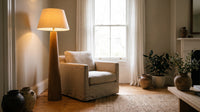
Entrance floor lamps
This selection is also available in our French store: Lampadaires pour entrée


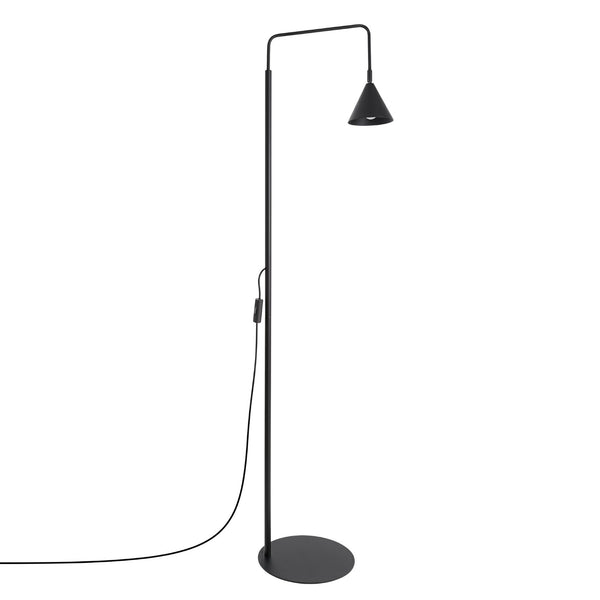



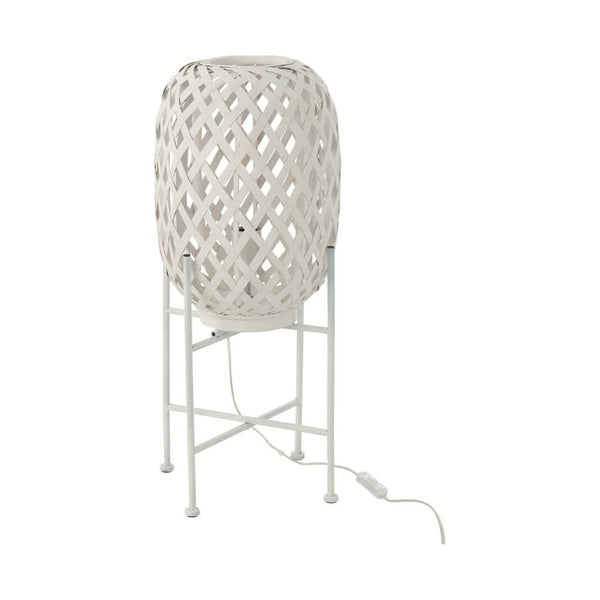















- Tracked delivery to your country Tracked delivery
- Secure payment at checkout Multiple payment methods
- 14 days to change your mind 14-day returns
- Secure payment Secure payment
Not sure of your style? Find it in 30 seconds
A few questions, and we will show you the pieces made for you.
Frequently asked questions
How do I choose the right product?
What are the delivery times?
Can I return an item?
Can I pay in instalments?

An interior that reflects who you are
Carefully selected pieces, shipped from our warehouses. Our team advises you before you buy, so you choose with confidence.
- Tracked delivery
- Pay in instalments, where available
- 14 days to change your mind
- Advice & showroom in Lyon, France
Count on three light sources in an entryway: a main light on the ceiling or wall, a secondary light at eye level, and a night light that stays on in the evening. A floor lamp fills that secondary role without touching the wall, provided you clear the door swing and keep the same color temperature as the adjacent room.
Which light fixture for a home entryway?
A ceiling light when the ceiling is low and traffic is constant, a pendant light when height allows, a floor lamp when the wall must stay clear: available space decides before style does.
Entryway light fixture: ceiling light, pendant or floor lamp?
A ceiling light illuminates widely, does not touch the floor, but requires a sound ceiling and access without a ladder. A pendant brings light down to a useful height and adjusts to ceiling height, at the cost of an obstacle in the path. A floor lamp frees the wall and lights at eye level, while taking up a bit of floor. In a wide hallway, an adjustable floor lamp sends the beam toward the wall rather than into your eyes.
Entryway lighting: the rule of three sources
A main source that lights the room, a secondary source placed lower, a night light for the evening. This distribution avoids the ceiling light well and shadows underfoot. It combines different models, never three times the same one. Browsing our full range of light fixtures helps build this set without repetition.
| Zone | What matters | Suitable format | To check |
|---|---|---|---|
| Narrow hallway | Keep floor path clear | Wall sconce or ceiling light | Door swing width, ceiling height |
| Entrance hall | Mark the arrival | Pendant or chandelier | Support strength, maintenance |
| Stairwell | Light without glare when climbing | Wall sconce or high pendant | Access to change the bulb |
| Landing | Soft night light | Sconce or diffusing ceiling light | Control from bottom and top |
| Entryway open to living room | Visual continuity | Floor lamp | Same color temperature as adjacent room |
| Outdoor entryway | Resist humidity | Outdoor sconce or floor lamp | Protection rating stated on the product sheet |
Chandelier for entryway and hallway: when to prefer it?
A chandelier dresses an entryway when the ceiling supports it: it hangs into the volume and becomes the point the eye follows as you cross the door.
Chandelier for cathedral entryway: fill the height without overloading
In a double-height volume, a single chandelier in the center leaves a void around it. Pair it with low sconces or a floor lamp so light reaches walking level. A model with gold finishes catches daylight and remains readable even when off.
Large chandelier for high ceiling: check fixing and weight before drilling
A large chandelier hangs from a solid support, never from a drywall hook. Also check space for maintenance: crystal drops require regular access. A vintage style in patinated metal and glass gives the same presence with fewer fragile elements.
What light color for the entryway and living room?
Entryway and living room benefit from sharing the same color temperature: the eye does not perceive a break when moving from one room to another.
Light color for living room: keep the same temperature as the hall
A warm light, around 2700 K, suits the hall as well as the living room; a neutral light, around 4000 K, is only justified if the entryway serves as a reading or work corner. The useful reference is continuity, not the absolute value. A living room LED floor lamp thus extends the hall light without changing shade.
Warm or white light: what changes in a hallway
Perceived color also depends on the diffuser and the wall receiving the light: an amber shade warms a neutral bulb, a dark wall absorbs flux and darkens the room. So look at the shade material as much as the source. A modern LED floor lamp matches the same shade as the rest of the home.
Entryway open to living room or kitchen: how to match light fixtures?
When the entryway opens onto the living room, the light fixtures form a single scene: same materials, same finish, same color temperature.
Chandelier for living room: reuse a material already present in the entryway
Do not repeat the same model, but pick up a thread: the metal of the entryway light reappears in the base of the living room floor lamp, the wood of the coat rack in the shade. A Scandinavian spirit in light wood and painted metal maintains this continuity without heaviness, like a wooden base placed near the sofa.
Ceiling light for modern kitchen and chandelier for kitchen: when the entryway opens directly into the room
If the entryway opens onto the kitchen, the visual sentence continues: a designer LED floor lamp at the end of the counter picks up the metal of the entryway light. A coherent modern kitchen decor uses the same colors as the hall. In terms of materials, a rattan shade is enough to make the link. A black metal structure also works on a light wall.
| Style | Materials | Light atmosphere | Where it works |
|---|---|---|---|
| Scandinavian | Light wood, painted metal | Soft and even | Bright hall, clean interior |
| Industrial | Black metal | Direct, contrasting | Raw entryway, concrete or brick wall |
| Bohemian | Rattan, bamboo | Warm, filtered by the material | Open entryway, plant decor |
| Vintage | Patinated metal, glass | Tepid, slightly amber | Old hallway, moldings |
| Gold design | Gold metal, glass | Accent, decorative | Reception hall |
| Modern white | White metal | Neutral, discreet | Small entryways, light walls |
Light fixture for WC and toilet: what to place in a small volume?
In a WC, a diffusing ceiling light or a wall sconce is enough: light comes from above or the side without taking up the little space available.
Toilet light fixture: ceiling light, sconce or recessed spot
The ceiling light illuminates the whole room from one point; the sconce avoids light falling in the line of sight, more comfortable in a tight volume; the recessed spot requires a false ceiling. Look for a closed diffuser that dusts off in one gesture. A modern white finish blends into a small volume without weighing it down.
WC decoration: indirect light and easy-care materials
Stick to matte materials that are easy to wipe, and light that bounces off the wall rather than the mirror. A matte black wood adds character without shine. A timer or motion sensor avoids leaving the light on.
Wall sconce for indoor staircase: where to place it?
On a staircase, a wall sconce lights the step without glare: place it on the wall along the flight, above the handrail line, at regular height from one landing to another.
Wall sconce for indoor staircase: how to distribute points?
Several points are better than a single source at the top: two or three sconces distributed light each flight without a dark zone. Keep the same height from one point to another so the rhythm reads from below. A bamboo light fixture brings filtered light that suits an open stairwell.
Stairwell: control light from bottom and top
A two-way switch avoids climbing or descending in the dark: control from the bottom and from the landing. Also think about access to change the bulb, without a ladder in the flight. A simple high model dusts faster than an assembly with drops.
Outdoor entryway light fixture: how to resist rain and wind?
This collection contains no products for now: protection ratings, sockets, materials, heights, diameters and color temperatures of the floor lamps will appear here as soon as they are online.
Floor lamp for outdoor entryway: read the protection rating before buying
A model rated for outdoor use resists splashes and rain; an indoor model placed under an awning eventually oxidizes. A floor lamp holds light at path height and marks the way. An outdoor light fixture is also chosen according to exposure: full wind and sheltered wall do not require the same fixings.
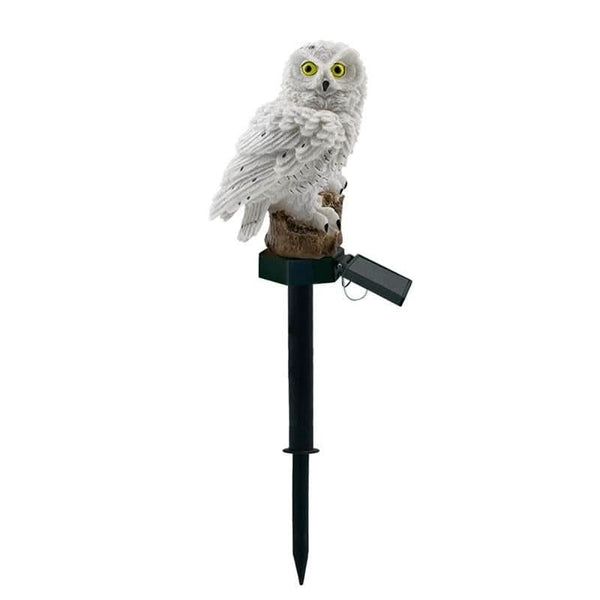
Solar floor lamps: for a path or gate without power supply
A solar model turns on at dusk and off by itself, without wiring or switch; the time depends on the setting and the day's sunshine. Other floor lamps turn off at the switch, or automatically with a timer or motion sensor.
How to maintain an entryway light fixture?
A light fixture is dusted dry with a soft cloth; on metal, a slightly damp cloth is enough, and no solvent is used.
Maintaining a wood or metal light fixture
Wood is cleaned without wetting product, which leaves marks; painted metal is satisfied with a soft cloth. Do not strip a light fixture: homemade recipes meant for furniture do not apply to a lamp finish, which is cleaned without abrasive.
Dust and bulbs: the gesture that avoids coming back
Dusting the shade changes the light as much as changing the bulb: a thin layer already absorbs part of the flux. Take the opportunity to check the ceiling fixing and the cable condition. On a model placed high, access without a ladder often decides the choice.
What mistakes to avoid with an entryway light fixture?
The most common mistakes: a fixture too low in a busy hallway, a source aimed straight into the eyes when crossing the door, an oversized format in a narrow hall, a light too cool that cuts the hall off from the rest of the home.
Glare at the entryway: aim the source out of sight
At the door, the eye is still adapted to daylight: a bare bulb facing the entryway glares. Choose a diffuser, or a source aimed at the wall, and keep the main light high. A designer LED floor lamp with a closed shade often solves the problem in one gesture.
An oversized format in a narrow hallway: how to avoid it
Measure the passage width before choosing: a fixture that hangs below the handrail line hits the shoulder. In a hallway, the sconce or ceiling light works better than a wide pendant. Format is chosen relative to volume, not the room.
Replacing a light fixture costs what the model and labor cost, not a single rate; the price of each piece is displayed up to date on its product sheet. Designix supports the choice: secure payment, tracked delivery, returns, customer service. Browsing the light fixture catalog is enough to compare formats and materials before ordering.
Frequently asked questions about entryway floor lamps
Which light fixture to choose for an entryway?
A ceiling light when the ceiling is low and traffic frequent, a pendant or chandelier when height allows, a floor lamp when you want to free the wall and place light at eye level. Floor space often decides, before style.
Chandelier for home entryway: what format to plan?
Format is chosen relative to volume, not the room: a chandelier should occupy the hall width without hindering circulation, and stay proportional to available height. In a low entryway, a flatter version works better than a very low-hanging model.
Ceiling light for entryway: which model when the ceiling is low?
Look for a thin ceiling light, with a closed diffuser, that lights widely and hugs the ceiling. The goal is not to create a visual obstacle or shadow zone underfoot, while keeping enough light to recognize a face on entering.
Toilet light fixture: ceiling light or sconce?
Both work. The ceiling light illuminates the whole room from a single point; the sconce avoids light falling straight in the line of sight, which is more comfortable in a small volume. The choice depends mainly on wall space and ceiling height.
What light color for the living room and entryway?
Keep a similar color temperature between entryway and living room: the transition from one room to another should not be visible. A warm to neutral light suits the hall; a whiter light is only justified if the entryway serves as a work or reading corner.