
IP65 bathroom ceiling lights
This selection is also available in our French store: Plafonniers IP65 pour salle de bain



- Tracked delivery to your country Tracked delivery
- Secure payment at checkout Multiple payment methods
- 14 days to change your mind 14-day returns
- Secure payment Secure payment
Not sure of your style? Find it in 30 seconds
A few questions, and we will show you the pieces made for you.
Frequently asked questions
How do I choose the right product?
What are the delivery times?
Can I return an item?
Can I pay in instalments?

An interior that reflects who you are
Carefully selected pieces, shipped from our warehouses. Our team advises you before you buy, so you choose with confidence.
- Tracked delivery
- Pay in instalments, where available
- 14 days to change your mind
- Advice & showroom in Lyon, France
A bathroom ceiling light with an IP65 rating lights a bathroom without fearing water splashes or steam. Mounted above a shower, a bathtub or in a small toilet, it is chosen first for its ingress protection rating, then for its format and the colour of its light.
Which IP65 bathroom ceiling light should you choose?
In a bathroom, start by choosing an IP65 rating, which protects the electronics from water splashes and steam, then pick the format to suit the ceiling: flat and discreet in a small room, as a ring or with several light points in a large bathroom. Then check the socket and the diameter before ordering.
IP65 bathroom ceiling light: flat shapes, rings and spotlights
A flat ceiling light spreads an even light and does not hang down into the room: it is the right choice under a low ceiling or above a vanity top, where you do not want anything in front of you. A ring model, or one with several light points, spreads the brightness over a larger surface and suits a spacious bathroom better. The waterproof recessed spotlight targets a precise area, the shower or the bathtub, rather than a whole room. A closed diffuser, with no grille or slot, keeps steam out of the fitting and makes cleaning easier. A white finish blends into a pale ceiling, black makes a statement in a room with dark tiles.
IP65 shower ceiling light: the model that stands up to splashes
Above the shower, an IP65 ceiling light fixed to the ceiling stays out of reach of movement and receives less water than a hanging pendant. A closed housing and a seal at the diffuser limit the entry of moisture. Look for a simple mount that can be taken down, so you can change the bulb without straining the seal. To compare the finishes and diameters on offer, browse the LED ceiling lights for bathrooms, then widen your search to designer bathroom ceiling lights if looks matter as much as technique.
Discover waterproof bathroom ceiling lights and compare shapes before making your choice.
What is the difference between IP20 and IP44 protection ratings?
An IP rating is read in two digits: the first covers protection against solids and dust, the second against water. An IP20 protects against fingers but not moisture; an IP44 resists water splashes from all directions; an IP65 adds sealing against dust and water jets.
| Room or area | Exposure | Rating to aim for | Type of fitting |
|---|---|---|---|
| Shower, bathtub | Direct water splashes and steam | IP65 | Closed ceiling light or waterproof recessed spotlight |
| Rest of the bathroom | Steam and splashes | IP44 minimum | Ceiling light or wall light |
| Toilet, small wet room | Occasional steam, frequent cleaning | IP44 to IP65 | Flat ceiling light |
| Kitchen | Cooking steam, cleaning | IP44 | Central ceiling light |
| Hallway, entrance | Dust, no water | IP20 is enough | Ceiling light or spotlight |
| Garage, cellar, utility room | Moisture and dust | IP65 | Waterproof ceiling light |
IP44 bathroom pendant: is it enough?
It all depends on the position. Away from the shower, in the dry zone, an IP44 pendant handles ambient moisture. But it hangs into the room, so it catches steam from above and gets in the way of movement near the bathtub. Above a water point, an IP65 ceiling light mounted on the ceiling is safer. If your room stays lightly exposed, IP44 models for lightly exposed areas are often enough.
Ceiling light, toilet, garage: which IP rating for which room?
The reasoning is the same everywhere: the closer water gets to the fitting, the higher the rating must be. A simply damp room is fine with an IP44, a space where water is splashed needs an IP65. For a separate toilet, a flat IP44 ceiling light is enough in most cases, and ceiling lights for toilets cover that need. In a garage or a cellar, the damp air and dust justify IP65, as with ceiling lights for garages.
Where and how should you install a waterproof ceiling light in the bathroom?
Place the ceiling light in the centre of the room for even light, or above the shower and bathtub when the area is exposed to splashes: that is where an IP65 is justified. Avoid mounting it directly in line with the mirror, where it creates a reflection.
Ceiling light above the shower or bathtub
Switch off the circuit at the consumer unit before taking down the old fitting, then identify the wires and photograph the wiring. Fix the bracket directly into the ceiling, not onto an added rail. Tighten the housing without crushing the seal, which provides the seal with the diffuser. A flat model above the shower lights downwards without glare, and its smooth surface can be cleaned without dismantling. For a narrow shower, a waterproof recessed spotlight targets the area without lighting the whole space.
Ceiling light near the mirror: good or bad idea?
A centred ceiling light leaves your face in shadow when you lean towards the mirror. It is better to offset the source, or to add a wall light on either side of the mirror to light the complexion without cast shadow. If you only have one light point on the ceiling, move the ceiling light away from the mirror wall rather than fixing it directly above. A little further away, the light falls more softly on the face and the reflection disappears.
| Type of fitting | Ceiling | Suitable room | What it brings |
|---|---|---|---|
| Flat ceiling light | Low to standard | Bathroom, toilet, hallway | Even light, little bulk |
| Ring or multi-point ceiling light | Standard to high | Large bathroom, living room | Light spread across the whole room |
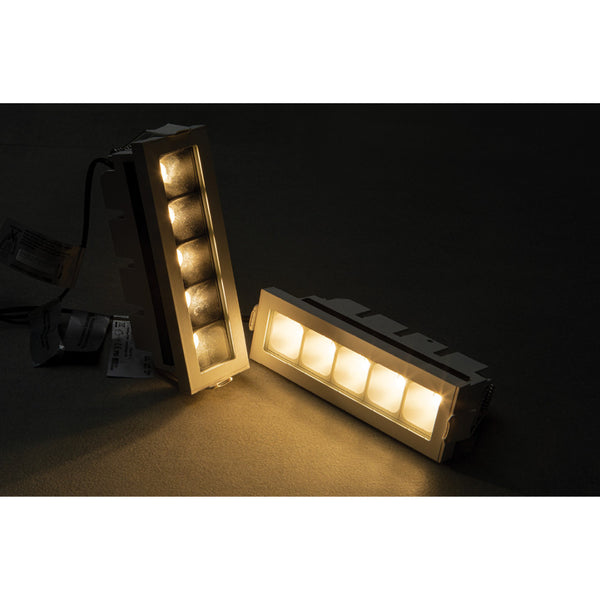
| Waterproof recessed spotlight | Standard | Shower, bathtub | Targeted lighting of the water area |
| Pendant | High | Dining room, living room | Volume and downward light |
| Wall light | All | Around the mirror | Face lighting without shadow |
A flat model to fix to the ceiling, and you can move on to installation with no surprises: choose a bathroom ceiling light.
Which light colour for a bathroom or a wet room?
A bathroom is used in the morning and the evening: a warm white relaxes in a room used at night, a neutral white stays true in front of the mirror for the complexion, a cool white lights strongly without warming. Two sources are better than one very powerful one.
Warm, neutral or cool white: what it changes in front of the mirror
Warm white settles the room at the end of the day and softens cold tiles. Neutral white gives a rendering close to daylight, more accurate for getting ready or applying make-up. Cool white remains useful in a work space, a utility room or a staircase, where clarity is wanted rather than atmosphere. The same reasoning applies in other rooms: compare the moods of LED ceiling lights for living rooms and bedroom lights before settling on your colour.
One or two light sources in a small bathroom?
Two weak sources are better than one strong source: they remove harsh shadows and prevent glare when you look up. A central ceiling light completed by a wall light near the mirror is enough in most wet rooms. If the ceiling is low, keep the ceiling light flat and add the extra light at the wall light, which catches light at face height.
Lighting for a toilet, hallway, entrance, garage: where else can you install an IP65 ceiling light?
Yes: an IP65 ceiling light can also be installed in a toilet, a hallway, an entrance, a utility room, a garage or a cellar, where the air is damp, dusty or subject to cleaning. In these passage areas, its smooth surface can be wiped clean in one go.
Lighting for a toilet and small wet room: the right format
In a toilet, the constraint is size: a flat ceiling light takes up little space and does not darken the room. An IP44 rating is enough in a dry toilet, an IP65 becomes useful if the room also serves as a wet room or if you often clean with plenty of water. A colour that is neither too cool nor too yellow stays comfortable in a small space, and a single well-centred source avoids cast shadows.
Hallway, entrance, garage: decor for a modern kitchen and passage areas
In a hallway, a flat ceiling light illuminates without cluttering a narrow space, as shown by ceiling lights to light a hallway and modern hallway ceiling lights. An entrance can take a more elaborate model, chosen from the designer ceiling lights for entrances. For modern kitchen decor, IP44 protects against cooking steam, and a more understated model suits a worktop, to be compared with modern LED ceiling lights for kitchens. A staircase is handled with a fitting that does not glare on the way up, such as ceiling lights for staircases.
Chandelier or ceiling light: when should you choose one over the other?
In a bathroom or a wet room, a waterproof ceiling light replaces the chandelier, which cannot handle moisture and splashes. In a living room or a dining room, a chandelier or a pendant brings volume above the table, especially under a high ceiling.
Dining room chandelier and living room chandelier: rooms with no moisture constraint
A chandelier does well where the air stays dry and where it can be dusted safely. In a living room, it structures the space and is complemented by a discreet ceiling light for general lighting, as with modern LED ceiling lights for living rooms. If your interior leans towards dark, black ceiling lights for living rooms give a sharp contrast, and the warm wood of wooden ceiling lights for living rooms warms a room with pale walls.
Large chandelier for a high ceiling: hanging pendant or ceiling light?
Under a high ceiling, a pendant that hangs down visually shortens the room and brings the light closer to the table: that is what is expected above a worktop or a table. A ceiling light fixed to the ceiling leaves the volume intact and suits rooms where people move around. The choice therefore depends on what you want to light, not on height alone.
Material, finish and care: how do you keep a bathroom ceiling light bright?
In a damp room, choose a smooth, closed surface that is easy to wipe: a flat ceiling light can be cleaned without dismantling. Switch off the circuit, run a soft, slightly damp cloth over the diffuser, and avoid abrasive products that permanently dull the material.
Materials and finishes that age well in a damp room
A housing in synthetic material or treated metal, with a closed diffuser, resists better than an open frame where dust and condensation settle. Colour matters too: white stays bright even when the room lacks daylight, as seen on white ceiling lights. Porous materials, such as untreated raw wood, are best kept for dry rooms. For a work station, a flat, matt model limits reflections, as with ceiling lights for offices.
Cleaning an IP65 ceiling light without damaging it
Cut the power before any work. Dust dry first, then run a barely damp microfibre cloth over the diffuser. Avoid strong alcohol, acetone and abrasive powders, which cloud the plastic and attack the seals. Do not open the housing to wash it, the waterproof part does not need to be dismantled. Light, regular cleaning keeps the original light output.
What mistakes should you avoid when buying a bathroom ceiling light?
The most common mistakes: installing a non-waterproof fitting above the shower, choosing light that is too cool in a small room, forgetting the number of light points needed, or picking a format that is too bulky under a low ceiling. Check the IP rating before the looks.
Choice traps to know about
An IP rating unsuited to the water area remains the first reason for replacement. Then comes the socket: note the one on your current fitting before ordering a replacement, otherwise the bulb will not fit. Under a low ceiling, a model that is too thick is noticeable and gets in the way. In a large room, a single light point leaves dark corners. And a colour that is too cool hardens a small tiled bathroom.
Ordering with peace of mind
At Designix, payment is secure, delivery is tracked and returns are possible if the format does not suit once installed. Customer service answers questions on the socket, colour or rating before you order. To see the shapes available and the colours on offer, browse the Designix lighting catalogue.
See the selection of IP65 ceiling lights for bathrooms and settle on your model.
Frequently asked questions
Which ceiling light for a bathroom?
A closed ceiling light, suited to damp rooms. Above the shower or bathtub, aim for an IP65 rating, which protects against water splashes and dust; elsewhere in the room, an IP44 is often enough. Then choose the format according to the ceiling surface and the size of the room.
IP44 bathroom pendant: is it enough?
It all depends on the location. An IP44 pendant is suitable away from the shower, in the dry zone, but it hangs into the room and remains exposed to steam from above. Above a shower, an IP65 ceiling light mounted on the ceiling is safer and does not get in the way of movement.
Lighting for a toilet: which one should you choose?
A flat ceiling light or a wall light, with an IP44 rating minimum if the room is damp or cleaned often. In a toilet without a shower, the essential thing is even lighting without cast shadow, placed in the centre of the ceiling, with a colour that is neither too cool nor too yellow.
Light colour for a living room: which should you choose?
In a living room, a warm white relaxes in the evening and suits reading corners; a neutral white stays natural for entertaining. In a bathroom, the reasoning is the same: neutral white in front of the mirror to read the complexion, warm white for a bath at the end of the day.
Large chandelier for a high ceiling: how do you light the room?
Under a high ceiling, a large chandelier or a pendant that hangs down visually shortens the room and brings the light closer to the table. Complete it with ceiling lights or waterproof spotlights in damp rooms, where a hanging fitting is not suitable. Compare the ranges in our full lighting collection.




