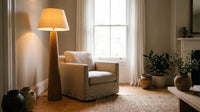
Wall-mounted hanging lights
- Tracked delivery to your country Tracked delivery
- Secure payment at checkout Multiple payment methods
- 14 days to change your mind 14-day returns
- Secure payment Secure payment


Not sure of your style? Find it in 30 seconds
A few questions, and we will show you the pieces made for you.





























Frequently asked questions
How do I choose the right product?
What are the delivery times?
Can I return an item?
Can I pay in instalments?

An interior that reflects who you are
Carefully selected pieces, shipped from our warehouses. Our team advises you before you buy, so you choose with confidence.
- Tracked delivery
- Pay in instalments, where available
- 14 days to change your mind
- Advice & showroom in Lyon, France
A hanging wall light fixes its body to the wall and releases the light through an arm, a textile cable or a tube. It illuminates a precise area, above a worktop, a sideboard or on a stairwell, without blocking the way.
What is a hanging wall light and what light does it give?
The body is screwed to the wall, the source is carried further out: this offset is what defines the hanging wall light. Depending on the model, it lights downwards, upwards or sideways, with a wide beam for a wall or a tighter brush above a worktop.
Hanging wall light: how the light point detaches from the wall
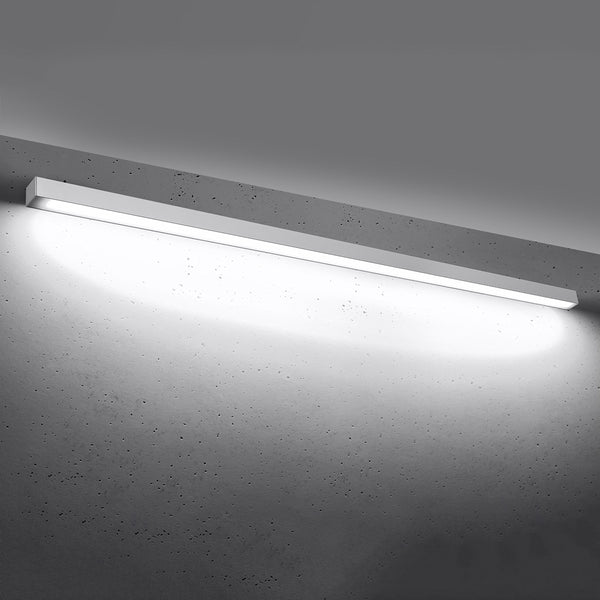
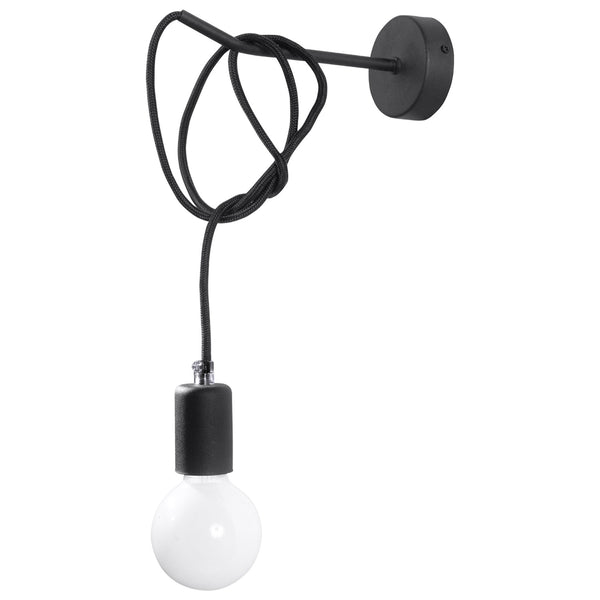
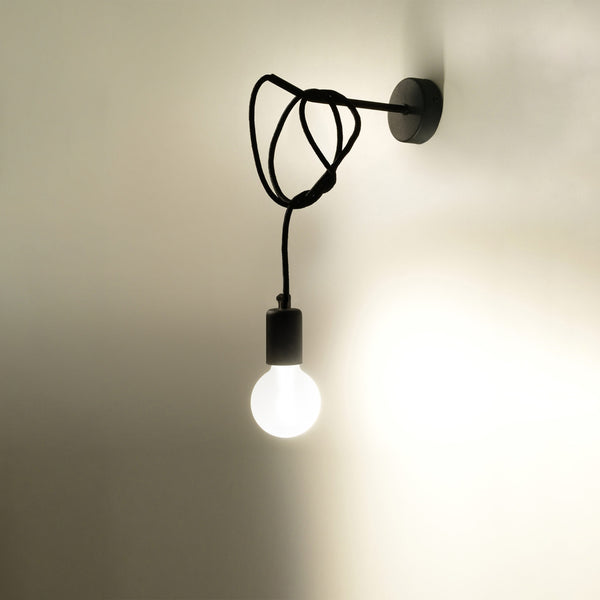
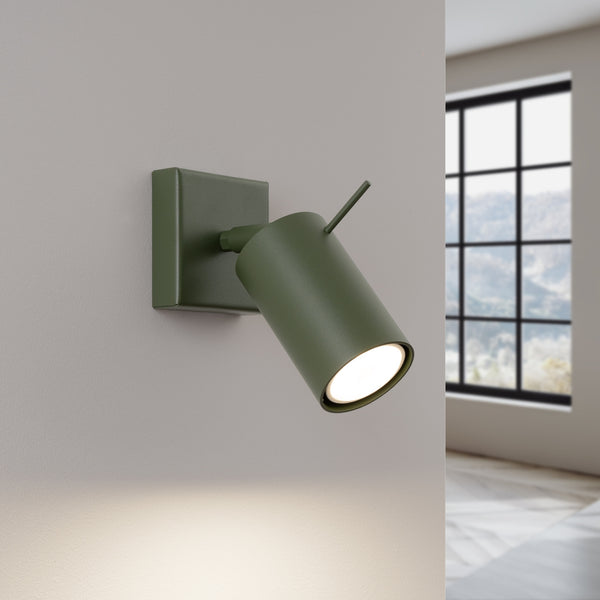
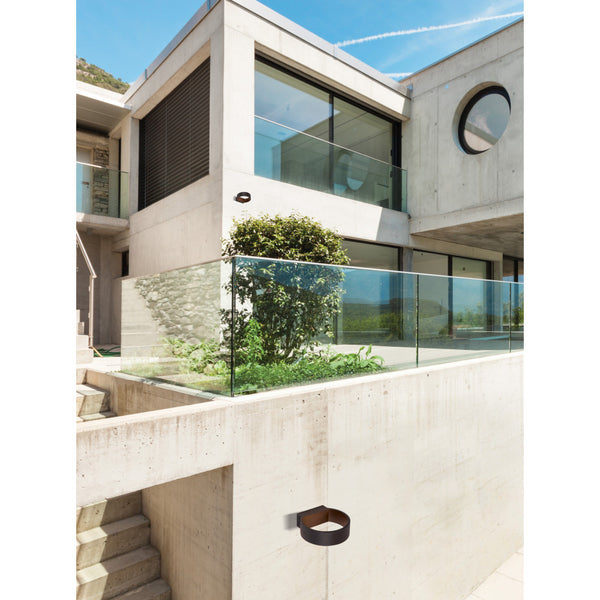
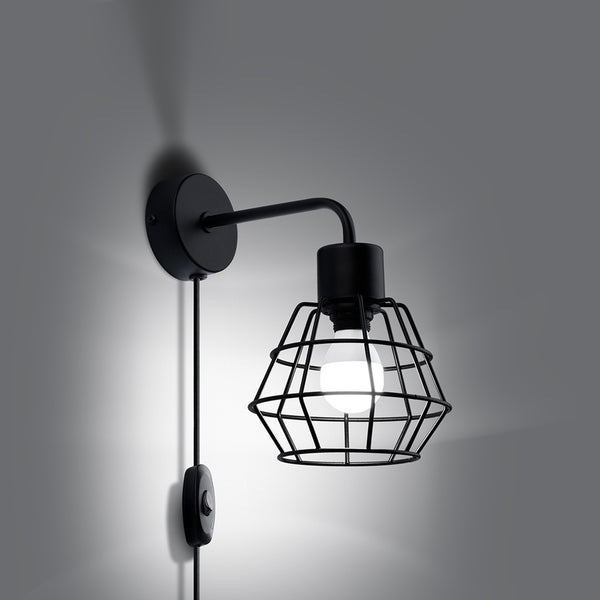
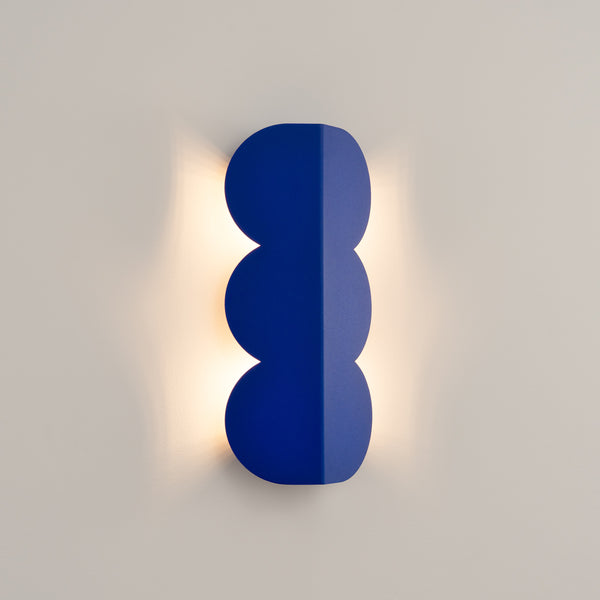
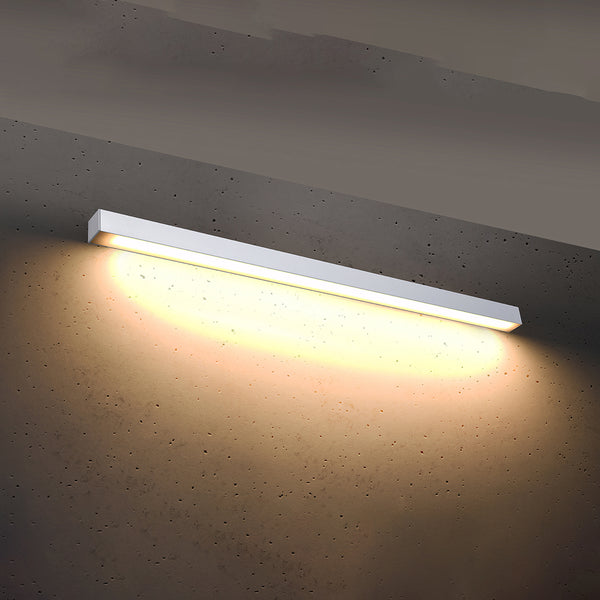
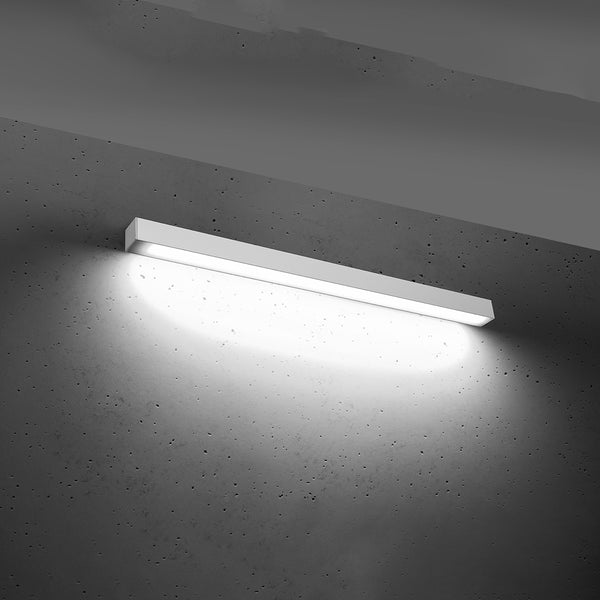
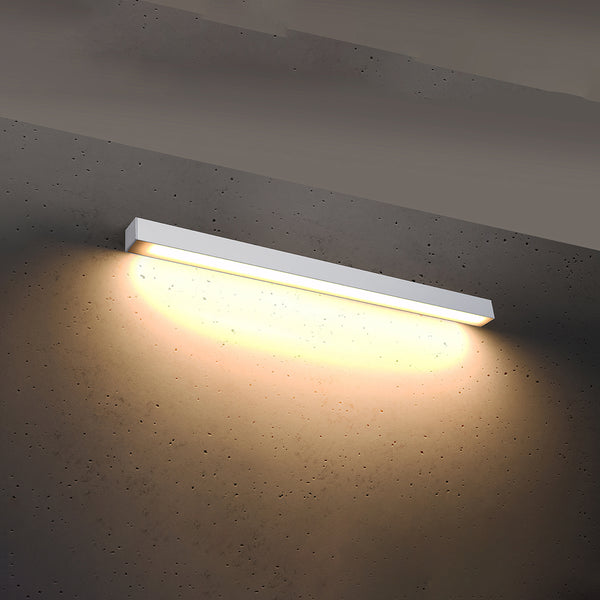
Four mountings coexist. The arm and textile cable of the Ondette light drop over 100 cm and end in an E27 socket: the light falls from above onto a table or an armchair. The tube of the Daelis pivots to aim at a worktop. The curved band of the Cambera runs over 60 cm and diffuses in neutral white. Other models play with the cylinder or the sphere, to discover in the design LED wall lights.
Arm, textile cable or tube: which formula to choose
An adjustable GU10 socket lets you direct the beam: handy above a workstation. An integrated LED imposes its design but stays very slim, like the 30 cm ribbed cylinders. A G9 or E27 socket gives a focused light, easy to replace. For atmosphere, warm white (2700 K to 3500 K) suits rest rooms, neutral white (3500 K to 4500 K) suits work areas. The rest of the Designix lighting catalogue follows the same logic.
| Room | What you are looking for | Format to favour | Marker in the collection |
|---|---|---|---|
| Living room | Accent lighting above the sofa or a sideboard | 60 cm horizontal or linear | Integrated LED, neutral white, dimmer |
| Bedroom | Soft light on each side of the bed | Compact, ball or leaf | Warm white, G9 socket, IP20 |
| Kitchen | Worktop lighting | Linear or adjustable tube | Neutral white, 8 W to 50 W depending on model |
| Hallway and entrance | Guide the way without cluttering it | Vertical cylinder or tube | IP20, LED, warm or neutral white |
| Stairs | Light the way down from the wall | Vertical cylinder, tube, ball | G9 socket or integrated LED, IP20 |
| Bathroom and outdoor | Light in a damp area | Closed wall light | IP44 in the collection, IP65 for outdoor |
Which wall light to properly light a living room?
In a living room, you want a light that does not dazzle: adjustable GU10 models or diffusing bands project towards the wall and the sofa. Favour a warm or neutral white, and a horizontal format when the wall is wide, vertical when it is narrow.
Which side to place the light in a living room
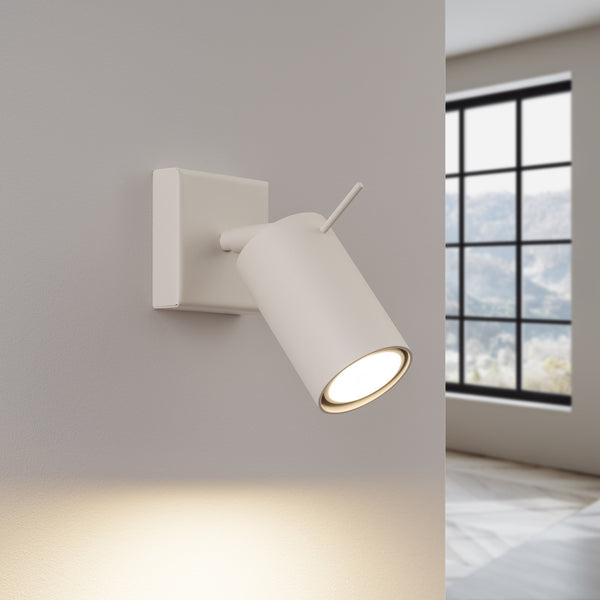
The Projecta, an adjustable cylindrical steel spotlight, can be aimed towards the sofa or a painting, without lighting opposite. A curved band, on the other hand, lights downwards and suits behind a sofa. If the living room opens onto the kitchen, also look at what goes on the kitchen worktop.
Which format above a sofa or a sideboard
A 60 cm band covers a panel or a sofa head. For a large wall, the Nolara drops over 200 cm with a micro-perforated diffuser. The Yvorella and its sphere on a small arm fits on a narrow wall. Other ideas to light a living room complete these two approaches.
How to choose wall lights for an adult bedroom?
For an adult bedroom, aim for a warm light, around 2700 K to 3500 K, placed on each side of the bed at reading height. A dimmable model lets you lower the intensity in the evening, and ball or leaf shapes pair well with metal and glass.
At what height to place a wall light on each side of the bed
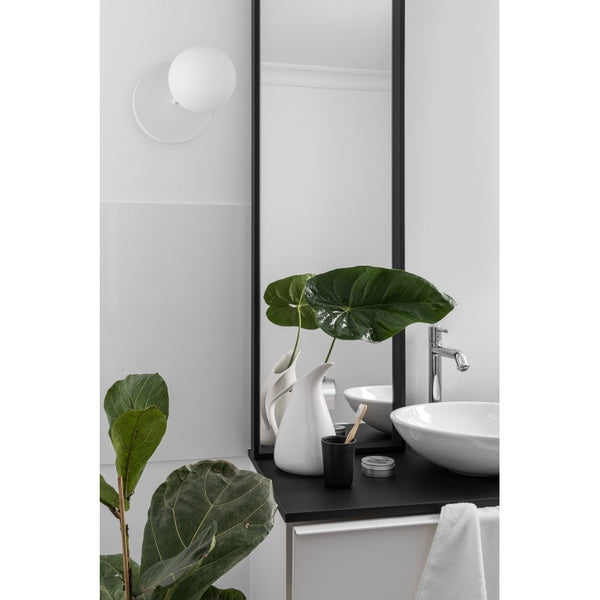
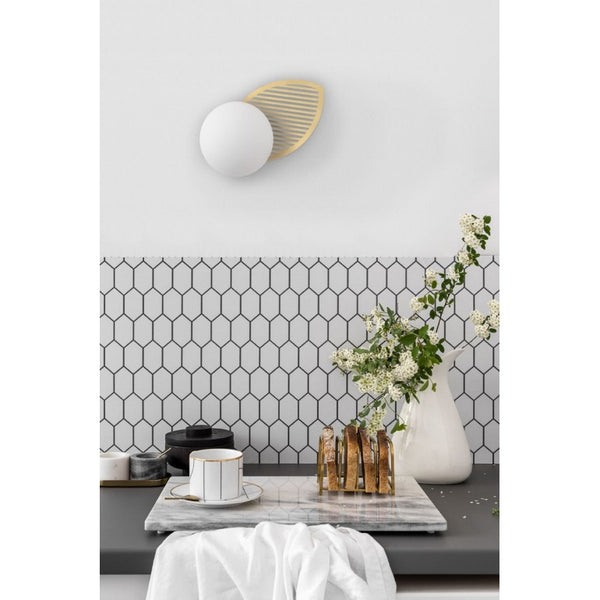
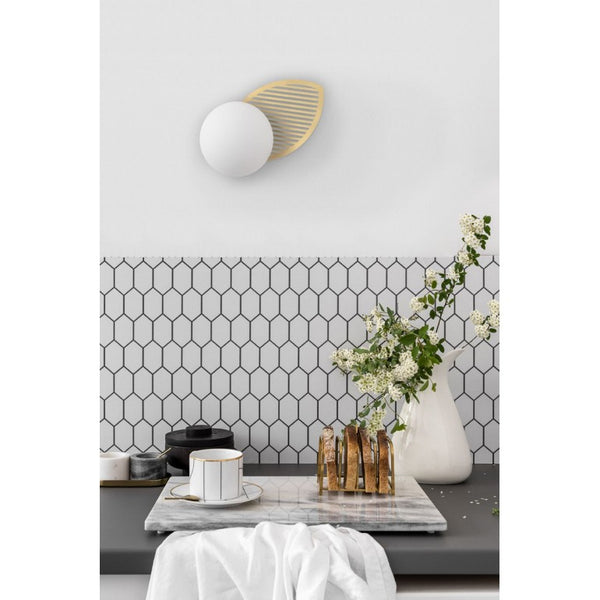
Generally allow 1.10 m to 1.30 m from the floor to read sitting up, and align both wall lights at the same height on either side of the bed. The Oskara, a metal and glass ball with a G9 socket, and the Bea, oblique blades in glass and brass, are two compact silhouettes that suit this placement. Find other models in the bedroom wall lights.
Warm white or neutral white for a bedroom
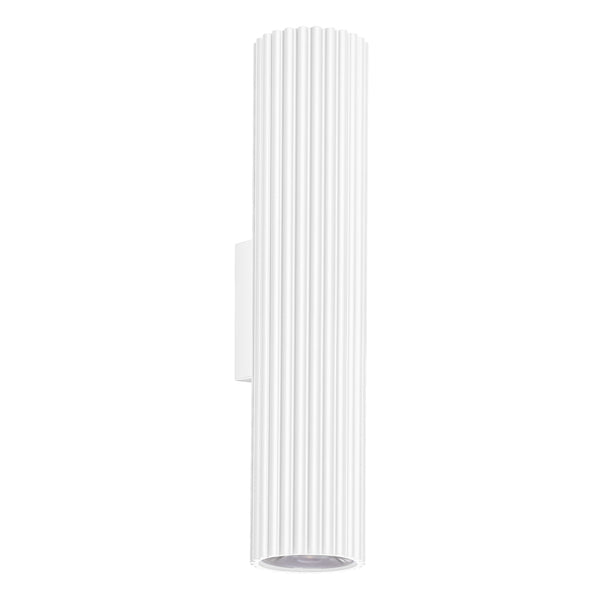
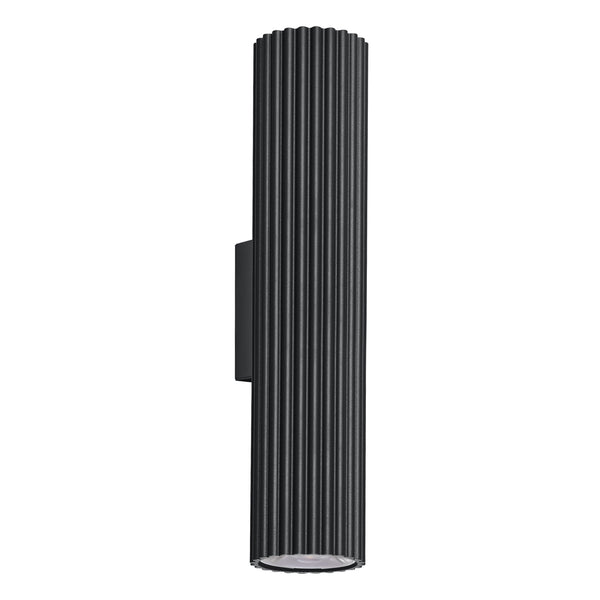
Warm white remains the safe choice: it rests the eye before sleep. The Vendora, a 30 cm ribbed cylinder, comes in several colours. The Quivara, same format, lights in warm white and accepts a dimmer. To compare solutions, see the dimmable models.
Art deco and art nouveau wall lights: how to recognise them?
1930s Art deco plays on geometric lines, strict cylinders and openwork patterns that let the light through. Art nouveau prefers plant curves. In this collection, the Art deco spirit shows on models with an openwork cylinder or oblique blades.
Art deco and 1930s art deco: the codes to spot
Look at the geometry: a clean cylinder, an openwork pattern, a fan, a metallic material. The Virelle takes up these codes with a white cylinder with openwork patterns, in steel, with a GU10 socket and 10 W. It can be fitted in a bedroom as well as a dining room. Other pieces in the same spirit are gathered in the retro style.
Art nouveau and antique wall lights: how to integrate them
An antique wall light, in brass or glass, pairs better on a light wall and with understated furniture: it must remain the detail point. A plant curve calls for plain wallpaper, an openwork geometry supports a wall painted white or beige. For second-hand pieces, browse the wall lights in vintage metal.
High-end design wall lights: what really changes
What sets a crafted model apart is the finish and the assembly: aluminium, steel, brass or glass, often combined. Then come the integrated LED, the dimmer when provided, and the warranty, which ranges from two to five years depending on the model.
Materials and finishes that make the difference on the wall
A well-machined aluminium keeps a clean edge and does not show dust. The ribbed cylinders Vendora and Quivara, in aluminium, come in several colours and can be placed alone or in pairs. Glass combined with metal softens the effect. The gold and black finishes play on contrast against a light wall.
Integrated LED, dimmer and warranty: what to check next
The integrated LED cannot be replaced, but it allows very slim formats and avoids buying bulbs. An original dimmer changes daily use in a bedroom or living room. The warranty, from two to five years depending on models, remains a good indicator of the seriousness of the assembly. An exceptional piece and an entry-level model differ mainly there. Browse the design LED models to compare.
How to light a staircase or hallway with wall lights?
On a staircase or in a hallway, the wall light replaces the bulky pendant: it is fixed to the passage wall and repeated down the descent. Models in tube or textile cable, in warm white, avoid the hospital corridor effect.
Staircase wall lights: how to pace the climb
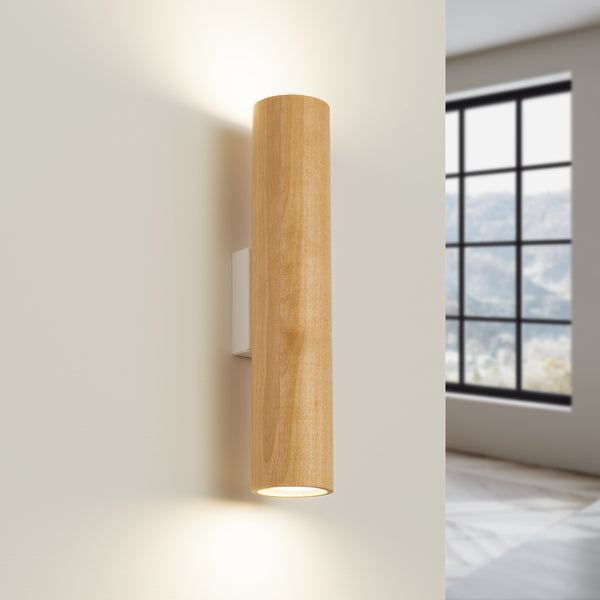
Space the points regularly and keep the same height relative to the stair nosing, the light then follows the slope without jolts. The Daelis, an adjustable tube, lights each landing; the Oskara, a compact ball, takes up little space. The stairwell benefits from mixing a repeated model and a lower point.
Hallway and entrance: what to choose in a narrow passage
Favour shallow depths: the Ondette protrudes only 8 cm from the wall, despite its 100 cm cable. A 30 cm vertical cylinder also does the job along an entrance. See the modern hallway and the matte black finish.
Wood, metal or aluminium wall lights: which material to choose?
Wood brings a warm light and a cosy material, suited to a bedroom or an office. Aluminium and steel dominate the collection, in black or white, and suit passage rooms. Glass, often combined with metal, softens the light effect.
Wood wall lights: for which rooms
Wood goes where you want to warm things up: headboard, desk, reading corner. It matches a warm white and a light painted wall. In a damp room, better to avoid it in favour of a closed wall light. Discover the wood wall lights in the selection.
Metal, aluminium or glass: what it changes when switched on
Aluminium keeps clean lines and comes in black, white, grey and taupe. Steel gives a more graphic silhouette. Glass, for its part, diffuses the light instead of reflecting it: the Bea and the Gus, in metal, glass and brass, light at 12 W with a G9 socket, and the Gus is IP44.
IP, socket, dimmer and colour temperature: the technical markers
Three markers are enough to decide: the protection rating for the room, the socket for the light, the dimmer for the use. LED is the dominant technology in the collection, most often integrated into the light.
IP20, IP44, IP65: which protection for which room
IP20 for dry rooms: living room, bedroom, hallway, entrance. IP44 for damp areas, bathroom or kitchen near the sink. IP65 for outdoor: the Rosmilica, a cylindrical aluminium wall light, carries this rating. Check it before fitting, particularly for a damp room, the IP65 models or small spaces.
G9, GU10, E27 socket or integrated LED: how to decide
The socket decides the light and the replacement. To choose according to the room, then according to the desired beam. For an arm wall light, a large standard socket remains the most flexible, as on the E27 socket models.
| Source type | Bulb | What it changes | Examples in the collection |
|---|---|---|---|
| Integrated LED | Not replaceable | Very slim format, no bulb to buy again | Curved band, ribbed cylinder, linear |
| G9 socket | Small pin bulb | Focused light, easy replacement | Ball wall light, leaf wall light, arm wall light |
| GU10 socket | Adjustable spotlight | You direct the beam | Adjustable cylindrical spotlight |
| E27 socket | Large standard socket | Wide bulb choice | Arm and textile cable wall light |
| G4 socket | Micro bulb | Very slim tube format | Wall light shaped like a light tube |
What are the trends for wall lights in 2026?
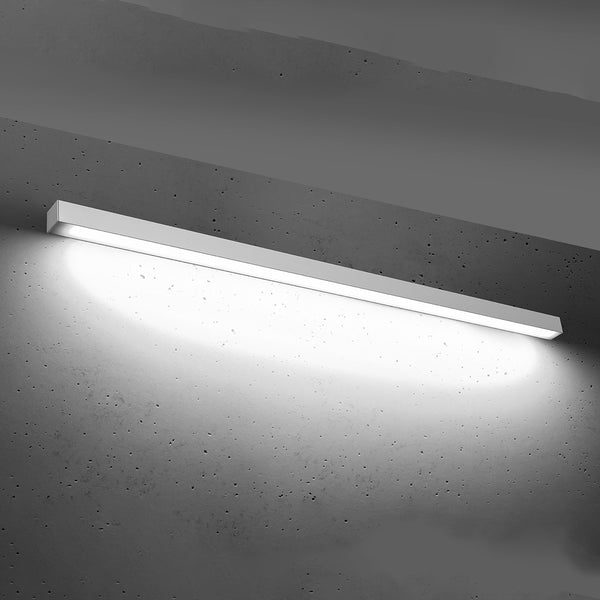
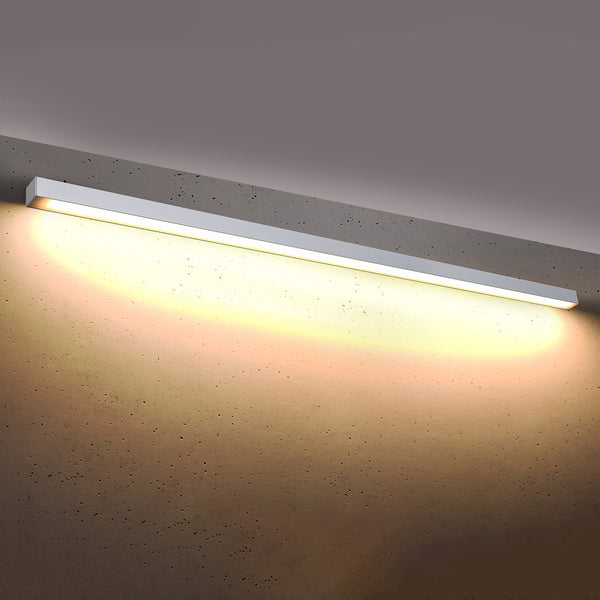
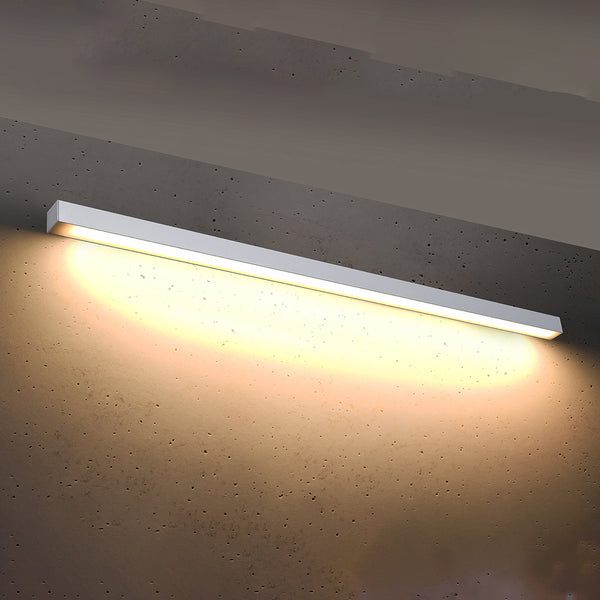
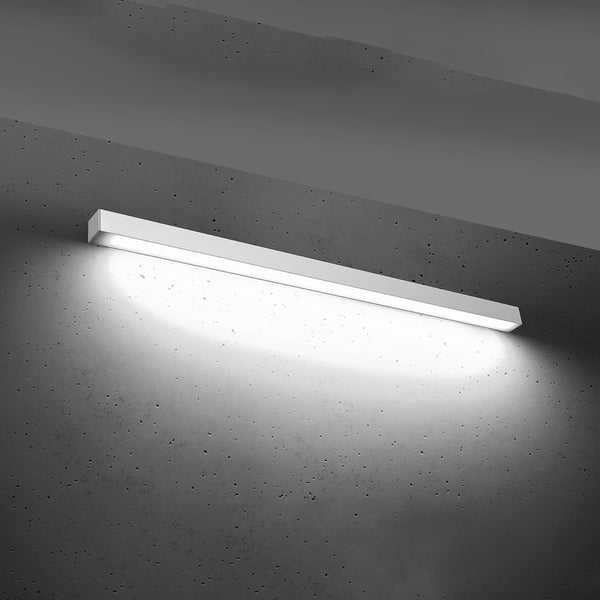
The trend is towards discreet hanging wall lights: slim tubes, ribbed cylinders, black or taupe finishes, integrated LED and dimmer. The 60 cm bands and large linear models are installed above a worktop or a sideboard, in warm or neutral white.
Tube and ribbed cylinder shapes
The tube remains the most requested shape for its slenderness: the Yira, a 40 cm light tube with a G4 socket, lights in warm white and accepts a dimmer. The ribbed cylinders Vendora and Quivara, 30 cm high, dress a wall without weighing it down. The curved bands Cambera and Benda cover 60 cm, and the Nolara goes up to 200 cm on a large panel.
Black, taupe and gold finishes
Black and white remain the majority, followed by gold and beige, with taupe progressing on the cylinders. A dark finish blends into a dark wall, a gold finish stands out on a light wall. These shades run through all our lights.
Unsure about the height, format or socket? These three criteria are decided before purchase, with the real dimensions of each product page. Secure payment, tracked delivery, returns according to the conditions in force and Designix customer service accompany every order.
What is the difference between a wall light and a wall pendant?
A pendant hangs from the ceiling, a wall light is fixed to the wall. A hanging wall light combines both: the body is screwed to the wall, but the light detaches through an arm, a textile cable or a tube. It illuminates a precise area without blocking the way.
Should you choose wood wall lights for a bedroom?
Wood brings a warm light and a soft material, suited to a bedroom or an office. In this collection, aluminium, steel and metal remain the majority, often in black or white. Wood suits a warm effect, aluminium a fine line.
Can a hanging wall light be installed in a bathroom?
It depends on the area. The collection includes IP44 wall lights, intended for damp rooms, and IP65 models for outdoor. The majority are IP20, reserved for dry rooms such as the living room, bedroom, hallway or entrance. Check the rating before fitting.
Which socket to choose between G9, GU10 and E27?
The G9, a small pin socket, gives a focused light that is easy to replace. The GU10 is an adjustable spotlight, handy above a worktop. The E27 accepts a wider bulb and suits arm wall lights. Many models use an integrated LED, with no bulb to change.
Do you need a dimmer on a wall light?
Useful in a bedroom or living room, a dimmer lets you lower the intensity in the evening without changing bulbs. Not all wall lights offer it: some include it as standard, others accept a dimmer depending on the socket and the source. To be checked case by case.