Dimmable pendant lights
This selection is also available in our French store: Suspensions à variateur
- Tracked delivery to your country Tracked delivery
- Secure payment at checkout Multiple payment methods
- 14 days to change your mind 14-day returns
- Secure payment Secure payment


Not sure of your style? Find it in 30 seconds
A few questions, and we will show you the pieces made for you.















Frequently asked questions
How do I choose the right product?
What are the delivery times?
Can I return an item?
Can I pay in instalments?

An interior that reflects who you are
Carefully selected pieces, shipped from our warehouses. Our team advises you before you buy, so you choose with confidence.
- Tracked delivery
- Pay in instalments, where available
- 14 days to change your mind
- Advice & showroom in Lyon, France
A dimmable pendant light is chosen first for what it changes in a room: the same fixture shifts from dinner to evening without anyone touching it. Then check the socket, the colour temperature and the cable height, because those decide the real use.
What is a dimmable pendant light and what light does it give?
A dimmable pendant light is a pendant whose brightness is adjusted, either at the wall or through a built-in touch dimmer. In this collection, models with integrated LED, E27, G9, GU10 or G4 sockets are controlled with a compatible dimmer: bright light for cooking, soft light for dinner.
Dimmable pendant lights: what changes day to day
The setting changes the use more than the style. Above a table, the same fixture gives clear light for serving, then low light for staying and talking. Over a worktop, high brightness lights the chopping, low brightness keeps the room alive without glare. To compare the results, look at the modern LED pendants, often the steadiest at low output.
Dimmable pendants: what is adjusted, and what is not
What is adjusted: brightness, and therefore how warm the room feels. What is not adjusted: the colour temperature, fixed at purchase on most models. An integrated LED is dimmed as part of the fixture. A socket model needs a dimmable bulb, otherwise the dimmer does nothing or makes it flicker. The two-year warranty covers the whole selection.
Variable speed dimmers: why the search is not about the same object
A speed controller drives a motor, not a bulb. If the aim is to soften the evening light, then it is a light dimmer that matters. The rest of the useful vocabulary: touch dimmer when the control sits on the fixture, dimmable bulb when the source can be replaced.
Where to install a dimmable pendant light at home?
The living room, kitchen and bedroom are the most common rooms, ahead of the dining room and hallway. Choose a large linear format above a table or island, a ball or small diameter for a bedroom, a compact piece for a corridor.
Which dimmable pendant light for the living room?
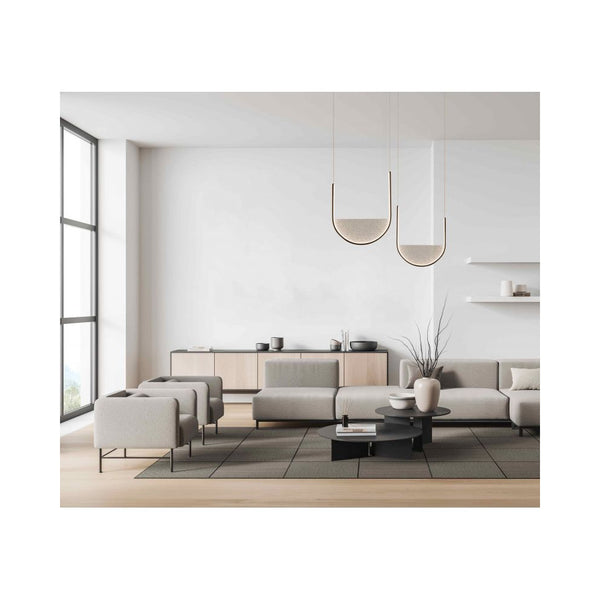
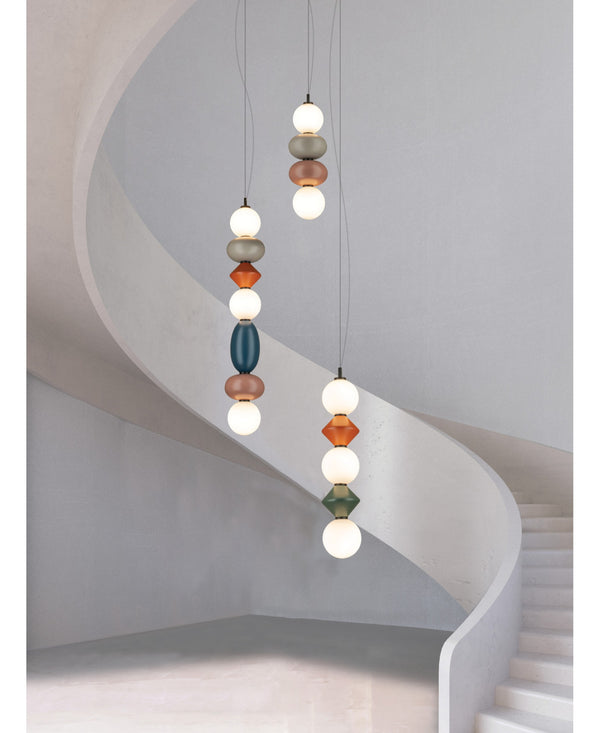
The living room calls for a format that makes a statement without taking over: bar, ball, structure. Linear pieces run up to 150 cm, balls up to 50 cm in diameter, and cages play on transparency. A low ceiling will prefer a fine line; a large volume takes a wide piece. See the Scandinavian selection for the living room.
Kitchen and central island: which format, which brightness?
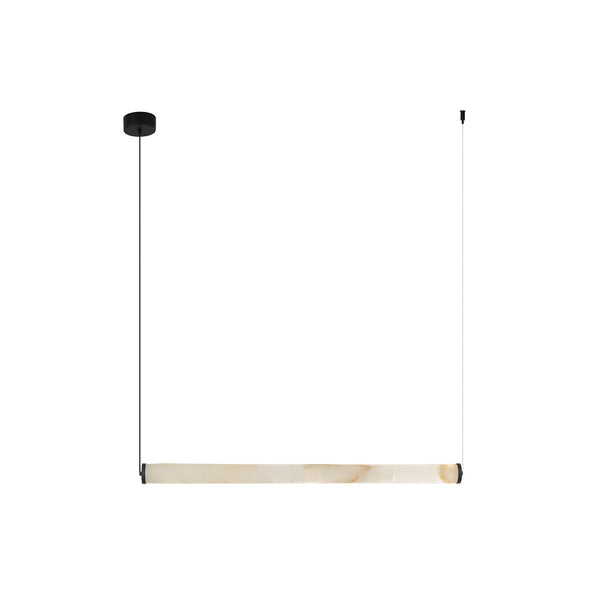
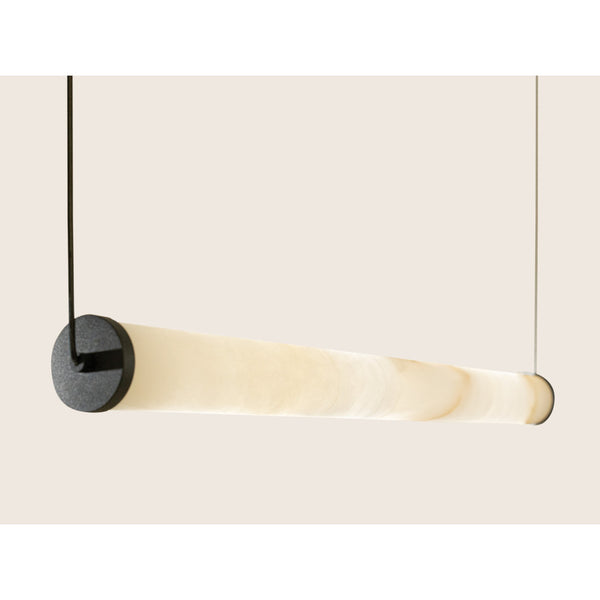
Above a worktop, light has to come down. A four-disc LED model directs the flow onto the surface, a 114.5 cm linear covers a standard island, a wider ball lights a table open to the kitchen. Adjustable brightness avoids glare when moving from preparation to the meal. Compare with the pendants designed for the kitchen, for example the four-disc LED island model in brushed steel.
Bedroom, corridor and hallway: the small formats that fit anywhere
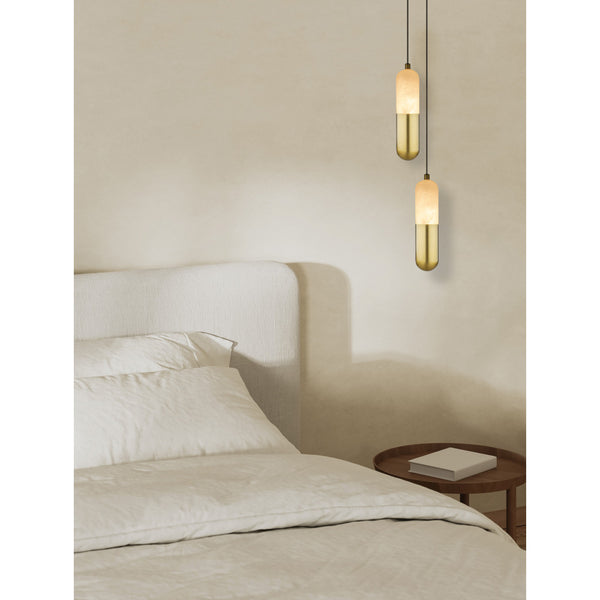
Small diameters, from 24 to 32 cm, fit anywhere: above a bedside, in a corridor, in a hallway. The adjustable cable lets you raise the fixture above the walkway. Soft materials suit dry rooms, such as the Liana wood and rattan pendant. To go further, see the natural materials and wood.
| Room | Formats in the collection | Styles seen | Point to check |
|---|---|---|---|
| Living room | Linears and bars up to 150 cm, balls up to 50 cm in diameter, cage structures | Contemporary, modern, minimalist | Length relative to the table or sofa, cable height |
| Kitchen | 114.5 cm linear, 90 cm four-disc island, 50 cm ball | Modern, contemporary | Light directed onto the worktop and adjustable brightness |
| Dining room | 114.5 and 150 cm bars, cage structure, LED discs | Modern, contemporary, minimalist | Centring above the table, clearance for guests |
| Bedroom | Diameters from 24 to 32 cm, rattan, balls, shades | Contemporary, industrial, vintage, Nordic | Warm light and low brightness late in the evening |
| Hallway and corridor | Compact formats with adjustable cable, fine structures | Contemporary, modern | Footprint in the walkway and suitable protection rating |
How to choose between LED, E27 and G9 sockets?
The socket decides what you can change later. A pendant with integrated LED cannot be dismantled; an E27 model takes an off-the-shelf dimmable bulb, which makes it the most flexible choice. G9, GU10 and G4 equip the smaller formats in the selection.
Dimmable pendant lights for E27 bulbs: the most flexible solution
E27 is the most common and most permissive socket: you choose the wattage, the colour temperature and whether the bulb is dimmable. It is the format to favour if you like changing the light without changing the fixture. Several black metal pendants in the selection use E27. Glass models, for their part, are recognised by their worked, luminous glass.
Integrated LED or replaceable bulb: which is better depending on the room
Integrated LED removes any bulb question: the fixture carries the source and is dimmed directly, often by touch. It suits rooms where you no longer want to think about it. A replaceable bulb keeps control over colour temperature and replacement. For a large table, the 150 cm steel linear pendant with dual lighting combines LED and dimmer.
G9, GU10 and G4: the small sockets in the selection
These three sockets equip models with several light points or adjustable sources. G9 is compact and easy to find in a dimmable version, GU10 can be aimed, G4 stays reserved for small modules. Before buying, check the dimmer-compatible mention on the bulb packaging, since that decides everything.
| Socket or source | Where it appears | Brightness adjustment | To check before buying |
|---|---|---|---|
| Integrated LED | LED bars, discs and linears | Yes, often with a touch dimmer | The fixture carries the source, nothing to change |
| E27 | Metal, glass, rattan pendants, shades | Yes if the bulb is dimmable | The dimmer-compatible mention on the bulb |
| G9 | Pendants with several light points | Depends on dimmer and bulb | Compact format, dimmable bulb available |
| GU10 | Models with adjustable sources | Depends on dimmer and bulb | Aiming and bulb compatibility |
| G4 | Small formats in the selection | Depends on dimmer and bulb | Voltage and compatibility to check |
Which light colour for a dimmable pendant light?
Three families exist in the collection: warm white, around 2700 to 3500 K, the majority; neutral white, between 3500 and 4500 K; cool white, from 4500 to 6500 K. For a living room, a bedroom or a dining room, warm white stays the most comfortable. There are six families: linear pendants, island pendants, glass pendants, rattan or wood pendants, cage pendants and LED pendants.
Warm white, neutral white or cool white: which to choose?
Warm white leans yellow: it rests the eye and suits the evening. Neutral white stays readable without being cold, useful for cooking or working. Cool white wakes you up but tires the eye in a relaxation room. A pendant in a gold finish for a bedroom looks better with warm white.
Lowering the brightness in the evening: why temperature matters as much as the dimmer
Lowering the brightness does not warm the light: it becomes weaker, not warmer. That is why colour temperature is chosen at purchase, once and for all on an integrated LED. If you want both, take a socket model and a dimmable warm white bulb.
How to match your lights well for a modern decor?
Give each light point a role: the pendant lights the table, the rest supports it. Consistency comes from the light colour and the dominant finish, not from identical models everywhere.
In practice, keep a single white temperature in the room and one dominant finish, black, white, gold or grey. Vary the formats rather than the styles: a discreet ceiling light, a wall light, a floor lamp. Two colours coexist well if the shapes stay in the same family and the room is large enough. Browse to compare the grey pendants. Gold metals work with matte black, as long as only one is kept in a large format.
At what height and how do you install a dimmable pendant light?
The height is set during installation: the pendants in the collection have an adjustable cable or system, with maximum heights ranging from about 1.10 m to 2.10 m depending on the model. Allow enough clearance above a table and check the protection rating according to the room.
Adjustable cable and maximum height: how to adjust during installation?
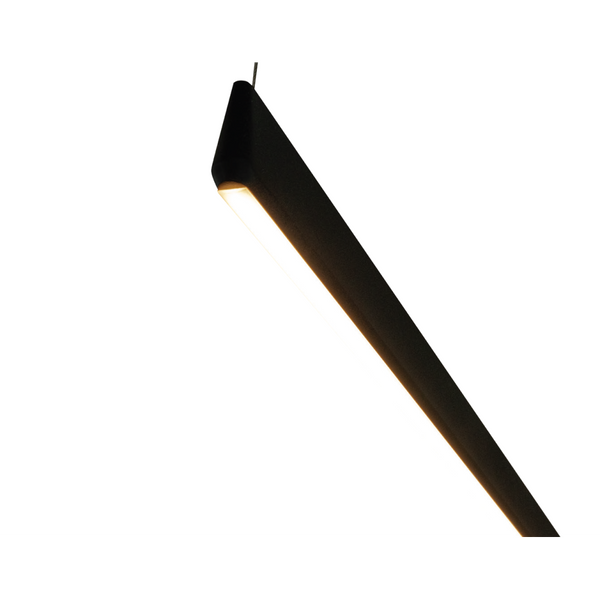
The adjustable cable is locked or shortened during installation: set the height before fixing the base to the ceiling. Above a table, usually allow 70 to 80 cm between the bottom of the shade and the tabletop. Above a worktop, go a little higher so it does not get in the way of your eyes. The black model with adjustable brightness illustrates this short setting.
IP20 or IP44: what to check before installing
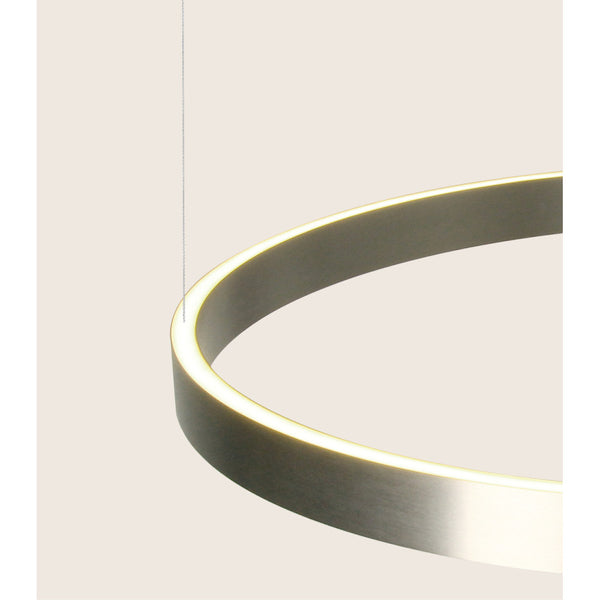
The protection rating says where the fixture can live. IP20 covers dry rooms: living room, bedroom, corridor, dining room. IP44 adds resistance to splashes, useful near a water point or in a damp room. One model in the selection is rated IP44, the Cira pendant, which makes it versatile.
Which pendant trends for the living room in 2026?
The collection moves towards simple lines and long formats: linear LED bars, balls, structures in black, white or gold metal, often in warm white. Contemporary and modern styles dominate, with industrial, minimalist and vintage pieces, and a few models in rattan or glass.
Rattan and natural fibres are returning to living spaces, as is the unapologetic industrial spirit of metal structures. Tube and ball shapes lead the selection, followed by ovals and rounds. For a softer interior, Nordic inspiration relies on whites and light woods. LED pieces with a strong design suit open volumes.
How to care for a dimmable pendant light and avoid faults?
A soft cloth is enough on metal, plastic and glass, without abrasive products; rattan and wood are dusted dry. The sensitive point remains the compatibility between bulb and dimmer, more often the cause than the fixture's electronics.
Cleaning metal, glass and rattan without damaging them
Metal and plastic: soft cloth, dry or barely damp. Glass: lint-free cloth so no marks are left. Rattan, wood and fabric: gentle dusting, in a dry room. Avoid abrasive products and excess water near electrical connections.
Flickering and buzzing: check bulb compatibility
These two signs almost always come from the bulb: a non-dimmable source fitted to a dimmer circuit. Replace it with a dimmer-compatible bulb, same socket and same wattage. If the problem persists on an integrated LED, switch off the circuit and contact Designix customer service. The two-year warranty covers the whole selection.
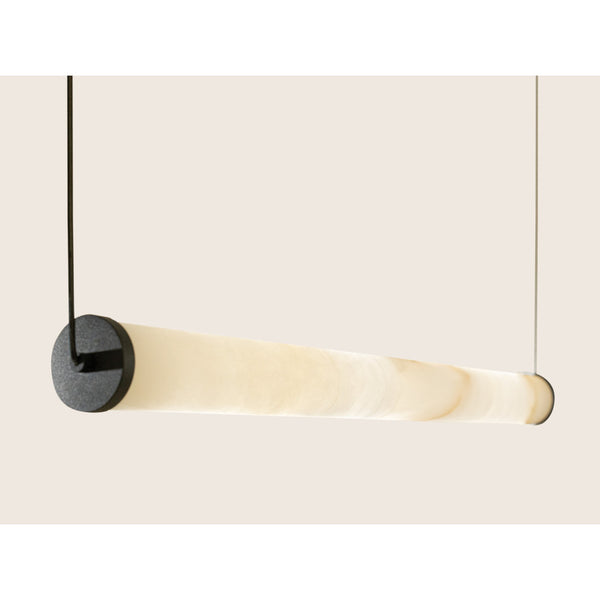
Secure payment, tracked delivery, returns and Designix customer service: your order can be followed without surprises. For a living room or a dining room, the 114.5 cm black linear LED bar with touch dimmer handles both uses, meals and evenings, and the Designix lighting catalogue completes the set.
Frequently asked questions about dimmable pendant lights
Do LED bulbs work with a dimmer?
An LED bulb works with a dimmer only if it is designed for it: its data sheet must state dimmer compatibility. In this collection, models with integrated LED are dimmed directly. For pendants with E27, G9, GU10 or G4 sockets, a dimmable bulb is better, otherwise it flickers or buzzes.
How do you match your lights well for a modern decor?
Keep one family of shapes and one light colour for the whole room: here black, white, gold or grey metals, in tube, ball, oval or square. The pendant remains the centrepiece, and the other light points pick up the same warm white tone.
What are the different types of light fixtures?
There is the pendant, which hangs down and lights a precise area; the ceiling light, fixed to the ceiling; the wall light; the floor lamp and the table lamp; the recessed or track spotlight. This collection focuses on the pendant, the one installed above a table or an island.
What are the three types of lighting?
There is general lighting, which lights a whole room; task lighting, directed at a job such as the worktop or reading; and ambient lighting, lower and warmer. A dimmable pendant often covers all three, depending on the brightness chosen.
What should you check when choosing a reliable light fixture?
There is no official ranking of brands. What can be checked in practice: the warranty, here two years across the whole selection; the availability of bulbs for the fixture's socket, E27, G9, GU10 or G4; the protection rating and the dimmer compatibility stated on the product page.