Art Deco wall light: how to choose it and install it right
This article is also available in French: Applique murale art déco : luminaires et éclairage de style ancien
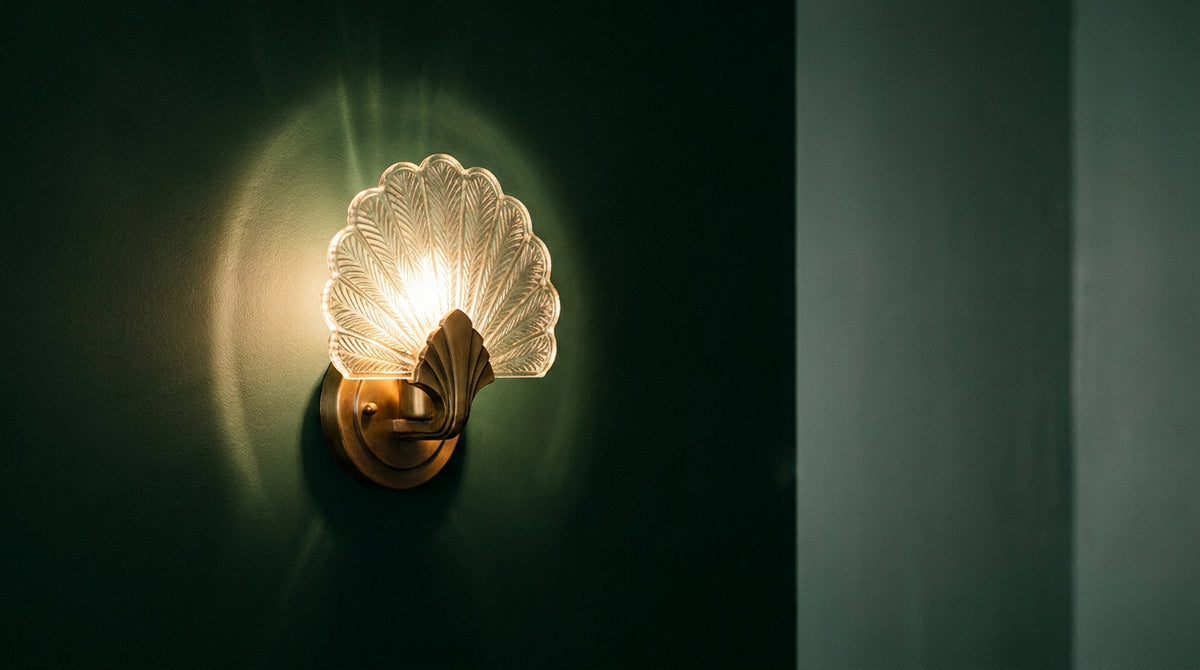
First check the socket, then set the height. An Art Deco wall light is chosen on three points: the base (LED, G9 or E27), the metal of the mount and the protection rating. Above a bed, allow 60 to 70 cm above the mattress; around a mirror, aim for face height. The style comes next.
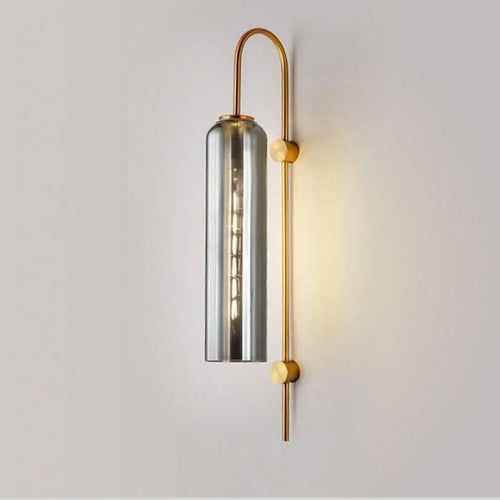
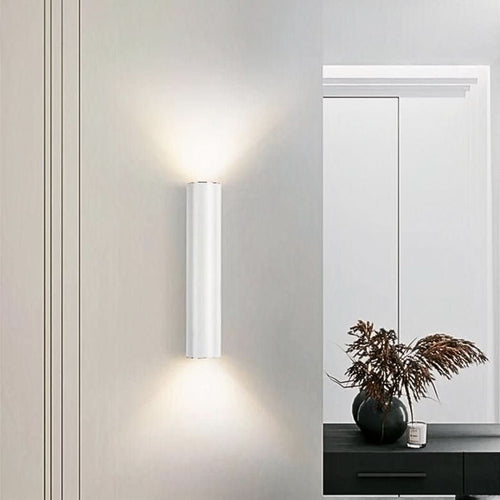
Used alone or in pairs, an Art Deco wall light frees up the floor and draws a pattern on the wall. The 1920s-1930s collection has 470 references as of 5 October 2026, from the gilded tubular model to the smoked glass panel.
What is an Art Deco light?
An Art Deco light is a fixture with clean geometry: disc, fan, chevron or cluster of rods, mounted on gilded, chrome or black-lacquered metal. It casts light upwards or at an angle, rarely straight down. In a survey of 51 references from our collection, dated 5 October 2026, 94% are metal and 94% are listed as LED.
The codes of the 1920s-1930s
- Geometry: circles, arcs, beams, never a plant-like curve
- Material: worked metal, often combined with frosted or smoked glass
- Mounting: 100% wall-mounted across the 51 records surveyed
- Intensity: dimmable on 65% of the 33 records that state this point
Vintage Art Deco wall light or reissue?
An original piece brings a patina that nothing can copy: marked metal, slightly irregular glass. In return, it requires checking the wiring and the socket. A reissue brings a modern socket and a warranty: 98% of the 51 records surveyed state 2 years.
The doubt is settled by looking at the back of the mount. Recent designer wall lights show a standardised backplate and an earth screw. What other buyers say can be read on the company's Google listing, public and up to date.
Between an original piece and a reissue, the hesitation is quickly resolved: ask us for lighting advice, and the models can also be viewed on site in Vaulx-en-Velin.
The socket decides the bulb, and therefore the colour of the light. To choose your bulb base, start from the number of light points you want rather than the look of the bulb.
Which room should the Art Deco wall light be switched on in?
What is the difference between Art Nouveau and Art Deco?
Art Nouveau follows the curve of the plant, Art Deco follows the rule of the compass. The first seeks the scroll and the arabesque, the second aligns circles, triangles and broken lines on clean surfaces. The shift can be read at a glance on a wall, with no particular expertise.
Plant curves versus geometric lines
| Criterion | Art Nouveau | Art Deco |
|---|---|---|
| Line | Curved, scroll, arabesque | Straight, circle, sharp angle |
| Motif | Flower, stem, dragonfly | Fan, chevron, sun |
| Period | Late 19th century | 1910s to 1930s |
| Materials | Opaline glass, wrought iron | Polished metal, smoked glass, lacquer |
Recognising an Art Nouveau wall light on the wall
The telltale sign is the continuity of the line: the stem leaves the mount and curls without a break. The vintage wall lights of this family often have opaline glass and a wrought iron mount, finer than an Art Deco mount.
What are the typical colours of Art Deco?
Gold, black and smoked glass form the basic trio, lifted by white and cream. Across our 51 records surveyed on 5 October 2026, white appears on 71%, black on 67%, gold on 49%, beige on 16%. These shares apply to the sample, not to the 470 references.
Gold, black, smoked glass
- Gold: brass or gilded metal, ideal against a dark wall
- Black: matte lacquer, it highlights the geometric cut-out
- Smoked glass: softens the brightness and avoids the mirror effect
- White and cream: more discreet, they light a narrow hallway
Aged gold pairs well with old woodwork, a detail that matters in a character apartment. A brass wall light develops a patina over time, whereas lacquered metal keeps its original appearance.
Which colours for a glass Art Deco wall light?
Smoked glass filters the light and remains readable even when switched off. Smoked-coloured glass wall lights suit rooms where you want light without glare. For a warmer result, a gilded light reflects an amber tint onto the wall.
A tip on balance: two dominant tones are enough, the third stays as an accent. Vintage brass wall lights play this accent role without overpowering the room.
What are the typical symbols of the Art Deco style?
The rising sun, the fan, the chevron and the fountain form the classic repertoire. These motifs come from the International Exhibition of Modern Decorative and Industrial Arts in Paris in 1925, which gave the style its name. On a wall light, they appear as metal cut-outs or in the glass structure.
Sun, fan, chevron
- Rising sun: short rays around a semicircle
- Fan: folds or blades opening from the base
- Chevron: repeated broken lines, a frieze motif
- Fountain: central jet and symmetrical falls
Where these motifs can be read on a wall light
The motif is first read when switched off, on the front face, then in raking light on the wall. That is what gives an old model its retro charm: the cut-out casts a shadow that repeats the design. On a reissue, the same effect is achieved with an LED positioned well behind the plate.
These motifs combine easily with other shapes. The simplest approach is different wall lights in the same room, provided you keep the same metal family.
Art Deco wall lights to see in person
 Wall light | Stellia
 Wall light | Pael
 Wall light | Jorvena
 Wall light | Lind
 Wall light | Qilo
 Wall light | Symphonie Lumineuse
See the whole selection: Art Deco Wall Light: 1920s-1930s Collection
Where and at what height should an Art Deco wall light be placed?
Above a bed, allow 60 to 70 cm above the mattress to read without shadow. On either side of a mirror, aim for face height, between 1.50 m and 1.70 m from the floor. An adjustable model is easier to correct than a fixed one.
Height above a bed and around a mirror
For a bed, the wall light replaces the bedside lamp and frees up the nightstand. A headboard wall light is placed 60 cm on each side of the mattress, aimed at the book. Our article on the height of a wall light details the hallway and staircase cases.
In a complete bedroom, it is better to plan the whole scheme before drilling. An adult bedroom wall light coordinates with a ceiling light and a second low source. That is the principle of a bedroom lighting project carried out in order: sources, heights, then mounting.
What a vintage glass Art Deco wall light changes
Old glass diffuses differently: slightly irregular, it softens the edges and lowers the colour temperature. Across our 51 records surveyed, the protection rating remains IP20 at 94%, so reserved for dry rooms unless stated otherwise. In a bathroom, check the zone before installing.
On the same subject
In stock · shipping costs shown at checkout · up to 30% off in your cart
Ready to turn inspiration into reality?
Tell us about your room, your style and your budget, and we will show you the pieces that truly suit your project.
Get guidance in 30 seconds →