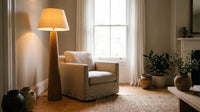
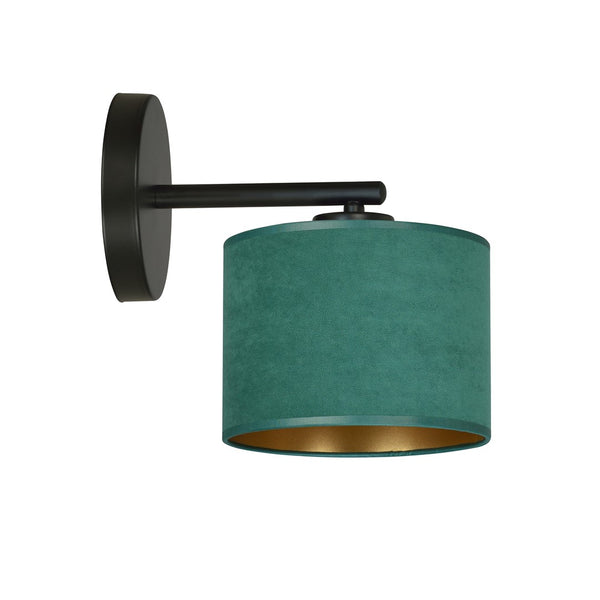
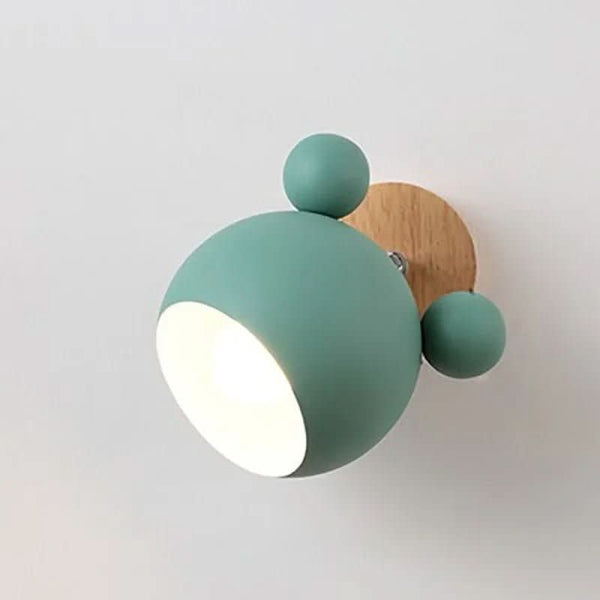
Green wall lamp
- Tracked delivery to your country Tracked delivery
- Secure payment at checkout Multiple payment methods
- 14 days to change your mind 14-day returns
- Secure payment Secure payment


Not sure of your style? Find it in 30 seconds
A few questions, and we will show you the pieces made for you.







Frequently asked questions
How do I choose the right product?
What are the delivery times?
Can I return an item?
Can I pay in instalments?
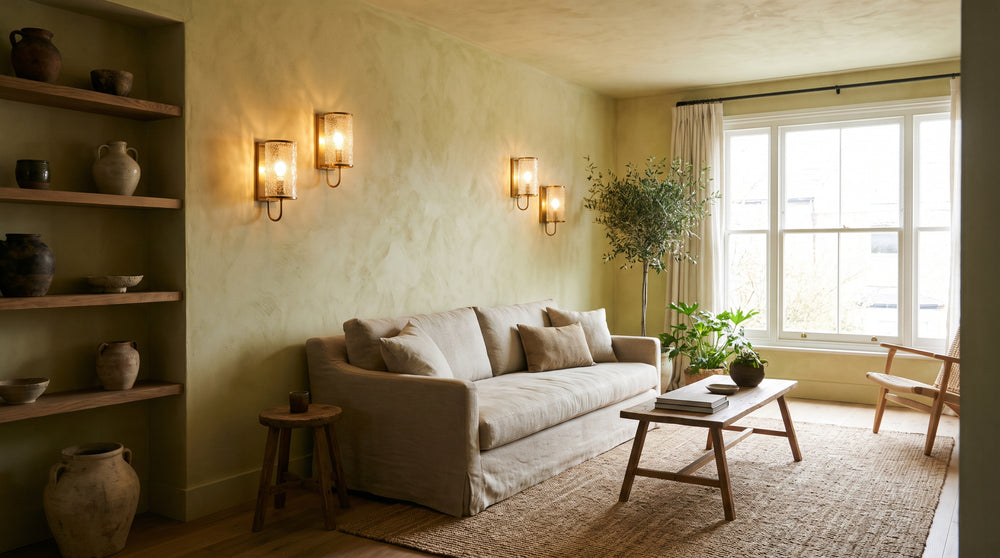
An interior that reflects who you are
Carefully selected pieces, shipped from our warehouses. Our team advises you before you buy, so you choose with confidence.
- Tracked delivery
- Pay in instalments, where available
- 14 days to change your mind
- Advice & showroom in Lyon, France
A green wall light is chosen first for the light it throws back onto the wall, then for its shade. Aim for a warm white (2700 to 3500 K) in a bedroom, a neutral white (3500 to 4500 K) in a hallway or entryway, and mount it between 1.20 m and 1.90 m from the floor depending on the room.
Contents
- What kind of light does a green wall light give?
- Where to install a green wall light in the home?
- How to choose a green wall light?
- At what height should a green wall light be mounted?
- How to match a green wall light with your decor?
- What mistakes to avoid with a powerful wall light?
- How to care for a green wall light?
- Frequently asked questions
- Order from Designix
What kind of light does a green wall light give?
A green wall light illuminates the wall before it lights the room: the light bounces off the surface and takes on a very slight tint, often invisible in warm white. The green therefore affects the look of the fixture, not the colour of the light. It is the bulb temperature that sets the mood.
Green dresses the fixture more than it colours the light
In this selection, the green comes from paint on steel, aluminium or metal, sometimes from tinted glass. When the shell is opaque, light escapes from the top and bottom: the wall receives two bright washes, with no green reflection. A slightly pale water green, on the other hand, blends into a white or beige wall and becomes almost discreet when the fixture is off.
Choose a temperature suited to the room
Warm white (2700 to 3500 K) warms a bedroom and living room in the evening. Neutral white (3500 to 4500 K) makes a hallway easier to read, useful for reading a letter or finding a lock. Cool white (4500 to 6500 K) stays reserved for workspaces. Many green models take a screw bulb, others an integrated source: browse the LED wall lights if you would rather never change a bulb again.
Where to install a green wall light in the home?
Place it at shoulder height in a hallway, around 1.70 m to 1.90 m from the floor, and between 1.20 m and 1.40 m in a bedroom, on either side of the bed. On a staircase, follow the line of the handrail to light the step without dazzling the face.
On each side of the bed and near an armchair
A pair of wall lights is a good replacement for two bedside lamps and frees up the nightstand. The green stays discreet on a painted wall, and the directed beam avoids waking the other person. For a precise replacement, look at the bedroom wall lights and the living room wall lights: same fixings, different effect.
Hallway, entryway and staircase
In a long hallway, allow one light point every 2 to 3 m. A green wall light with a shallow projection, such as those in the hallway wall lights, keeps you from bumping your shoulder. For a stairwell, one wall light per half-landing is often enough, chosen from the staircase wall lights.
How to choose a green wall light?
Look at three things in this order: the material and shape (what you see), the socket (what you install), then the fixing and cable outlet (what the electrician approves). The green comes last: it is the final decision, not the first.
Material and shape
Steel dominates, often painted, sometimes combined with brass or fabric. Aluminium lightens the whole, glass brings transparency, iron gives a more graphic line. As for shape, the tube remains the most common, ahead of the round, the square and the ball. A tube shape lights far and low, a ball diffuses more widely.
Socket and power
Nearly one wall light in two runs on integrated LED. For the rest, the E27 socket comes first, followed by the small E14 and G9 bases. An E27 socket accepts a bulb of your choosing, including dimmable ones. Models of 3 to 8 W are enough for a hallway; a 15 to 40 W wall light will suit a living room. A minority of models accept a dimmer: check this point before buying the bulb.
| Criterion | What you find in the selection | What it changes |
|---|---|---|
| Material | Steel, aluminium, metal, glass, iron | Weight, matt or glossy finish, durability |
| Style | Mostly modern and contemporary, then minimalist, original, jungle | Shape of the mount and visual thickness |
| Source | Integrated LED or E27, E14, G9 sockets | Bulb to change or sealed fixture |
| Temperature | Warm white, neutral white, cool white | Soft mood or clear reading |
| Protection | IP20 on the models shown | Indoor use only |
| Warranty | 2 years on a large part, 5 years on the rest | Peace of mind on the source and finish |
At what height should a green wall light be mounted?
There is no single height: it depends on what the wall light needs to illuminate. Aim for eye level for practical use, higher for ambient lighting, lower for reading in bed. The guidelines below are starting points to adjust once the room is furnished.
| Room | Indicative height | To remember |
|---|---|---|
| Bedroom | 1.20 to 1.40 m | One on each side of the bed, warm white |
| Living room | 1.40 to 1.60 m | Near a sofa or a bookshelf |
| Hallway | 1.70 to 1.90 m | One point every 2 to 3 m if the hallway is long |
| Entryway | 1.60 to 1.80 m | Above a piece of furniture or beside the door |
| Staircase | Along the handrail | Lights the step, not the face |
| Bathroom | Outside the shower zone | Check the protection rating first |
How to match a green wall light with your decor?
For a bohemian feel, green also pairs well with fibres, rattan or linen. In a WC or a small room, a green wall light placed high and with little projection lights without cluttering.
Green coexists well with white, beige, black and gold, all very present in the selection. On a light wall, it adds a touch of colour without darkening. On a dark wall, it almost disappears and the light takes over. So choose first what you want to see.
Green and chic country
A chic country wall light loves beige walls, raw wood and warm light. The green echoes the plants and natural textiles. A metal or painted steel model, with an E27 socket and a filament bulb, will give that warm effect. Complete it with a gold wall light in the next room to keep a consistent family of shades.
Water green, jungle and modern
Water green pairs with white for a fresh effect, particularly in a bathroom or kitchen. A water green wall light also finds its place in a jungle decor, beside plant fibres. If you prefer a bold contrast, look at the black wall lights or the white wall lights for the same model in another finish.
What mistakes to avoid with a powerful wall light?
Do not chase maximum power: a powerful wall light placed 1.30 m from the floor dazzles as soon as you look at it. A moderate, well-directed source is better. And never install it facing a mirror or a television, the reflection quickly becomes annoying.
Confusing power with comfort
A 4 to 8 W wall light suits a hallway or occasional reading. Beyond that, reserve it for a large room, with a shade that hides the source. If the fixture accepts a dimmable bulb, a dimmed bulb solves the problem better than changing the model.
Forgetting the protection rating and wiring
The models shown here are IP20: they are made for indoor use. For a terrace or a porch, you need a higher rating, around IP44 minimum, and a model designed for outdoor use. An outdoor gooseneck wall light, protected from direct rain, is mounted at around 1.80 m. Also remember to locate the cable outlet before drilling.
How to care for a green wall light?
Cut the power at the breaker before any handling. Dust dry with a soft cloth or a duster, about once a month. A light damp clean is enough on painted steel, provided you wring out the cloth and avoid abrasive products.
Clean without damaging the finish
Painted green marks faster than bare metal: avoid the scouring sponge and alcohol. On a glass model, an ammonia-free glass cleaner restores transparency. On a fabric wall light, use a vacuum with a soft brush. Retighten the fixing screws once a year, they work loose with temperature changes.
Change the bulb safely
Let the fixture cool before removing the bulb, especially with an E14 or G9 socket where heat concentrates. Use the same power as the old one, without exceeding the value indicated on the socket. If you replace it with an LED, check that it is compatible with any dimmer, otherwise it will buzz.
Frequently asked questions
Is a green wall light suitable for a bedroom?
Yes, it is even the room where it is used most often. Choose a warm white of 2700 to 3500 K and a moderate power, around 1.20 m to 1.40 m from the floor. The green stays discreet on a light wall and directs light toward the book rather than the face.
Can a green wall light be installed outdoors?
The models in this selection are IP20, so reserved for indoor use. For a terrace, a sheltered entryway or a porch, look for an outdoor wall light with an IP44 rating minimum and a sealed housing. An outdoor gooseneck wall light protects the source from direct rain.
What bulb should go in a green wall light with an E27 socket?
A filament bulb or a warm white LED, from 4 to 8 W for a hallway, up to 15 W for a living room. Respect the maximum power indicated on the socket. If the fixture does not accept a dimmer, take a standard, non-dimmable bulb.
Do you need a dimmer on a wall light?
It is not mandatory. Only some models are compatible, often those with an integrated source. A dimmer is mainly useful in a bedroom or living room, to go from accent lighting to reading light. Otherwise, a simple switch is more than enough.
How do you fix a wall light to a concrete or plasterboard wall?
On concrete, use suitable wall plugs and locate the cable outlet before drilling. On plasterboard, a toggle anchor is preferable, especially for a slightly heavy glass model. Always cut the power at the breaker before connecting.
Order from Designix
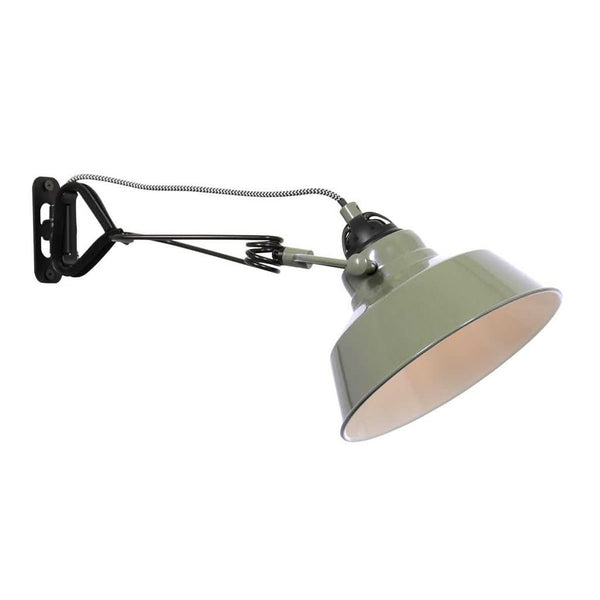
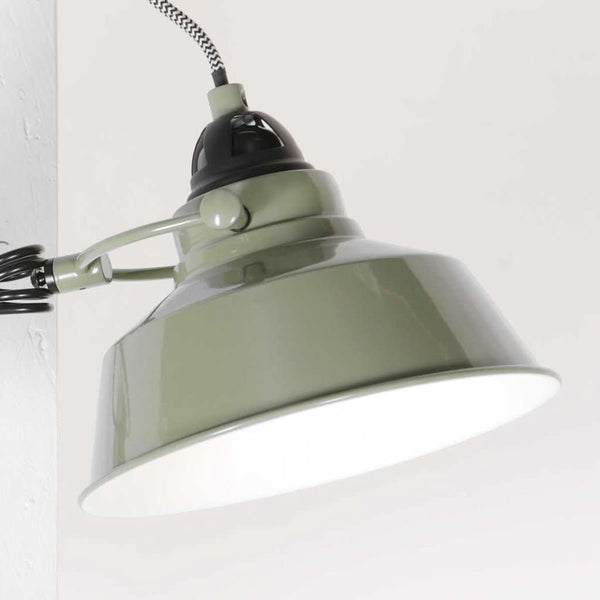
A few green models give an idea of the effect, for two or three very different rooms. The Nove green wall light suits a hallway as well as a dressing room, with its E27 socket and green and white shell. The Oregon Plus 8325 wall light relies on steel and a 6 W LED, for a square design of 30 cm. The Rio offers green in a smaller format, in steel and 4.2 W. For a living room, the Ponte Plus combines steel, brass and fabric, with an E27 socket up to 15 W, while the Doria plays the brass card. The Lenora remains the most compact, in E14.
Before confirming, measure the available wall width and note the height of your furniture. The rest is settled at installation. Secure payment, tracked delivery, returns possible and Designix customer service for any question about a dimension or bulb compatibility. You will find more shade ideas in the lighting catalogue and a wider choice of wall shapes in the wall lights.