
E-reader
This selection is also available in our French store: Liseuse



























- Tracked delivery to your country Tracked delivery
- Secure payment at checkout Multiple payment methods
- 14 days to change your mind 14-day returns
- Secure payment Secure payment
Not sure of your style? Find it in 30 seconds
A few questions, and we will show you the pieces made for you.
Frequently asked questions
How do I choose the right product?
What are the delivery times?
Can I return an item?
Can I pay in instalments?
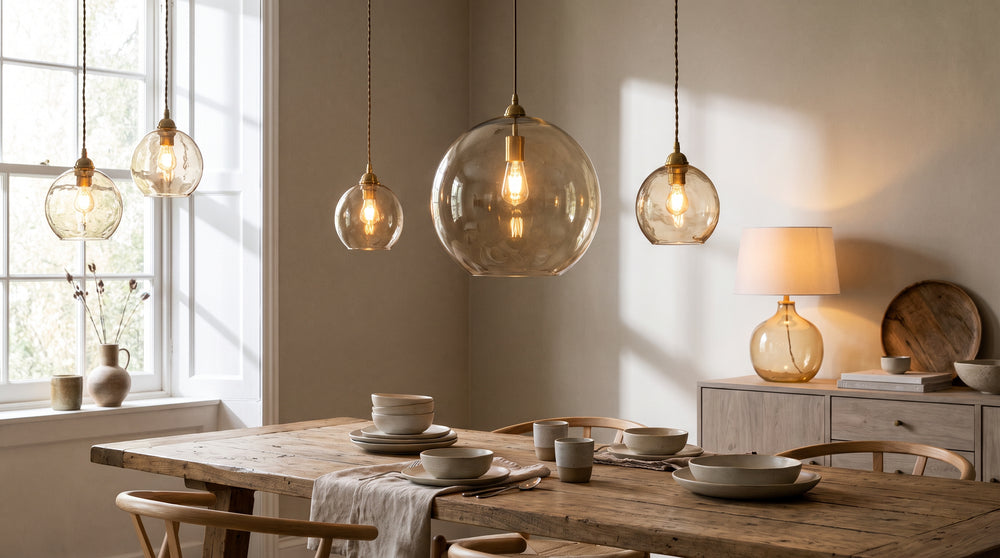
An interior that reflects who you are
Carefully selected pieces, shipped from our warehouses. Our team advises you before you buy, so you choose with confidence.
- Tracked delivery
- Pay in instalments, where available
- 14 days to change your mind
- Advice & showroom in Lyon, France
Two settings matter before you choose a reading light: the reach of the arm, which brings the light above your shoulder, and the colour temperature, which decides how comfortable reading is. In this collection, most models take an E27 bulb, in warm white 2700 to 3500 K, with an IP20 rating and a dimmer on some references. Metal dominates, and so does black.
What is a reading light and what light does it give?
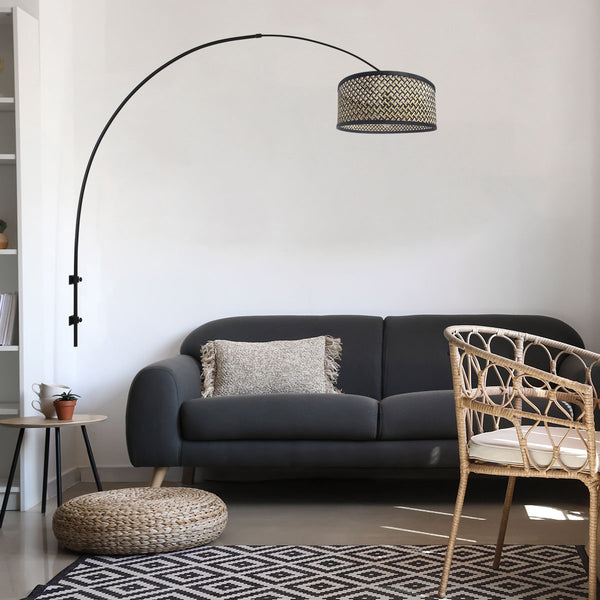
A reading light here is a lighting fixture: a wall light or a floor lamp whose arm and shade direct the light onto the book. The beam falls on the page, not into the room, and the rest of the living room or bedroom keeps a soft light.
Reading light or e-reader: how not to confuse them?
An e-reader is a screen, a reading light is a lighting fixture. Here we mean the second: an arm, a shade, a bulb. To place this family within the whole catalogue, browse our range of lighting fixtures, then come back to the models with an arm, recognisable by their reach and their adjustable head.
What sets a reading wall light apart from a classic wall light?
A classic wall light illuminates the wall or the room from its backplate. A reading wall light reaches out: the arm comes away from the wall by several dozen centimetres, the shade pivots or tilts, and the light lands exactly where you read. Technically, the collection stays at IP20 and warm white, with an E27 bulb in most cases.
Wall light with a reading arm: how to choose it?
Start with the reach and the direction: an articulated arm or an adjustable reach places the light above your shoulder, an adjustable head points it at the page. Then check the height and depth of the wall light, then the bulb fitting, then the dimmer if you read in the evening. The wall lights with a reading arm cover these three families.
Articulated arm, adjustable reach or adjustable head?
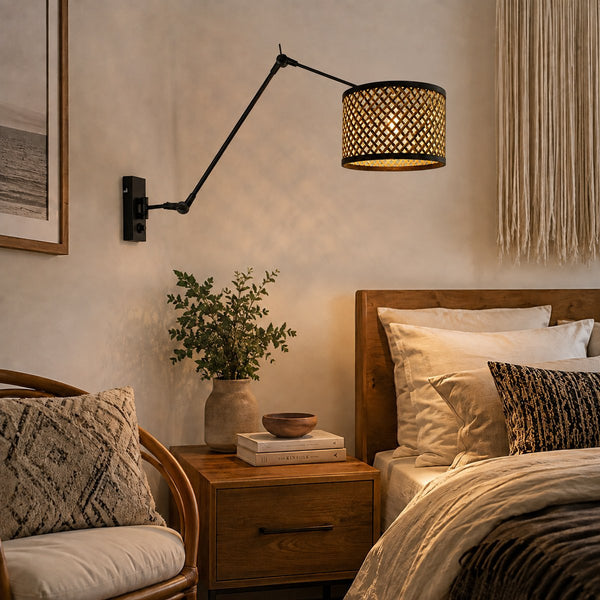
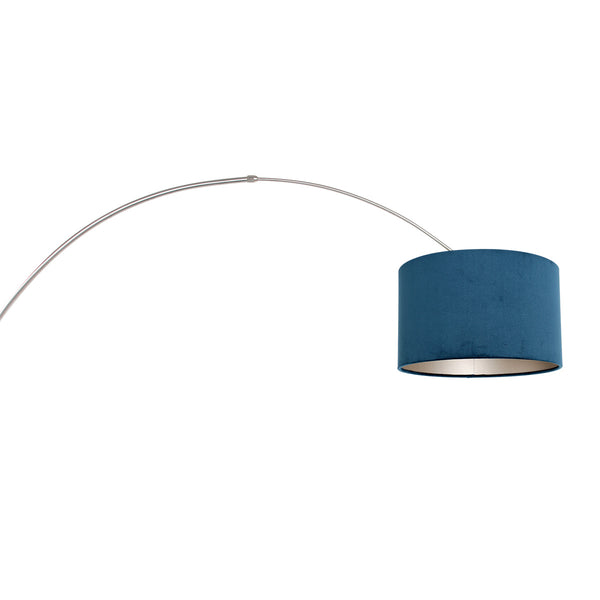
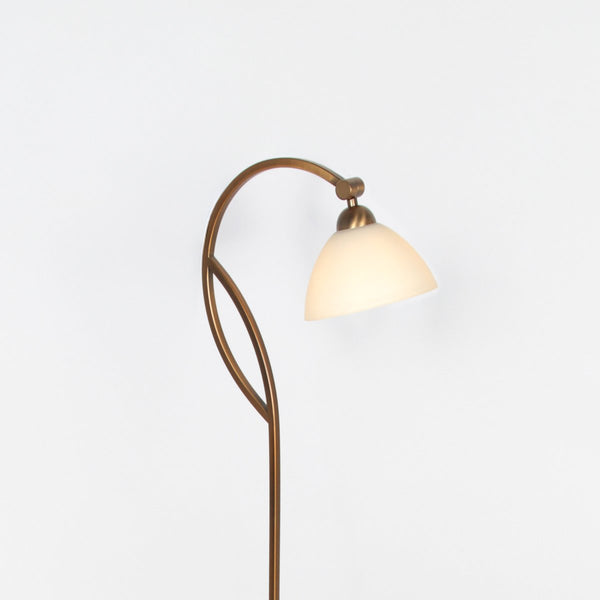
An articulated arm folds and unfolds: Éclio and its round head reach 55 cm from the wall, with integrated LED, and suit the space above an armchair. An adjustable reach is set once and for all, like the Valranara wall light with adjustable reach, which varies from 140 to 185 cm with a textile shade. An adjustable head simply pivots: that is the case with Orély and its white diffuser.
Which dimensions should you check before drilling?
Measure the height of the wall light and its depth once the arm is unfolded, then the free space above the furniture. Soren comes in at 27 cm high for 25 cm deep, Natasja at 33 cm for 22.5 cm: two formats that fit above a bedside table. For a hallway or a dressing room, the Nolma reading wall light stays within these reduced proportions. Find these models in the reading wall lights.
Bedside reading light or reading floor lamp: which solution for each room?
In a bedroom, a reading wall light frees the bedside table and puts the light in the right place; in a living room, a floor lamp with a reading arm lights the sofa without lighting the whole room. In an office, an adjustable wall light or a floor lamp with an articulated arm directs the light onto the desk.
Which reading light above a bed?
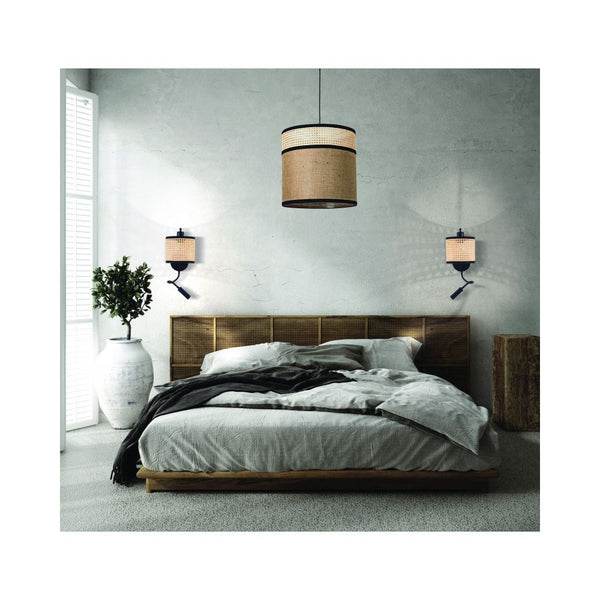
The wall light remains the most discreet solution: nothing on the floor, nothing on the bedside table, and a beam that falls onto the page. Soren plays on double lighting with its linen shade, Natasja probes the wall in steel with its cylindrical head and GU10 fitting. The bedside reading lights and a bed reading light gather these short formats, often in warm white.
Which floor lamp for reading on a sofa?
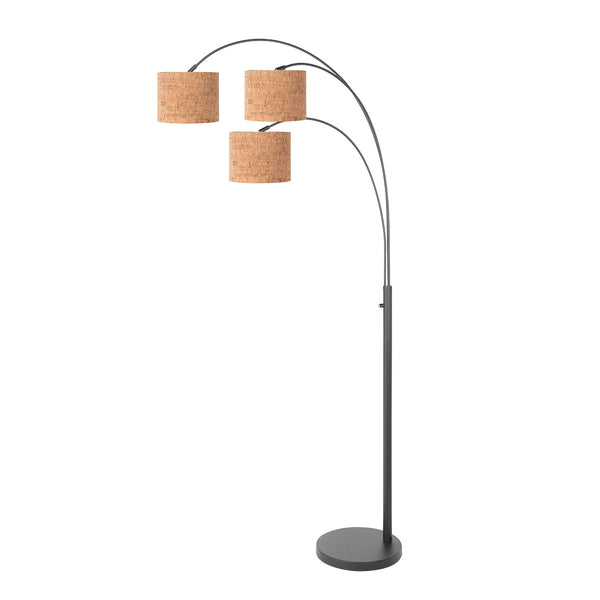
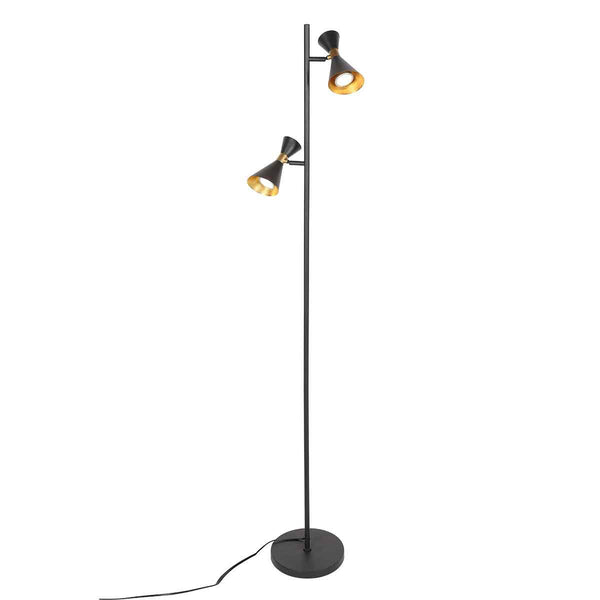
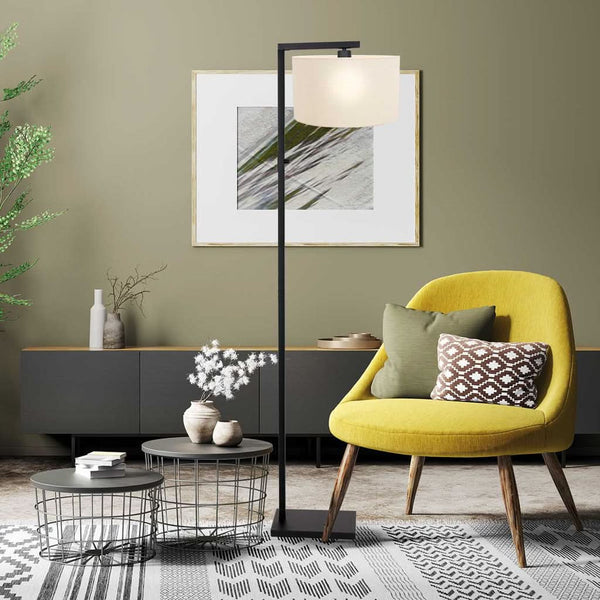
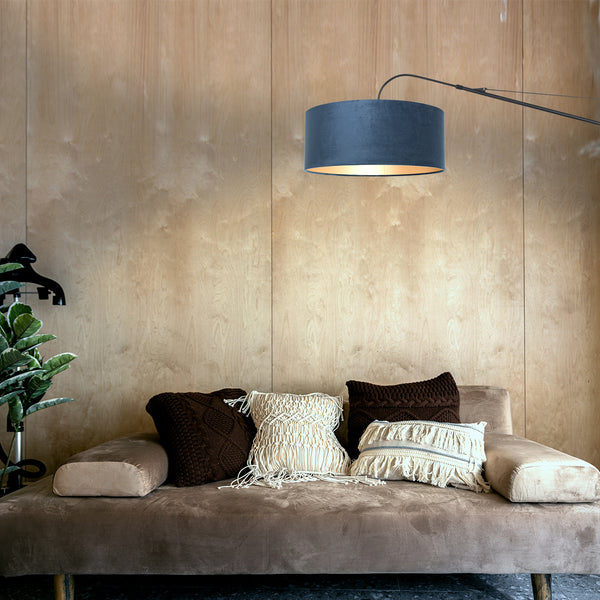
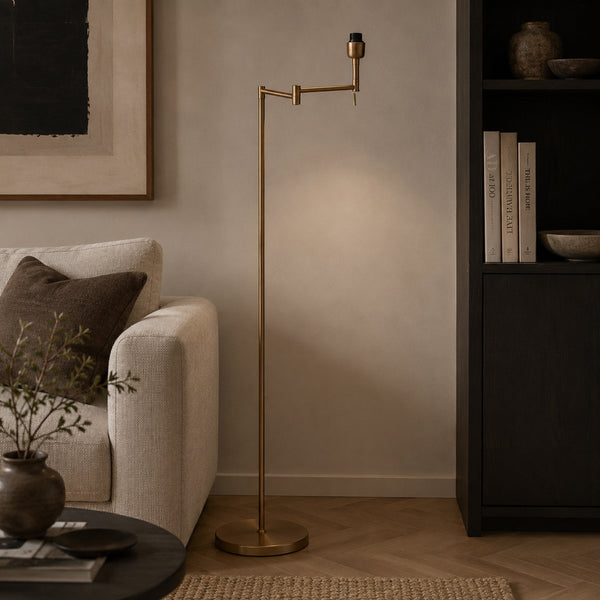
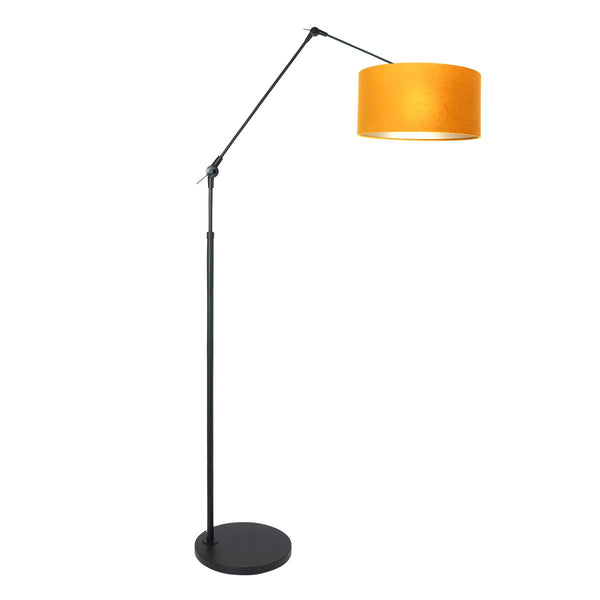
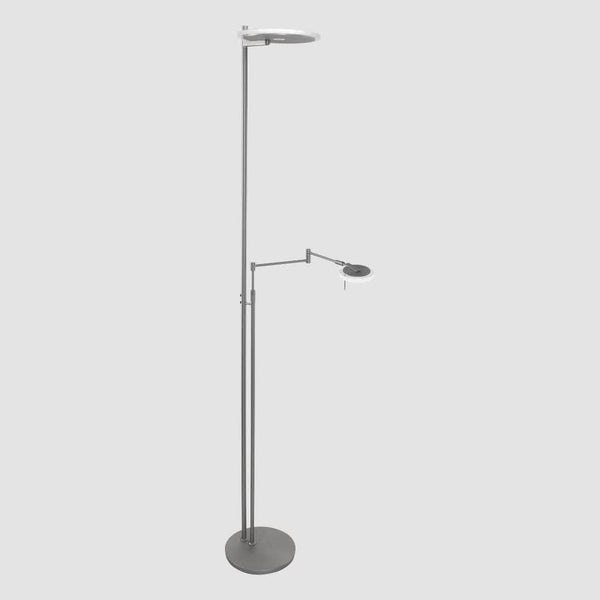
A floor lamp with a reading arm stands beside the sofa and tilts its shade towards the book. The Vela floor lamp rises to 185 cm with a flat shade 28 cm in diameter; Mirnorano opts for two adjustable GU10 spots. See also lighting a sofa and a reading floor lamp.
| Room | Type of reading light | What it brings | What to check |
|---|---|---|---|
| Bedroom | Wall light with a short arm | Light placed near the book, bedside table freed | Height 27 to 33 cm, depth 22 to 25 cm, E27 or GU10 fitting |
| Living room | Floor lamp with a reading arm | Extra light for reading on the sofa | Height 160 to 185 cm, adjustable shade, dimmer |
| Office | Adjustable wall light or floor lamp with an articulated arm | Light directed onto the desk | Articulated arm, GU10 fitting or LED source |
| Dining room | Floor lamp with a flat shade | Local light beside the table | Height and diameter of the shade |
| Hallway, entrance, dressing room | Compact reading wall light | Extra light at shoulder height | IP20, E27 fitting, reduced dimensions |
Which bulb fitting and bulb should you plan for a reading light?
Most reading lights in the collection take an E27 bulb, alongside models in GU10, G9 and a few integrated LED sources. The fitting determines the bulb to plan for and whether it can be replaced; models with integrated LED need none but cannot be changed.
E27, GU10, G9 or integrated LED: what are the differences?
An E27 fitting takes a standard bulb: you choose the brightness and the colour, and you replace it when it fades. GU10 equips models with adjustable spots, like Mirnorano or Natasja, with a more directed beam. G9 remains rare and serves small volumes. Integrated LED equips Éclio or the Vela floor lamp: nothing to buy, nothing to change. To widen your search, see the LED floor reading lights.
Can a reading light work with a dimmer?
Some models in the collection are dimmer-compatible, not all. Compatibility also depends on the bulb fitted: a non-dimmable bulb buzzes or cuts out badly on a dimmer, even if the fixture accepts one. Check this point when you buy the bulb, and keep warm white 2700 to 3500 K for reading.
| Fitting | Presence in the collection | Bulb to plan for | What it changes |
|---|---|---|---|
| E27 | The most widespread | E27 bulb | Easy to replace, brightness and colour of your choice |
| GU10 | Common on models with adjustable spots | GU10 bulb | Beam directed at the page |
| G9 | Rarer | G9 bulb | Compact format for small volumes |
| Integrated LED | On some models | None | No bulb to buy, source not replaceable |
How to match the colour and material of your reading light with the room?
Black dominates, followed by white, silver and gold: on a light wall, black stands out, on a dark wall, white and silver stay discreet. As for material, metal and steel give a clean line, while fabric and velvet soften the light from the shade.
Black, white, silver or gold reading light?
Black dresses about half the models and marks the wall effortlessly, which explains its presence on graphic pieces like Éclio. Silver, more discreet, suits light interiors. Gold and warm tones bring a more dressed-up touch, as on Nolma and its golden velvet. See the black models, the white finishes and the gold colours.
Metal, fabric, velvet or plastic: which finish?
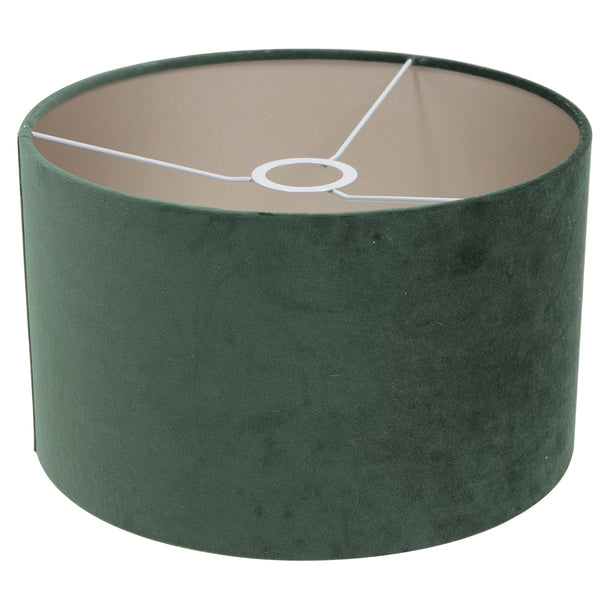
Metal accounts for the vast majority of the materials used, often completed by steel, fabric, velvet or glass depending on the model. A fabric or velvet shade diffuses a more enveloping light than a bare diffuser, which changes the result above a book. Round shapes remain the most frequent, ahead of tubes and balls.
| Criterion | What you find | Effect in the room |
|---|---|---|
| Material | Mostly metal, then fabric, velvet, steel, plastic or glass depending on the model | Metal draws clean lines, fabric and velvet diffuse a softer light |
| Colour | Black most common, then white, silver, gold, brown | Black stands out on a light wall, white and silver blend into a dark wall |
| Shape | Round shade, tube, ball, tilted cone or arc | Round stays discreet, tube and arc mark the wall more |
| Style | Modern and contemporary in the majority, with Nordic, minimalist and vintage | To match with the furniture already in place |
| Light temperature | Warm white 2700 to 3500 K on most models, cool white 4500 to 6500 K on a minority | Warm white suits evening reading |
How to install and maintain a wall reading light?
All reading lights in the collection are IP20, a rating that corresponds to indoor use in a dry room: they go neither outside nor in a room exposed to water splashes. Maintenance is limited to dusting the shade and changing the bulb on models with a fitting.
Can you put a reading light in a bathroom or outside?
No, with an IP20 rating, use stays indoors and in a dry room: bedroom, living room, office, hallway, entrance or dressing room. For the bathroom and outdoors, you need another protection rating, which these models do not carry. Also plan an electrical supply where you drill, at the level of the backplate.
How do you change the bulb of a reading light?
On a model with an E27, GU10 or G9 fitting, switch off the power, unscrew or remove the bulb, fit the new one. On an integrated LED source, nothing is replaced: the fixture works until the end. The manufacturer's warranty runs from two to three years depending on the model. To go further, compare with the reading lights with a crafted design and the wooden reading lights.
Is it worth buying a reading light?
Yes if you read in the evening: a reading light concentrates the light on the page instead of lighting the whole room, and warm white light strains the eyes less than a ceiling light. Models with an E27, GU10 or G9 fitting come back to life simply by changing the bulb, which extends their use.
What is the average lifespan of a reading light?
It depends above all on repairability. A fixture with a replaceable bulb starts again as new with a new bulb, which keeps obsolescence at bay: that is the case for most models in the collection, in E27 in particular. An integrated LED source cannot be changed. See the black models and the book light.
Reading light with a bulb or integrated LED: which to choose?
With a bulb if you want to choose the brightness, the colour and replace the source yourself. With integrated LED if you do not want to deal with any bulb: the fixture is ready, the light is fixed. For a tall stand in a living room, look at the floor reading lights and the book light.
One last marker before you decide: reach of the arm, height once unfolded, fitting and dimmer compatibility. Valranara for a long adjustable reach, Vela for a tall reading arm, Nolma for a narrow wall.
- Secure payment
- Tracked delivery
- Returns
- Designix customer service
The full lighting catalogue lets you compare a reading light with a classic wall light or a ceiling light before deciding.
Which light should you choose to read in the evening without straining your eyes?
Reading is more comfortable in warm white, between 2700 and 3500 K, the temperature found on most models in the collection; cool white 4500 to 6500 K equips only a small part of the models. An adjustable shade keeps the light source out of your eyes.
Warm white or cool white for reading?
Warm white dominates by far in the collection, with a minority of models in cool white. In practice, the colour is chosen when you pick the bulb on a fixture with an E27, GU10 or G9 fitting: take warm for the evening, more neutral for an office used during the day. Find the models concerned in the reading wall lights.
What is the dimmer for on a reading light?
It lowers the brightness for evening reading and lets you leave the rest of the room in the shade. Not all models in the collection are dimmer-compatible, and the result also depends on the bulb chosen. A shade that pivots completes the adjustment by masking the source. See the reading lights with a crafted design for the most adjustable models.
Frequently asked questions about the reading light
What are the drawbacks of a reading light?
As a lighting fixture, the limits are simple: an IP20 protection rating, so indoor use in a dry room only, a power supply to plan nearby and, on models with an E27, GU10 or G9 fitting, a bulb to buy separately. Models with integrated LED, for their part, cannot be repaired.
Is it good to read with a reading light?
Yes if the light is directed: a reading light places the beam on the page and not in your eyes, which leaves the rest of the room in a soft light. The adjustable or articulated-arm models in the collection go in that direction.
Which reading light does not strain the eyes?
The one whose light is directed at the page and not at the face, in warm white 2700 to 3500 K, the temperature found on most models in the collection. A shade that masks the source and a dimmer adjustment both contribute to reading comfort.
Is it good to read with a reading light before sleeping?
For extra light, it is better to stay in warm white 2700 to 3500 K than in cool white 4500 to 6500 K: the collection is mostly warm white, and the dimmer lets you lower the brightness as you close the book.
What are the 3 best reading lights?
There is no universal trio: in bed, a compact reading wall light frees the bedside table, in an office, an articulated arm directs the light onto the desk, and in a living room, a floor lamp with a reading arm lights the sofa. The choice depends on the reach, the fitting and the dimmer.




