
Ceramic table lamps
This selection is also available in our French store: Lampes à poser en céramique



















- Tracked delivery to your country Tracked delivery
- Secure payment at checkout Multiple payment methods
- 14 days to change your mind 14-day returns
- Secure payment Secure payment
Not sure of your style? Find it in 30 seconds
A few questions, and we will show you the pieces made for you.
Frequently asked questions
What table size for how many people?
Which tabletop material should I choose?
Extendable or fixed?
How do I care for the tabletop?

The right furniture, in the right place
Check the dimensions with our fit checker and receive pieces made to last. Unsure? Our team will answer your questions.
- Tracked delivery
- Pay in instalments, where available
- 14 days to change your mind
- Advice & showroom in Lyon, France
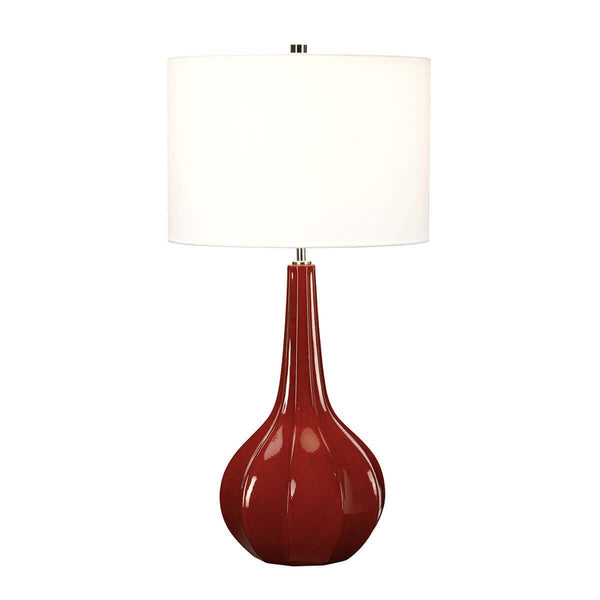
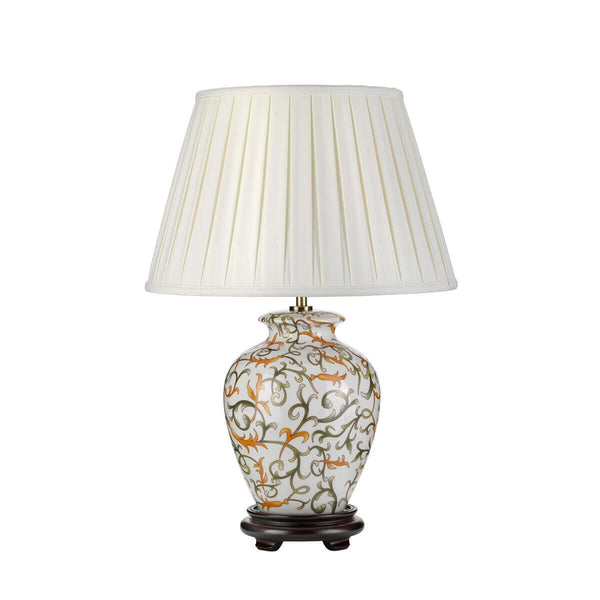
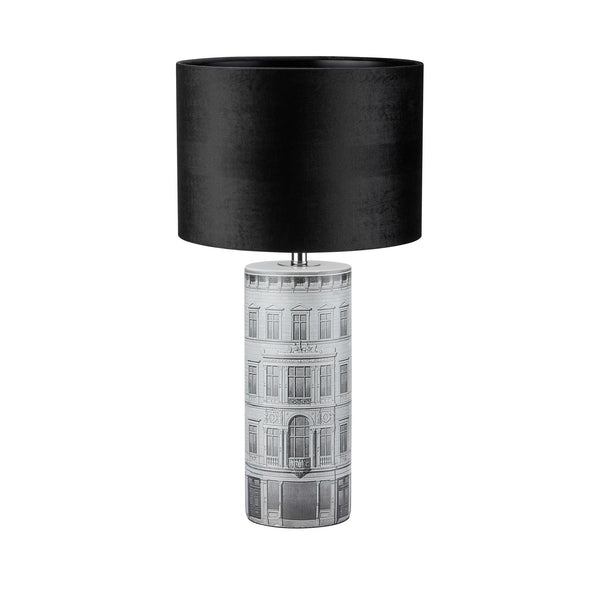
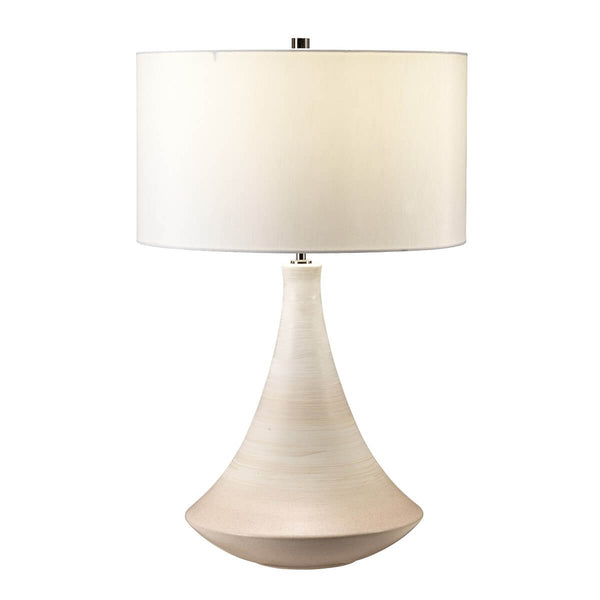
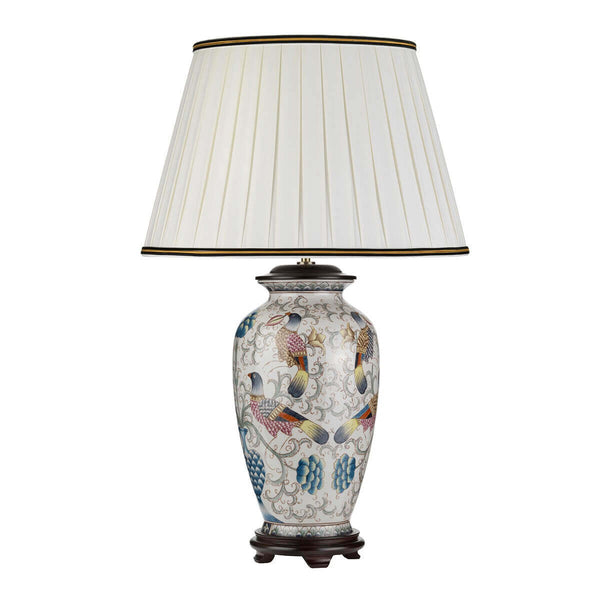
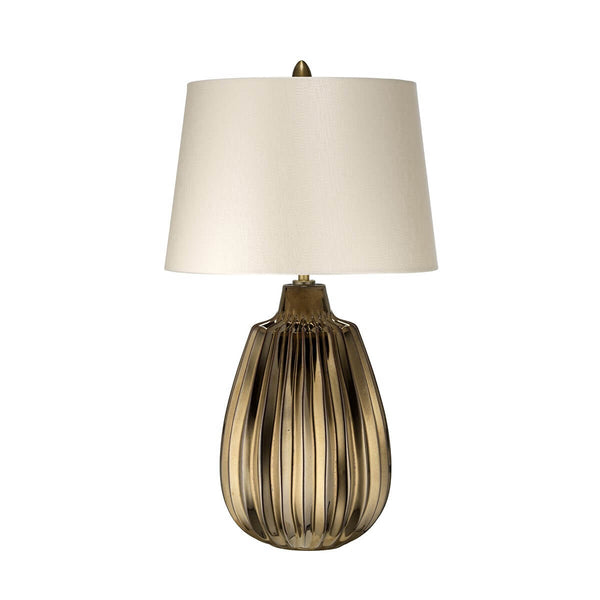
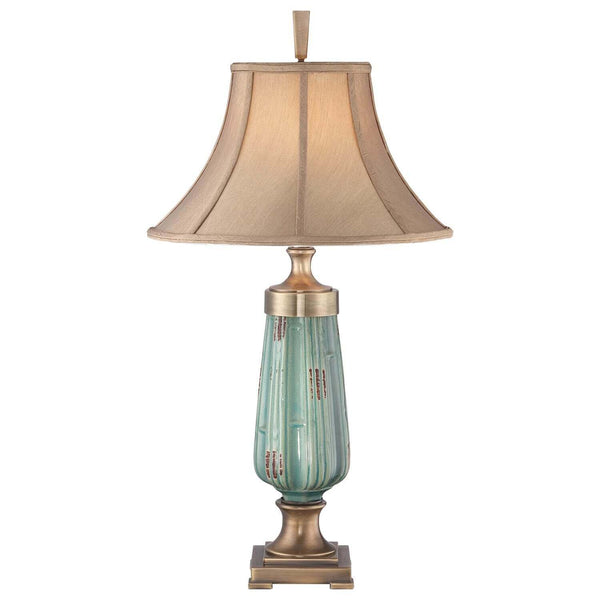
Count on a stable ceramic base and a fabric shade: that duo gives a soft accent light, on a living room sideboard as well as on a bedside table. The models in this collection are chosen first by height, then by E27 or E14 socket and by the shade of the base.
Which ceramic table lamp should you choose for a living room?
In a living room, a ceramic table lamp serves as accent lighting near a sofa or a low sideboard. Choose a stable base and a fabric shade that diffuses light without glare: a model 40 to 60 cm high works on a table, while large formats go on the floor.
White or beige ceramic table lamp: what effect in a bright living room?
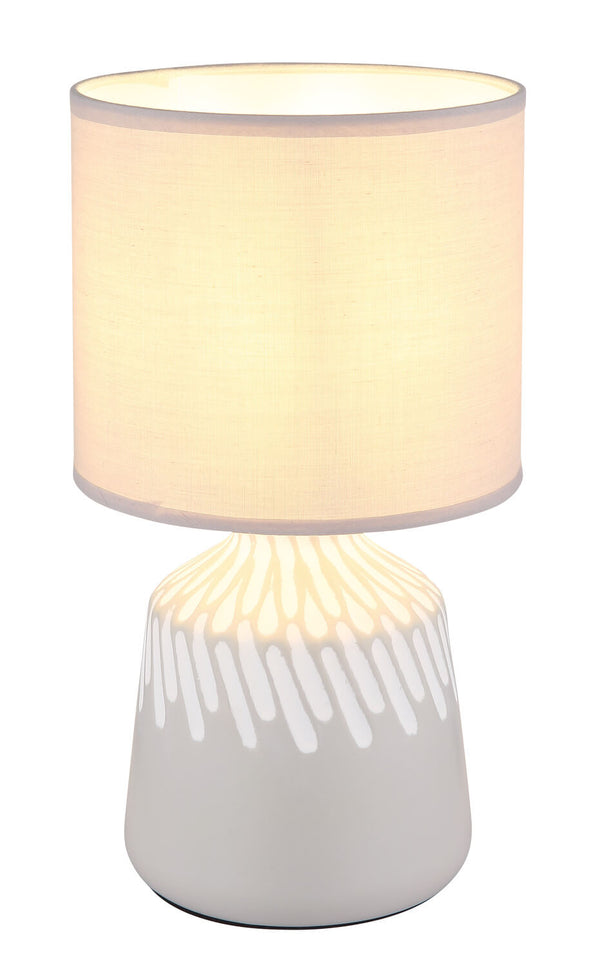
A white or beige glazed base blends into a pale wall and lets the shade do the work. Ceramic looks visually heavier than a metal base: it anchors the low sideboard without weighing it down. The Solia, 34 cm high and 20 cm in diameter, fits on a narrow console and leaves breathing space around it.
The Romano takes a different approach: beige ring base, white shade, 44 cm high and 31 cm wide, E27 socket at 60 W maximum per bulb. Its wider volume suits a low living room sideboard. To widen your style search, the designer table lamps for living rooms range shows the same principles of proportion.
Designer ball table lamp: which shapes make a statement in a living room?
A sphere draws the eye because it has no corners: the Oscar, gold and black, 37.5 cm high and 20 cm in diameter, accepts a dimmer and a 60 W E27 bulb. The Sienna, black, 46 cm by 23 cm, at 40 W, gives structure to a darker corner. Both sit on a sideboard or a wide bedside table.
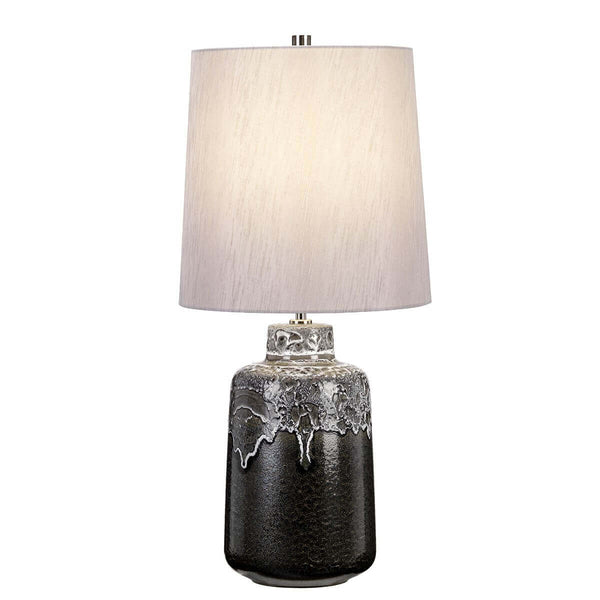
The tube remains a safe choice for a hallway: the Woolwich rises to 65 cm for 30 cm in diameter, anthracite enamelled base and white shade, E27 at 60 W maximum. You will find this type of silhouette in the modern table lamps for living rooms, to pair with the all Designix lighting already in place.
What light does a ceramic table lamp give?
The light depends on the bulb and the shade, not on the base. Most of these lamps take a screw bulb, E27 or E14, at 40 or 60 W maximum, and a fabric shade that filters the beam. Some models accept a dimmer to adjust the intensity.
E27 or E14 socket: which bulb for a ceramic table lamp?
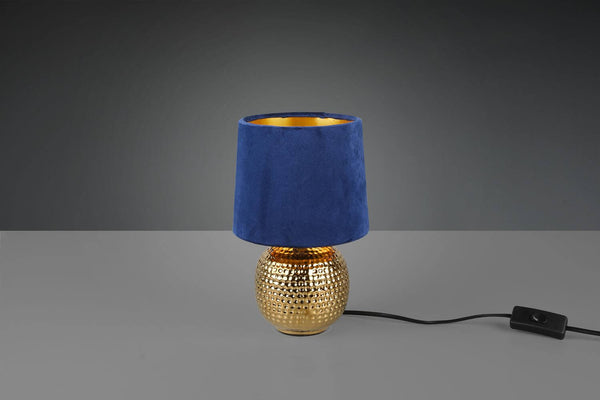
The socket number gives the diameter of the holder: 27 mm for E27, 14 mm for E14. Large living room models are E27, like the Sienna, the Oscar and the Romano, with maxima of 40 or 60 W depending on the holder. Small formats use E14, such as the Sophia, gold and green, at 40 W maximum. A filament bulb or an LED with the same socket works; what counts is the wattage indicated on the holder.
The Mirtorina is the exception: its LED module is built in and cannot be replaced, in a format of 8 by 10 cm. To compare light sources, the designer LED table lamps range groups the diode models, and the linen table lamps show what a thicker textile shade changes.
Dimmer: how do you adjust the light of a ceramic lamp?
A built-in dimmer lets you go from a nightlight glow to reading light without changing the bulb. Not every model in the collection accepts one: the Oscar and the Sienna allow it, others do not. Check this point before choosing your bulb, because an incompatible bulb buzzes or does not dim.
Ceramic bedside table lamp: which format for the bedroom?
On a bedside table, aim for a compact lamp 26 to 35 cm high so it does not get in the way, like Aroha, Rela or Solia. An E14 socket at 40 W maximum is enough for reading without lighting the whole bedroom, and the fabric shade prevents glare.
White ceramic table lamp: why choose it for the bedside?
White goes with everything and ages without tiring, which matters when you keep a lamp for ten years. The Rela Blanche, 31.5 cm high and 17.5 cm in diameter, combines a ceramic base with discreet grey lines, in E14 and 40 W maximum. The heavy base stays stable when you reach for the switch in the dark.
Small ceramic bedside lamp: what dimensions on a bedside table?
Measure the usable width of the table before choosing: a diameter of 14 to 20 cm leaves room for the phone and the book. The Aroha, 26 cm high and 14 cm in diameter, openwork ceramic and wooden handle, fits on the narrowest tops. The Mori Grise, 32 cm by 20 cm, suits a bedside table or a small desk. The ceramic bedside table lamps range gathers these short formats, and the designer lamps for bedrooms widen the choice while keeping the same scale.
Large ceramic table lamp: where should you place it in the room?
The large formats, 60 to 73 cm high, go on the floor next to a sofa or on a wide low sideboard. They furnish an empty corner and replace a floor lamp. Count on a wide base, like Nurea, Sévra, Rayola, Tessia or Woolwich, to stay stable.
Large ceramic table lamp: how high should it go in a living room?
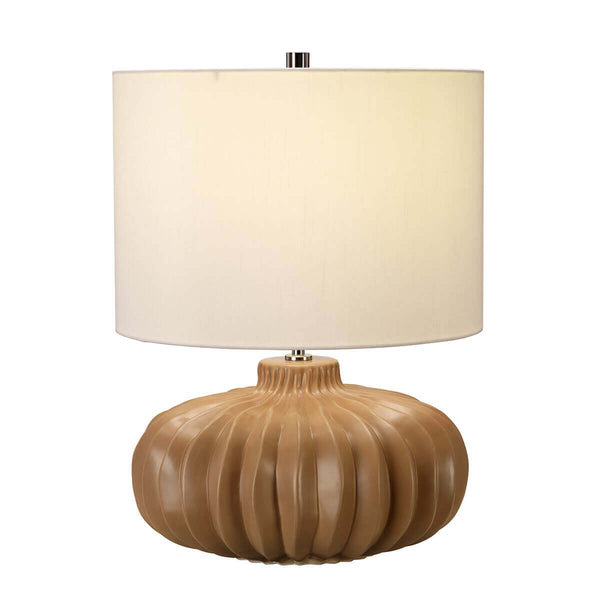
The height of the base aligns with the seat: above the sofa back, the lamp lights the shoulder rather than the face. The Nurea reaches 71 cm for 35 cm in diameter, the Sévra 70 cm for 40.5 cm. The Rayola rises to 60.5 cm by 36.5 cm, the Tessia to 73 cm by 46 cm, a real volume for an empty corner. All of them go on the floor.
Floor lamps or large table lamps: what is the difference?
A floor lamp has a slim stem and slips behind an armchair, but its base remains visible. A large ceramic table lamp takes up more floor space and is harder to move: it is treated as a decorative object. If space is short, prefer a table format. The Scandinavian table lamps offer more contained volumes for small living rooms.
How do you match a ceramic table lamp to your decor?
Start from the dominant colour of the room: white and beige blend in anywhere, black gives structure, gold and green add a touch. The style of the base matters as much as the tint: a striped or openwork model stays understated, a ball or drop shape becomes the focal point.
| Tint | Effect in the room | Models in the collection | To pair with |
|---|---|---|---|
| White | Blends into a bright interior, keeps the room light | Solia, Nurea, Sévra, Rela | Light wood, linen, natural textiles |
| Beige and stripes | Warms without clashing, adds a discreet pattern | Rayola, Solia, Romano, Tessia | Cream walls, rattan, wool |
| Black and anthracite | Gives structure, draws a visual anchor point | Sienna, Woolwich, Oscar | Light walls, black metal |
| Gold | Catches the light, a more dressed tone | Oscar, Sophia | Neutral background, brass, mirror |
| Green and blue | A touch of colour on a sculptural base | Sophia | White ceramic, dark wood |
Beige, green or blue ceramic table lamp: which colour for which interior?
The striped beige of the Rayola warms a living room with cream walls without creating contrast. The green and blue of the Sophia, 26 cm deep and 16 cm in diameter, place a splash of colour on a neutral background. Black needs light around it so as not to feel heavy. The gold and black ceramics set the tone if you are looking for a more dressed match, and the white ceramic models remain the safe choice for a bright room.
Italian designer table lamp: how do you recognise it?
Sculptural lines, a worked base and generous proportions, often in white, black or gold: form comes before ornament. The Tessia and the Nurea play on these volumes. The shade matters too: a thick fabric filters, velvet dresses it up more. See also the white designer table lamps.
How do you wire several lamps to a single power supply?
For two or three portable lamps, a power strip or a socket rail is enough: each keeps its own switch. A fixed parallel connection, where they all come on together, is prepared with terminal blocks in an accessible box. As soon as the circuit is recessed, an electrician steps in.
Wiring several lamps in parallel: how do you do it simply?
In parallel, each lamp holder receives the same voltage: the live wires meet on one side, the neutral wires on the other. A burnt-out lamp does not switch off the others. Table lamps supplied with a cable and plug are happy with a power strip, with no wiring at all. For a mobile work station, adjustable table lamps avoid multiplying light points.
Wiring 3 lamps to 1 switch: which solution?
The logic stays the same: three parallel connections in an accessible junction box, and the switch cuts the whole set. A switched power strip does the job for three table lamps, without touching the circuit. Beyond that, have the wiring checked. The desk lamps range shows models designed to stay plugged in continuously.
How do you install and care for a ceramic table lamp?
Simply place the lamp on a stable surface, screw in the bulb and plug the cable into an accessible socket. Ceramic is dusted with a soft cloth, the fabric shade is brushed. IP44 models, like Mirtorina, withstand damp rooms; IP20 models stay in dry rooms.
How do you clean a ceramic table lamp?
Unplug it first. Run a soft cloth, slightly damp if needed, over the glazed ceramic, then dry it. The fabric shade is brushed dry, without water. Never pour liquid on the socket or the cable, and do not use abrasive products on a tinted glaze.
| Model | Height | Diameter or width | Socket | Max wattage | Where to place it |
|---|---|---|---|---|---|
| Aroha | 26 cm | Ø 14 cm | E14 | 40 W | Bedside table |
| Rela and Rela Blanche | 31.5 cm | Ø 17.5 cm | E14 | 40 W max | Bedside table |
| Oscar | 37.5 cm | Ø 20 cm | E27 | 60 W | Living room, wide bedside table |
| Sienna | 46 cm | Ø 23 cm | E27 | 40 W | Living room, wide bedside table |
| Woolwich | 65 cm | Ø 30 cm | E27 | 60 W max | On the floor, hallway |
| Tessia | 73 cm | Ø 46 cm | not specified | not specified | On the floor, large volume |
IP20 or IP44: where should you install your lamp?
The protection rating describes resistance to water and dust. IP20 corresponds to a dry room, bedroom or living room. IP44 adds protection against splashes, which matters near a washbasin. The Mirtorina, rated IP44, is the only model in the selection intended for these rooms. Elsewhere, stay with IP20, as with the black metal bedside lamps.
Ceramic, crystal, wood or metal: which material for a table lamp?
Ceramic gives an opaque, matte base, glazed or textured, that carries the colour. Crystal and glass play on transparency, wood warms, metal refines. The choice is made according to the light you want and the style of the room more than according to a budget.
Ceramic or glass: what difference in light?
An opaque base sends the light upwards and towards the shade, without diffusing it sideways. Glass and crystal let light through and light up the material. The Woolwich, in anthracite enamelled ceramic, stays matte; the Mori Grise, textured, plays on the cast shadow. Compare with the crystal table lamps to see the difference in effect.
Ceramic or wood lamp: which style for a living room?
Wood warms an already bright interior, ceramic holds colour and cleans up in one wipe. The Aroha mixes both with its wooden handle. For a living room, ceramic matches textiles, wood matches natural fibres. The wooden lamps usefully complete a room already furnished with ceramic, and the black lamps for living rooms offer a sharp contrast on a light background.
Reassurance and ordering
Secure payment, tracked delivery, returns and Designix customer service: you order without unpleasant surprises, and the team answers if the format does not suit once placed.
The safest approach: measure the available height between your sideboard and the wall, then choose. For a bedside table, go for the Aroha or the Rela. For a living room corner, the Nurea and the Tessia do the job. The rest of the selection is there to browse in our lighting universe, keeping in mind the dominant tint of the room and the real floor space.
Frequently asked questions
What are the most beautiful living room lamps?
There is no universal answer: a beautiful living room lamp is one that matches the room and the use. A white or beige ceramic blends into a bright interior, a black or gold model gives structure to a darker living room. The ratio between the size of the shade and that of the sideboard remains decisive.
What is a designer ball table lamp?
A ball lamp has a spherical base or shade, with no marked corners. In ceramic, the sphere brings a round presence that softens a straight sideboard. It sits near an armchair or on a shelf and serves as accent lighting rather than a main source.
Can you put an LED bulb in a ceramic table lamp?
Yes, provided the socket matches: E27 for a 27 mm holder, E14 for a 14 mm holder. An LED heats less than an incandescent bulb, which suits fabric shades. Respect the maximum wattage indicated on the holder, often 40 or 60 W.
How do you wire several lamps to a single power supply?
A power strip or a socket rail is enough for portable lamps: each keeps its own switch. For a fixed installation, the lamps are connected in parallel in an accessible junction box. As soon as you touch the recessed circuit, an electrician steps in.
How do you wire 3 lamps to 1 switch?
The three lamps are connected in parallel, each receiving the live and neutral wires, and the switch cuts the whole set in one go. This wiring requires an accessible box and suitable terminals. For three portable table lamps, a switched power strip does the same job without any work.




