White or yellow light: choosing the right light for every room
This article is also available in French: Lumière blanche ou jaune Comment Choisir votre Eclairage
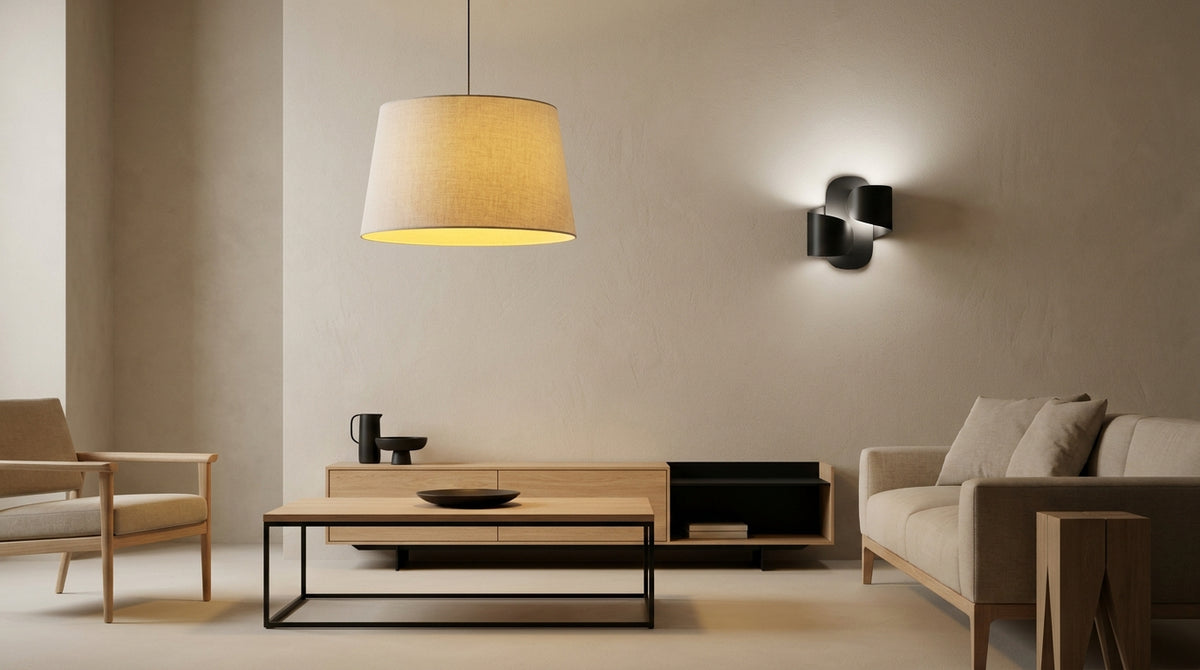
Set one colour temperature per room rather than a single one for the whole home: 2700 K in the living room and bedroom, 3000 K in the dining room, 4000 K in the kitchen and bathroom. You keep evening comfort without sacrificing readability where you work.
Which light should you choose, yellow or white?
The choice comes down to Kelvin, not to how it feels. A yellow light, from 2700 to 3000 K, warms the rooms where you relax. A white light, from 4000 K and above, lights the areas where you work. The reliable guide: what you do in the room after nightfall.
What colour temperature changes in a room
Kelvin describes the tint of the source, never its power. Four levels are enough to cover a home.
- 2700 K: strong yellow, for the living room and bedroom
- 3000 K: pale yellow, for the dining room and hallway
- 4000 K: neutral white, for the kitchen, bathroom and study
- 6500 K: cool white, reserved for the garage and facades
For an apartment being redone, our living room lighting project starts from this scale before selecting the light fittings.
Why the same bulb looks different depending on the wall and furniture
A beige wall absorbs part of the yellow and cools the result. A grey wall does the opposite: it adds blue to an already neutral 4000 K. Furniture matters as much as paint.
- Light wood: reinforces the yellow, the room can look more golden than expected
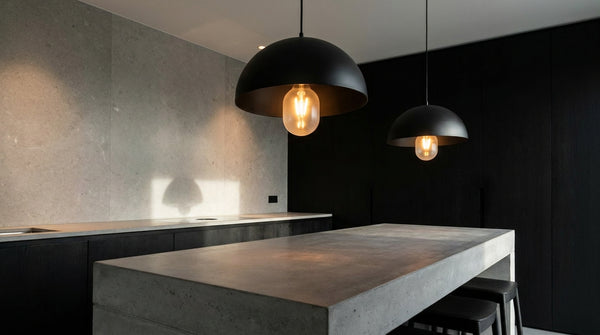
- Concrete and grey metal: absorb the yellow and push towards cool
- Saturated wallpaper: the perceived tint changes with the source
Yellow lighting, the foundation of the mood
Yellow lighting remains the safe choice for the evening. It tires the eye less at the end of the day and gives faces a natural complexion. The difference between yellow and white light often comes down to 300 K, not a jump of 2000.
To go further, our guide to warm or cool light details these differences level by level.
What is the best lighting for a home, room by room?
There is no single best lighting, but one temperature per use. Living room and bedroom in yellow at 2700 K, dining room at 3000 K, kitchen and bathroom in neutral white at 4000 K. The table below sets the value for each room, then the comparison tool applies it across our catalogue.
Living room and dining room: the yellow light of the evening
The living room lives in the evening. Aim for 2700 to 3000 K, spread across several points rather than a single one, to avoid glare and hard shadows.
- 2700 K for the ambient light, indirect where possible
- 3000 K above the table, for the look of the food
- Dimming on at least one source, to lower the level in the evening
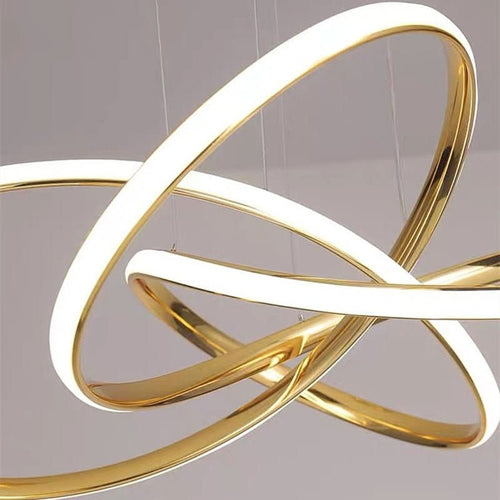
For the living area, the chandelier remains the natural fixing point above the table. In a survey of 250 product pages in our catalogue on 4 October 2026, 61% list black and 50% list gold: dark finishes and brass dominate the pages, not chrome.
Kitchen, bathroom: the white light that works
These two rooms call for neutral white at 4000 K, because that is where you read a colour, a cut, a complexion. A 2700 K there yellows food and skin tones. Our guide to the kitchen and dining room lighting project details the layout plan by plan.
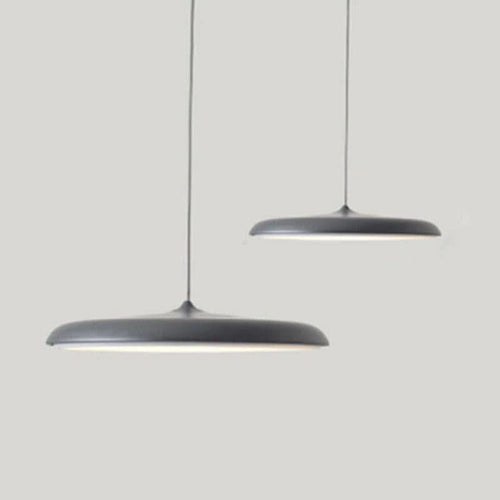
Above an island, a kitchen pendant lights the worktop without casting a shadow. In the bathroom, the area near the basin is damp: in the same survey of 250 product pages on 4 October 2026, 94% list an IP20 rating, which is not enough near a water point. Aim for IP44 and above in exposed zones.
Bedroom: the most restful
The bedroom suits the lowest yellow, 2700 K, with low output and low-level sources. As for equipment, our bedroom light selection favours adjustable or table models, rather than a ceiling light that glares when you are lying down.
Two questions then come up. The first, which bulb for a bedroom, depends on the cap and the output.
The second, how many lumens for a bedroom, depends on the area to cover.
| Room | Recommended temperature | What it changes |
|---|---|---|
| Living room | 2700 K | Warm mood, long evenings |
| Dining room | 3000 K | Pale yellow, accurate look on the food |
| Kitchen | 4000 K | Neutral white, readable worktops |
| Bathroom | 4000 K | Neutral white, accurate complexion in front of the mirror |
| Bedroom | 2700 K | Low yellow, easier to fall asleep |
To move from the table to the real thing, the bulbs sorted by colour temperature section filters directly on this criterion.
The range is wide: our alternative collection has 21,689 references as of 4 October 2026, enough to keep one temperature per room without compromise.
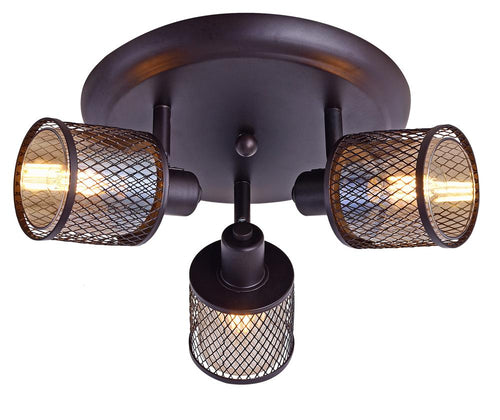
For areas lit from the ceiling, the LED ceiling light is chosen on temperature as much as on diameter.
Light fittings to choose according to light temperature
 LED ceiling light | Lumière Zenith
 Chandelier | Essence Lumineuse
 Wall light | Silvesena
 Pendant light | Zenlinessa
 Pendant light | Vellinina
 Pendant light | Uther
See the whole selection: Alternative Laurie Lumière: your new lighting destination | Designix
If you are still hesitating between two temperatures, tell us the room and its use so you can describe your room to the team: we answer about your specific case, not an average.
Which gives the whitest light, cool white or warm white?
Neither: Kelvin does not make lumens. Temperature describes the tint, the lumen describes the quantity. A dim 6500 K gives less light than a well-measured 2700 K. To see more clearly, look at the lumens, not the highest K figure.
Kelvin does not make lumens
Two bulbs with the same E27 cap can show 2700 K and 4000 K with an identical output. Kelvin gives the colour, the lumen gives the light. In our survey of 250 product pages on 4 October 2026, 30% mention E27, the most common cap for changing a bulb without changing the fitting.
The guide to caps and kelvins explained lets you cross-check both before buying.
White or warm light: what the figure really changes
A white light at 4000 K does not hurt the eye more than a warm one. It is its output and direction that decide comfort. A very bright warm light glares more than a white light set low. The K figure says nothing about eye strain, it says the tint.
Can you mix two temperatures in the same room?
Yes, on one condition: one temperature dominates. A 4000 K on the ceiling and a 2700 K in a table lamp work together if the neutral white stays the base and the yellow is the accent. The reverse gives a room that looks badly lit. The rule holds for two sources, rarely three.
Our guide to colour temperature room by room shows where to place each level.
On this specific point, our Google listing shows comparable interiors already fitted.
Which light is the most restful for the eyes?
In the evening, aim for 2700 K and a low level, with no source in your line of sight. A soft light, directed at the wall or ceiling, rests the eye. Cool white at 6000 K and above, rich in blue, delays falling asleep when it comes late.
Blue light, the real brake in the evening
A 6500 K late in the evening sends the brain a daylight signal. Blue slows the production of melatonin, the hormone that prepares sleep. Switching to 2700 K two hours before bedtime is often enough to restore the difference. Our guide to light colour for sleeping details this mechanism hour by hour.
Lower the level before changing the bulb
Before replacing anything, lower what you have. A dimmable bulb sets the evening better than a change of temperature. If the fitting does not allow it, a 2700 K table lamp near the bed does the job.
Related reading
In stock · shipping costs shown at checkout · up to 30% off in your cart
Ready to turn inspiration into reality?
Tell us about your room, your style and your budget, and we will show you the pieces that truly suit your project.
Get guidance in 30 seconds →