What is a hanging lamp called? The name and the installation
This article is also available in French: Comment appelle t on une lampe suspendue
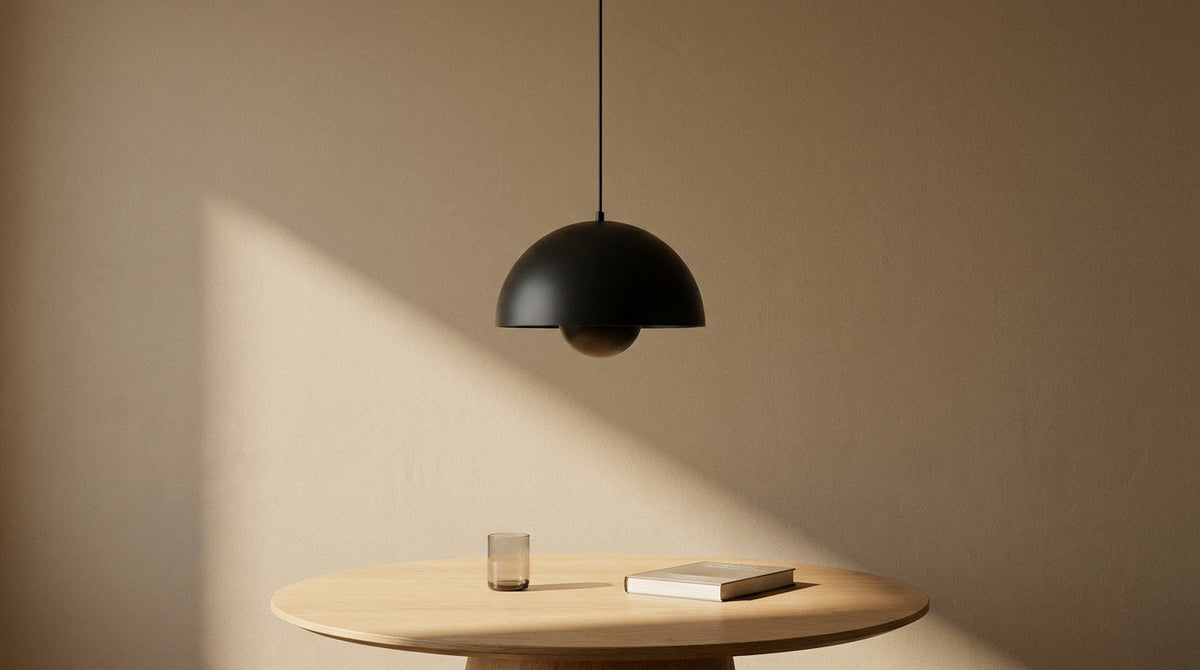
A hanging lamp is called a pendant light. The word refers to the fixture that hangs from the ceiling by a cable, a chain or a rod, with an adjustable drop set at installation. Several branches or several globes on a single axis: that is a chandelier. A fixture fixed flat to the ceiling, with nothing hanging down: that is a ceiling light.
What is a hanging lamp called?
The name follows the structure, not the size. A single source at the end of a cable is still a pendant. As soon as arms or globes radiate around a central axis, the vocabulary shifts to chandelier. A ceiling light does not hang, it sits flat against the ceiling.
On our product pages, the note "suspended mounting" appears in the specifications. It prevents ordering a hanging lamp while expecting a surface-mounted model. The collection brings together 9 references as of 26 November 2026, from a thin single-source cable to the glass globe.
Pendant: the common name when the lamp hangs
This is the term used in catalogues, quotes and delivery notes. It covers everything that comes down from the ceiling, from the most discreet model to the widest globe.
- Adjustable drop: the cable is shortened during installation, on site.
- Suspended mounting: the note distinguishes the lamp from a surface-mounted model.
- Dimmable: useful above a table, from dinner to evening.
- IP20: the standard protection in dry interiors, sufficient outside the bathroom.
Chandelier: when the hanging lamp has several branches
The chandelier keeps a branched structure: arms, rods, multiple globes around an axis. The word does not indicate size, but the complexity of the silhouette.
A model with five opal globes is still a chandelier even if it hangs low above a table. To decide on a specific reference, our guide to telling a chandelier from a pendant light covers the borderline cases.
- Branches: several sources on the same axis.
- Globes: opal glass, crystal or metal depending on the desired effect.
- Weight: heavier than a simple pendant, check the fixing before buying.
The chandelier collection reads better on the technical sheet than in a lifestyle photo.
Ceiling light: the word people use wrongly
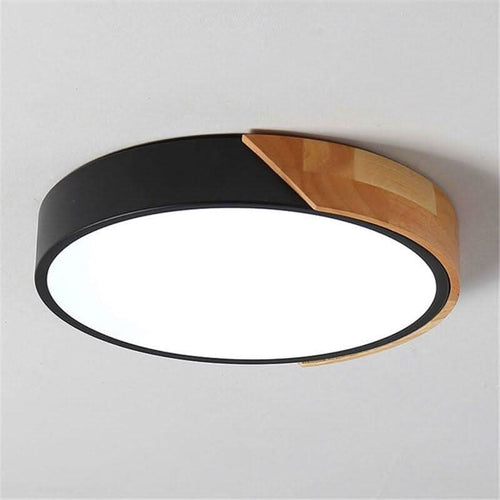
Many visitors look for a hanging lamp and leave with a ceiling light. The latter sits flat against the ceiling, with no visible cable: it lights a whole room, not a worktop.
It keeps its place in a hallway or a bedroom without clearance, where a pendant would hit a door. A LED ceiling light is then chosen on colour temperature and protection rating, not on cable length.
Designer pendants: the selection


What is the ideal height for a pendant light?
The height is set by the cable, not by the table. The lower edge of the shade should stay above the eyes of a seated person and let the view pass to the other end of the table. Too low, it crushes the tabletop; too high, the light illuminates the room instead of the work surface.
Above a table
Aim for reading comfort: the eye should meet the shade without hitting it. A dining room pendant is set lower than an entrance pendant, because people stay seated underneath.
- Seating: the person can see over the table without leaning.
- Table centre: the pendant falls in the middle of the tabletop, not the middle of the room.
- Wide shade: it is raised to avoid a tunnel effect.
In an entrance or a hallway
Here, people walk through standing up and do not stop. The pendant is raised to clear the way, even if that means losing a little light on the floor.
- Passage: nothing hangs down in the walking zone.
- Short cable: a height-adjustable pendant keeps a useful margin after installation.
- Small footprint: a narrow model does not visually clutter the hallway.
If you are hesitating between two cable lengths for your room, send us the ceiling height and a photo of the wall, and we will reply via the page to ask the workshop.
How do you hang a pendant lamp?
Two fixing points coexist: the hook screwed into the ceiling for heavy models, and the DCL box, that round base often already in place in recent homes. The weight of the lamp decides the choice, the type of ceiling dictates the wall plug.
Hook or DCL box
The hook takes the load in the ceiling. The DCL box provides both the power supply and the attachment, with no visible connector block.
- Hook: for a heavy silhouette, thick glass or solid metal.
- DCL box: on an already equipped ceiling, with no extra drilling.
- Wall plug: suited to the surface, plasterboard or concrete, never chosen at random.
The full procedure is detailed in our tutorial to install a pendant light in the right order.
On a branched model, the load is poorly distributed: better to follow the method to fix a chandelier with a hook than to improvise with the screws from the box.
Fixing without drilling
A raw concrete ceiling or a rental with no work allowed does not rule out a pendant. Drilling-free solutions exist, with weight limits to know.
- Rail: fixed to an existing support, without touching the ceiling.
- Clamp or bracket: reserved for thin cables and lightweight models.
- Load limit: beyond that, you go back to the wall plug.
Our article on fixing a light without drilling reviews these cases.
Can you make your own pendant?
Assembling a shade and a textile cable is very doable as a DIY project. The electrical part is not: it stays on CE-certified equipment. Our models are covered by a 2-year or 5-year warranty depending on the reference.
- Shade: cardboard, linen, rattan, to assemble yourself.
- Textile cable: suitable gauge, never salvaged.
- Socket: CE-certified, never a bare assembly.
The step-by-step guide to making a pendant light details the decorative part.
To judge the result and the installation as seen by other buyers, the Designix Google listing is kept permanently up to date, with no fixed figure in this article.
Antique pendant, original pendant: which words to describe it?
A pendant is described by three pieces of information: the era, the shape and the material. One alone is not enough. "Antique pendant" says neither the size nor the colour, whereas "brass dome" immediately places the model.
By era
- Art Deco: geometry, brass and frosted glass.
- Industrial: exposed metal, wide shade, workshop feel.
- Vintage: rounded shapes and patinas, often found second-hand.
- Contemporary: clean lines, discreet cable.
The same silhouette changes camp depending on the finish. A vintage light is recognised by its patina, not by its age.
By shape and by material
Our product pages state the colour (black, white, gold, beige), the material (metal, glass, resin, brass) and the shape (ball, dome, oval, round). These three lines are enough to decide between two similar models.
- Ball: opal glass, diffuse light, timeless.
- Dome: directed downwards, perfect above a table.
- Oval: best reserved for open volumes.
- Brass: warm, ages well, pair it with clear glass.
How many pendants should you plan for in a room?
One per area to light, not one per room. Count one pendant above the table, two or three aligned above an island, one on each side of the bed. The number follows use, never the surface area alone.
Above an island
Alignment matters more than quantity. Two or three identical models, evenly spaced, give a clean line seen from the living room.
- Alignment: same heights, same gaps.
- A single line: no offset between the cables.
- Type of light: a directional model lights the worktop, a globe diffuses it.
In an open kitchen, the kitchen chandelier hangs low above the island and marks the boundary with the living area.
In the bedroom
A central pendant is enough, unless the bed is tucked into a corner. In that case, two small pendants replace the bedside lamp.
- Symmetry: one on each side of the bed, at the same distance from the wall.
- Switching: two separate switches, one per sleeper.
- Height: above the head, never in front of the eyes when lying down.
The principle also holds in the living room, where a wider living room pendant holds the centre of the room.
In stock · shipping costs shown at checkout · up to 30% off in your cart
Ready to turn inspiration into reality?
Tell us about your room, your style and your budget, and we will show you the pieces that truly suit your project.
Get guidance in 30 seconds →