Warm lighting: creating a cozy atmosphere at home
This article is also available in French: Comment créer une ambiance chaleureuse avec la Lumière
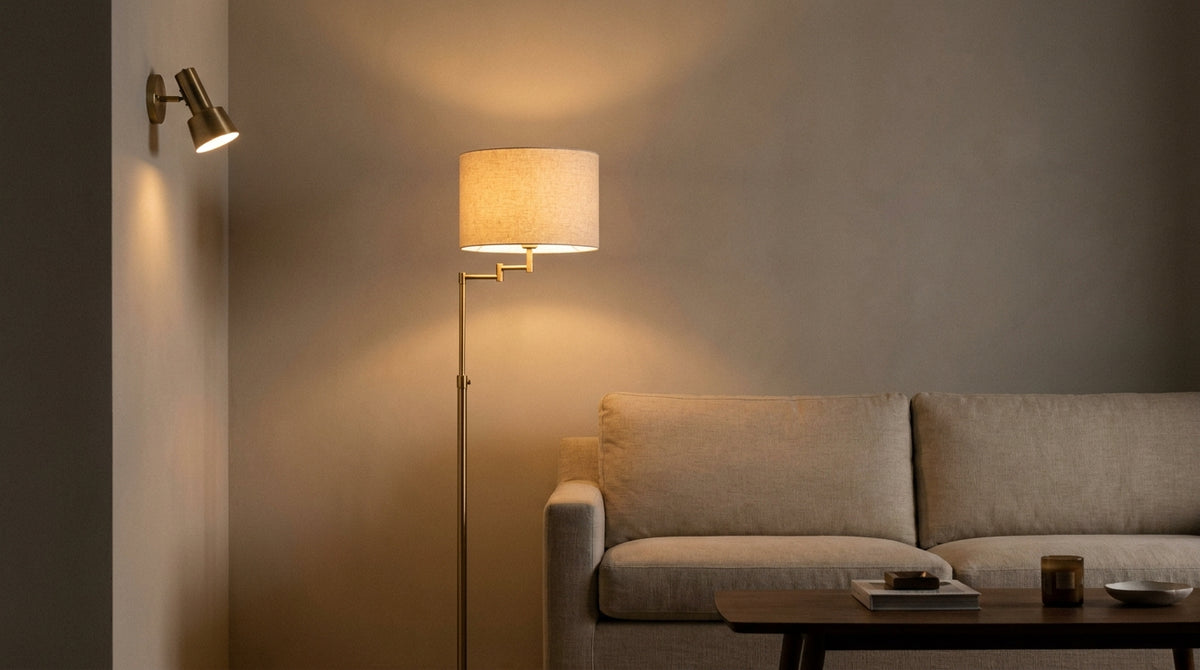
Plan for three to four light sources at different heights: a low wall light, a table lamp, a floor lamp, then the general ceiling light. Set every bulb between 2,700 and 3,000 K and fit a dimmer. At the same brightness, two low sources warm a room more than a single ceiling light, because the shadows stay visible.
Which type of lighting creates a warm atmosphere?
Warm lighting relies on several low-power sources spread around the room, never on one powerful central point. Warm white, between 2,700 and 3,000 K, and dimming do the rest: shadows multiply, faces relax, materials feel warmer.
That is the very definition of ambient lighting: the general light stays discreet and the low sources shape the volumes. With a single ceiling light, everything flattens out and the evening becomes uniform.
Before buying, list how you use the room: reading on the sofa, dining, entertaining, working late. These four situations call for different light, and any living room lighting plan starts with this list.
Which colour temperature should you choose, room by room?
Stay between 2,700 and 3,000 K in living spaces, and keep neutral white for work areas.
| Temperature | Rendering | Where to use it | What to avoid |
|---|---|---|---|
| 2,700 K | Amber, very warm | Bedroom, reading corner, dining room | Kitchen worktop |
| 3,000 K | Warm white, slightly crisper | Living room, hallway, open kitchen | Nothing, it is the all-round value |
| 4,000 K | Neutral white | Study, workshop, pantry | Bedroom and living room in the evening |
| 5,000 K and above | Cool white, bluish | Garage, technical outdoor areas | All living spaces |
The difference between warm and cool light comes down to just a few hundred kelvins, yet the eye notices it immediately on a white wall.
It is better to decide once for the whole room: white or yellow light depending on the sources, but a single family of shades. Two different temperatures in the same living room and the room loses its unity.
A reference point before you order: across a survey of 250 references in our catalogue on 5 October 2026, 30% state an E27 base, 15% an E14 and 12% a GU10. The large base remains the most common, so it is the one that opens up the most choice among 2,700 K bulbs.
How can you create a warm atmosphere with sunlight?
Open up as much as possible on the south and west sides, where evening light is most golden, and let the low sources take over before nightfall.
- Light curtains, in linen or sheer voile, open during the day: they diffuse light without blocking it
- Mirror facing the window, never facing an artificial source
- Matte walls rather than satin: a matte white reflects light without directing it
- Late afternoon: switch off the ceiling light and turn on the low lamps
How can you create a bright atmosphere without adding more ceiling lights?
Keep one high point per zone, on a dimmer, and add three low sources: one near the sofa, one against the wall, one near the table. This distribution is enough to adjust the mood according to the time of day, without ever lighting the whole room.
A designer light in the wrong place lights badly; a simple model well distributed warms the room: layout matters more than the wattage printed on the box.
How many light sources in a living room?
Four is enough in a standard-sized living room, provided they sit at different heights.
- 1 general source: pendant or ceiling light on a dimmer, used mainly to move around
- 1 secondary source: a floor lamp in the corner of the sofa
- 1 reading source: table lamp or adjustable wall light, light coming over the shoulder
- 1 accent light: bookshelf, picture or plant, at low brightness
Soft lighting in a living room does not mean dim: it means indirect, bounced off a wall, a lampshade or a light ceiling.
Where should the secondary source go?
At seating height and never above eye level: a visible source tires the eyes more than it warms the room.
- Corner of the sofa: 30 to 50 cm outside the backrest, to light without dazzling
- Wall behind the sofa: our wall lights are fixed at shoulder height, facing downwards
- Corner of the room: a low lamp is enough to lift the walls and make the room feel bigger
- Near the table: a source that lights the tabletop, not the faces
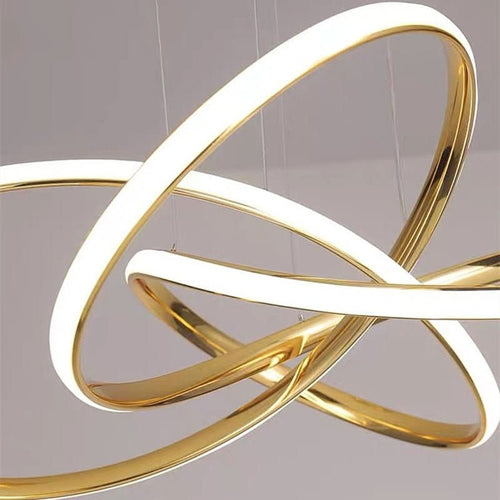
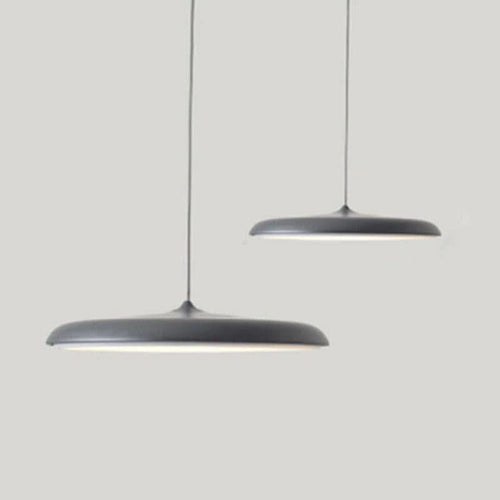
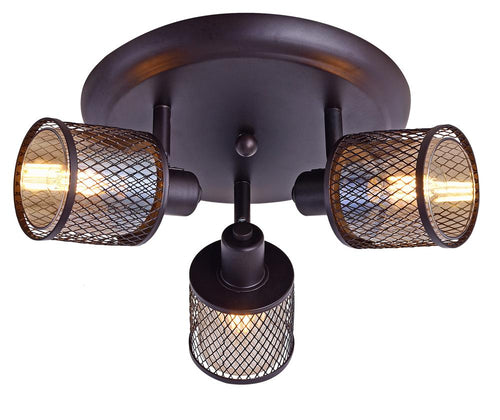
The lights that give a warm glow
 LED ceiling light | Lumière Zenith
 Chandelier | Essence Lumineuse
 Wall light | Silvesena
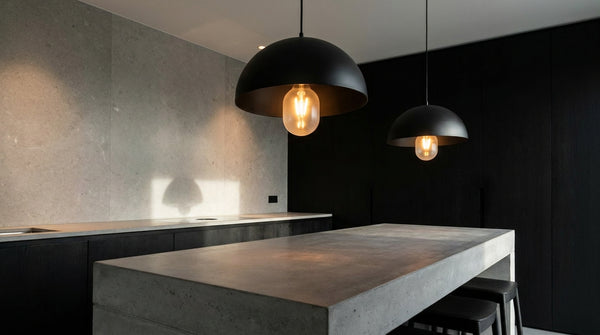
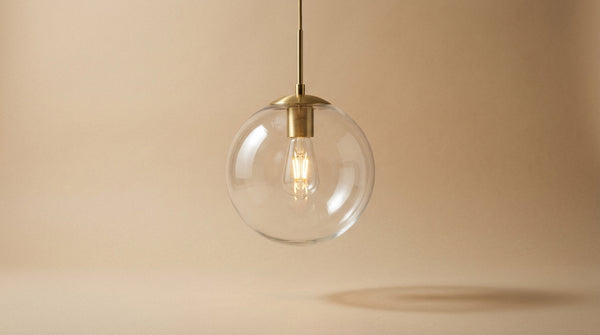
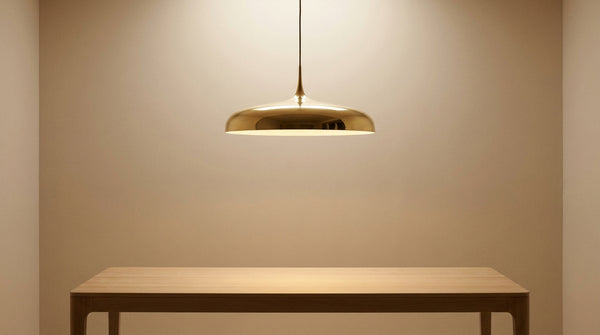
 Pendant light | Zenlinessa
 Pendant light | Vellinina
 Pendant light | Uther
See the whole selection: Alternative Laurie Lumière: your new lighting destination | Designix
At what height should a warming light be placed?
Allow 1.50 m to 1.70 m from the floor for a wall light, and 75 cm to 85 cm between the shade and the tabletop for a pendant. The lower the source, the warmer the effect feels, even with an identical bulb.
At what height should a wall light be fixed?
In a living space, fix it between 1.50 m and 1.70 m from the floor, at the shoulder height of a standing adult. Above a bedside table, go lower, around 1.20 m: you can then read without looking up.
- Wall light: 1.50 m to 1.70 m from the floor, facing downwards
- Bedside table: around 1.20 m, 20 cm from the edge of the bed
- Floor lamp: shade above the line of sight once seated
- Accent lighting: under furniture or up high, never at 1.60 m in the line of sight
At what height should a light be hung above a table?
Allow 75 cm to 85 cm between the bottom of the shade and the tabletop, adding 10 cm if the light is wider than 60 cm.
There is often some doubt about cable length: a living room pendant can be adjusted in two minutes with a stepladder, a tape measure and someone standing at the other end of the room.
If you would rather start from a specific room than try three bulbs, you can describe your room to an adviser in a few lines, with the dimensions and ceiling height.
How can you create a cocooning atmosphere at home?
Lower the general brightness, keep warm white and multiply the small sources. A cocooning room is recognisable by its switched-off ceiling light: two or three low lamps, none lighting directly the place where you sit.
Which light colours should you avoid in a bedroom?
Cool white from 4,000 K upwards, blue, icy green, and any direct ceiling lighting. In the evening, very white light delays the feeling of night.
- Cool white: above 4,000 K, keep it for the study or the garage
- Blue and icy green: common on budget LED strips, avoid above a bed
- Ceiling light without a dimmer: the light falls straight down and the room flattens out
In the same survey of 250 references on 5 October 2026, 96% state a 2-year warranty and 94% an IP20 protection rating. For a bedroom light, IP20 is enough: there is no point paying for water resistance you do not need.
Should a night light stay on all night?
Yes, provided it lights the floor and never the bed. A small source placed 30 cm from the floor, facing downwards, guides without waking anyone. Beyond a few watts, the night light becomes a lamp again.
Before choosing between two models, the business's Google listing shows real projects, viewable in one click, with no 3D rendering.
None of these settings requires any building work: moving a floor lamp by 50 cm is sometimes enough to transform a whole room. Our advice and inspiration then detail each case by room type and ceiling height.
And if you are starting from a blank page, it is better to choose the most suitable lighting before buying the first lamp, rather than compensating afterwards with more powerful bulbs.
In stock · shipping costs shown at checkout · up to 30% off in your cart
Ready to turn inspiration into reality?
Tell us about your room, your style and your budget, and we will show you the pieces that truly suit your project.
Get guidance in 30 seconds →