
Don't get scammed! 5 tips to spot fake bronze or brass chandeliers
This article is also available in French: Ne vous faites pas arnaquer ! 5 astuces pour démasquer les faux lustres en
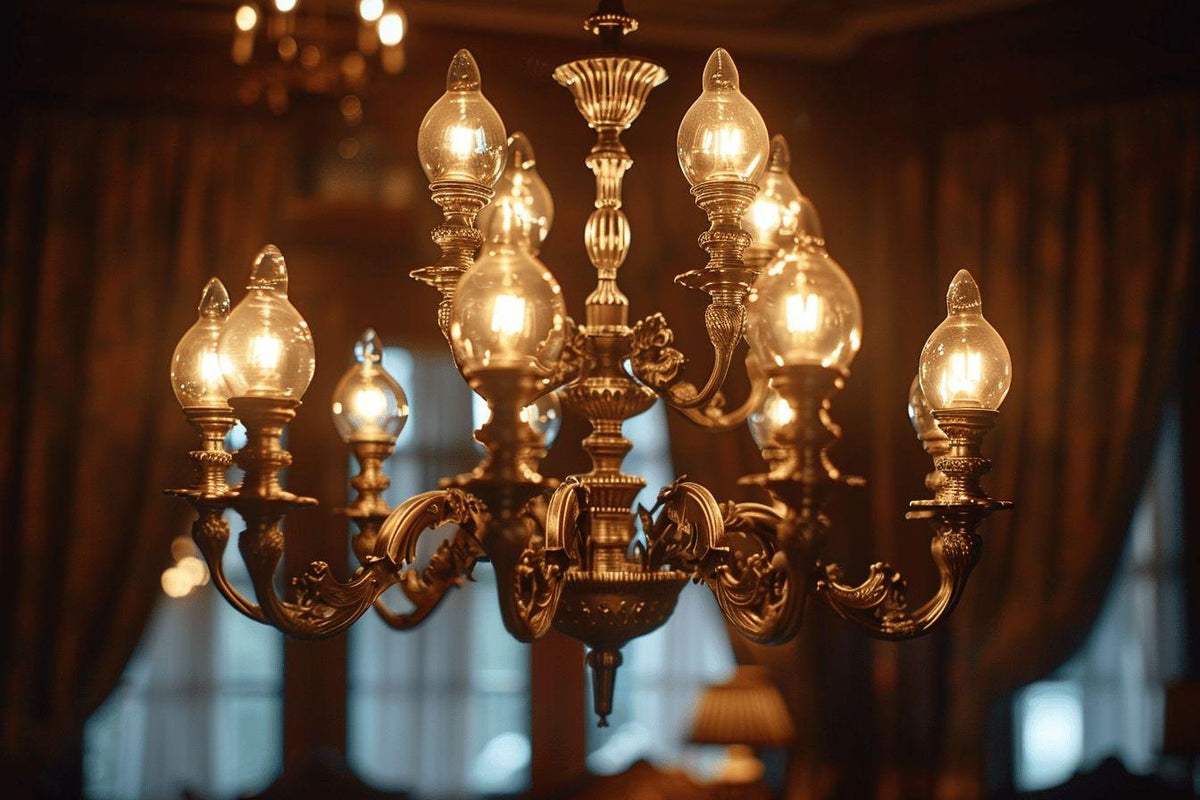
Bronze and brass chandeliers add a touch of timeless elegance to any interior. However, distinguishing between these two materials can prove tricky for the uninitiated. As an interior design enthusiast, I have learned to recognize the subtleties that differentiate these magnificent pieces. Here are my tips for confidently identifying a bronze or brass chandelier, and consequently making the perfect choice to illuminate your space.
The distinctive characteristics of bronze and brass
Bronze and brass are both copper alloys that possess unique properties. Bronze, composed of copper and tin, offers remarkable resistance to corrosion. Its hue varies from golden brown to reddish, and it develops a natural patina over time. This patina gives bronze chandeliers a highly sought-after antique charm, particularly in Louis XVI and Empire styles.
Brass, on the other hand, is an alloy of copper and zinc. Lighter than bronze, it is characterized by a vibrant yellow color. Brass chandeliers generally retain their uniform shine, making them a popular choice for modern and Art Deco designs. During my research to choose the perfect lighting fixture for my dining room, I was enchanted by the diversity of finishes offered by these two materials.

Visual and tactile identification techniques
To differentiate a bronze chandelier from a brass model, start by carefully observing its color and texture. Bronze often features deeper shades and a slightly irregular surface due to its patina. Brass, meanwhile, sports a clearer, more uniform hue. Do not hesitate to touch the chandelier: bronze is generally colder to the touch than brass.
Weight is also a valuable indicator. Solid bronze chandeliers are significantly heavier than their brass counterparts. This difference in density is particularly noticeable in large models or those adorned with crystal droplets. During a visit to a Lyon antique dealer, I was surprised by the weight of a magnificent Empire bronze chandelier.
Also examine the details and patterns. Bronze chandeliers often feature intricate chasing and finely worked ornaments. Brass, being more malleable, lends itself better to clean lines and geometric shapes. These stylistic differences can help you identify the material while choosing a model that harmonizes with your decor.
Expertise methods for precise identification
For more advanced identification, certain expert techniques can be employed. A simple test involves gently scratching a hidden area of the chandelier. Bronze will reveal a golden hue, while brass will show a bright yellow color. Be careful, however, not to damage the piece.
Using a magnet can also prove useful. Neither bronze nor brass is magnetic. If the magnet sticks, it is likely that the chandelier is made of another material, such as spelter or steel. This test allowed me to rule out several fakes during my quest for the perfect chandelier for my apartment.
For antique or high-value pieces, it is recommended to consult an expert. These professionals use more sophisticated methods to authenticate the material and estimate the value of the chandelier. If you wish to know the value of a chandelier, their expertise is invaluable.
Care and preservation of your chandelier's beauty
Once you have identified the material of your chandelier, it is essential to maintain it correctly to preserve its beauty. For bronze chandeliers, use a soft cloth lightly dampened with warm water and a neutral soap. Avoid abrasive products that could alter the patina. Brass can be cleaned with a mild solution of white vinegar and salt.
The frequency of cleaning depends on the environment where your chandelier is located. In my kitchen, which opens onto the dining room, I opted for a brass chandelier that I clean regularly to maintain its shine. For more delicate pieces or crystal chandeliers, professional maintenance may be necessary.
Remember that the bronze patina is precious and part of its charm. If you own an antique bronze chandelier, resist the temptation to polish it excessively. This natural patina bears witness to the piece's history and contributes to its value.
The informed choice for your interior
Now that you know how to recognize a bronze or brass chandelier, you can make an informed choice for your interior. Both materials offer unique aesthetic qualities that can transform the ambiance of your space. Bronze brings a touch of classic sophistication, while brass breathes in a contemporary elegance.
Consider your overall decor when choosing between bronze and brass. A bronze chandelier will fit perfectly into an interior with vintage or classic accents. Brass, with its golden shine, can bring a touch of modernity to more contemporary spaces. Do not hesitate to follow the trends in pendant lighting to find inspiration.
Whatever your preference, a bronze or brass chandelier is a durable investment that will illuminate your interior for many years. By taking care of your piece and maintaining it properly, you will preserve its beauty and value over time. So, let yourself be guided by your instinct and choose the chandelier that will make your personality shine in your living space.
On the same subject
In stock · shipping costs shown at checkout · up to 30% off in your cart


Ready to turn inspiration into reality?
Tell us about your room, your style and your budget, and we will show you the pieces that truly suit your project.
Get guidance in 30 seconds →


