
How to clean a fabric lampshade without damaging it
This article is also available in French: Comment nettoyer un abat jour en tissu
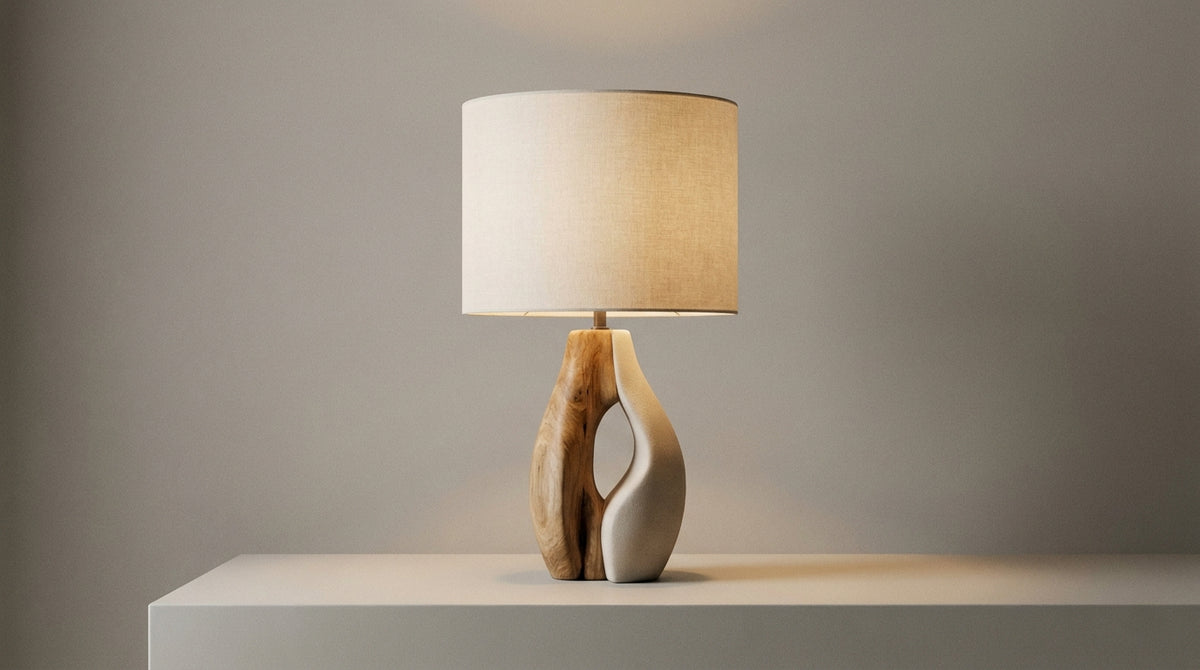
A tarnished, yellowed, or stained fabric lampshade dulls all the light in a room, and cleaning it without deforming it depends on one simple rule: knowing what can be dusted and what can be washed. An overly wet approach will peel back the edges or slacken the fabric.
A lampshade is essentially stretched textile: the same precautions apply as those used for taking care of upholstery fabric—never use excess water, and never scrub firmly.
If the fabric is pitted, yellowed, or has holes, cleaning won't save it: it is better to look for a replacement lampshade, which is often less time-consuming than a risky rescue.
How to clean a fabric lampshade?
First, dust it while dry, from top to bottom, using a lint roller, a soft brush, or the brush attachment on a vacuum cleaner on low power. Then, check if the fabric is glued or sewn onto the frame: if it is glued, it can only withstand a barely damp cloth and mild soap; if sewn, it can tolerate more thorough washing.
This distinction changes everything, and Google's Snippet only skims the surface. A glued fabric sits on a strip of adhesive along the rings: too much water dissolves it, and the edge will shrink. A sewn fabric can sometimes be removed for a quick soak in lukewarm soapy water.
For wet cleaning, dab with a white cloth wrung out until almost dry, using Marseille soap and lukewarm water. Based on a survey of 27 lampshades in our catalog as of September 21, 2026, linen accounts for 52% of the materials found and fabric 19%: two fibers that fear heavy water exposure.
Delicate materials require even more restraint. The logic is similar to cleaning a velvet sofa: you brush in the direction of the fibers, never soak, and dry quickly with a dry cloth.
How to clean a lampshade that has yellowed?
A yellowed lampshade should be treated with baking soda: dilute a tablespoon in half a liter of lukewarm water, barely dampen a white cloth, dab without soaking, and then dry immediately. Yellowing comes from the heat of the bulb and embedded dust; on glued fabric, stay very light so as not to open the edges.
The yellowing mainly settles at the top, near the heat source. Switching to an LED bulb, which generates little heat, significantly slows the return of the problem once the fabric has been revived.
On light linen or cotton, always test the mixture on a hidden area, on the inside of the bottom edge. If the color changes, stop: uniform yellow is easier to live with than a light water ring in the middle.
How to remove water rings from a lampshade?
A water ring appears when water dries too slowly and leaves a mark on the periphery. To avoid this, moisten the entire area evenly, from the edge toward the center, without ever concentrating water on one spot, then dry immediately with a hairdryer set to cool or warm, at a distance. Dab, do not scrub.
If a ring has already formed, re-moisten well beyond its boundary to blend it in, then dry all at once. This same approach of rapid drying guides the method for microfiber, another textile that leaves marks at the slightest drop.
Iron stains leave a rusty halo that water will not remove: the procedure is the same as for removing rust stains from fabric, with a suitable product and a lot of patience.
If the fabric remains marked despite careful cleaning, it is often wiser to replace it: do not hesitate to ask our team a question to identify the right size for your lamp base.
How to clean a moldy lampshade?
Mold on lampshade fabric rarely leaves without leaving a ring or a gray trace. Brush the spores off dry while outdoors, dab with white vinegar diluted by half, then dry completely. If the stains persist or the smell returns, replacement is necessary: mold permanently weakens the fibers.
Fabric that has molded once will quickly relapse because the fibers remain porous. This is a case where buying a new lampshade takes less effort than saving it, especially in a bedroom or a humid room.
Is your lampshade too damaged to be saved? Find its replacement according to your decor.
Good news for purchasing: the assembly is highly standardized. In that same survey of 27 lampshades as of September 21, 2026, the E27 socket fits 89% of models, and a 2-year warranty covers 96% of the selection. Checking the socket before buying prevents format errors.
Understanding this reference helps in making the right choice: our guide to understanding bulb sockets shows why the E27 dominates and how to read the markings on your lamp holder.
In terms of choices, our collection of designer lighting covers 789 lampshade references as of September 21, 2026, in pendant or wall-mounted versions. For a nightstand, take a look at the formats designed for bedside lamps.
Before deciding, the Designix Google listing compiles feedback from buyers, which is useful when hesitating between two formats or materials.
Our lampshades to replace or match your lamp
 white pleated fabric pendant, oval lampshade Ø 60 cm | Velina
 K2011NS separate lampshade – Small handmade black linen teardrop lampshade Ø25 cm for E27 sockets
 Pendant lamp, black bar 3 gray velvet shades adjustable 97-167 cm | Velsa
 K1066QS white linen lampshade
 K7396QS white linen lampshade
 Black arc wall reading light, fabric shade Ø60 | Noctis
See the entire selection: Lampshades: Pendants, Table Lamps, and Floor Lamps
On the same topic
In stock · shipping costs shown at checkout · up to 30% off in your cart


Ready to turn inspiration into reality?
Tell us about your room, your style and your budget, and we will show you the pieces that truly suit your project.
Get guidance in 30 seconds →


